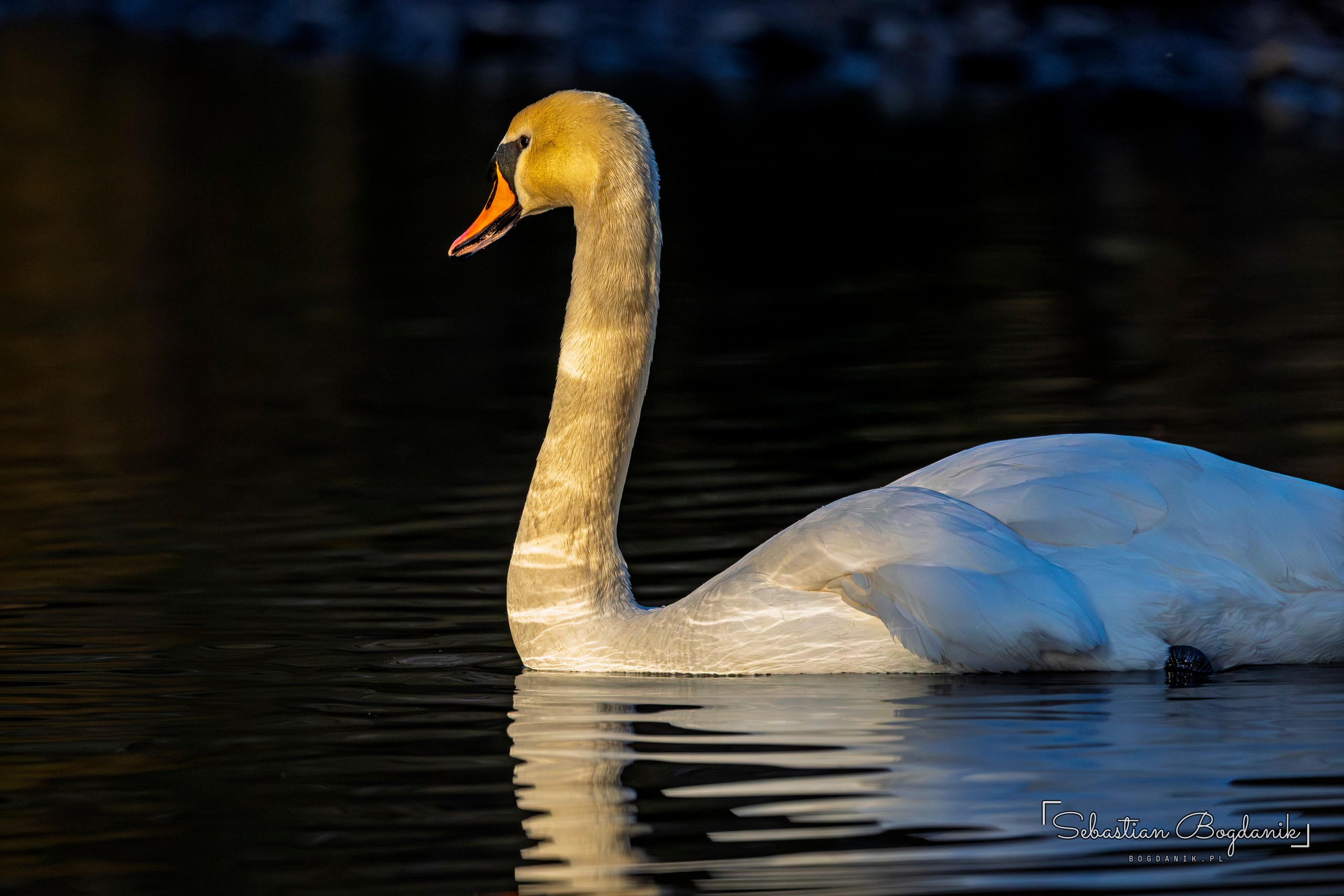
The day after the equinox, a Saturday afternoon in the Castle Park in Żywiec. The trees are still bare, the grass is only just turning green, and by the water it is as busy as a railway station. I took the first photo on 21 March 2026 at five to three and the last at 16:41. In under two hours more than a dozen species and breeds of birds passed in front of the lens: wild and domestic, local and from the other side of the world. Here they are one by one, each with what is worth knowing about it.
The Castle Park in Żywiec: three centuries of change
The park, known in Żywiec as the Castle Park or the Habsburg Park, has a long and varied history. The oldest mention of a garden by the castle comes from an inventory of 1667, but it says nothing about its appearance. The first more detailed information dates from around 1712. It was then a formal Italian garden divided into compartments, probably laid out by Franciszek Wielopolski and his wife Anna, née Lubomirska. The Wielopolski family held Żywiec from 1675 to 1838.
In the late 18th century the Chinese House, a pavilion bearing the Wielopolski coat of arms, was built in the southern part of the garden. In the first half of the 19th century the formal garden was redesigned as an English landscape park. The heritage record of the National Heritage Board of Poland says this was probably the idea of Andrzej Wielopolski and his wife Karolina, née Grabowska, with gardening work led by Jan Merk. The millrace became a canal with an island, on which the Chinese House still stands.
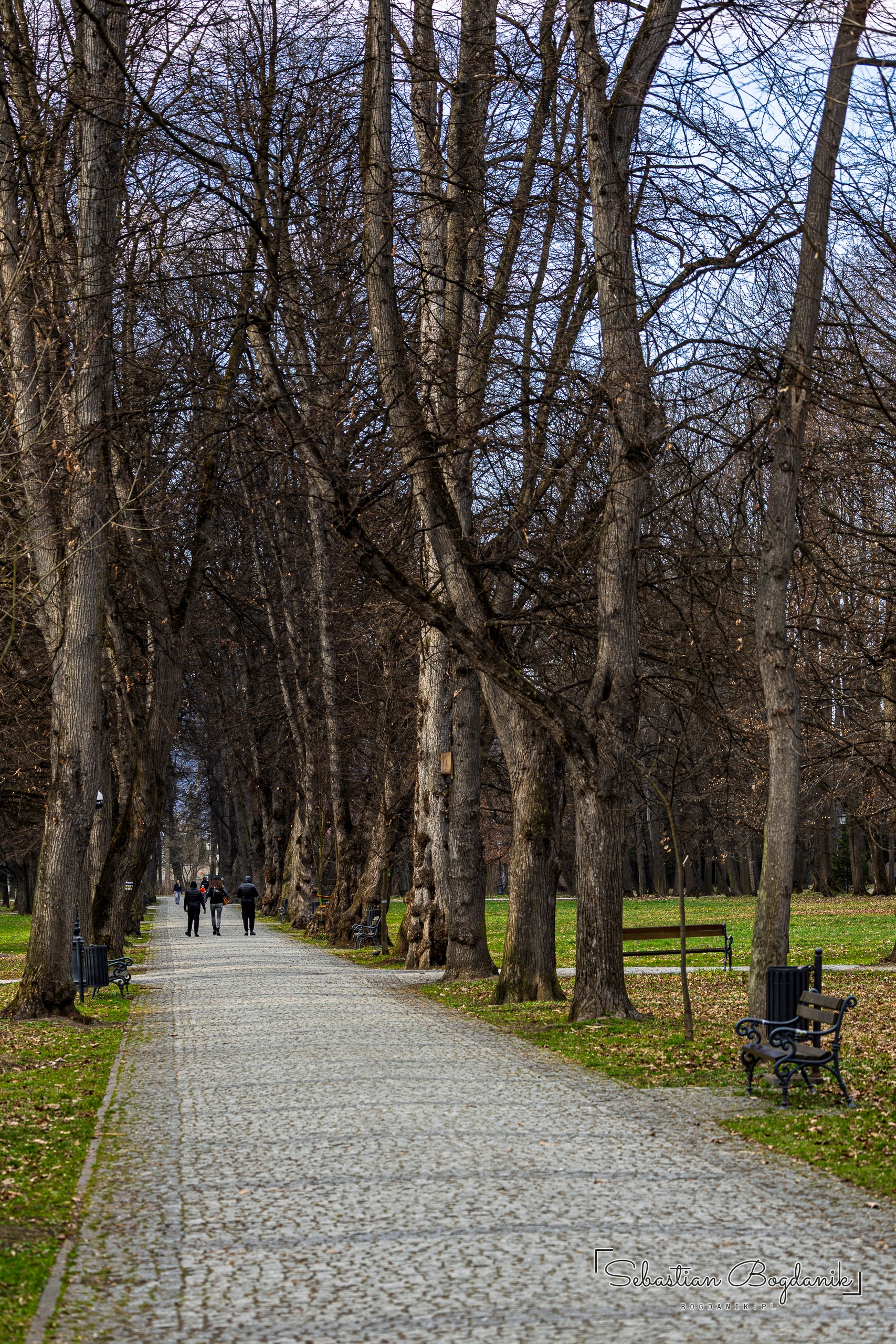
In 1838 the Żywiec estate passed to the Habsburgs. They enlarged the park, planted oak and lime avenues, regulated the stream and built a waterfall that survived until the 1950s. The last major changes came in 1930 to 1936: pergolas, a round pool with a fountain, a rose garden and a viewing clearing in front of the palace. They are attributed to the English landscape architect Brenda Colvin, with Kit Beckh carrying out the garden work. Today the park covers about 26 hectares and is listed in the register of historic monuments.
It is also a valuable tree collection. In a 2017 study, researchers from the University of Bielsko-Biała described the park as one of the most valuable dendrological collections in the region and assessed the condition of 27 trees that are protected natural monuments. Old trees with hollows, water and quiet corners mean there are plenty of birds here all year round, and in March, before the leaves open, they are easiest to see.
The mute swan, which is not mute at all
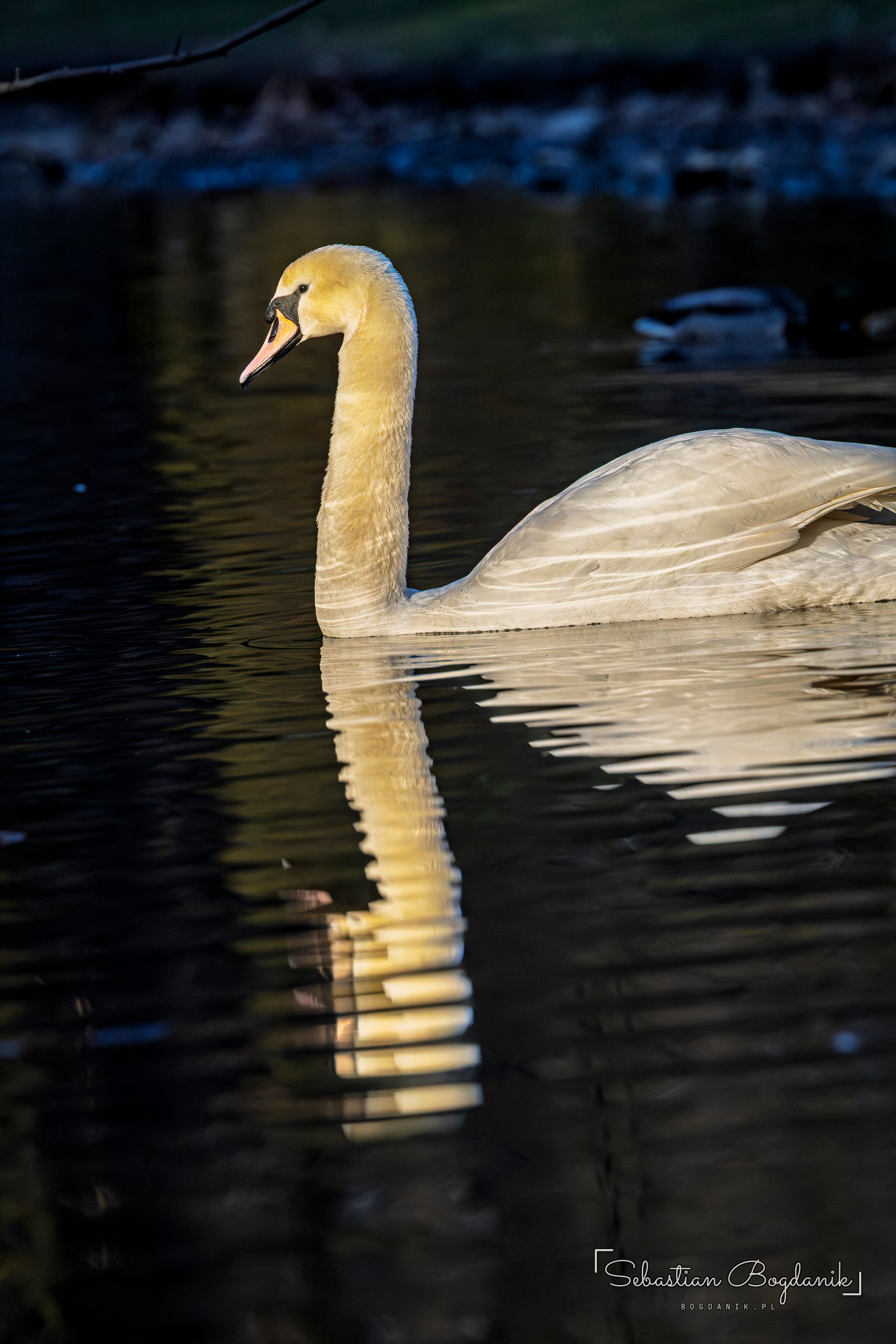
The name is misleading. The mute swan hisses at anyone who comes too close, and in flight its wings make a loud, throbbing whistle that carries a long way. It is mute only compared with the whooper swan, which trumpets. An adult male usually weighs 10 to 12 kilograms, which puts it among the heaviest flying birds. It is easy to recognise by the orange bill with a black knob at the base. The male’s knob is larger, especially in spring.
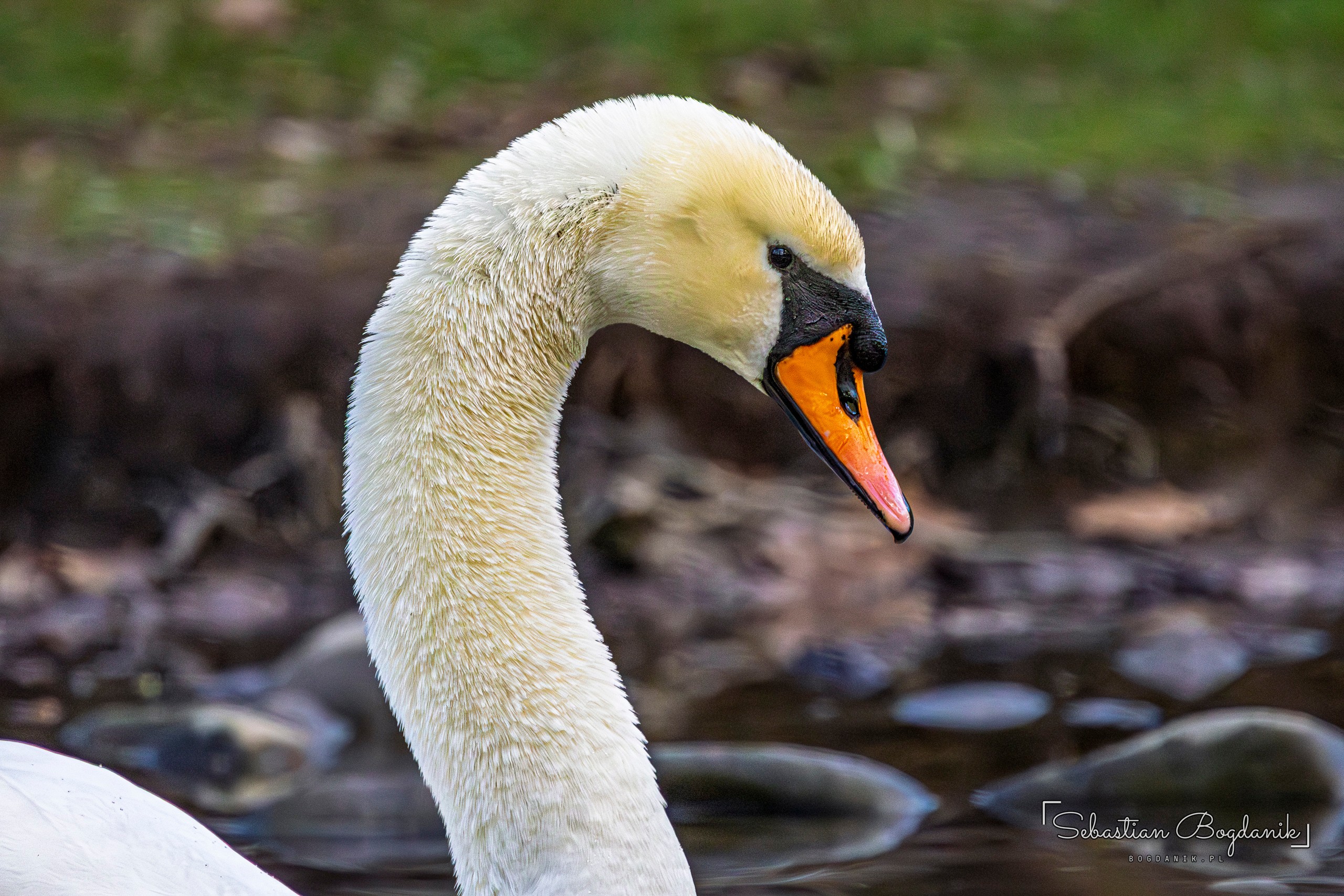
Swans pair up for many years, often until one partner dies, although separations do happen. In Poland the species is protected. In Żywiec several pairs stayed close to the bank, where food is easy to come by.
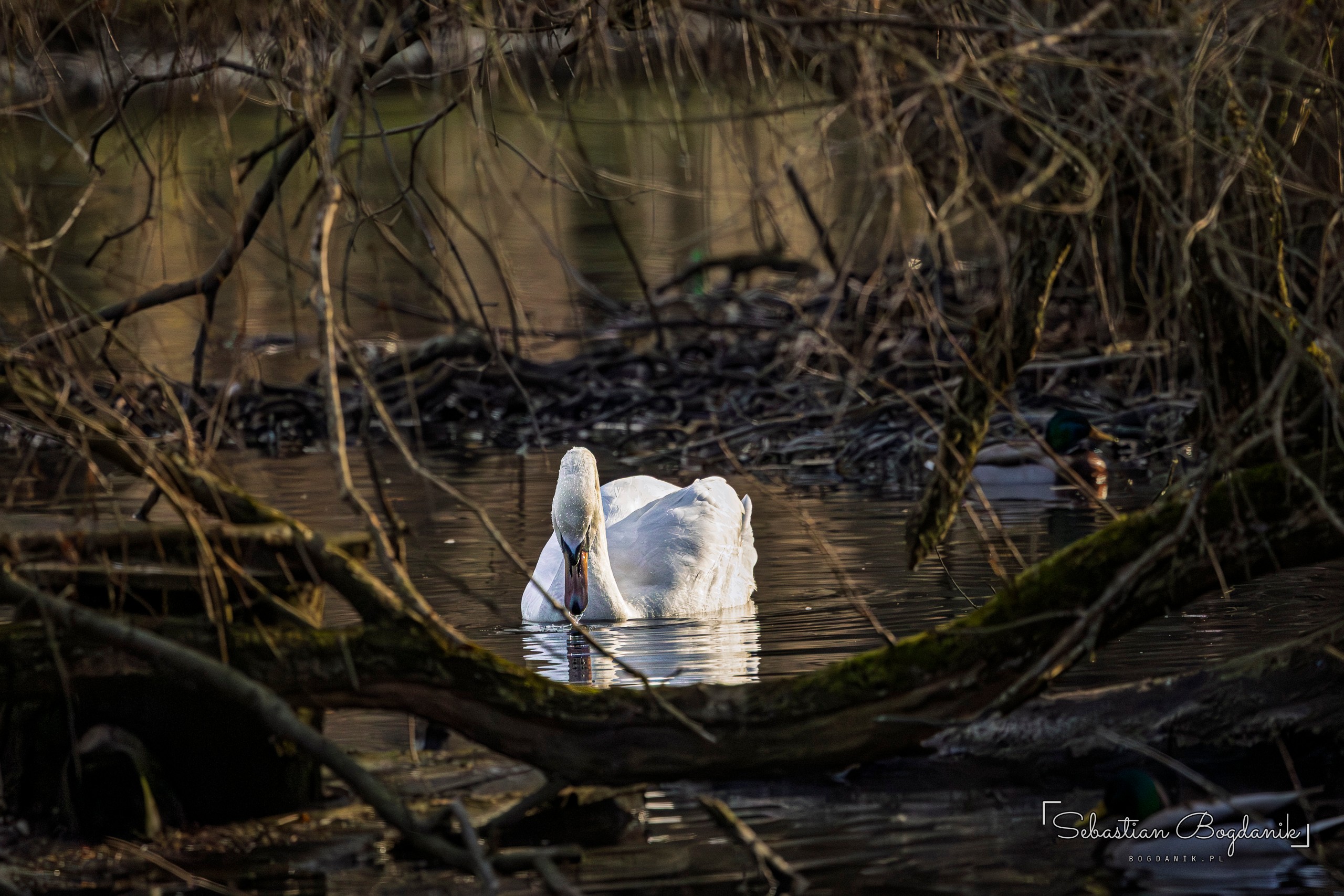
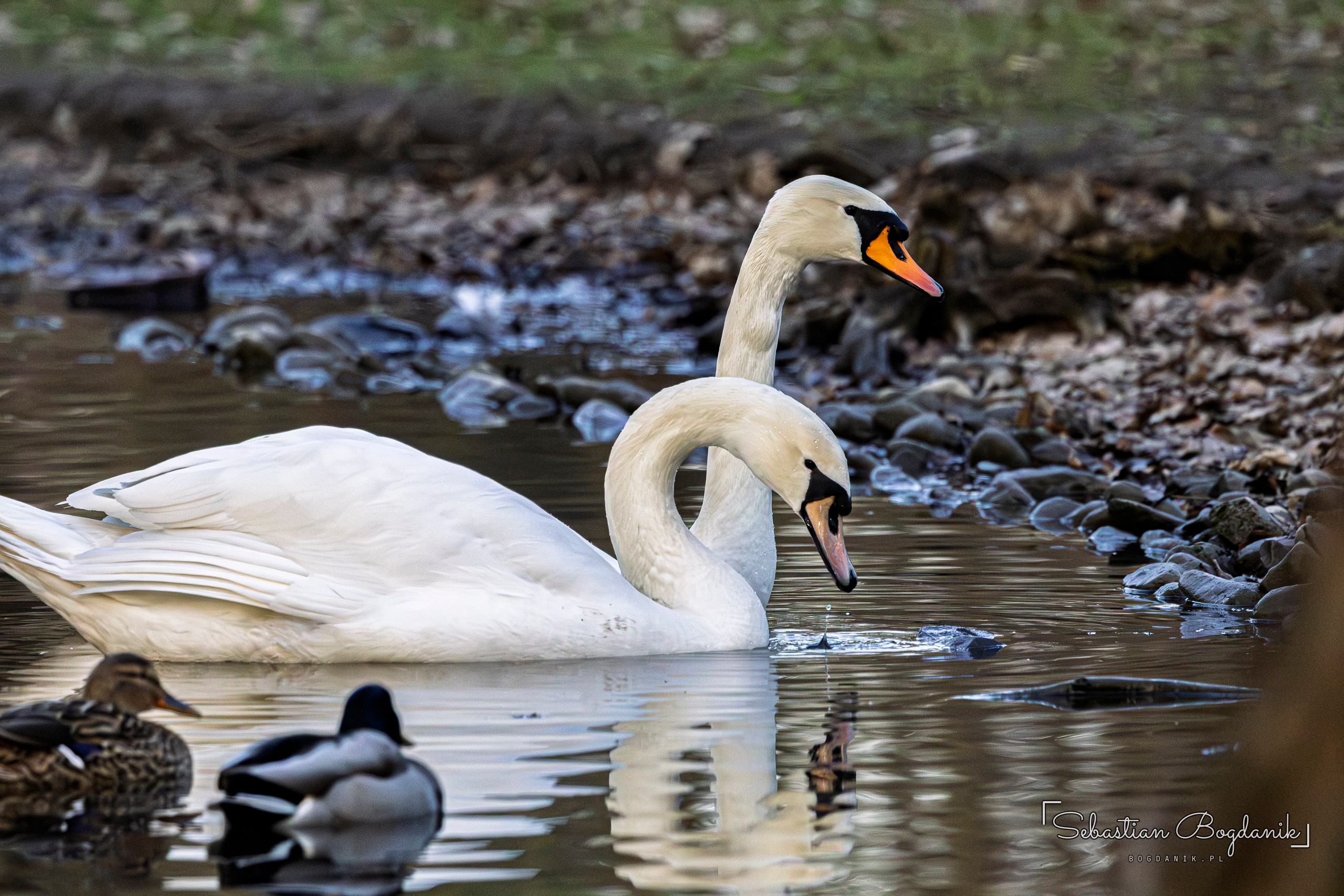
The best light came at the end. At twenty-five past four the sun dropped low, the water darkened and the white feathers took on the colour of honey.
The mallard: the park’s commonest duck
The mallard is the commonest duck in Poland and one of the most widespread in the world. Almost every domestic duck descends from it. The one exception appears further on.
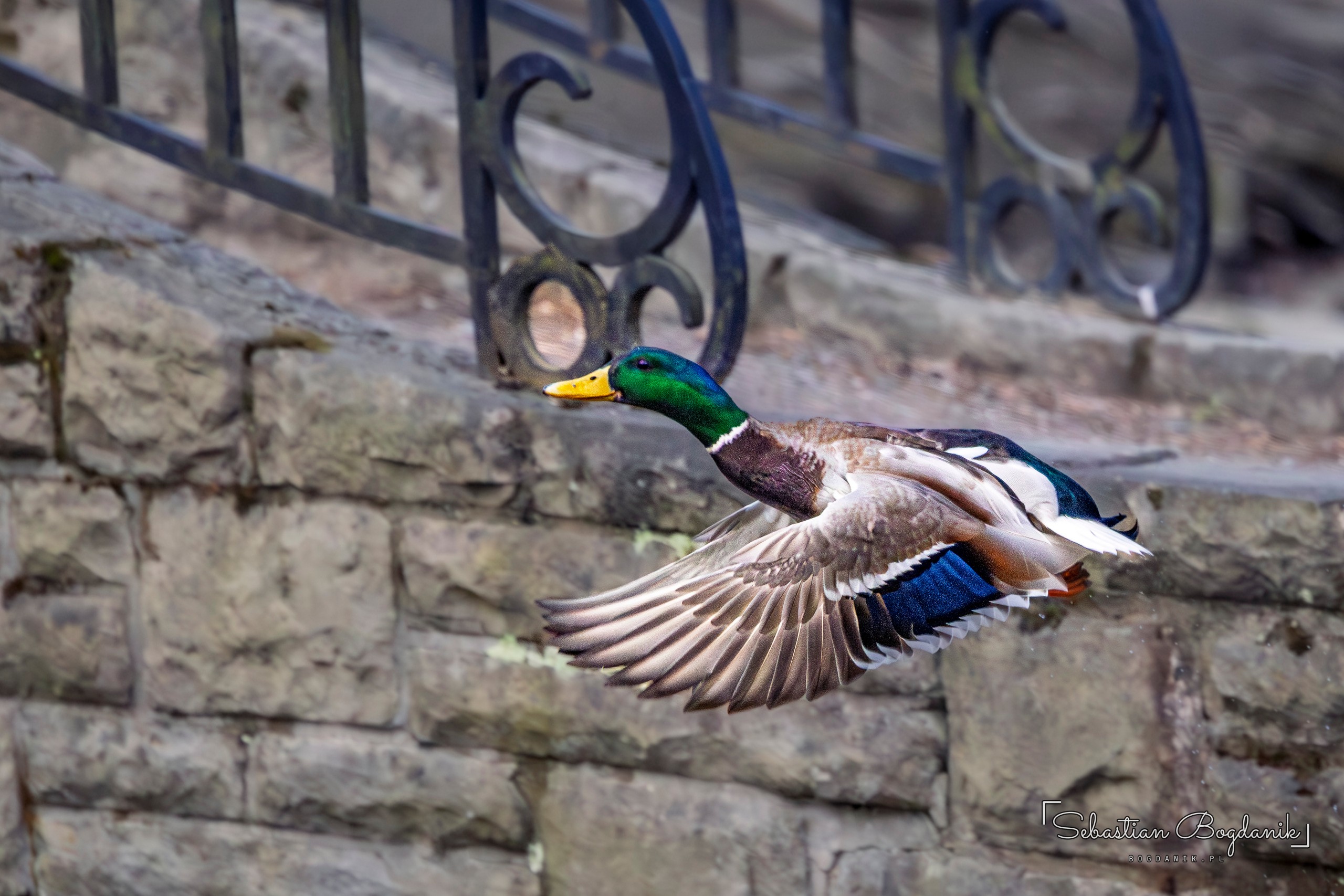
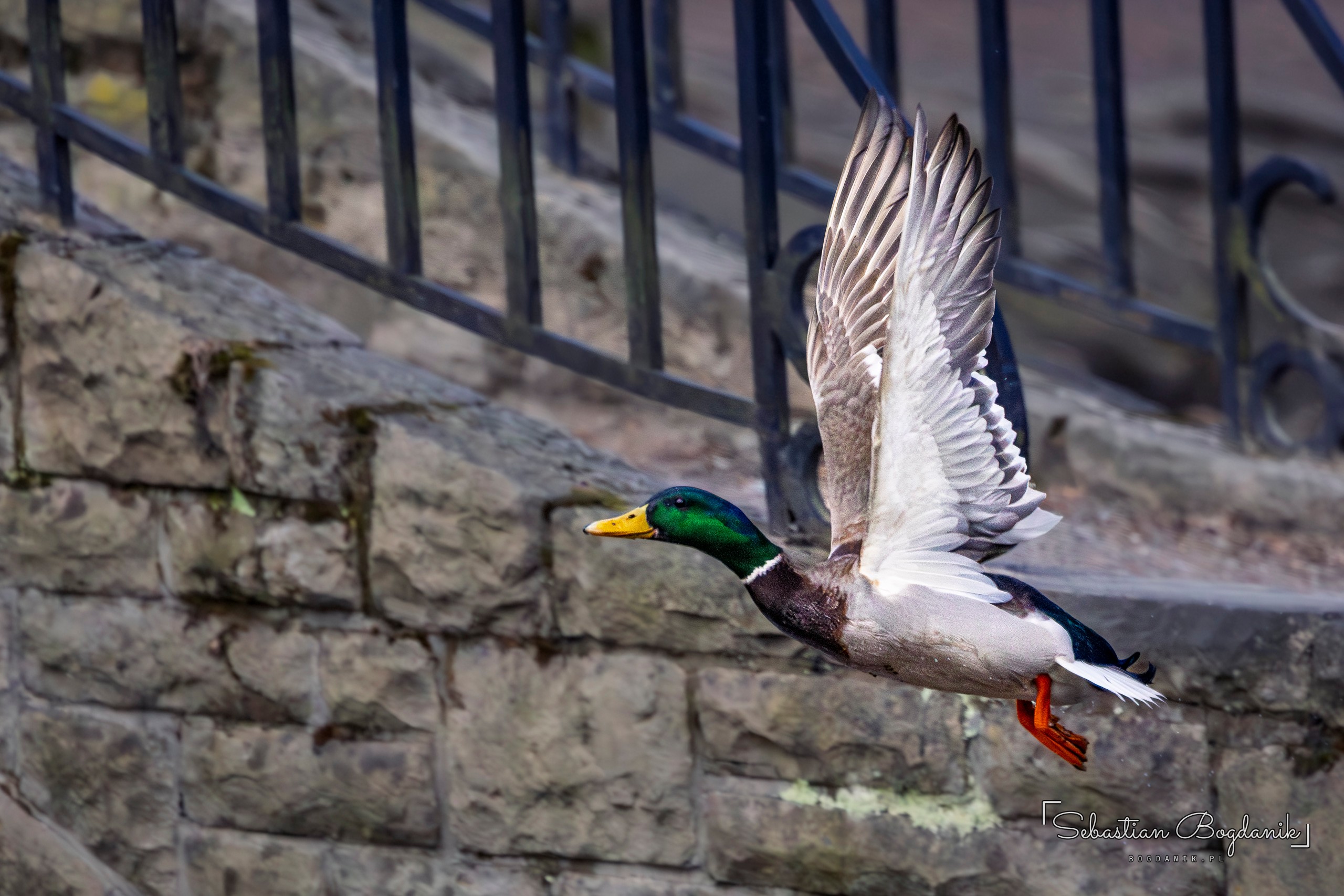
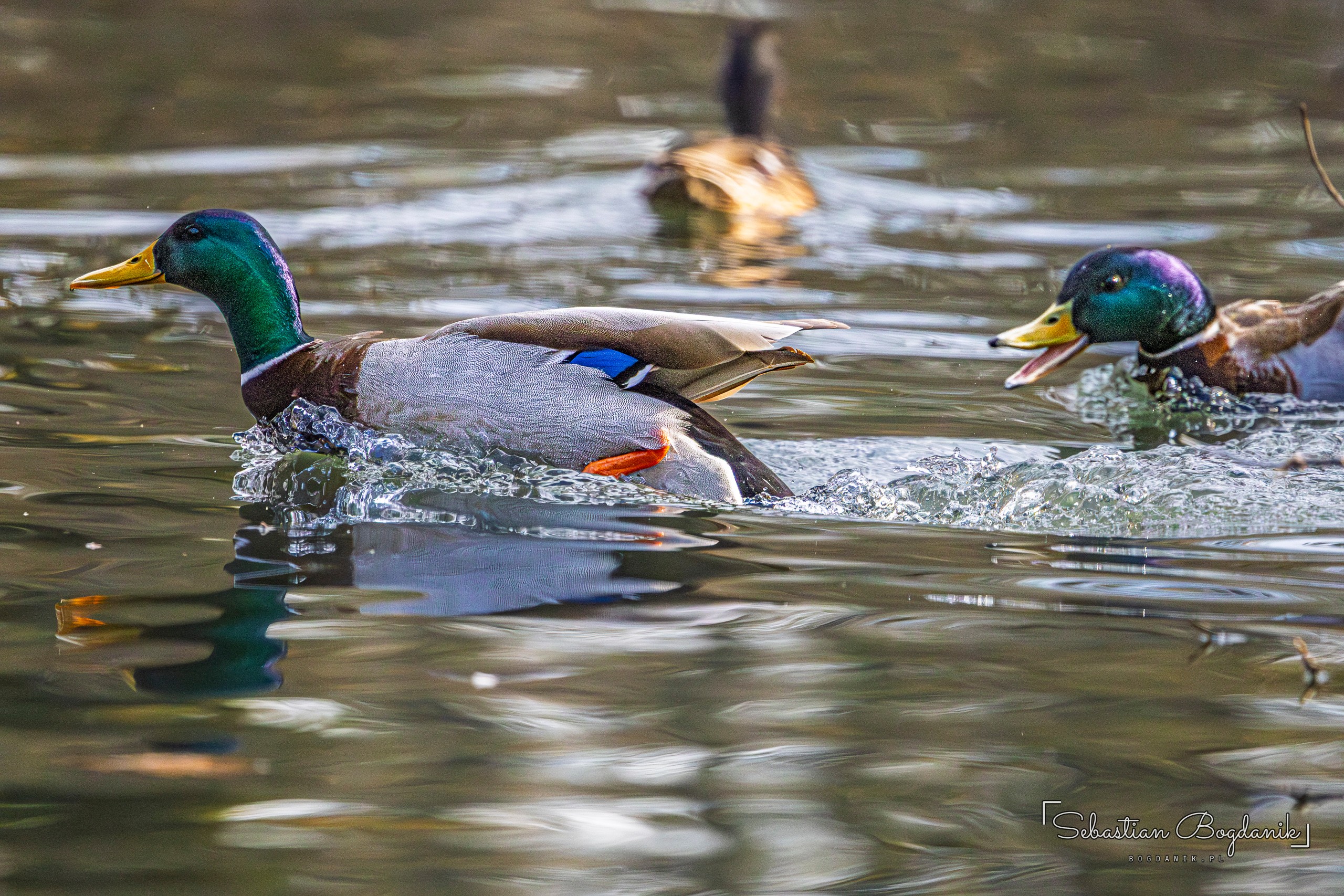
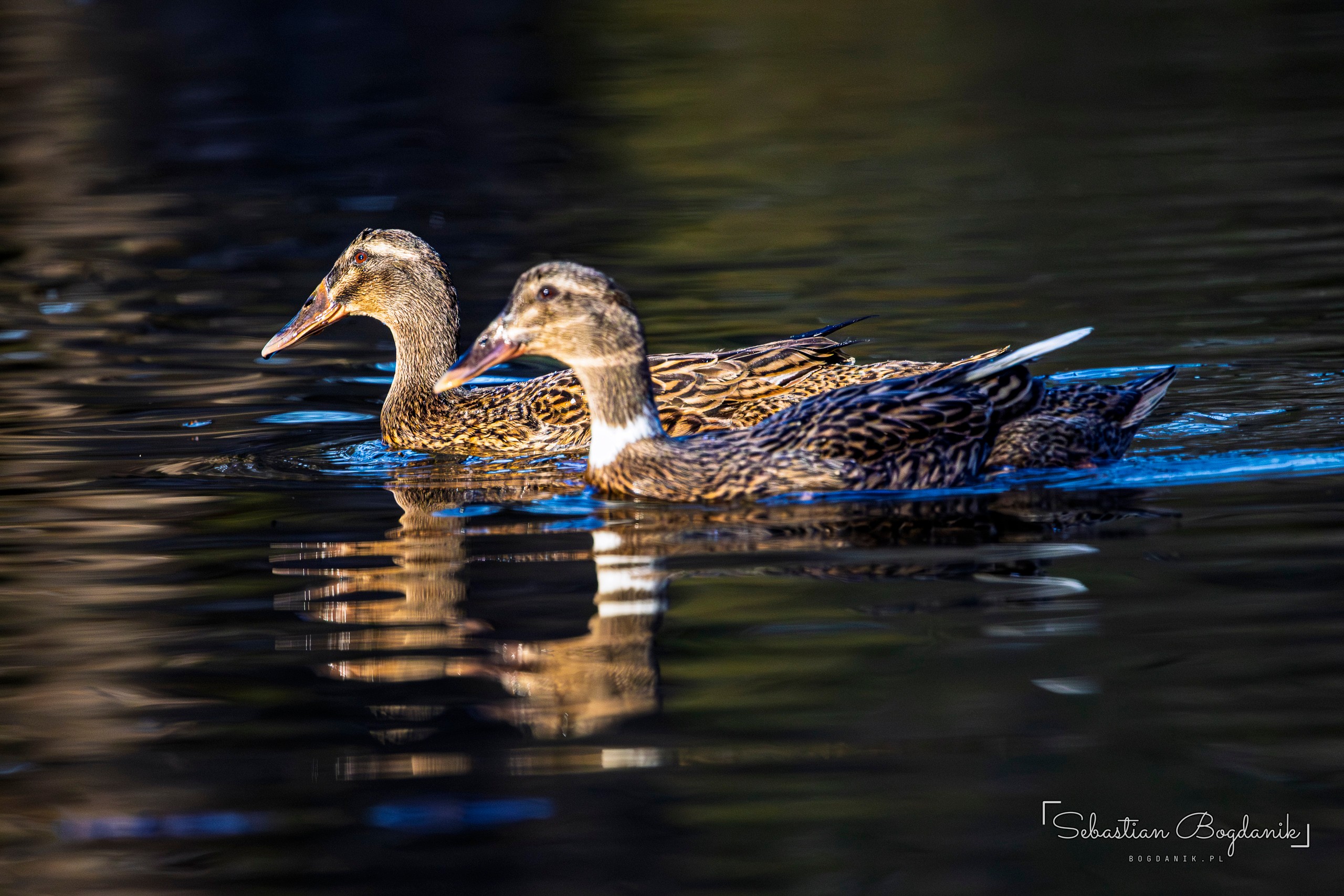
In breeding plumage the drake has a bottle green head, a white collar and a brown breast. In summer he loses his colours and for a few weeks looks almost like a female. At that time he sheds all his flight feathers at once and cannot fly, so the drab outfit suits him. Both sexes have a speculum, a violet blue patch on the wing edged in white.
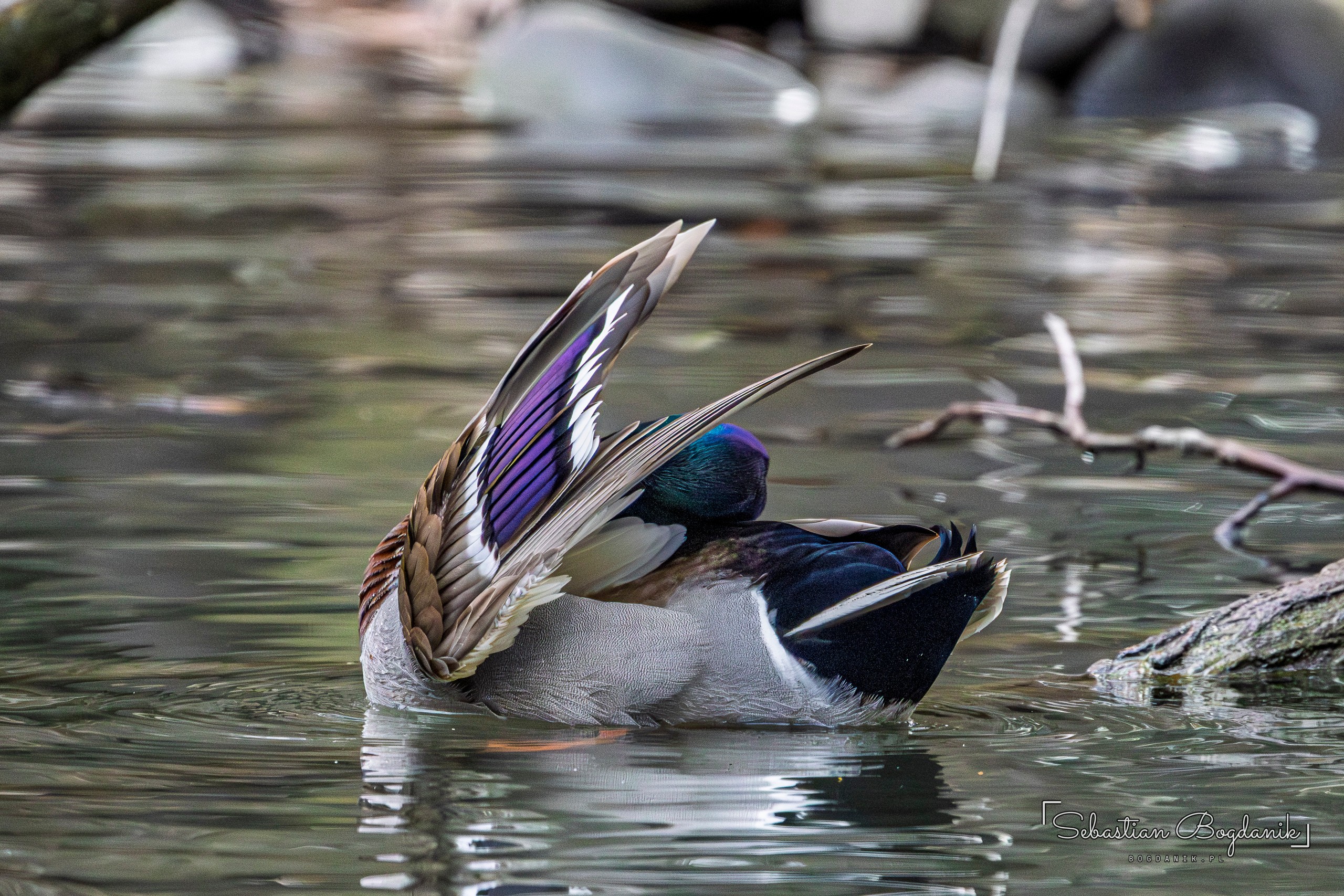
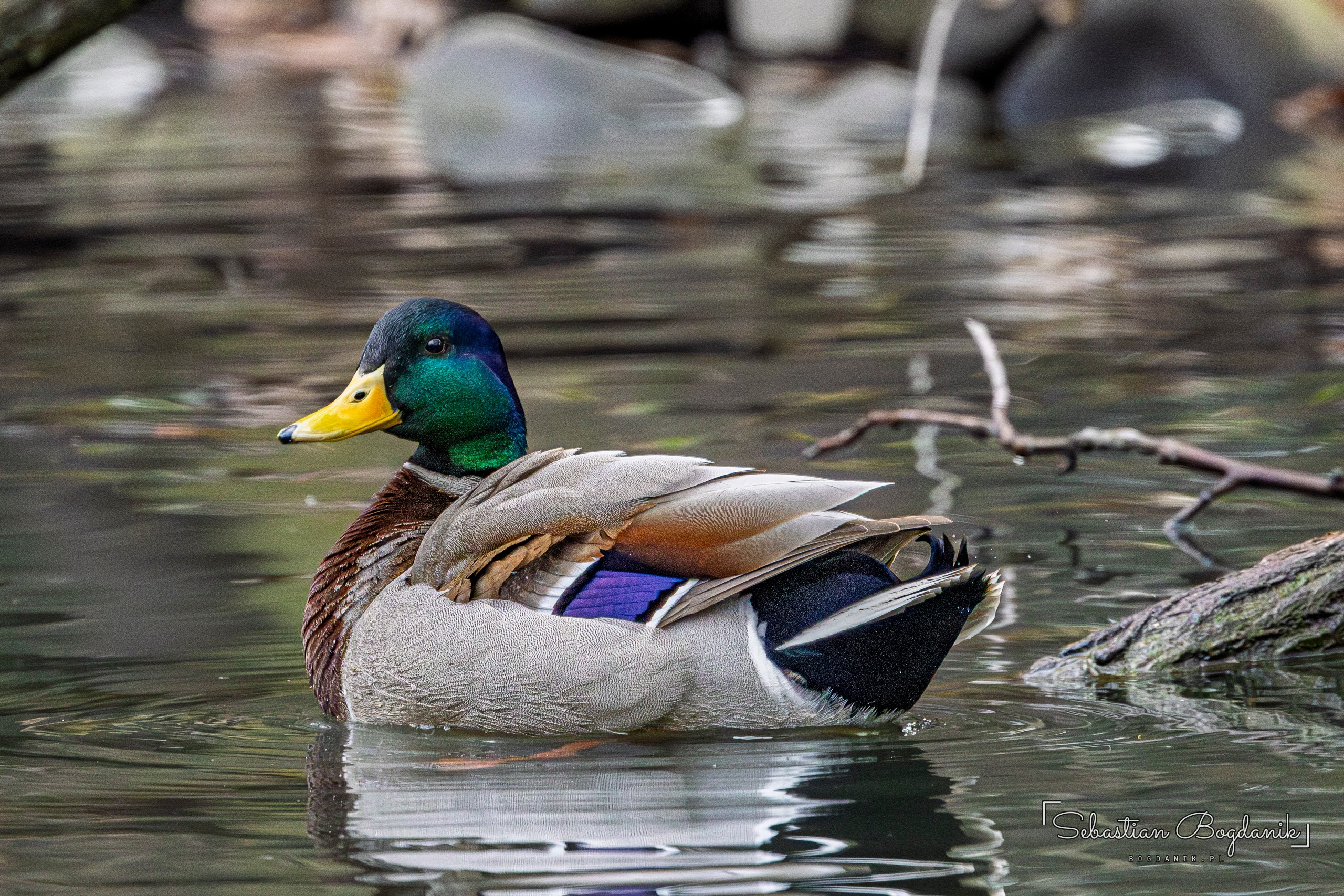
Only the female quacks loudly. The drake makes quiet, rasping sounds and whistles that are easy to miss.
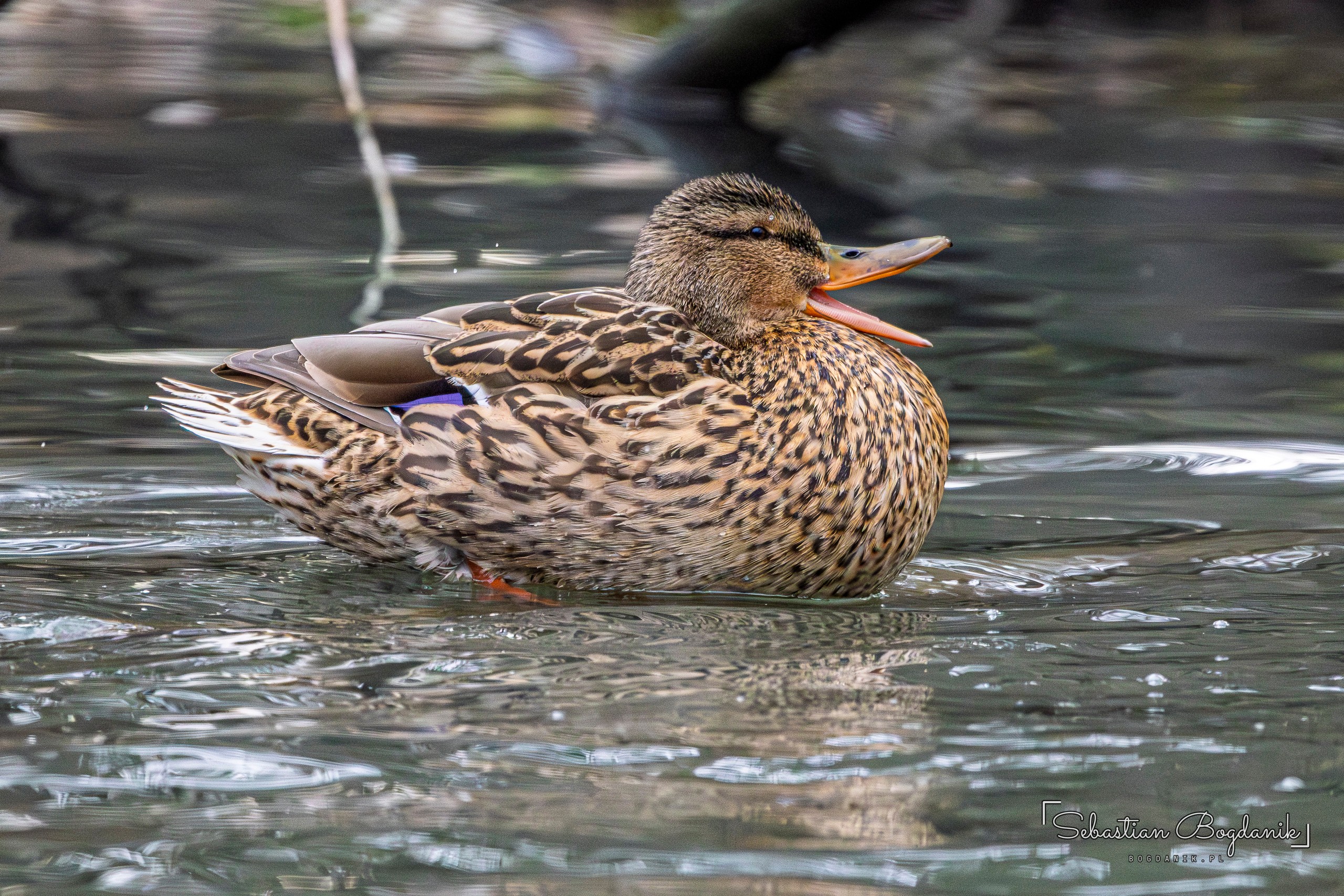
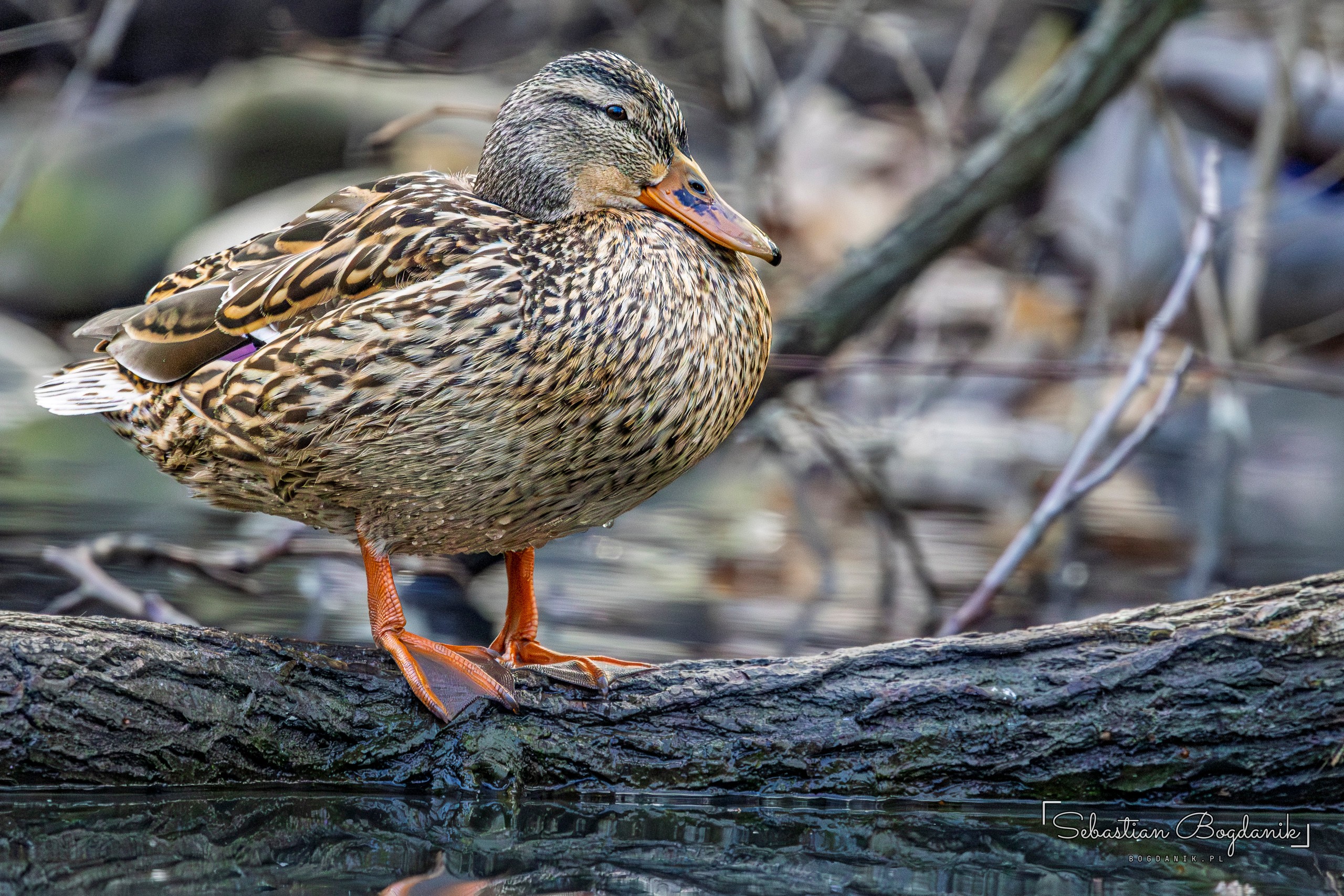
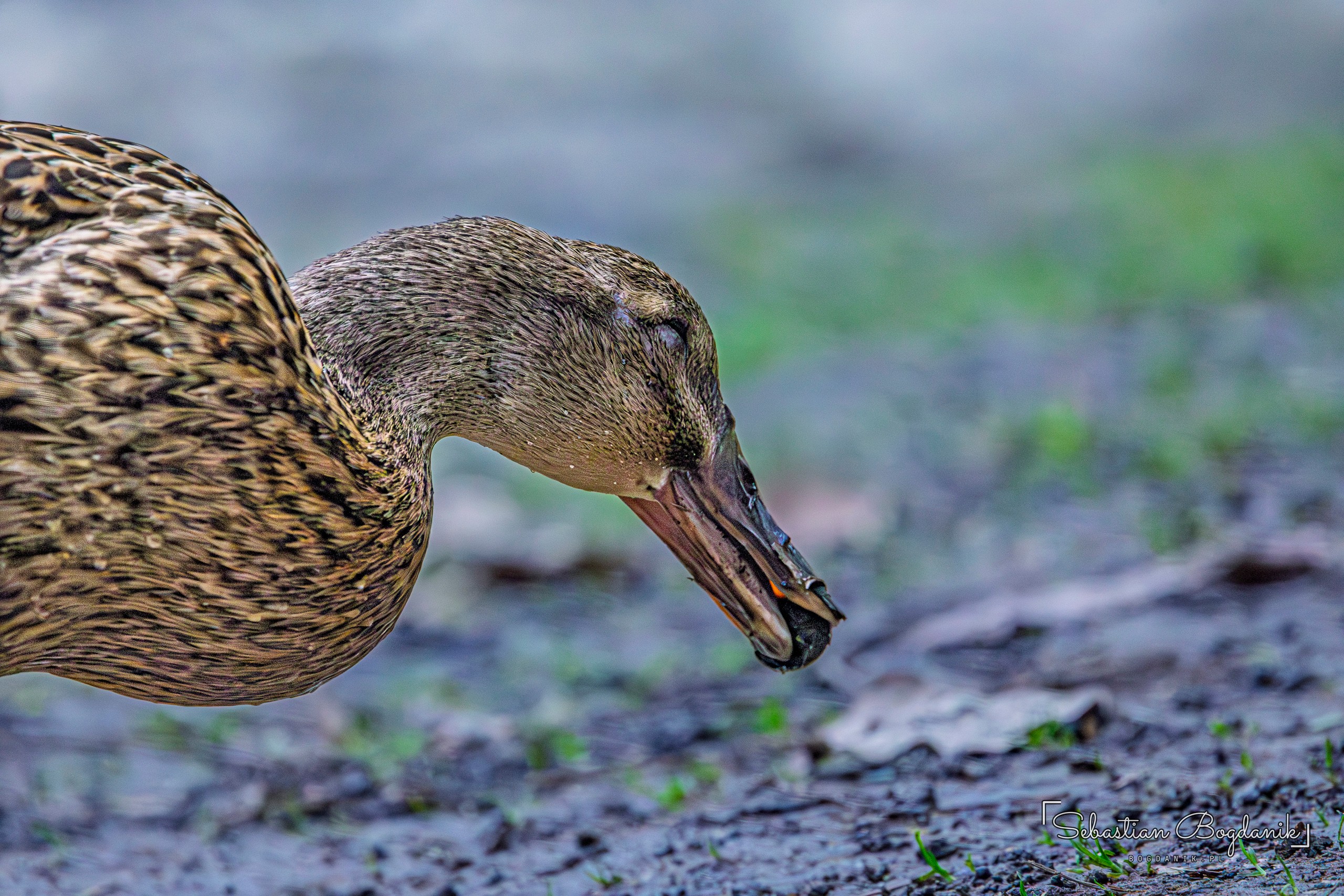
A duck’s bill works like a sieve. Its edges carry fine plates through which the mallard strains seeds, bits of plants and small animals from water and mud.
Pairs form as early as autumn, and in March the mating season is under way. That afternoon drakes chased off rivals several times, so hard that the water churned. The female alone chooses the nest site, sometimes far from water: in bushes, in a tree hole, even on a balcony.
In several places on the bank there was scattered grain. That is a better idea than bread. Ducks fed mostly on bread are thought to fall ill, and young birds can develop so called angel wing: the flight feathers twist outwards and the bird never flies again.
The mandarin: a colourful visitor from the Far East
The most colourful resident of the park comes from East Asia: China, Korea, Japan and the Russian Far East. It was brought to Europe as an ornamental bird, and wild flocks grew from escapes. The largest now live in Great Britain.
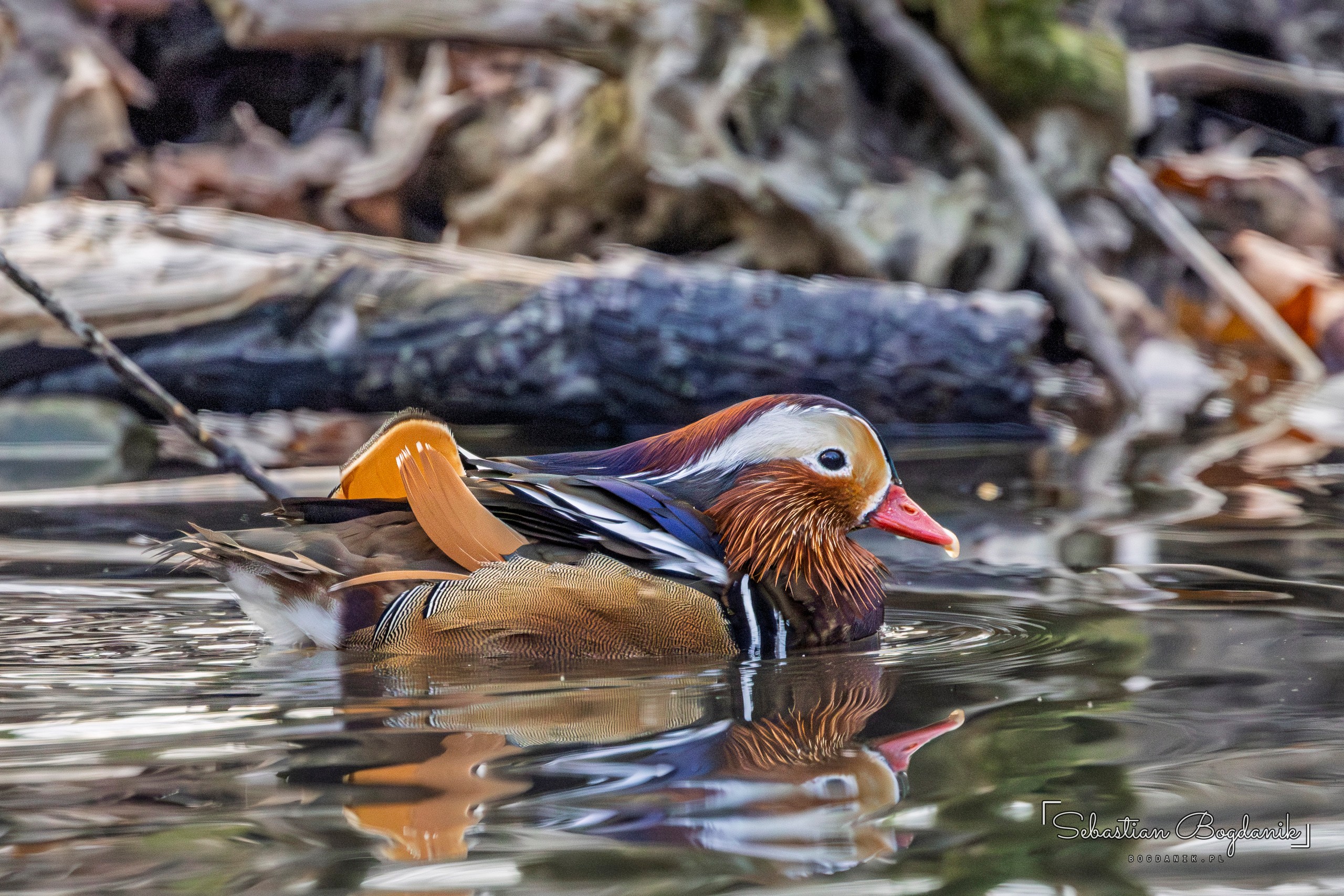
The male looks as if made of porcelain: the orange “sails” on his back are enlarged wing feathers, and there are side whiskers, a white brow and a red bill. The female is modest, grey brown, with a white ring around the eye. Mandarins nest in tree holes, sometimes several metres above the ground. A day after hatching the ducklings jump down and usually come to no harm, because they are as light as down.
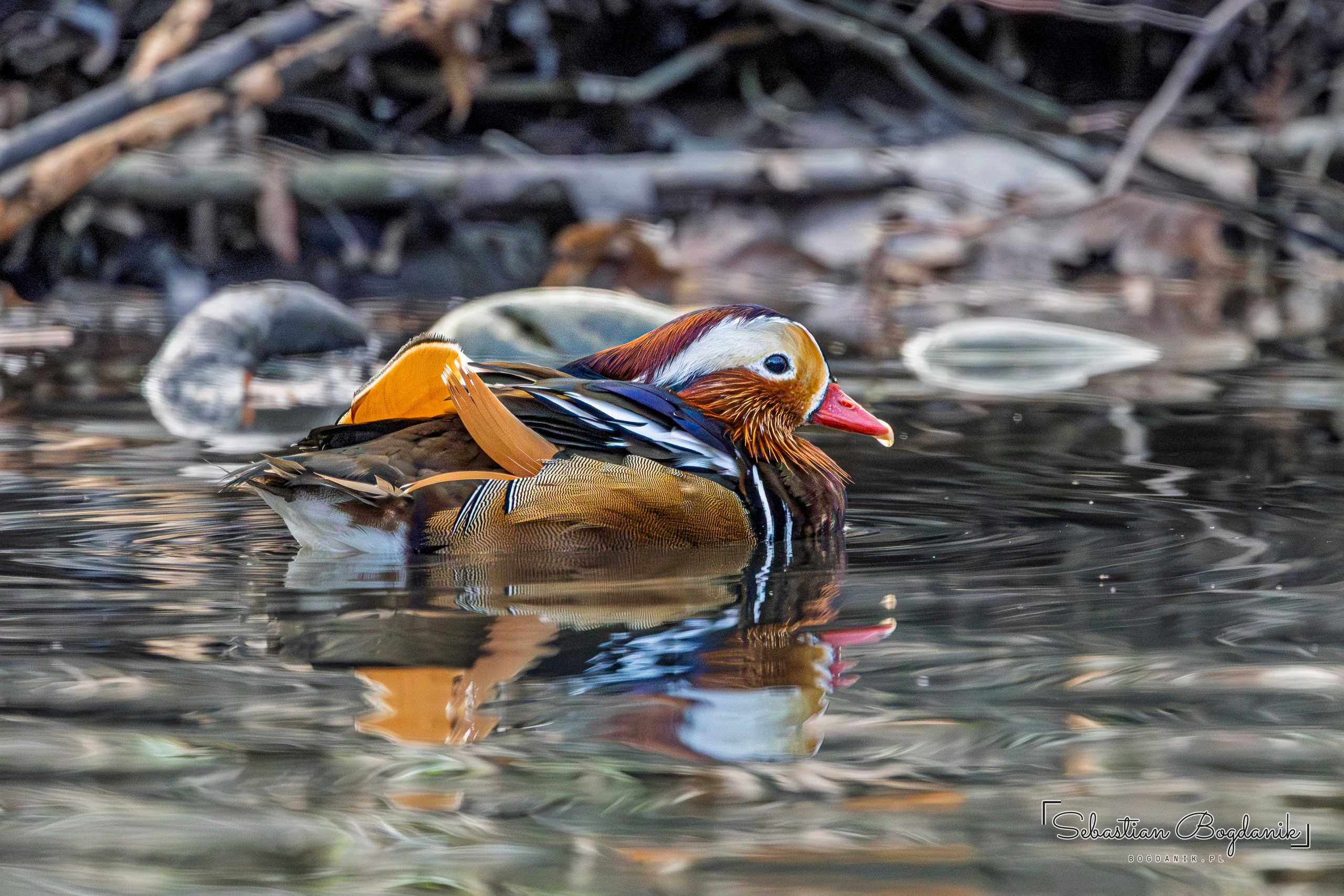
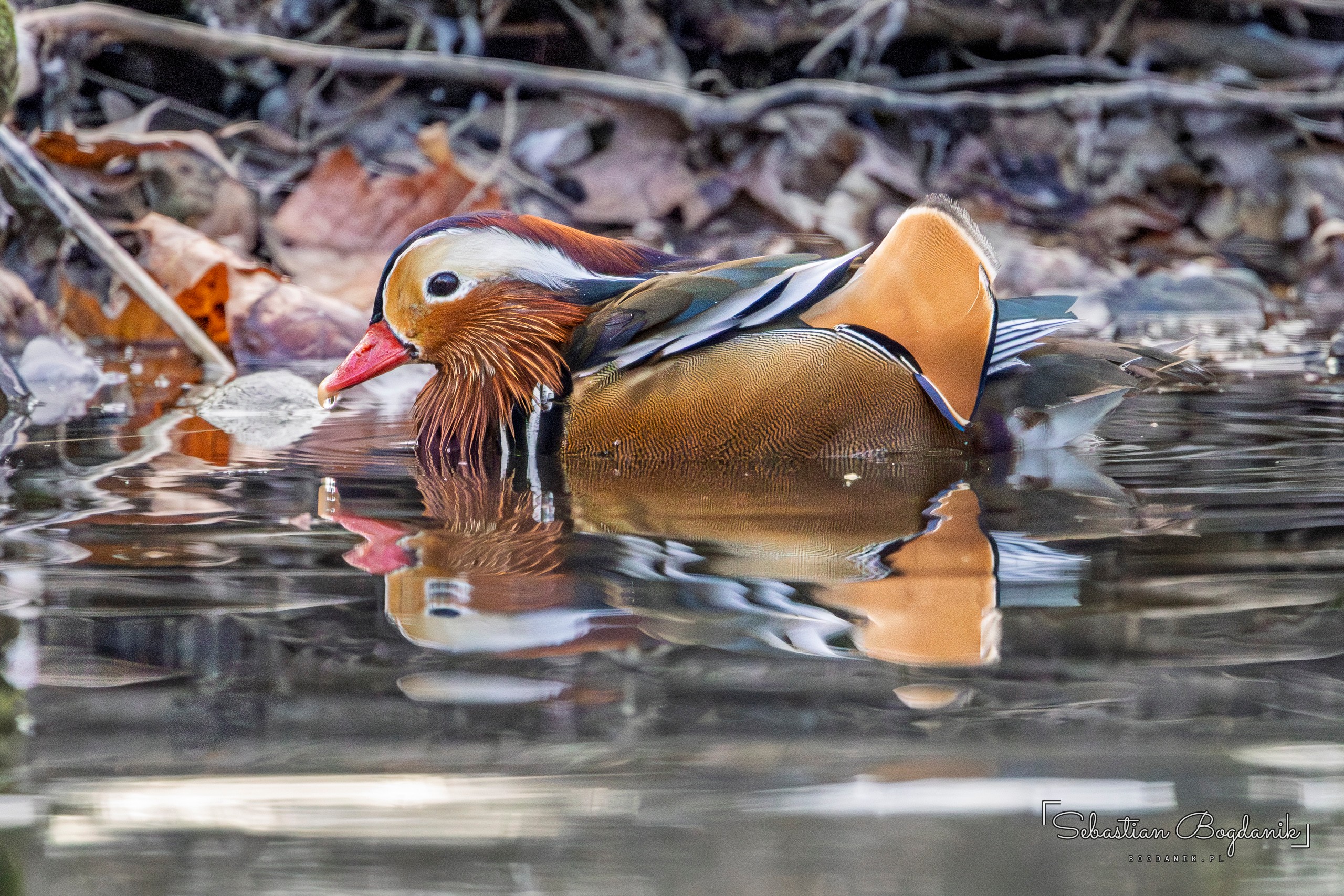
In China a pair of mandarins is a symbol of marital fidelity and a common motif on wedding gifts. In nature it varies: pairs usually form for a single breeding season.
Domestic ducks, hybrids and the Indian Runner
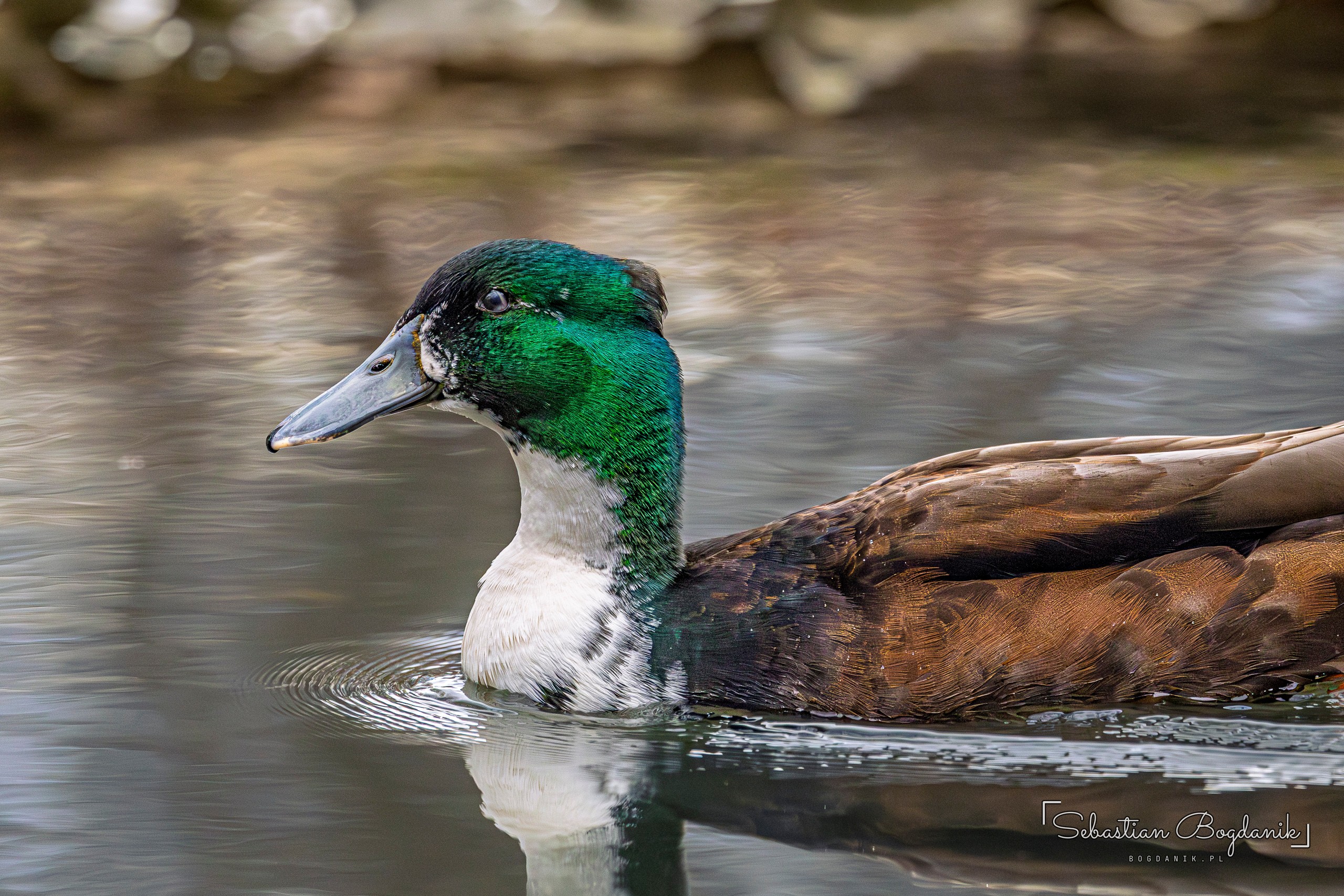
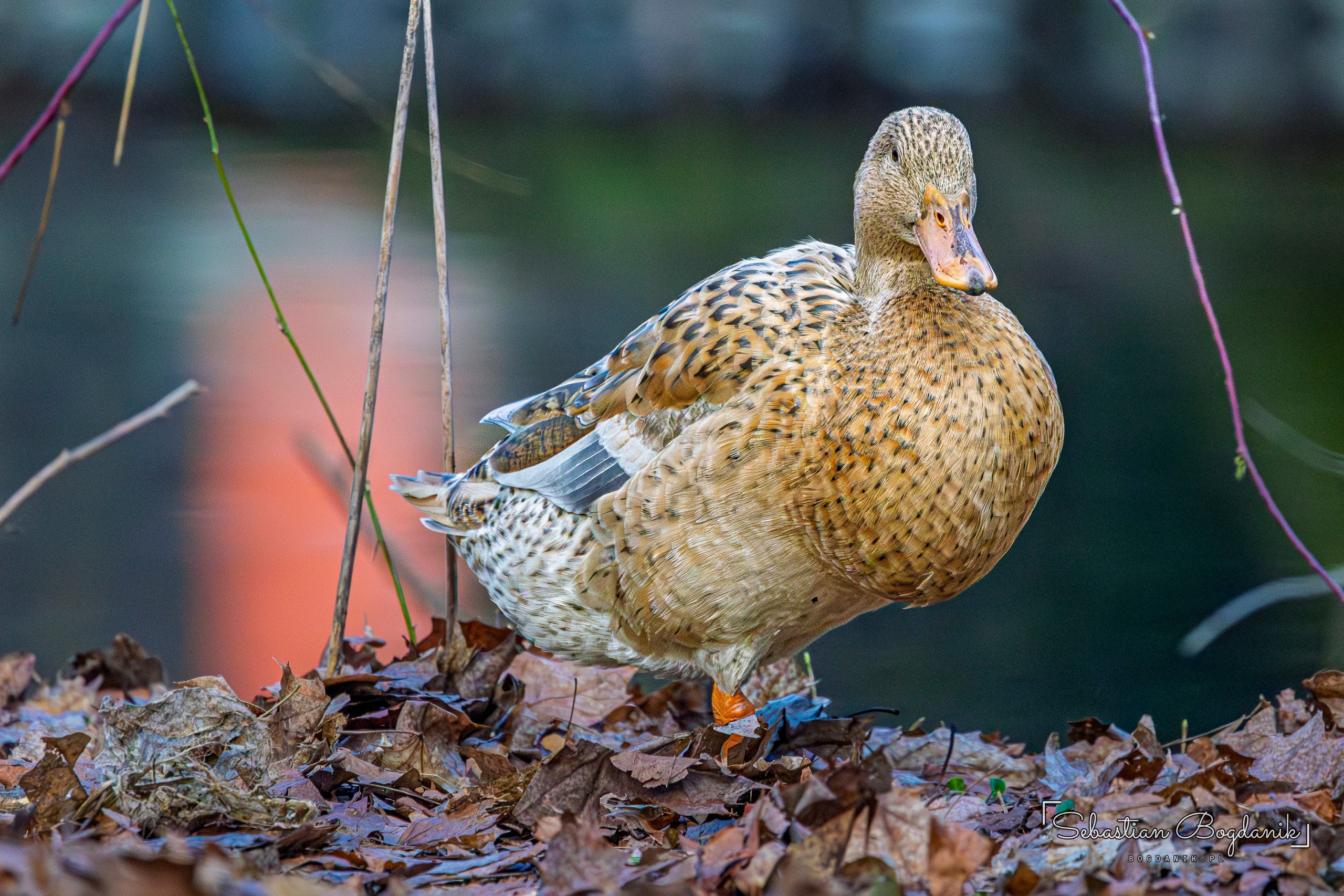
Every park has a few ducks you will not find in a field guide. These are domestic breeds, abandoned or released, and their hybrids with wild mallards. Hence collars that are too broad, mottled heads and green heads on brown bodies.
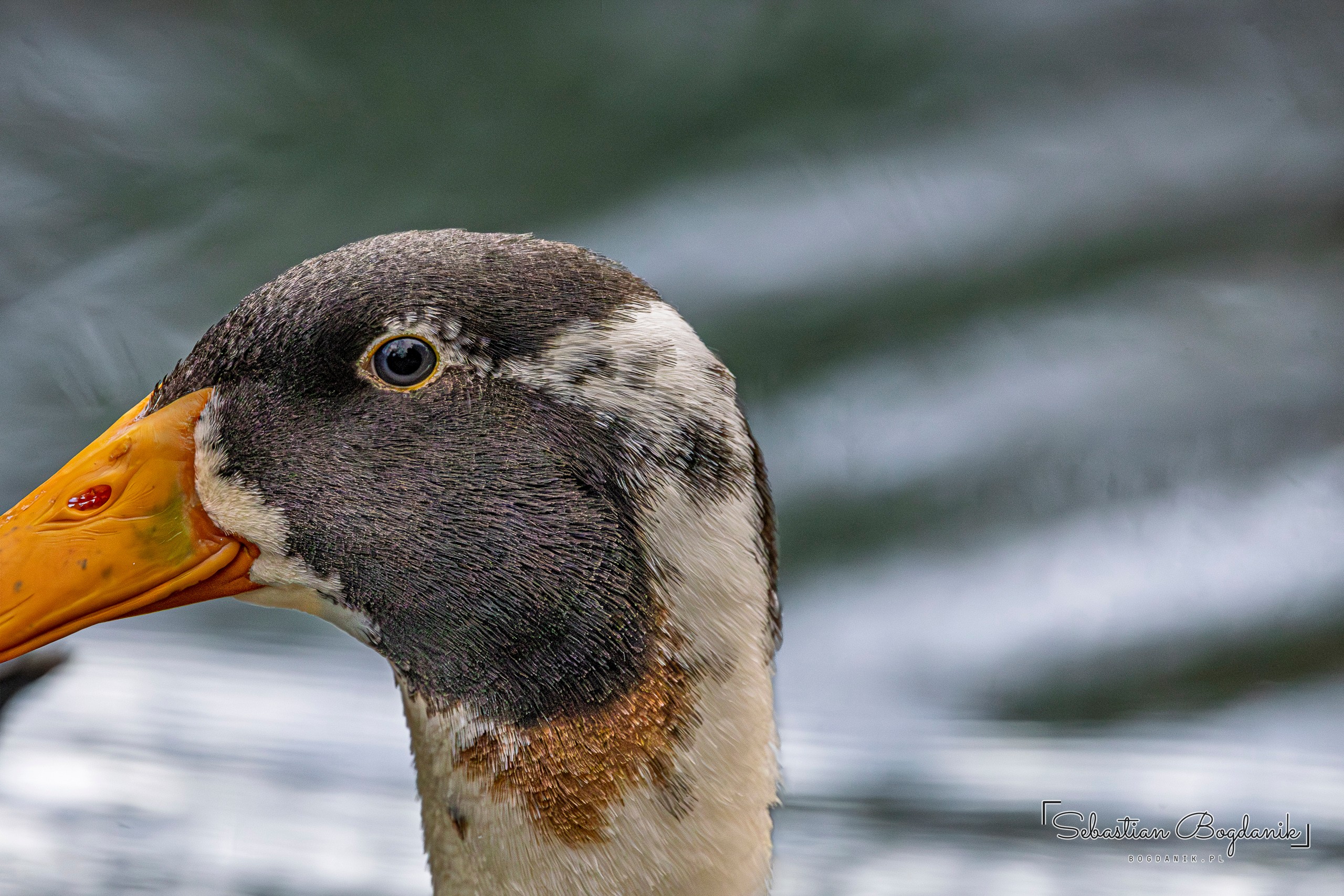
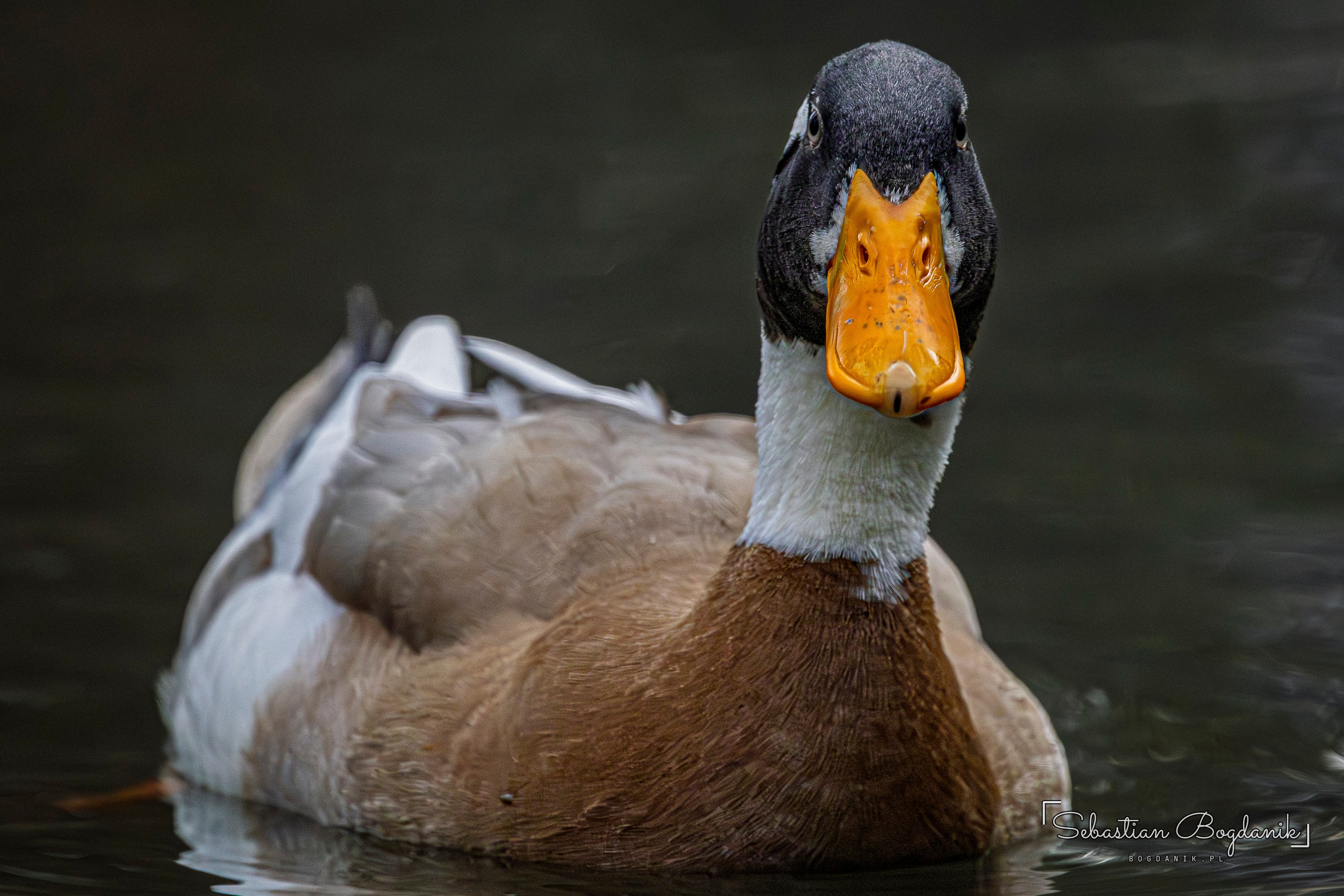
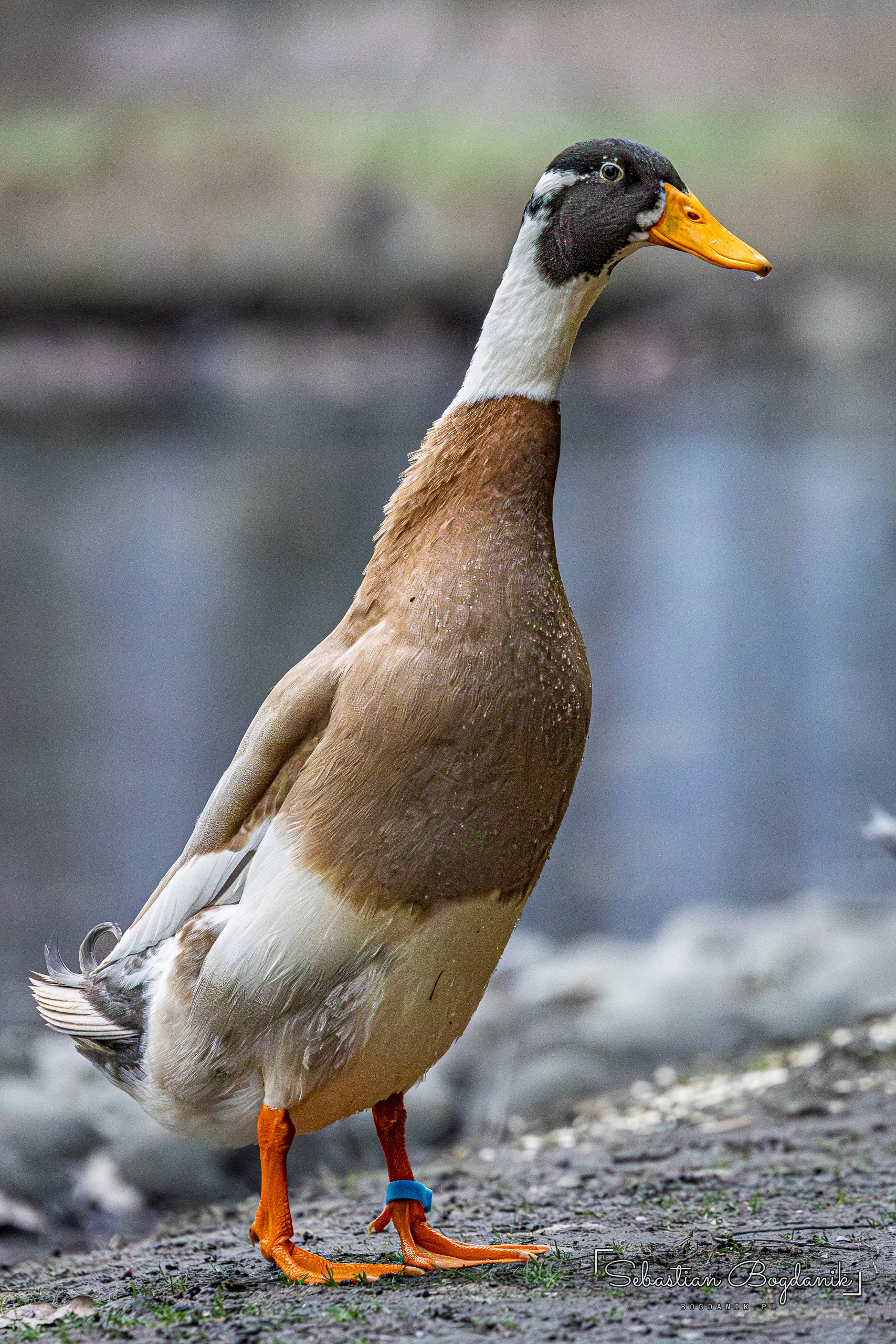
The funniest is the Indian Runner. It stands almost upright, like a penguin, and cannot fly, but it walks and runs fast. The name is misleading: the breed comes from the Malay Archipelago and reached Europe in the 19th century. It is kept for eggs and for clearing slugs from gardens. The one in Żywiec wears a blue ring on its leg.
The Muscovy, a duck from outside the family
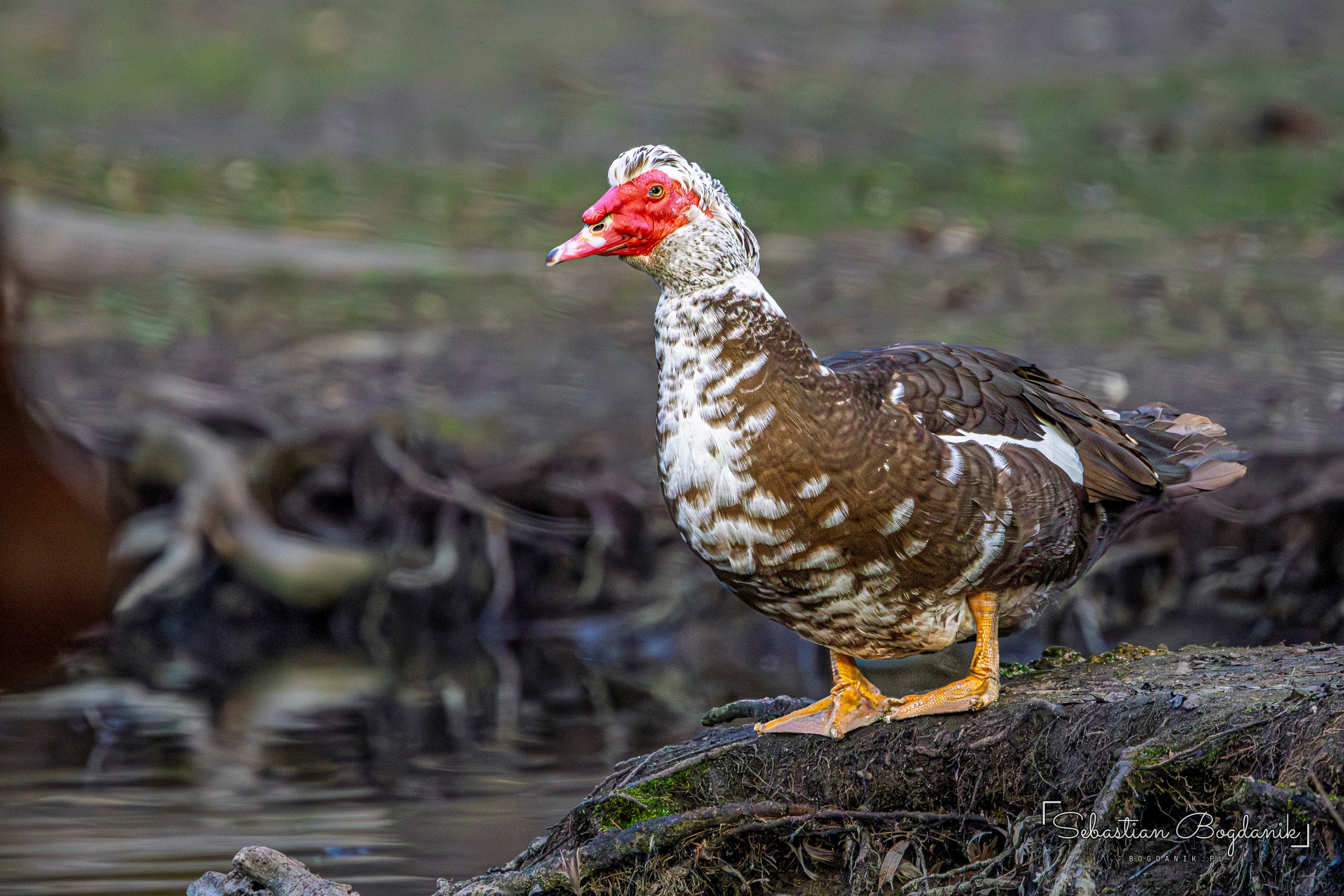
This is the exception. The Muscovy is the only domesticated duck that does not descend from the mallard. Its wild ancestor lives in Central and South America, and it was domesticated by Native Americans long before Columbus arrived. It is easy to recognise by the red, warty caruncles around the eyes and bill. It hardly quacks; it hisses instead. Wild Muscovies roost in trees and have claws for climbing. Hybrids of the Muscovy and the domestic duck, known as mulards, are sterile.
The blackbird that moved to town
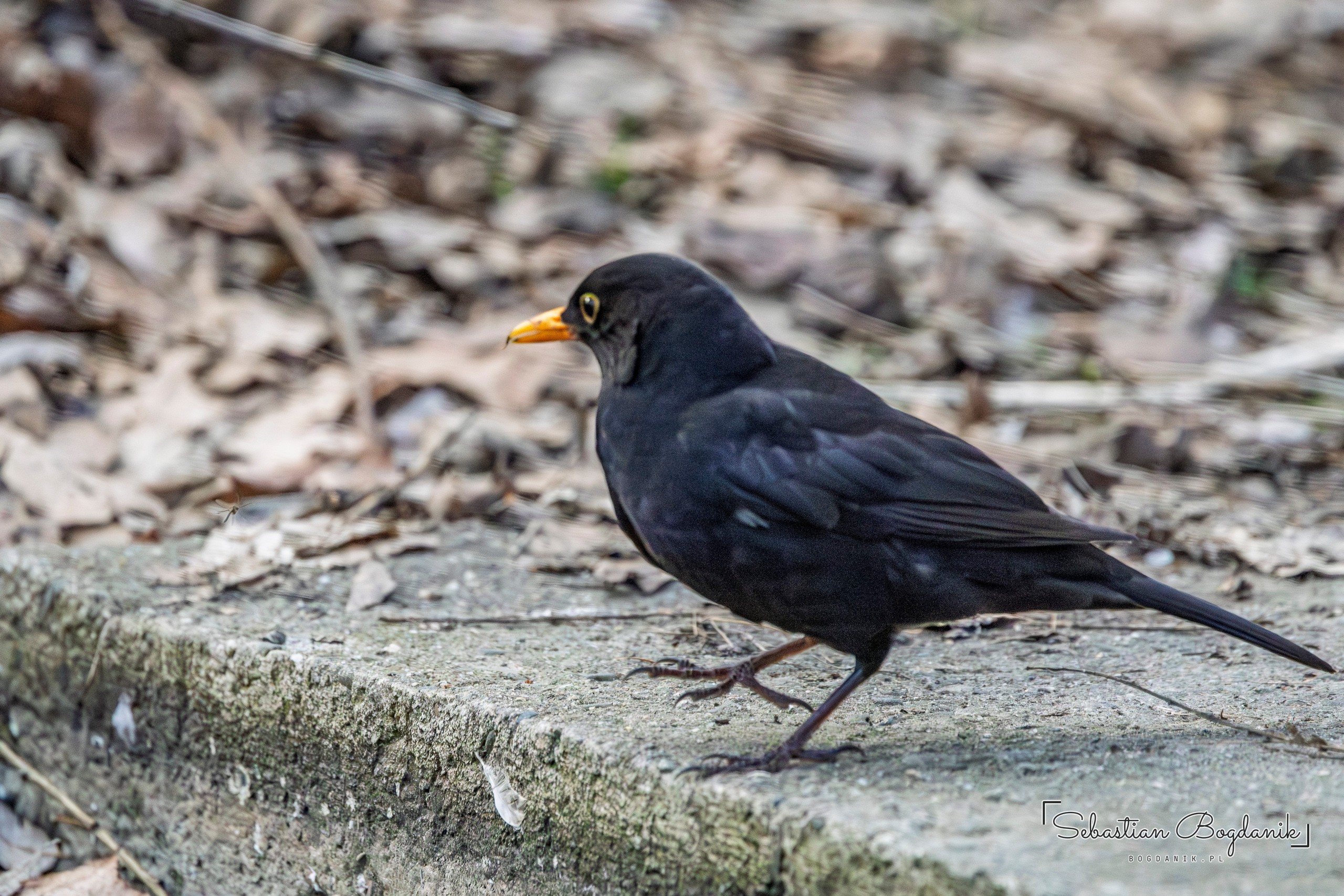
Two hundred years ago the blackbird was a shy forest bird in Europe. It began moving into towns in the 19th century, and today parks can hold more of them than forests. The male is black, with a yellow bill and a yellow eye ring; the female is brown. Towards the end of winter the males start singing, preferably at dawn and dusk, from high branches and rooftops.
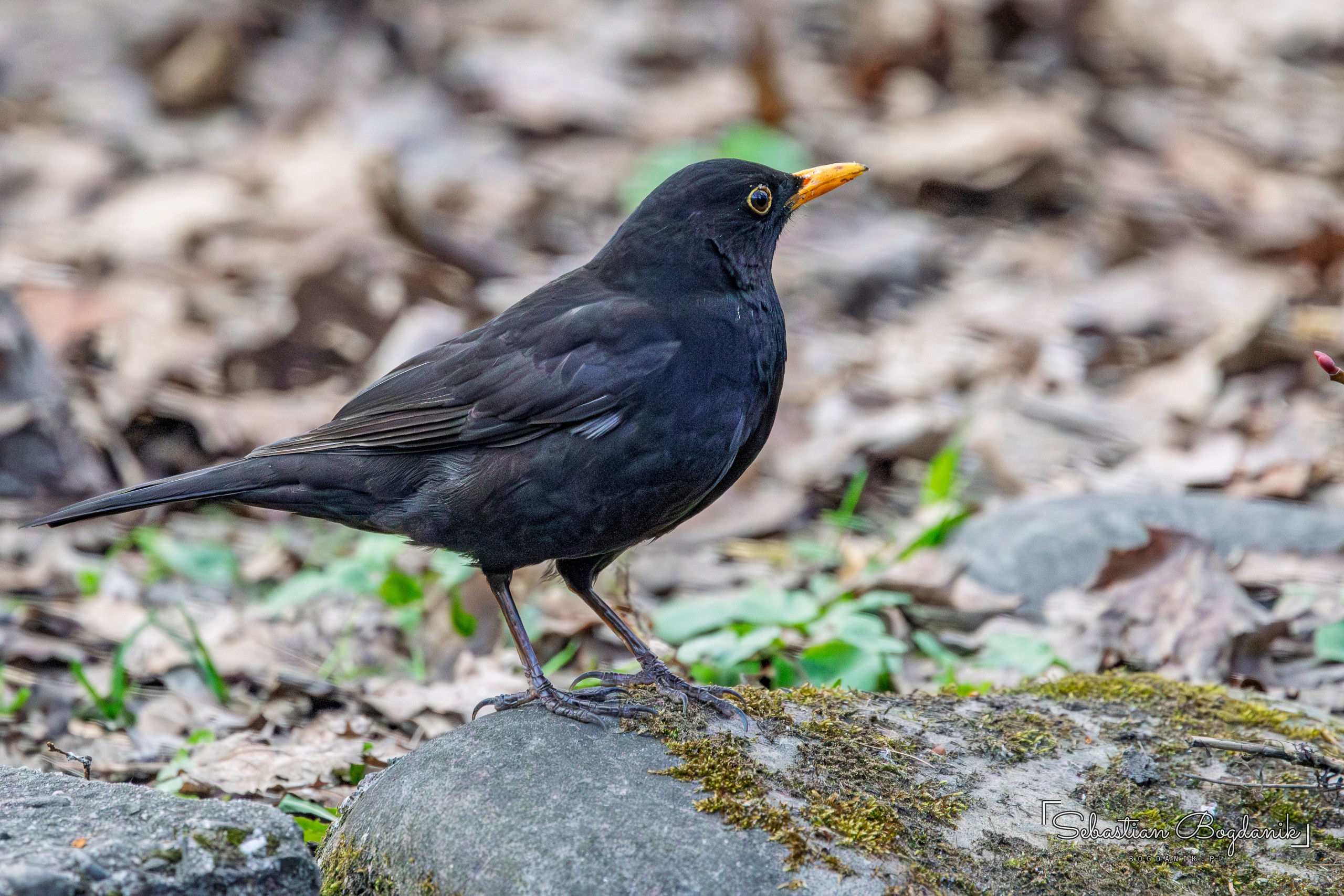
On the ground the blackbird works mainly with its bill: it flicks leaves aside and listens for earthworms.
The chaffinch, a bachelor by name
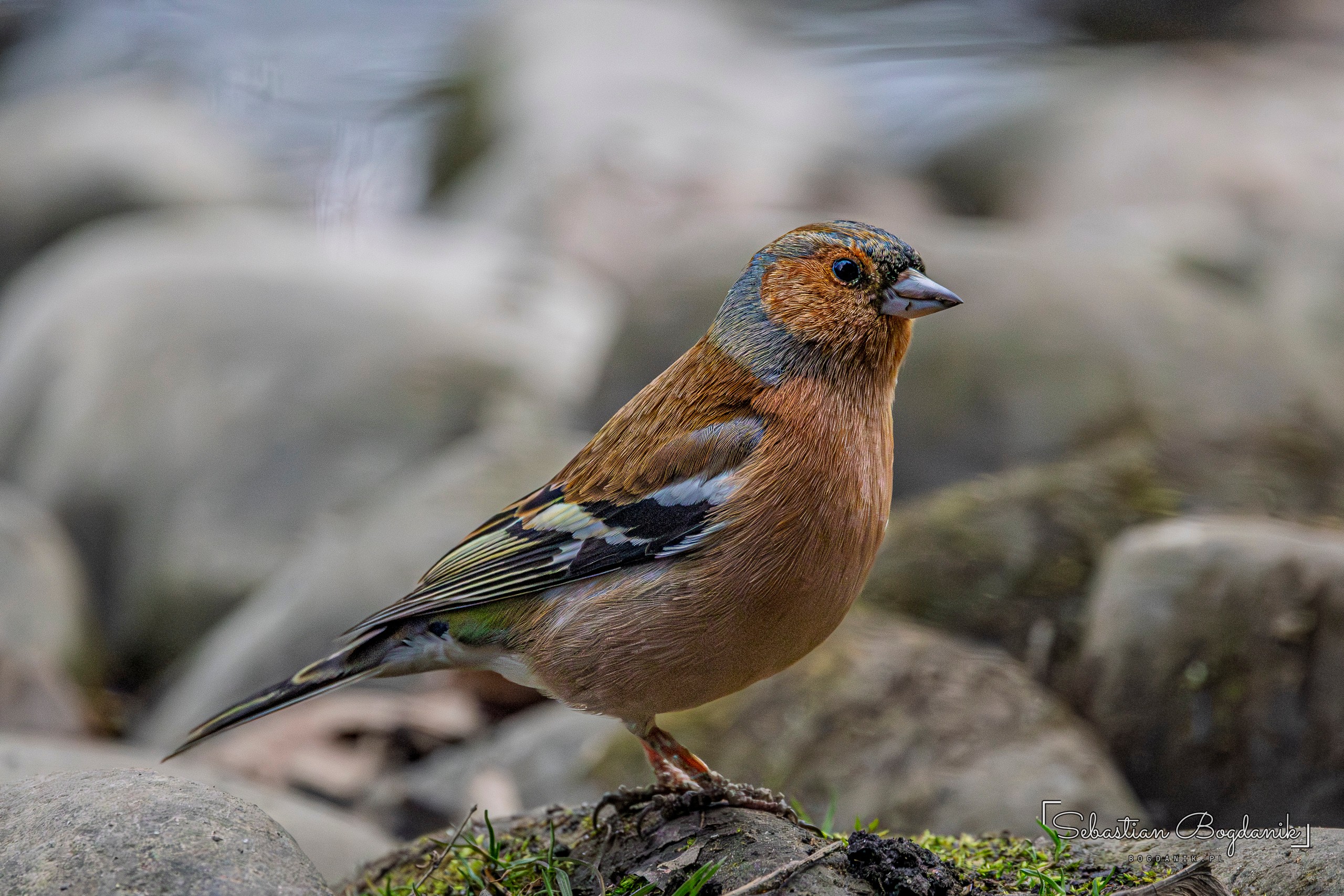
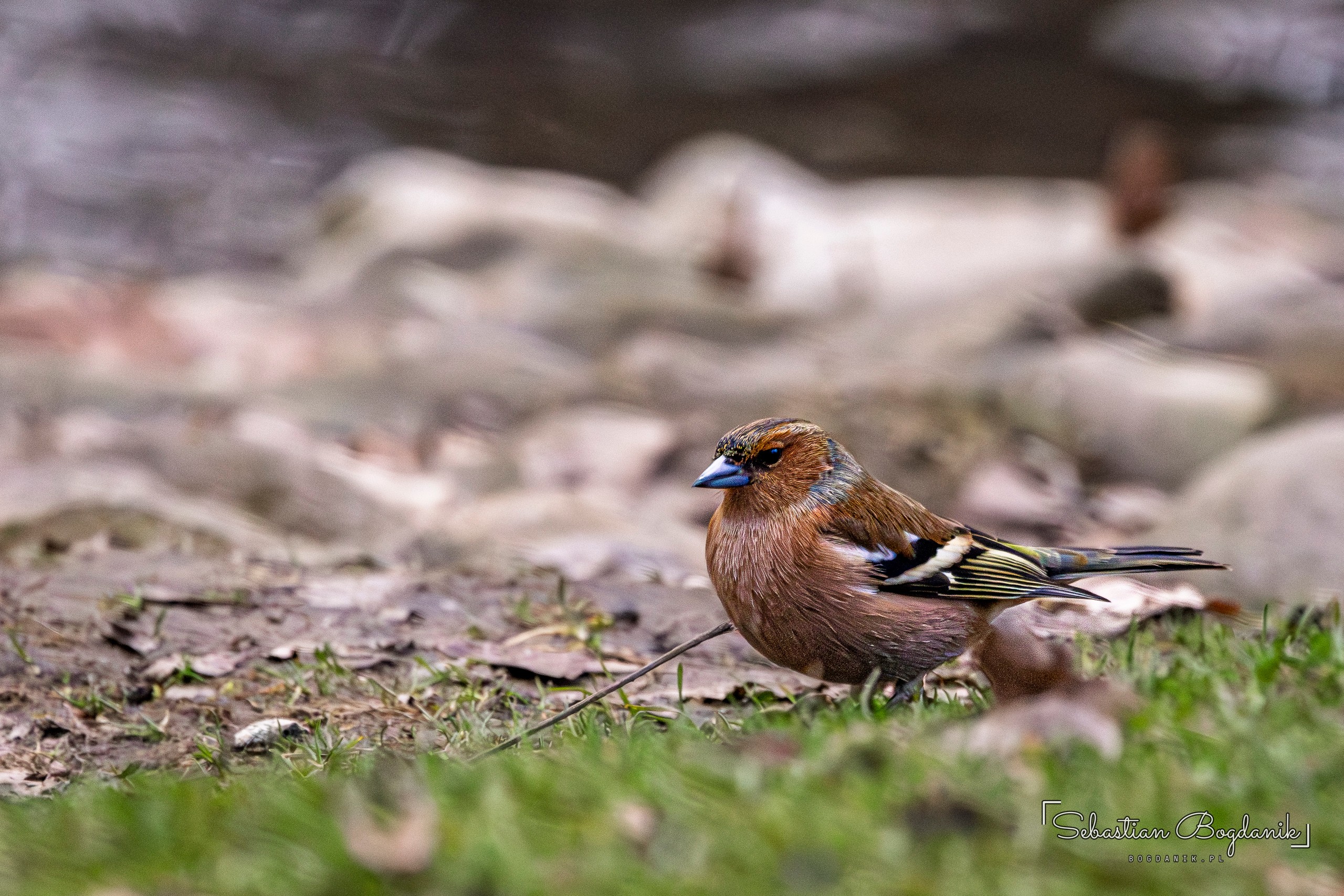
The chaffinch is one of the most numerous breeding birds in Poland. Its Latin name, Fringilla coelebs, means roughly “bachelor finch”. Linnaeus gave it that name because in Sweden mainly males stayed for the winter, while the females flew south. In spring the male has a blue grey cap, a rusty breast and white wing bars.
Blue tit and great tit
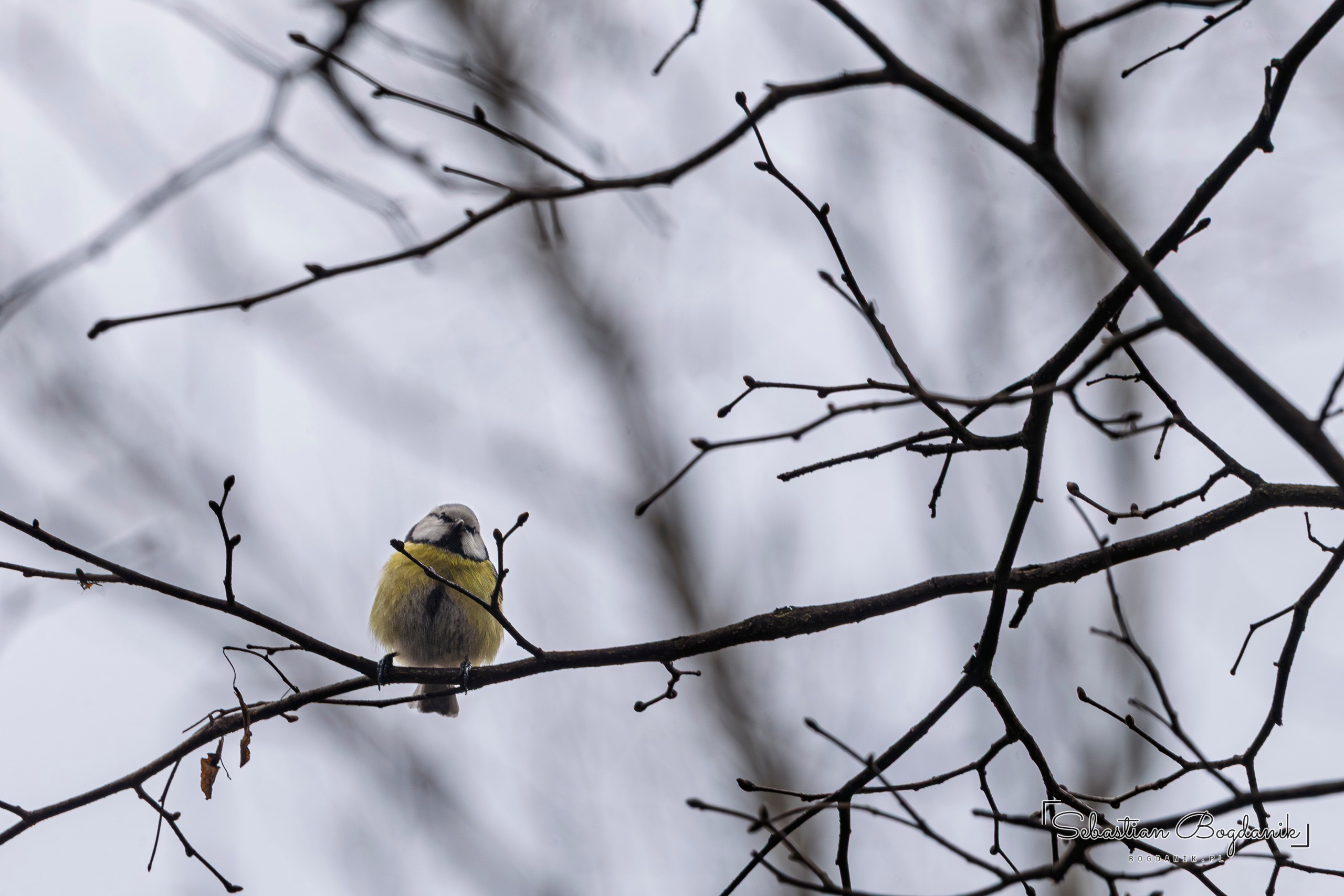
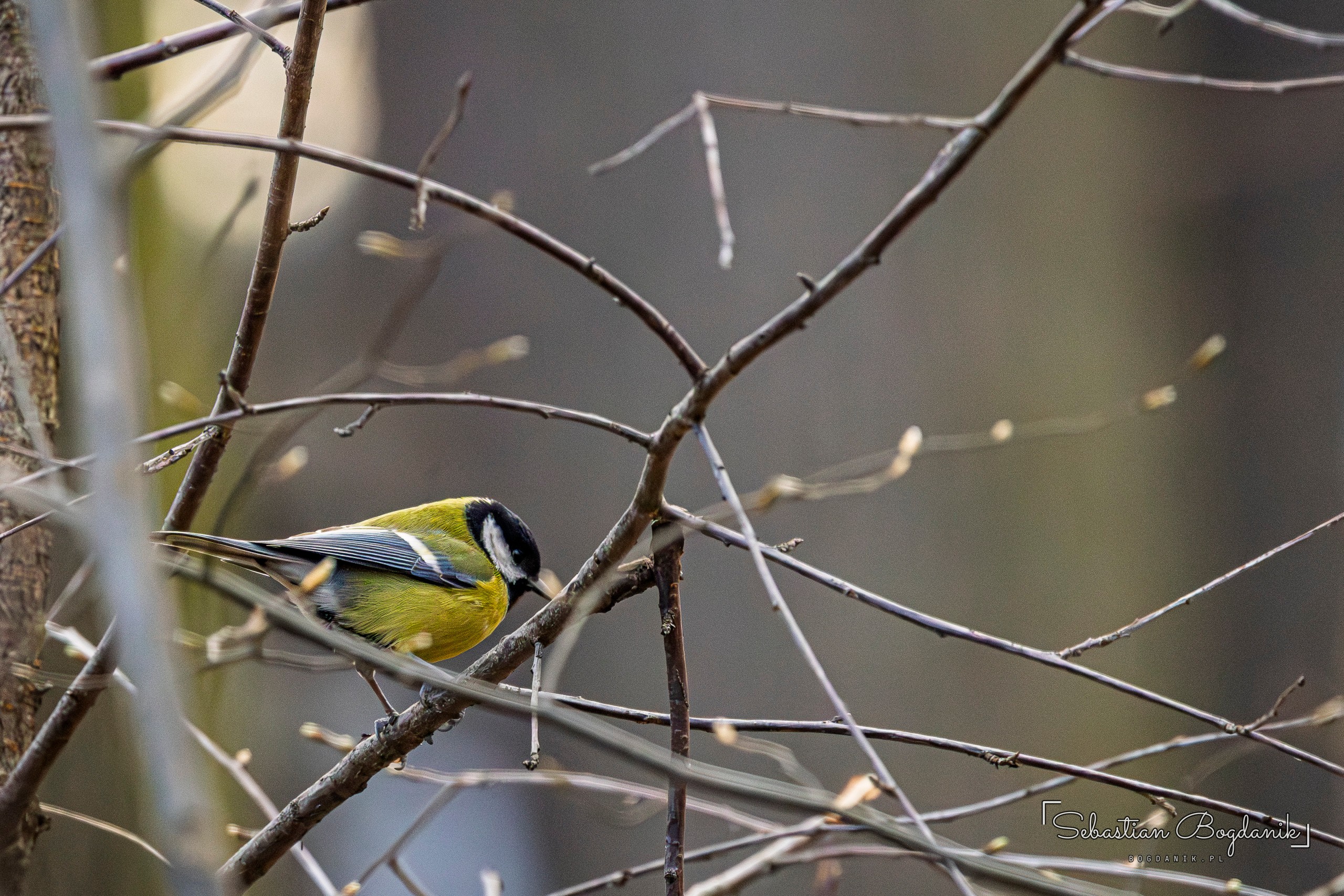
Tits were busy in the treetops. The blue tit has a blue cap and can hang upside down from the tip of the thinnest twig. The great tit is the largest of our tits. The black stripe down its yellow breast is broader in the male than in the female.
The feral pigeon
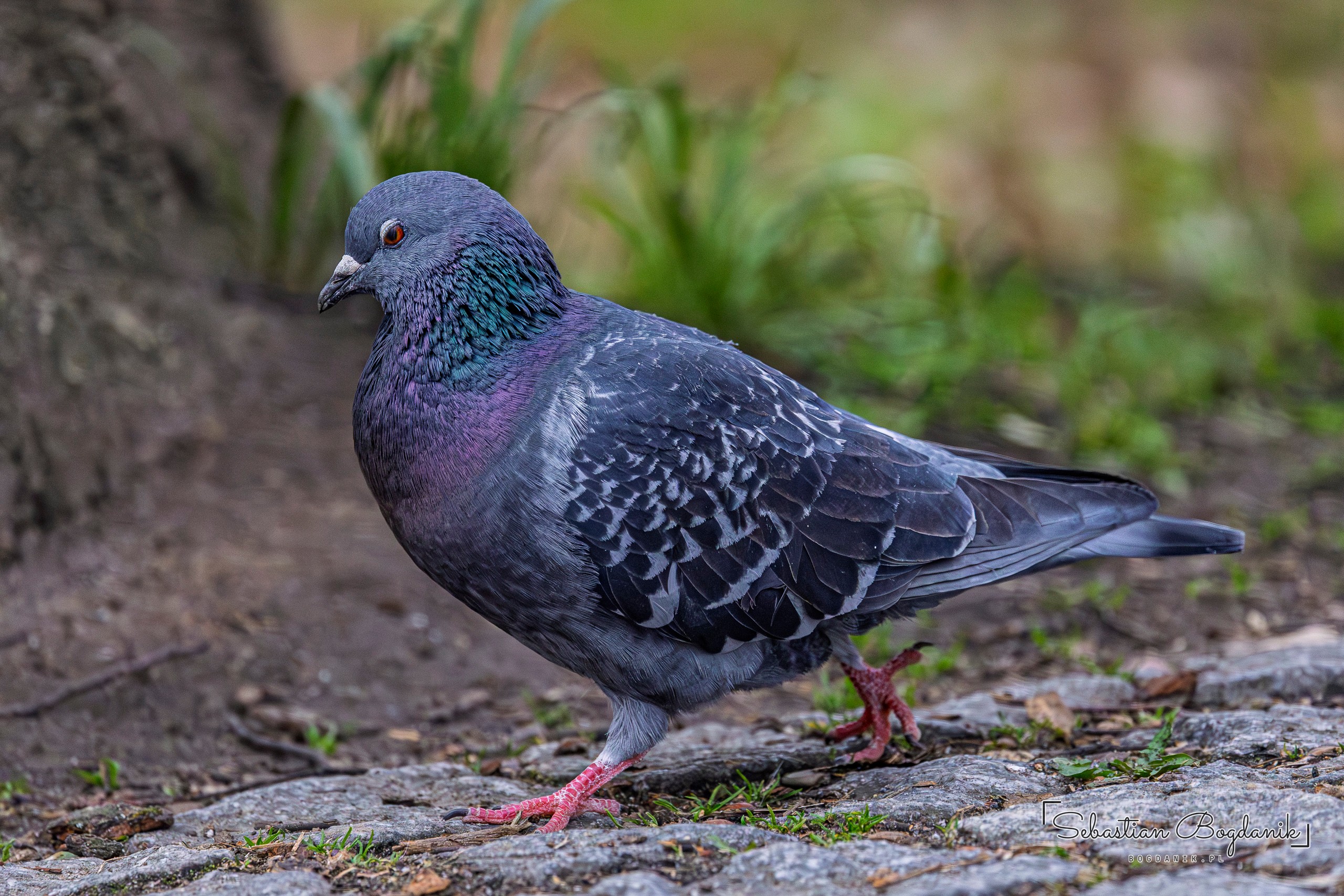
The feral pigeon descends from the wild rock dove, which nests on cliffs. In town, ledges and attics stand in for the rocks. The green and purple sheen on its neck is not pigment but light split by the structure of the feathers. It changes with every movement of the head.
Behind the wire
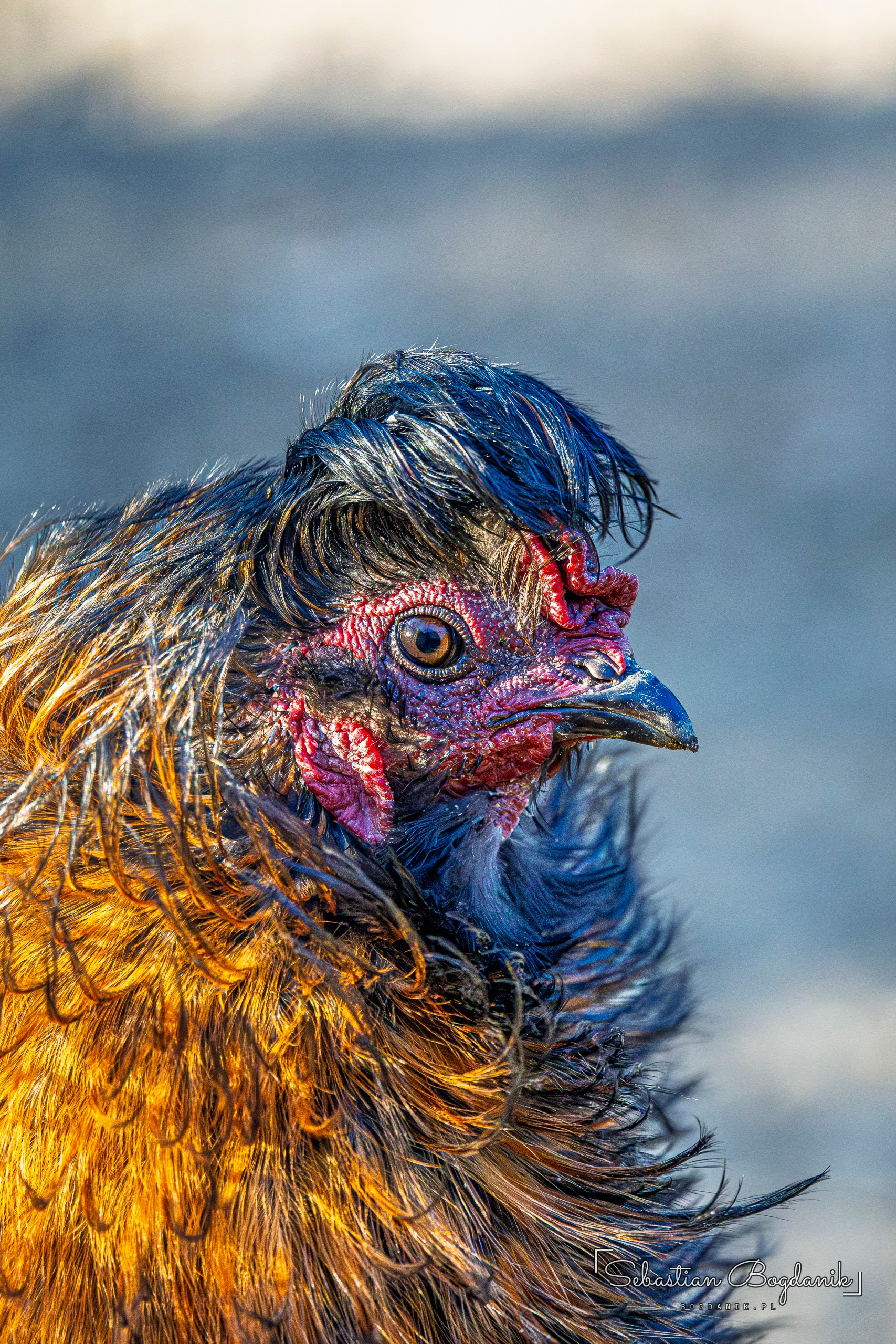
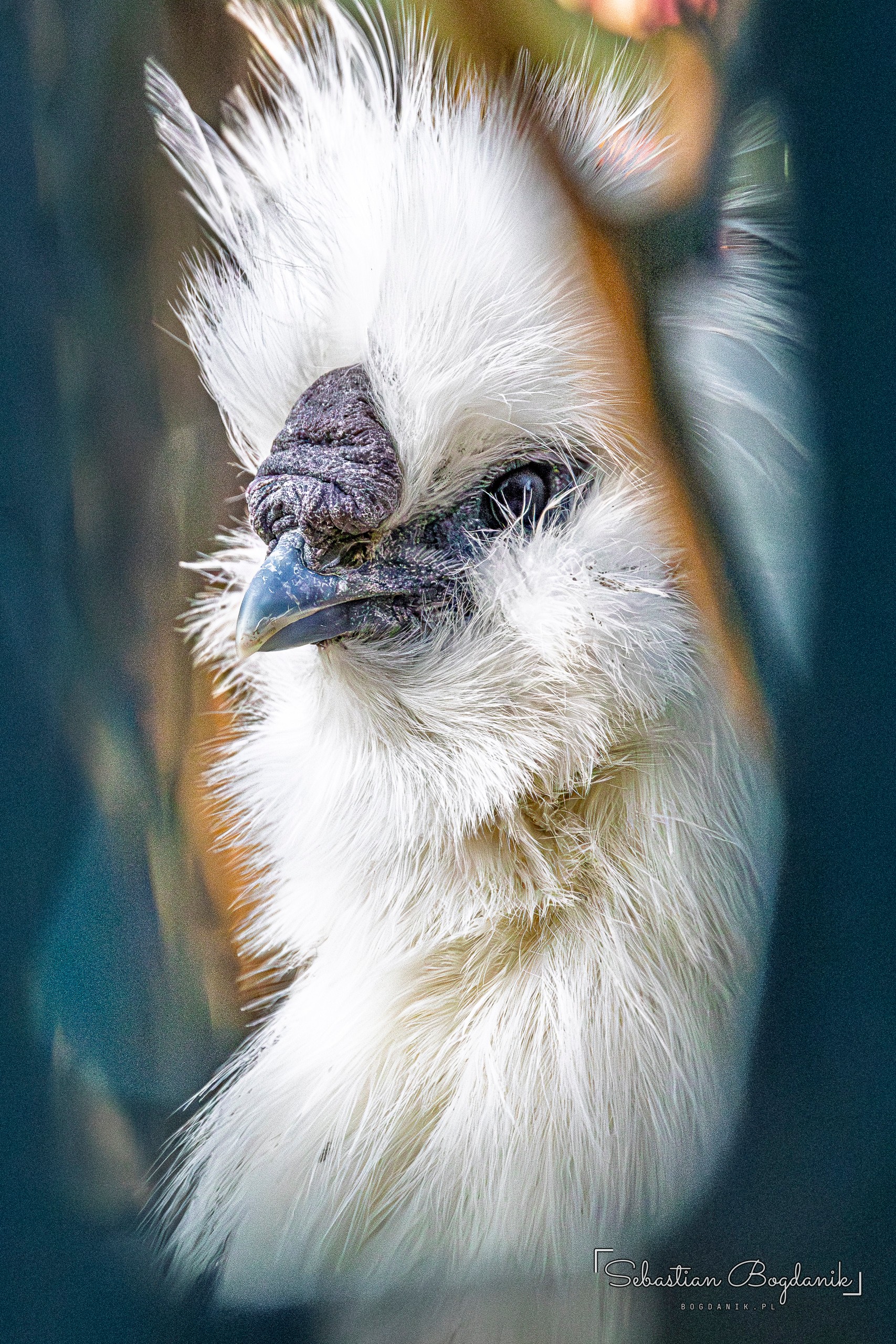
Finally, after half past four, ornamental hens behind the wire. One with a tousled crest, the other a Silkie. A Silkie’s feathers do not hook together into vanes, so they look like down or fur. The breed also has dark, almost black skin and five toes on each foot instead of four.
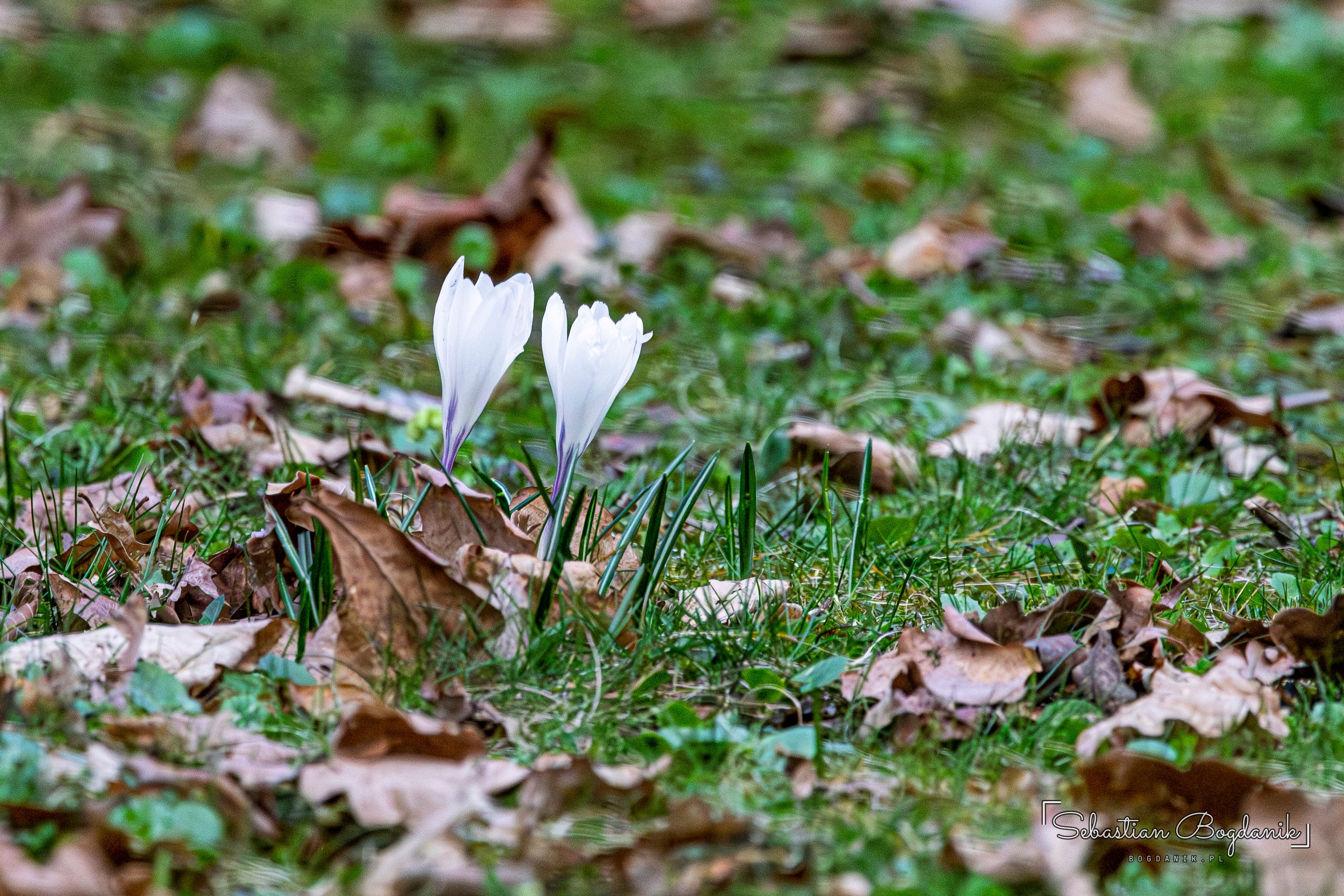
Earlier, before four, the first white crocuses had pushed up on the lawn among last year’s leaves. Spring in the park starts from the ground.
More from Żywiec and the Beskids
A few frames from this walk also appear in 2026 in Frames. From Żywiec there is also a photo story from a vintage computer show, RETRO ŚWIAT 5 in Żywiec, and from the Beskids a record of the night the northern lights appeared over the mountains.
The history of the park follows the heritage record of the National Heritage Board of Poland and the Żywiec Town Hall website; the figures on natural monuments come from a 2017 paper in Inżynieria Ekologiczna.
Photographs and observations: Sebastian Bogdanik. Castle Park, Żywiec, 21 March 2026, 14:55 to 16:41.