The best-selling home computer in history was the work of a boy from Łódź, Poland, and for a while Poland was the biggest Atari market in the world. These and other stories hide inside the hardware I photographed on 5 September 2026 at the RETRO ŚWIAT (Retro World) exhibition in Żywiec, southern Poland. This is not an event report but a guide: dozens of machines, their fortunes, versions and trivia.
Contents
- The exhibition in a nutshell
- Commodore: from typewriters to the Amiga
- Atari: Poland's first love
- Sinclair and clones: rubber keys and a Timex from Portugal
- Before the Pegasus: the age of Pong
- Consoles: from the Pegasus to the PlayStation 3
- Other computers: Amstrad, Sharp and PCs
- Video and home electronics
1. The exhibition in a nutshell
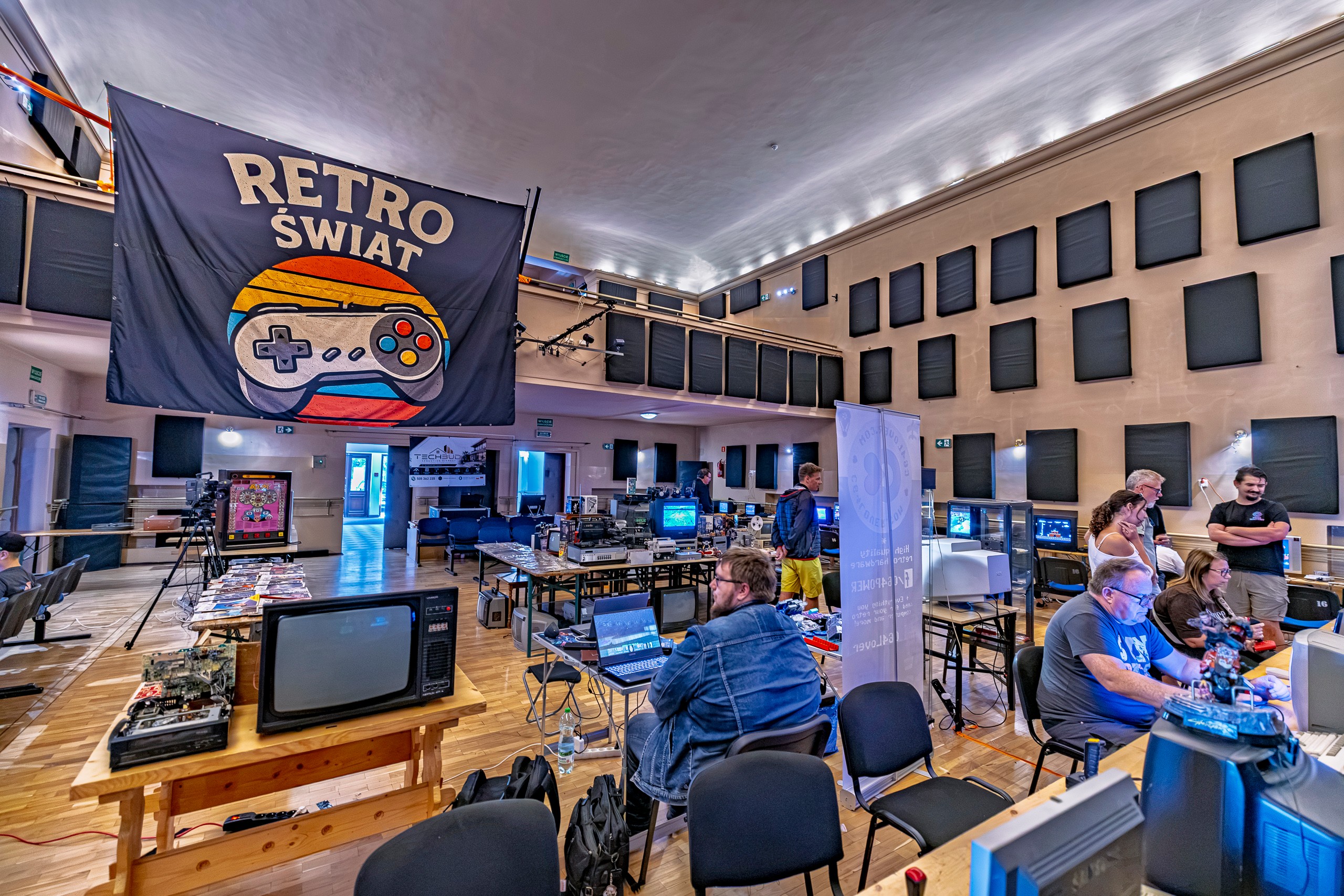
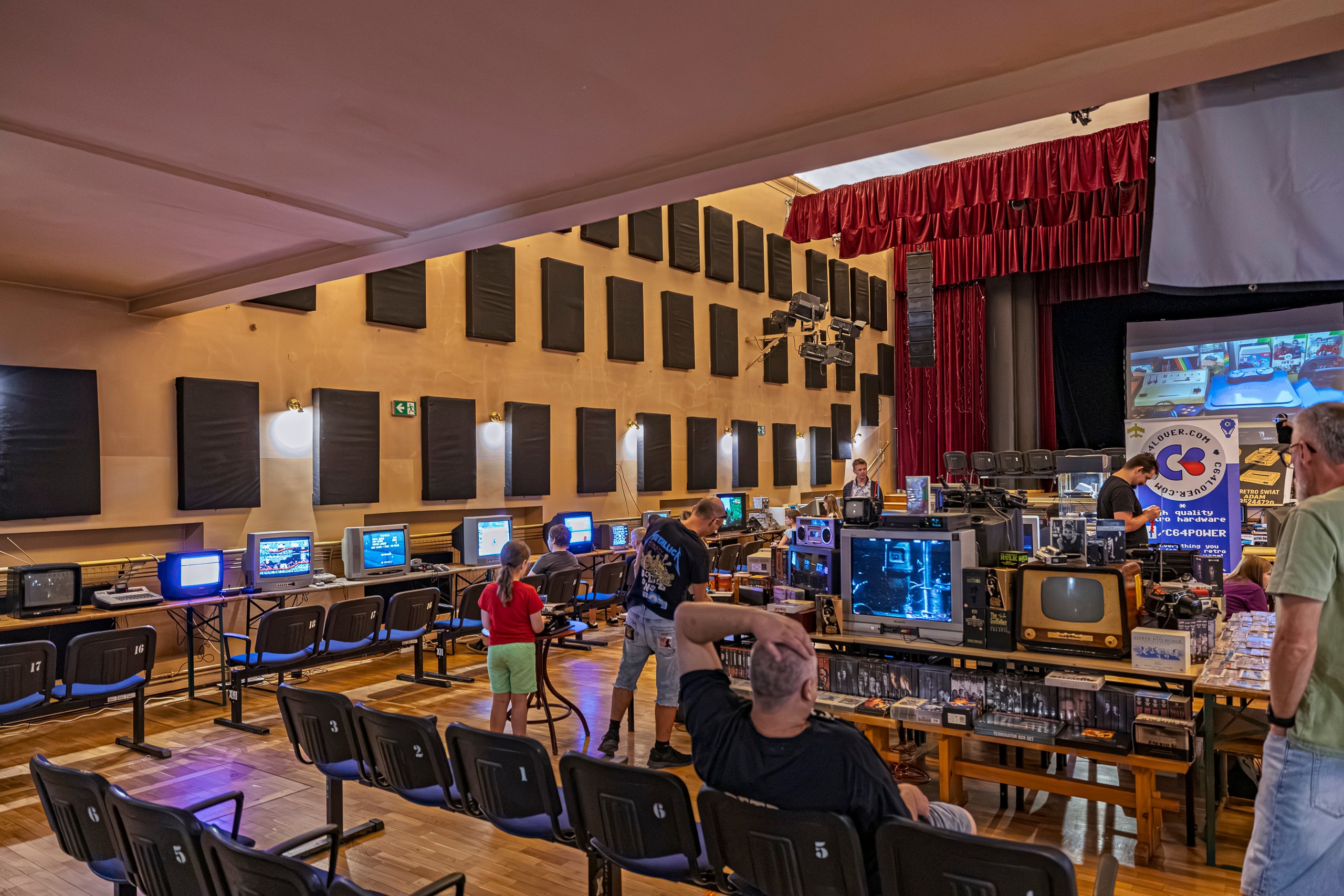
The fifth RETRO ŚWIAT took place at the Municipal Culture Centre (MCK) in Żywiec (al. Wolności 4) from 4 to 6 September 2026, with free admission. Around 50 stations held working computers and consoles from the 1970s, 80s, 90s and early 2000s. You could look, but above all you could play. On top of that: a display of old TV and audio gear, contests and film screenings from VHS tapes.
2. Commodore: from typewriters to the Amiga
The boy from Łódź
The man who sold millions of people the best-selling home computer in history was born in 1928 in Łódź as Idek Trzmiel (some sources, Polish ones included, give his first name as Jacek). Yes, his surname simply means "bumblebee" in Polish. In 1939, as a Jewish boy, he was confined with his family to the Łódź ghetto, and in 1944 he was sent to Auschwitz. He survived because he was fit for work. His father did not.
After the war he emigrated to the United States, changed his name to Jack Tramiel, learned to repair office machines in the army and in 1953 bought a typewriter repair shop in the Bronx, New York. He called it Commodore Portable Typewriter. Two years later he moved the company to Toronto. For two decades Commodore sold typewriters, then calculators. Computers came in the late 1970s.
Commodore PET 8032-SK: a computer for the office
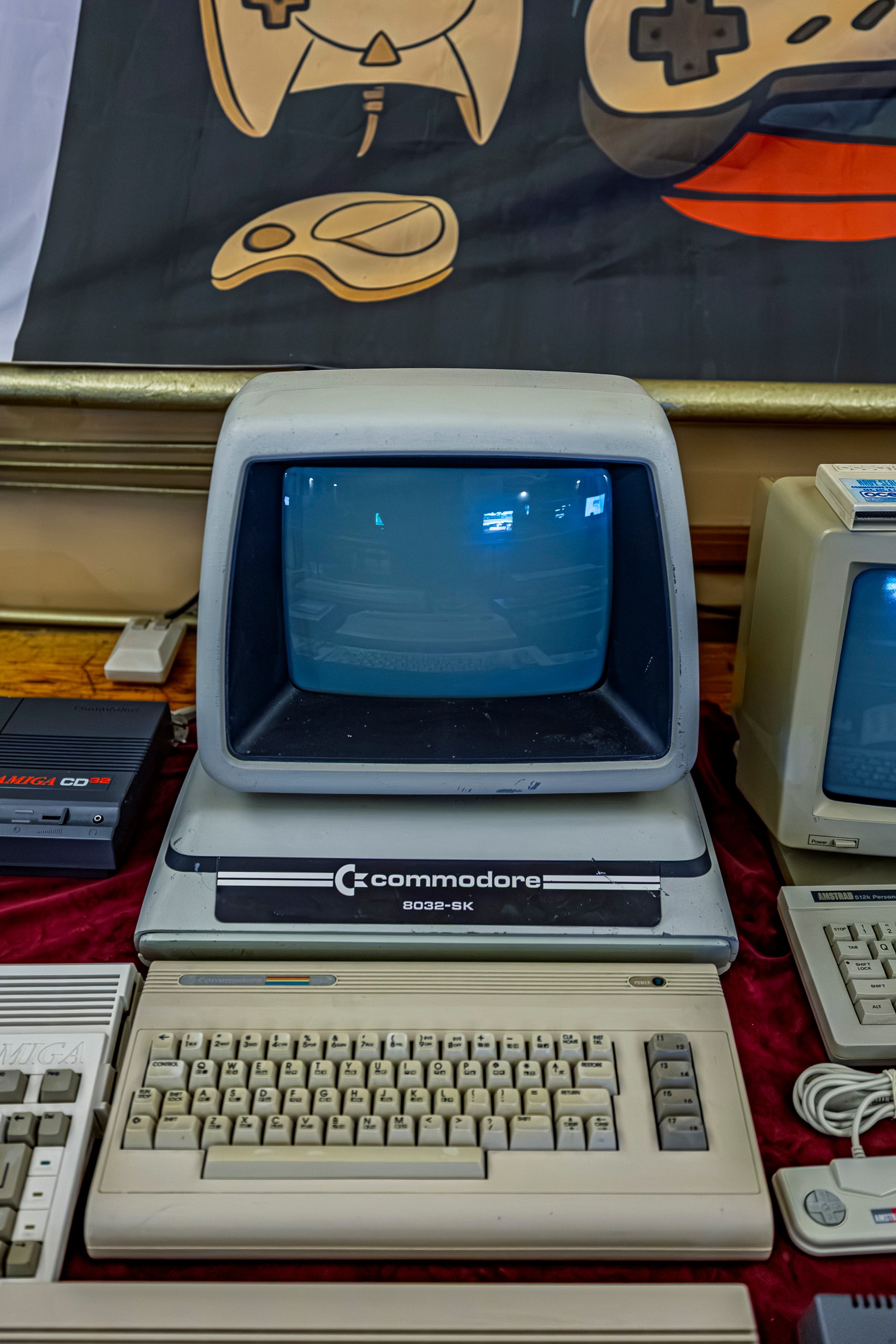
The PET (Personal Electronic Transactor) debuted in January 1977 at CES, alongside the Apple II and the TRS-80. The first PET had everything in one case: monitor, keyboard and cassette deck. The model in the photo is its mature office version. The name is a user manual in itself: 80 columns of text, 32 KB of memory, SK for separate keyboard. Eighty columns was a fundamental change: 40 columns were fine for programming, but letters and spreadsheets needed the full width of a page.
Trivia: the 8032-SK case hides an engineering stopgap. The new, rounded case was ready before the new motherboard, so Commodore squeezed the old board inside and ran cables to the connectors. Legend has it that the case was designed by someone from the Porsche studio, but sources disagree. In Germany the unit alone cost 2,295 marks.
VC-20: the first million
The VIC-20 was Commodore's first colour home computer, announced in 1980. Tramiel set one condition: it had to cost less than 300 dollars. It did, and in January 1983 the VIC-20 became the first computer in history to pass one million units sold. In total about 2.5 million were sold, and at the peak the factories assembled 9,000 a day.
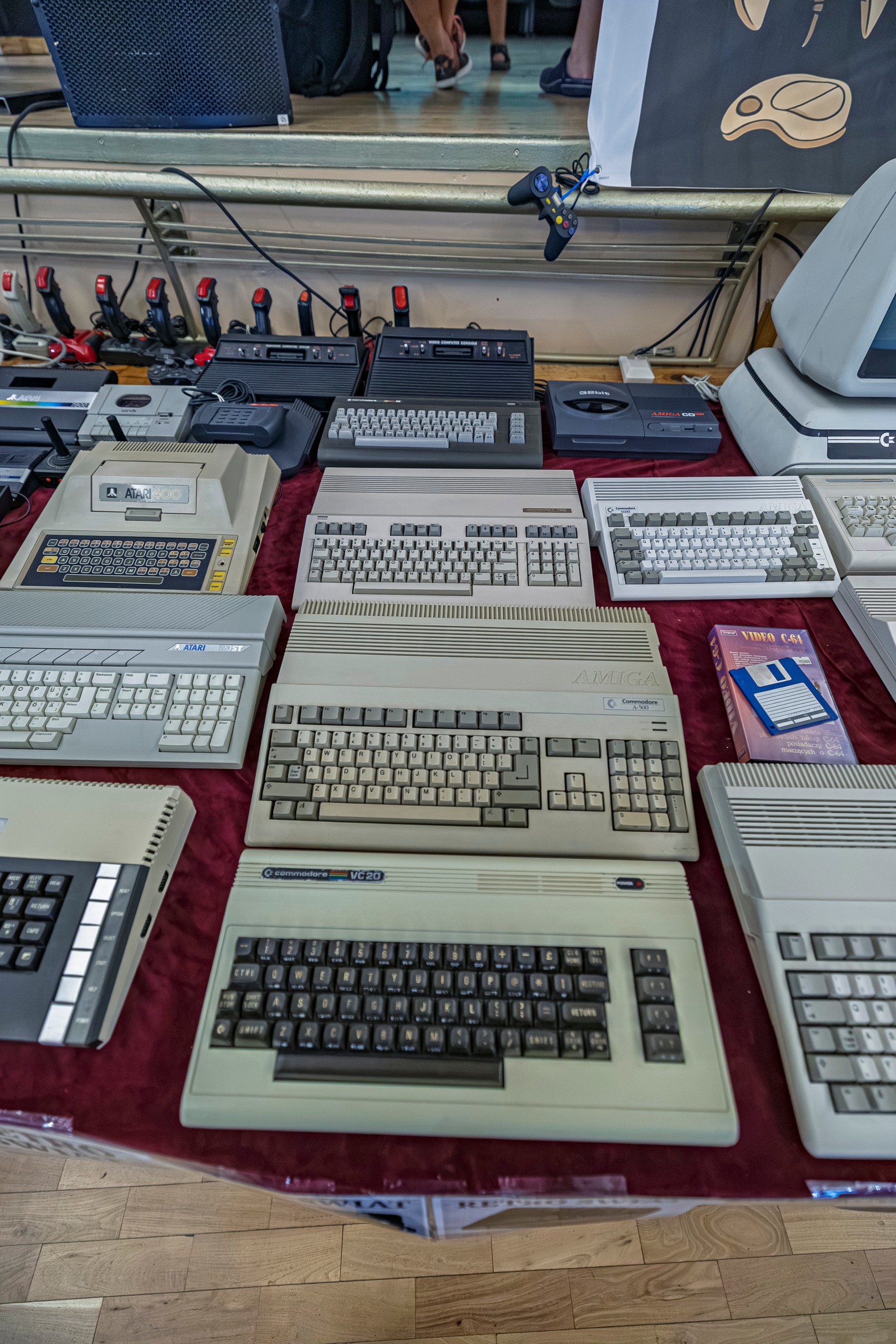
The version on the table photo: the VC-20, the variant for German-speaking markets. The case is the classic "breadbin": a tall beige body with dark keys. The first C64 later got the same shape.
Trivia: pronounced in German, "VIC" sounded like a vulgar word, so Commodore renamed it VC-20 and came up with the backronym VolksComputer, the "people's computer", like the Volkswagen. Linus Torvalds, the creator of Linux, learned to program on a VIC-20. In the US the computer was advertised by William Shatner, Captain Kirk of "Star Trek".
C64 and C64C: two faces of a bestseller
The Commodore 64 was unveiled in January 1982. A MOS 6510 processor (about 1 MHz), 64 KB of memory, VIC-II graphics with 16 colours and hardware sprites. The SID sound chip became a legend: three voices and analogue filters that sounded like a small synthesiser and still have fans in chiptune music. How do you tell the versions apart?
- C64 "breadbin" (1982-1986): a tall, brown-beige case like the VC-20.
- C64C (from 1986): a flat, light case in the style of the C128. Inside it is practically the same machine; the looks and production costs changed. The ones at the exhibition were exactly these flat models.
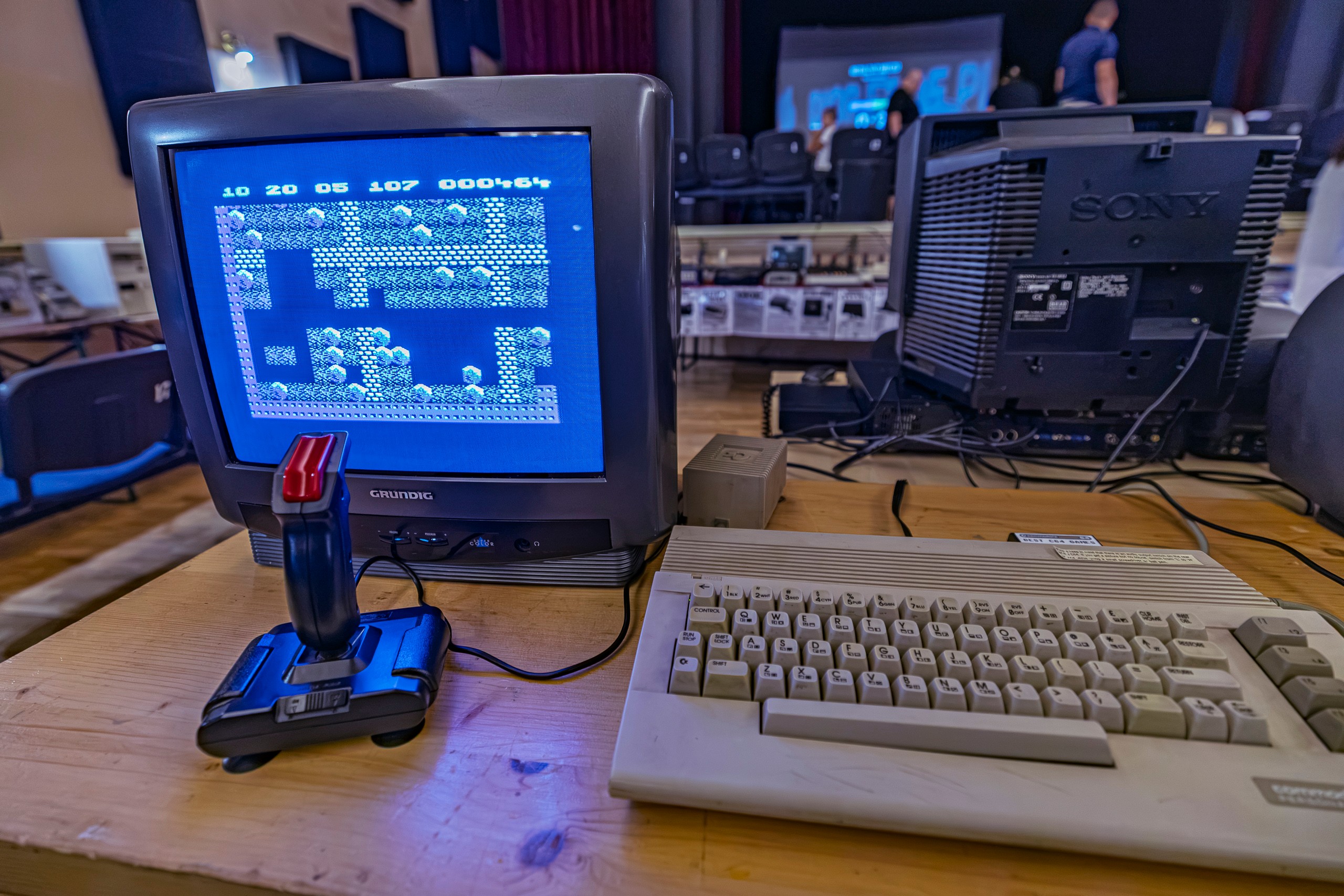
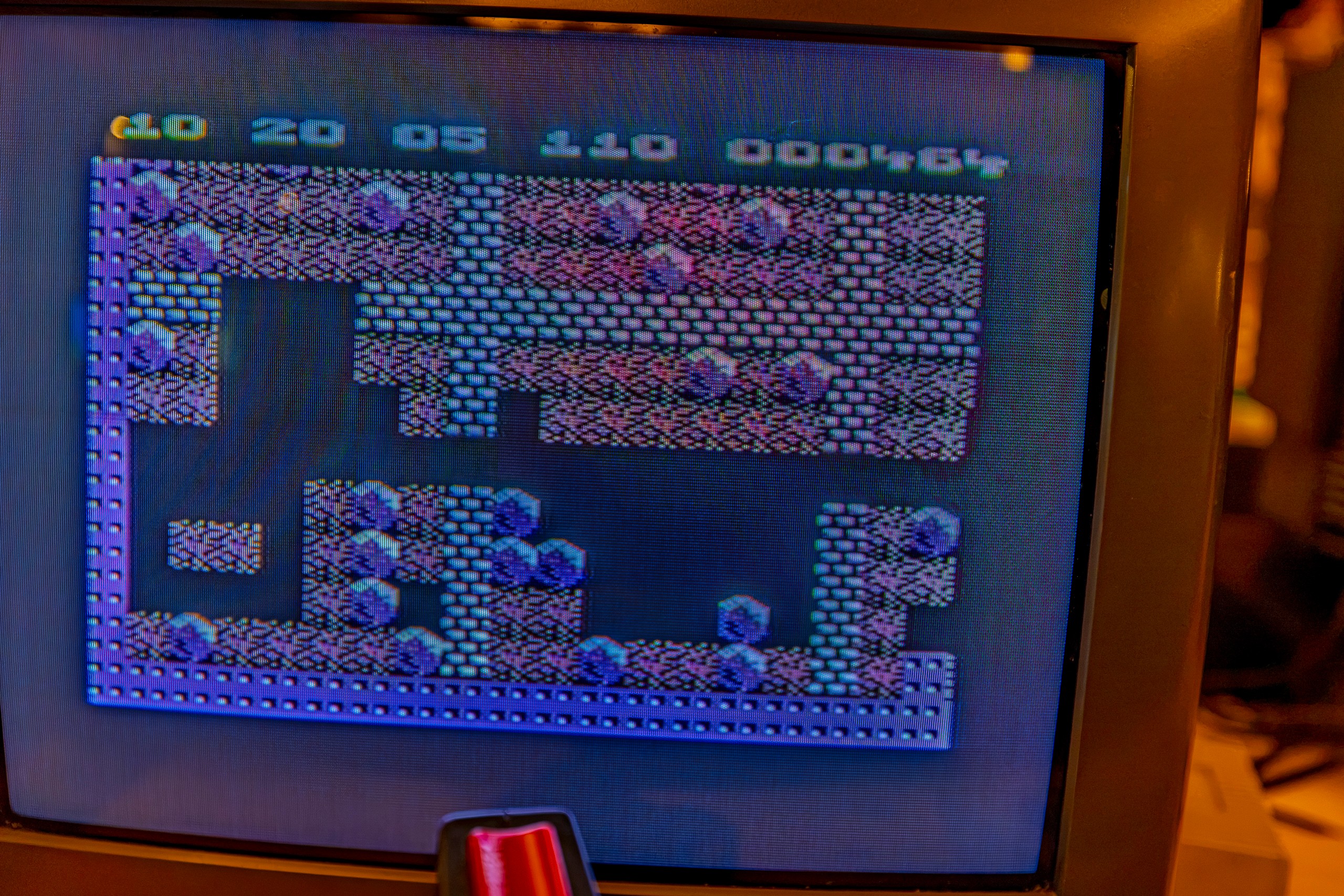
A note for Atari fans: Boulder Dash was not born on the Commodore at all. Canadian Peter Liepa wrote it in 1984 for the 8-bit Atari, and only then did the game reach the C64 and dozens of other platforms.
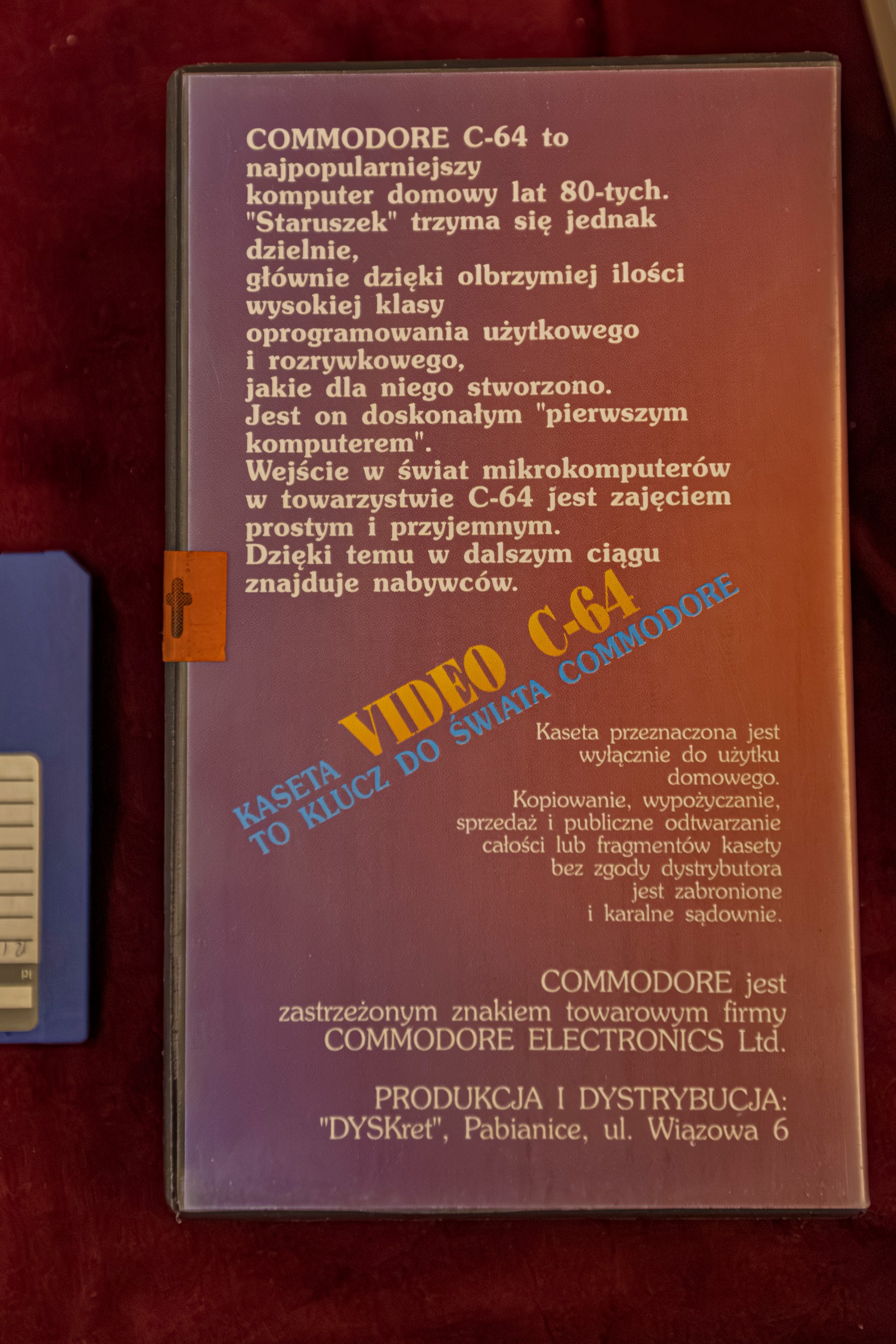
This is one of the most interesting Polish exhibits at the show. The cover says the C-64 is "the most popular home computer of the 80s" and that "the old-timer is still holding up bravely". The tone gives away the date: the tape was made when the C64 was already a veteran in the West but was only just reaching ordinary Polish homes. The box also says the course is "for those planning to buy a C-64, C-64 owners, and those dreaming of a C-64". That "dreaming" captures the reality of those years better than anything.
Commodore 16: the brother nobody wanted
The C16 (1984) was meant to replace the VC-20. It was built around the new TED chip, which did almost everything at once: video, sound and memory refresh. TED could display 121 colours, far more than the C64, but it had no hardware sprites and its sound was much weaker than the SID. The biggest problem: the C16 could not run C64 software, and even the C64's cassette deck and joysticks did not fit. With thousands of games available for the C64, buyers' choice was obvious.
The Polish angle: several Polish schools imported C16s from Hungary to compare them with the C64. After testing, they chose the C64. In Hungary, on the other hand, the C16 and Plus/4 were an unexpected success.
Commodore 128: three computers in one
The C128 was shown in January 1985 at CES. After the C16 fiasco Commodore bet on compatibility: inside was a complete C64, switched on by holding the Commodore logo key at start-up or by typing GO64. The lead designer was the young Bil Herd. A second processor, the Zilog Z80, could run the CP/M business operating system. According to Herd, the Z80 ended up on the board mainly to keep the promise of 100 percent C64 compatibility. The irony: the C128 is sometimes called the best-selling CP/M computer ever, yet almost nobody used that mode, because offices were already moving to MS-DOS.
Amiga 500, 600 and 1200: a new era
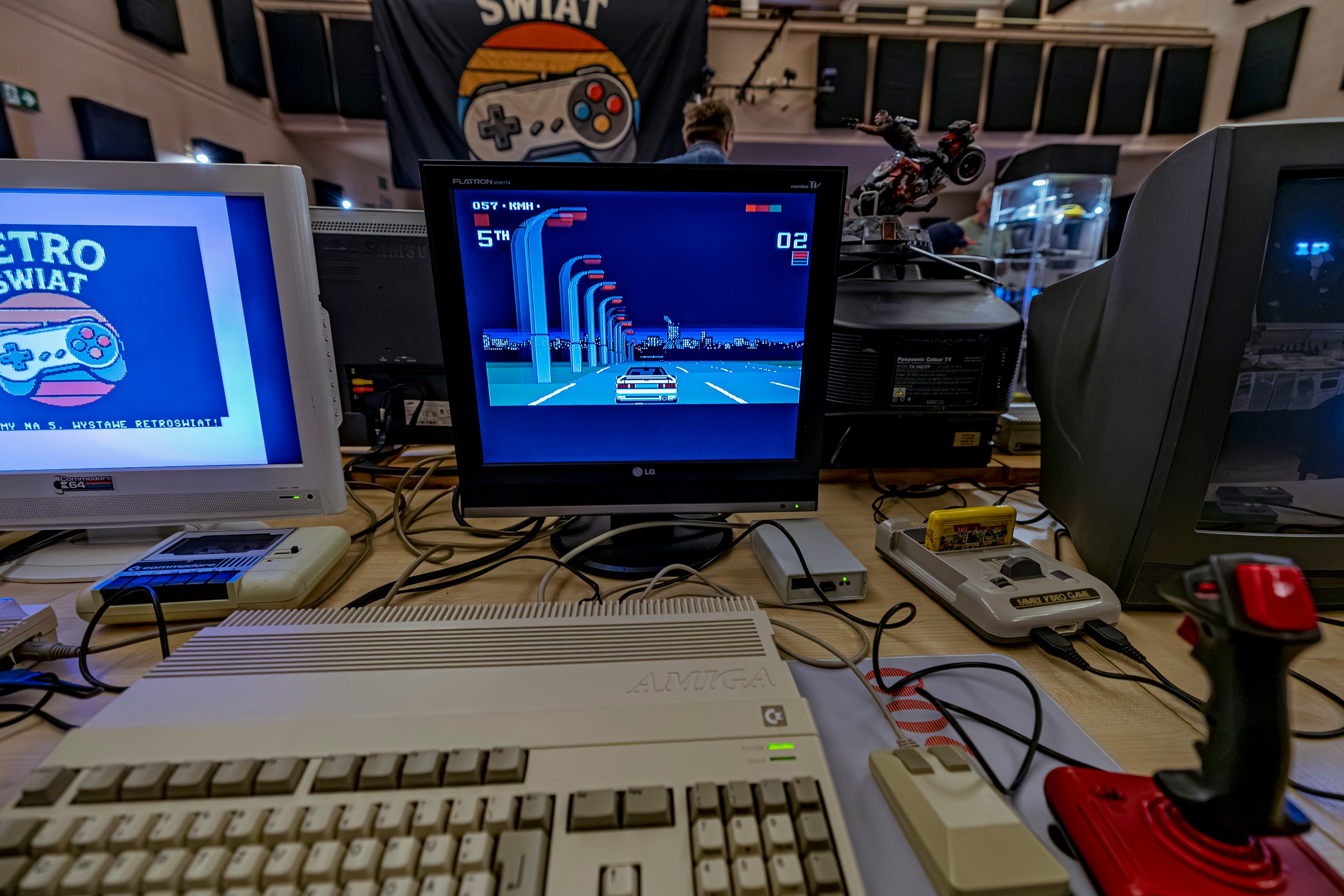
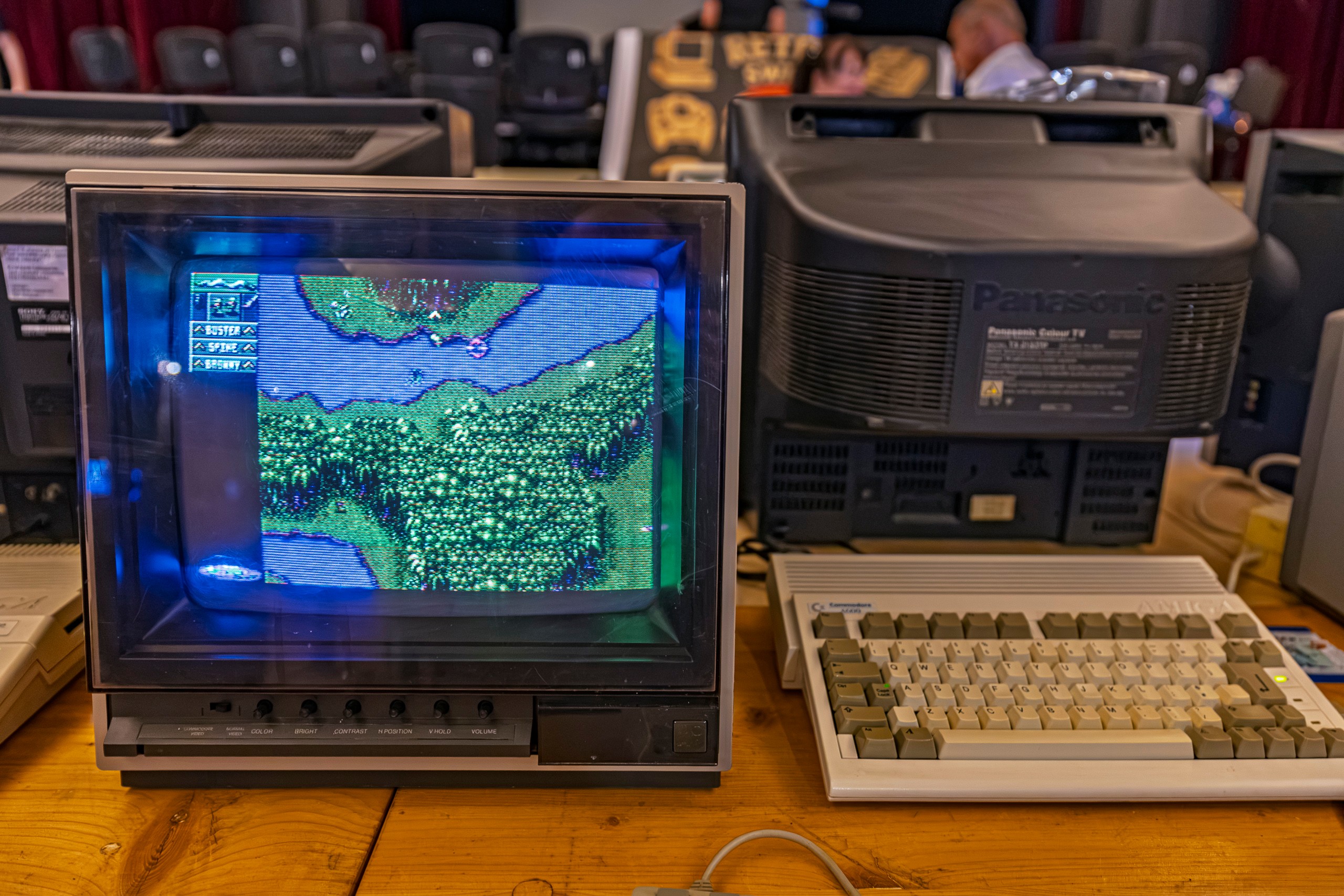
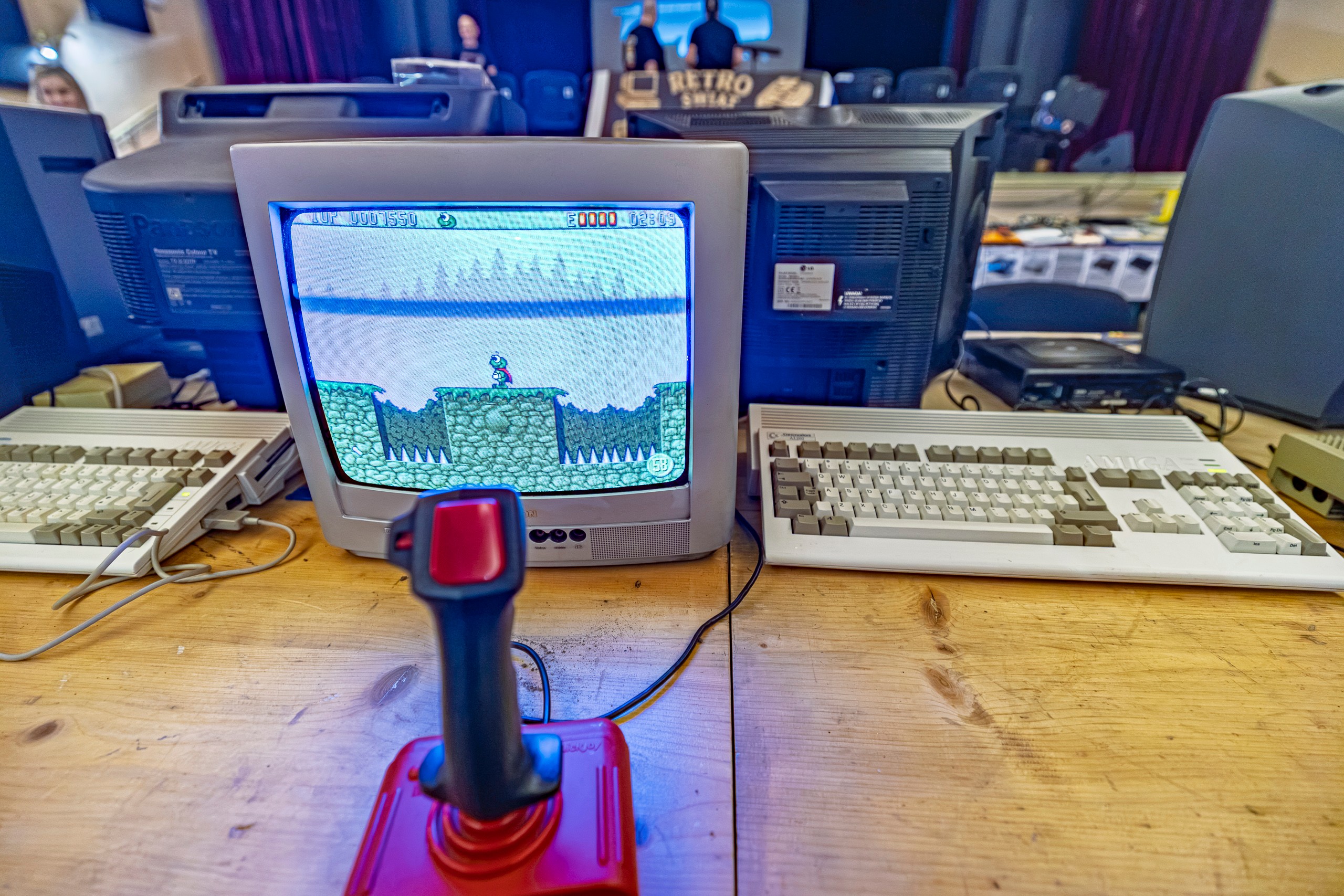
The Amiga was in another league: a Motorola 68000 processor, plus graphics and sound that put late-80s PCs to shame. The 1987 Amiga 500 became, in Europe and in Poland too, a byword for a computer for games, demos and graphics.
The Amiga 600 appeared in March 1992 as the successor to the A500. It is barely bigger than a PC keyboard, because Commodore cut off the numeric keypad, which angered some users. In return it got a PCMCIA slot and room for an internal hard drive. It did not live long: later the same year the far more powerful Amiga 1200 came out, and the A600 left the market in 1993. Today that PCMCIA slot is what saves the A600: collectors plug network and Wi-Fi cards into it.
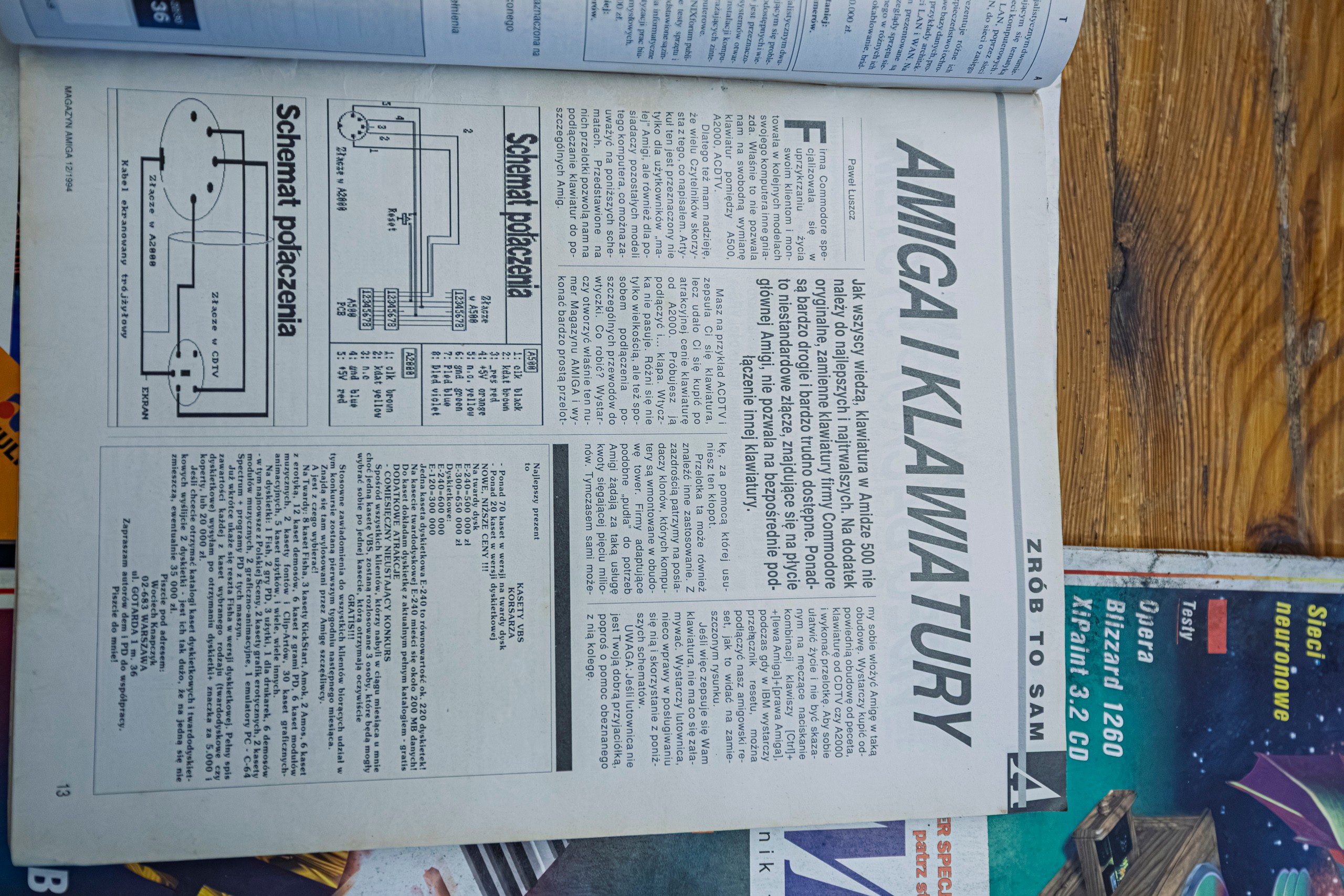
This exhibit says more about the Polish scene than many a computer. Original Amiga parts were expensive, so magazines printed schematics for home-made modifications. The photo shows a keyboard wiring diagram, including a connector labelled "Złącze w CDTV" (the CDTV connector). Which brings us to the next machine.
CDTV: an Amiga disguised as a disc player
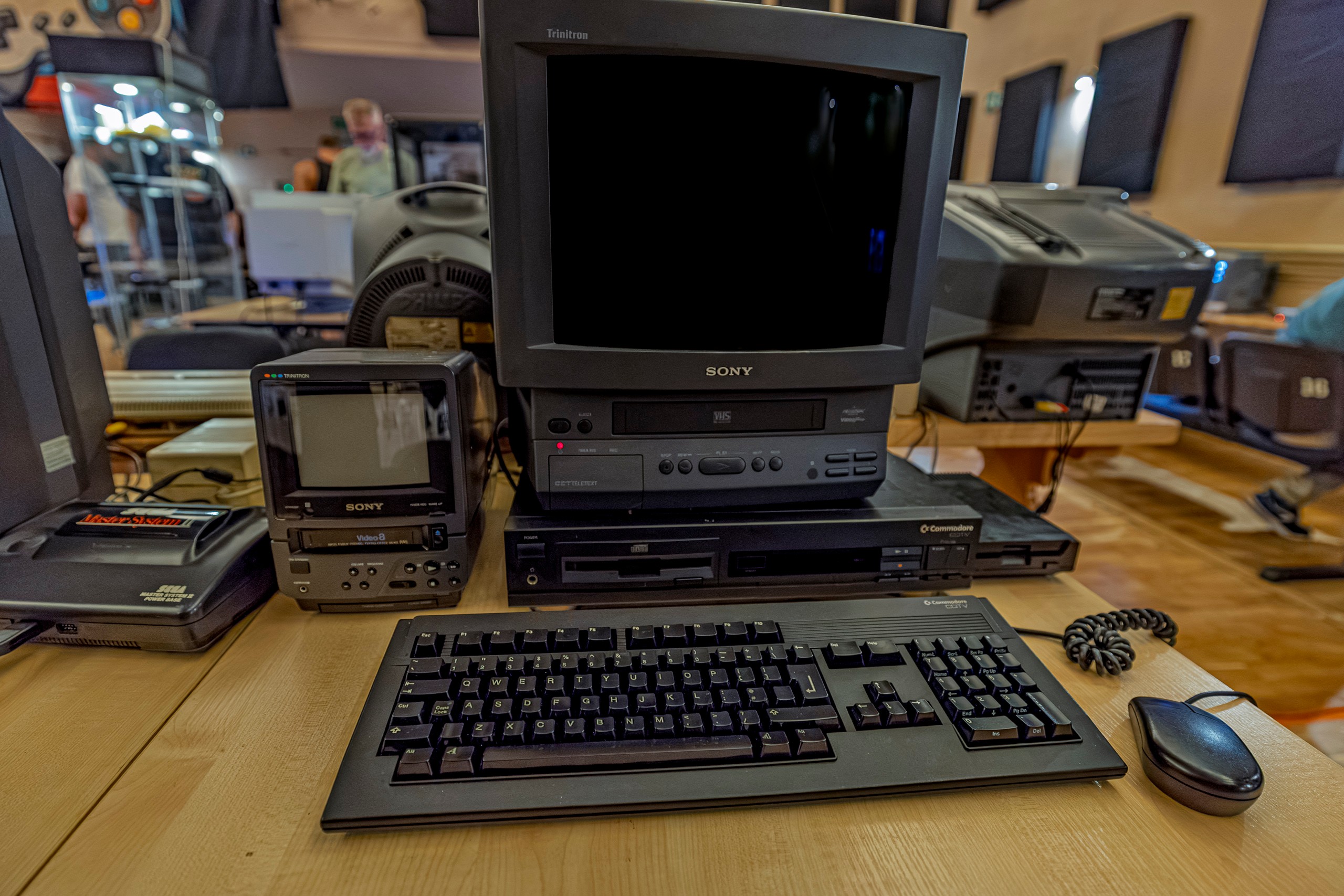
The CDTV (Commodore Dynamic Total Vision) went on sale in March 1991. It cost 999 dollars in the US and 499 pounds in the UK. Inside it was essentially an Amiga 500 with a CD-ROM drive, but Commodore deliberately avoided the word "Amiga": the machine was meant to sit under the TV like hi-fi equipment and be operated with a remote. With the optional keyboard and mouse, as in the photo, it turned into a full Amiga.
Why did it fail? Commodore released the A570 drive for the Amiga 500, which offered the same as the CDTV, so Amiga owners had no reason to buy a second computer. Then there was the price. Fewer than 50,000 units are estimated to have been sold, which is why the CDTV is a collector's item today.
Amiga CD32: the last console
The CD32 (visible on the table and PET photos) is an Amiga 1200 in a console case, with a CD drive. The first 32-bit CD console in Western Europe debuted in September 1993 and for a while sold very well: in its first Christmas season it accounted for 38 percent of CD-ROM drive sales in the UK.
Then came disaster. A company called Cad Track held a patent on XOR, a simple graphics operation Commodore used. Commodore did not pay in time; a court ordered 10 million dollars and banned imports into the US. Consoles meant for the American market got stuck in a factory in the Philippines. On 29 April 1994 Commodore filed for bankruptcy. The company was finished off by a logic operation taught in the first class of any computer science course: XOR, "either-or".
Full circle: a mini comeback and Tramiel's trail
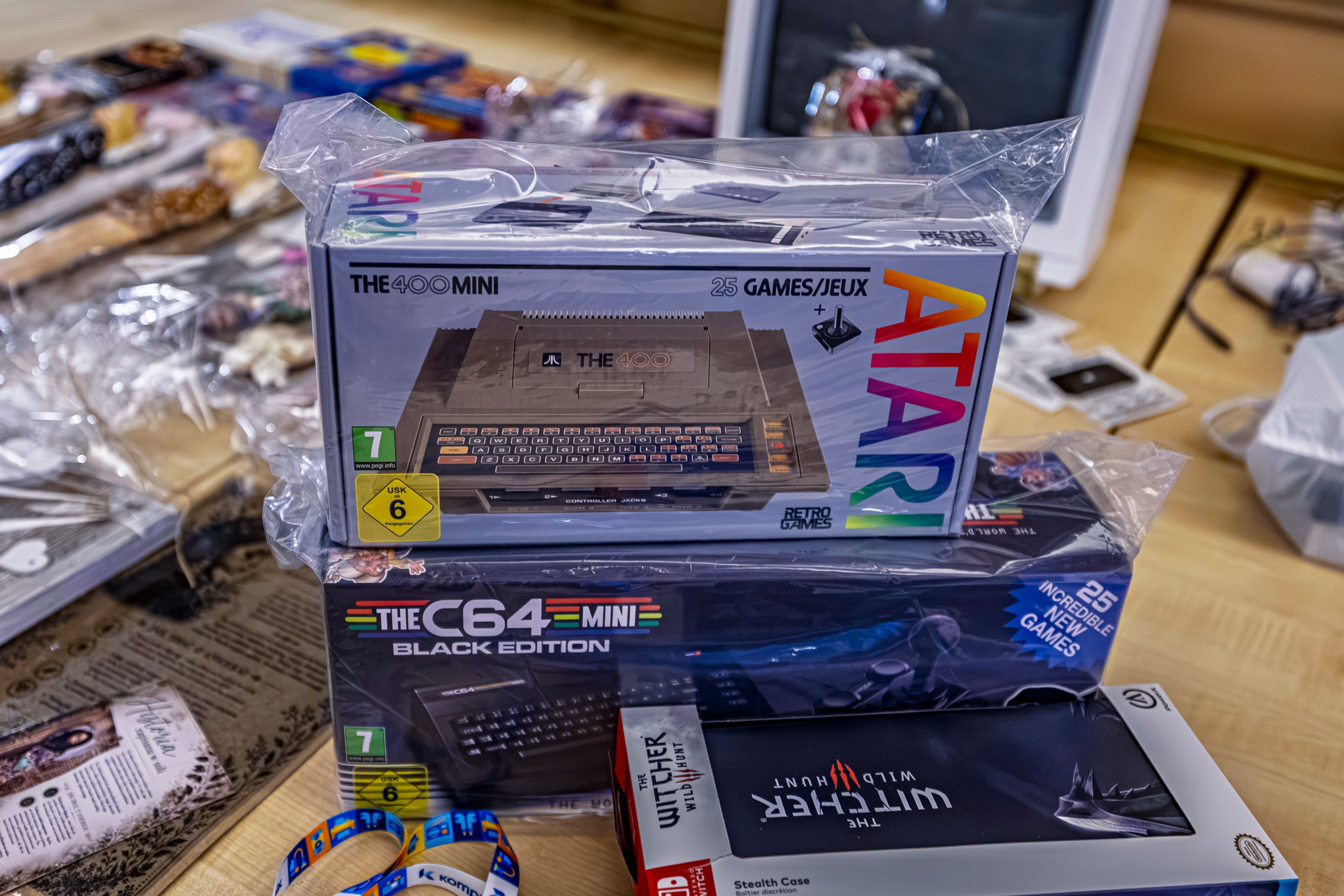
This pairing has a second layer. Jack Tramiel left Commodore in early 1984, at the height of the C64's success, and soon took over... Atari, its biggest rival. The boy from Łódź who gave the world the C64 started building computers on the other side of the barricade. And this is where the Polish Atari story begins.
3. Atari: Poland's first love
Atari 2600 and 7800: the consoles that started it all
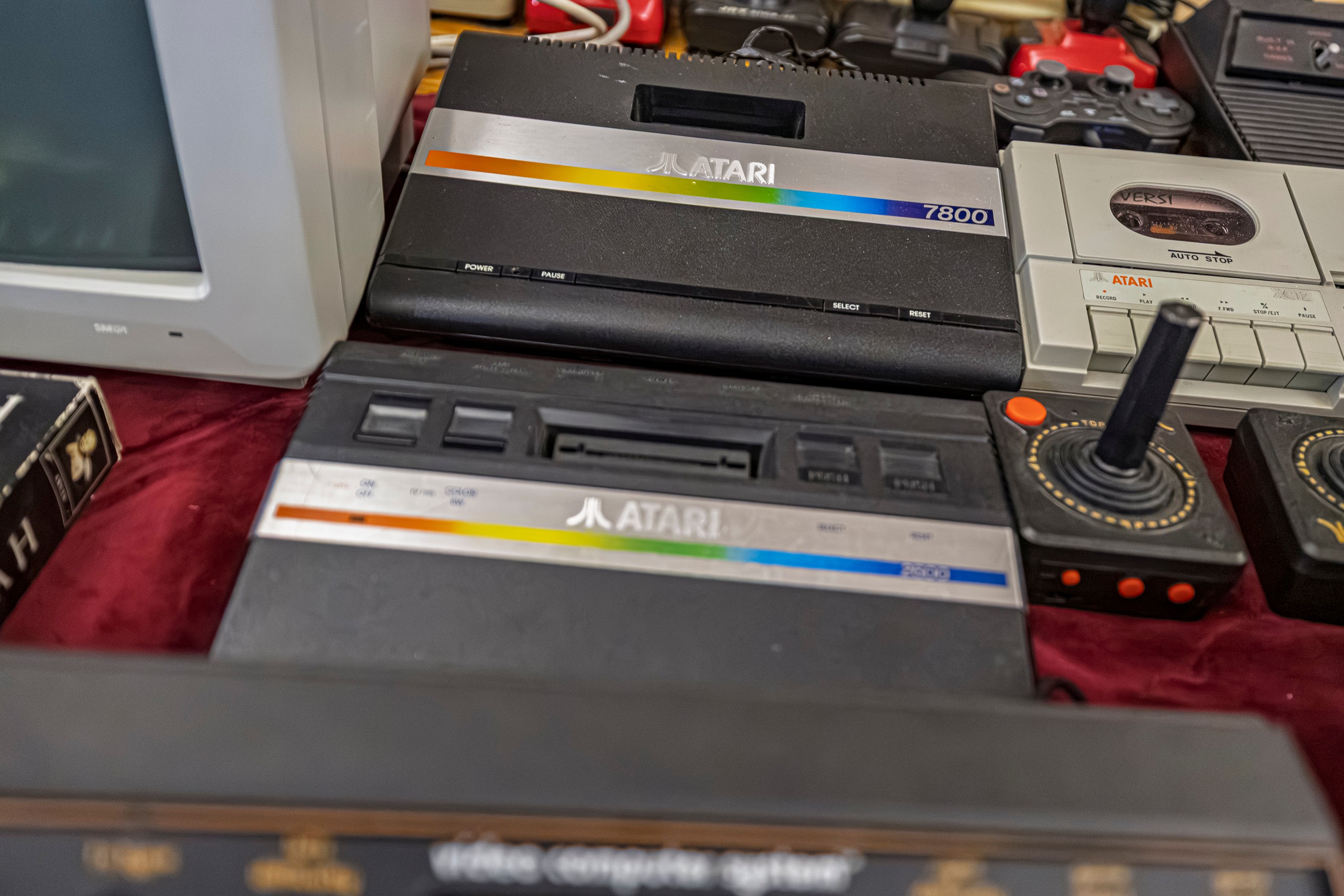
The 1977 Atari 2600 turned video games into mass entertainment. Its successor, the Atari 7800, was unlucky. It was announced in May 1984, but right afterwards Warner sold Atari to Tramiel and the launch stalled for two years. It reached shops only in 1986, when the Nintendo NES already ruled.
Trivia: the 7800 could run almost all 2600 games and is considered the first console with backward compatibility. To keep that compatibility, Atari kept the old 2600 sound chip, so the new console sounded like the one from 1977.
Atari 400: a computer designed by the father of the Amiga
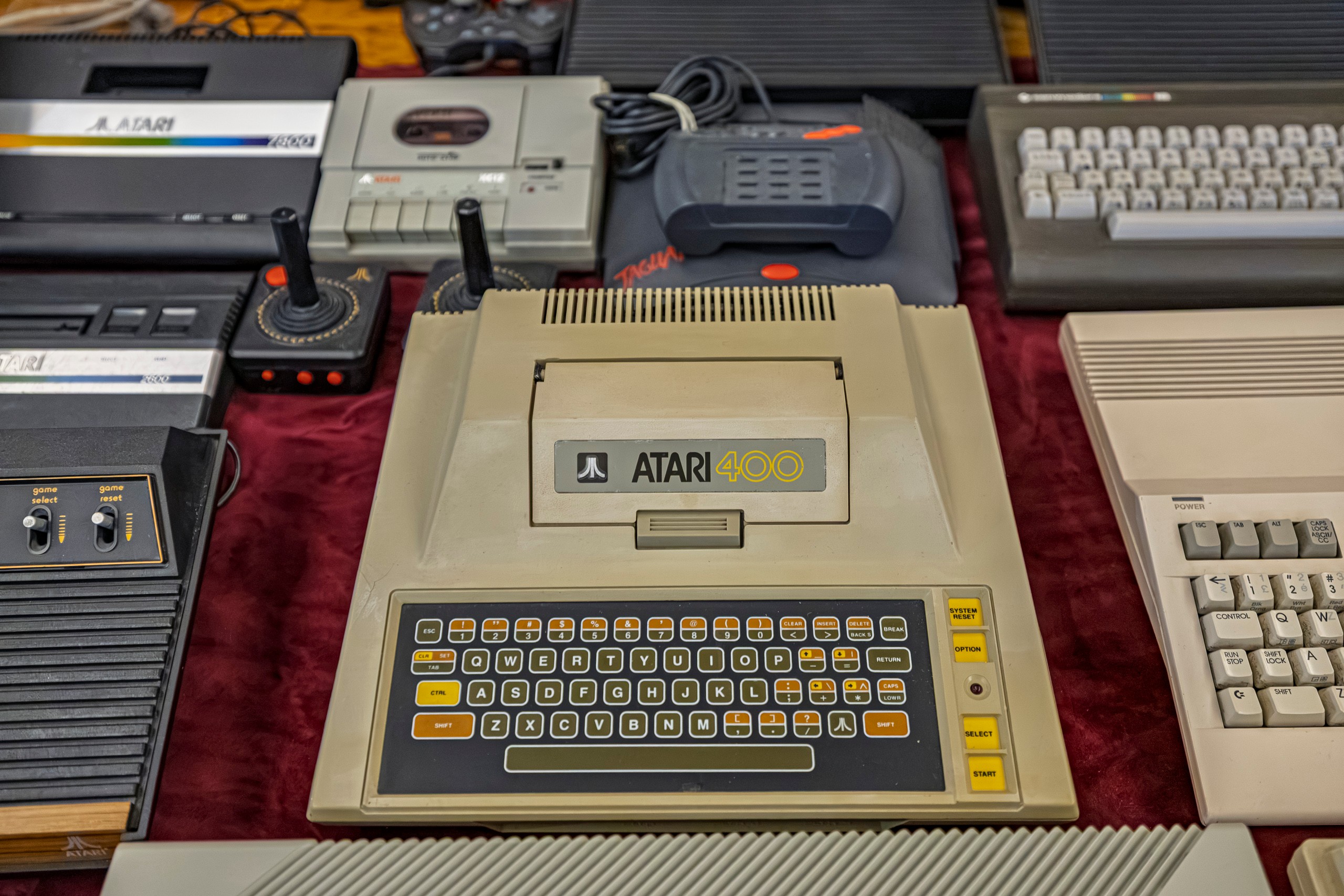
The Atari 400 and 800 were announced in late 1978 and reached shops in 1979. They were the first home computers with dedicated coprocessors: ANTIC and CTIA (later GTIA) for graphics, POKEY for sound. The cheaper 400 had a membrane keyboard and a single cartridge slot, while the 800 had a proper keyboard and more memory.
Trivia: the team that designed the Atari 400/800 chips was led by Jay Miner. A few years later the same man designed the Amiga chipset, which is why he is called the "father of the Amiga". The rivals of the 1980s share a common ancestor.
Atari 800XL and the XE series: how Atari conquered Poland
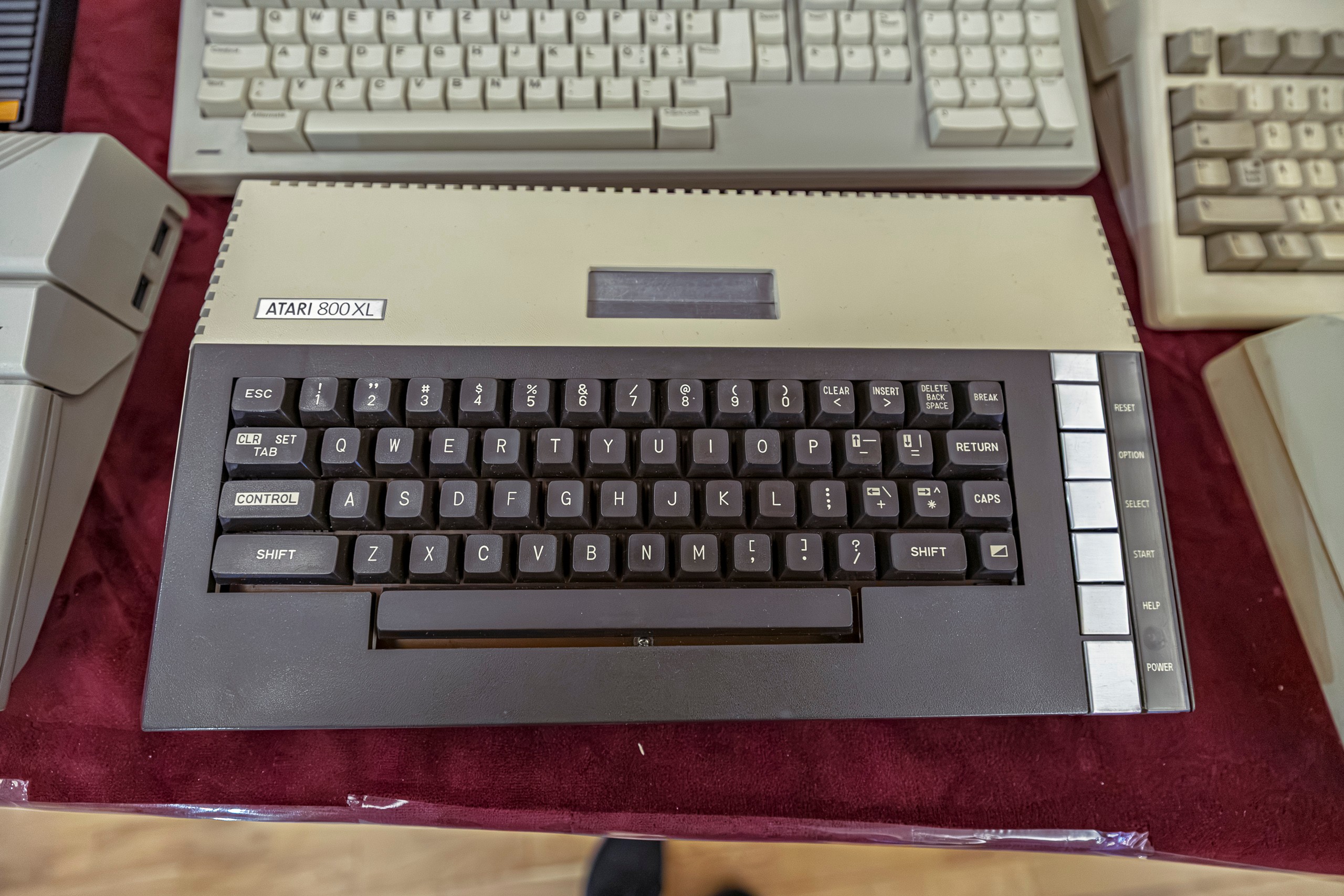
Here Jack Tramiel returns. In 1985 the Atari 800XL arrived in Pewex, the state chain of hard-currency shops in communist Poland, thanks to the efforts of a young physicist, Lucjan Wencel, a man Tramiel trusted. Atari was the only computer in legal distribution and came with a warranty, which gave it a huge advantage. By the late 1980s Poland was the biggest Atari market in the world, and the country was called "the Last Fortress of the Small Atari".
The most popular "small Atari" in Poland was the Atari 65XE from 1985: functionally the same as the 800XL, but in a grey case styled after the Atari ST. It was relatively cheap and easier to get than other computers.
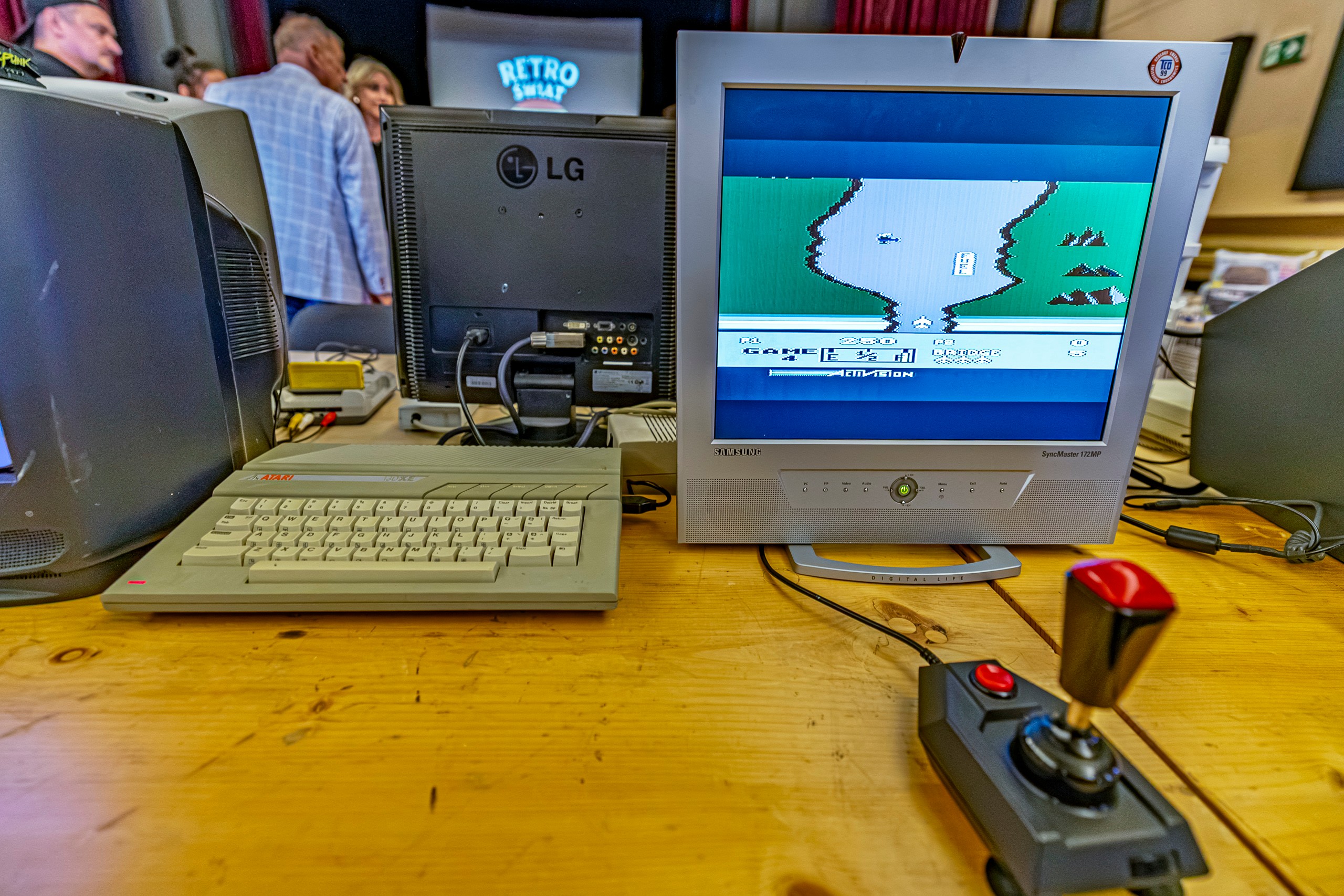
Trivia: River Raid (1982) was created by Carol Shaw, regarded as the first professional female video game designer. She first wanted to make a space game, but her boss felt there were too many space games already, so she moved the action over a river. The game sold over a million copies, and Shaw herself ported it to the 8-bit Atari.
Atari 1040ST: a "Jackintosh" for musicians
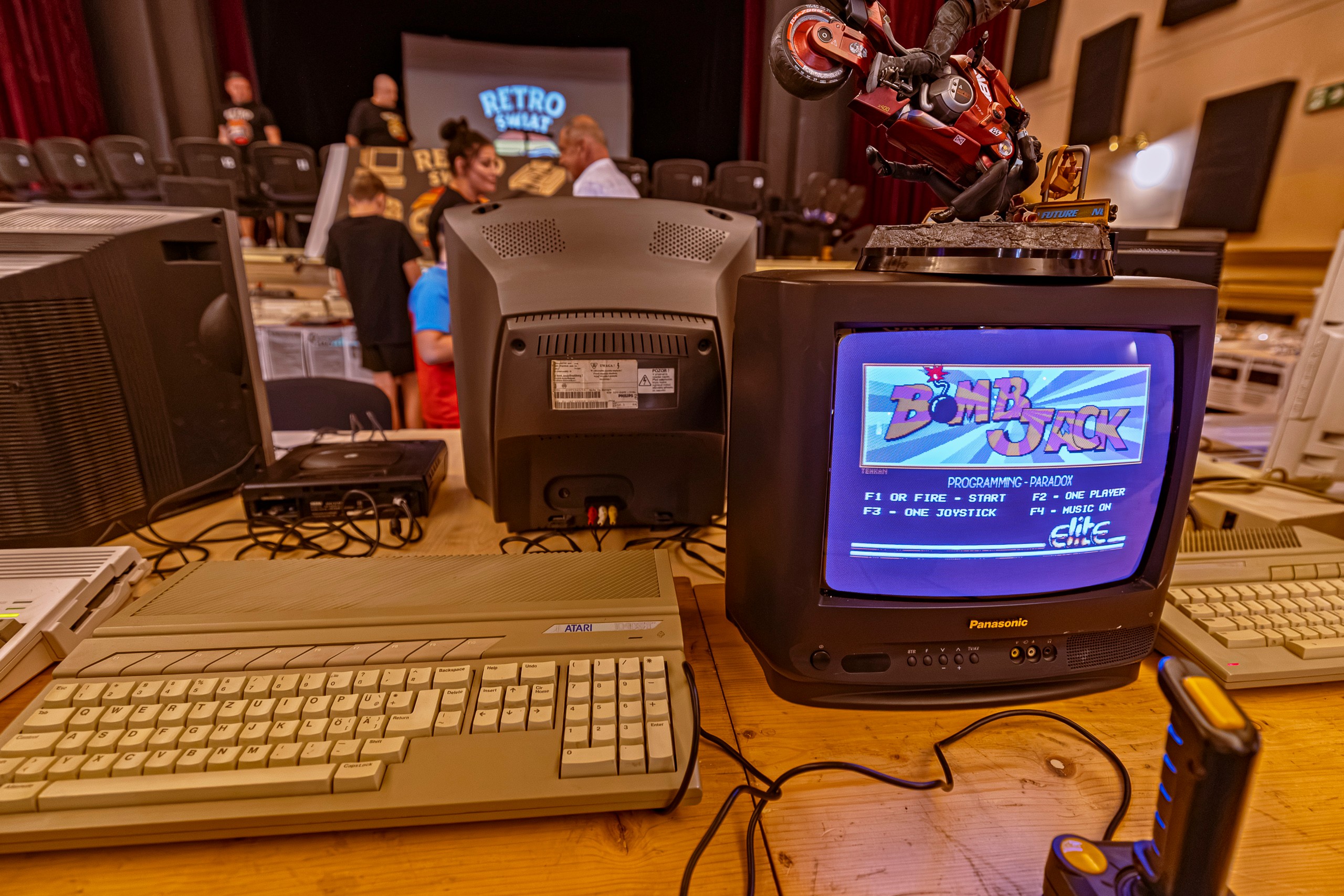
The Atari ST was Tramiel's answer to the Macintosh and the Amiga. The first model, the 520ST, went on sale in June 1985, ahead of the Amiga. The press quickly nicknamed it the "Jackintosh": it looked and worked like a Macintosh but cost a fraction of the price. The 1986 1040ST was the first personal computer with 1 MB of memory as standard and the first in which a kilobyte of RAM cost less than a dollar.
Trivia: the ST had built-in MIDI ports, so musicians loved it. Cubase and Notator (the ancestor of Logic Pro) were born on the Atari ST, and in the 1990s the 1040ST was standard equipment in electronic music studios.
4. Sinclair and clones: rubber keys and a Timex from Portugal
ZX Spectrum: from "rubber key" to 128K
The ZX Spectrum from Clive Sinclair's Sinclair Research came out in 1982. The 48K model with its rubber keyboard (nicknamed "gumiak", the "rubber one", in Poland) became in Britain what the C64 was in the US. A Zilog Z80A processor (3.5 MHz), 256×192 graphics and the famous colour clash: colour was assigned to 8×8 pixel blocks, so a character walking over the background changed colour.
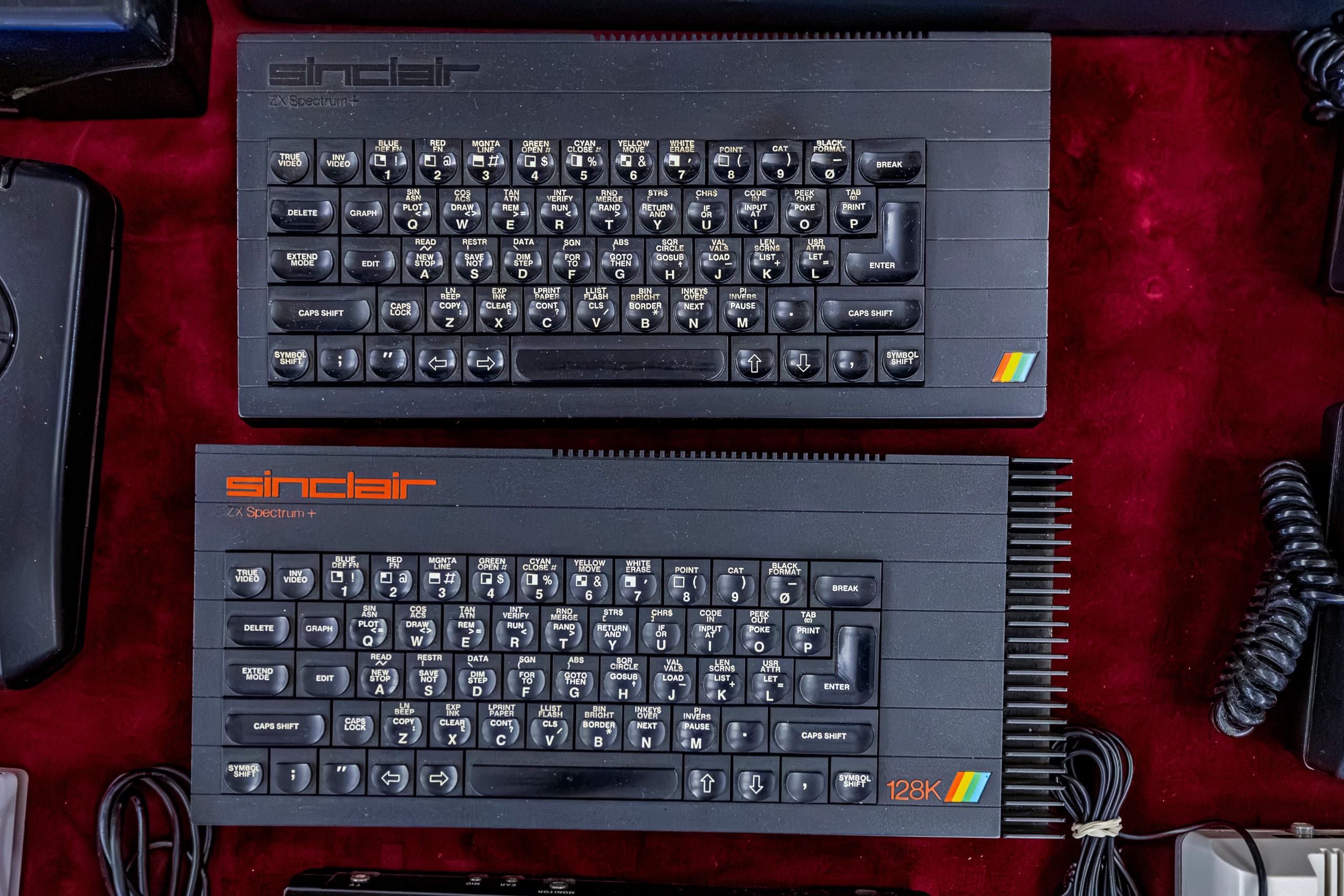
The ZX Spectrum 128 is a curious case: it premiered not in England but in Spain, in September 1985. It was designed together with the Spanish distributor Investronica, because the Spanish government had imposed a special tax on computers with 64 KB of memory or less. The model got 128 KB of RAM, the three-channel AY-3-8912 sound chip and a MIDI port.
Trivia: the large heatsink on the side earned it the nickname "Toast Rack". The model was short-lived: a few months after its British launch, Sinclair was bought by Amstrad.
ZX Spectrum +2: the first Spectrum from Amstrad
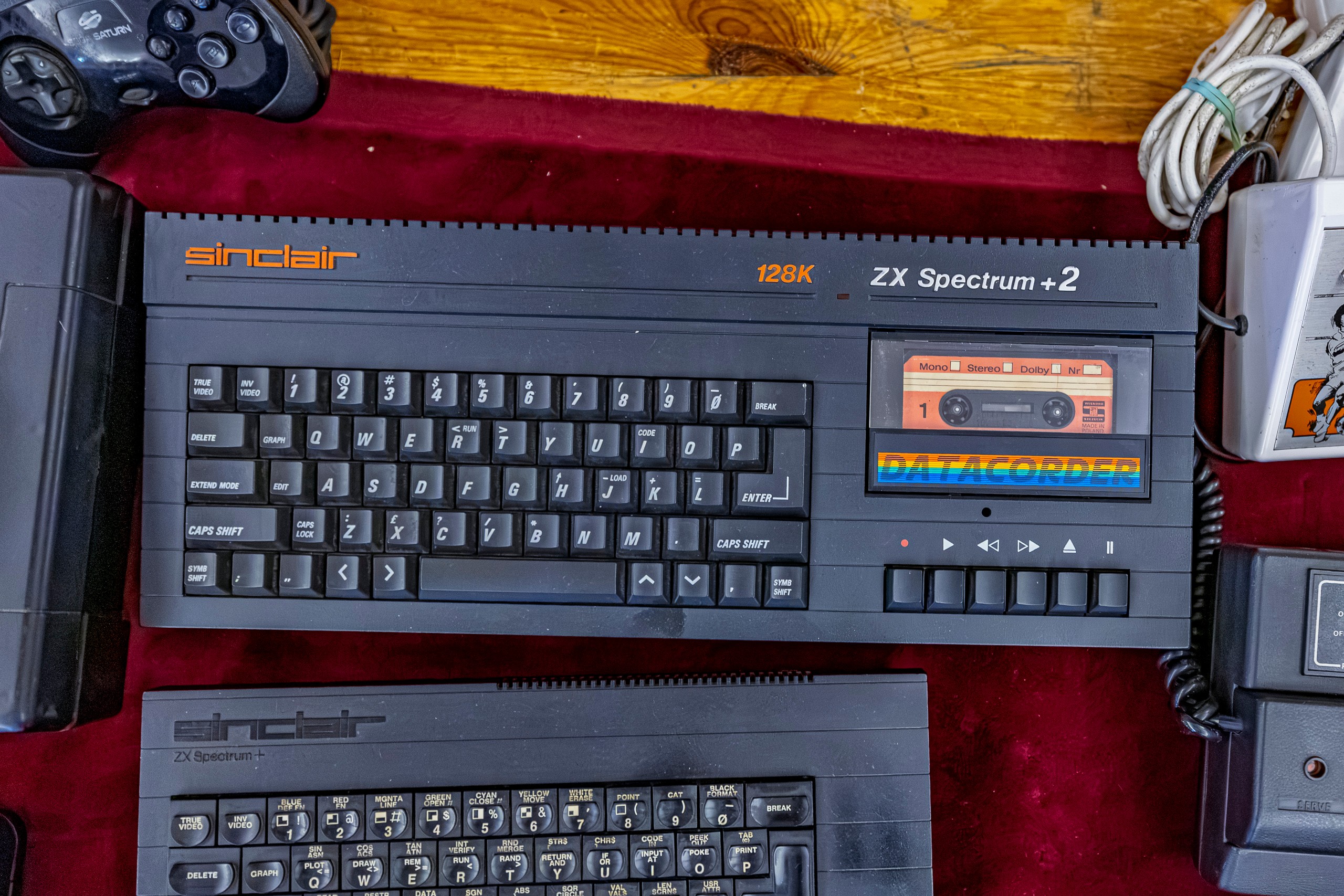
In 1986 Amstrad bought Sinclair and released the +2: a decent keyboard, two joystick ports and a cassette deck built into the side, like the Amstrad CPC 464. Inside it is basically a Spectrum 128, and the price fell to 149 pounds. The original +2 had a grey case. The black +2A and +2B from 1987 were built on the Spectrum +3 board.
Trivia: the +2's joystick ports had a non-standard pin layout. An ordinary Atari-style joystick did not work, and Amstrad, naturally, sold its own sticks.
Timex Computer 2048: a Spectrum from Portugal, sold in Poland
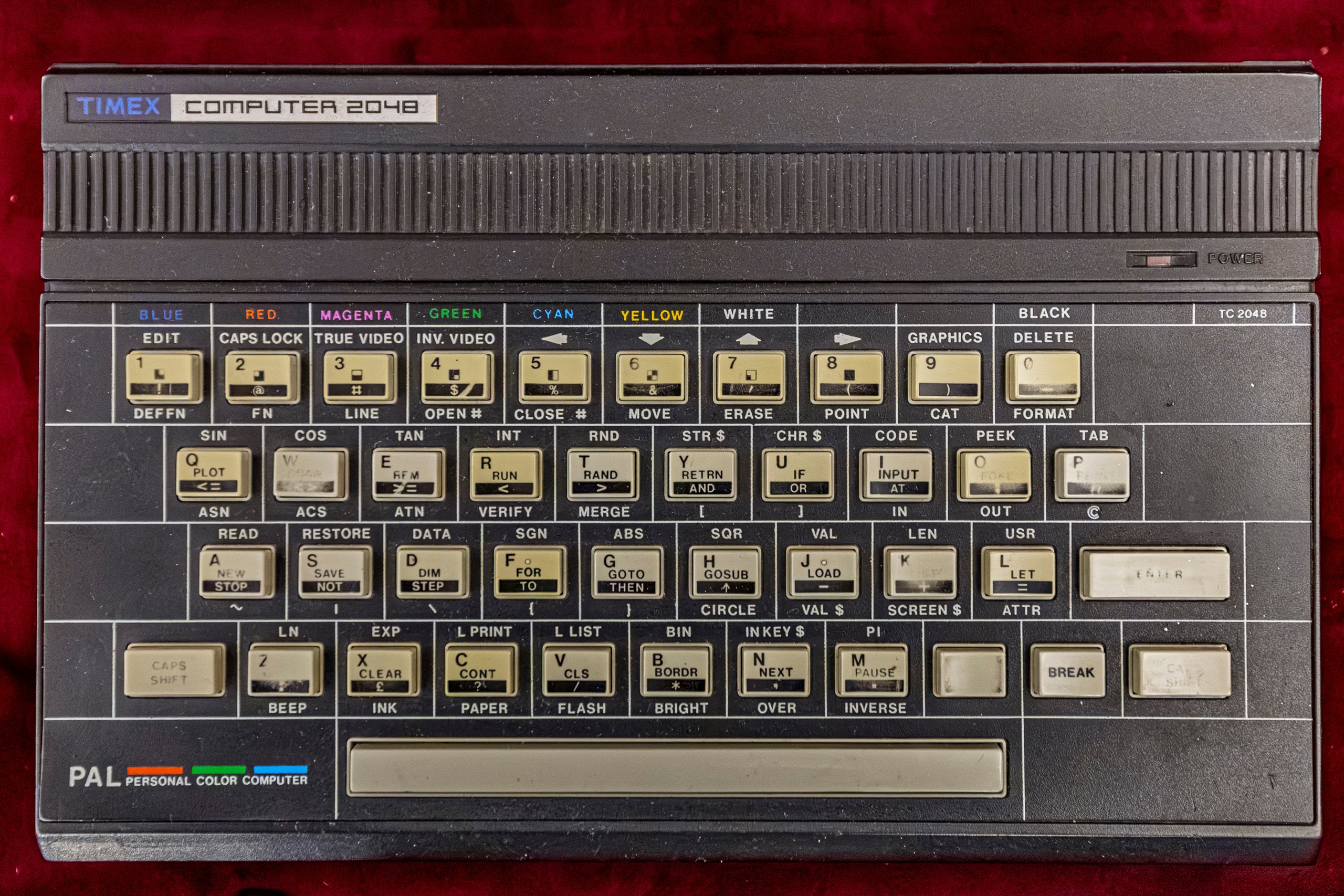
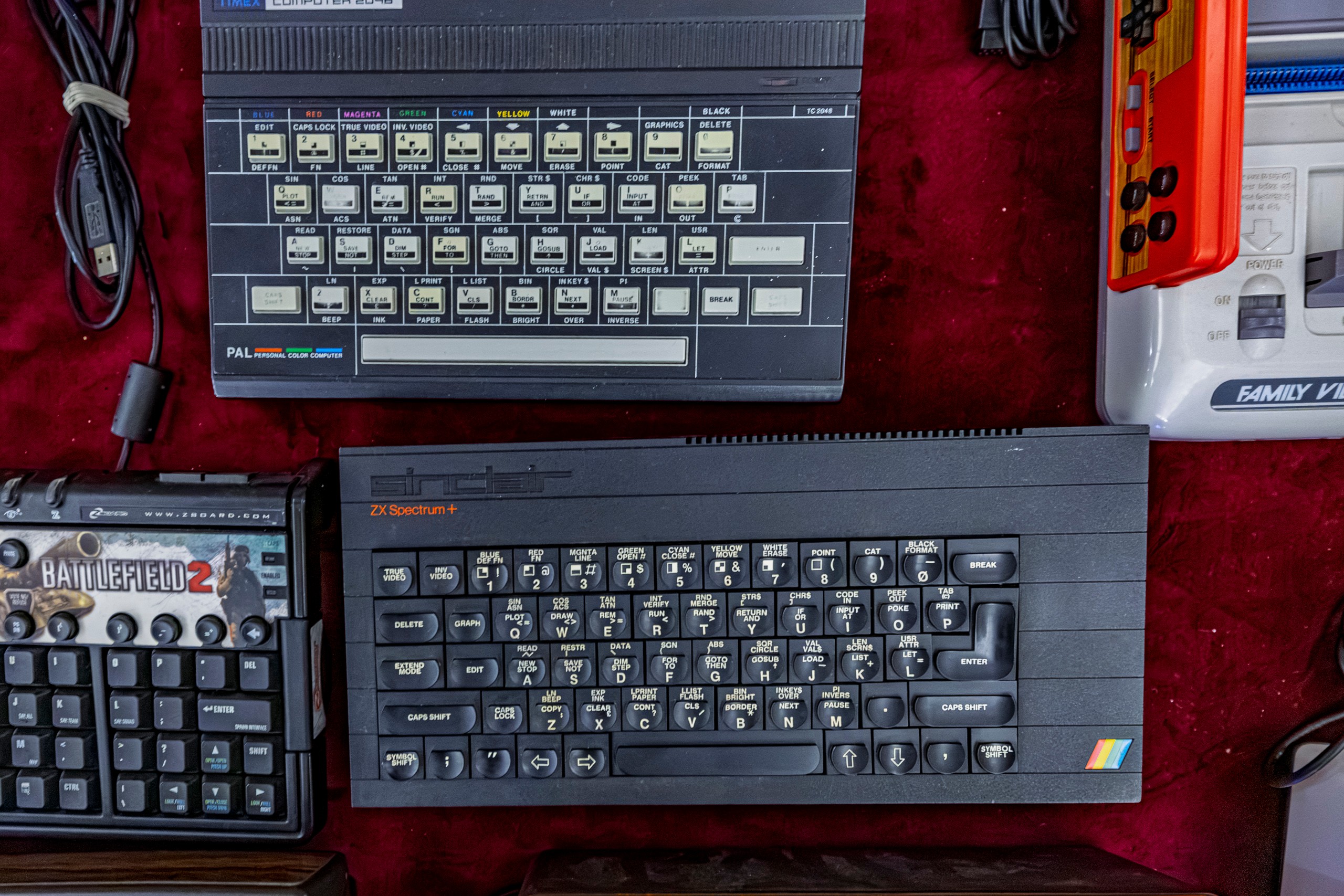
The TC 2048 is a 1984 computer designed by the Portuguese branch of Timex. It was almost fully Spectrum-compatible but had a built-in Kempston joystick interface and extra graphics modes, including 512×192, which allowed 80 columns of text.
The Polish angle: Timex Portugal sold the TC 2048 only in Portugal and Poland, where it was easier to get than the original British Spectrum. It was a success in both countries. The Polish counterpart was the Elwro 800 Junior, a school computer from the Elwro works in Wrocław, also Spectrum-compatible.
5. Before the Pegasus: the age of Pong
Pong on a single chip
In 1976 General Instrument released the AY-3-8500, known as "Pong on a chip". Add a few components, a case and some knobs, and you had a ready console with tennis, squash and football. That is why dozens of companies sold consoles that looked different but played the same games.
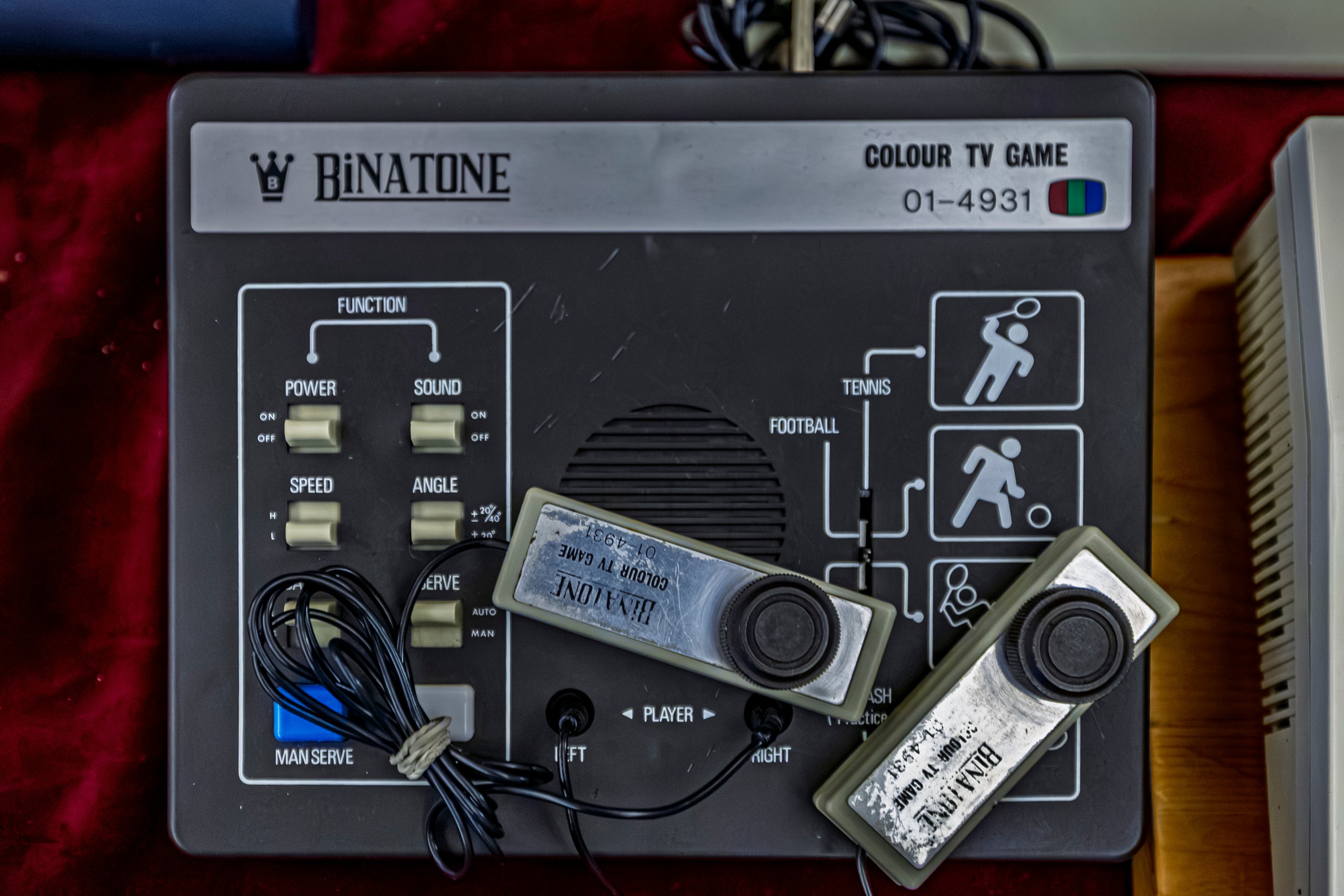
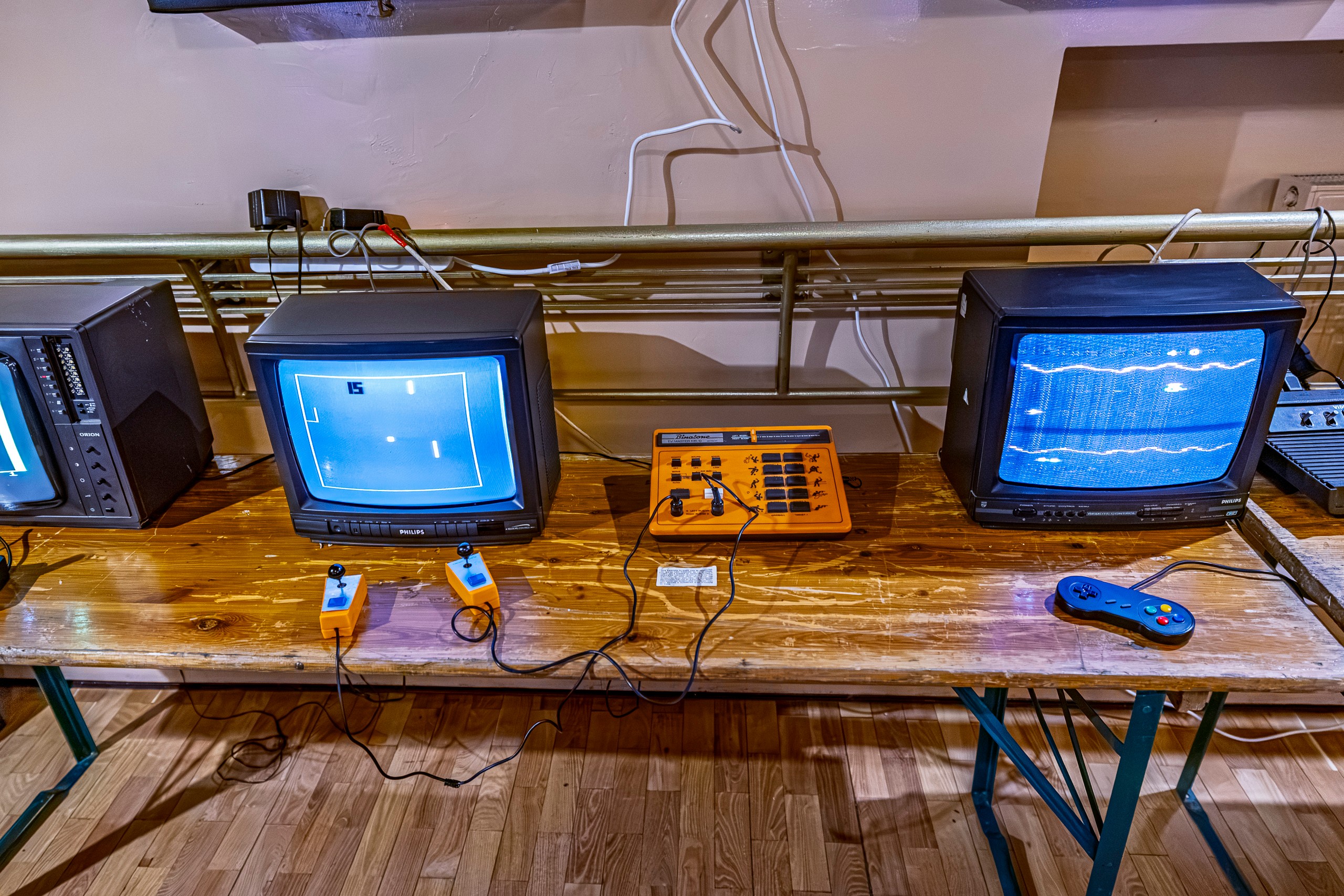
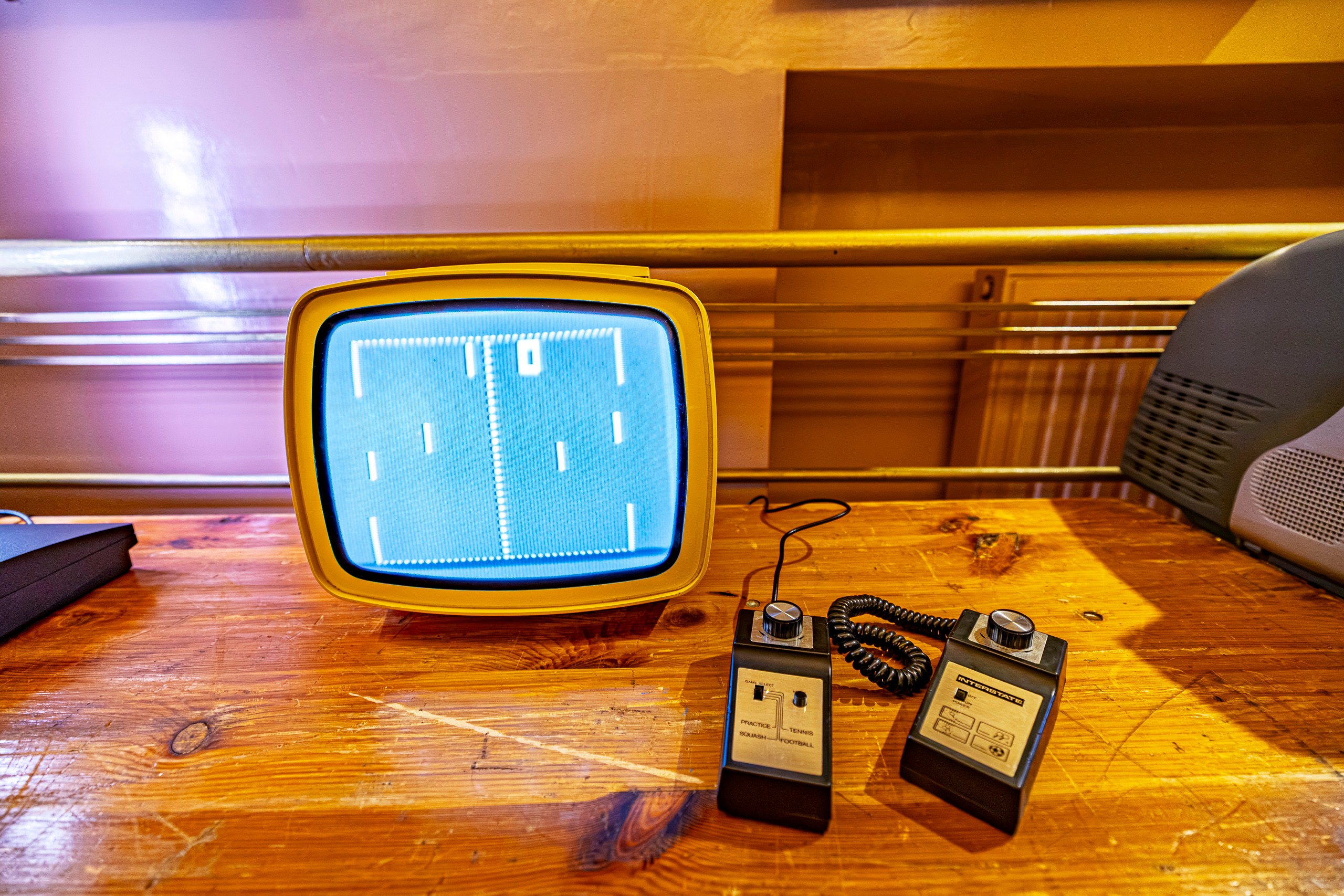
Britain's Binatone built its own consoles and also sold them under the Mentor and Tokyo names. Interstate and Videomaster were among the many companies that based their games on off-the-shelf chips.
Videomaster Star Chess: chess with rockets
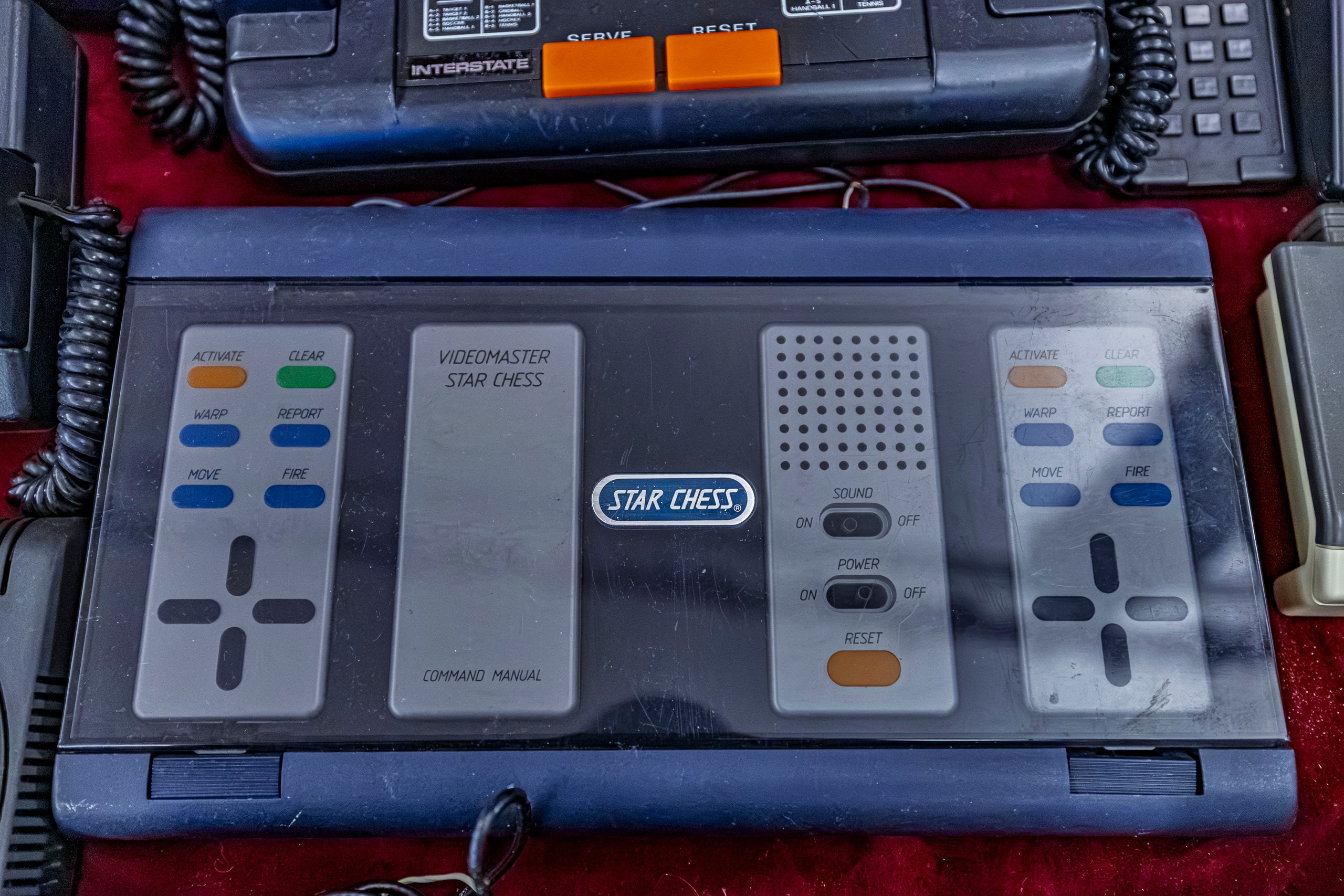
Star Chess from 1979 is a cross between a TV game and chess. It was played by two people, with no computer opponent, and the pieces were replaced by spaceships. On top of that came rules from beyond the chessboard: you could fire rockets at your opponent, use shields and check damage reports. The console is considered one of the rarest and most original ever made.
Tandy TV Scoreboard: Pong from Radio Shack
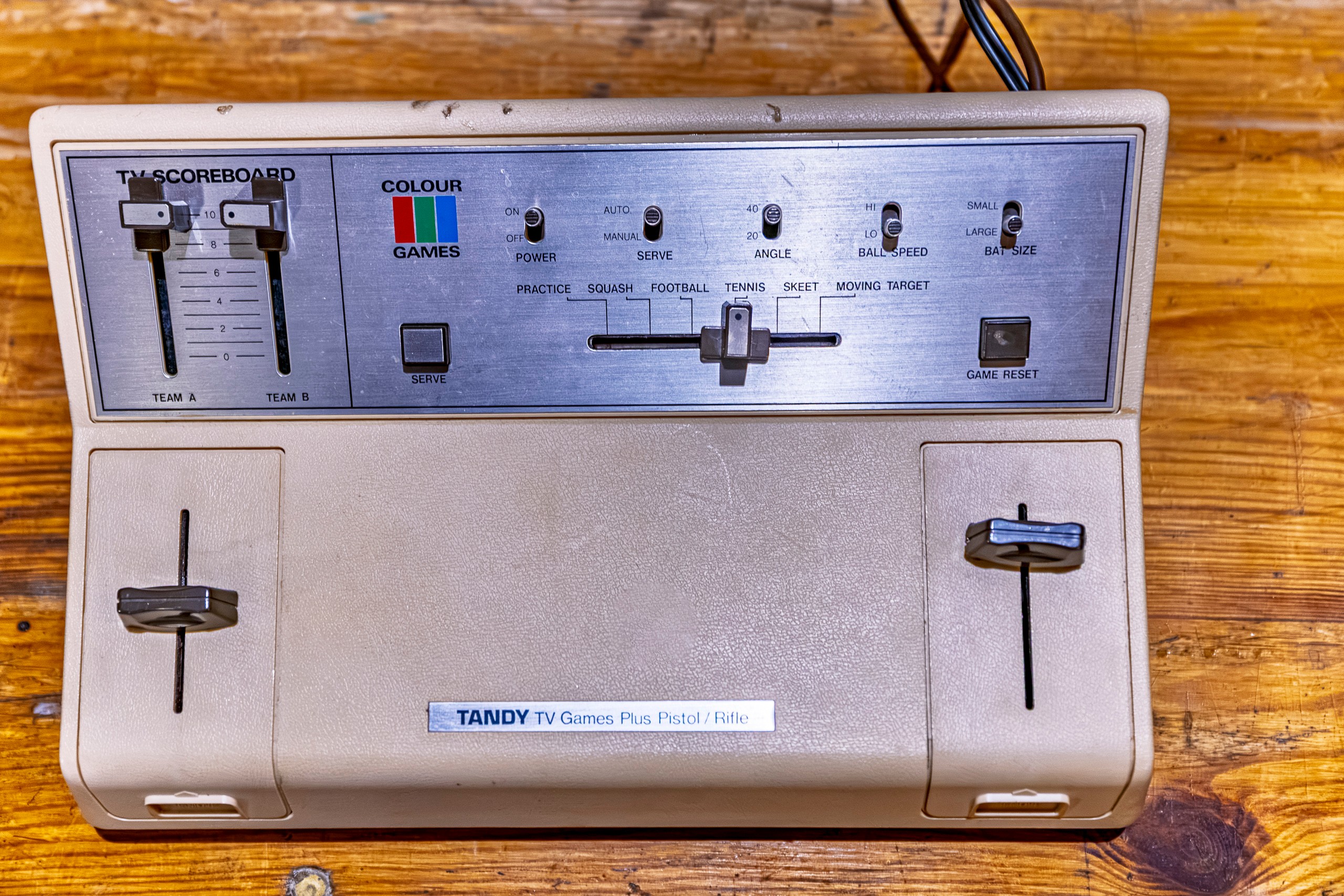
The 1976 TV Scoreboard was the first console from the American chain Tandy/Radio Shack. The photo shows the "TV Scoreboard" lettering and a sticker naming the version with a light gun.
Trivia: Carol Shaw, the future author of River Raid, had a Radio Shack Pong like this at home. Sometimes great careers start with two lines and a square ball.
Philips Videopac G7000: a console with a keyboard
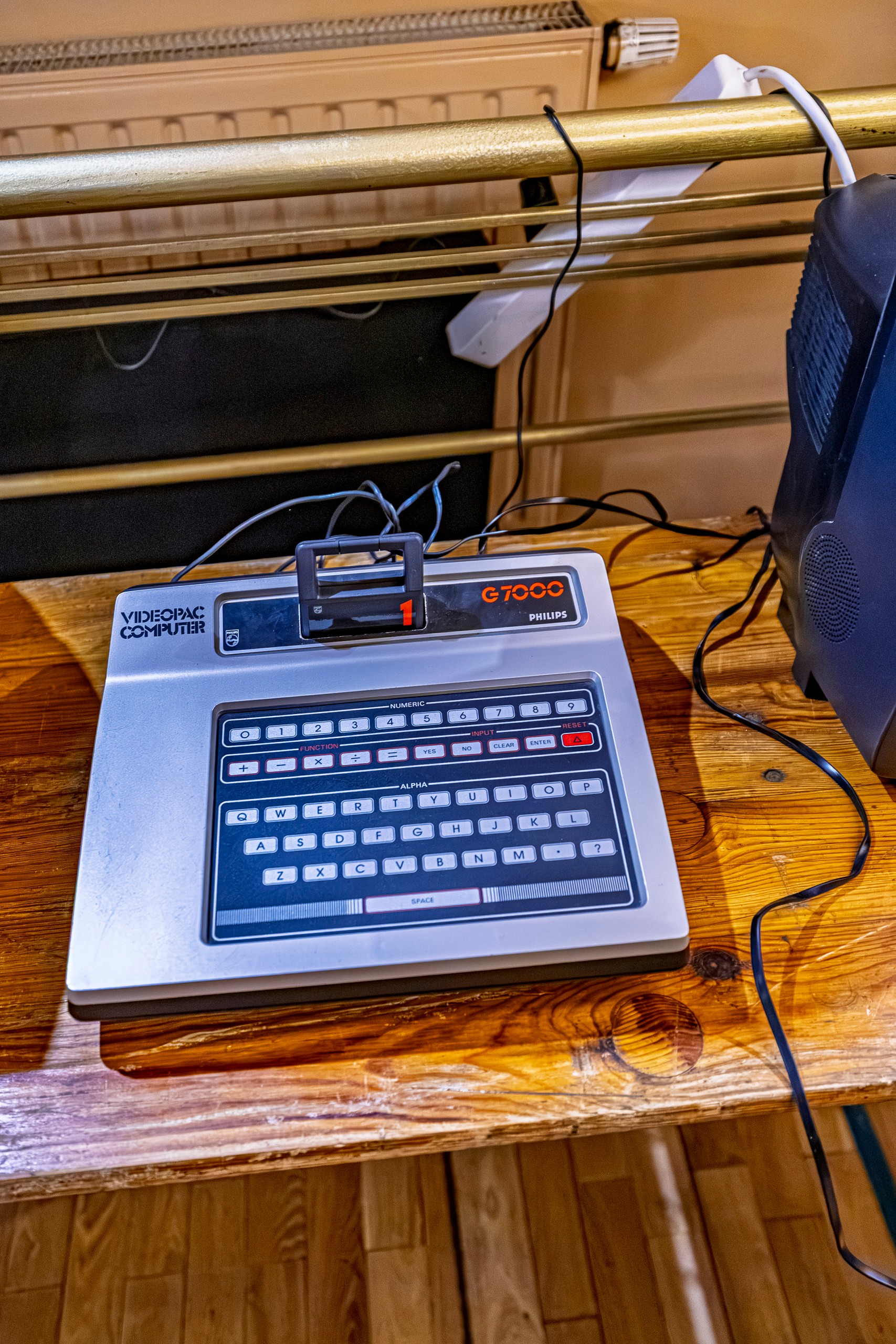
The Videopac G7000 is the European version of the American Magnavox Odyssey², released by Philips in December 1978. It was the first console with a full keyboard, useful for educational games and simple programming. It did much better in Europe than in the US.
Trivia: the European launch was unlucky. About 7,500 units were sold in the first Christmas season, then sales were halted because of a faulty power plug. A successful relaunch came in 1979.
Intellivision: the first 16-bit console
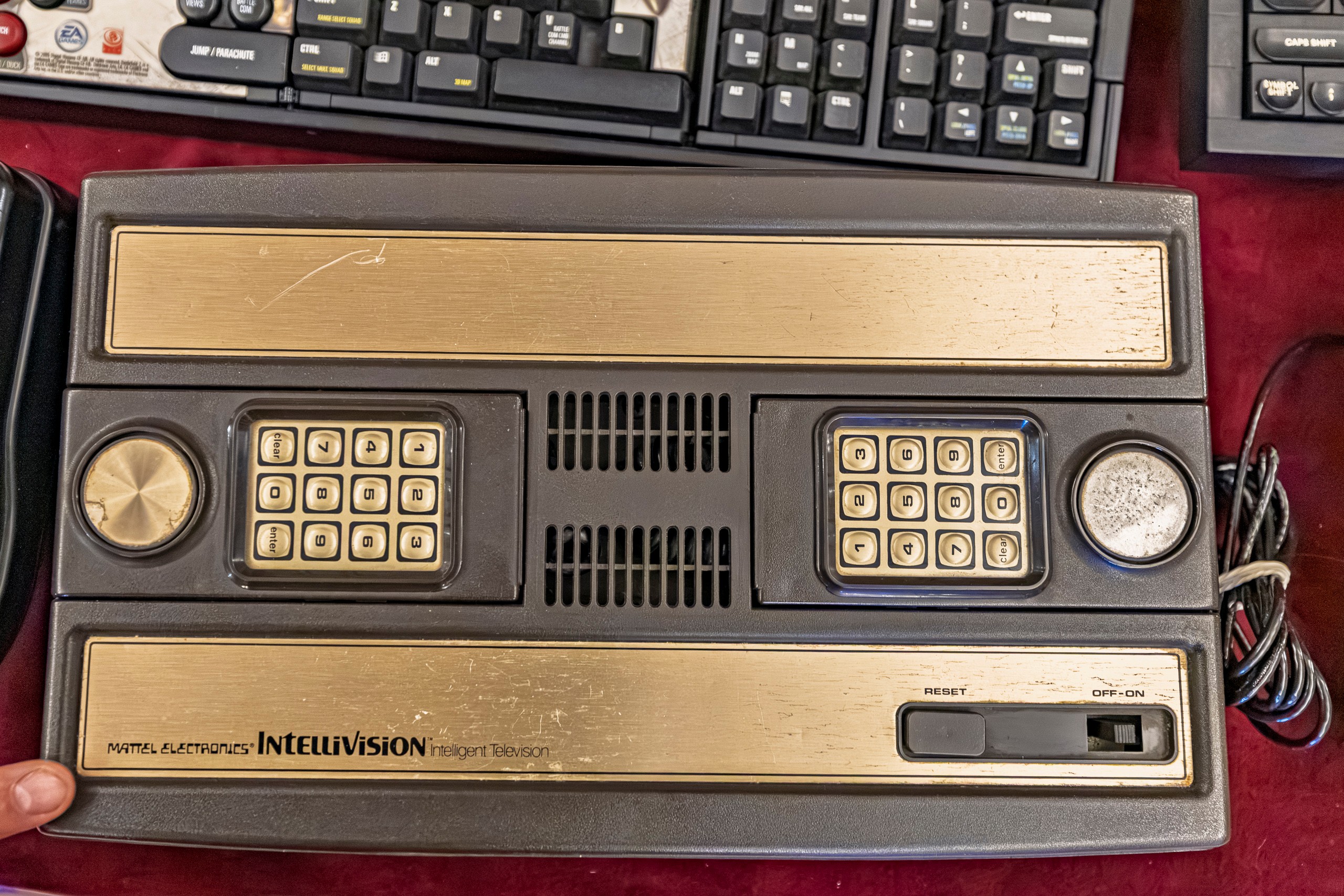
Mattel's Intellivision came out in 1979 as the first console with a 16-bit processor. Each controller had a 16-direction disc and a 12-button keypad, covered with plastic overlays describing the buttons for a given game.
Trivia: Mattel started the first "console war". In its ads, writer George Plimpton showed the same game side by side on the Intellivision and the Atari 2600, so viewers could judge the difference for themselves.
Elektronika: Soviet "egg catchers"
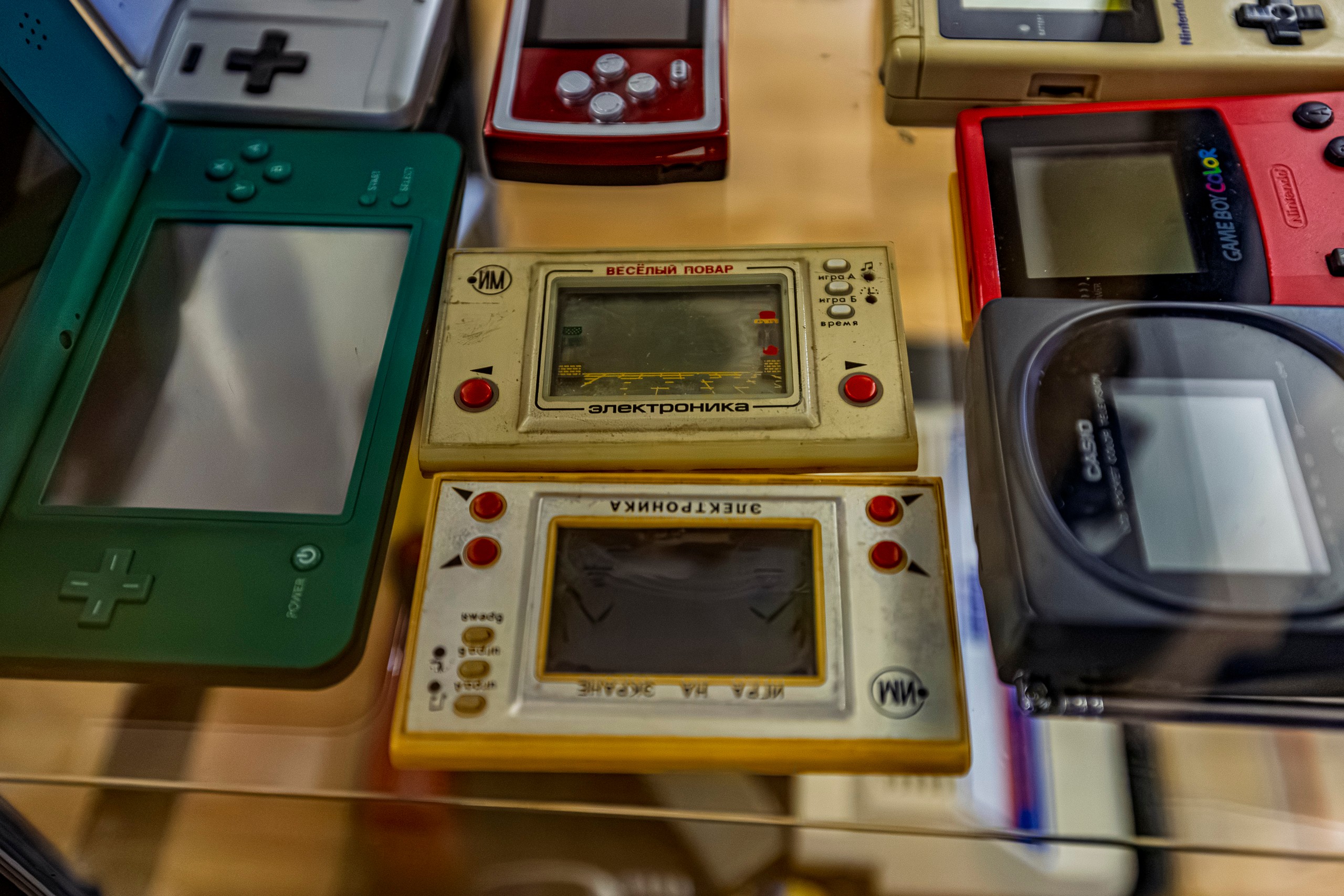
The Soviet Elektronika games of the IM series ("microprocessor game") are unofficial copies of Nintendo's Game & Watch, with a Soviet clone of the same processor inside. "Wesoły Kucharz" (Merry Cook, IM-04) copies the game Chef. The most famous, "Nu, pogodi!" (IM-02), is a copy of Egg, in which Nintendo itself had... put in a wolf. Soviet engineers swapped it for the wolf from the cartoon "Nu, pogodi!" (roughly "Just You Wait").
Trivia: in the USSR and in Poland there was a legend that after scoring 1,000 points a whole episode of the cartoon would play on the screen. Needless to say, nobody ever saw it.
6. Consoles: from the Pegasus to the PlayStation 3
Pegasus and the Famiclones: a Polish lesson in copyright law
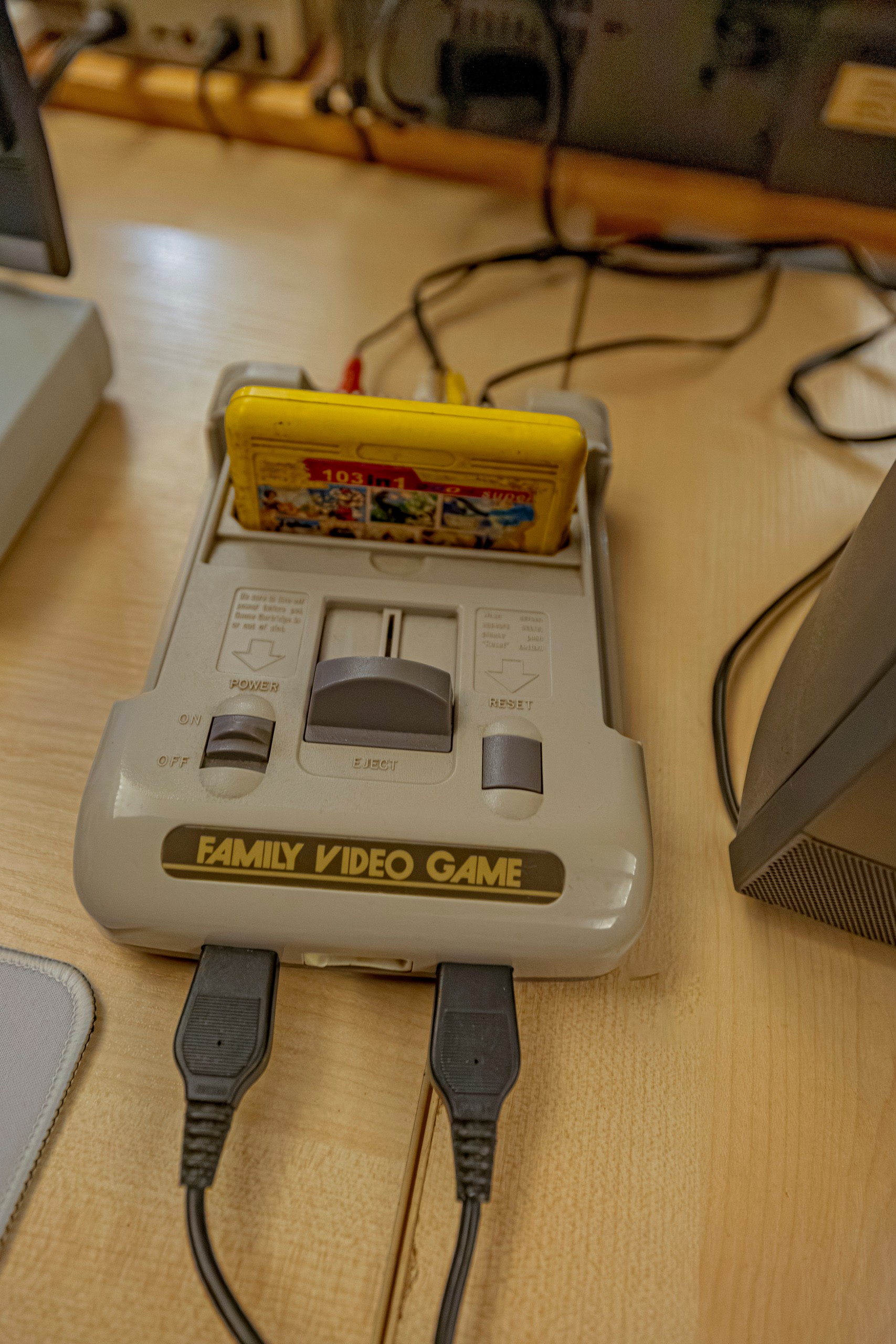
A Famiclone is an unofficial copy of Nintendo's Japanese Famicom. In Poland the most famous was the Pegasus, imported from Taiwan by BobMark International. The first model, the MT-777DX, was a hit in 1992-1993, and over the decade about a million Pegasus consoles ended up in Polish homes. The year 1994 and a new copyright act thinned out the pirate games considerably. The console in the photo is called "Family Video Game", one of many similar Famiclones of the time.
Sega: from Mega Drive to Dreamcast
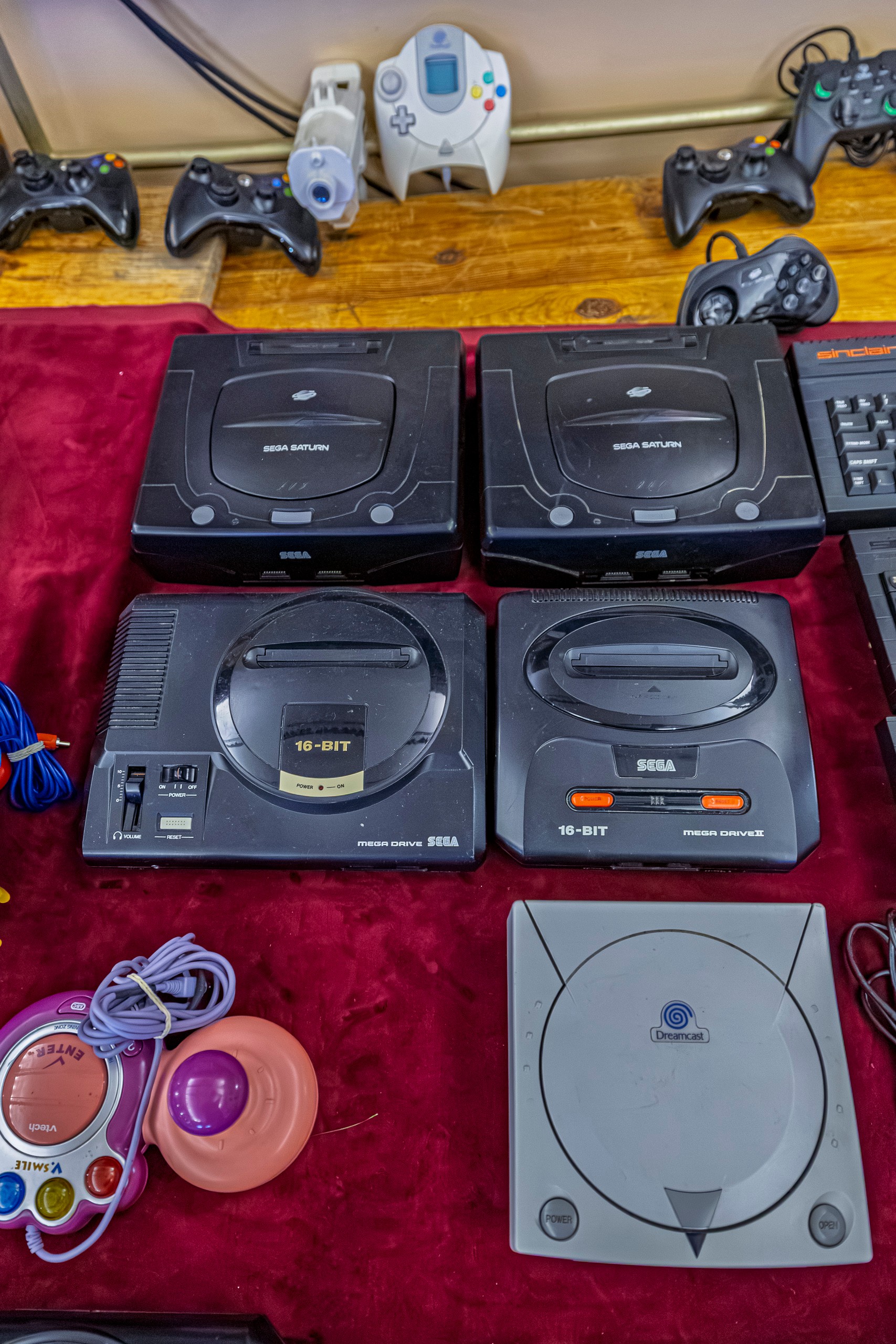
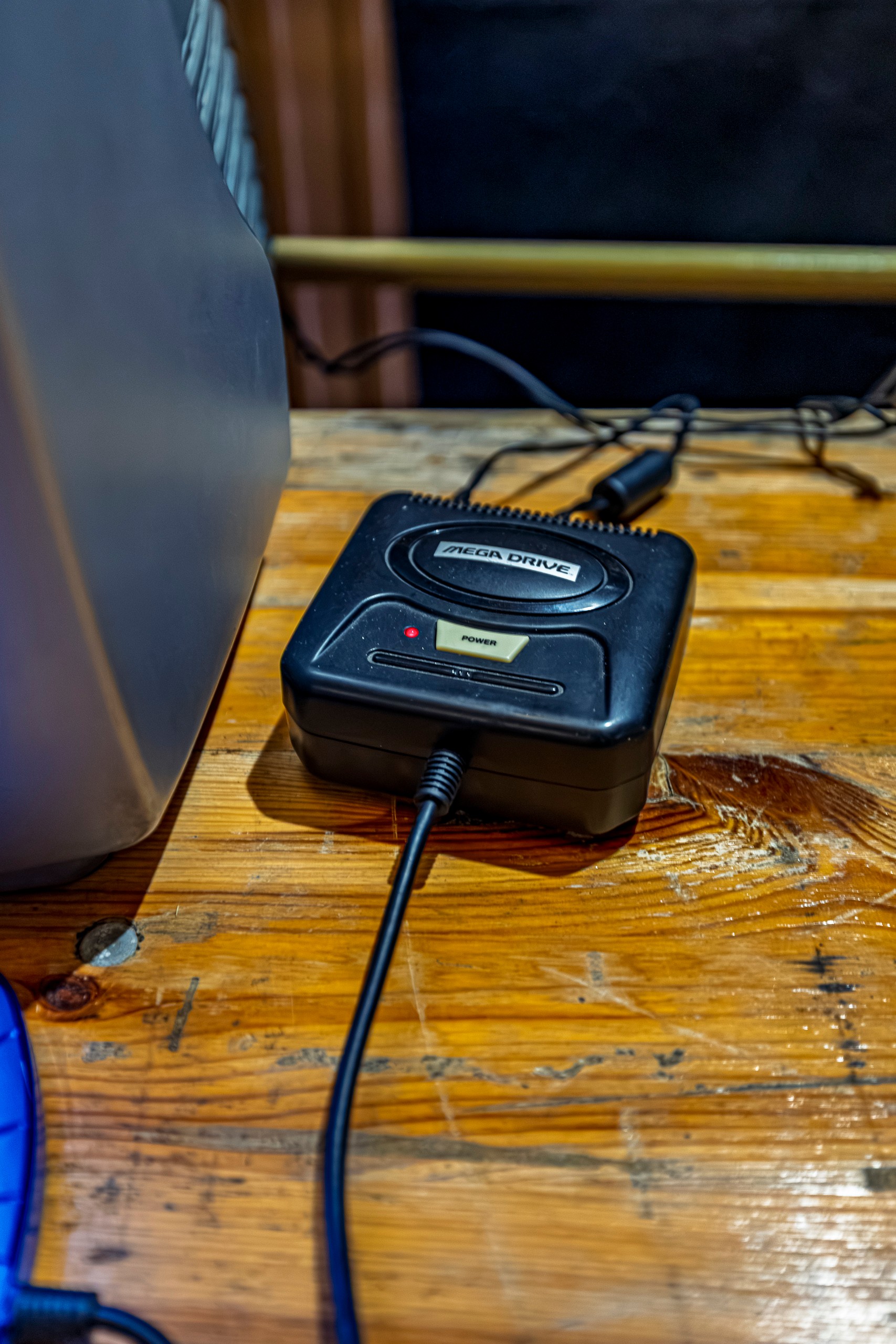
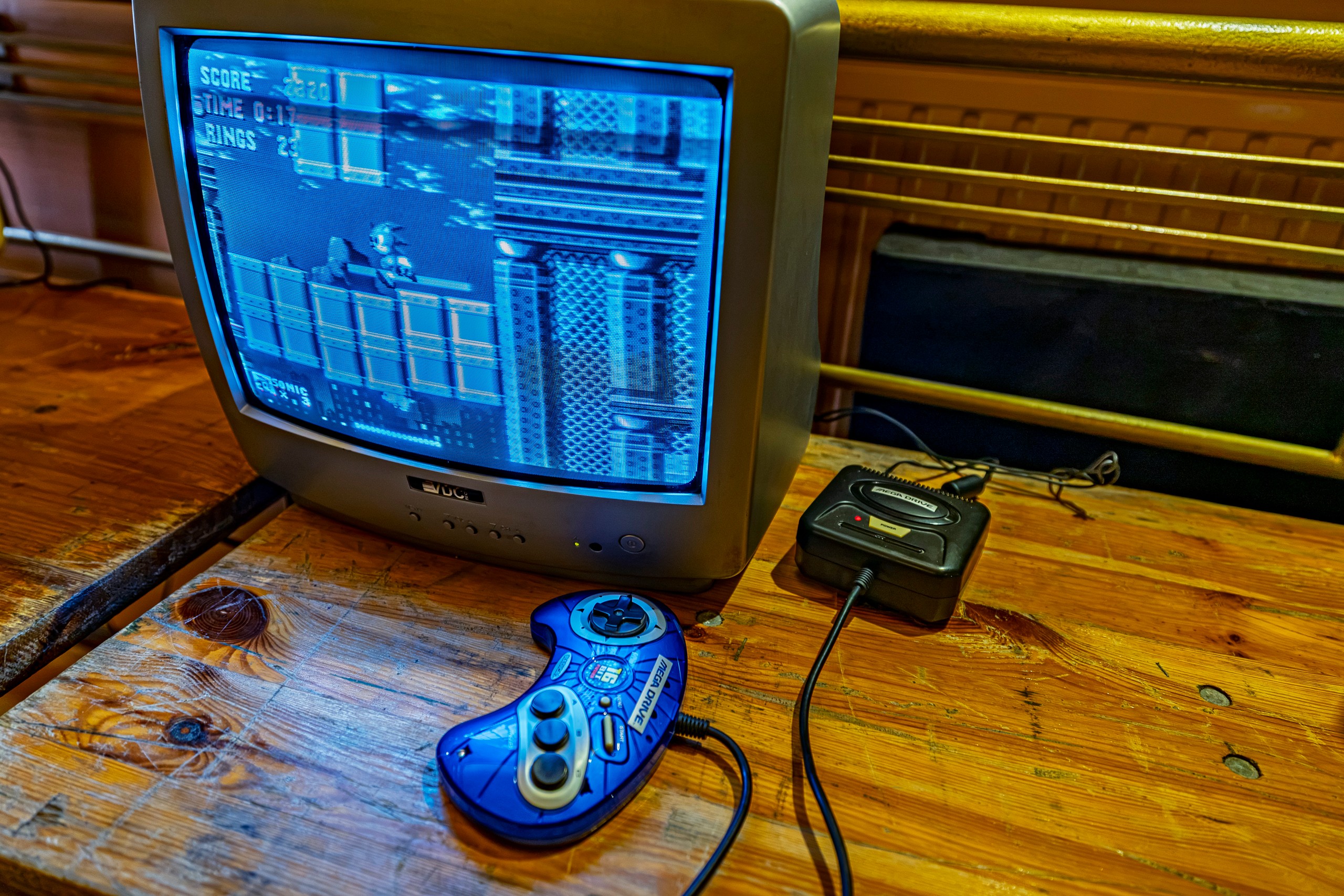
The Mega Drive (Genesis in the US) is Sega's 16-bit console, and Sonic the Hedgehog was its answer to Mario. The 1998 Dreamcast was Sega's last console and the first with a built-in modem for online play. In March 2001 Sega ended its production, left the console business and has only published games ever since.
Neo Geo: an arcade machine for the home
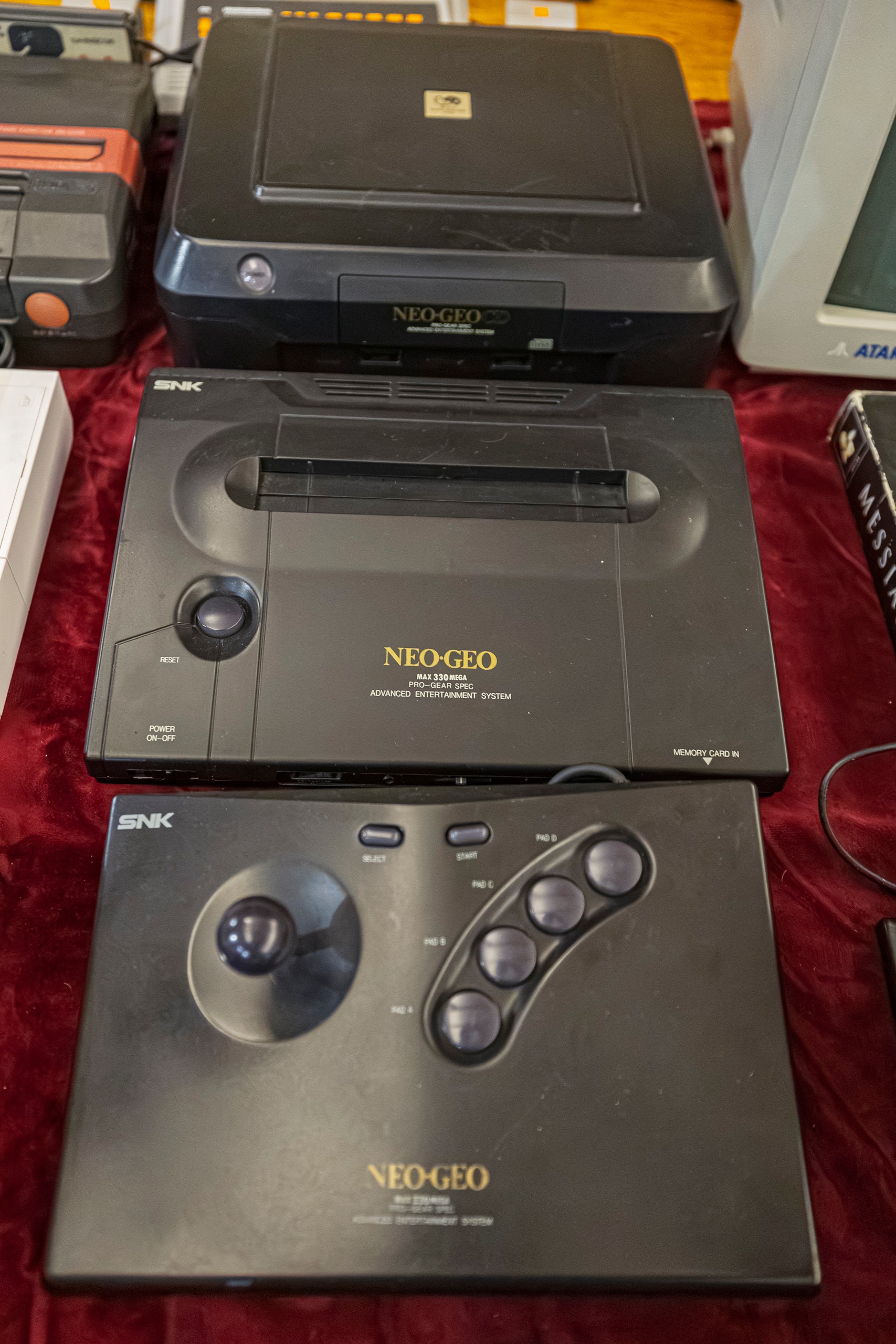
SNK's Neo Geo was the most expensive console of its time. The home AES version from 1990 had the same hardware as the MVS arcade machines, so games at home looked exactly like in the arcade. The console cost 649.99 dollars, and a single cartridge between 200 and 600 dollars. At first in Japan it was not even sold in shops, only rented.
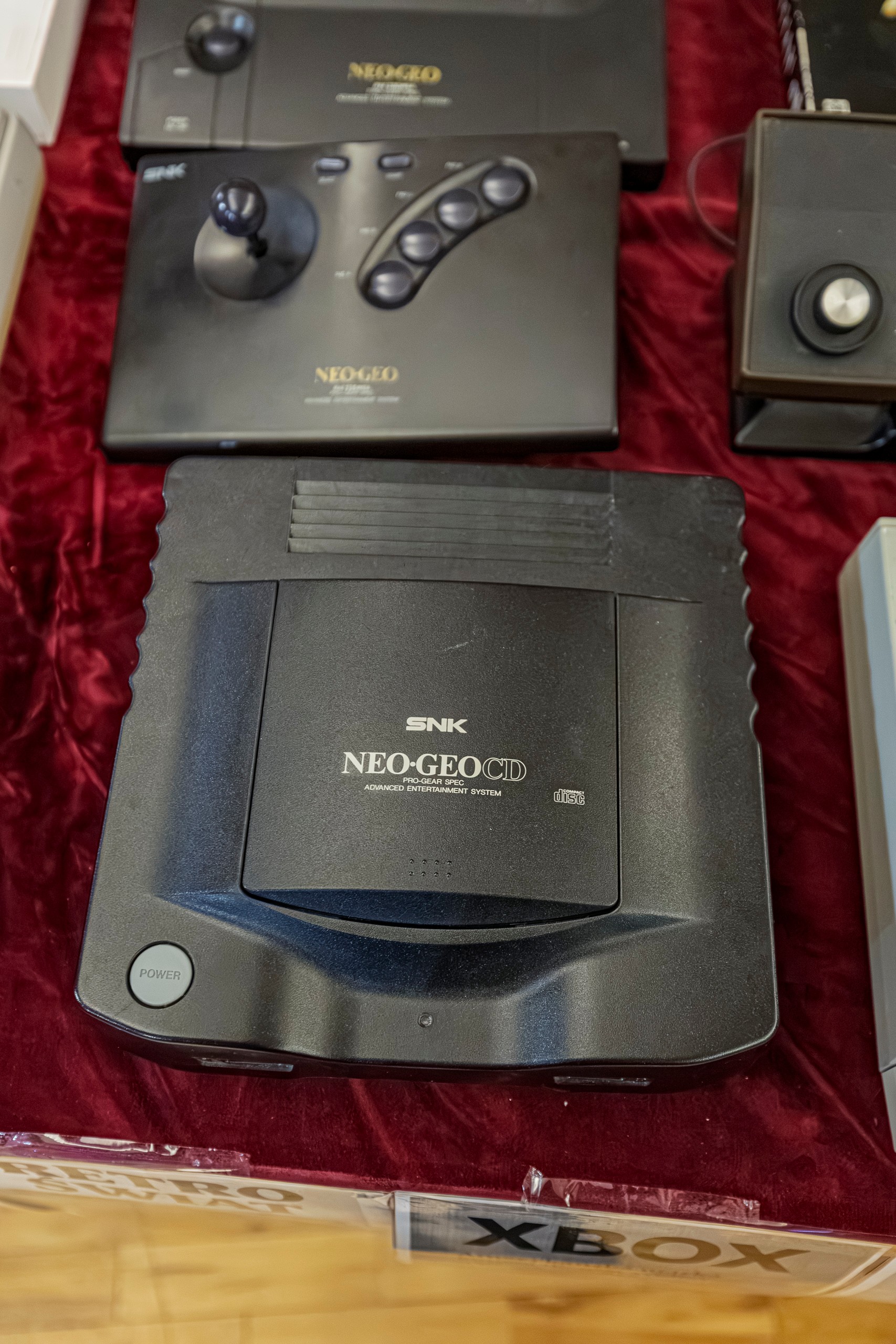
Trivia: the Neo Geo CD had a single-speed CD drive. In fighting games, where players expected the next round instantly, the wait was 30 to 60 seconds.
3DO: a console anyone could make
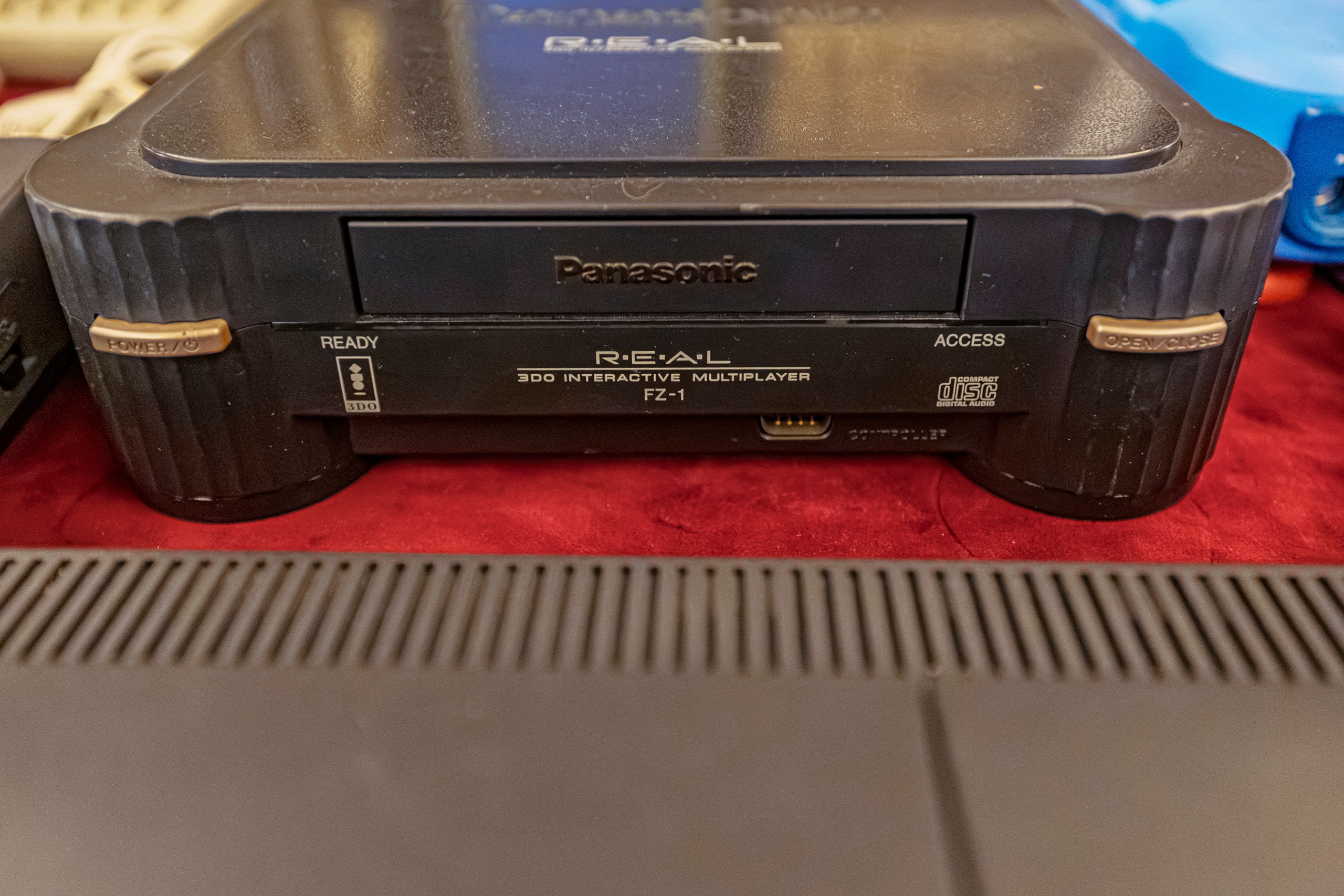
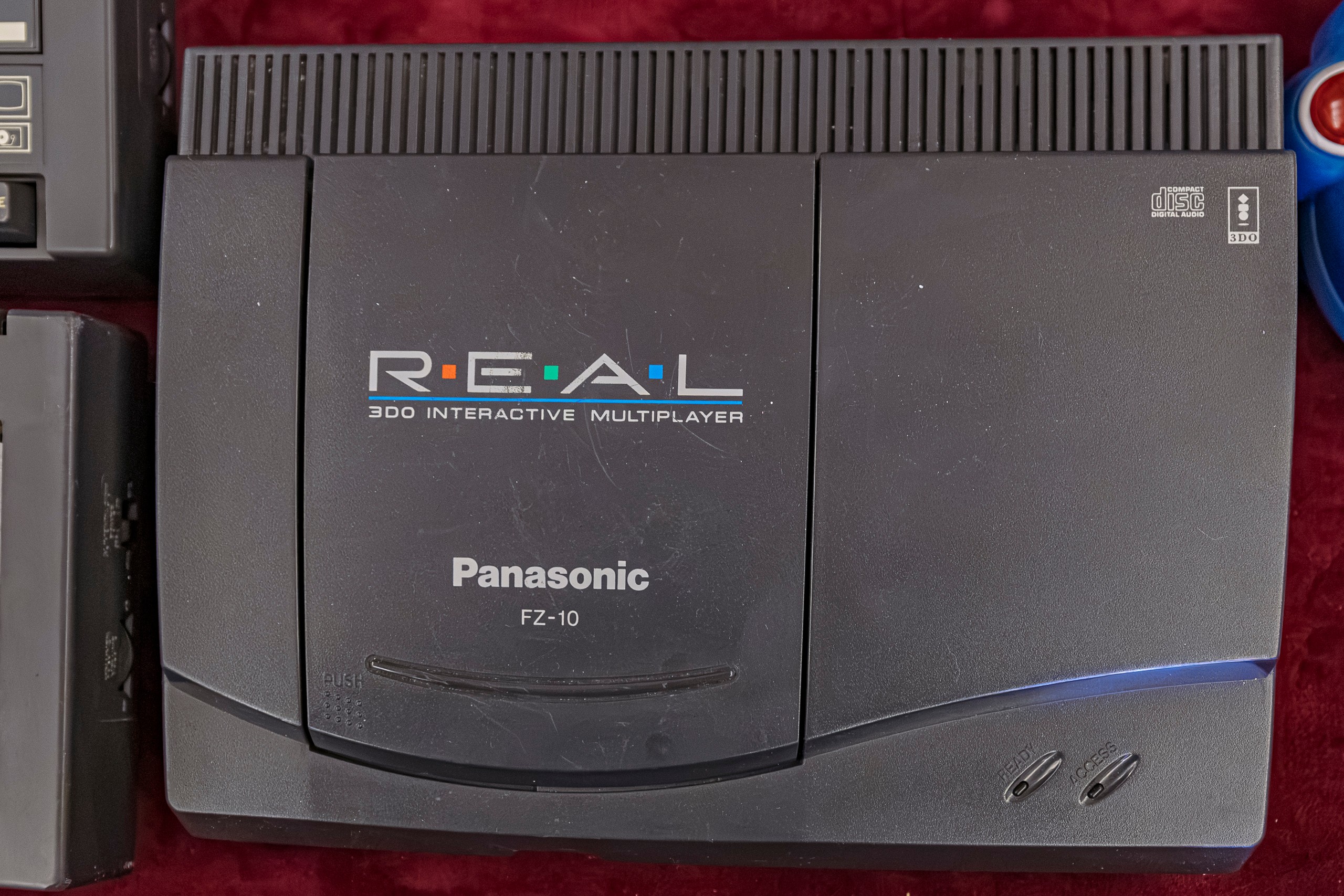
The 3DO was conceived by Trip Hawkins, the founder of Electronic Arts. The idea was revolutionary: the 3DO company only designed the specification, and licensees manufactured the consoles, as with VHS recorders. Panasonic was first with the FZ-1 (October 1993), followed by GoldStar and Sanyo. The problem was that manufacturers had to make money on the hardware itself, so the FZ-1 cost a hefty 699.99 dollars. The price is blamed for the failure of the whole format.
GameCube and PlayStation 3: the 21st century
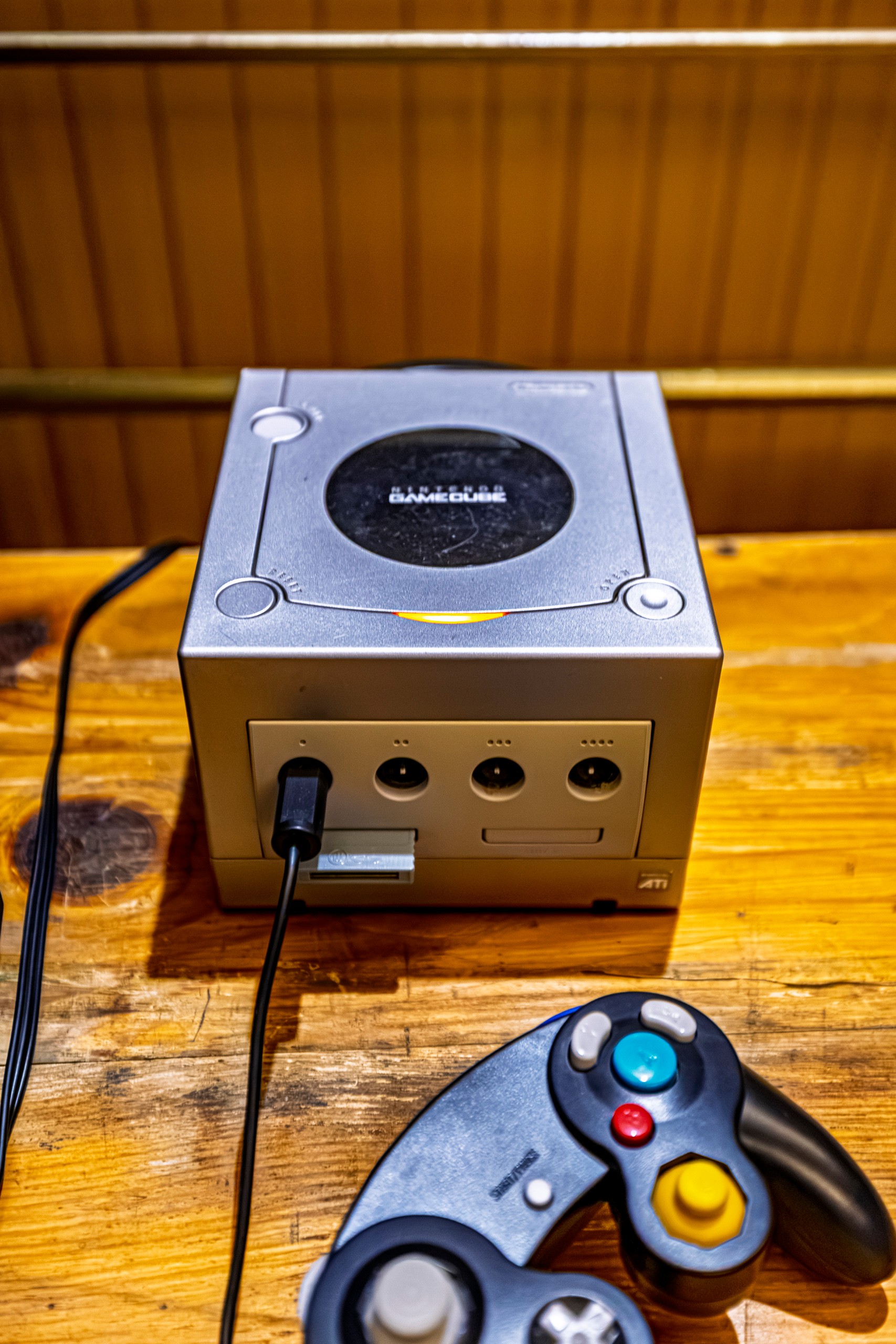
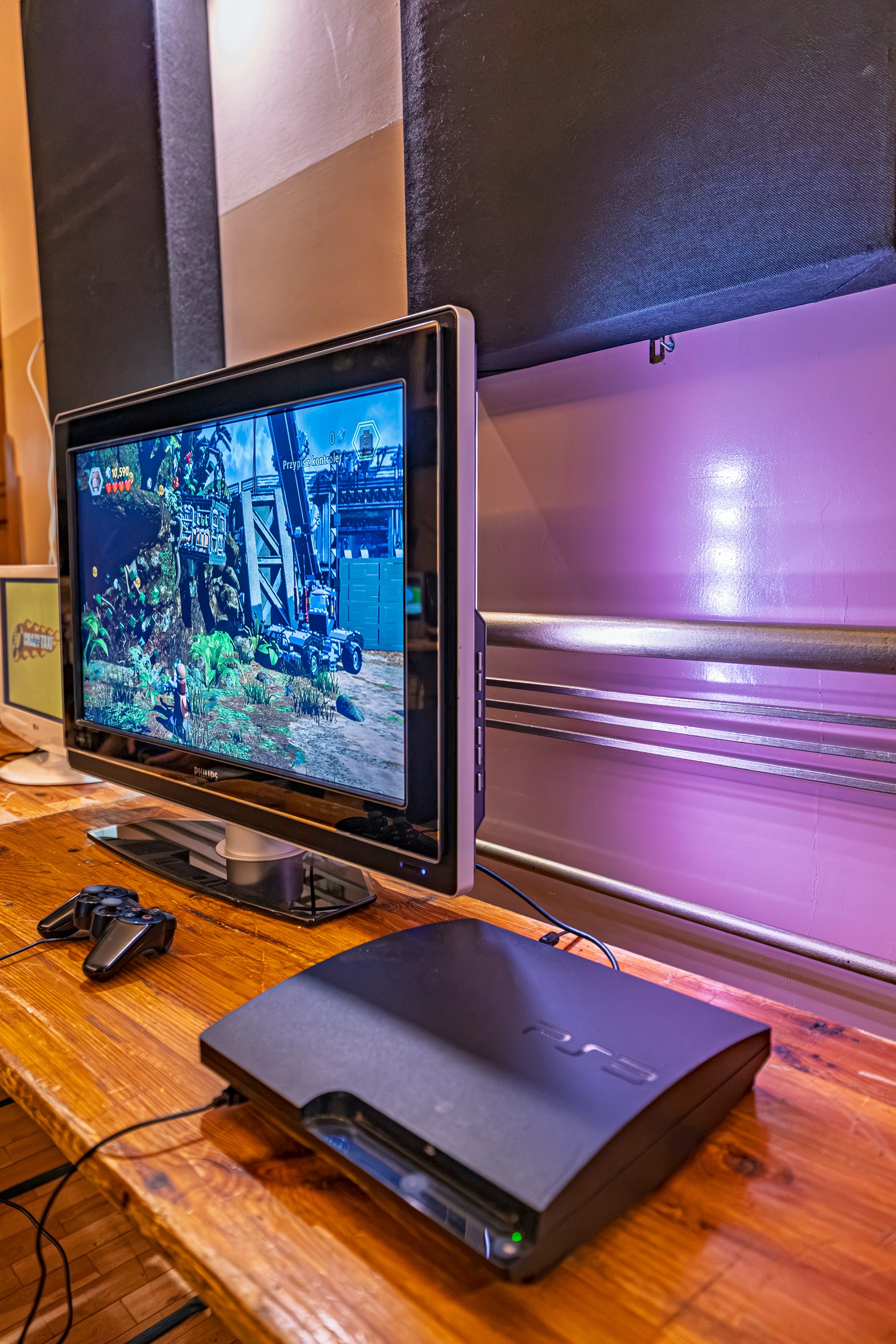
The GameCube (2001) used small 8-centimetre discs, and the PlayStation 3 (2006, Slim version from 2009) belongs to the age of Blu-ray and HD. Their presence is a reminder that "retro" is a moving target: for today's teenagers, these are the consoles of their parents' childhood.
7. Other computers: Amstrad, Sharp and PCs
Amstrad CPC 6128 and Schneider CPC 464: a computer with one plug
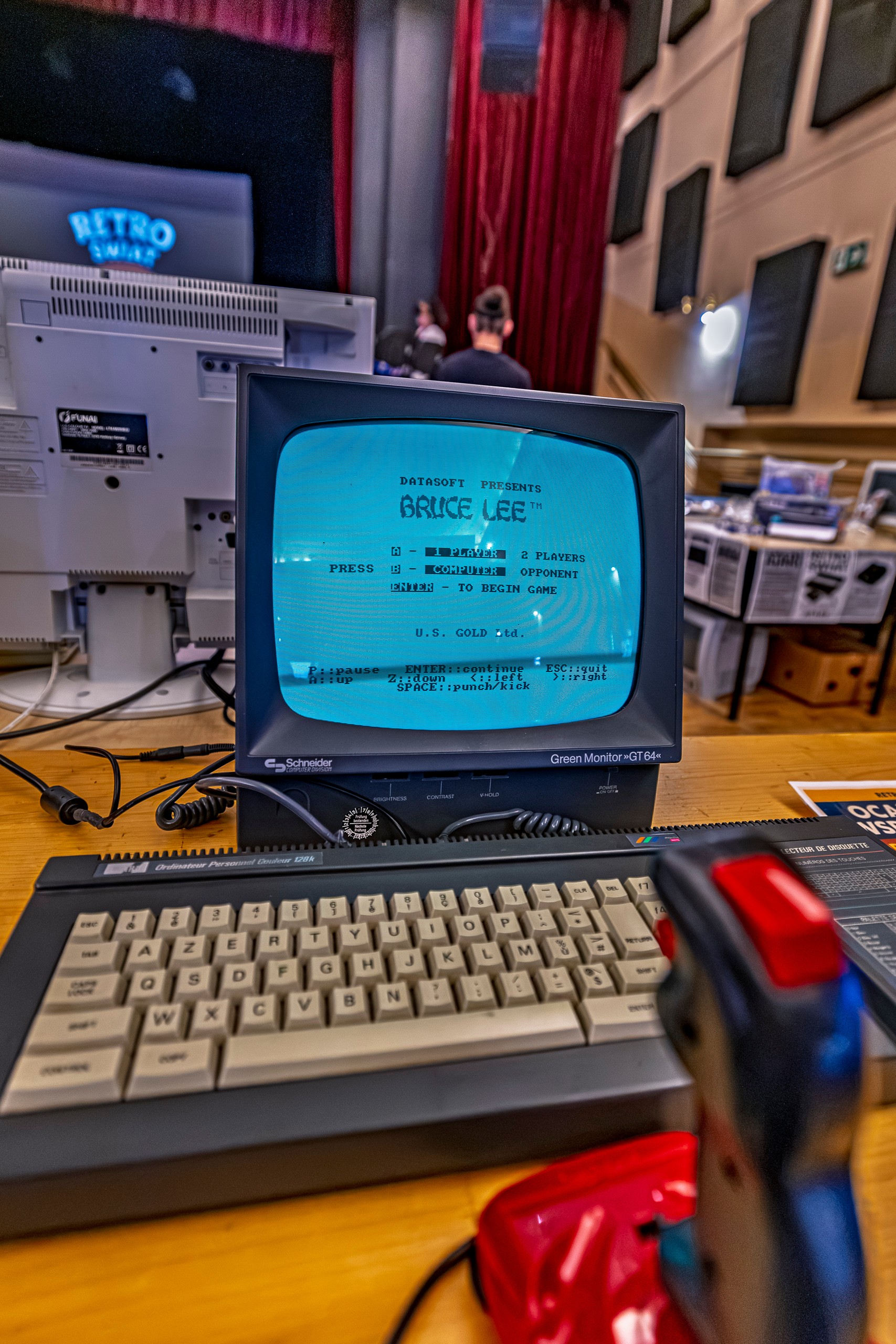
Alan Sugar's British Amstrad (the name stands for Alan Michael Sugar Trading) was known for cheap hi-fi systems. In 1984 it entered the computer market with the CPC 464, which had a built-in cassette deck and was sold with a monitor from the start. The computer in this photo reads "Ordinateur Personnel Couleur 128k" and its disk drive is labelled "Lecteur de disquette": it is a CPC 6128 with a built-in 3" floppy drive, in the French-market version.
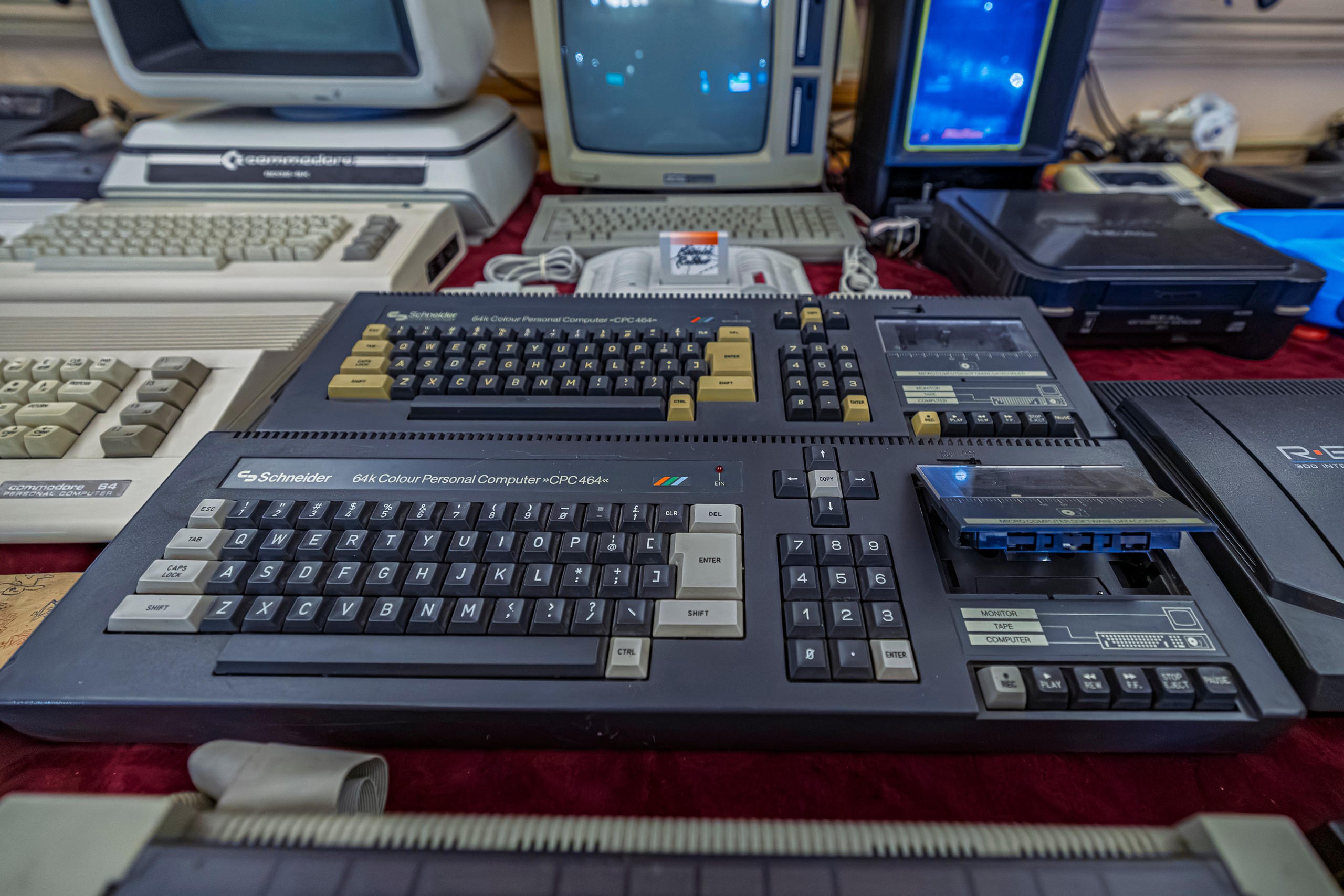
Trivia: the CPC's power supply sat in the monitor, and the computer drew power from the monitor through a cable. The whole set needed just one wall socket. In Germany and a few other countries Amstrads were sold by Schneider under its own brand, hence the Schneider logo on the monitor next to the CPC 6128. The CPC 464 was Amstrad's best-selling computer: over 2 million units.
Sharp MZ-700: the "clean computer"
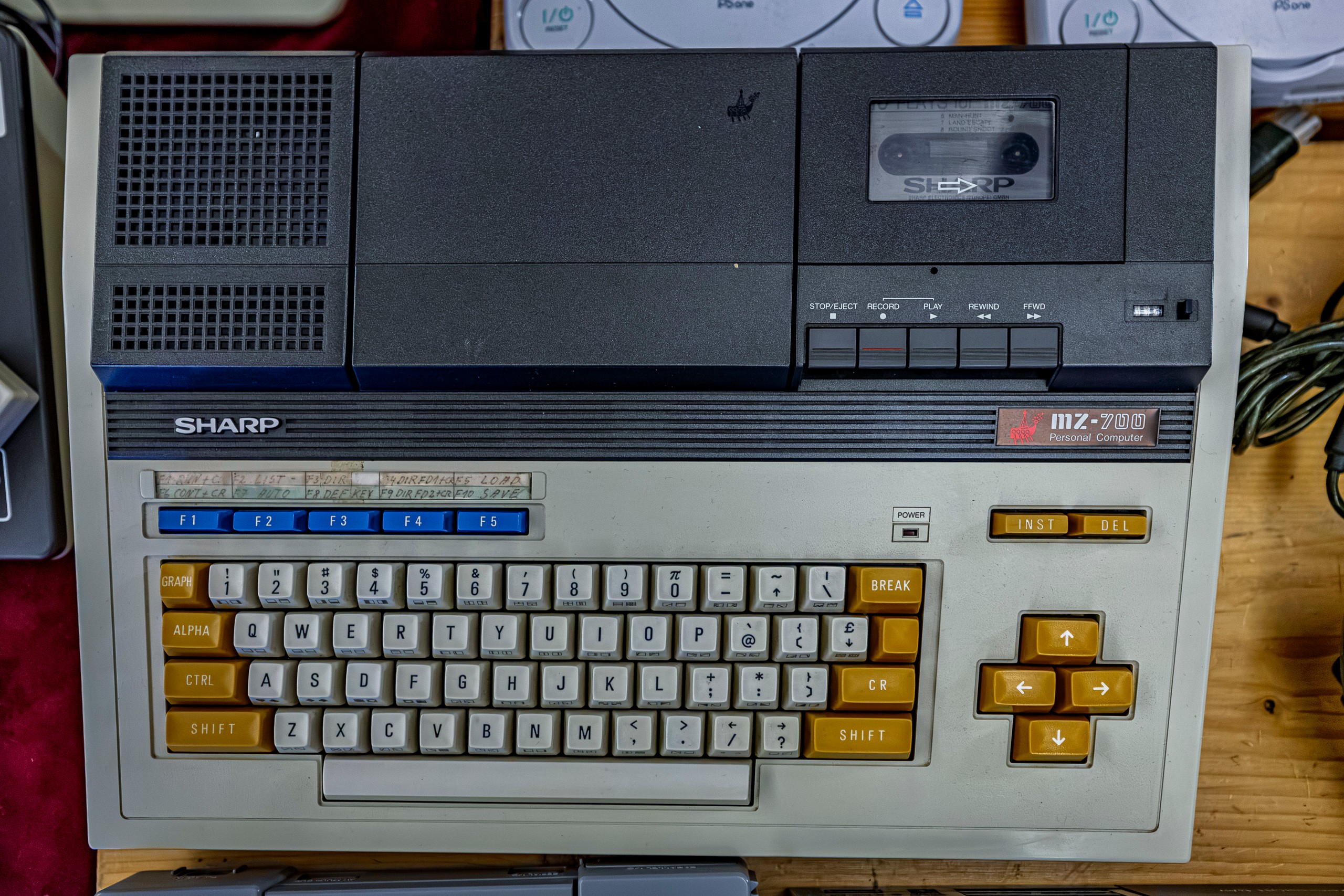
The Japanese Sharp MZ-700 from 1982 came in three versions: the bare MZ-711, the MZ-721 with a cassette deck (as in the photo) and the MZ-731, which also had a built-in four-colour plotter with miniature pens.
Trivia: Sharp advertised the MZ-700 as a "clean computer". The ROM held only a small boot program, and BASIC had to be loaded from tape every time, which took several minutes. The upside: all the memory was left for your program, and instead of BASIC you could load another language.
Sharp MZ-2500: the Japanese "Phoenix"
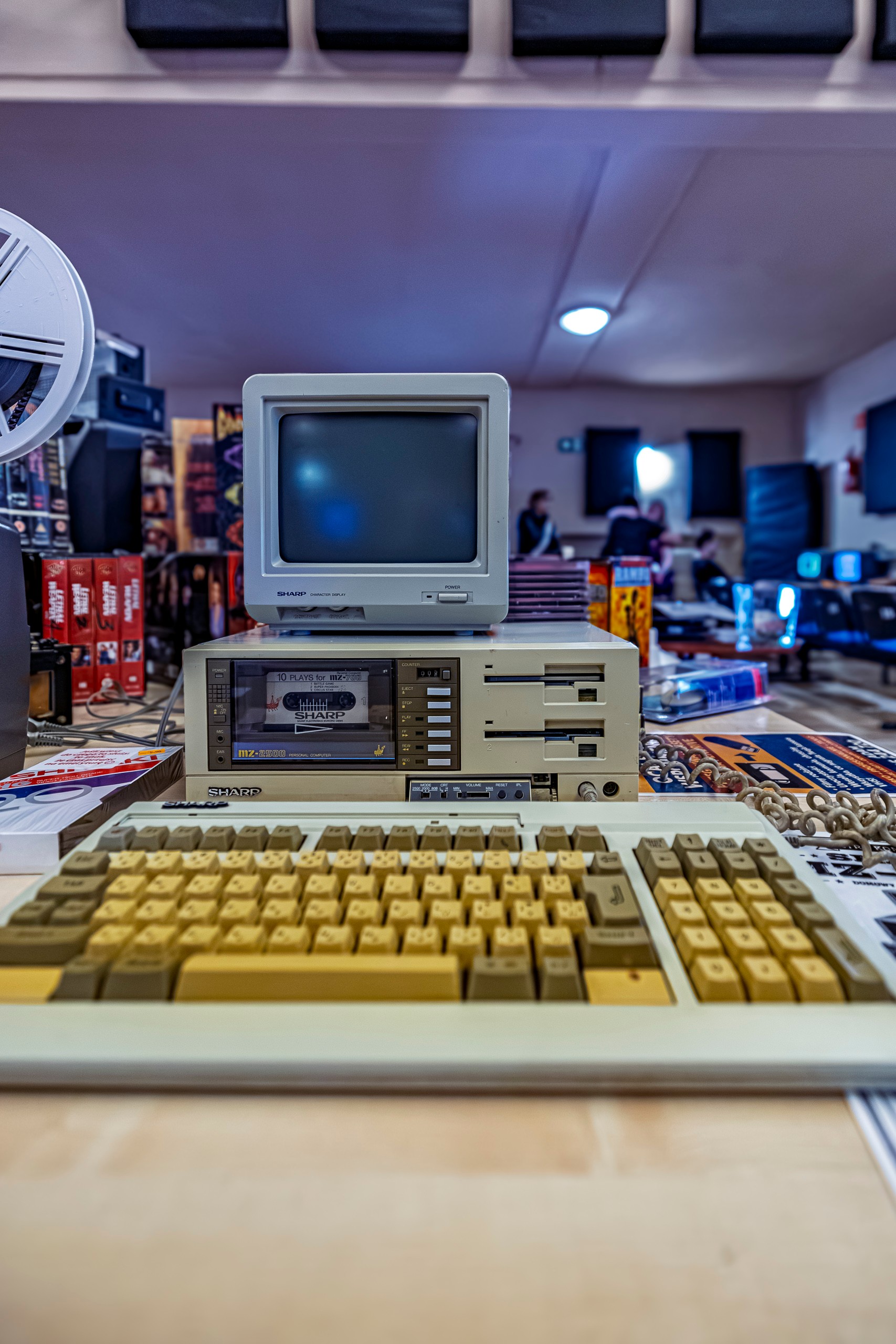
A genuine rarity at a Polish exhibition. The MZ-2500, or "Super MZ", went on sale on 1 October 1985 and was sold mainly in Japan. It is an 8-bit machine with a Z80B processor (6 MHz), 3.5" floppy drives and a port for connecting to online services. The Japanese press called it the "Phoenix", and it is still regarded as one of the most powerful 8-bit computers.
Trivia: a switch on the front turned the MZ-2500 into the older MZ-2000 and MZ-80B models, and the cassette deck was kept precisely for compatibility with them.
PCs: from Prince of Persia to Call of Duty 2
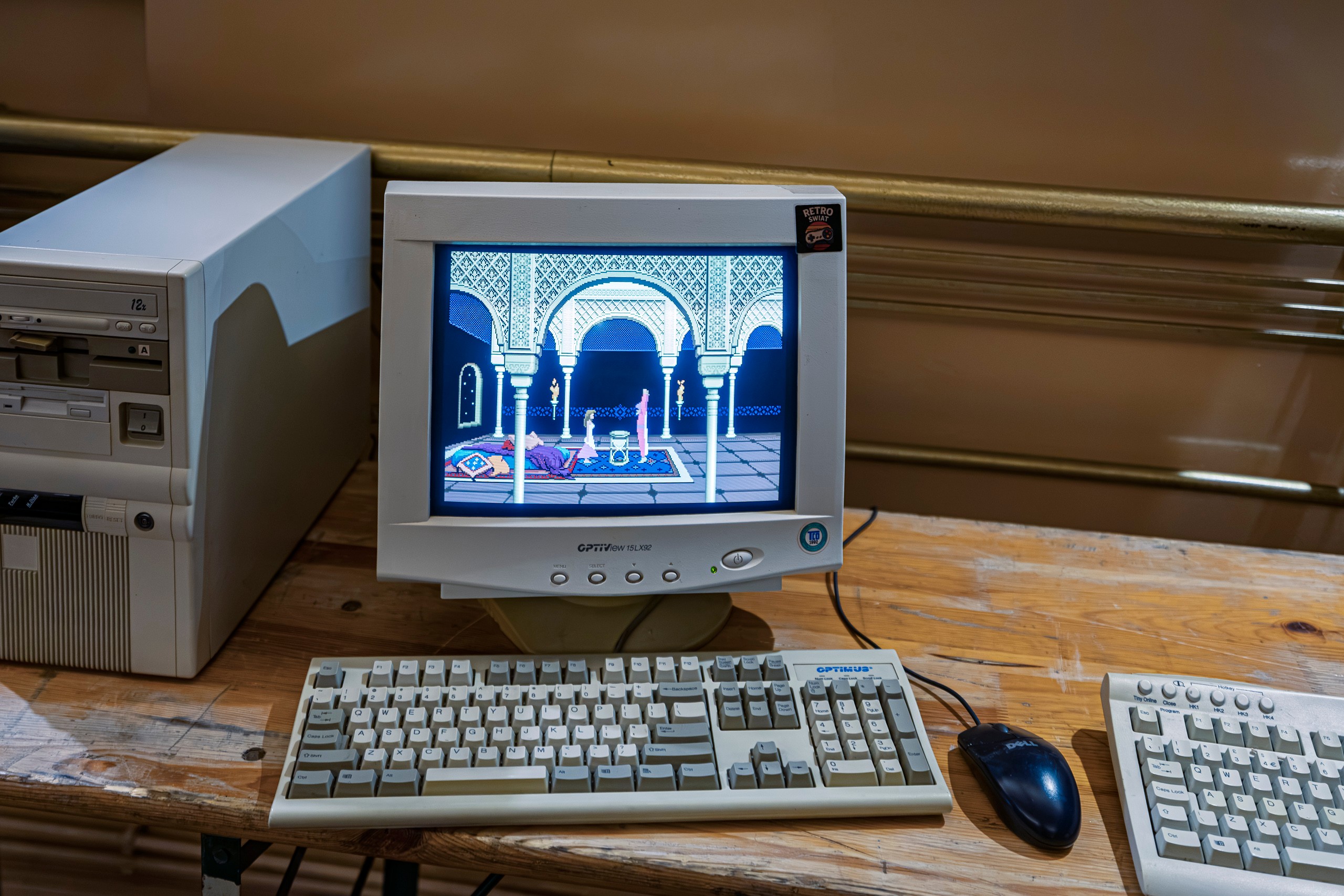
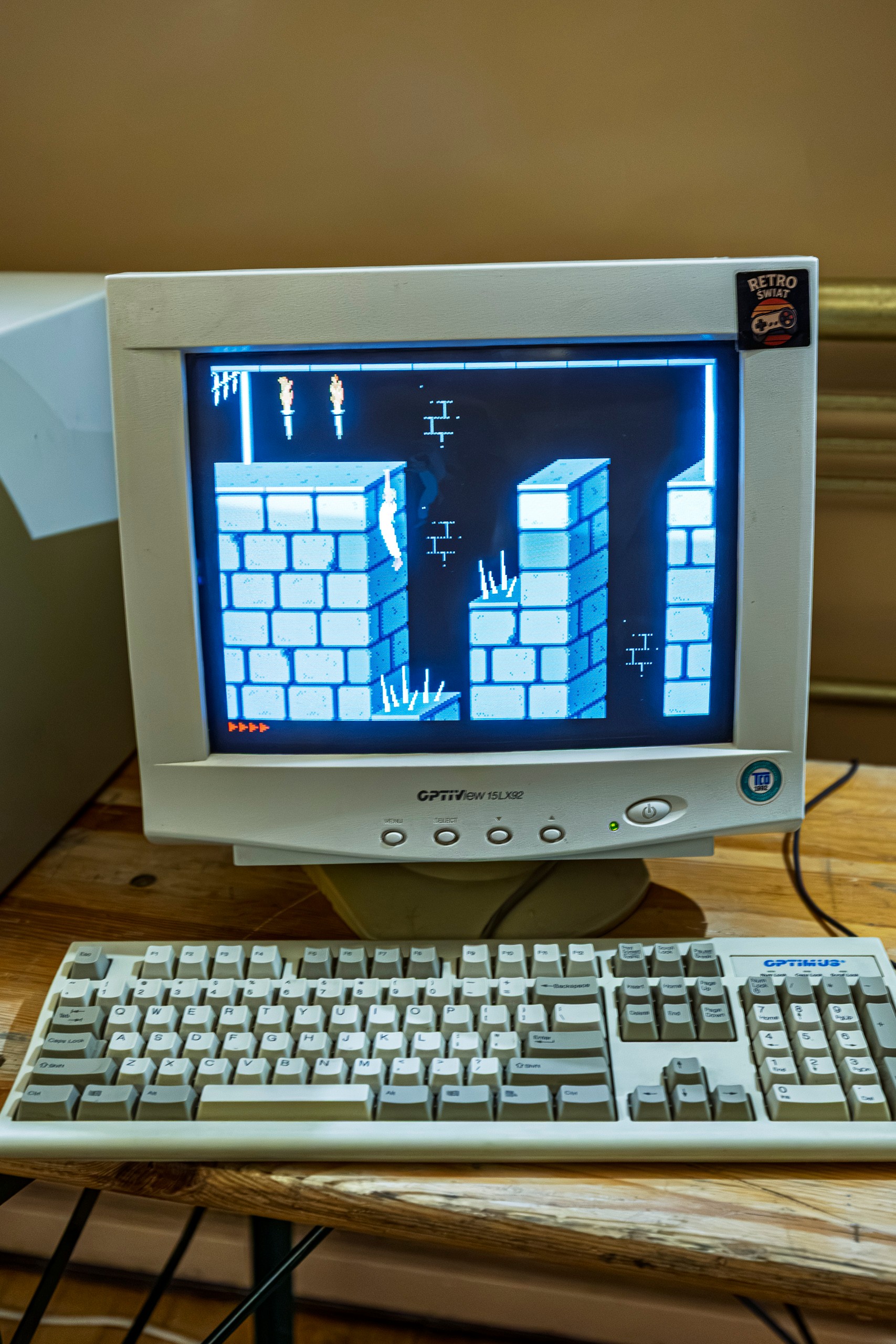
Jordan Mechner's Prince of Persia (1989) amazed players with the fluid movement of its hero. Mechner used rotoscoping: he filmed his younger brother David running and jumping around a parking lot in white clothes, then traced his movements frame by frame. The sword fights were traced from the duel between Errol Flynn and Basil Rathbone in the 1938 film "The Adventures of Robin Hood". The game's music was composed by the brothers' father, Francis Mechner.
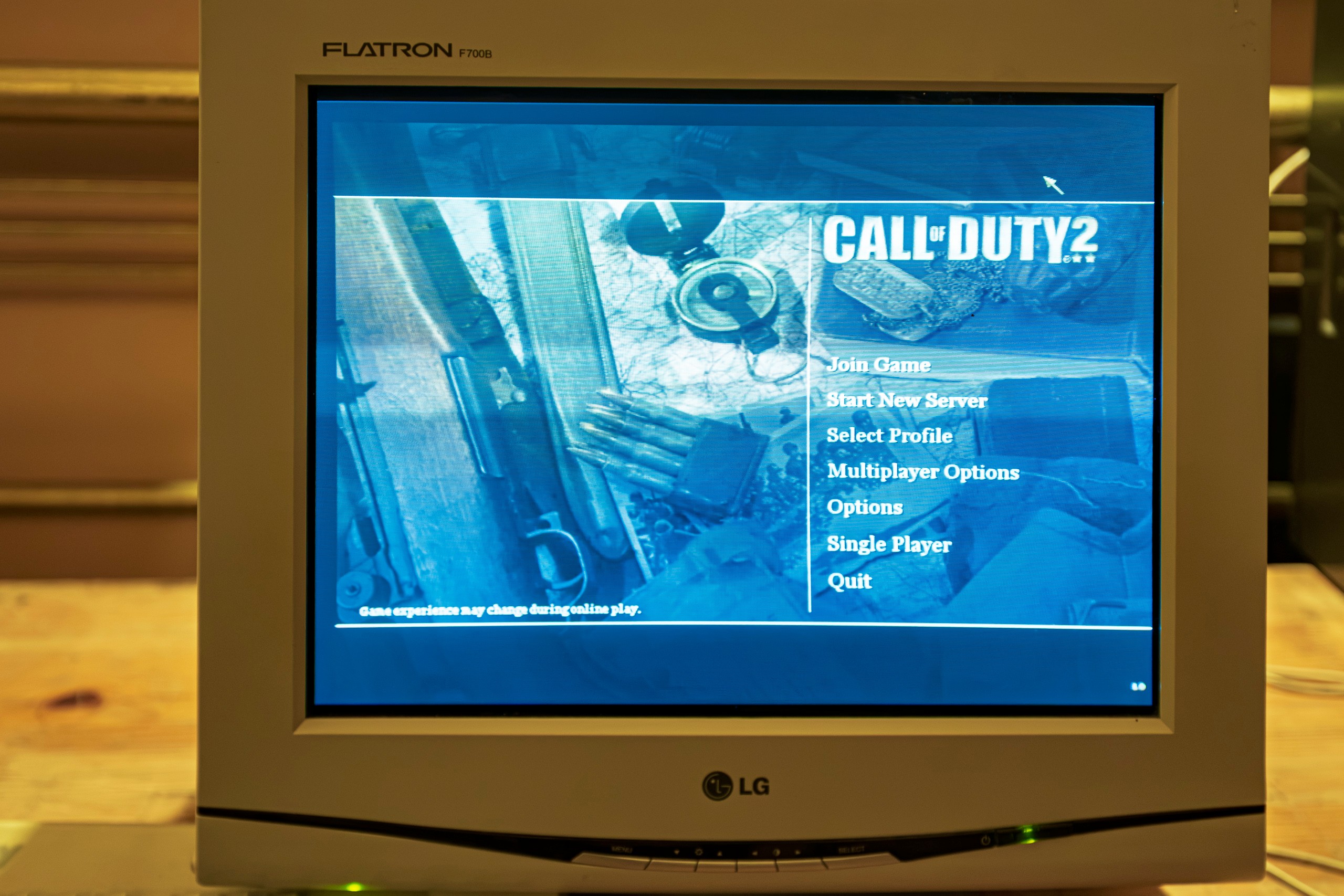
8. Video and home electronics
Video8: tapes smaller than VHS
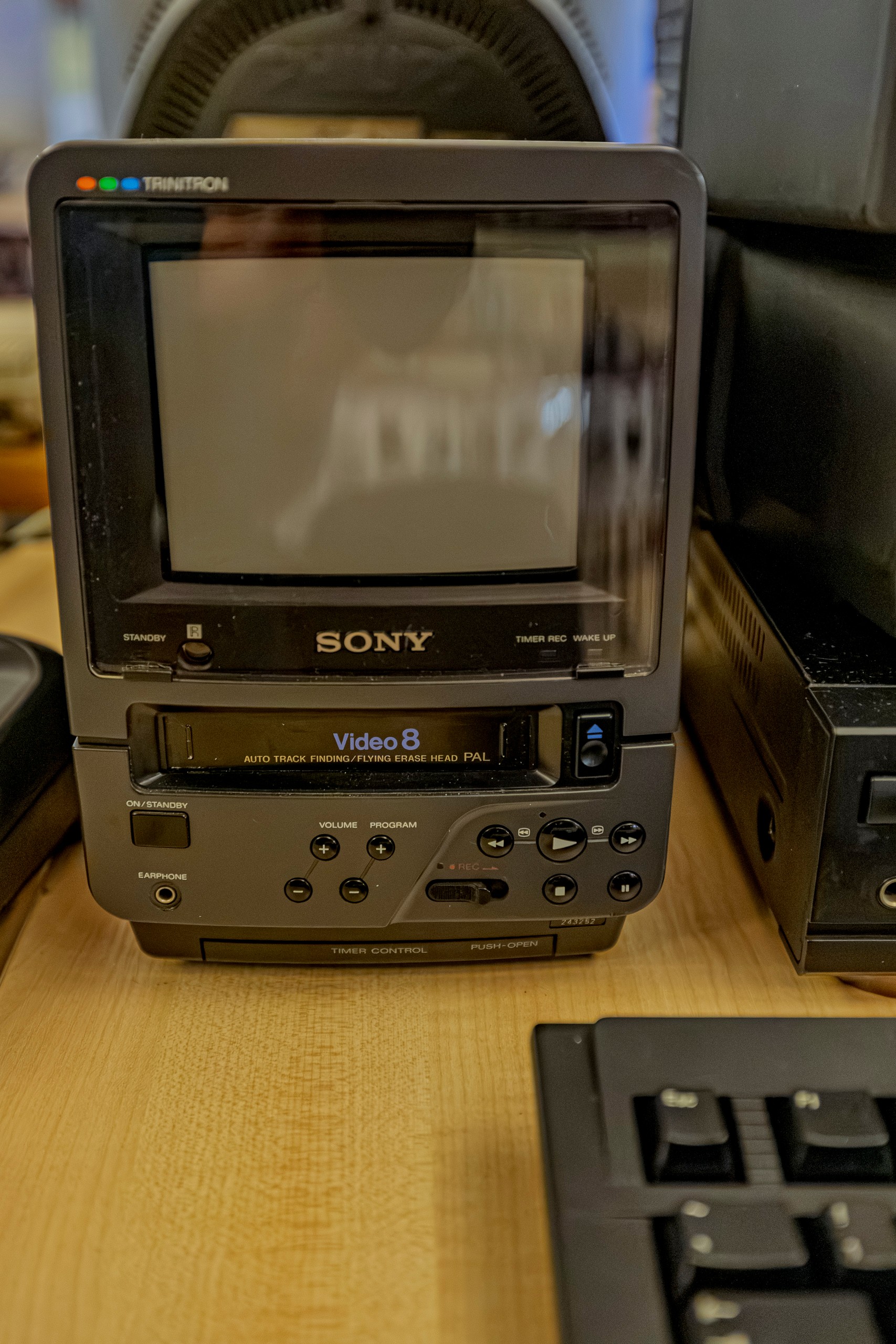
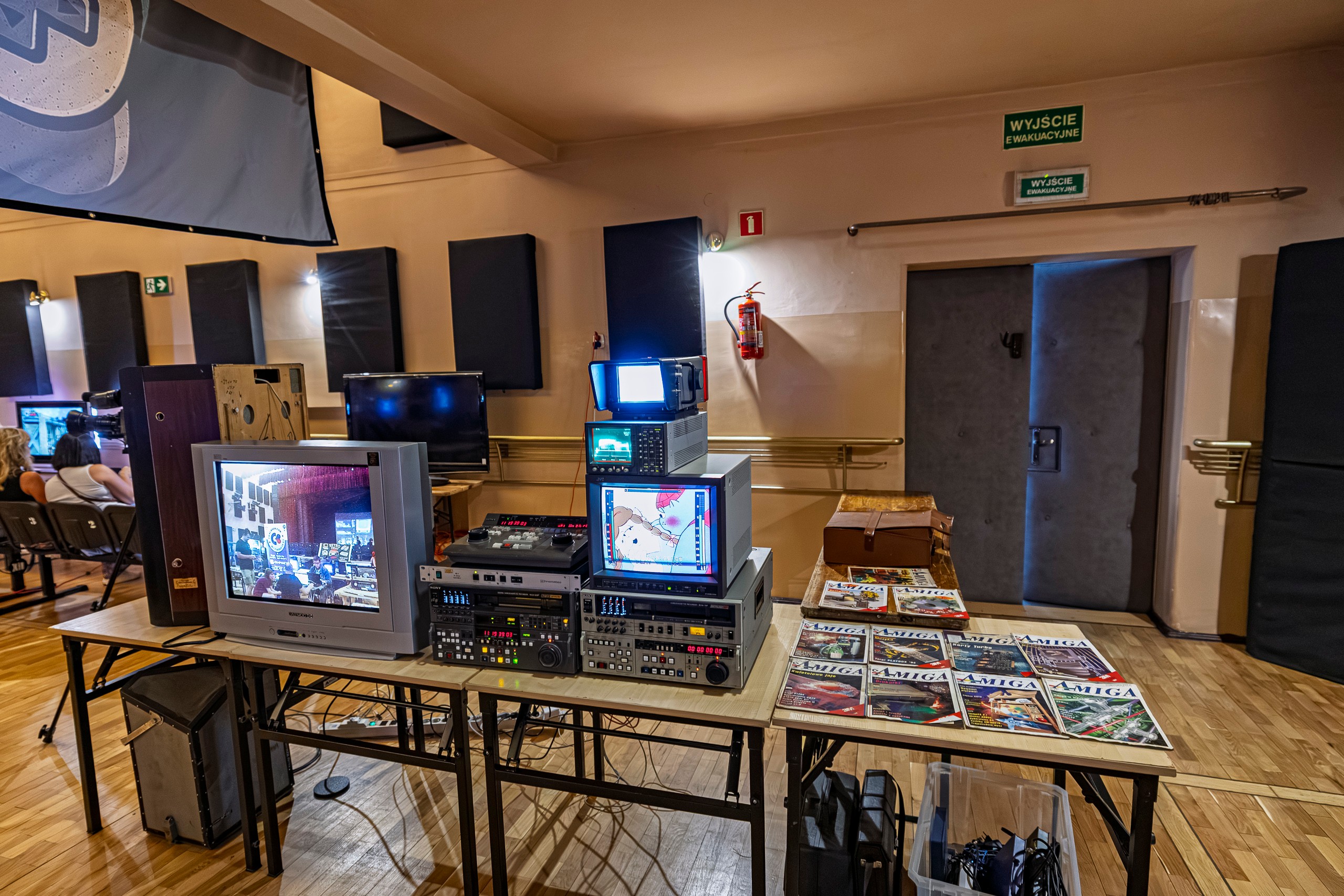
Sony introduced the Video8 format in 1985, together with the first Handycam camcorders. The tape was 8 mm wide, so cassettes were much smaller than VHS and camcorders fitted in your hand. Sony hoped Video8 would eventually replace VHS and Betamax. VHS won in the living room, but Video8 and the later Hi8 took over the amateur camcorder market. Devices like the one in the photo were used mainly to watch camcorder footage on a bigger screen.
Noris: home cinema before tapes
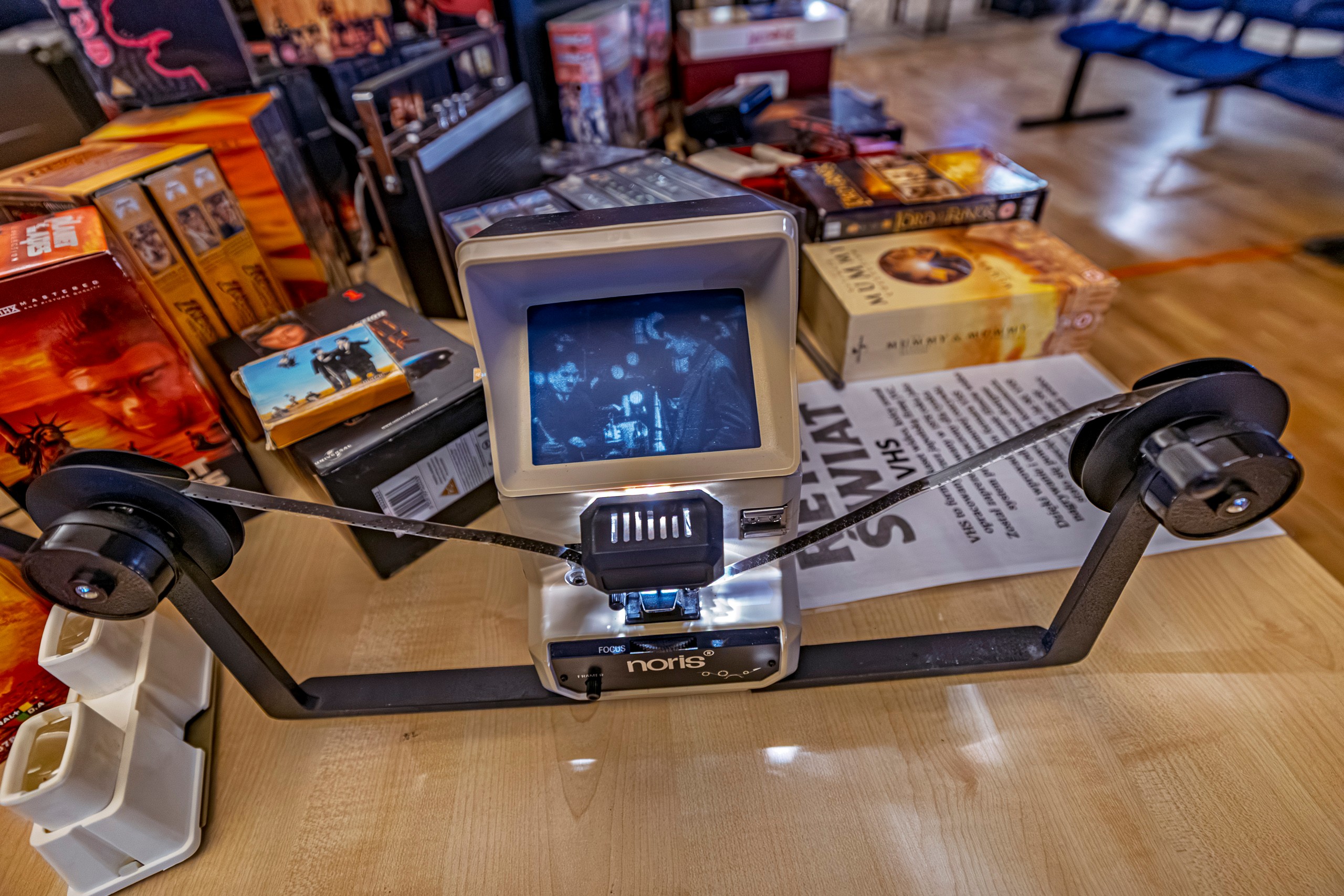
Before video cameras, home movies were shot on photographic film, for example 8 mm. Viewers like this one from the German brand Noris were used for watching and editing: you wound the film by hand between the reels, and the picture appeared on a small matte screen. The best shots were cut out and spliced together.
VHS as a hard drive: the Video Backup System
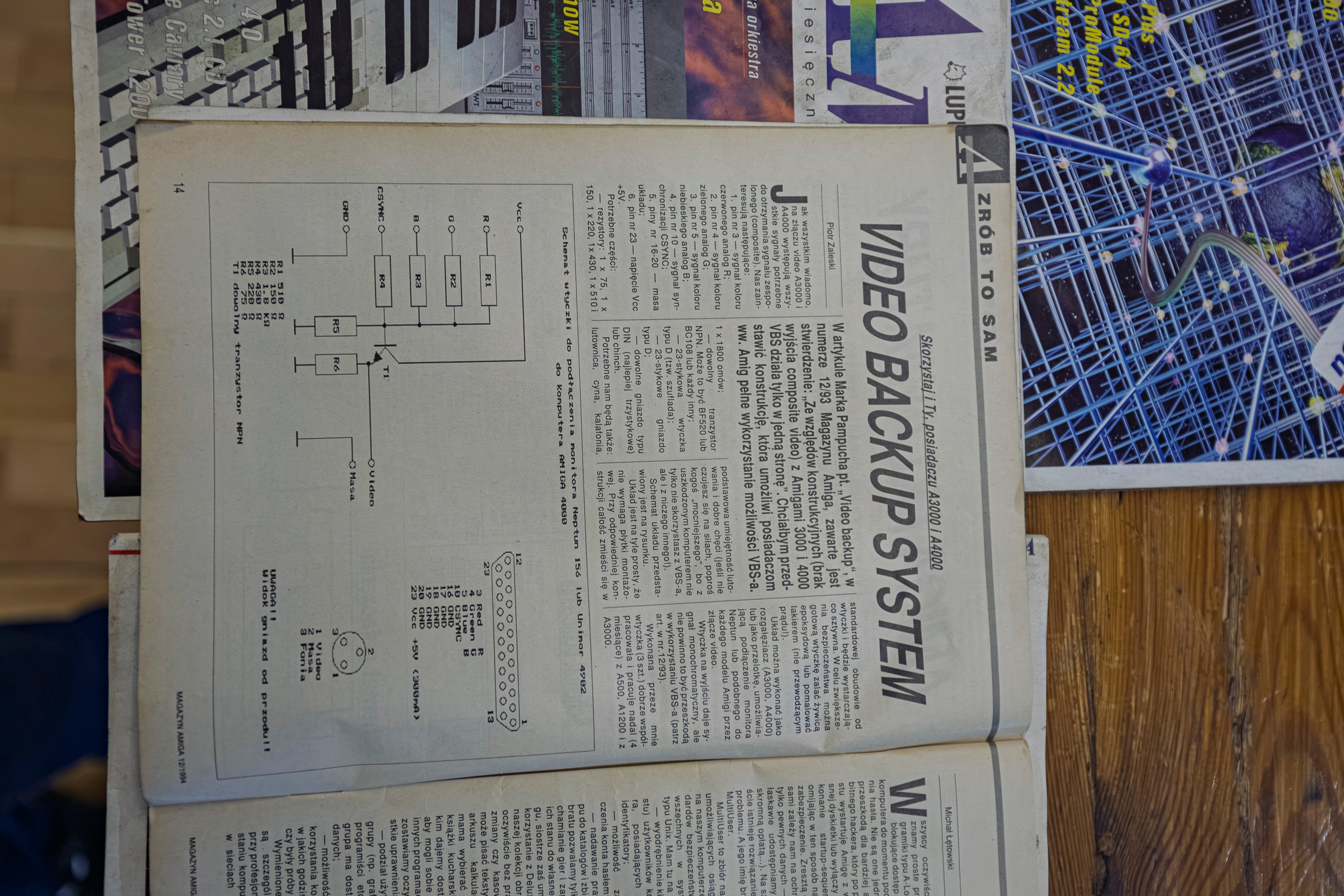
In the early 1990s Dutch engineer Hugo Lyppens developed the Video Backup System for the Amiga. The computer turned data into a black-and-white picture that an ordinary video recorder taped onto a VHS cassette. A four-hour tape held about 200 Amiga floppies or 175 MB from a hard drive. Tapes cost next to nothing, and every home had a VCR.
Sources
- Commodore: Jack Tramiel, VIC-20, PET 8032SK, C16, C16 in Poland, C128, Amiga 600, CDTV, CD32, Boulder Dash
- Atari: Jay Miner, Atari 7800, Atari in Poland (academic paper), Atari XL/XE, Carol Shaw, Atari ST
- Sinclair: ZX Spectrum 128, ZX Spectrum +2, Timex Computer 2048
- The age of Pong: Pong Story: AY-3-8500 consoles, Videomaster Star Chess, Odyssey² / Videopac, Videopac history, Intellivision, Elektronika IM
- Consoles: Pegasus (in Polish), Dreamcast, Neo Geo, 3DO
- Other: Amstrad CPC 464, Sharp MZ-700, Sharp MZ-2500, Prince of Persia, Video8, Video Backup System