From the Flintmobile to the V8: A Walk Through the Moto Szroty 2026 Season Finale
📅 October 11, 2026 | Municipal Market Square, Sucha Beskidzka, Poland
Picture a small-town market square in the mountains of southern Poland, packed with cars from half a dozen countries and three different eras. A Soviet Volga of the kind the KGB secretly fitted with a V8. A Beetle that shifts gears without a clutch pedal. A Chrysler whose big-block displaces as much as eight and a half Polish Syrenas put together. We start with the oldest technology on the lot, wood and stone, and finish with eight cylinders. Come along for the walk.
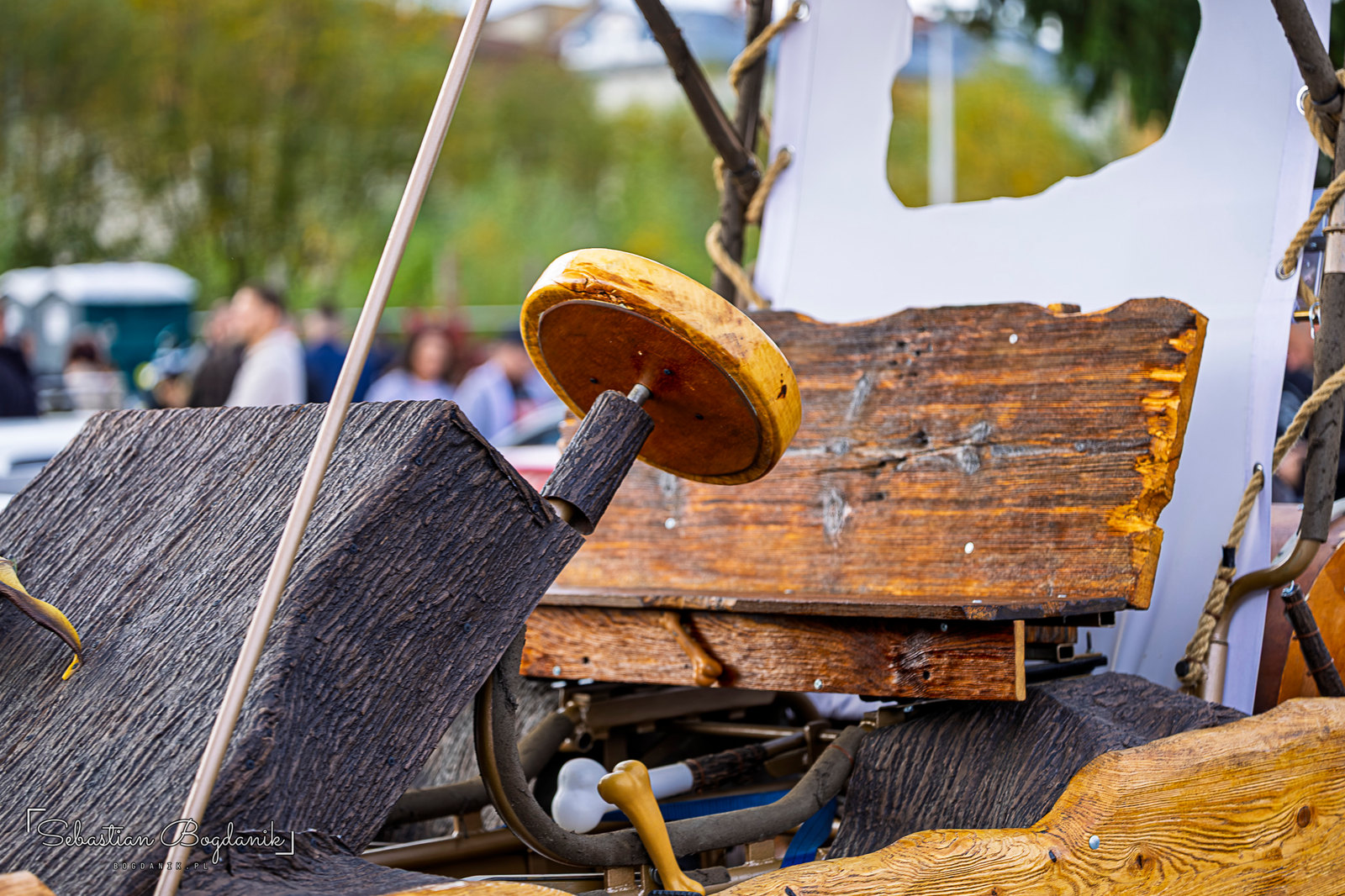
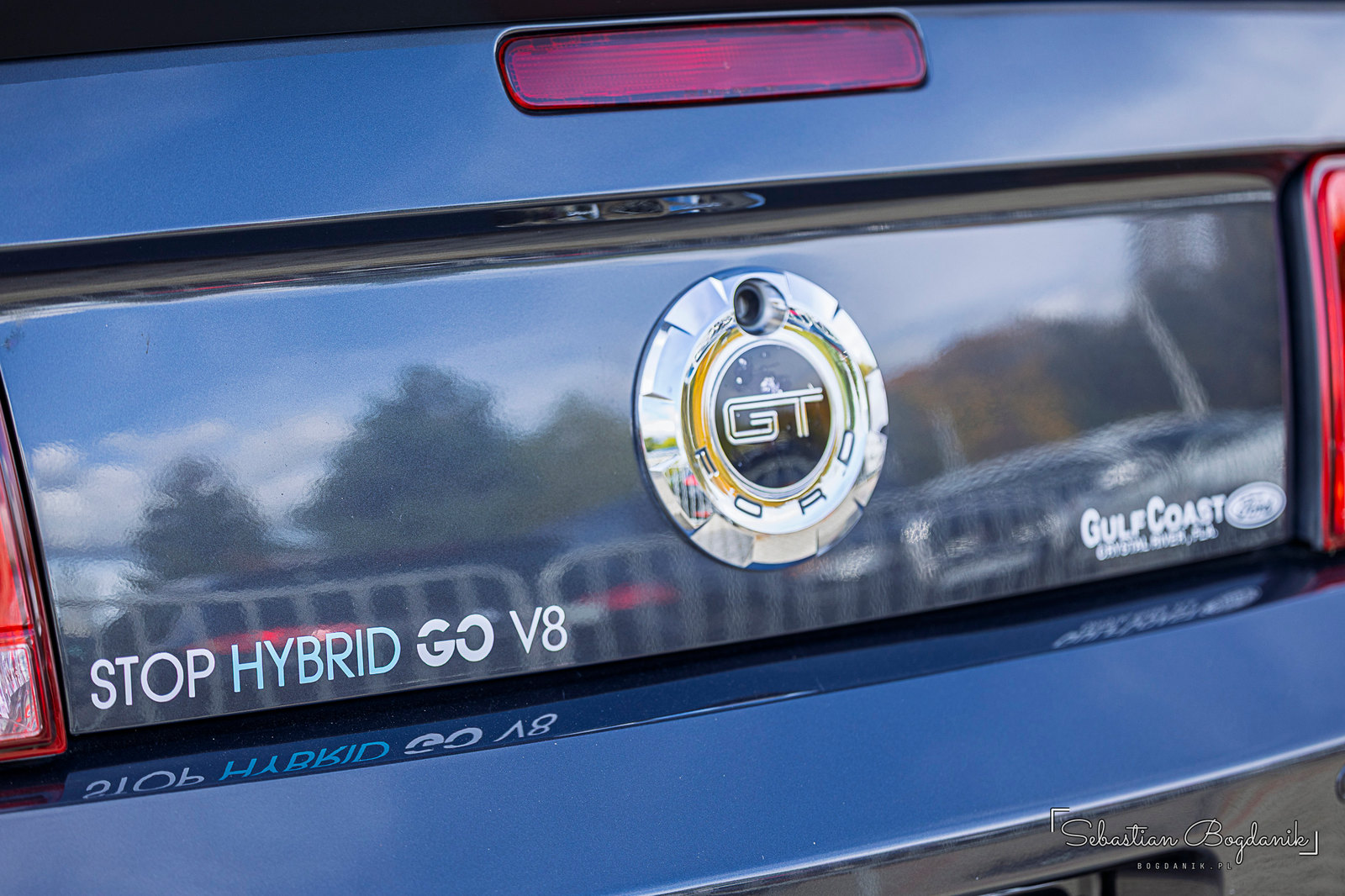
The two poles of motoring, side by side. On the left, the steering wheel of the Flintmobile, straight out of Bedrock. On the right, the trunk lid of a Mustang GT with the slogan that sums up the whole afternoon: “STOP HYBRID, GO V8.” Yabba dabba do.
Made in Communist Poland
We start at home. Between 1945 and 1989 Poland was a communist state, the PRL, and buying a car meant years on a waiting list. These are the cars the whole country drove to work, to the beach and to the in-laws, the Polish equivalent of a Chevy in every driveway.
The Syrena 105, last of the Syrena line, built in Bielsko-Biała until 1983. Three cylinders, two-stroke, 51 cubic inches and about 40 horsepower, and you mixed the oil right into the gas. In 1960 Poland even built a Syrena Sport with a fiberglass body. It never reached production, and the prototype vanished under circumstances nobody has fully explained. The yellow plates mark a registered historic vehicle, Poland’s version of antique tags.
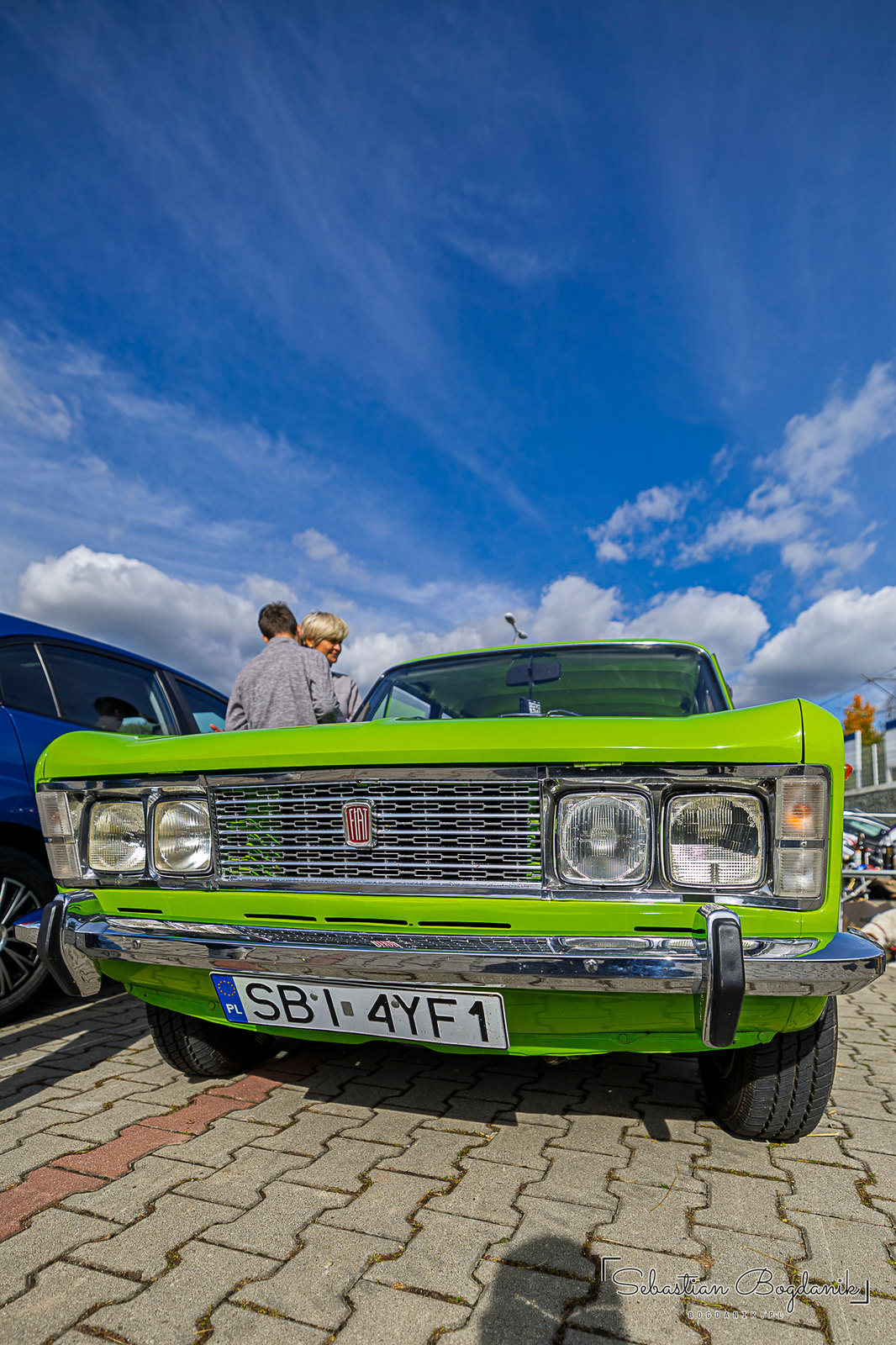
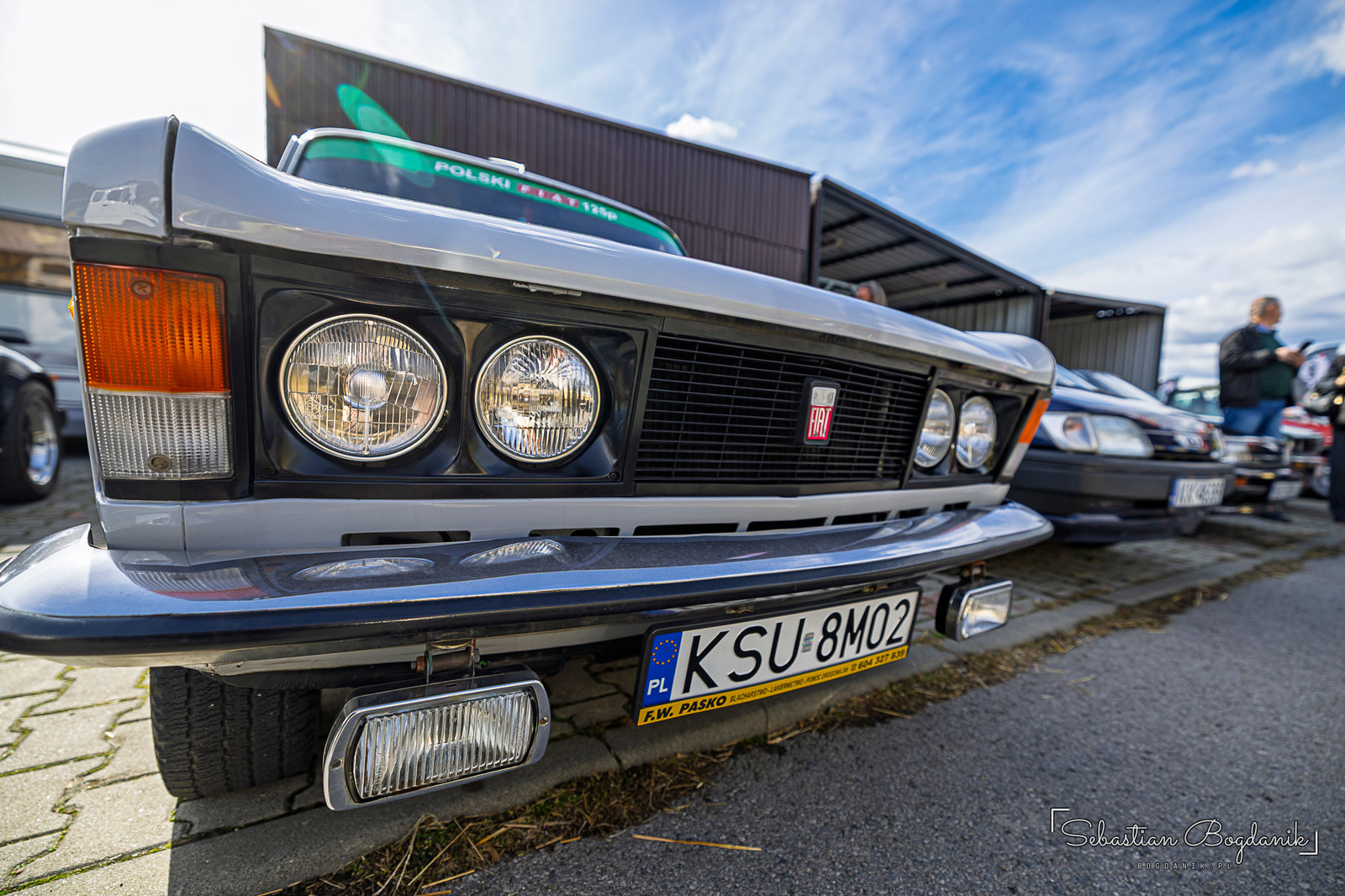
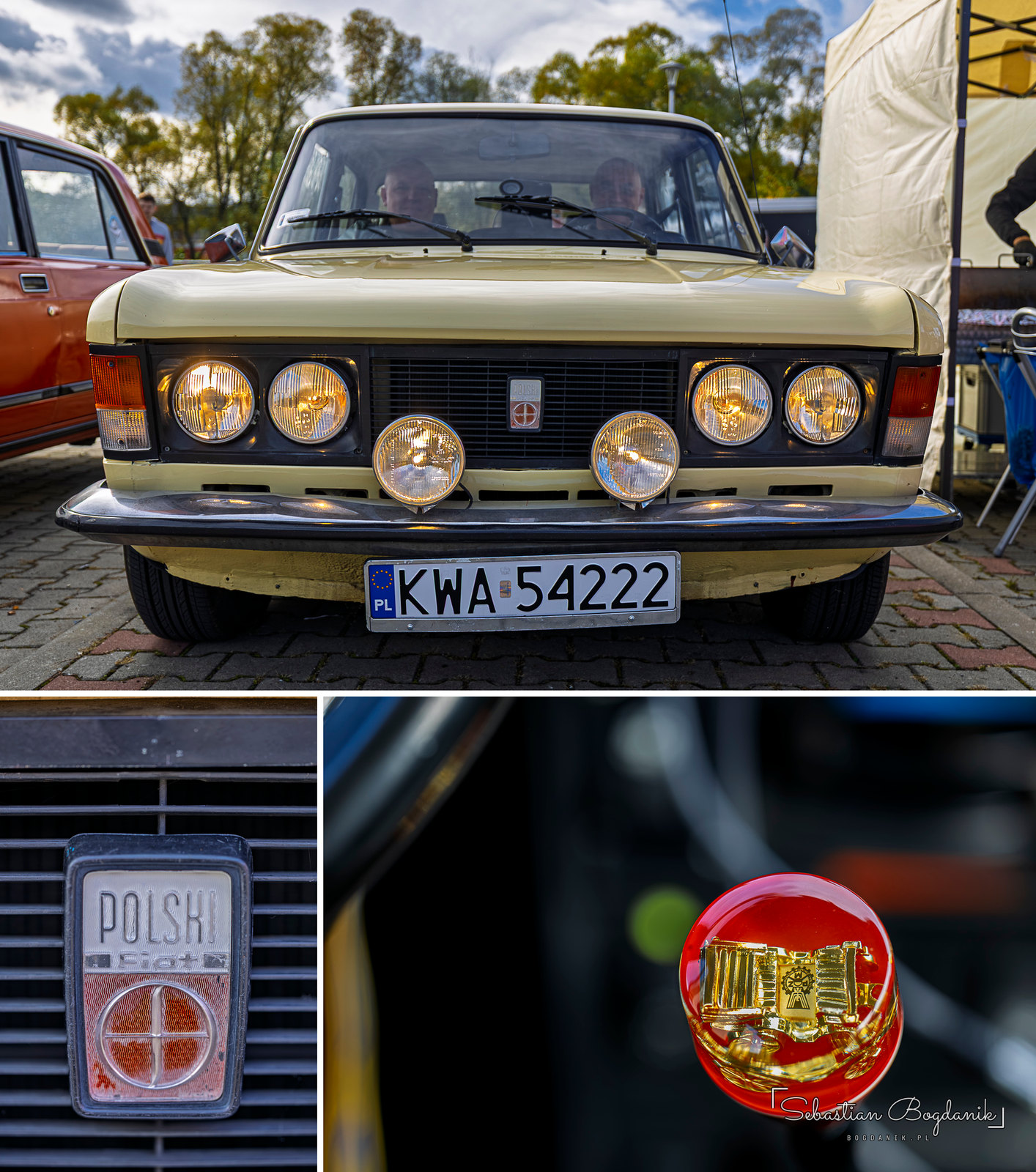
The Polski Fiat 125p, a Fiat design built under license in Warsaw and the family sedan of 1970s Poland. In 1973 a team of Polish drivers set world endurance records with it on a stretch of highway near Wrocław: 25,000 kilometers, 25,000 miles and 50,000 kilometers at an average of about 86 mph, around the clock for more than two weeks, broadcast on national TV. The green one wears the 1975 facelift with chrome bumper guards; the other has a green sun strip that proudly reads POLSKI FIAT 125p.Another 125p, this one with a row of extra round lamps. The owner insists they are genuine period sport lights. Plus the badge every Polish driver knew by heart for a quarter of a century, and a red shift knob.
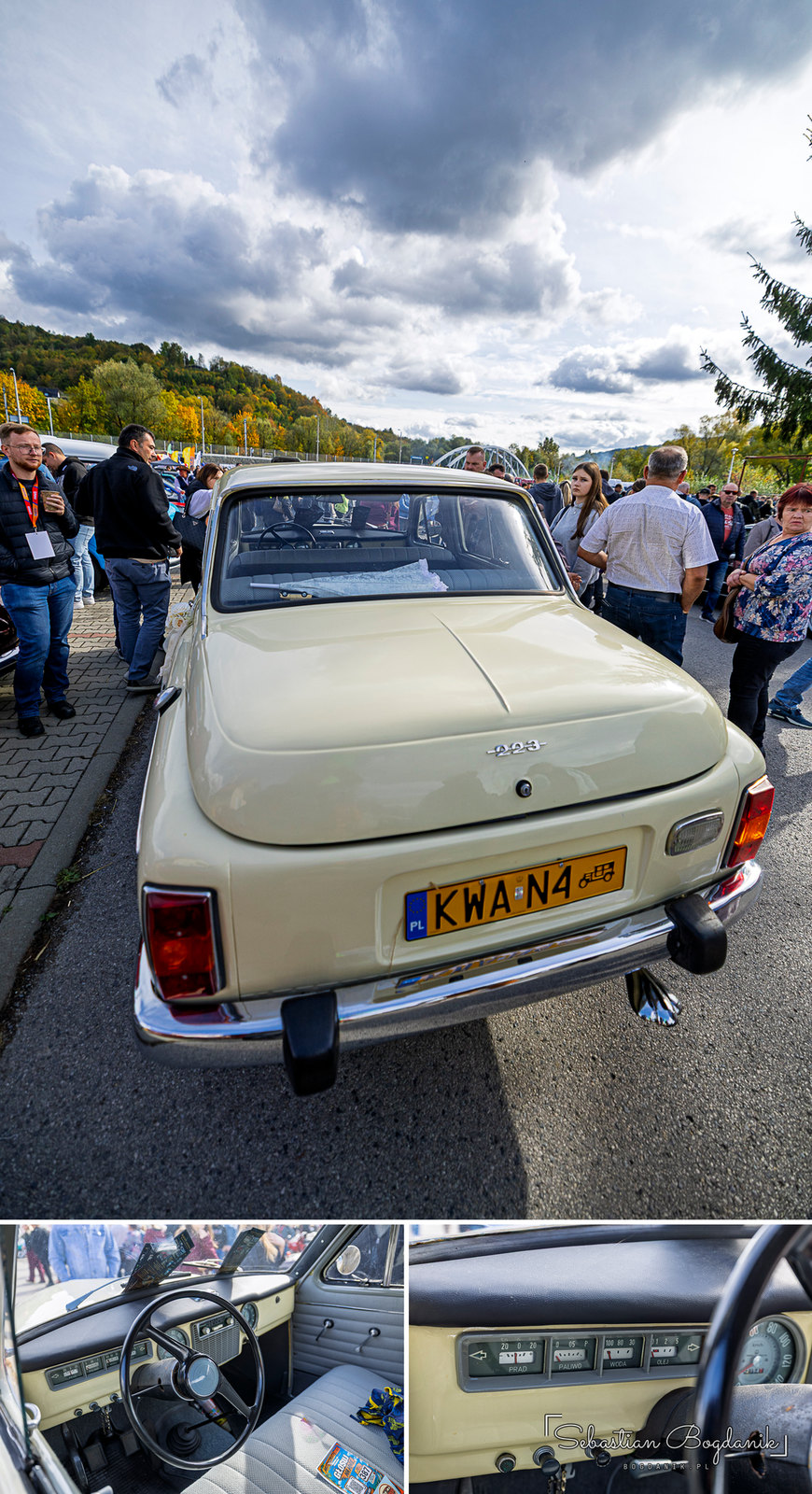
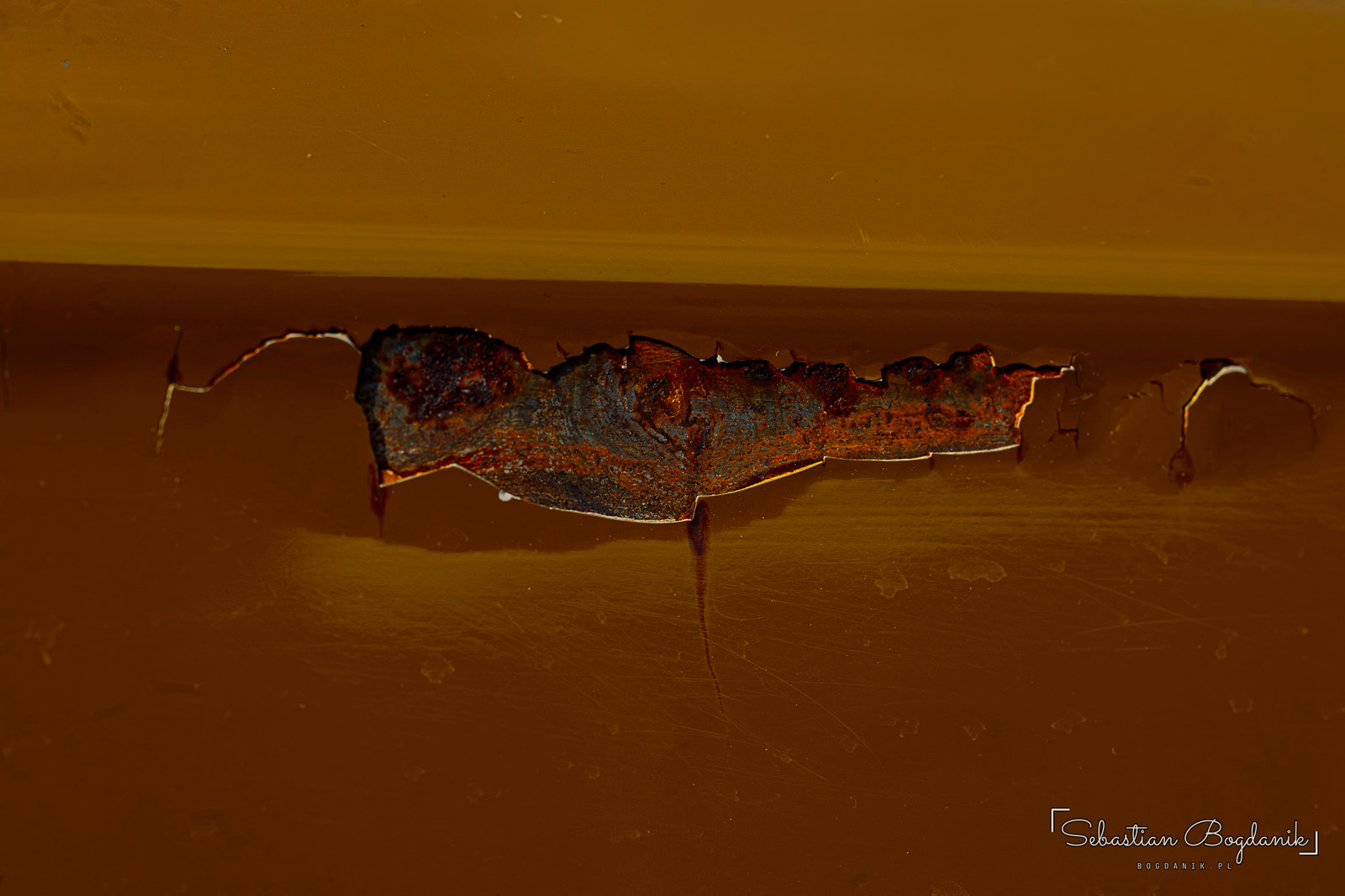
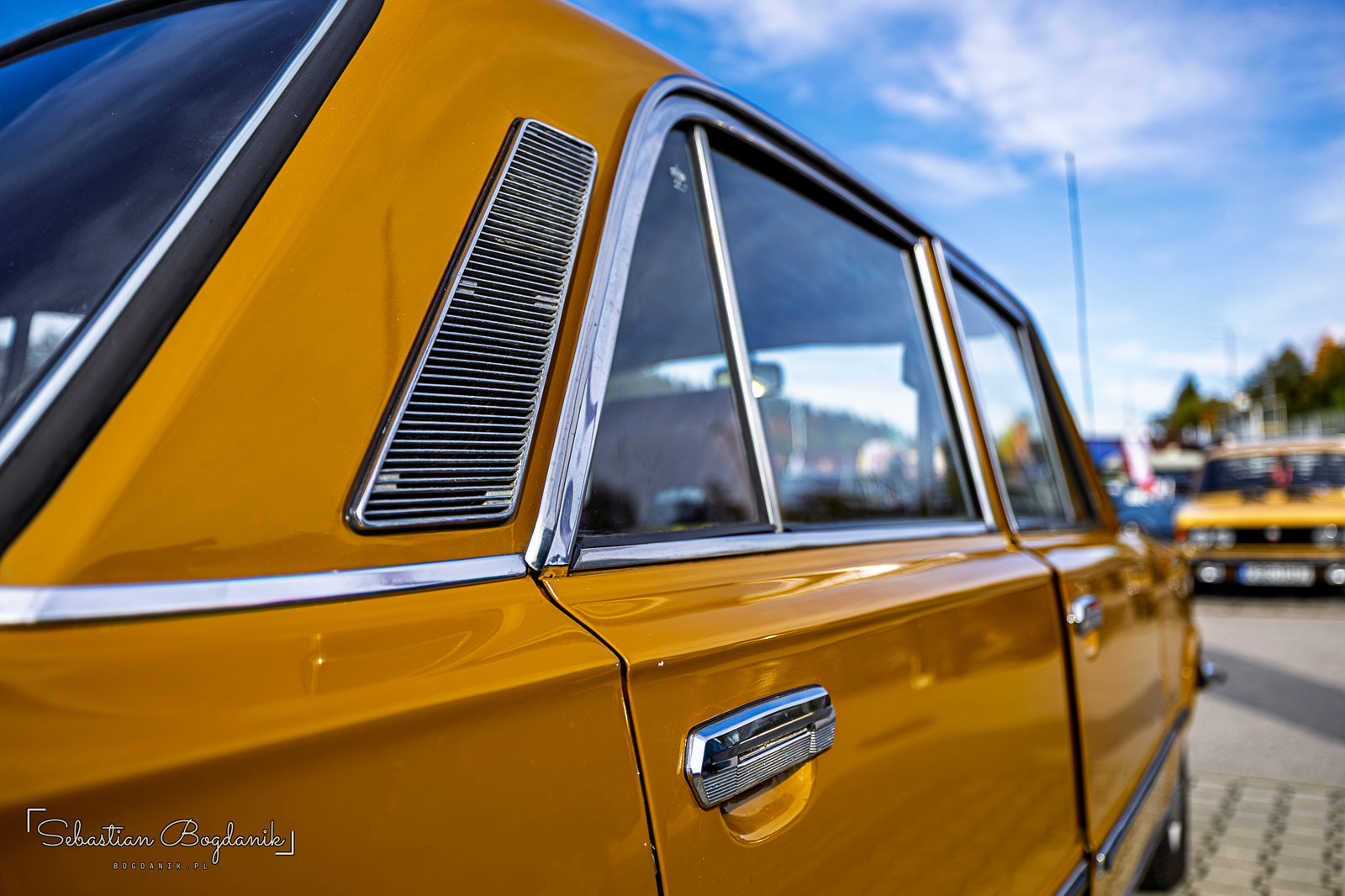
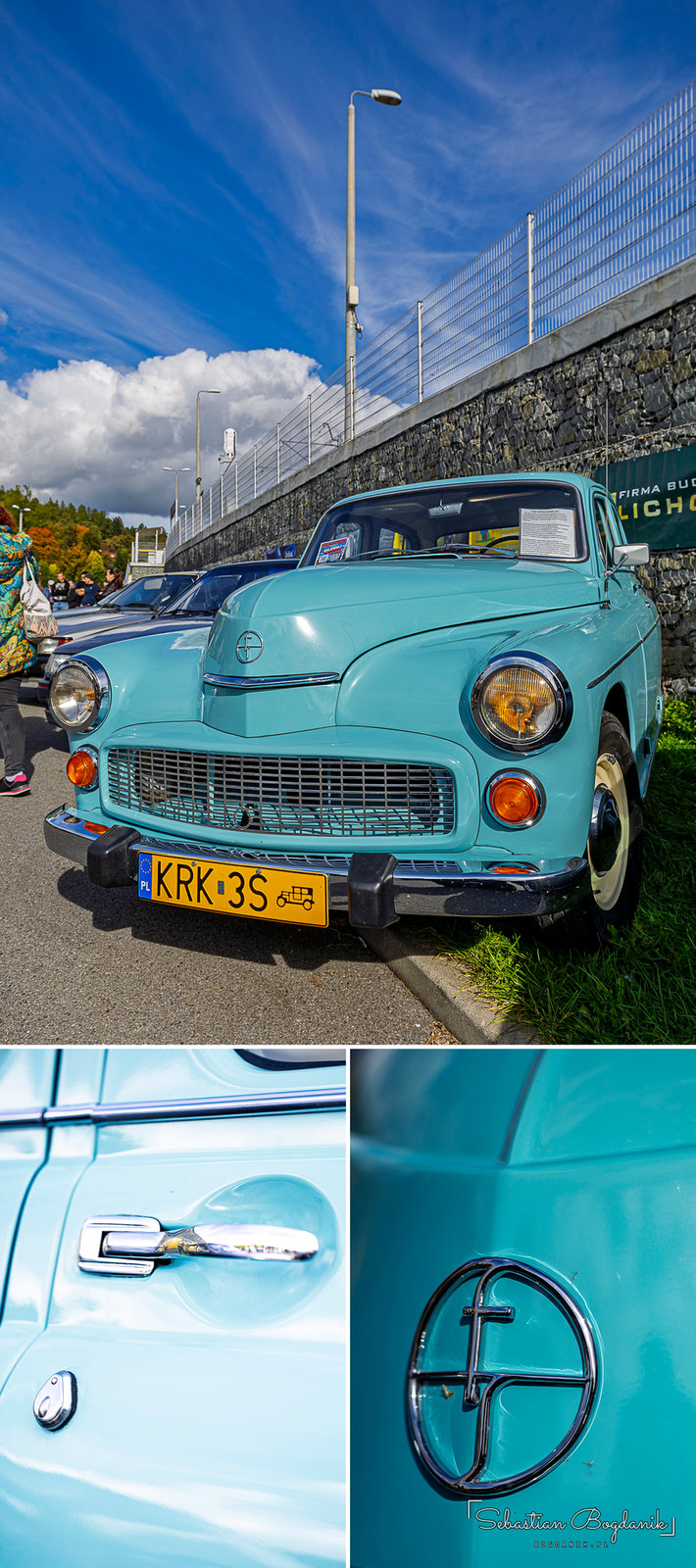
Patina, Polish style: rust blooming where a badge used to be, and the chrome vent “gills” on the rear pillar. Nothing fake about this one.The FSO Warszawa 223, as the sign in its window says. The Warszawa was the first passenger car built at the FSO plant in Warsaw: the first one rolled off the line on November 6, 1951, built under license from the Soviet Pobeda, and production ran until 1973. Chrome door handle, round badge, showroom fresh.
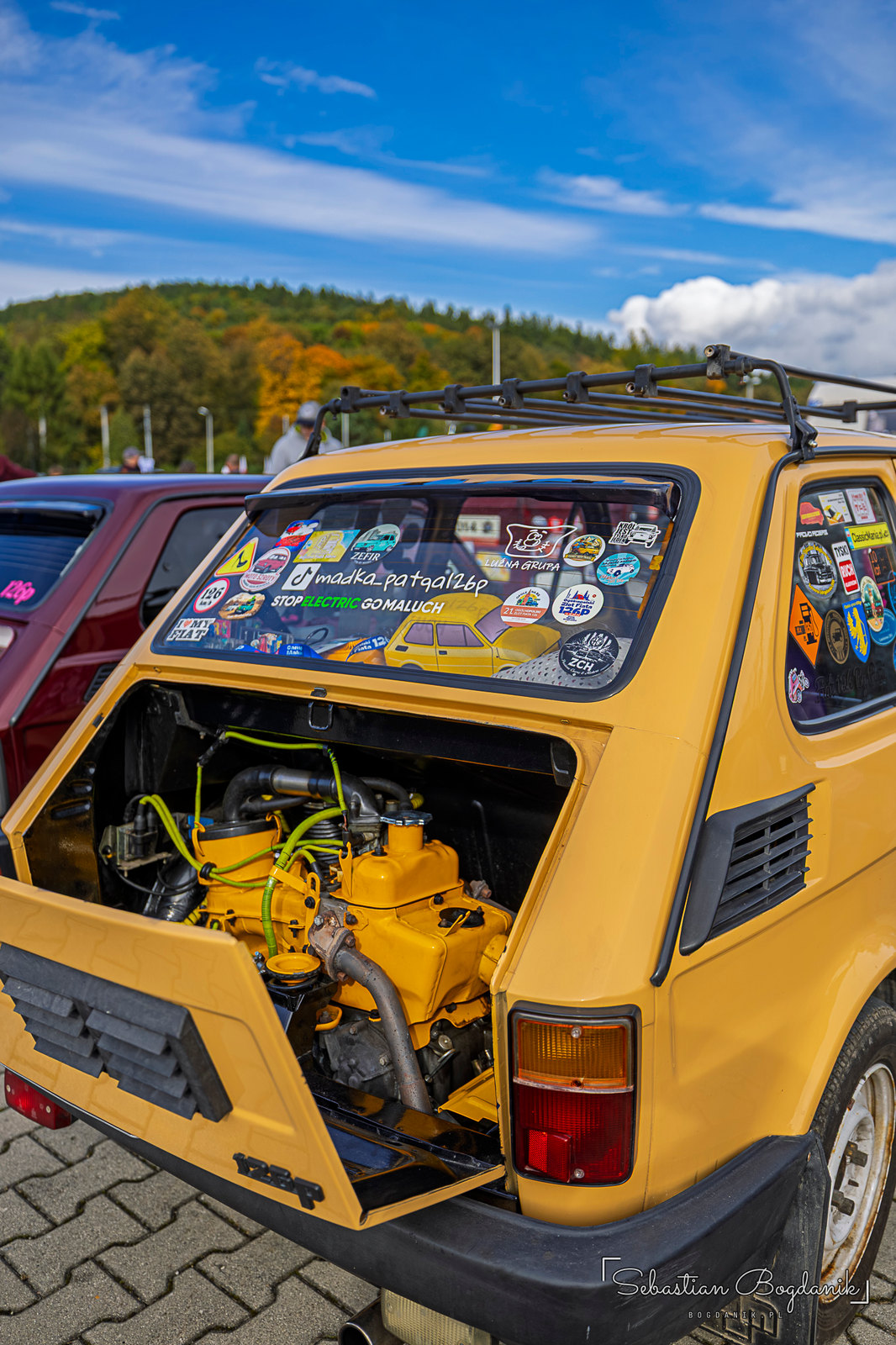
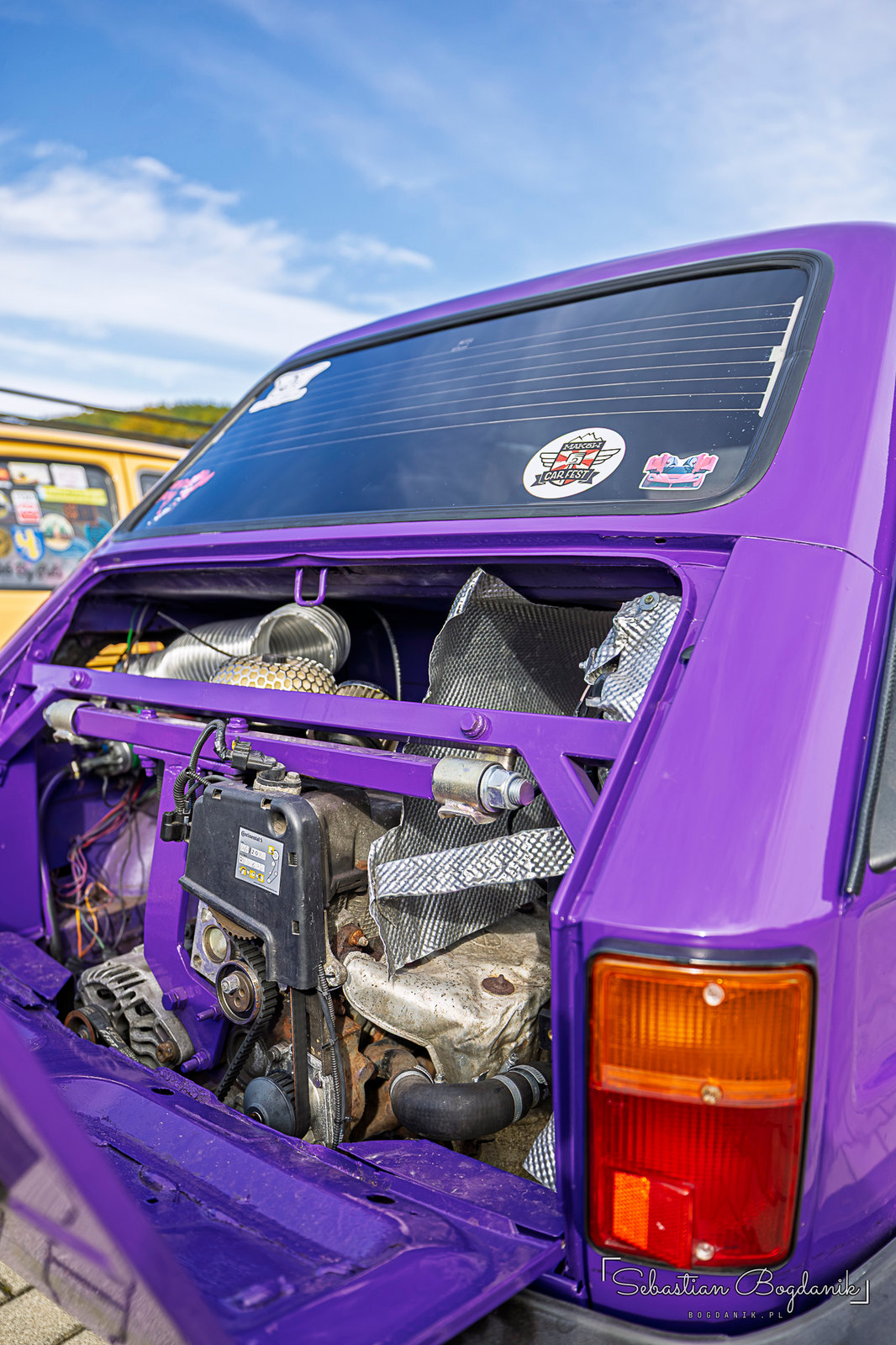
Meet the maluch, “the little one,” Poland’s answer to the VW Beetle: the Fiat 126p, built in Poland from 1973 to 2000 and the first car for millions of families. Two of them, two philosophies. The yellow one carries the factory two-cylinder out back. The purple one got a heart transplant from a very different stable: fewer ponies, more horses.
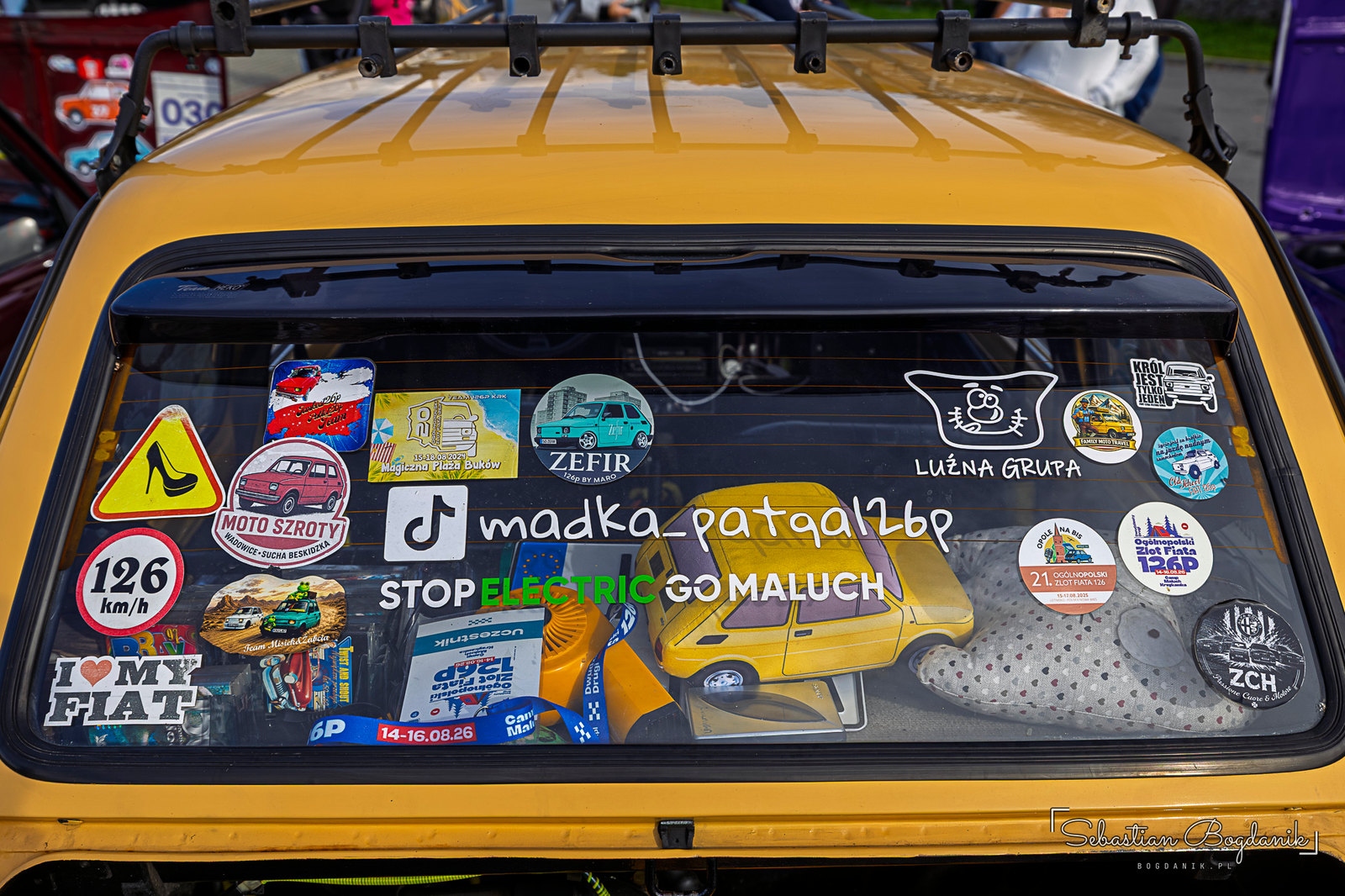
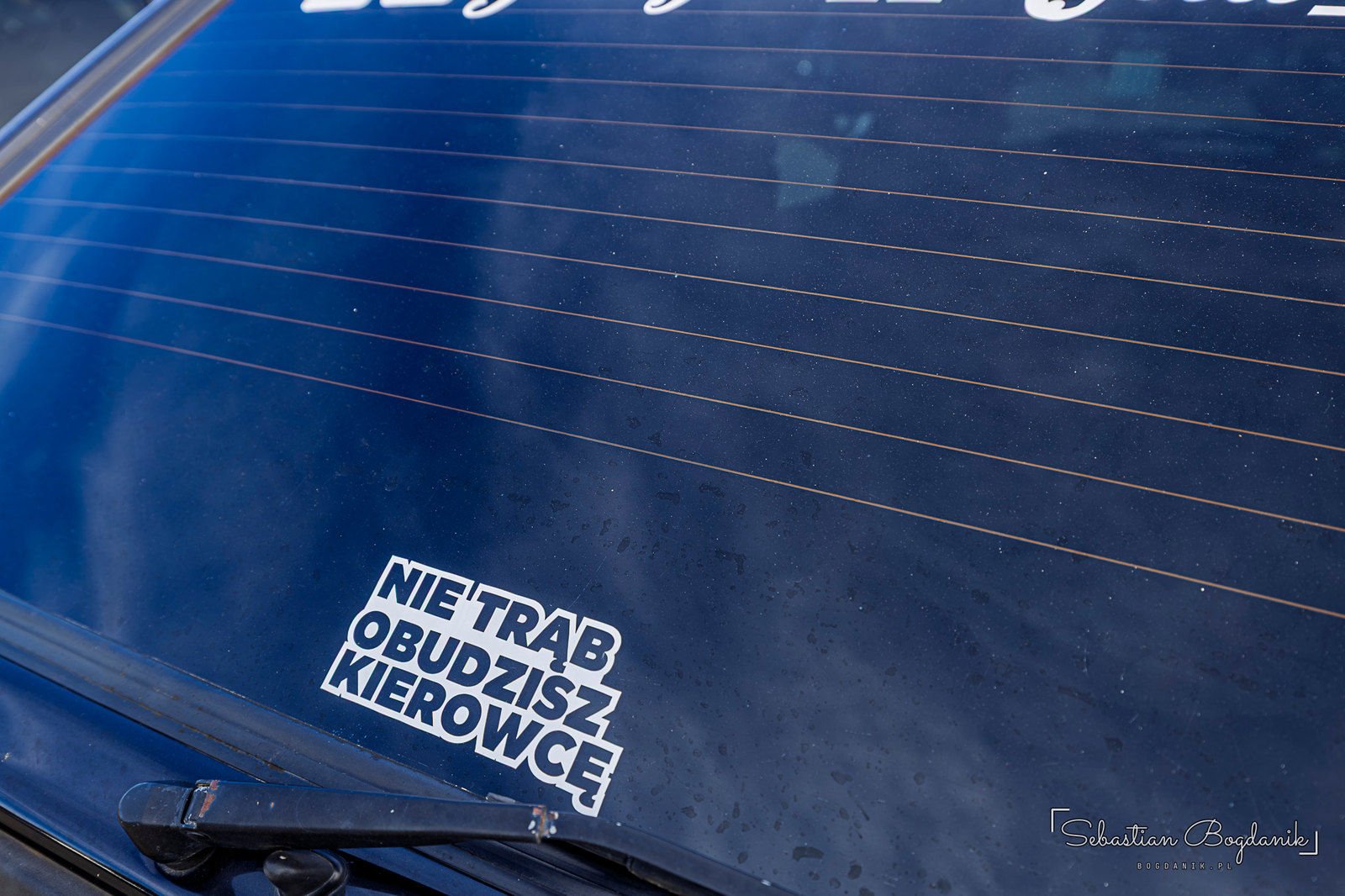
Maluch philosophy in bumper-sticker form. One rear window says “STOP ELECTRIC, GO MALUCH,” the small-car answer to that Mustang. The other politely asks: “Don’t honk, you’ll wake the driver.”
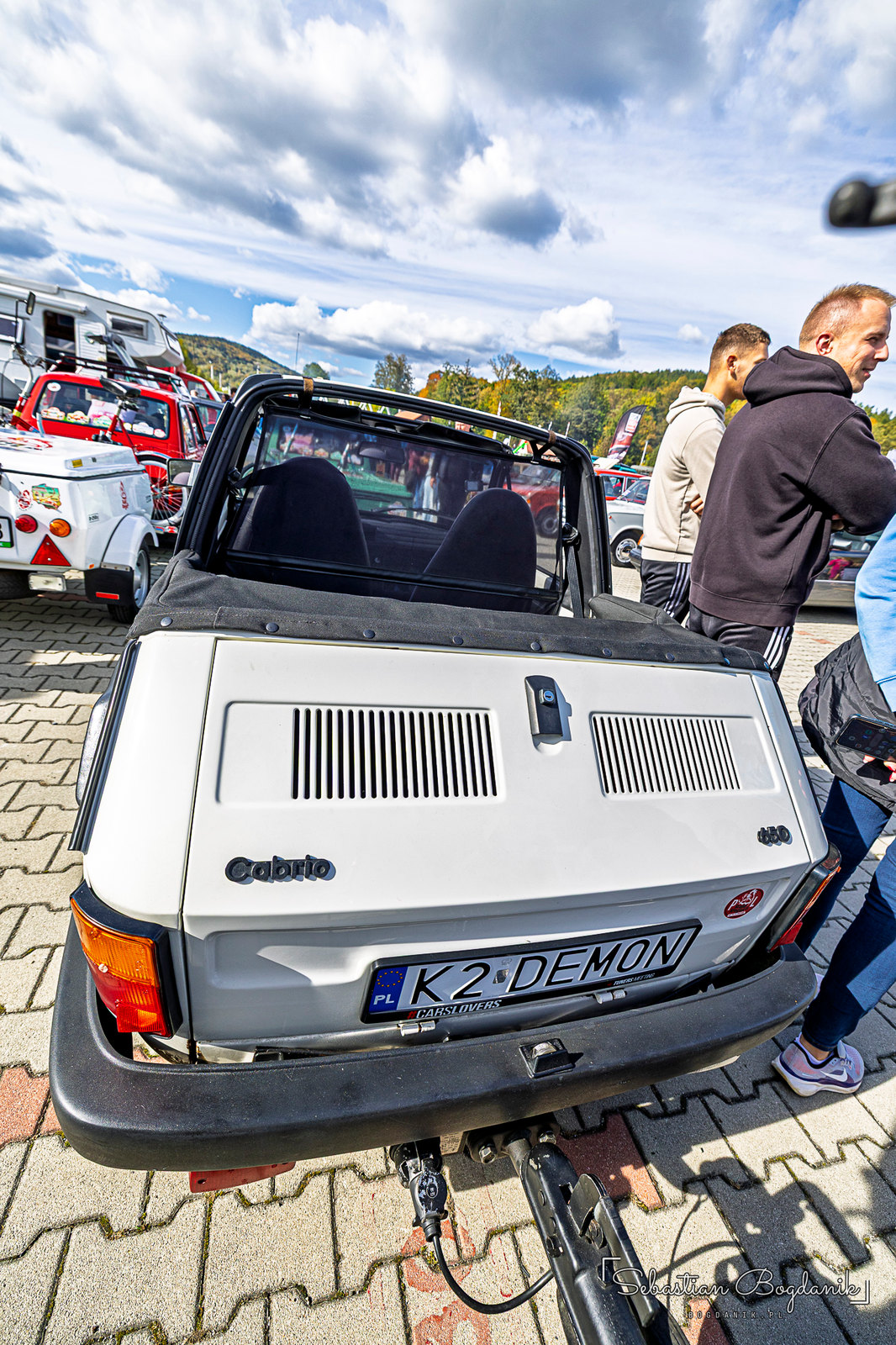
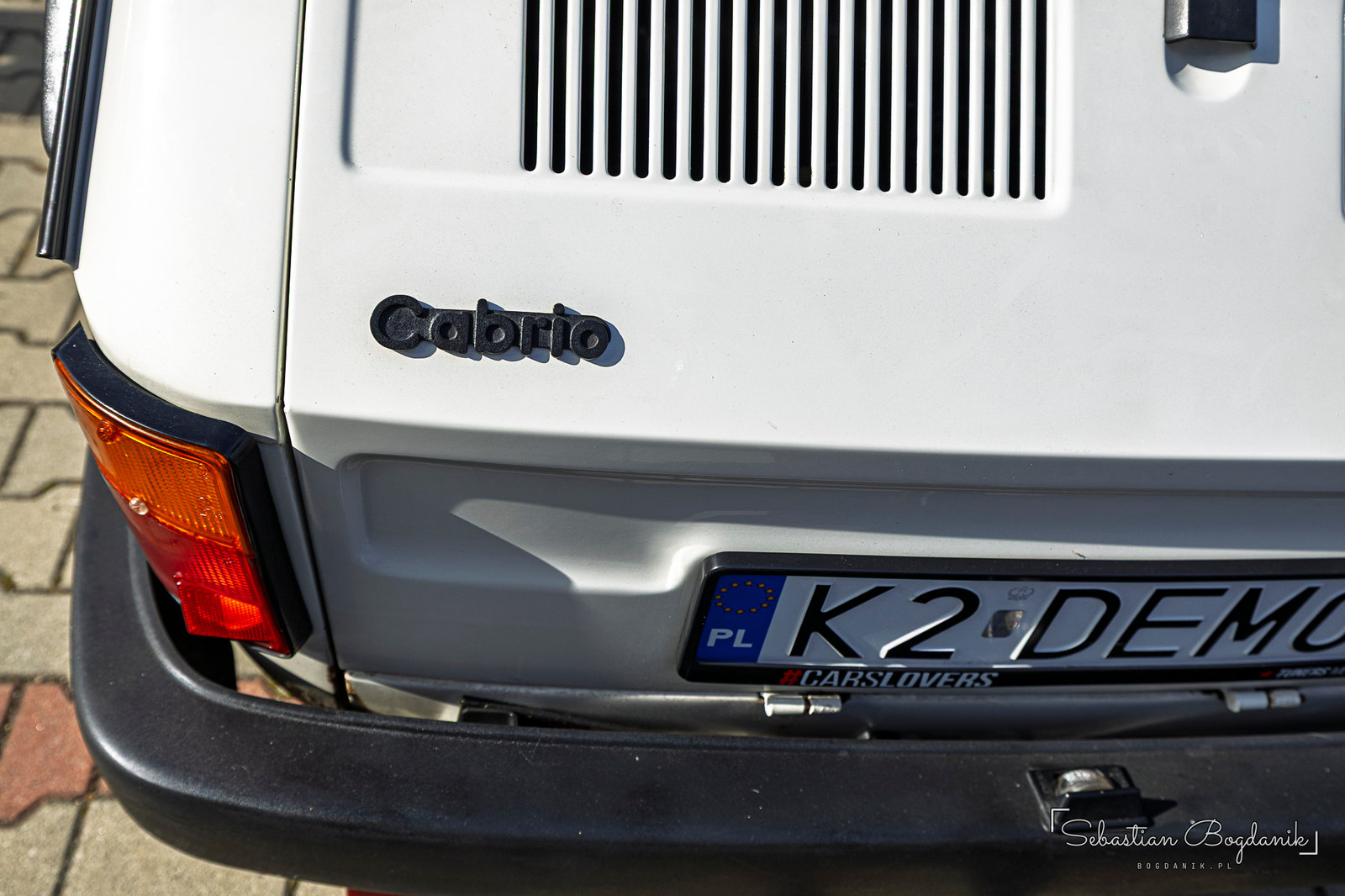
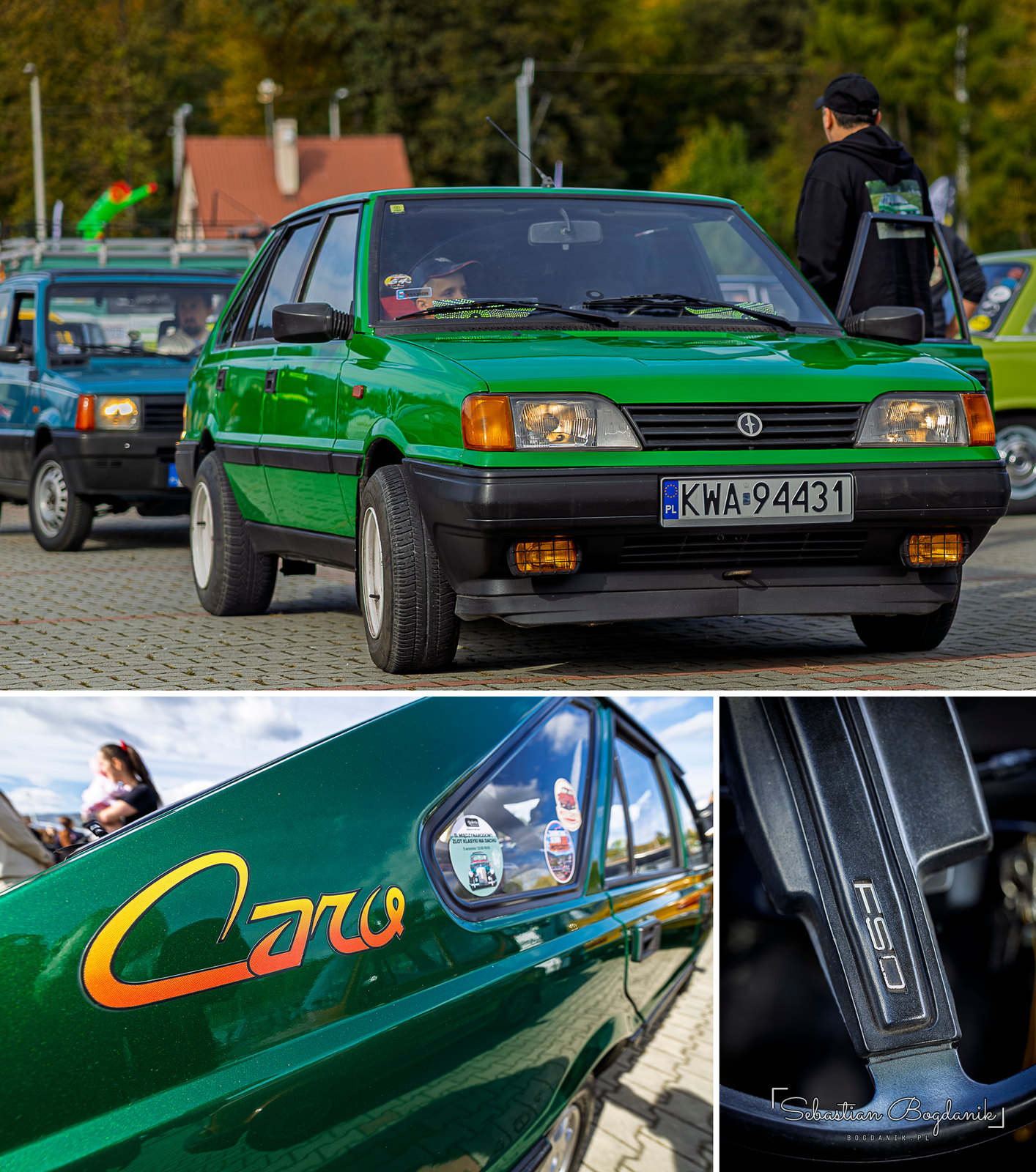
A maluch with a “Cabrio” badge and a folding roof. The sun came out in the mountains, so the top was exactly where it belongs: down.The FSO Polonez Caro, the last big update of Poland’s home-grown hatchback, from the 1990s: the whole car, its script badge and a steering wheel stamped with the FSO logo.
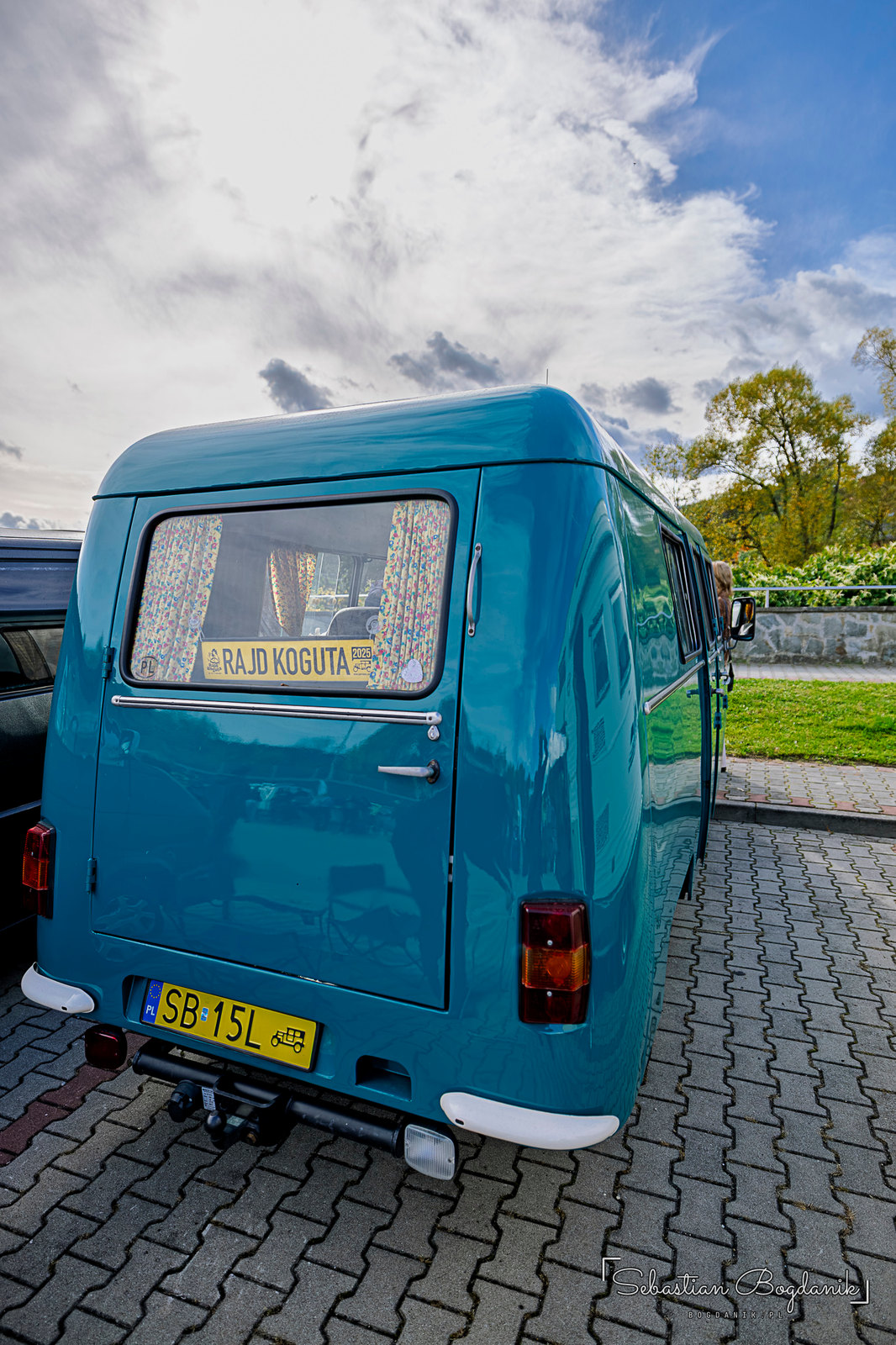
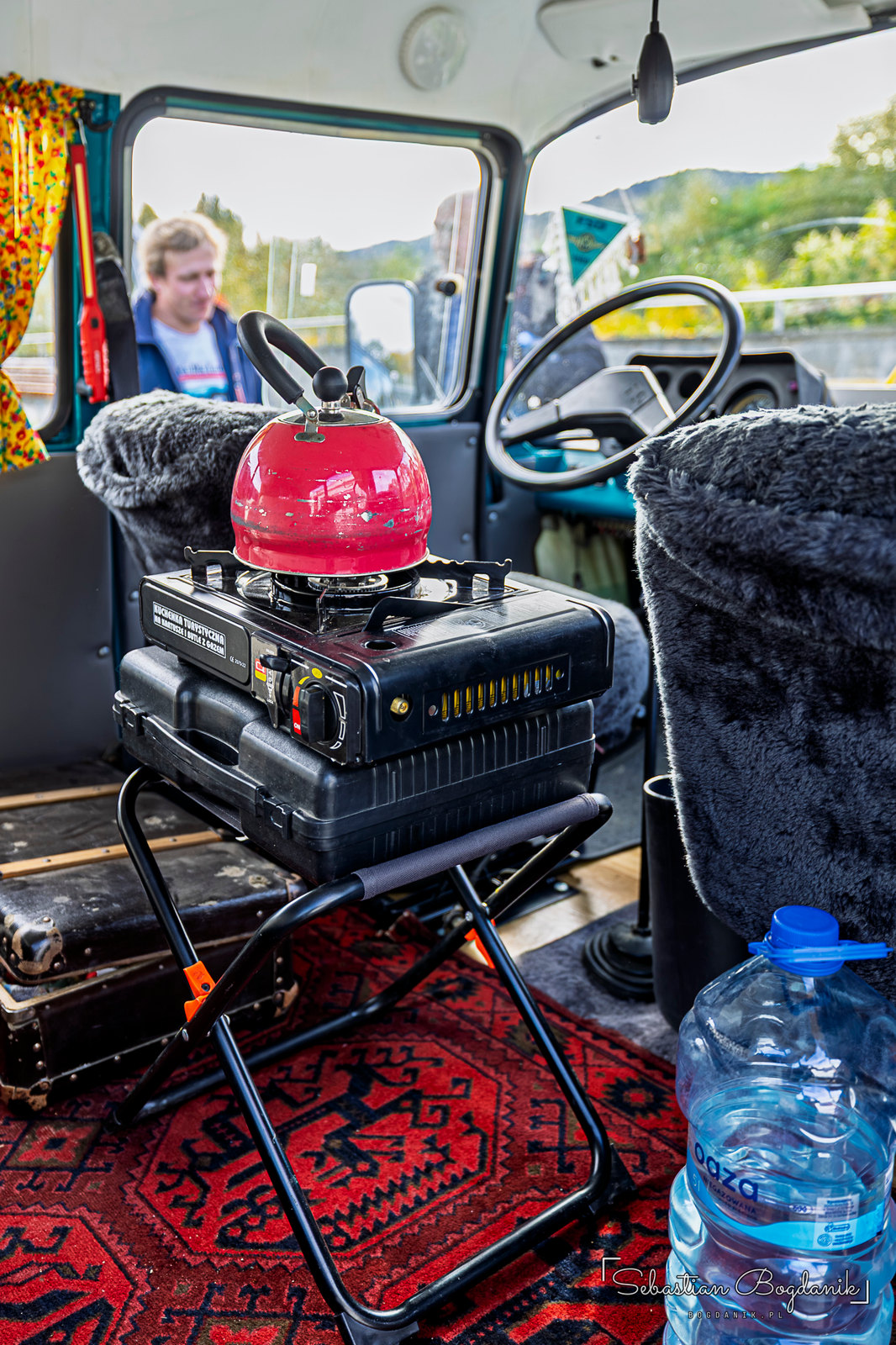
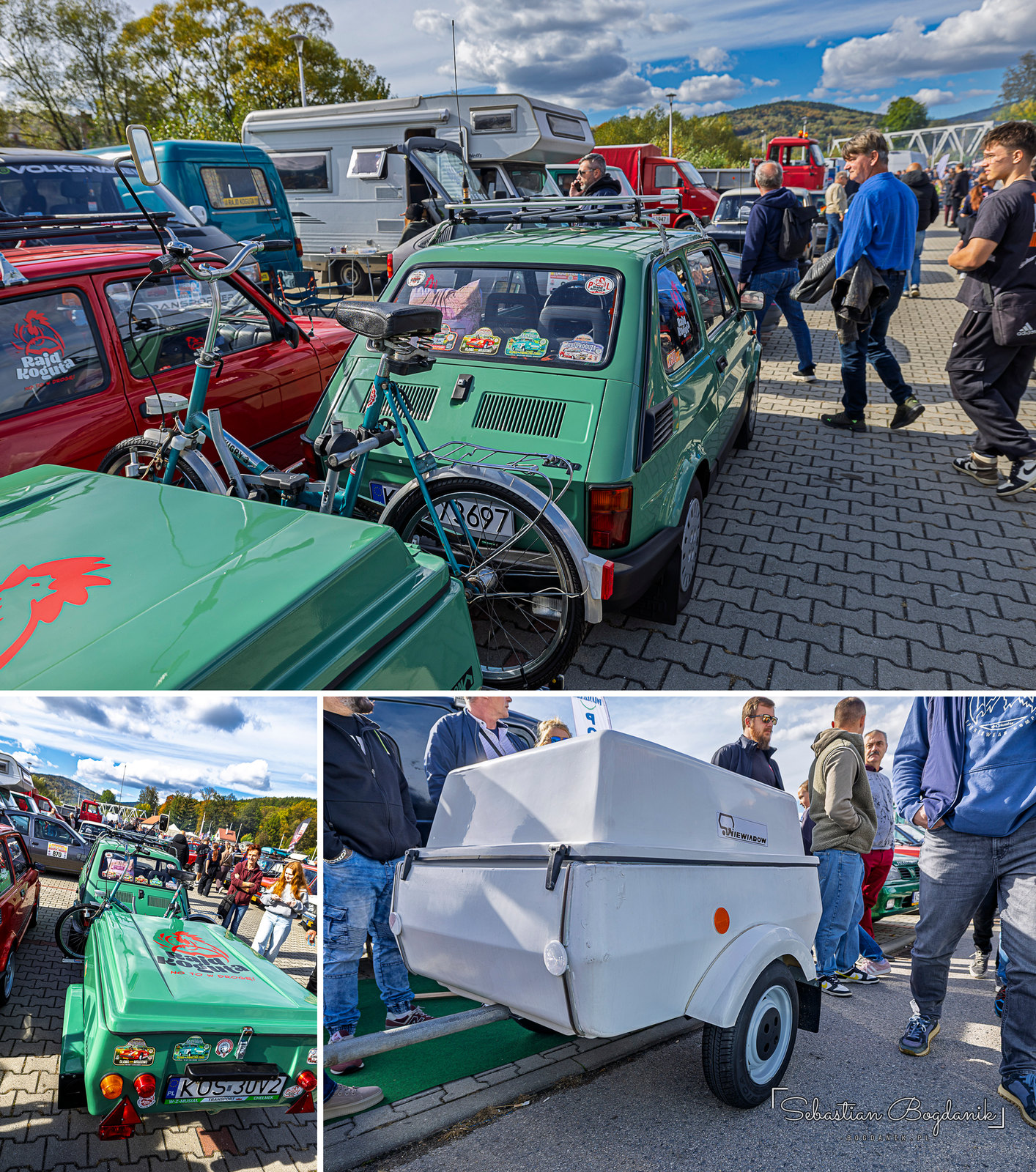
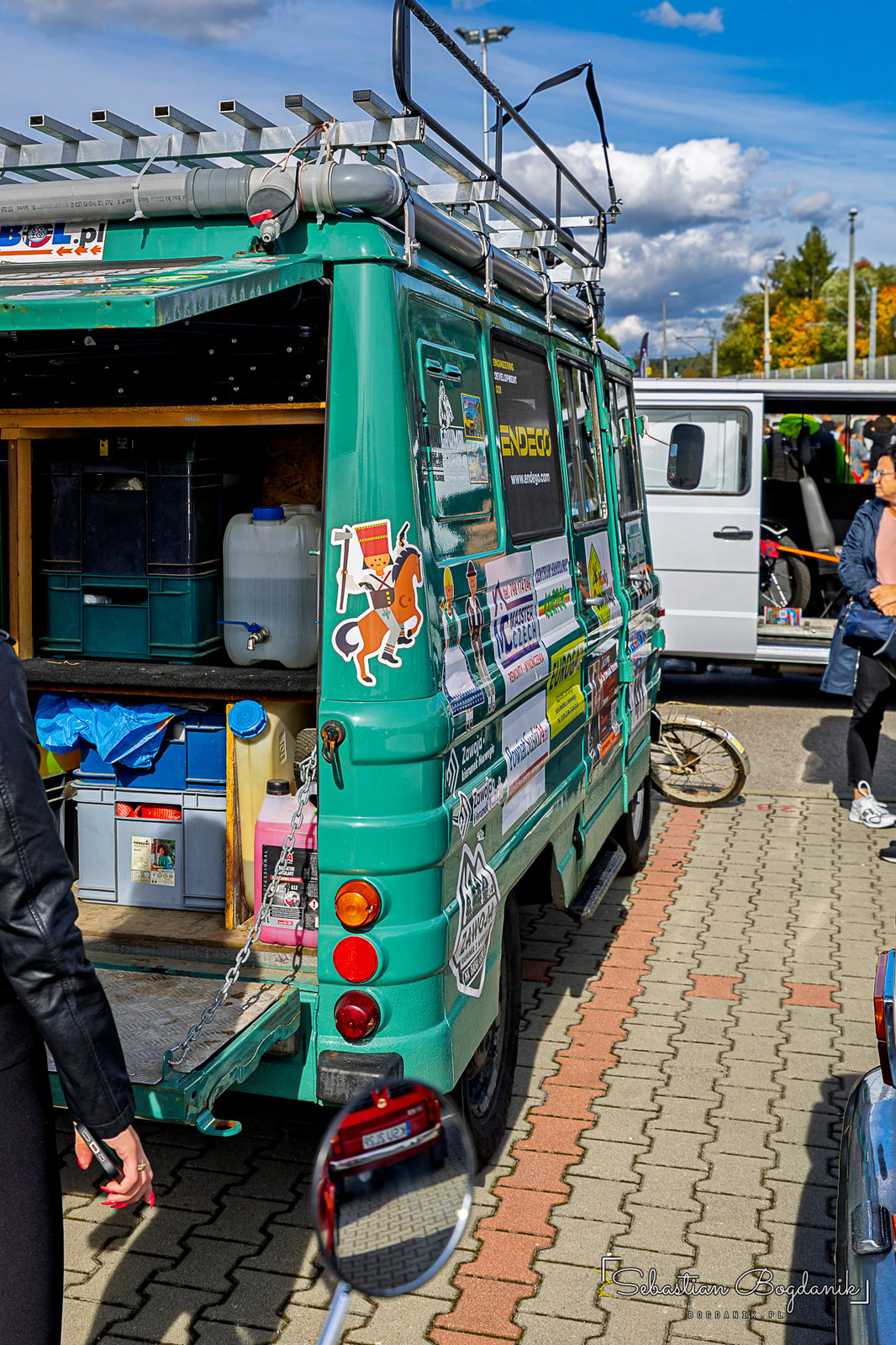
A Nysa van turned camper: curtains in the back, a camping stove with a kettle, a rug and a jug of water. Communist-era vanlife, decades before Instagram.Car, trailer and bicycle, all in one color: the dream combo. A maluch towing a trailer painted to match is practically its own class at Polish car shows. Here a mint-green set with a bike strapped to the back, and a white trailer from another matching set. The complete vacation kit: car, trailer and a bicycle in case the car decides to take the day off.A mint-green camper with a roof rack, shelves, crates and a water jug. A home on wheels, ready for any show on the calendar.
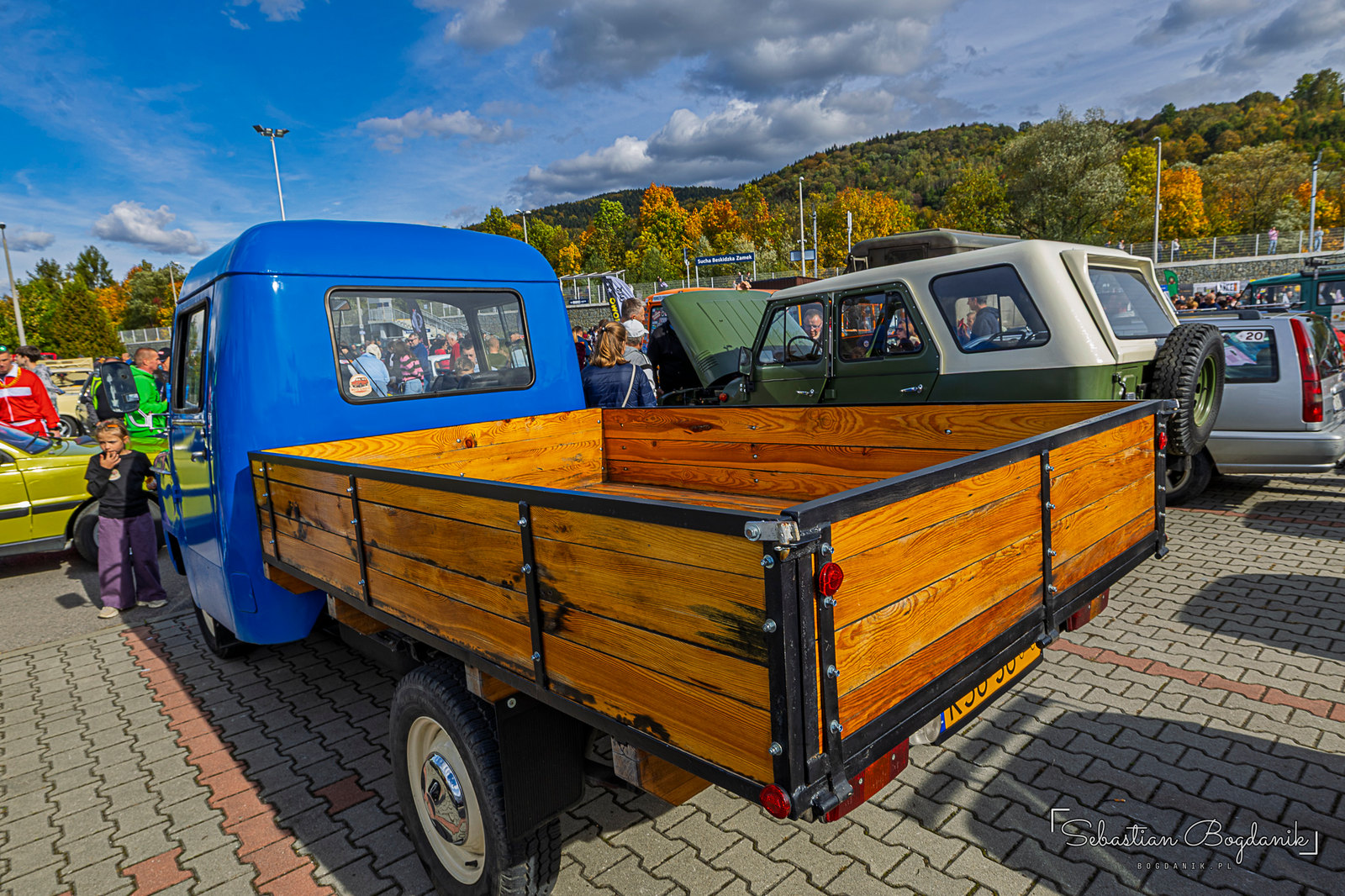
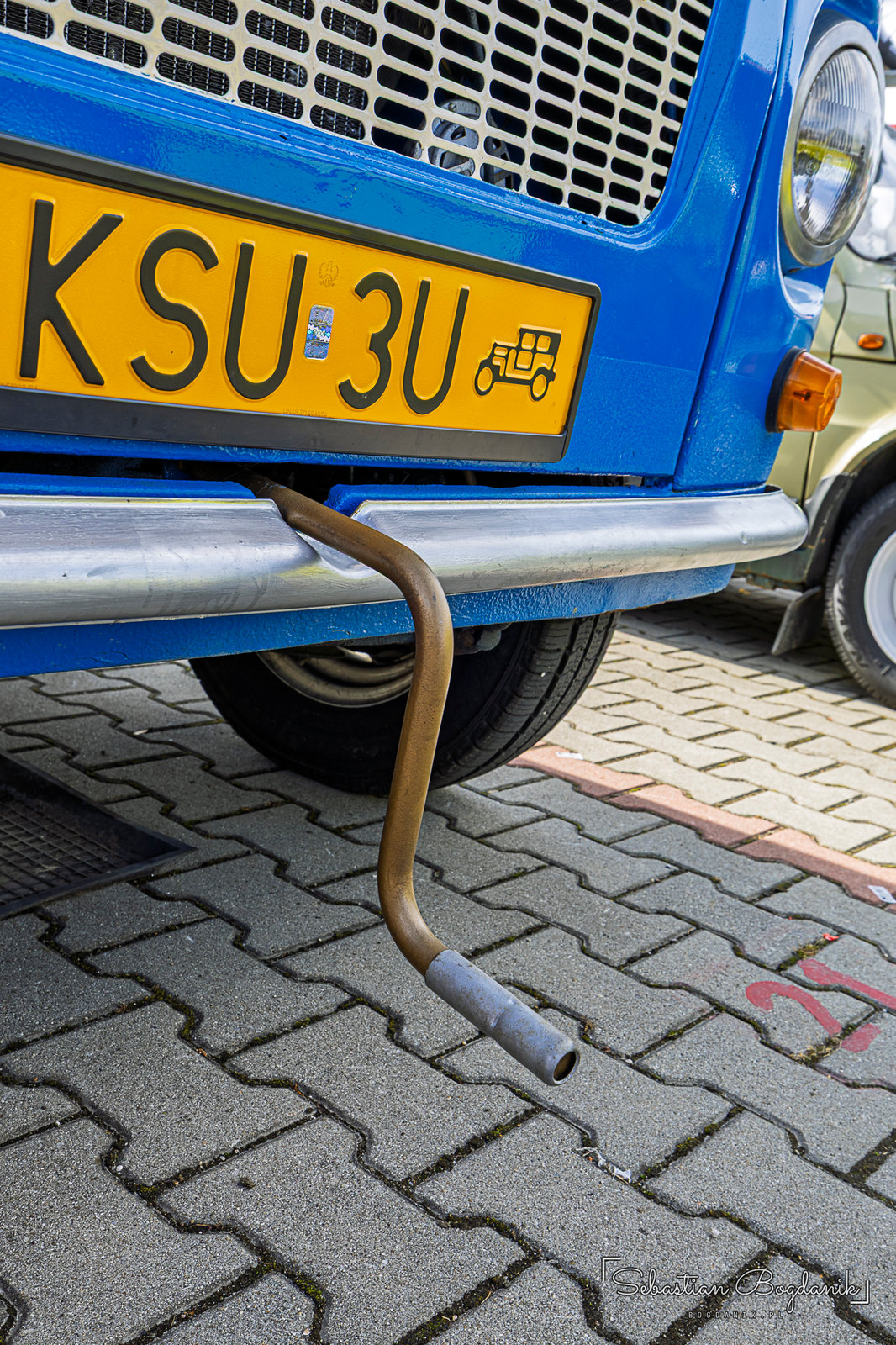
A blue Nysa van converted into a pickup with a wooden bed, later the stage for a contest to see how many people could fit on it. Up front, a hand crank for starting the engine: a starter that never fails, as long as the driver ate breakfast.
Behind the Iron Curtain
East German, Soviet and Czechoslovak machines that were everyday transportation across the Eastern Bloc and are now the stars of any car show.
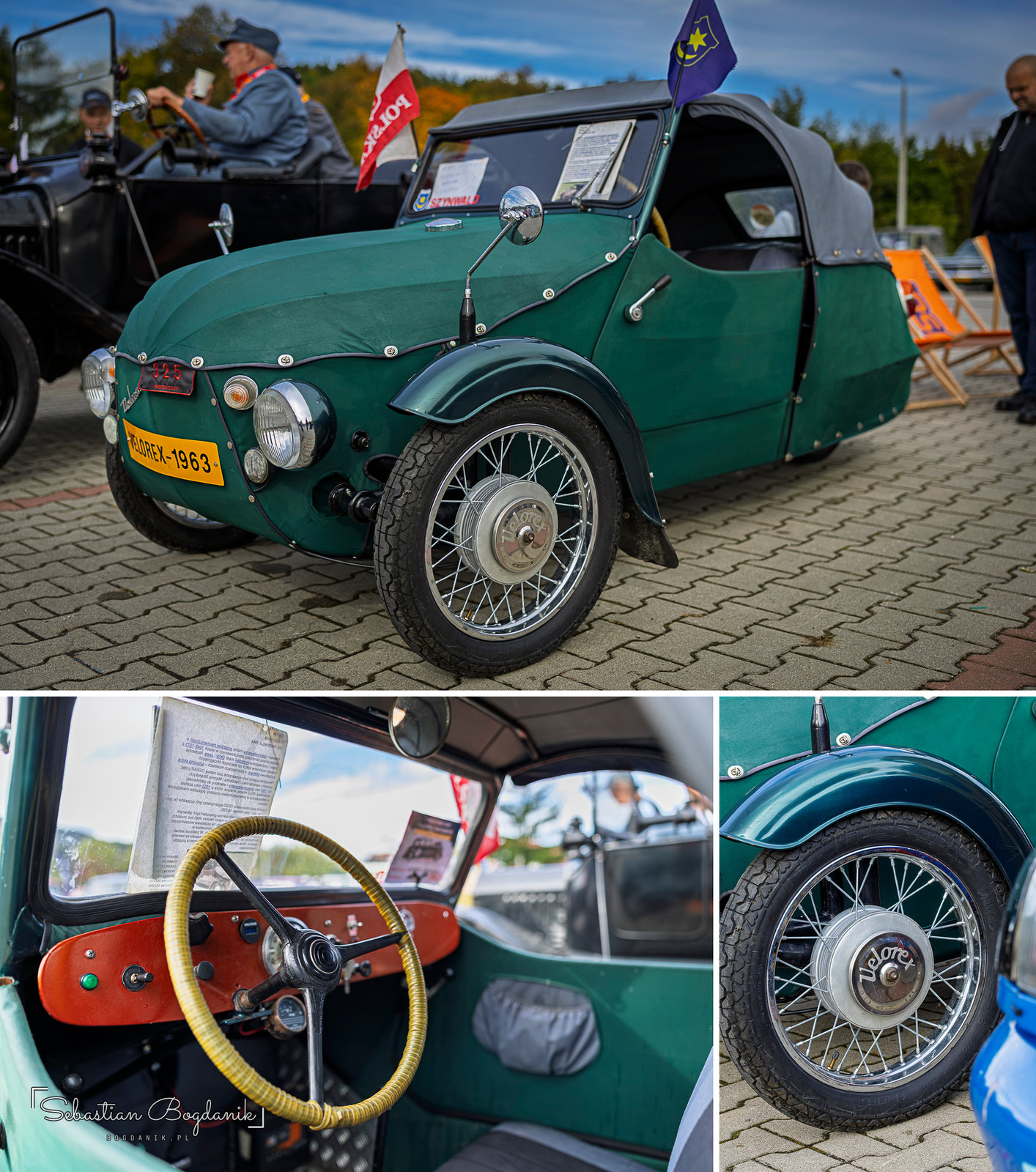
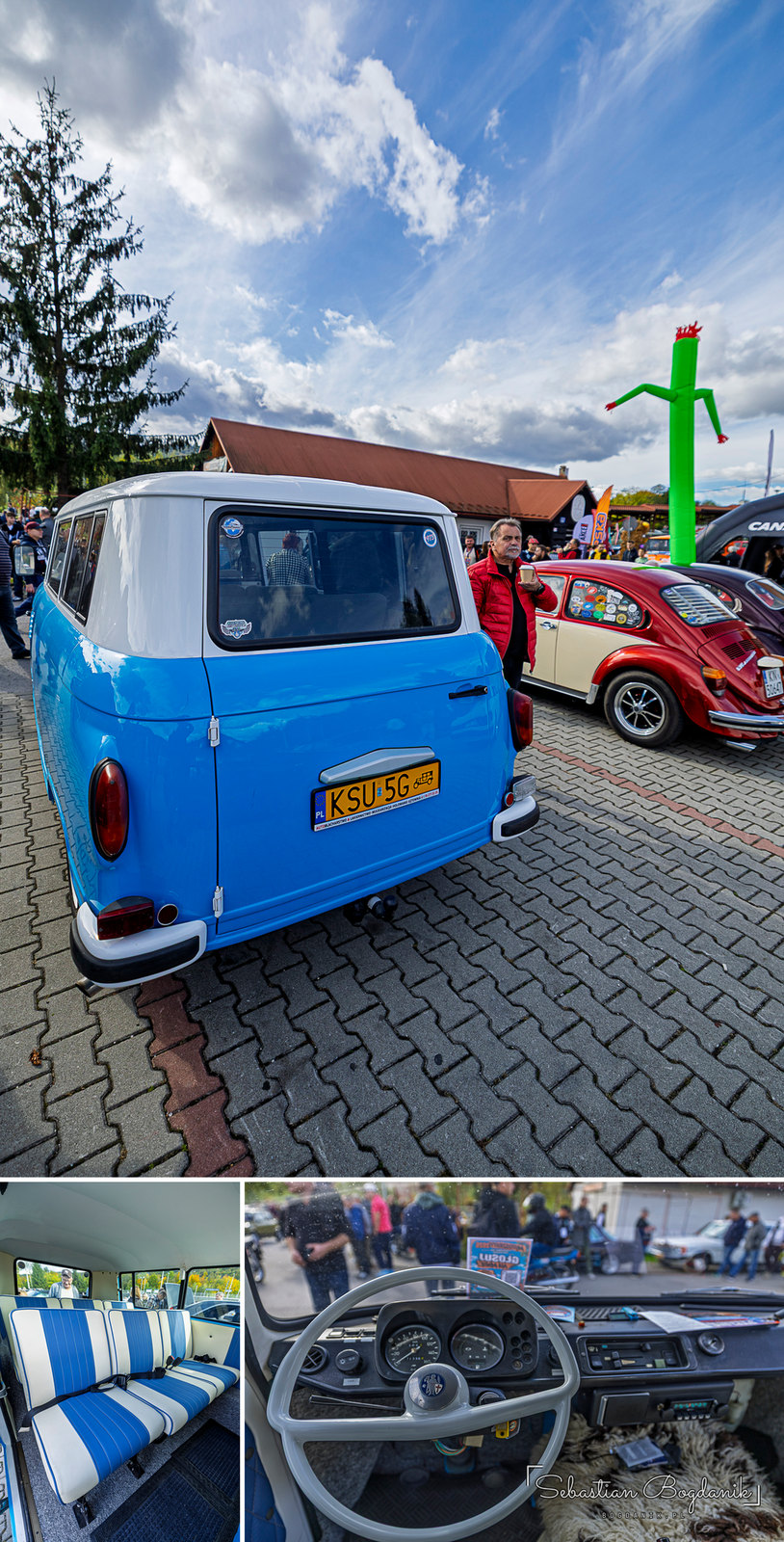
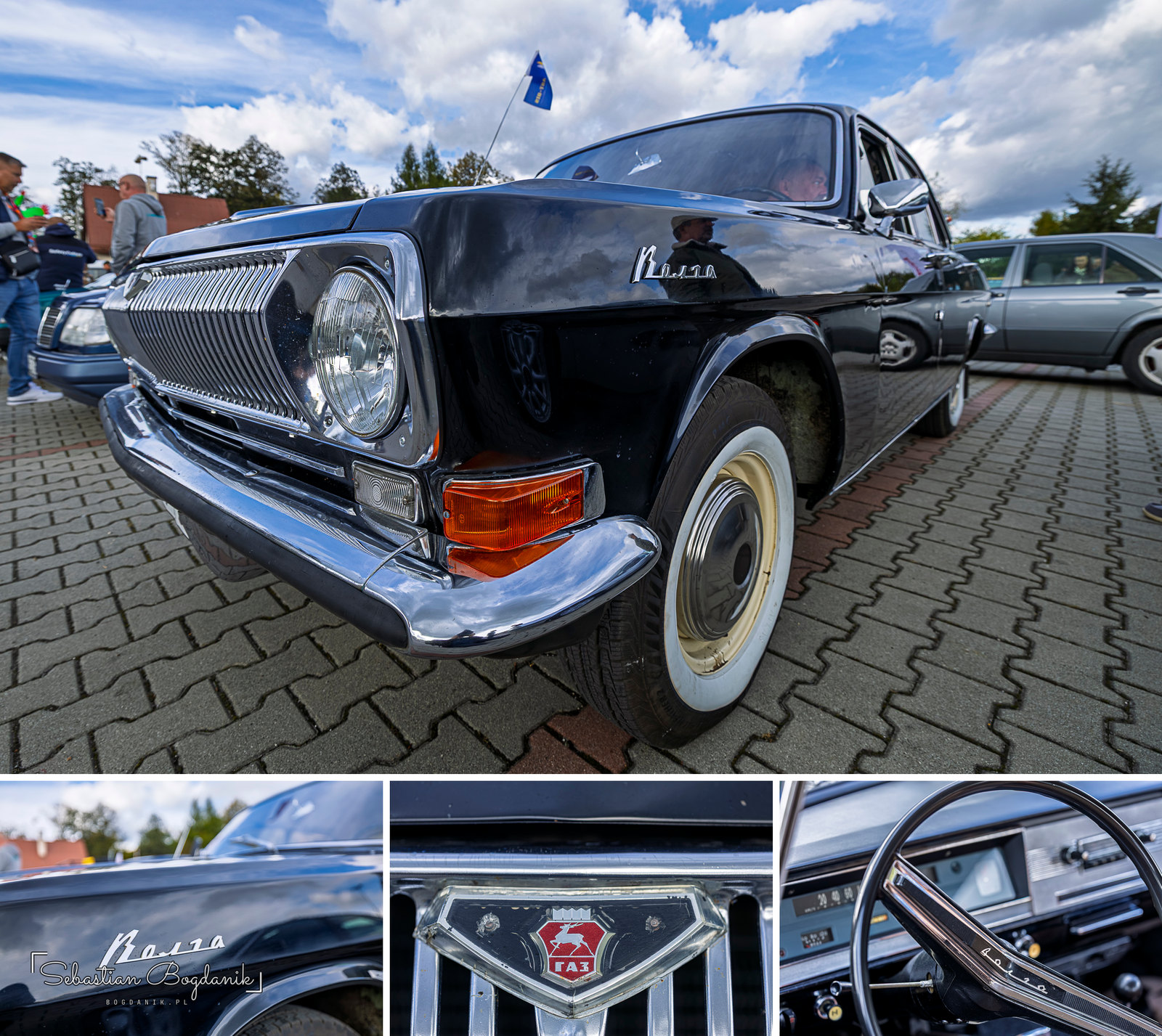
The Velorex, a Czechoslovak three-wheeler dreamed up during World War II by the Stránský brothers in their bicycle repair shop. The first prototype was called Oskar. Instead of sheet metal, the tube frame wore a skin of leatherette, and more than 15,000 were built. Think of it as a homemade Morgan with a vinyl jacket.The Barkas B1000, East Germany’s minibus, built from 1961 to 1991. Its one-liter, three-cylinder two-stroke sits right in the cab between the driver and the passenger, so the heater is free. Front-wheel drive and independent suspension all around made it surprisingly modern for a 1960s van. Owner: Jan Spytkowski.The GAZ-24 Volga, the Soviet Union’s executive sedan and taxi. The KGB ordered a special version, the GAZ-24-24, with a 5.5-liter V8 from the Chaika limousine and an automatic gearbox disguised to look like a manual. On the outside, a gray cab. Underneath, a pursuit car built to keep up with Western diplomats. Russians called them “catch-up cars.” A sleeper before sleepers were cool.
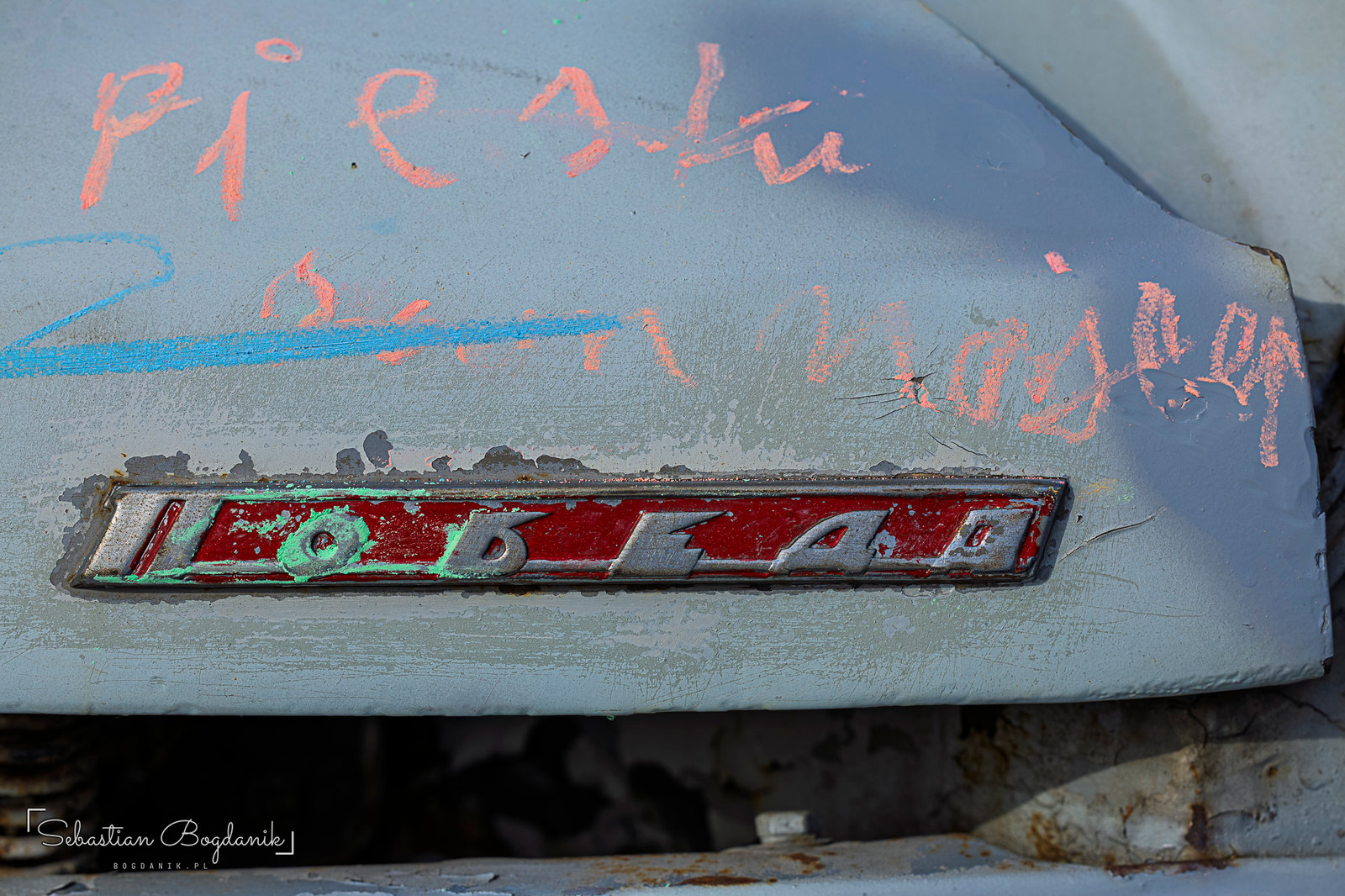
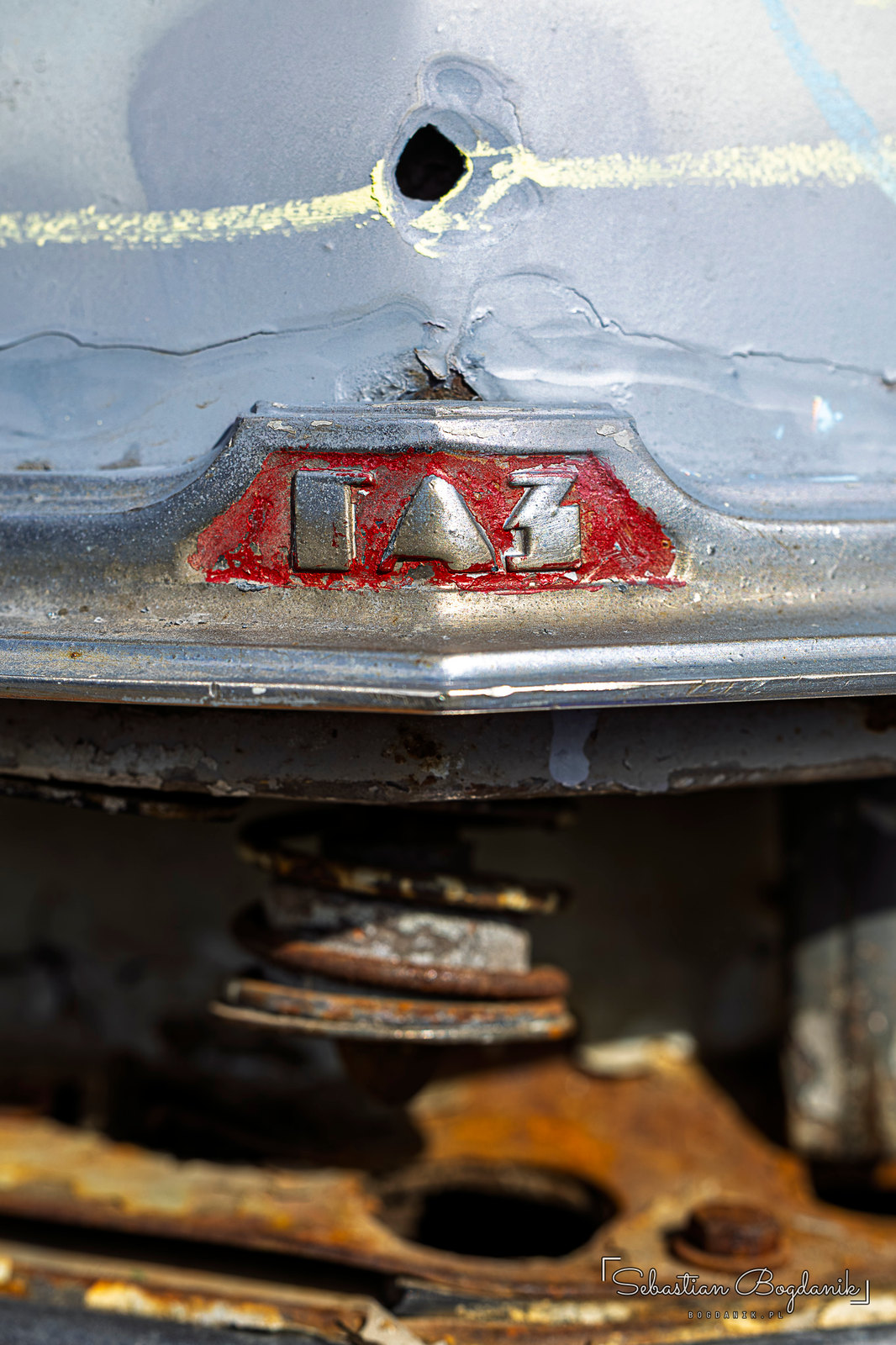
The Pobeda up close: the Cyrillic name means “Victory,” next to a well-weathered GAZ badge. Legend has it the car was first going to be called Rodina, “Motherland,” until Stalin asked how much they planned to sell the motherland for.
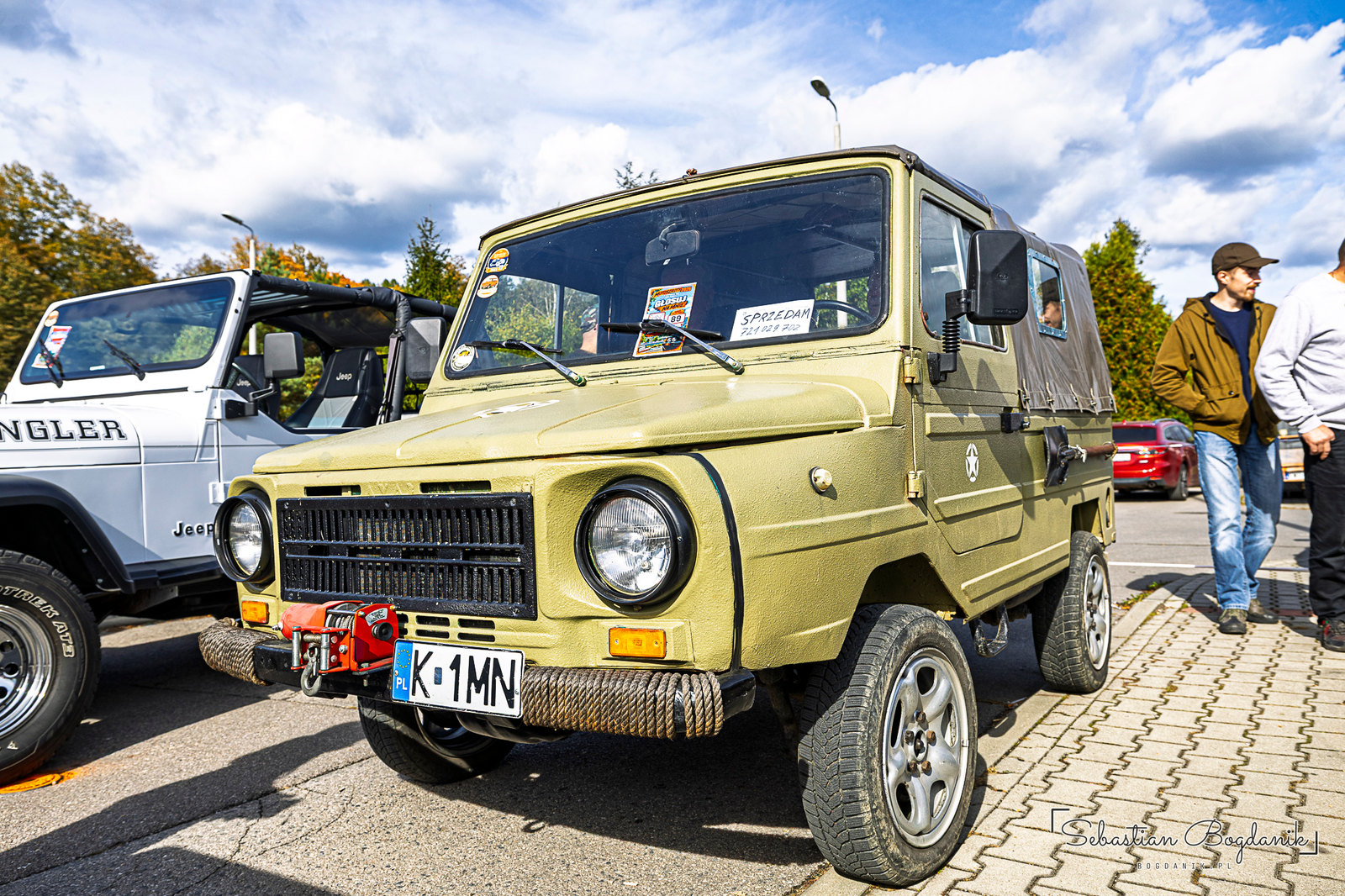
The LuAZ-969M Volyn from Lutsk in Ukraine, a civilian cousin of an amphibious military carrier. It can’t swim, but with its high ground clearance it laughs at mud. Its predecessor was the first Soviet production car with front-wheel drive. This one is looking for a new home: the sign in the window says “FOR SALE.”
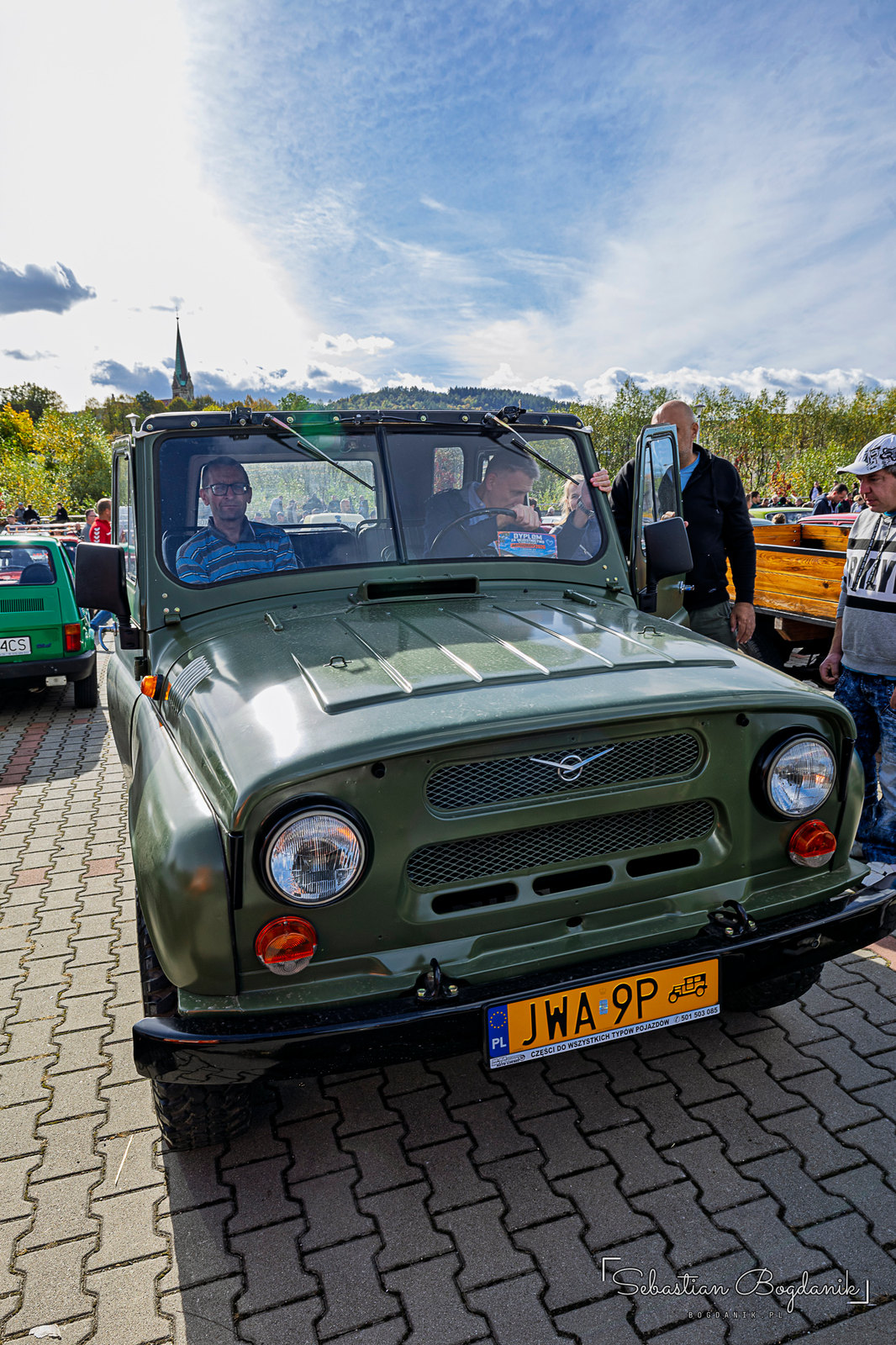
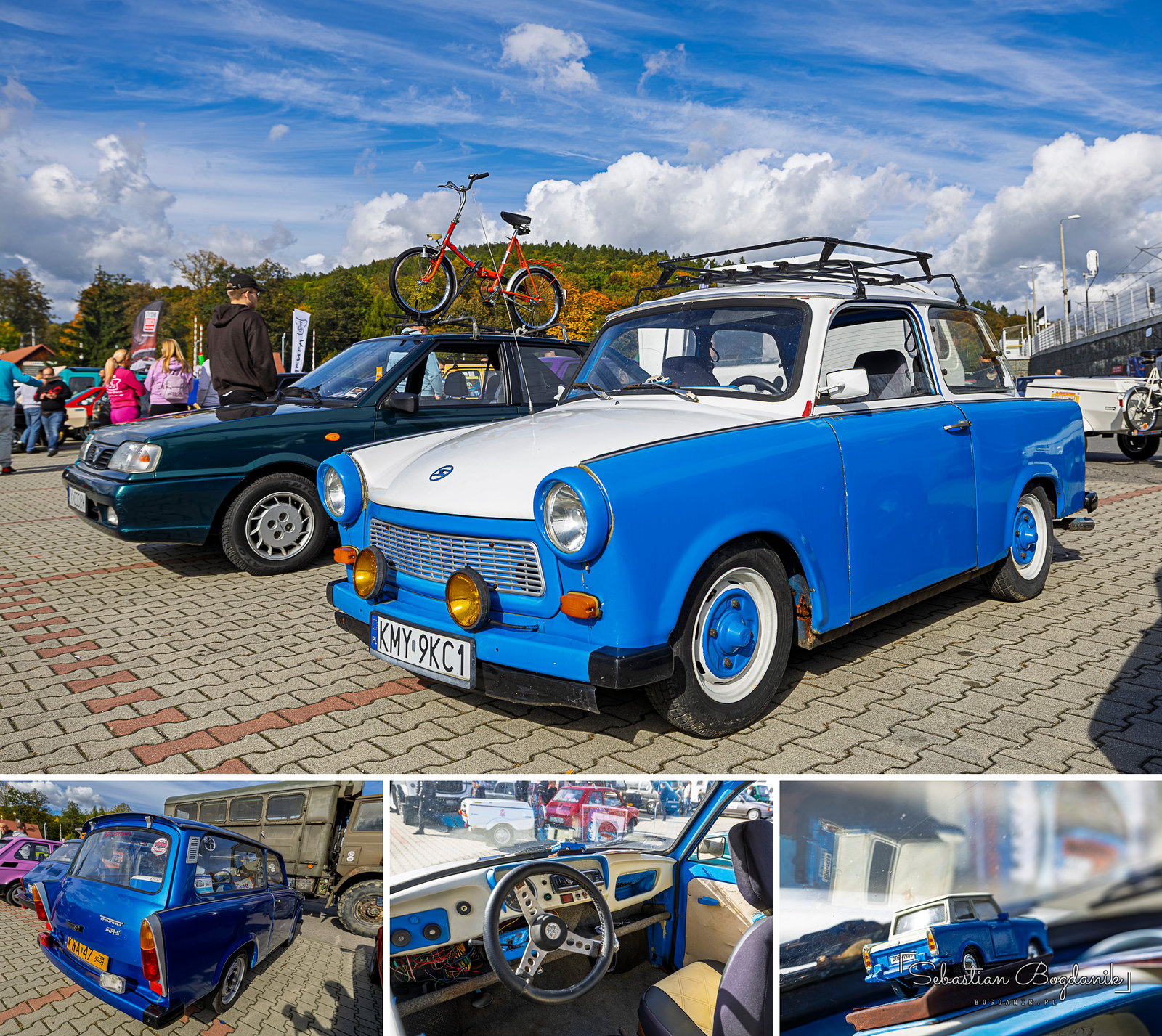
The UAZ-469, the Soviet answer to the Jeep. Russians nicknamed it “the goat,” supposedly for the way it bounces over rough ground. Built since the early 1970s, and its descendants still roll out of the factory in Ulyanovsk today.The Trabant, East Germany’s people’s car, four ways: sedan with a bike on the roof, wagon, cabin and a toy model with “DDR-1989” plates. It was named after Sputnik, since “Trabant” is German for satellite. The body was made of Duroplast, a resin reinforced with cotton waste, and East Germans waited years to get one. The model has one advantage: no blue two-stroke smoke.
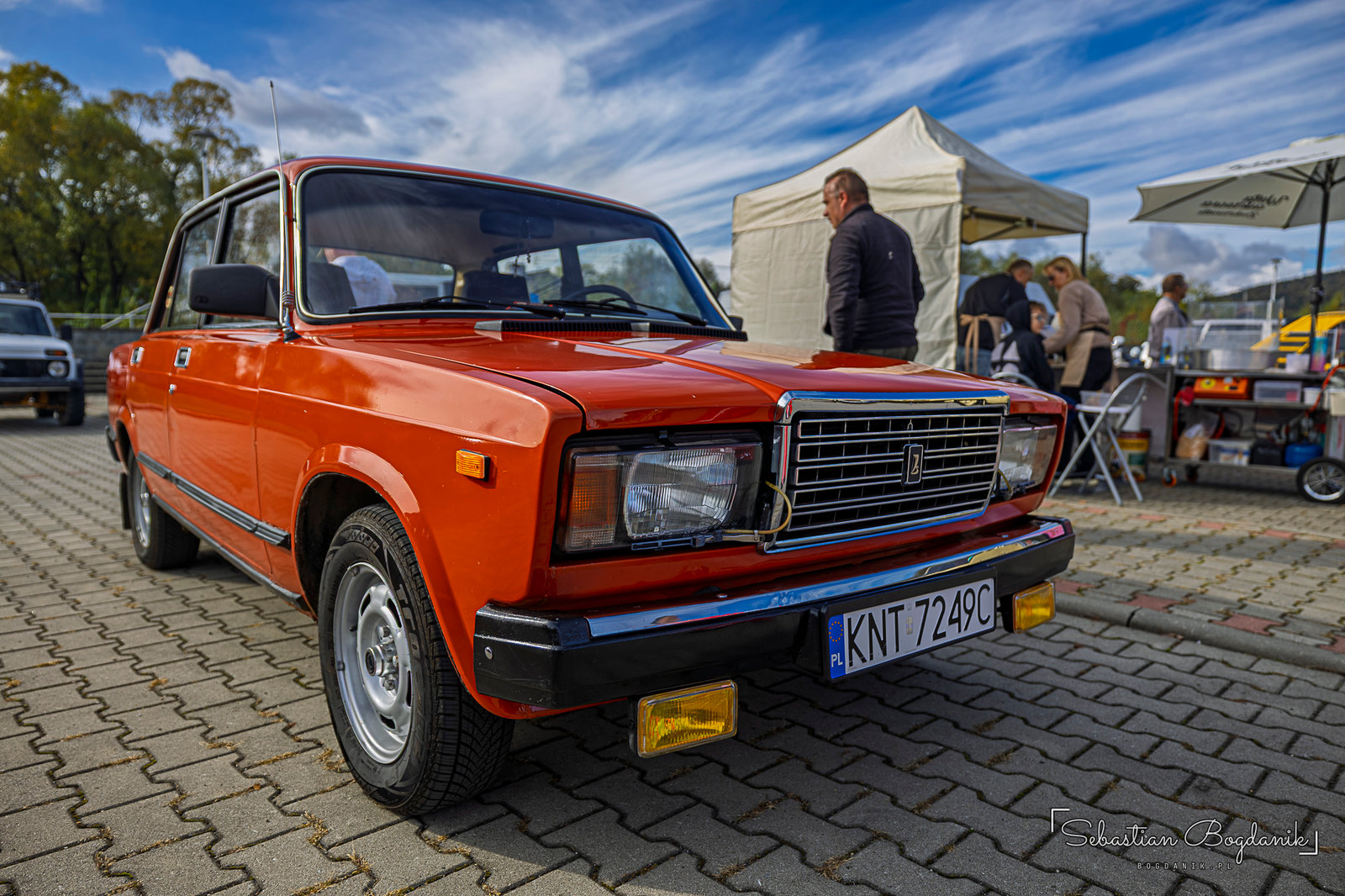
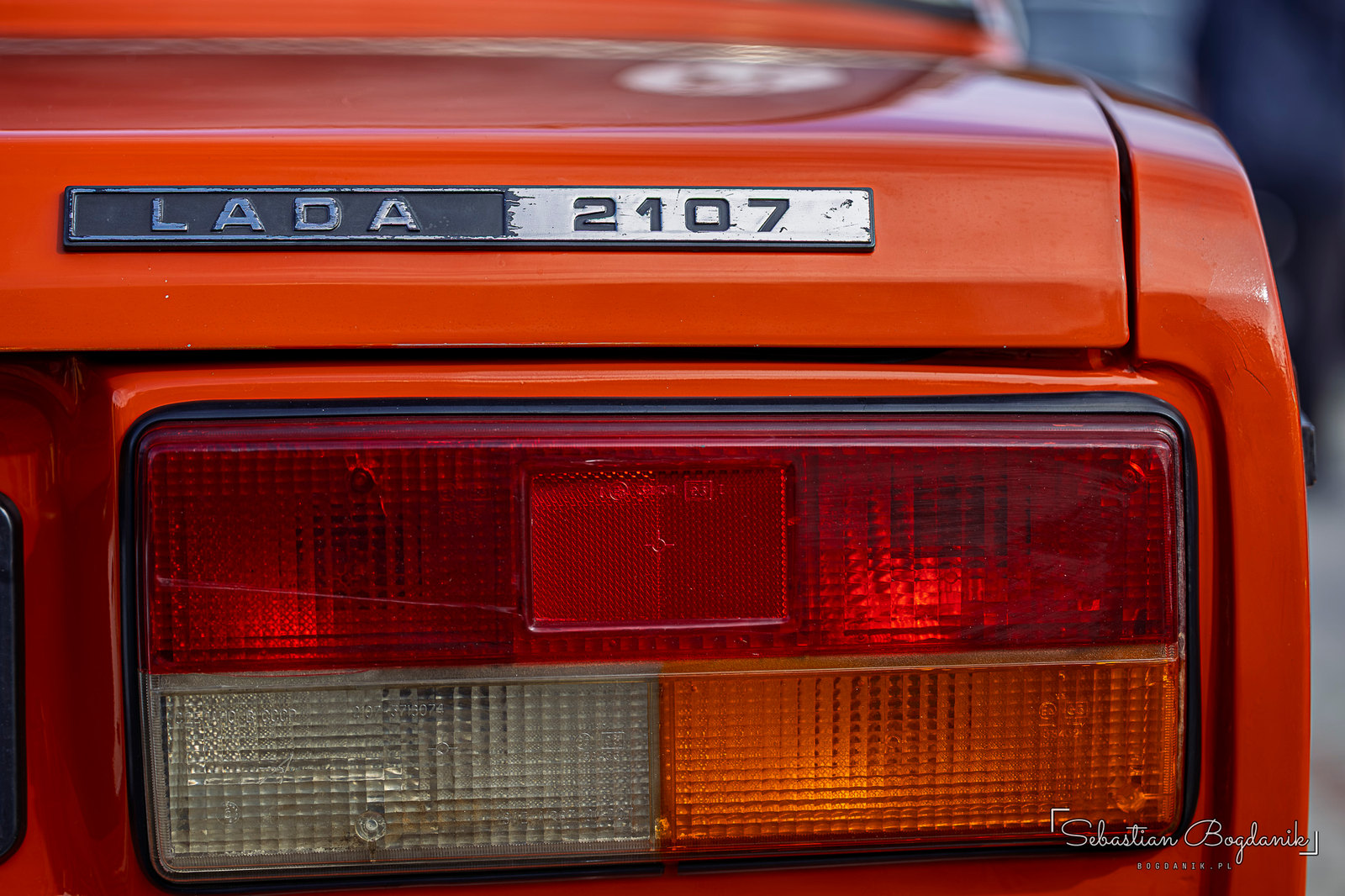
The Lada 2107. Its family tree is Italian: the very first Lada was a licensed Fiat 124. You will meet its sporty cousin, the Fiat 124 Spider, a couple of pages from now.
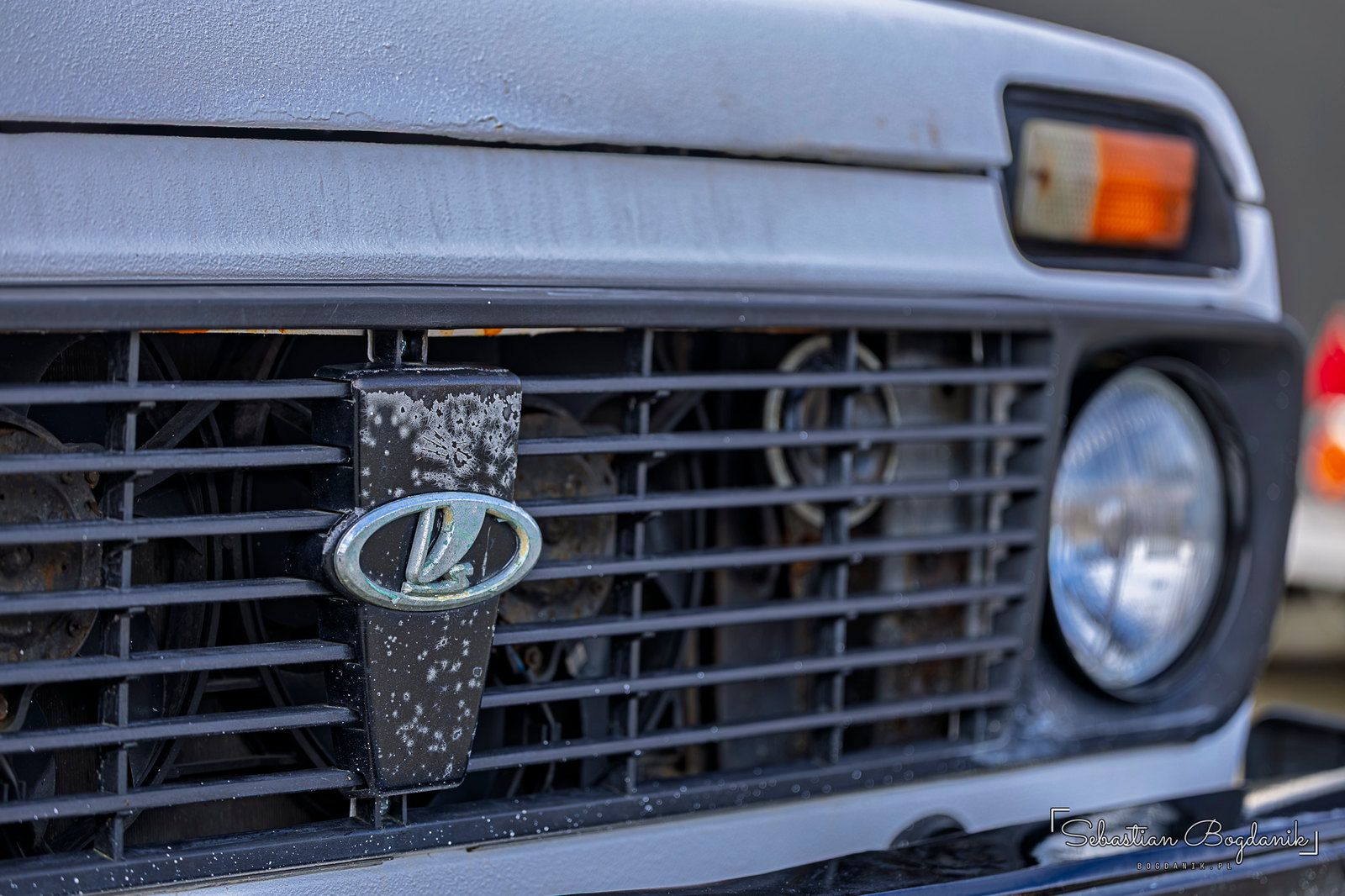
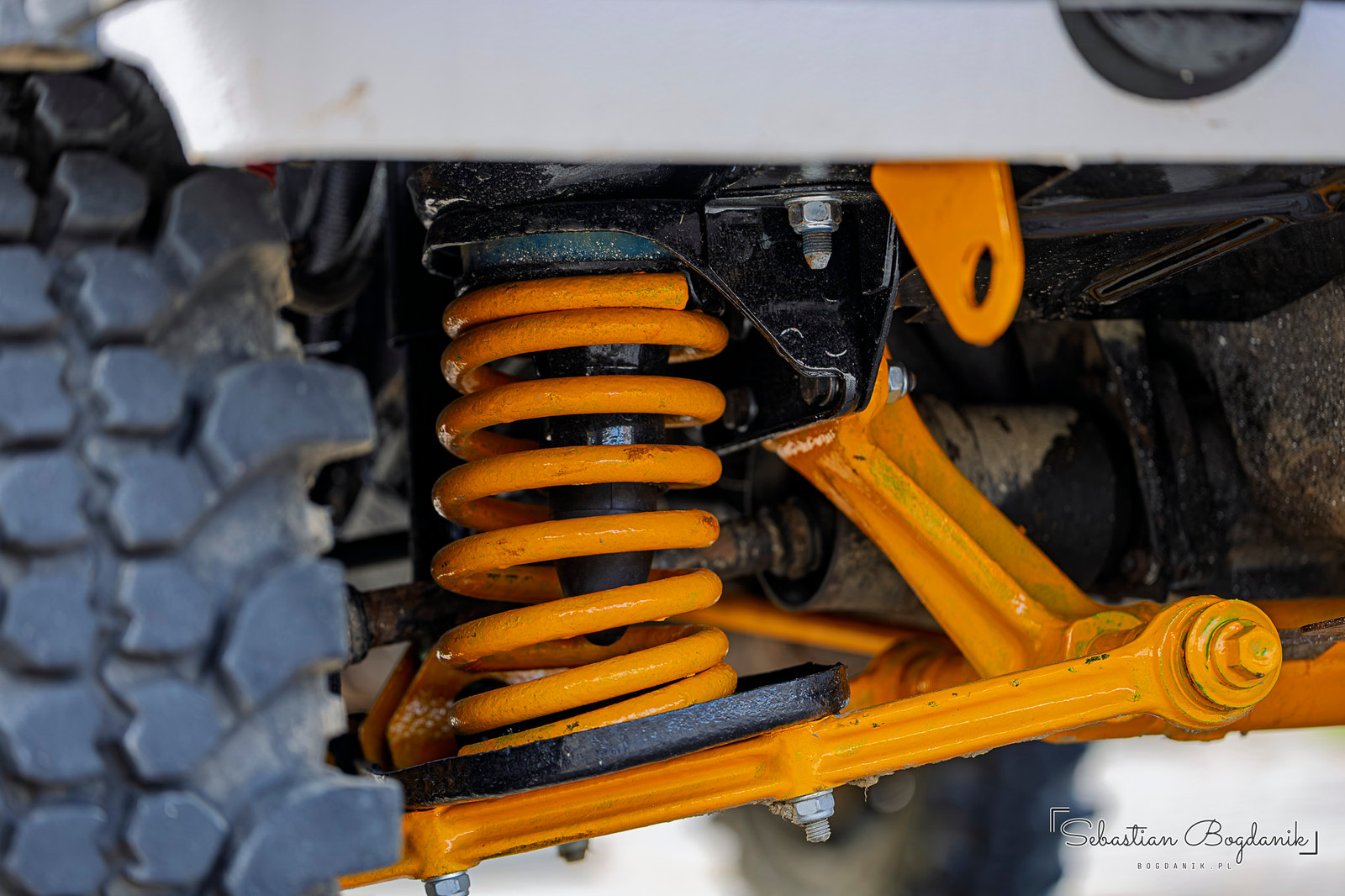
A Lada Niva on lifted suspension with bright yellow springs. Launched in 1977, the Niva was one of the first 4x4s with a car-style unibody, years before “crossover” was a word.
Ciao Italia
Italy gave Poland its Fiat licenses, so this chapter feels a bit like family.
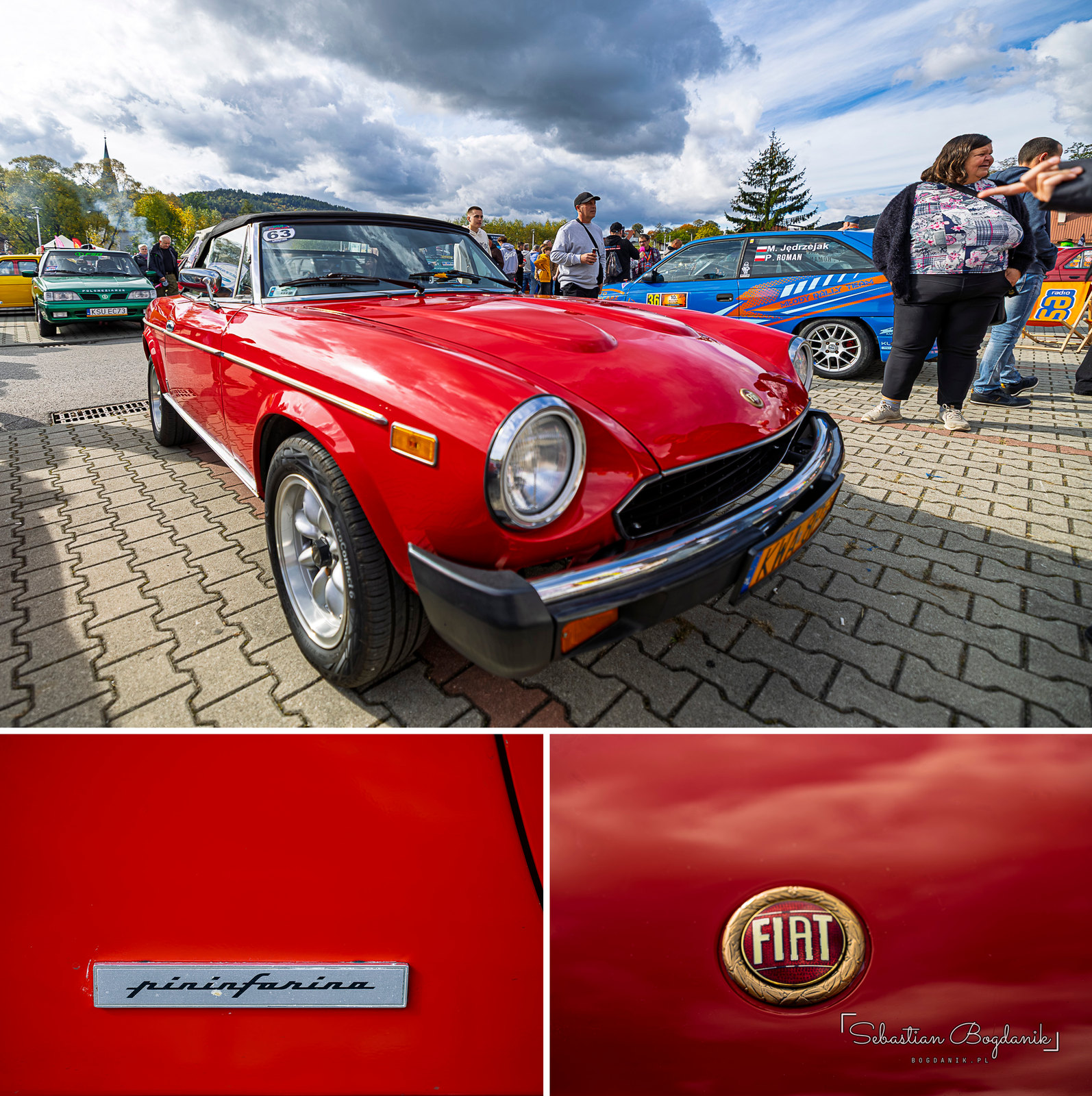
The Fiat 124 Sport Spider, a two-seater penned by Pininfarina, as the script badge proudly notes. Built from 1966 for almost two decades, and most of them were sold in the United States. The very last ones were even sold under the Pininfarina name.
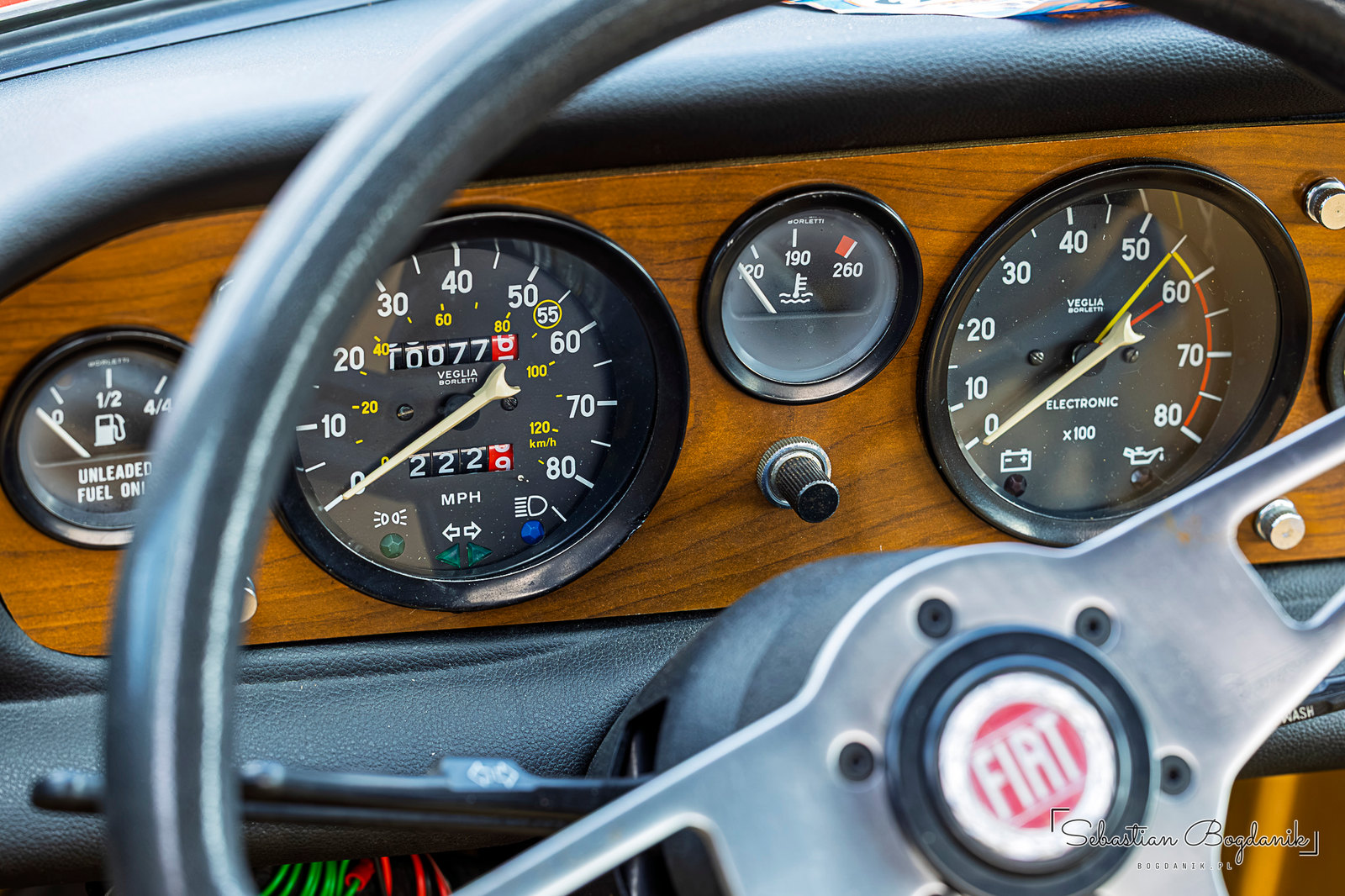
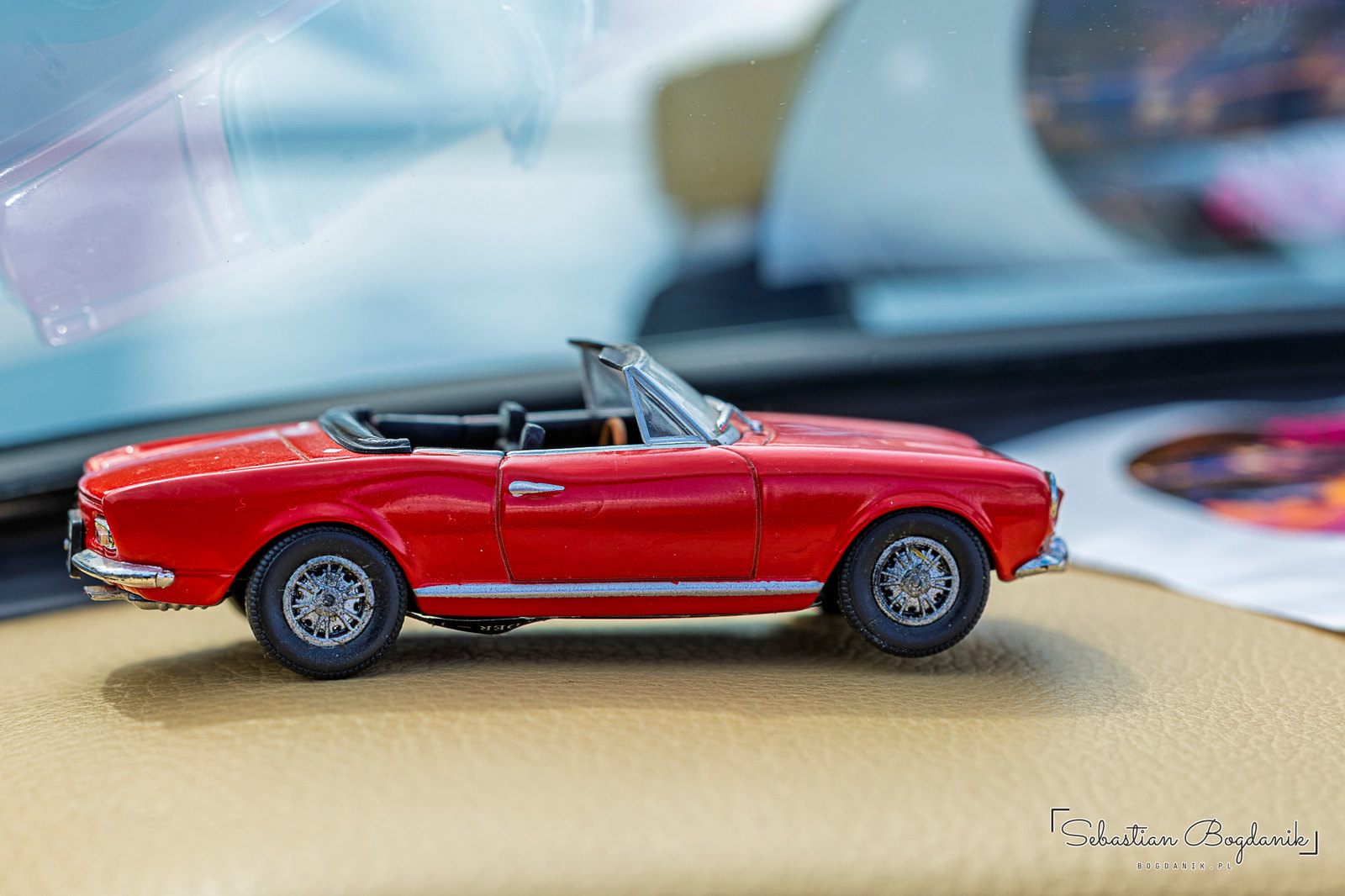
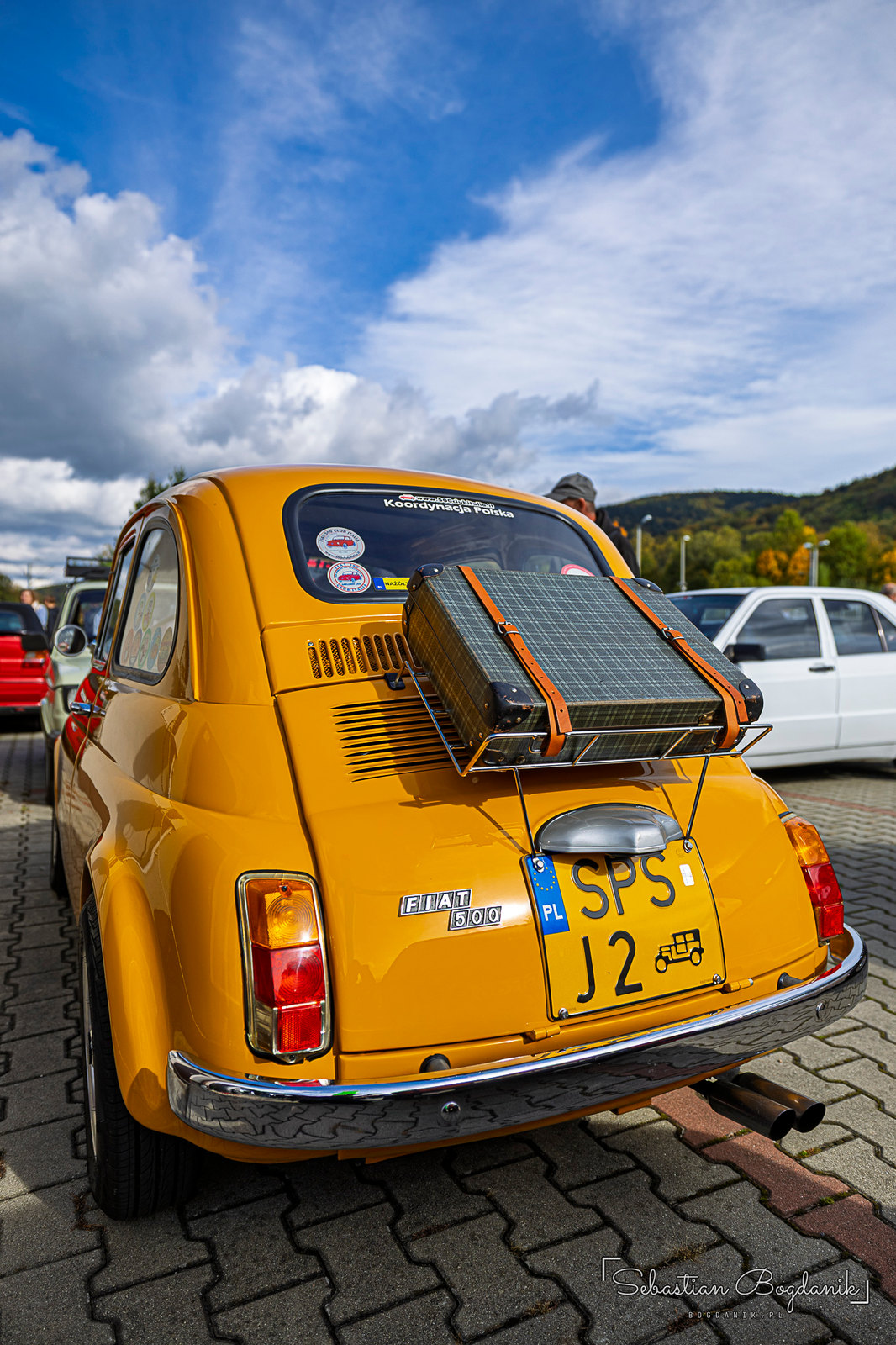
The same Spider from the inside: wood dash, Fiat horn button. And on the dash, a scale model of itself, because true love comes in two sizes.The original Fiat 500 in L (Lusso) trim, the “luxury” version with chrome bumper bars. A 30-cubic-inch twin out back making about 18 hp. Its successor became Poland’s maluch. The suitcase rides on the rear rack, because there is no room for it inside.
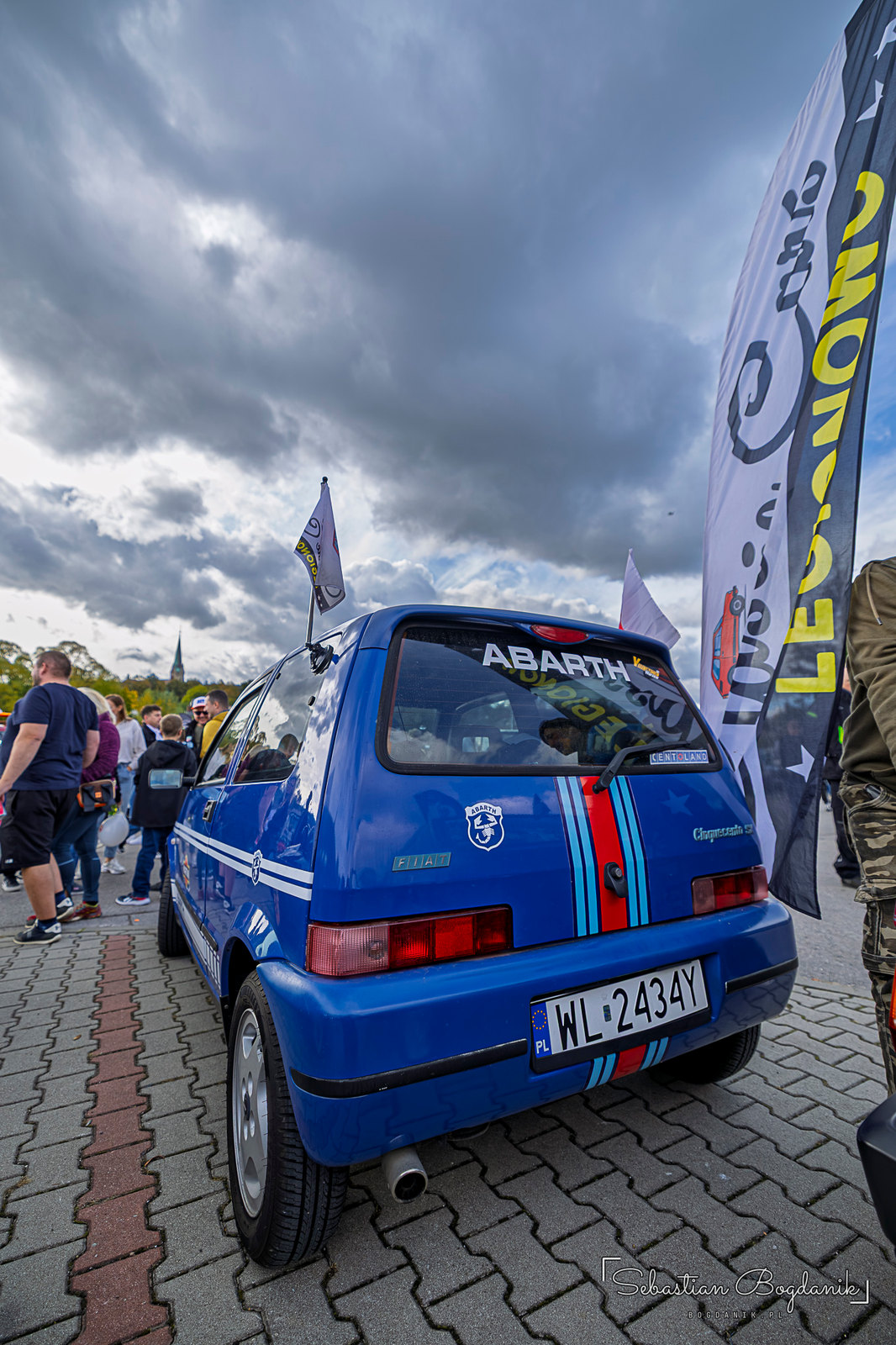
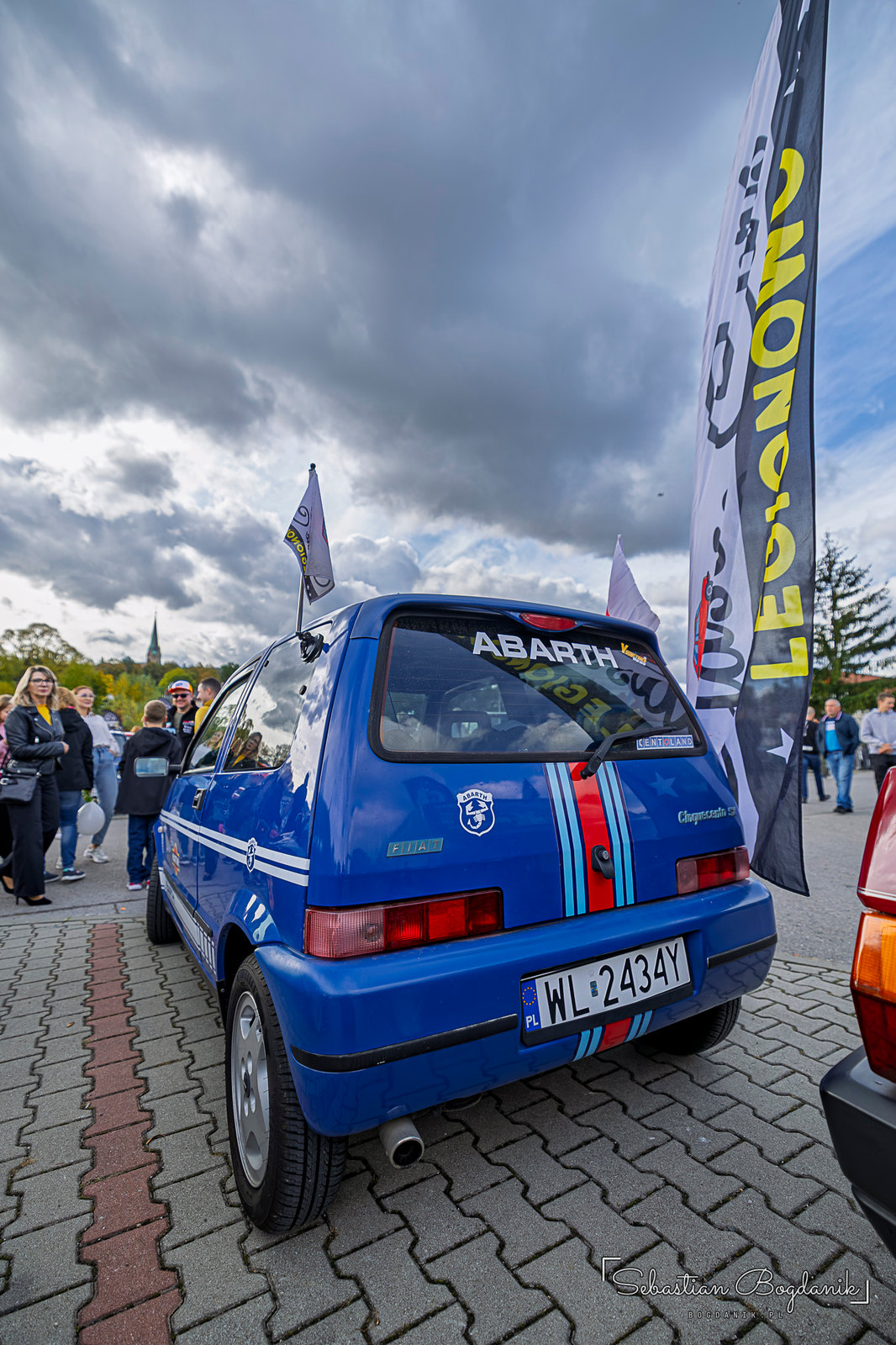
A Fiat Cinquecento in Abarth colors. Fun fact: the Cinquecento was built only in Poland, in Tychy and Bielsko-Biała, so this little Italian carries a Polish passport.
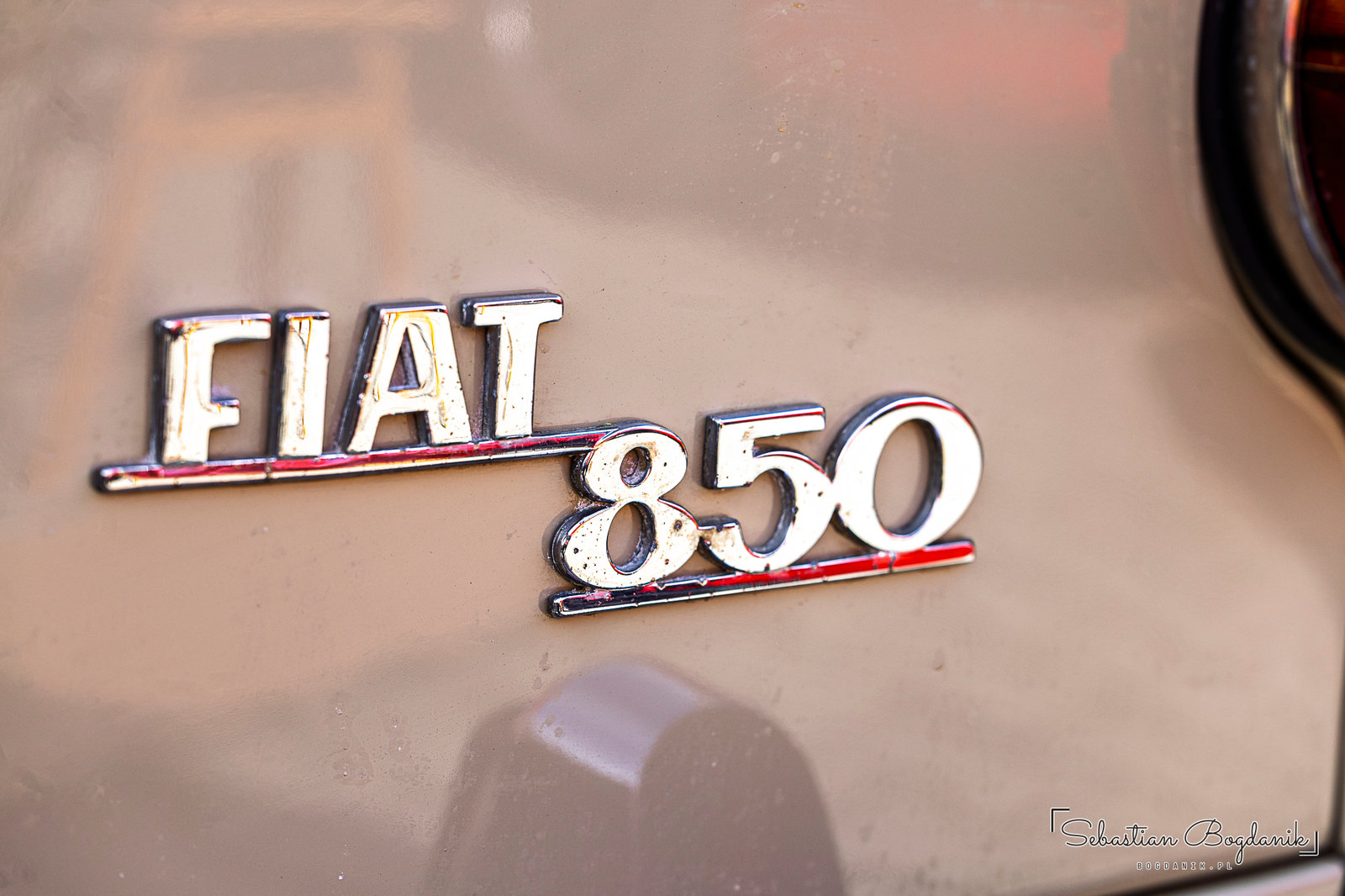
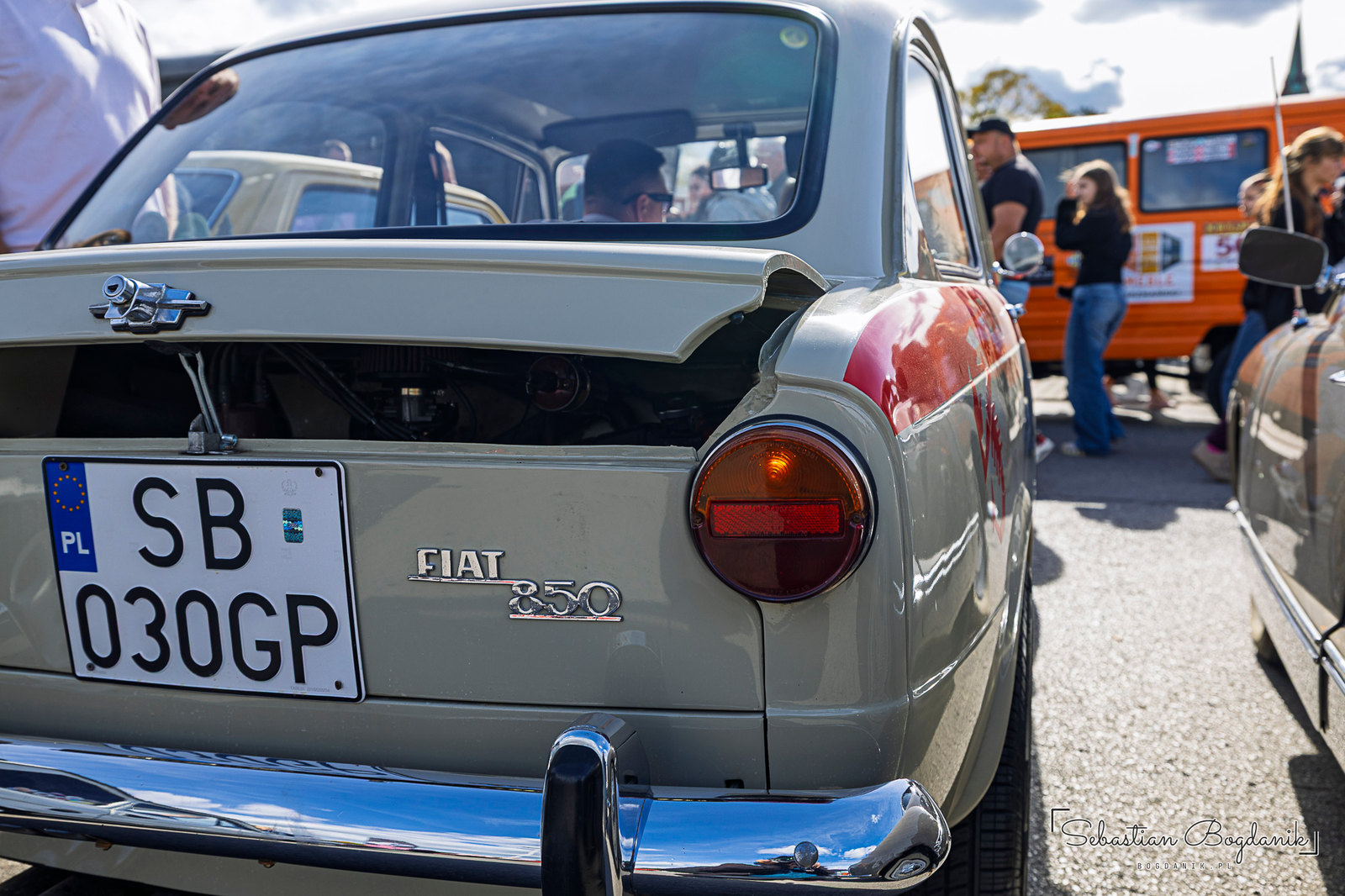
The Fiat 850, built from 1964 to 1973. Rear engine, and up front a transverse leaf spring bent upward at the factory so the car sits level with a full trunk. Spain built it under license as the SEAT 850.
Wunderbar & Co.
Germany, France and Britain: cars most Poles only saw in Western magazines before 1989. Today they park right next to the Trabants.
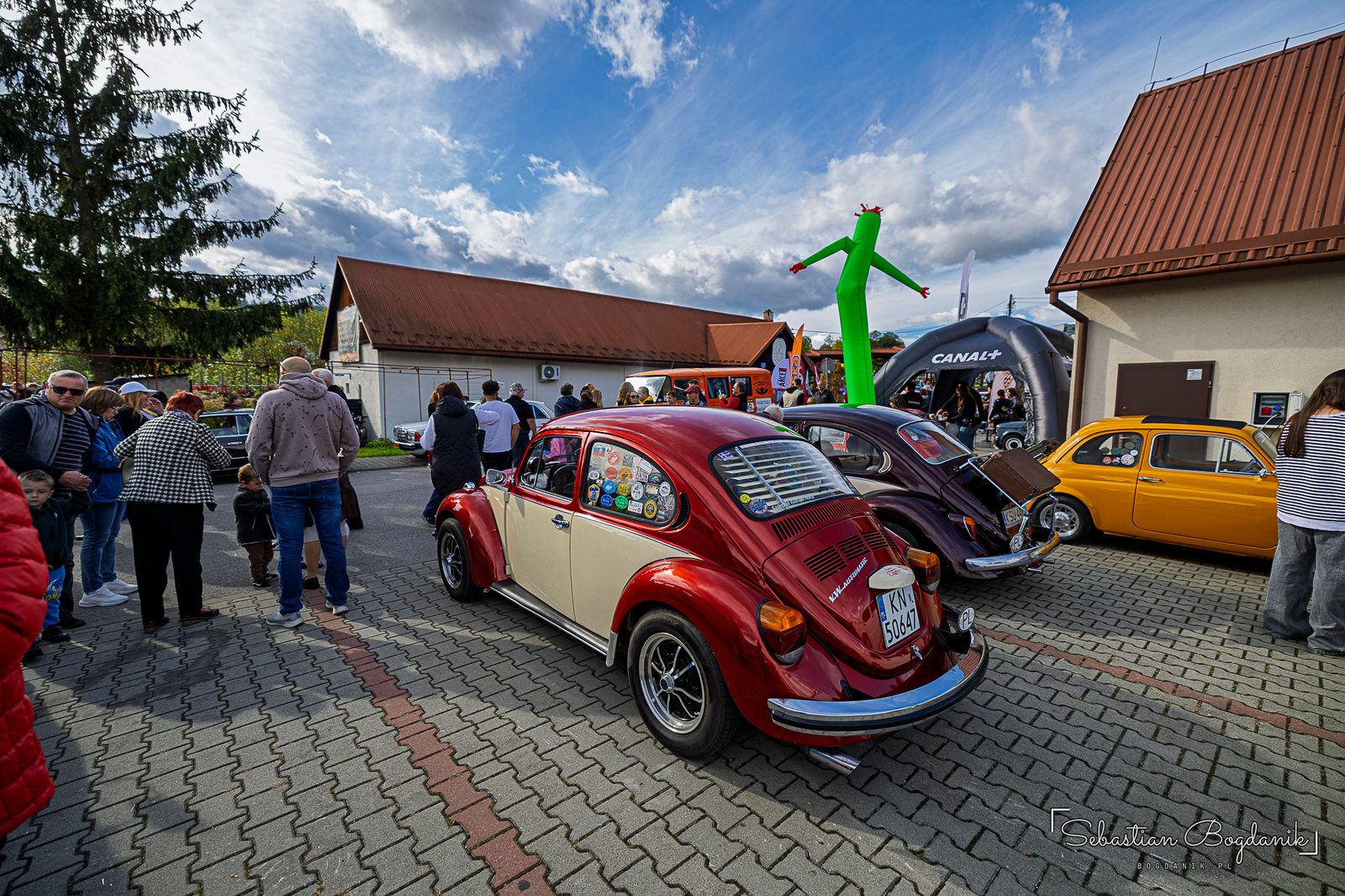
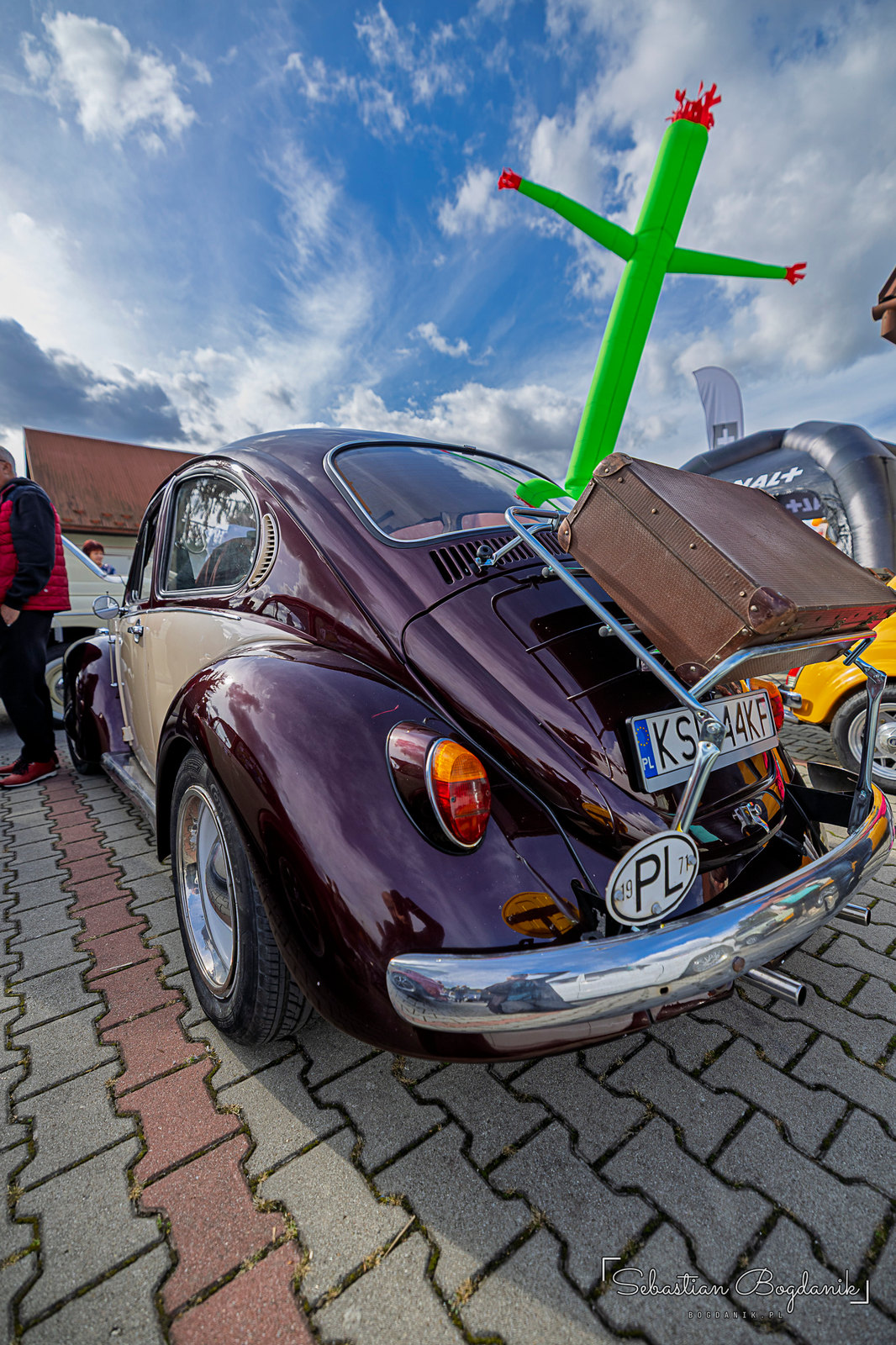
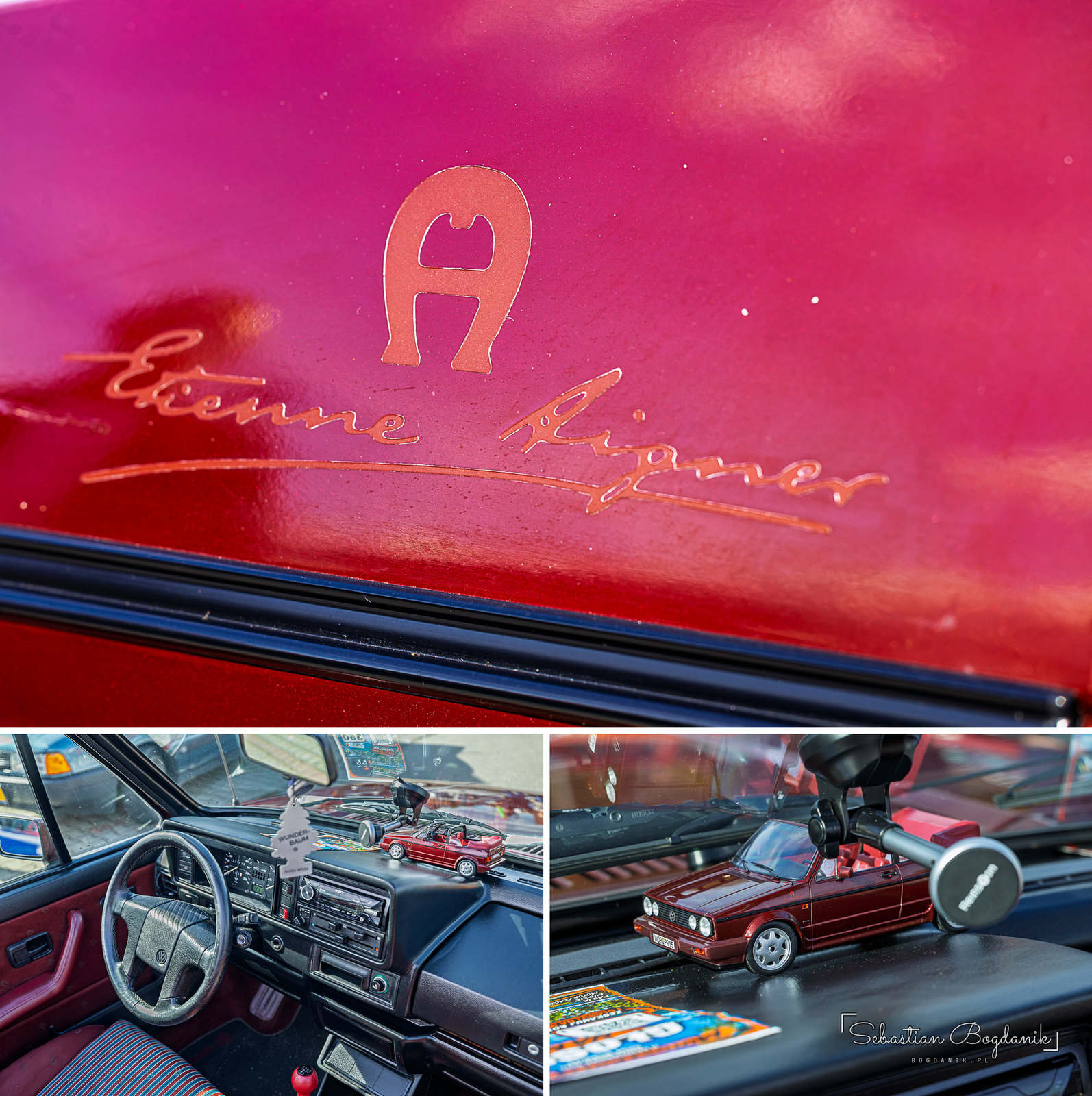
Two Beetles, two clever tricks. The red-and-cream one is a rare VW Automatic, the “Autostick”: three speeds and no clutch pedal, because a vacuum servo disengages the clutch the moment you touch the shifter. The other carries a leather suitcase on the engine lid, since the front trunk is tiny. More than 21 million Beetles were built, the last one in Mexico in 2003. Herbie would approve.The Golf Cabriolet, sold in America as the Rabbit Convertible, here in the Etienne Aigner special edition named after the leather-goods brand. Only 2,951 were built and roughly half of them went to the U.S. Germans call it the “strawberry basket” because the roll bar looks like a basket handle. Its owner keeps a scale model of the car on the dash.
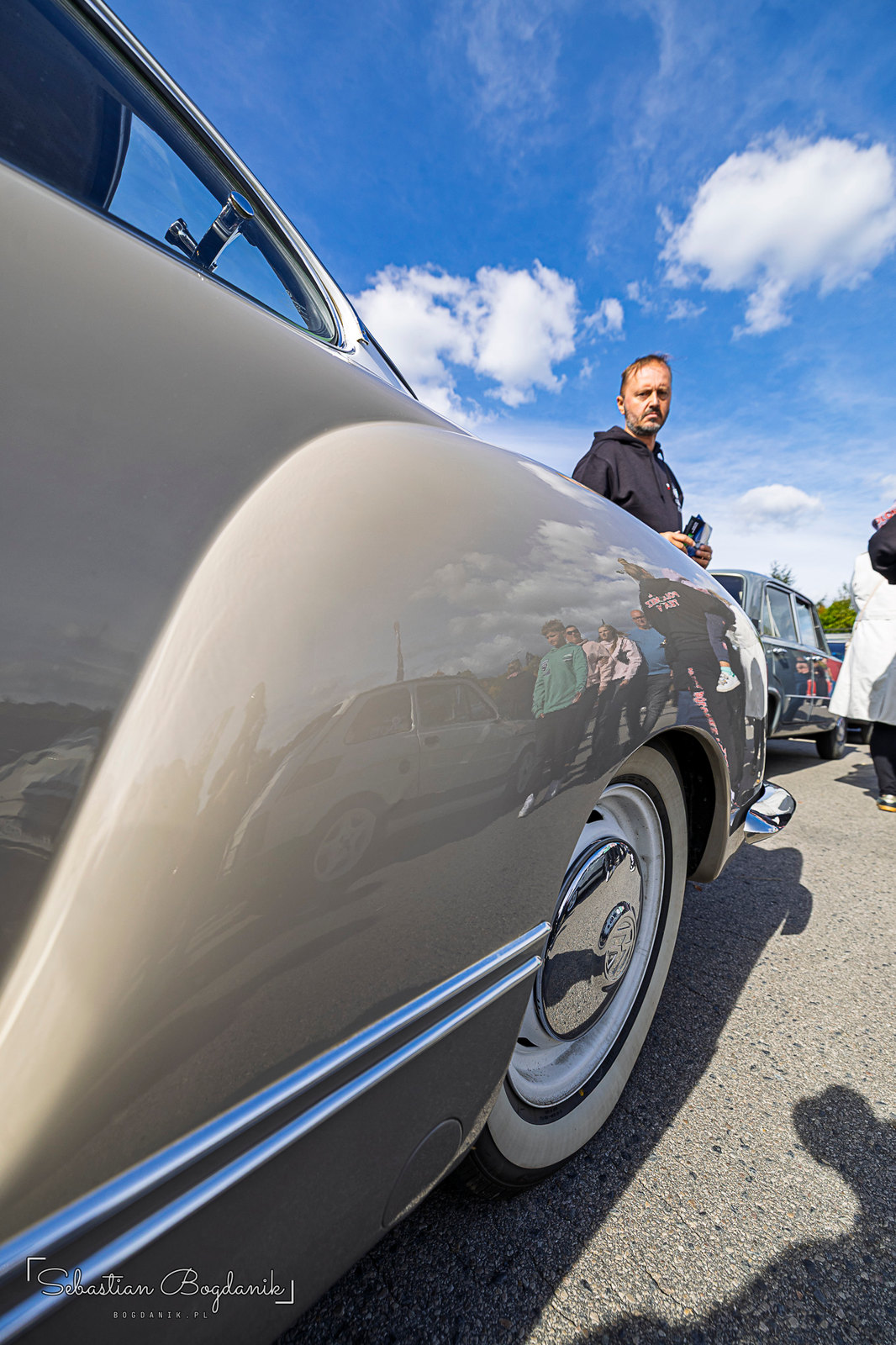
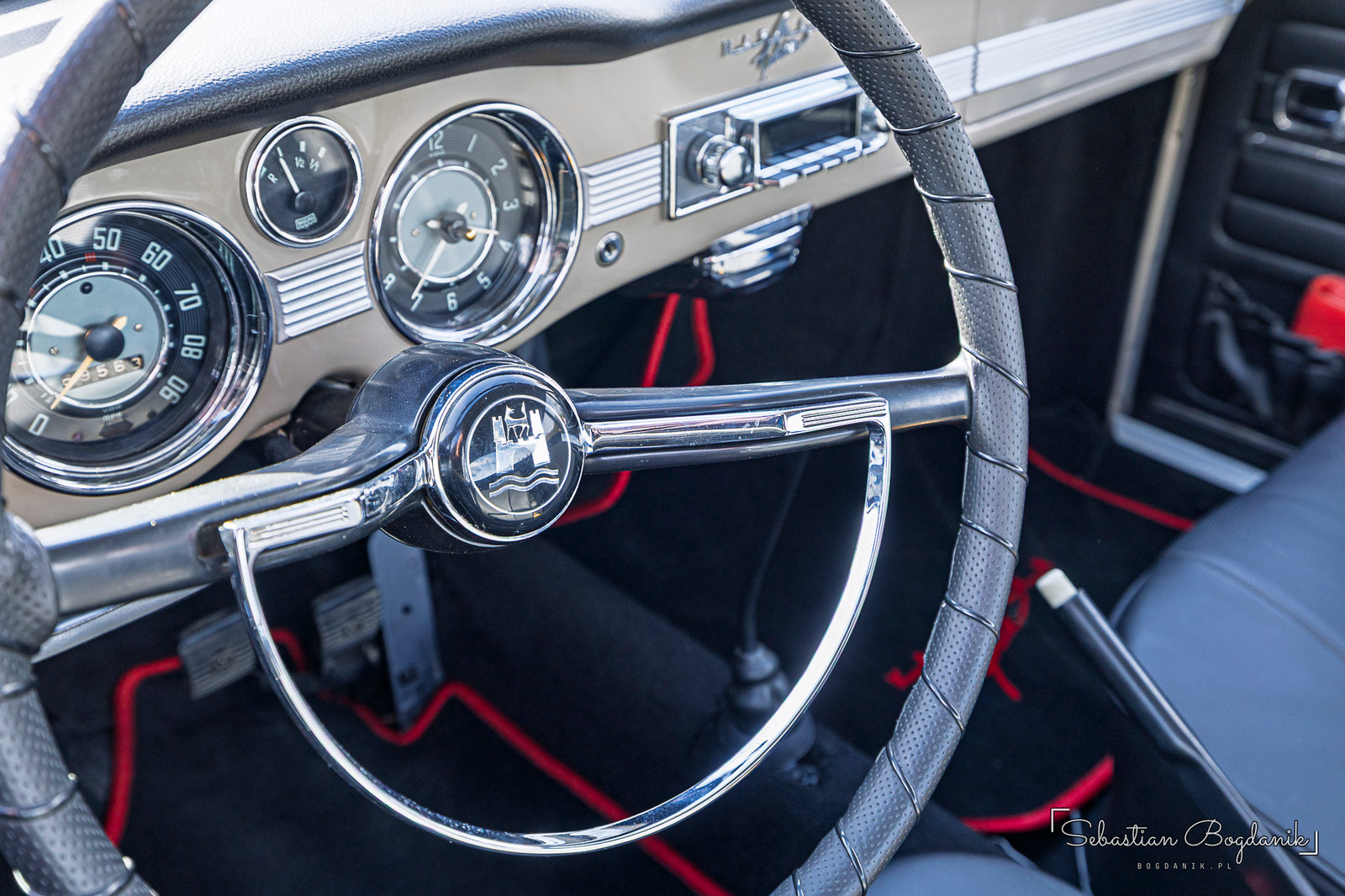
The VW Karmann Ghia: Beetle underneath, body built by Karmann, styling by the Italian design house Ghia. The horn button carries the crest of Wolfsburg, the town Volkswagen built.
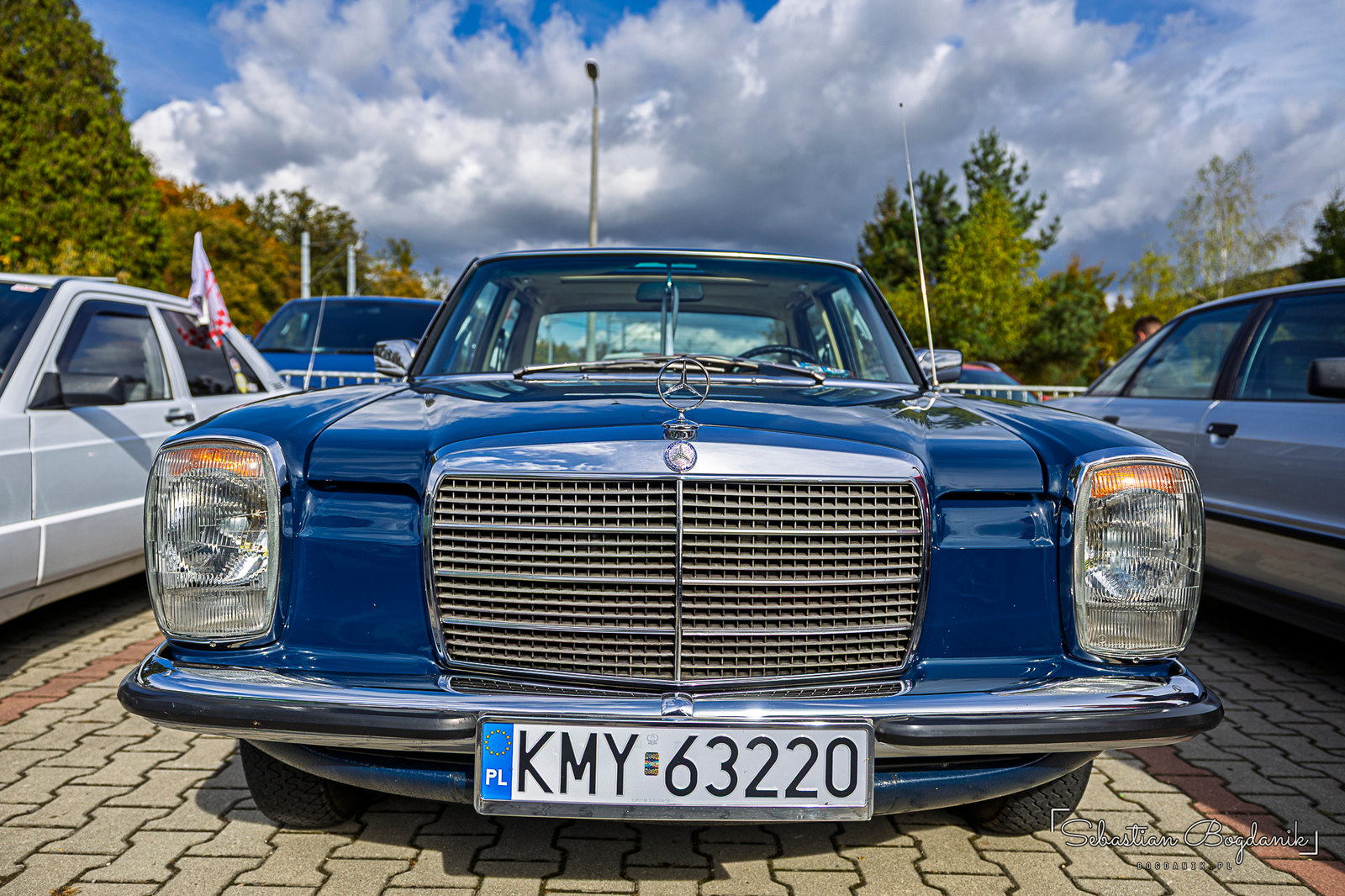
A Mercedes W114/W115, nicknamed “Strich-Acht” (“slash eight”) after its 1968 debut, the diesel taxi of choice across Europe. Toughness runs in the family: its successor, a W123 taxi in Greece, racked up about 2.9 million miles before Mercedes put it in its museum.
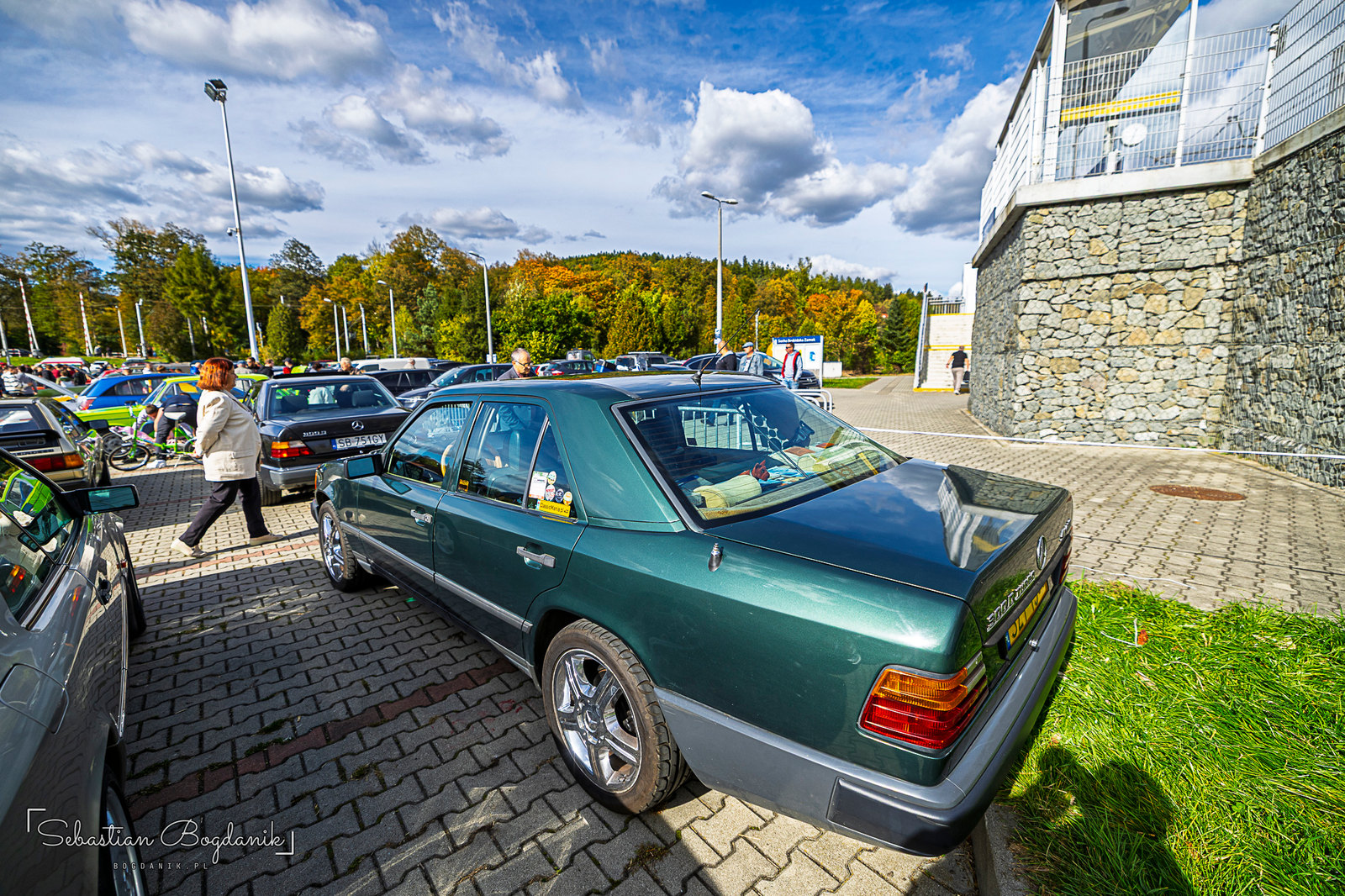
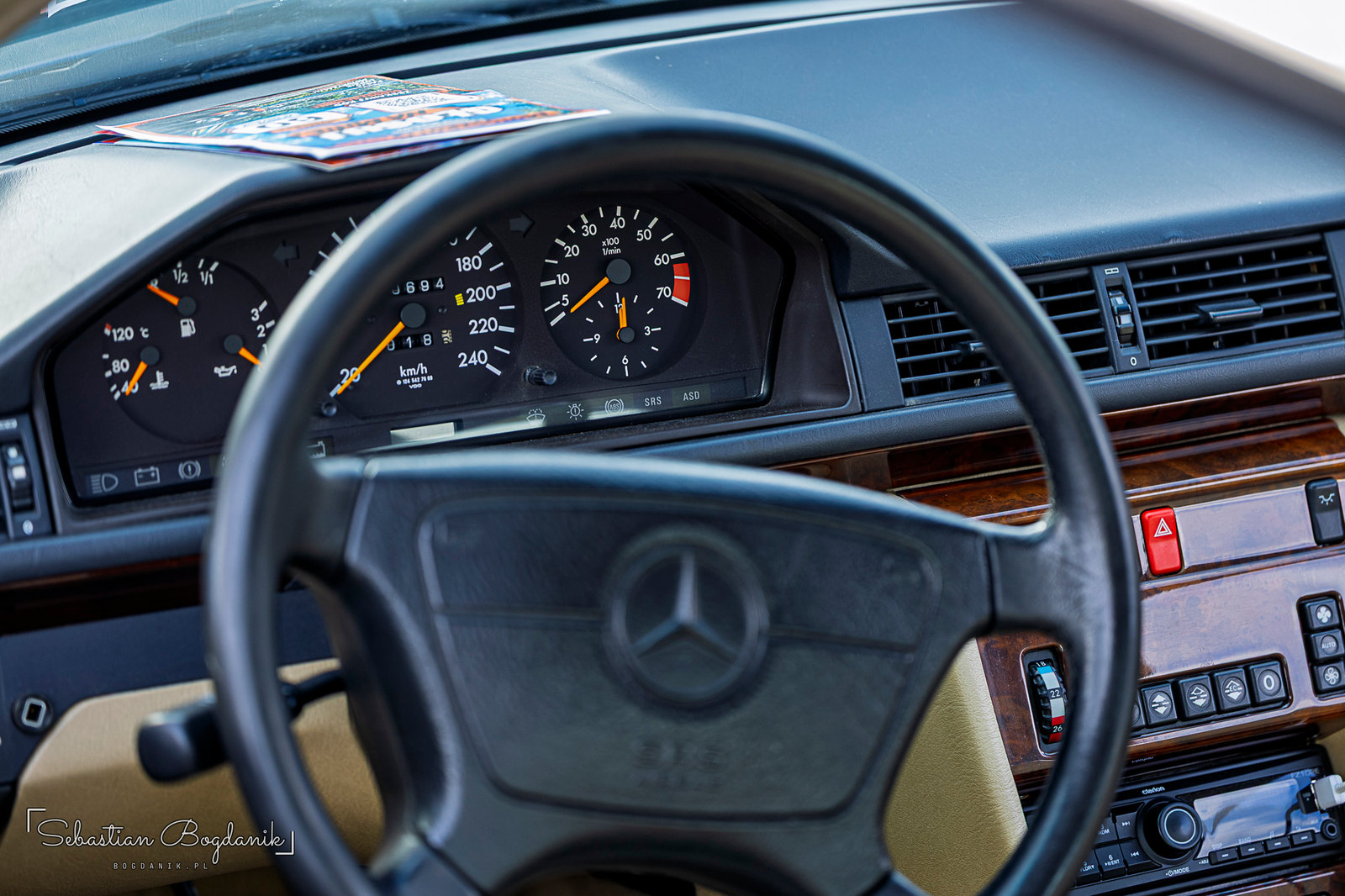
A W124 coupe and a cabin trimmed in wood. Many enthusiasts call the W124 the most bulletproof Mercedes ever made.
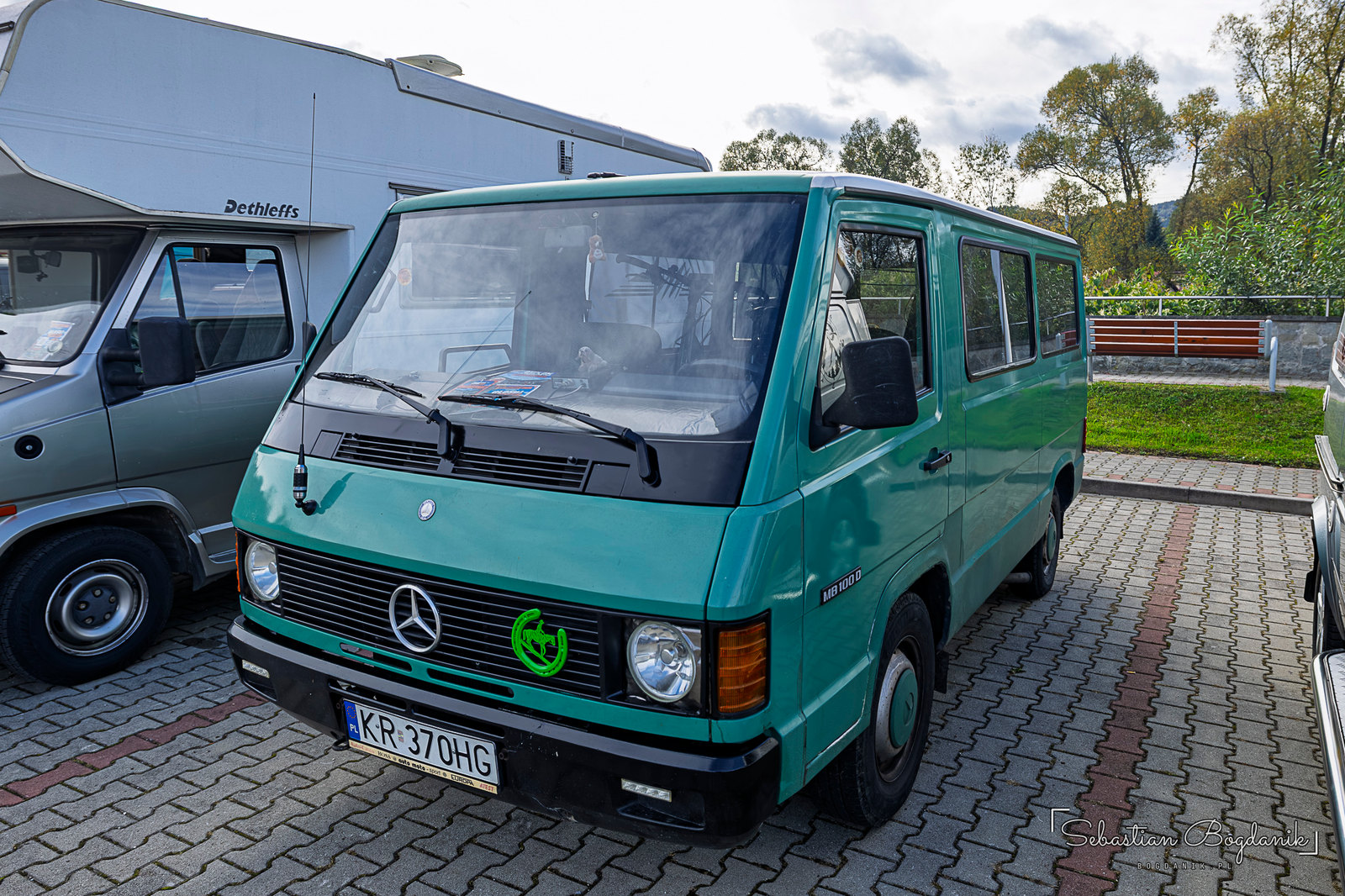
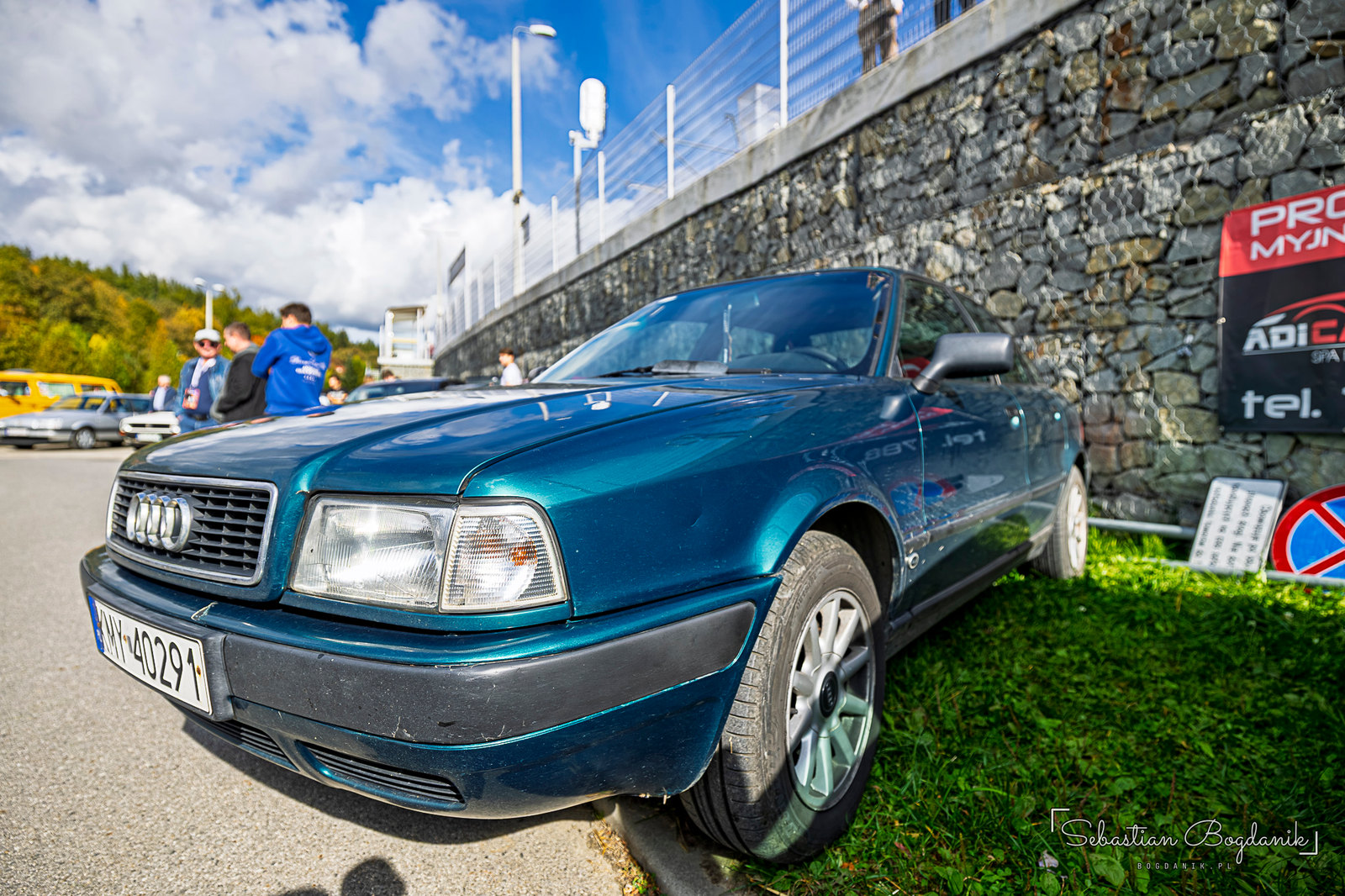
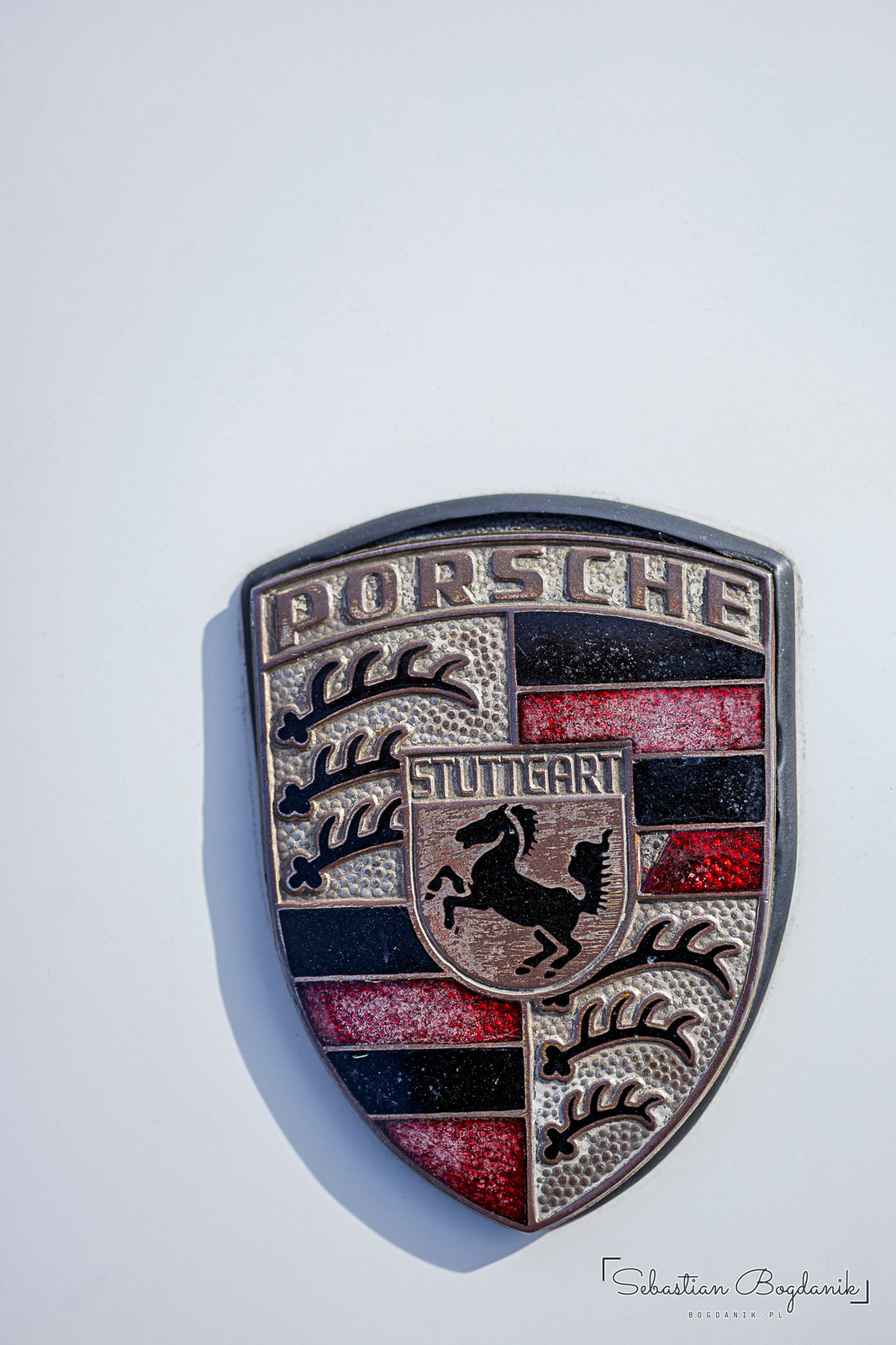
A Mercedes MB100 van, built in Spain, and an Audi 80, the last of its line before the A4 replaced it in the mid-1990s.The Porsche crest: the prancing horse comes from the coat of arms of Stuttgart, the antlers and stripes from Württemberg. Legend says Ferry Porsche sketched it on a napkin over dinner in New York with importer Max Hoffman. The official story credits a contest and an in-house designer.
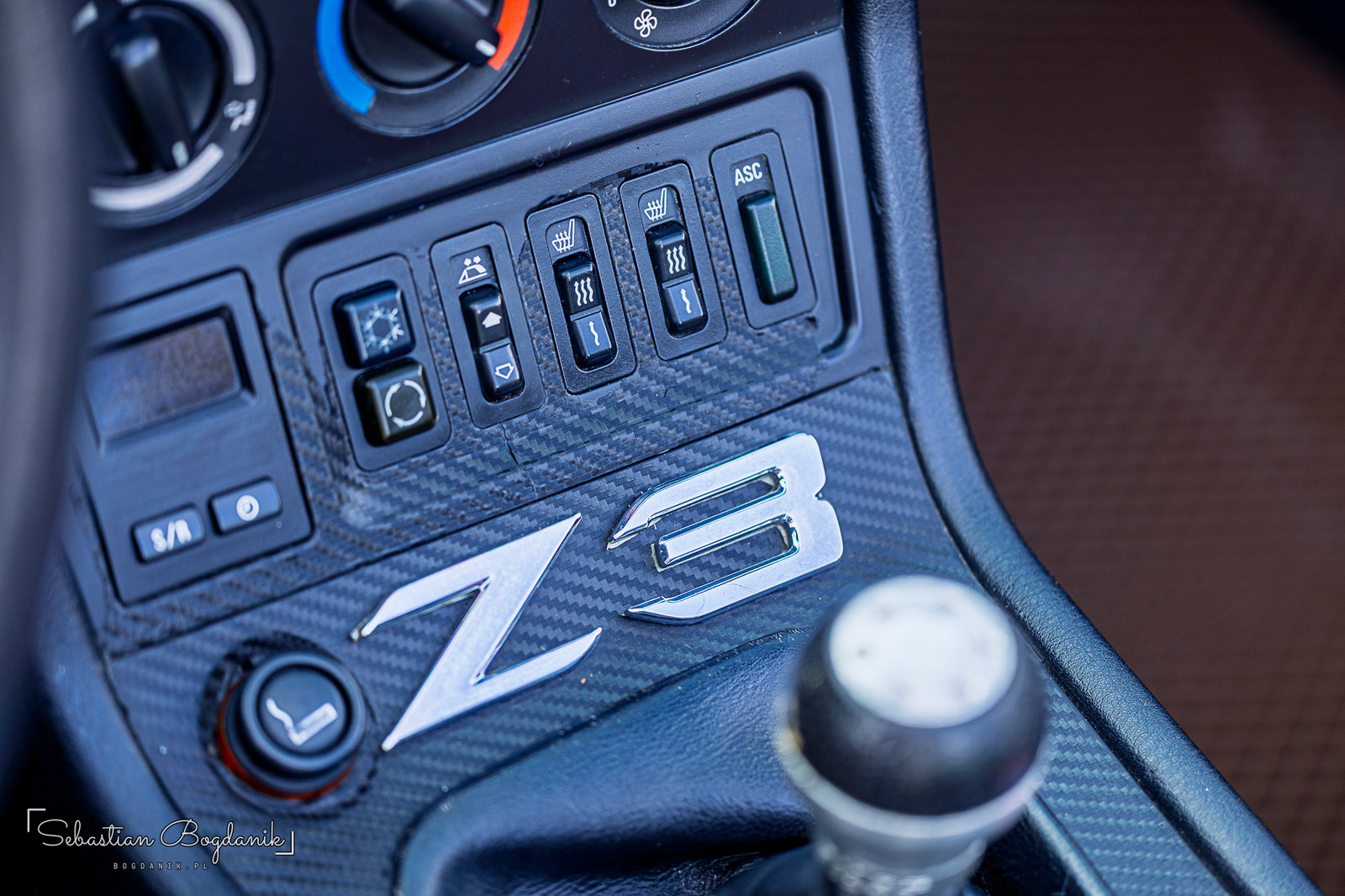
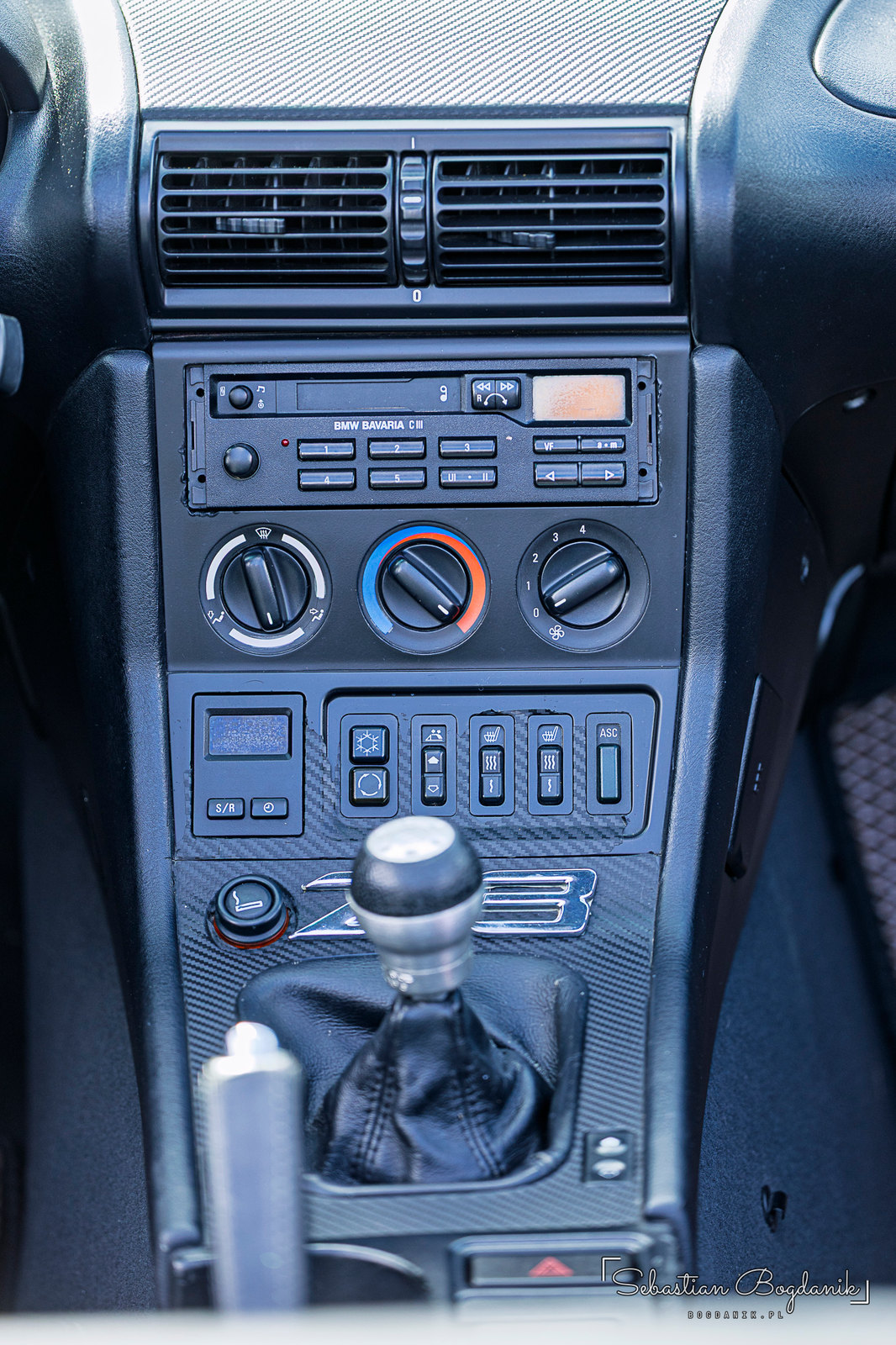
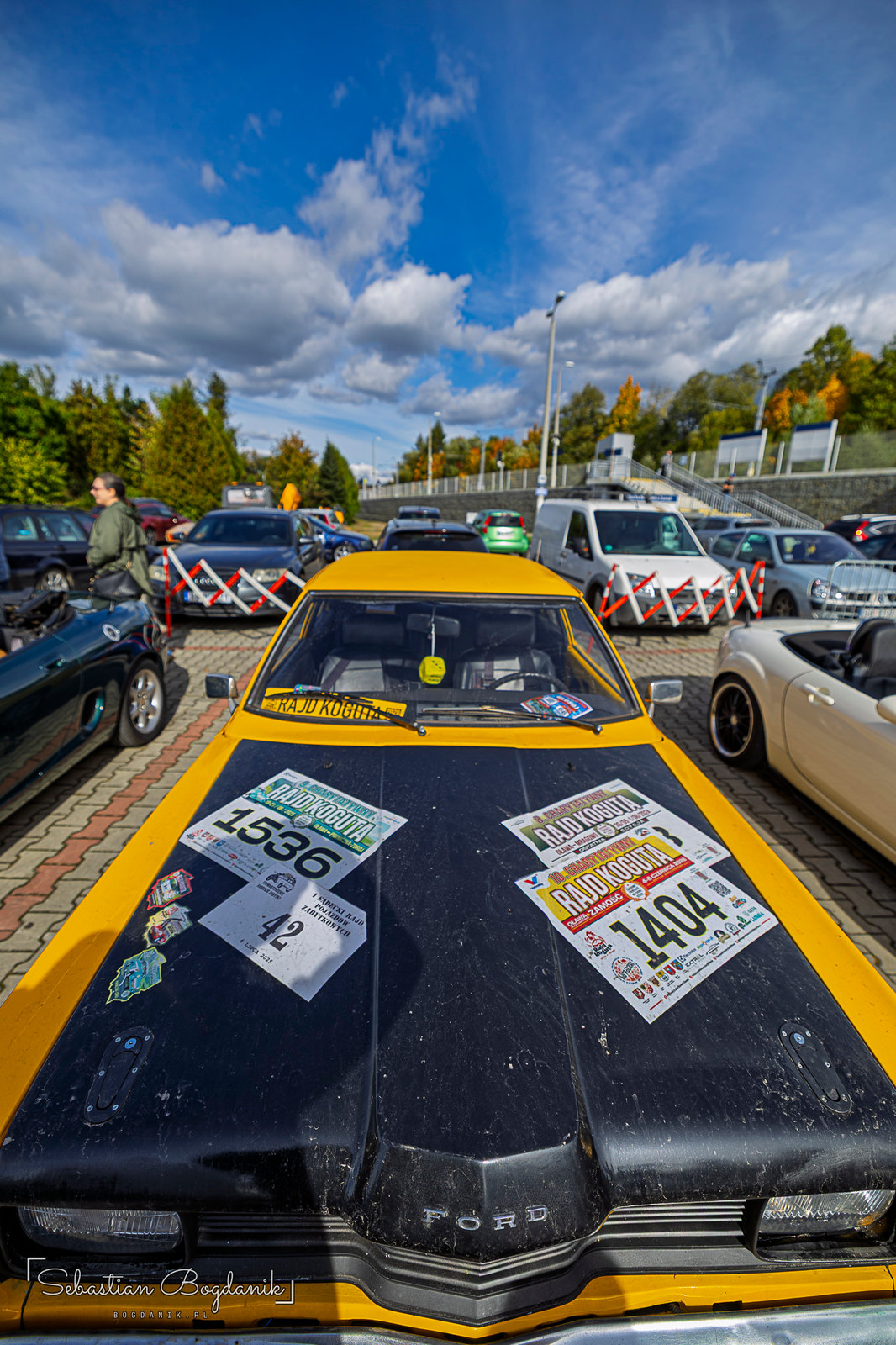
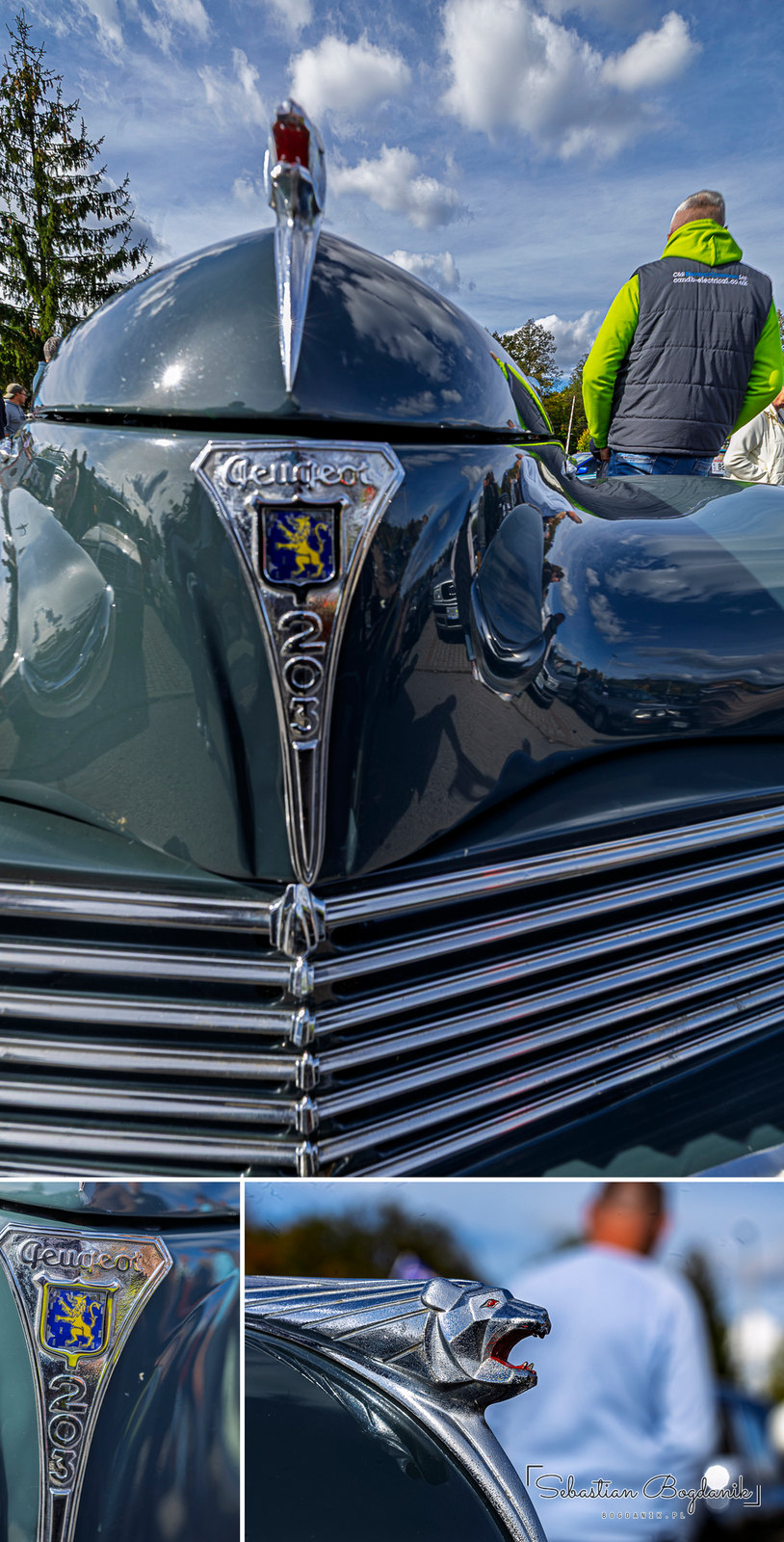
The BMW Z3, built in Spartanburg, South Carolina, and the roadster James Bond drove in GoldenEye in 1995. A no-nonsense cockpit: a big Z3 on the console, three climate knobs and a short shifter.A first-generation Ford Capri, Europe’s Mustang. The yellow paint and matte-black hood nod to the sporty RS2600. The stickers come from a different rally, the Rooster Rally.The Peugeot 203, the company’s first all-new car after World War II, built from 1948 to 1960. The lion on the hood dates back to the 1800s, when the Peugeot family stamped it on their steel saw blades: teeth as strong as a lion’s.
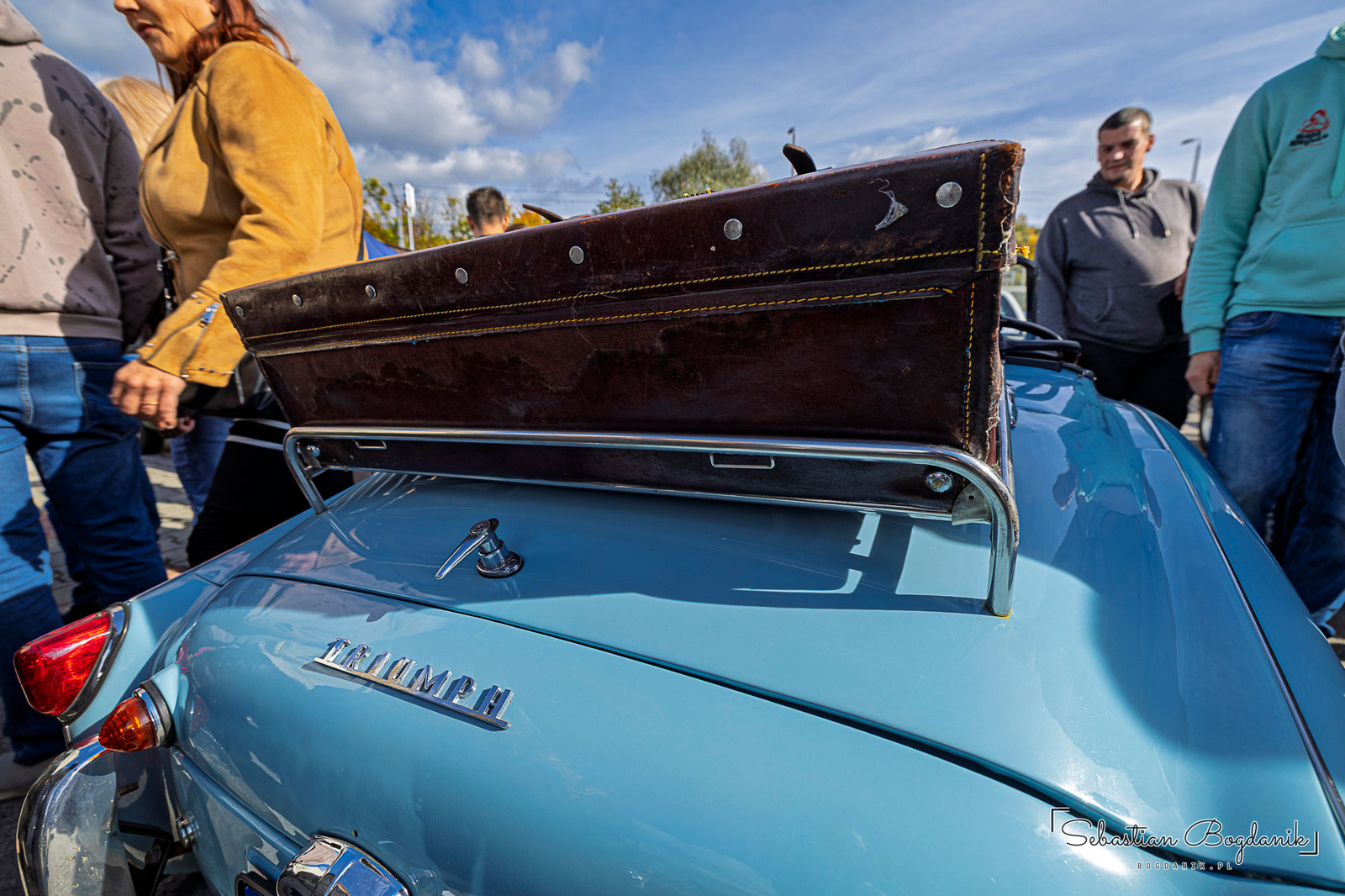
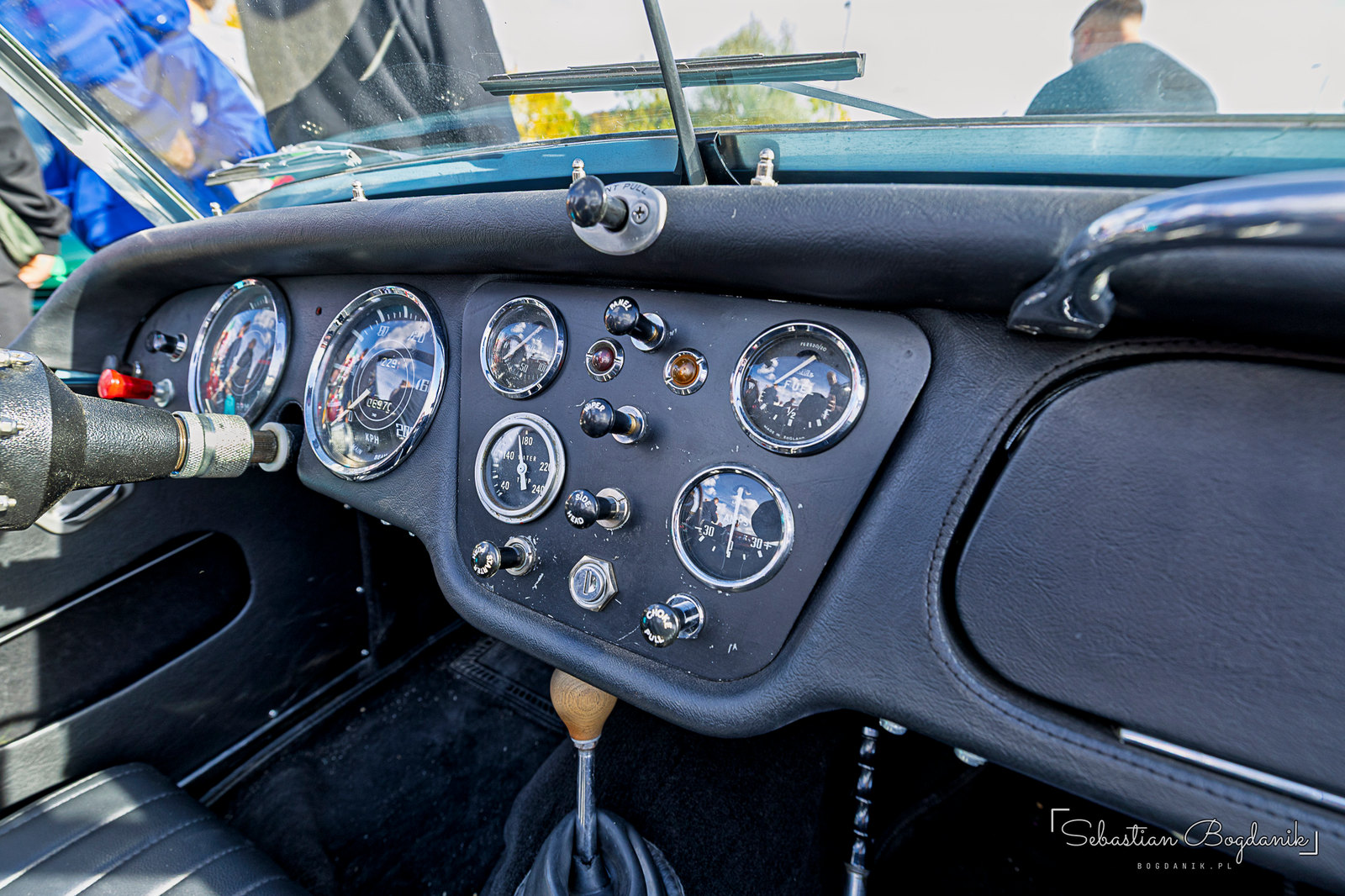
A British Triumph with a suitcase on the rack and a dash full of round gauges. All you need for a road trip across half of Europe.
The American Dream
Yes, there were Americans in the Polish mountains too. From a Model T to big-block V8s, with plenty of chrome and at least one flag.
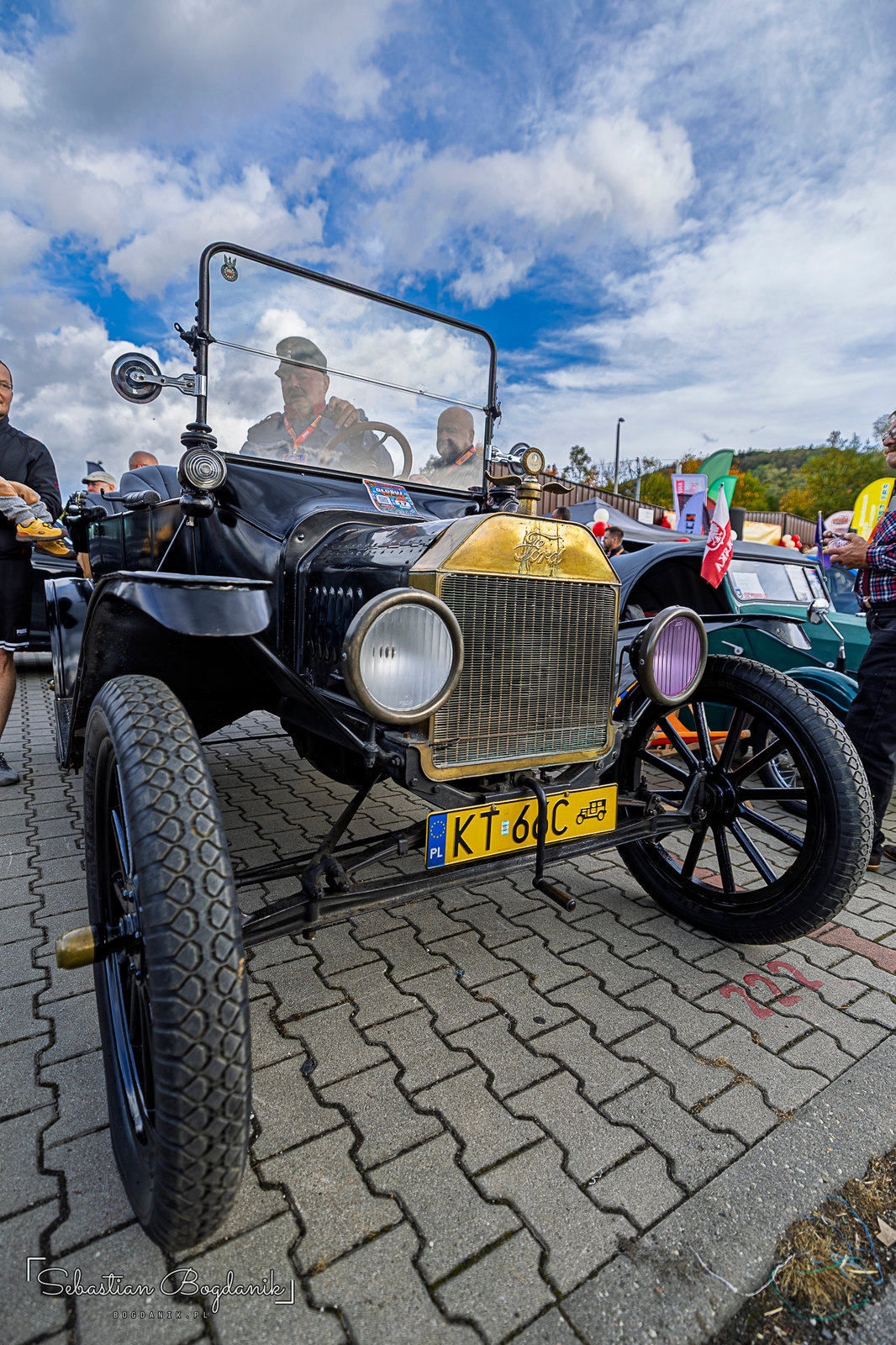
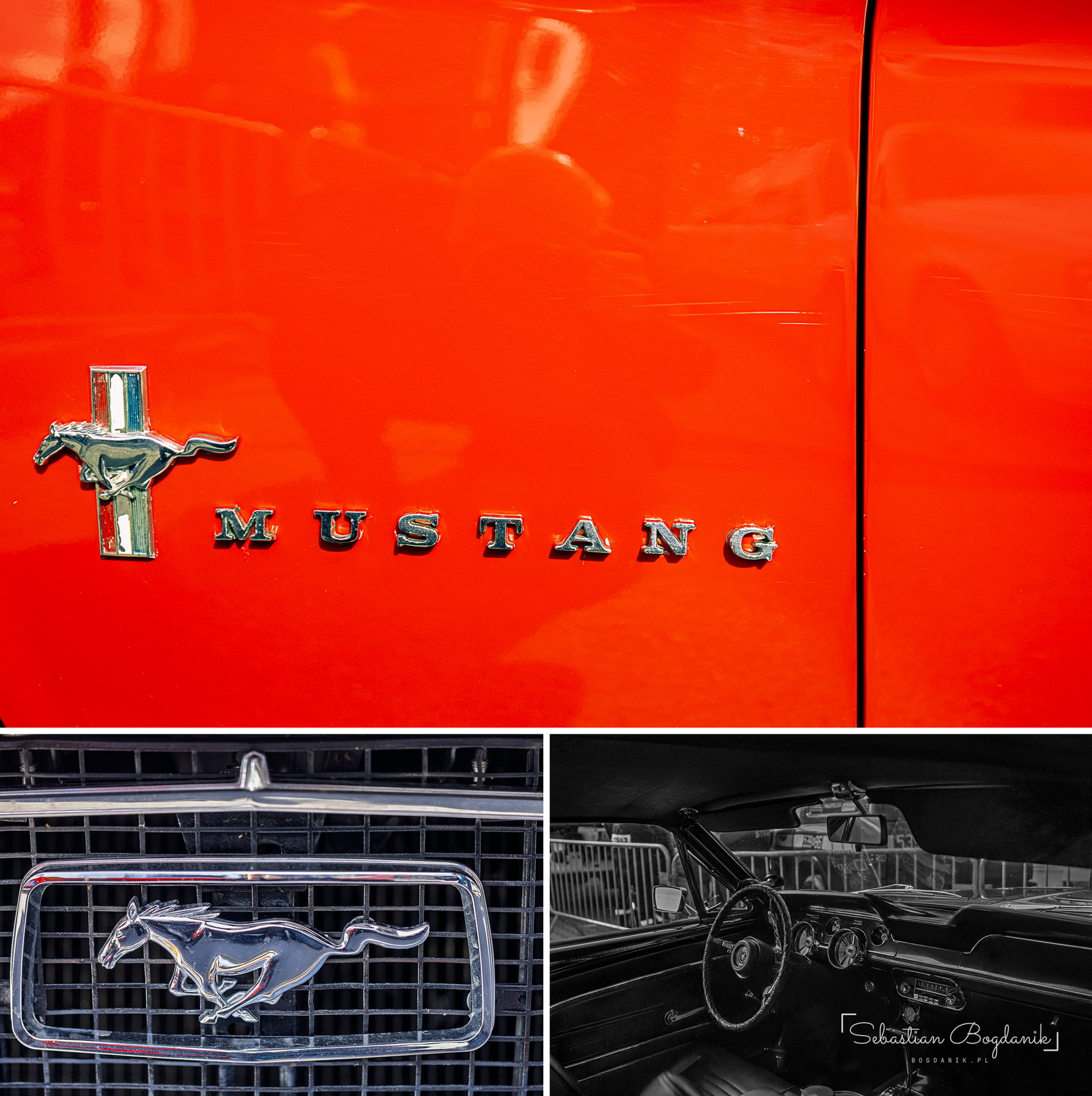
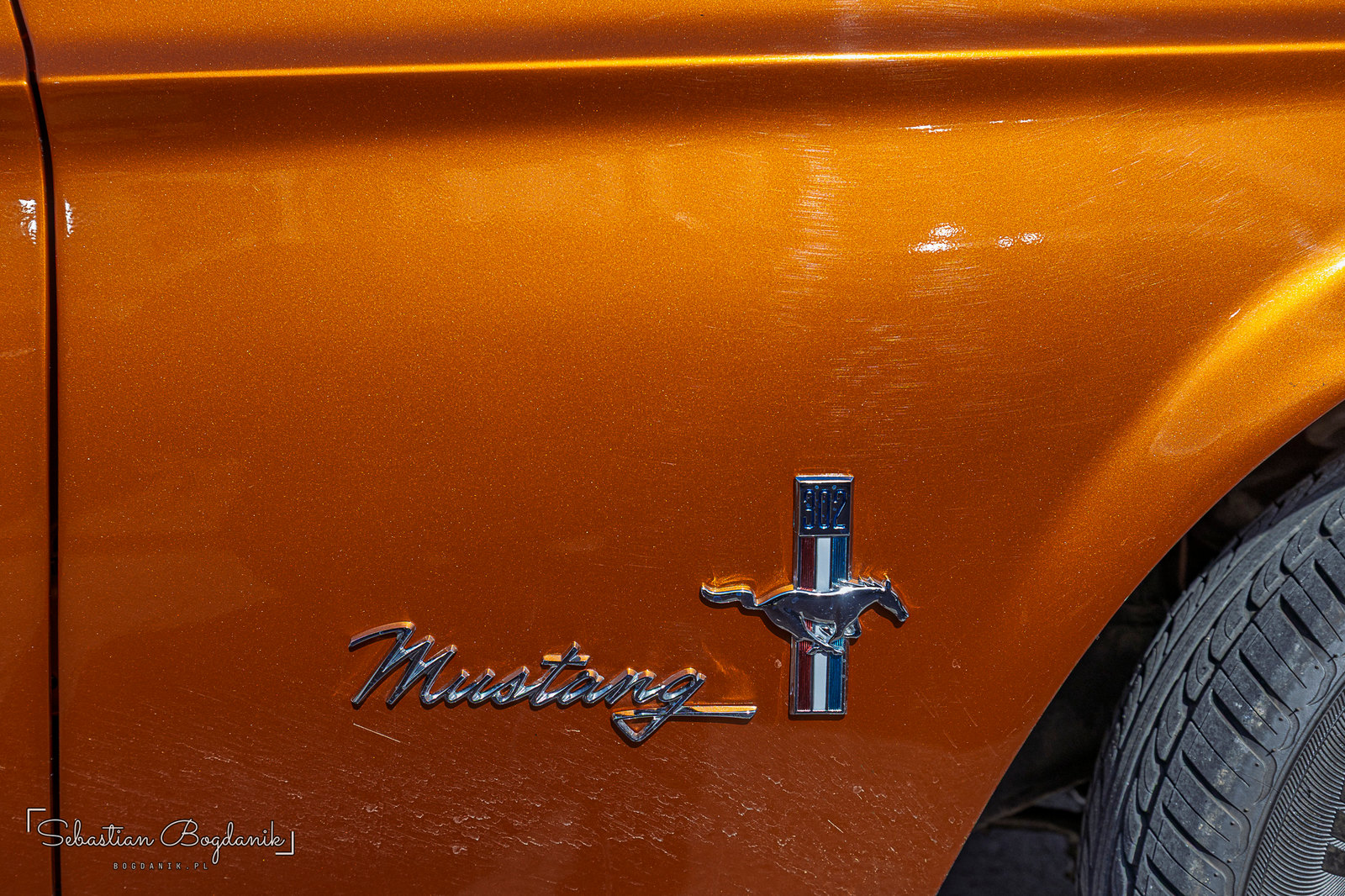
The Model T, the car that put America on wheels. Fuel ran to the engine by gravity from a tank under the front seat, so with a low tank a T could not climb a steep hill forward. The fix every farmer knew: turn around and back up the hill. This one has the brass radiator.A first-generation Mustang: fender script, the running horse in the grille and the cabin. Unveiled at the New York World’s Fair on April 17, 1964, it took 22,000 orders on day one and invented the pony car. Seeing one in Sucha Beskidzka still turns heads.
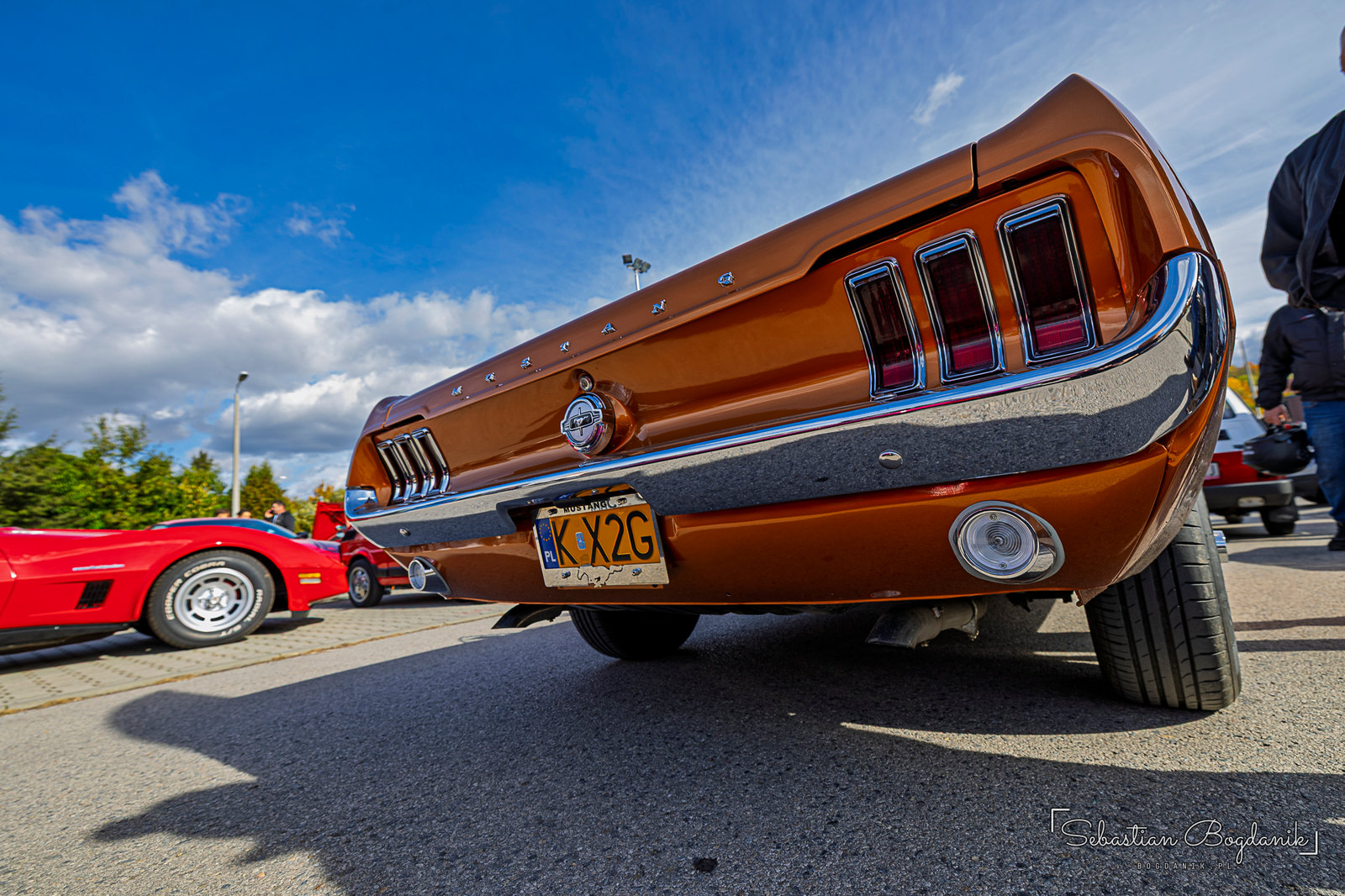
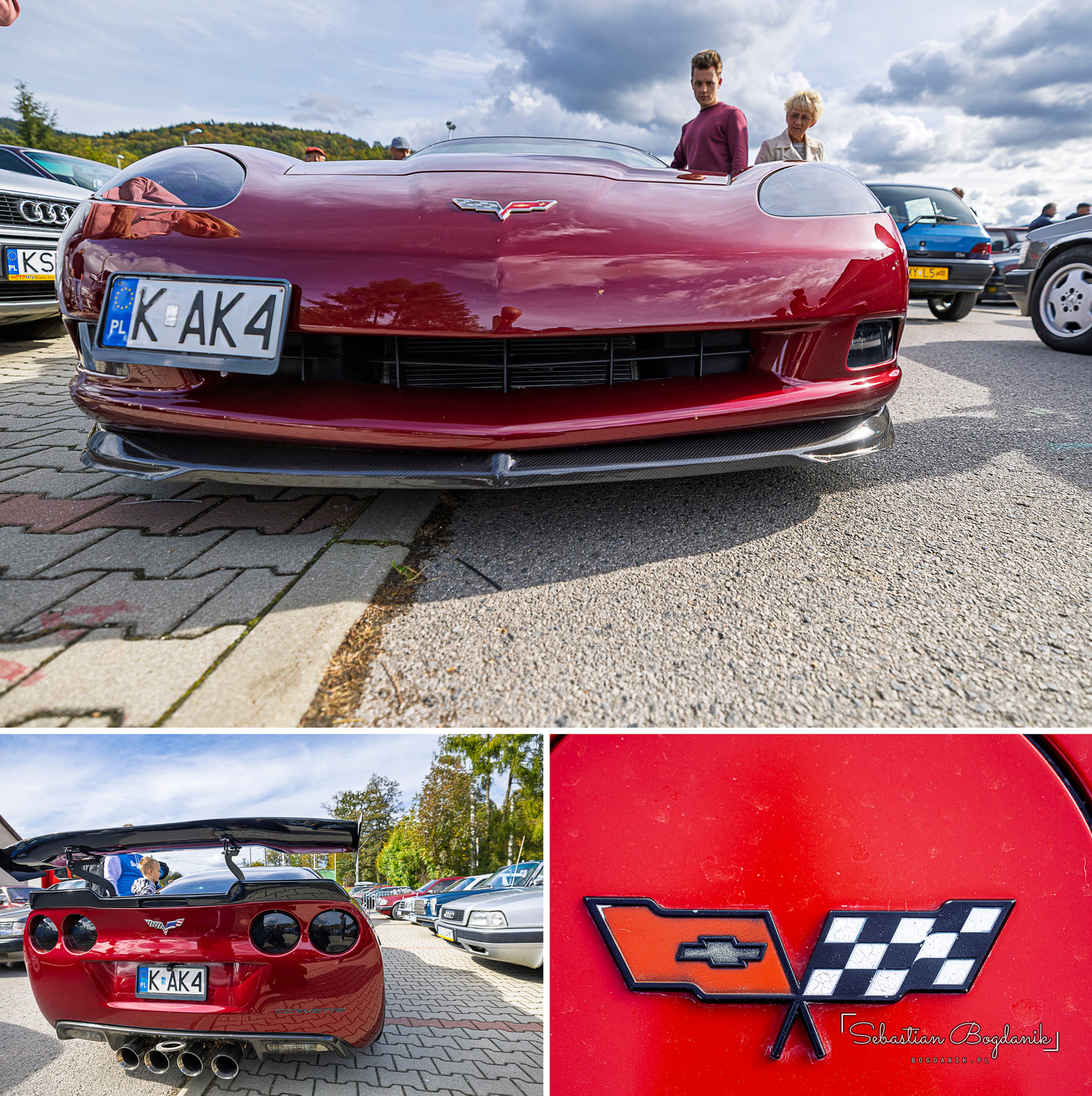
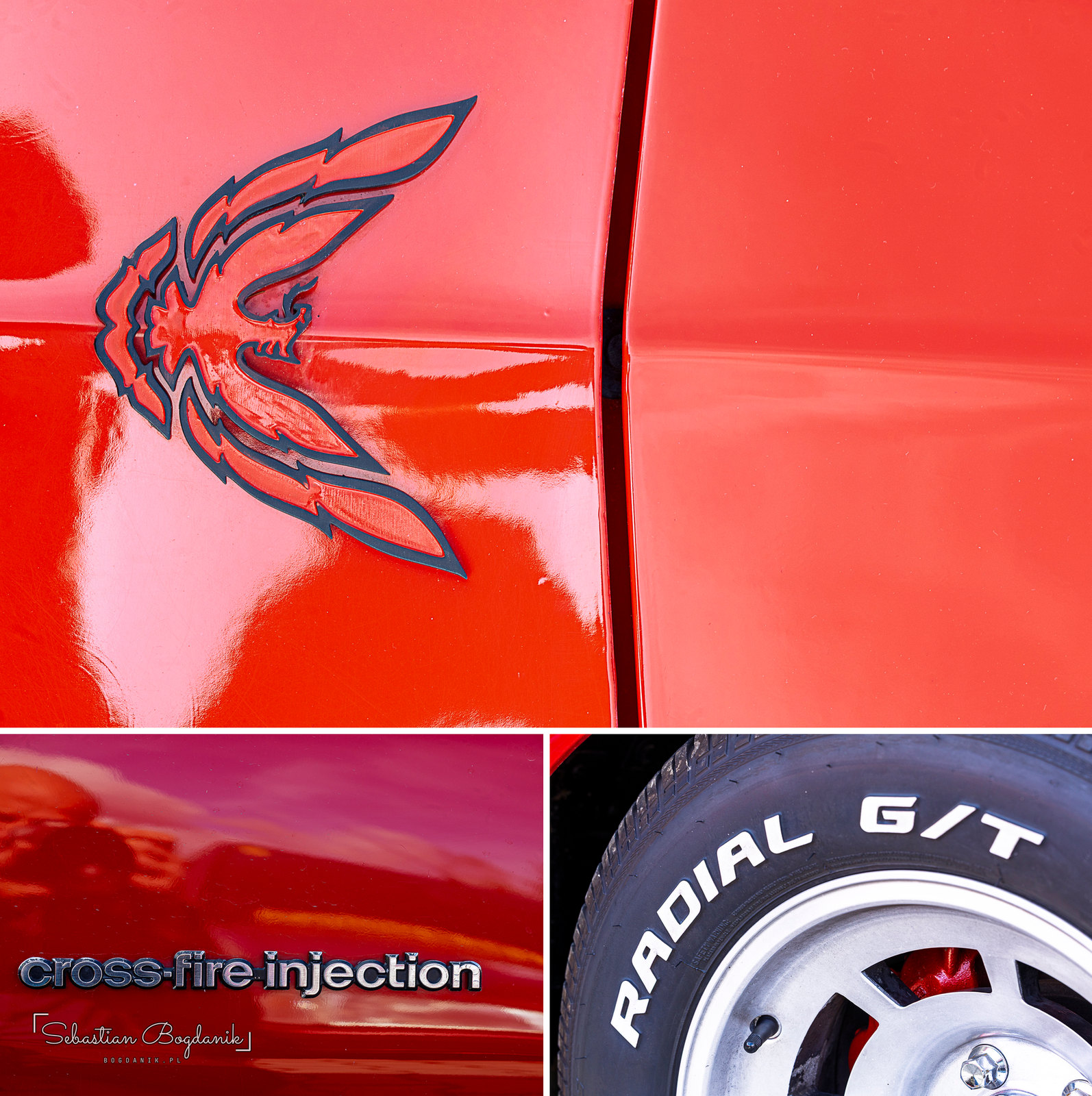
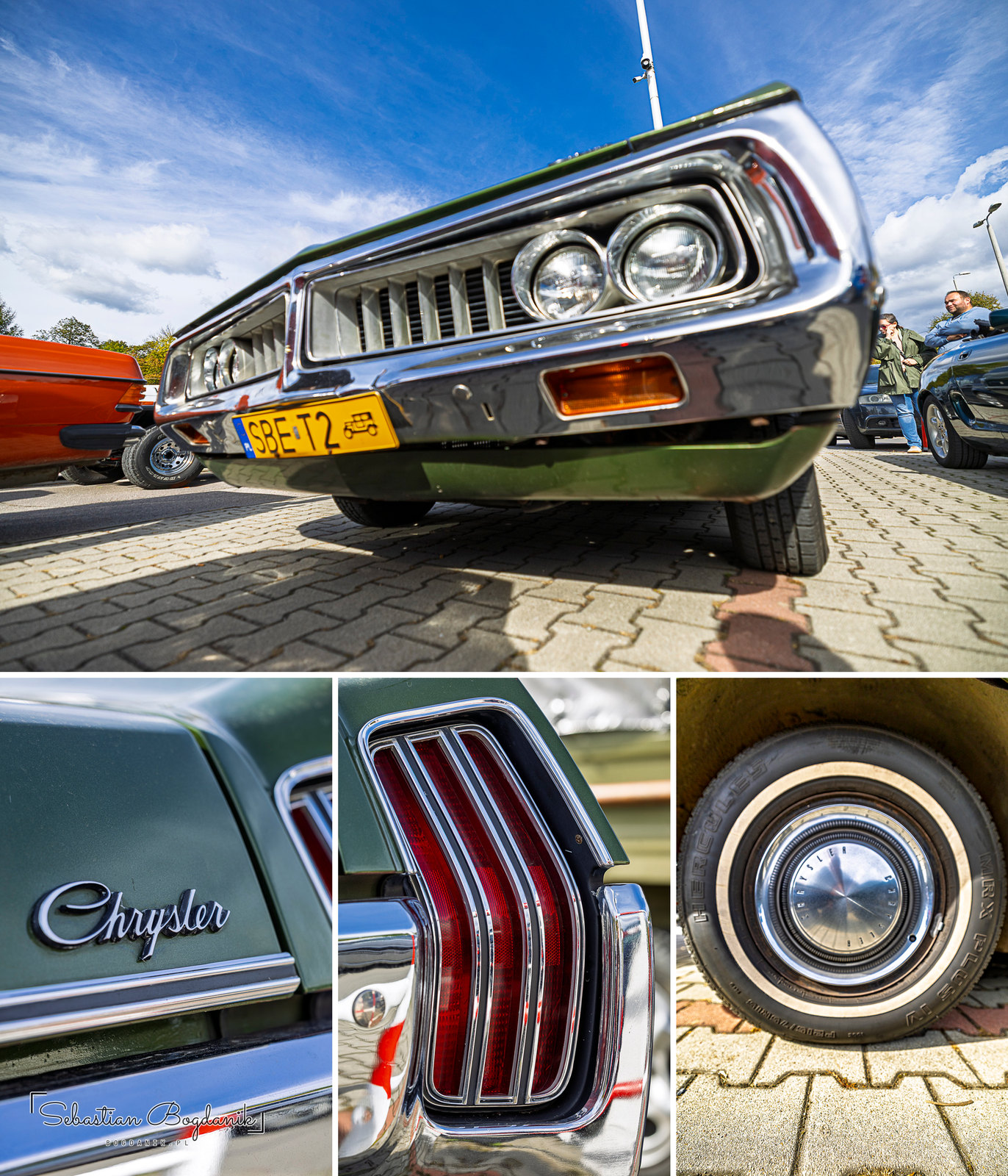
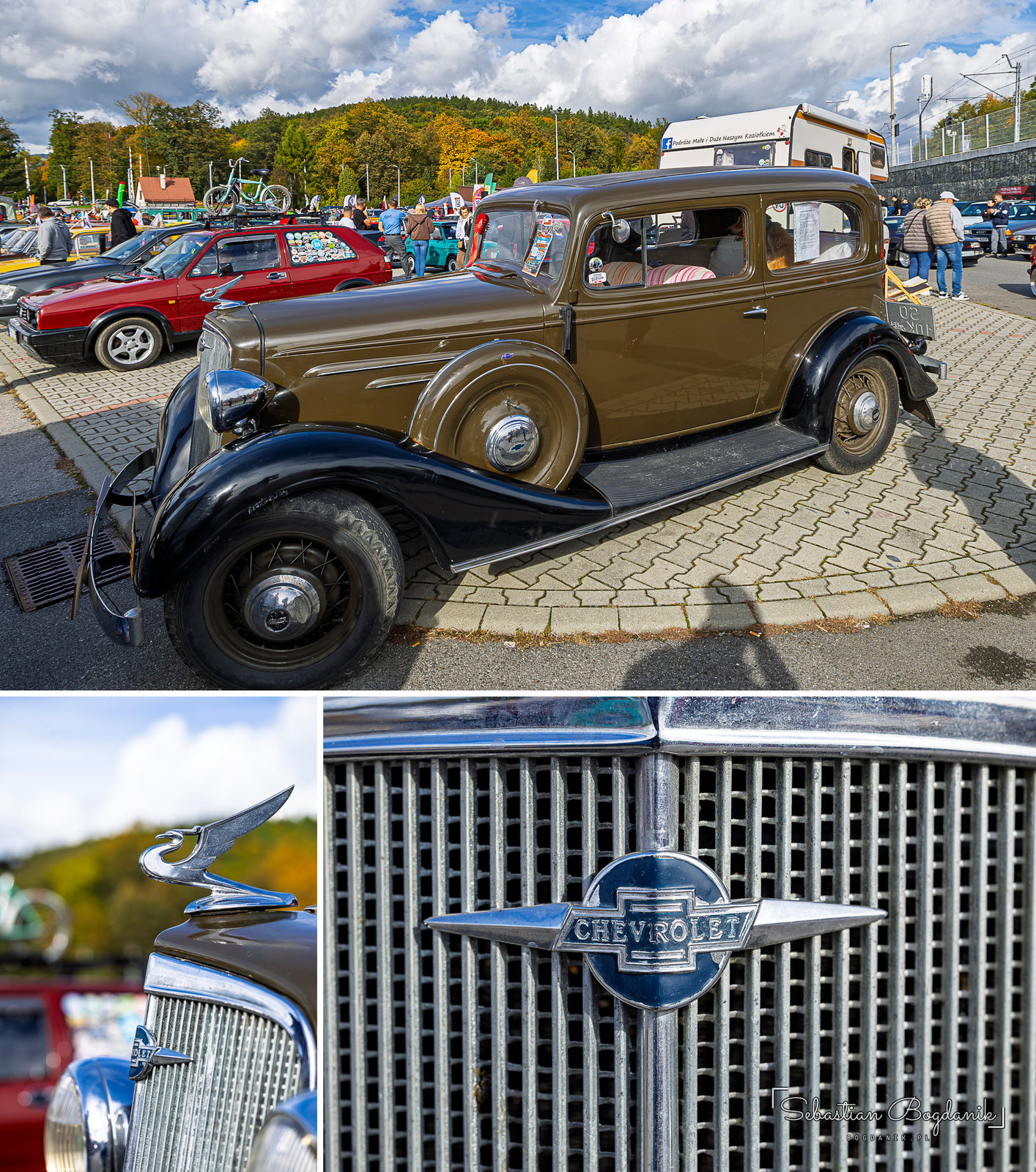
A second Mustang, a copper fastback. Two of them at one show in the Polish mountains makes a small herd.A Chevrolet Corvette from the front, from the back and the crossed flags. In 2014 a sinkhole opened under the National Corvette Museum in Bowling Green, Kentucky, and swallowed eight of them. This one is parked on solid Polish pavement.A Pontiac Firebird: the “screaming chicken,” a Cross-Fire Injection badge and raised-letter Radial G/T tires. This is the generation that played KITT in Knight Rider. No word on whether it talks.A Chrysler Newport from the “fuselage styling” years, with sides rounded like an airliner. Newports could be had with up to 440 cubic inches of V8, more than eight Polish Syrenas’ worth of engine. Whitewalls, chrome and yellow antique plates.A pre-war Chevrolet: the silhouette, a chrome bird on the hood and the bowtie. Where did the bowtie come from? One legend says founder William Durant spotted the pattern on the wallpaper of a Paris hotel.
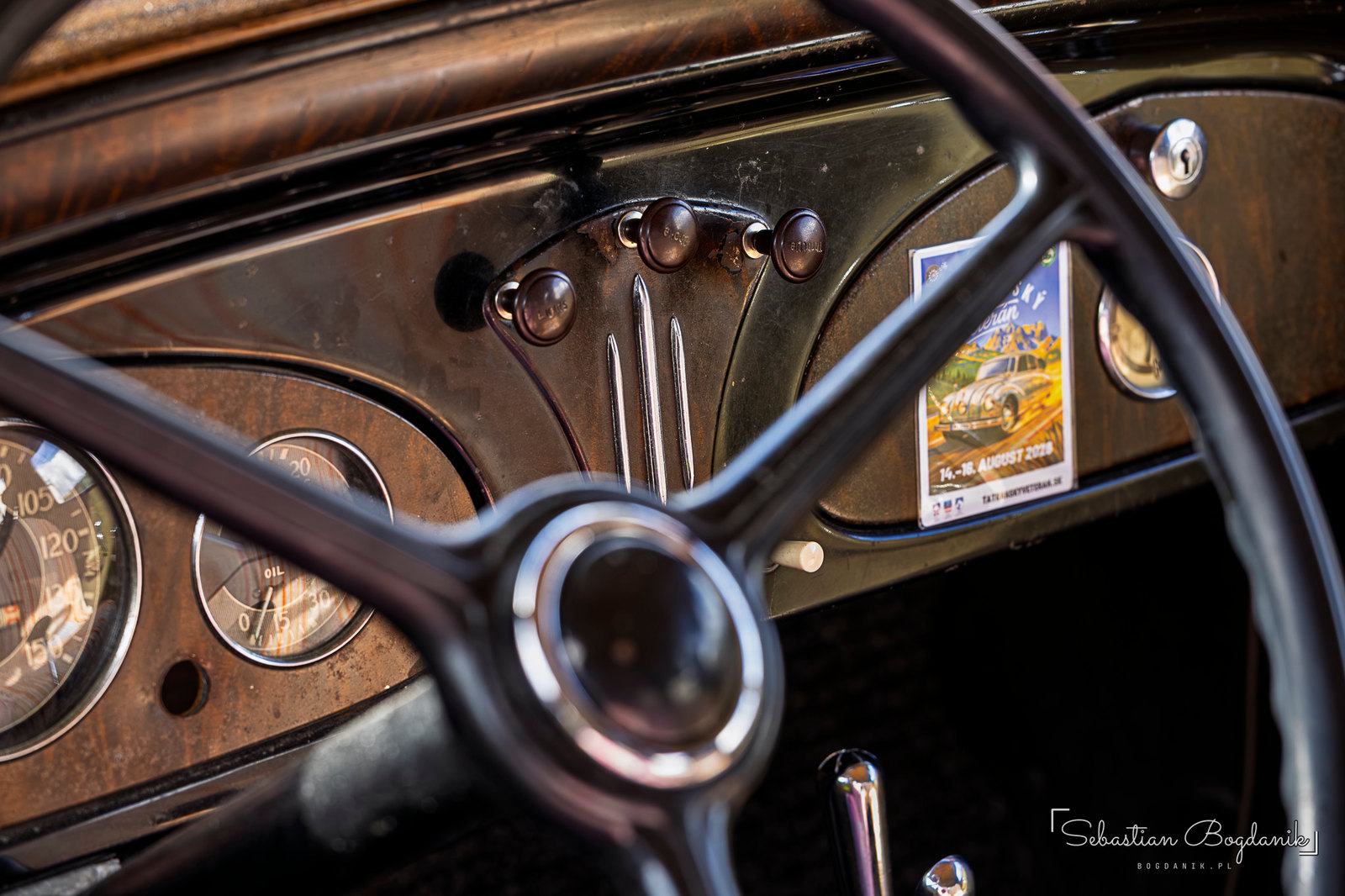
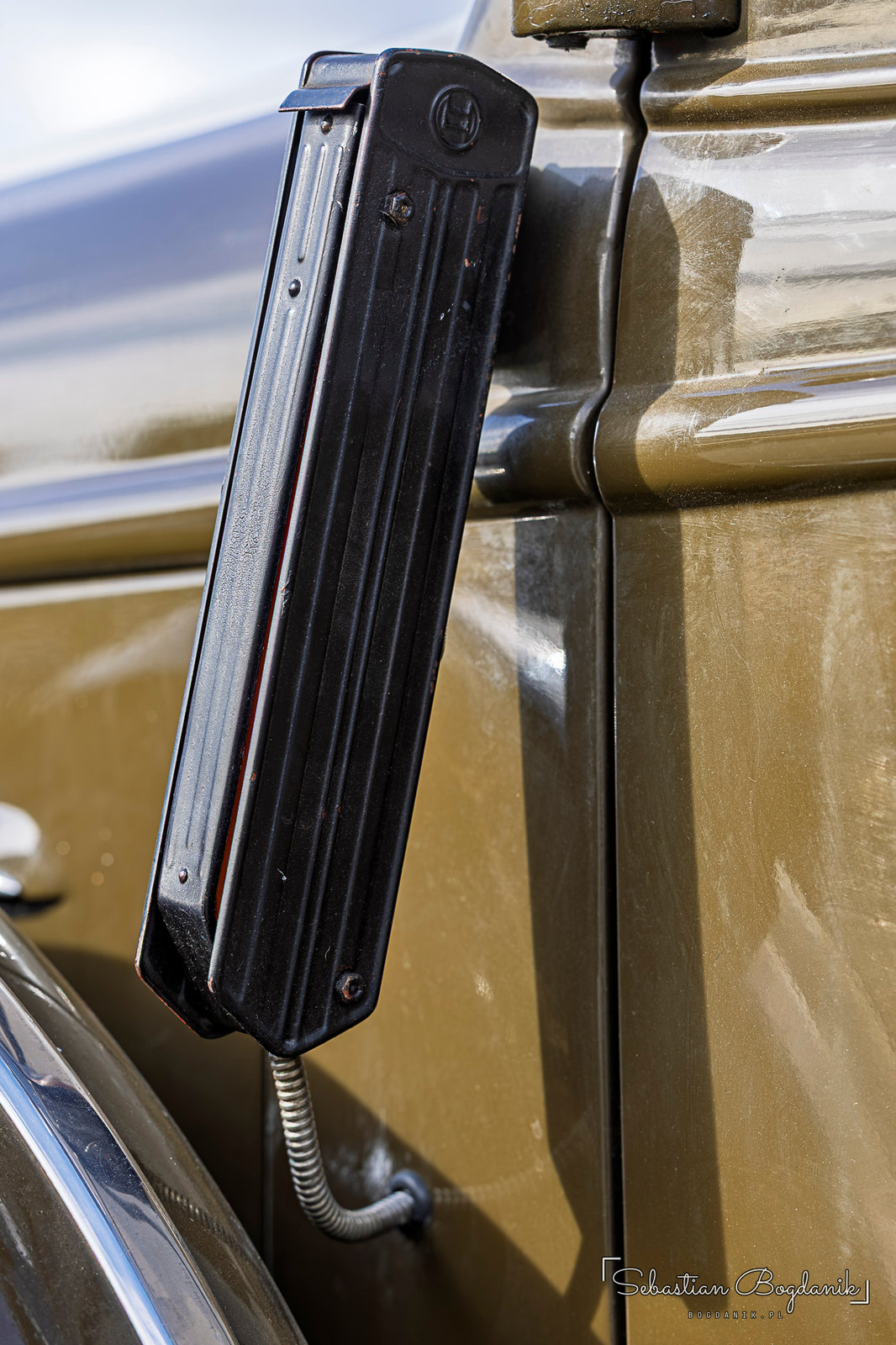
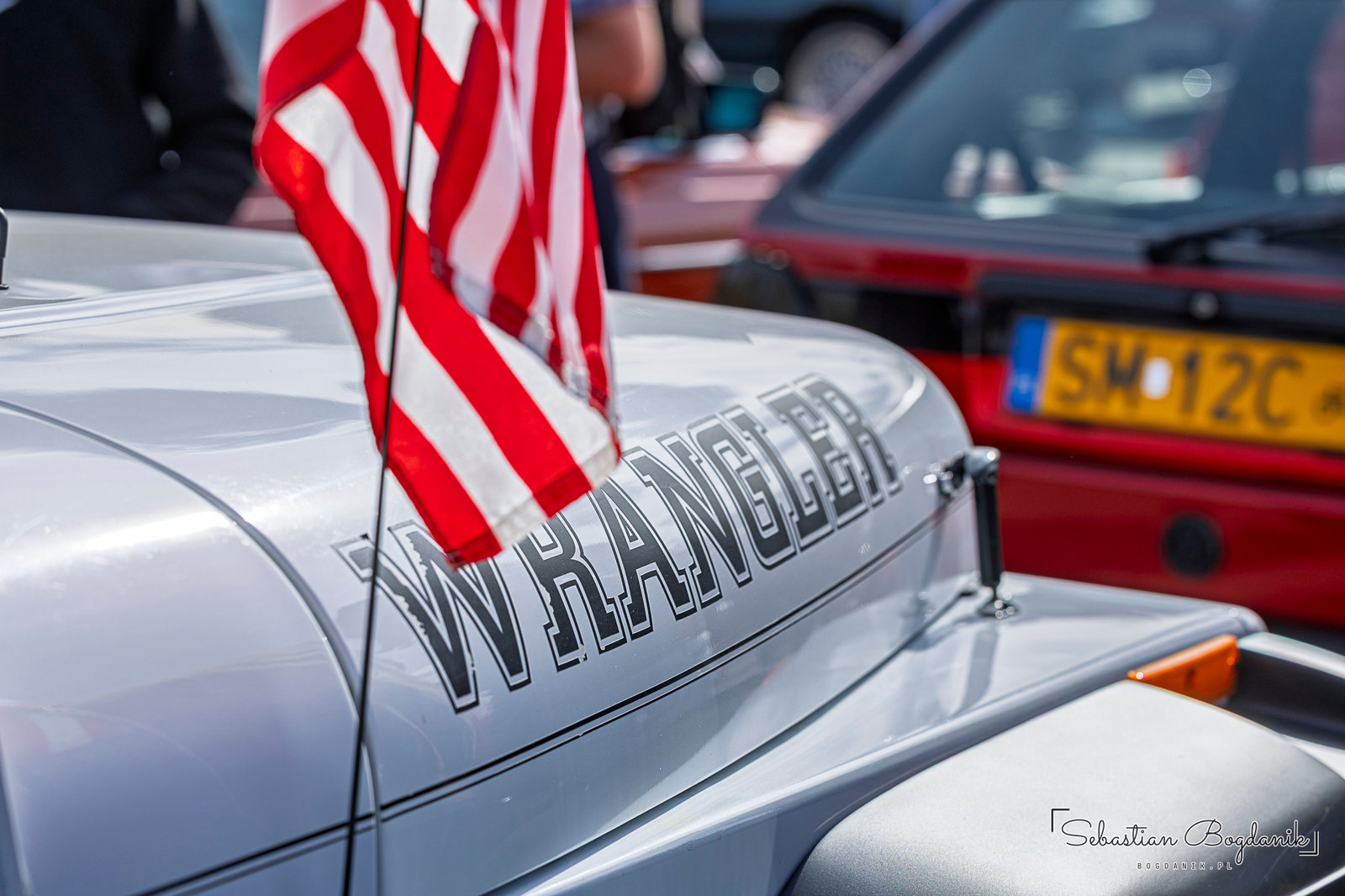
Inside the same Chevy, a wood-grain dash, and on the pillar a pop-out semaphore turn signal from the days before blinkers.A Jeep Wrangler flying the Stars and Stripes like it is the Fourth of July. In southern Poland. In October.
On Two Wheels
Motorcycles and scooters, from American legends to a Czechoslovak “piglet.”
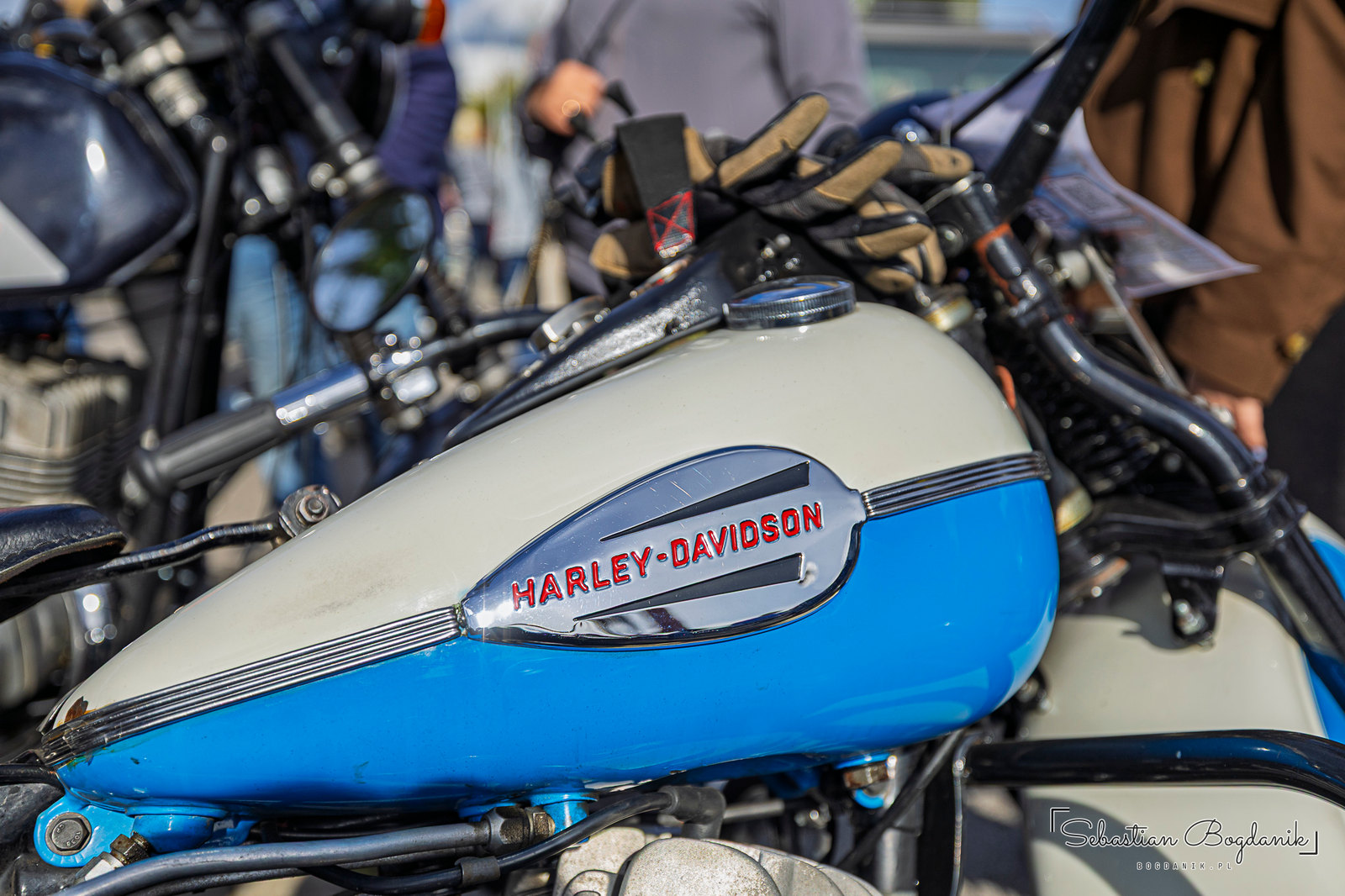
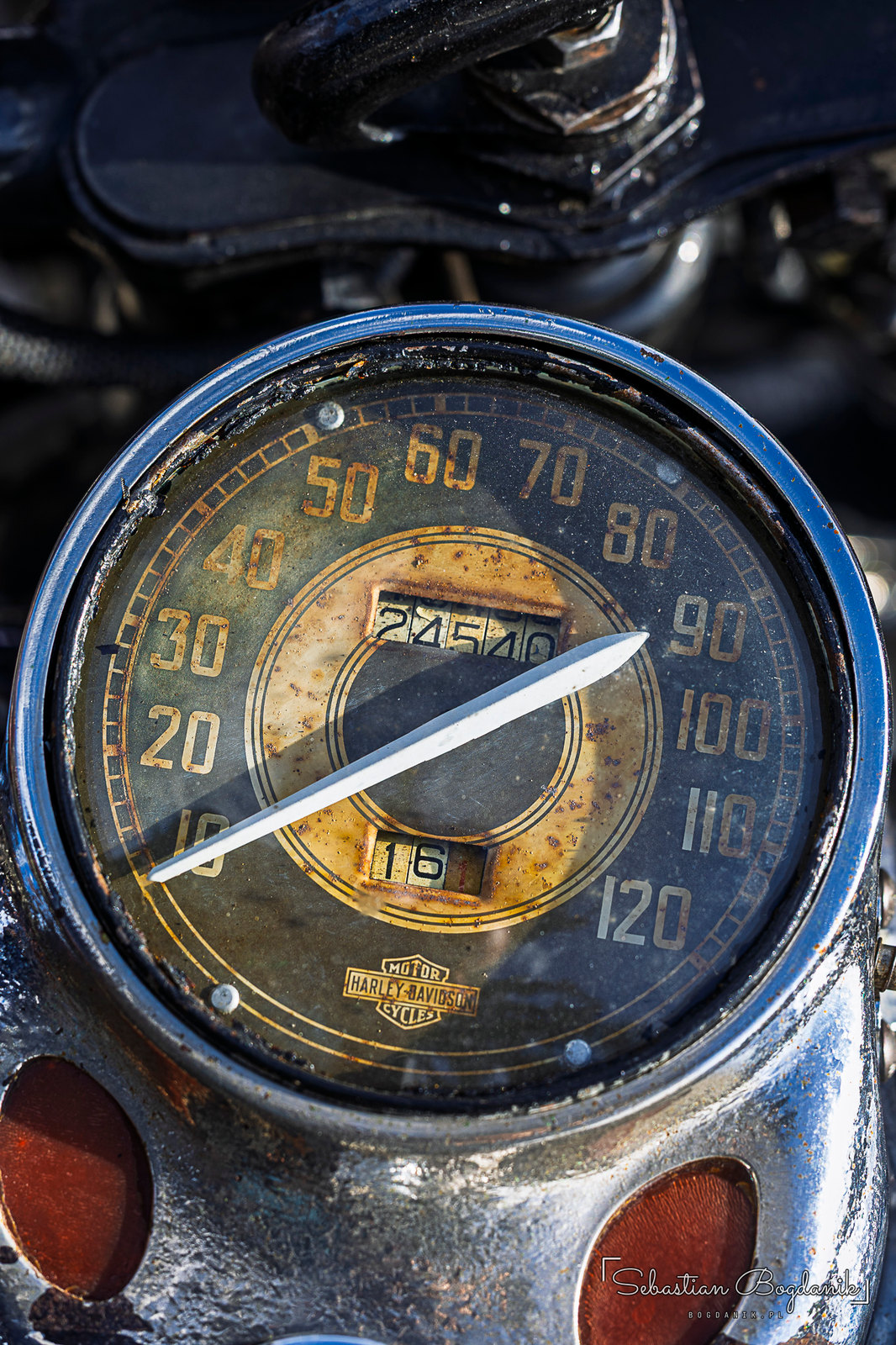
A Harley-Davidson: tank and speedometer. It all started in 1903 in a wooden shed in Milwaukee.
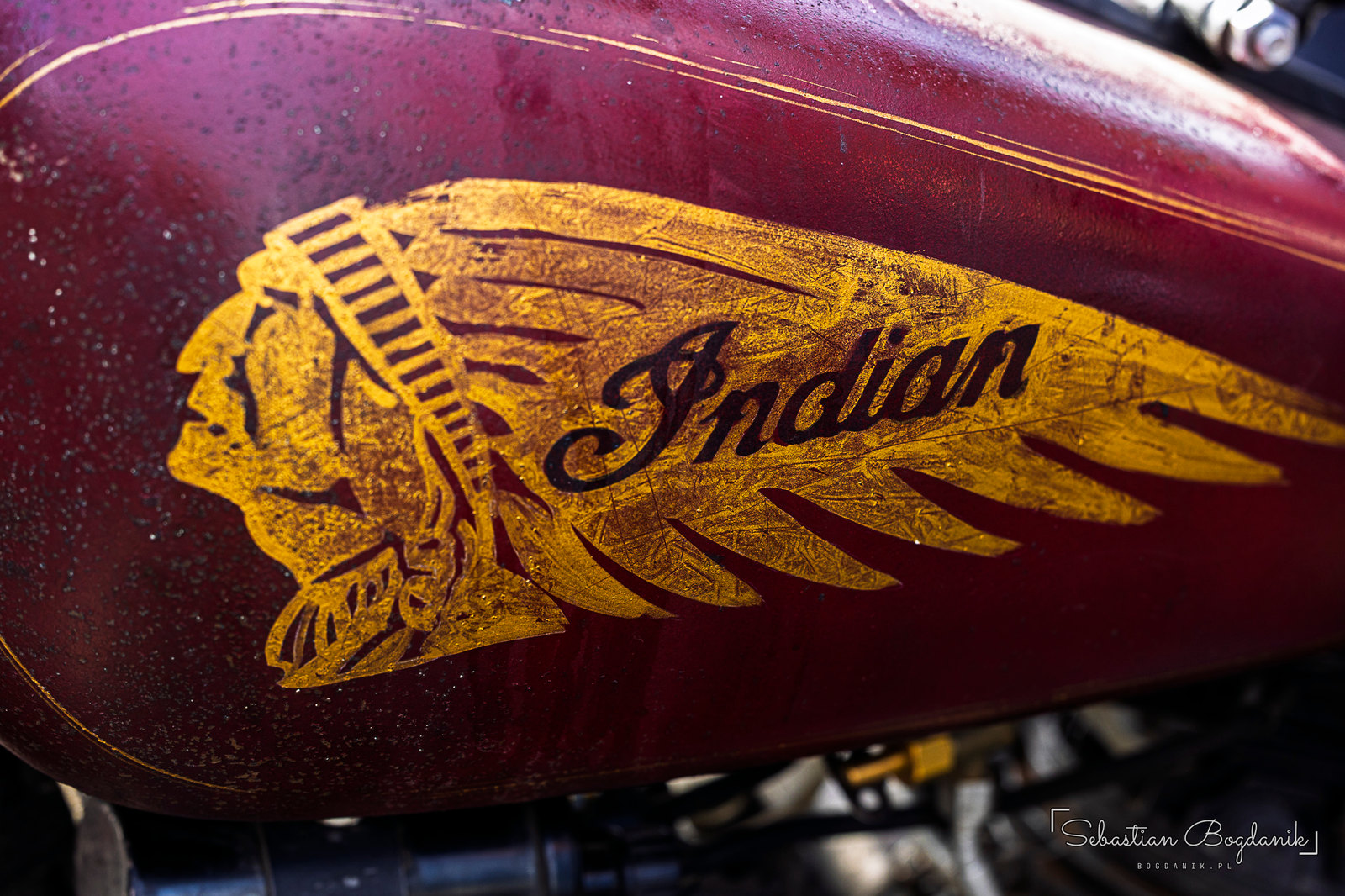
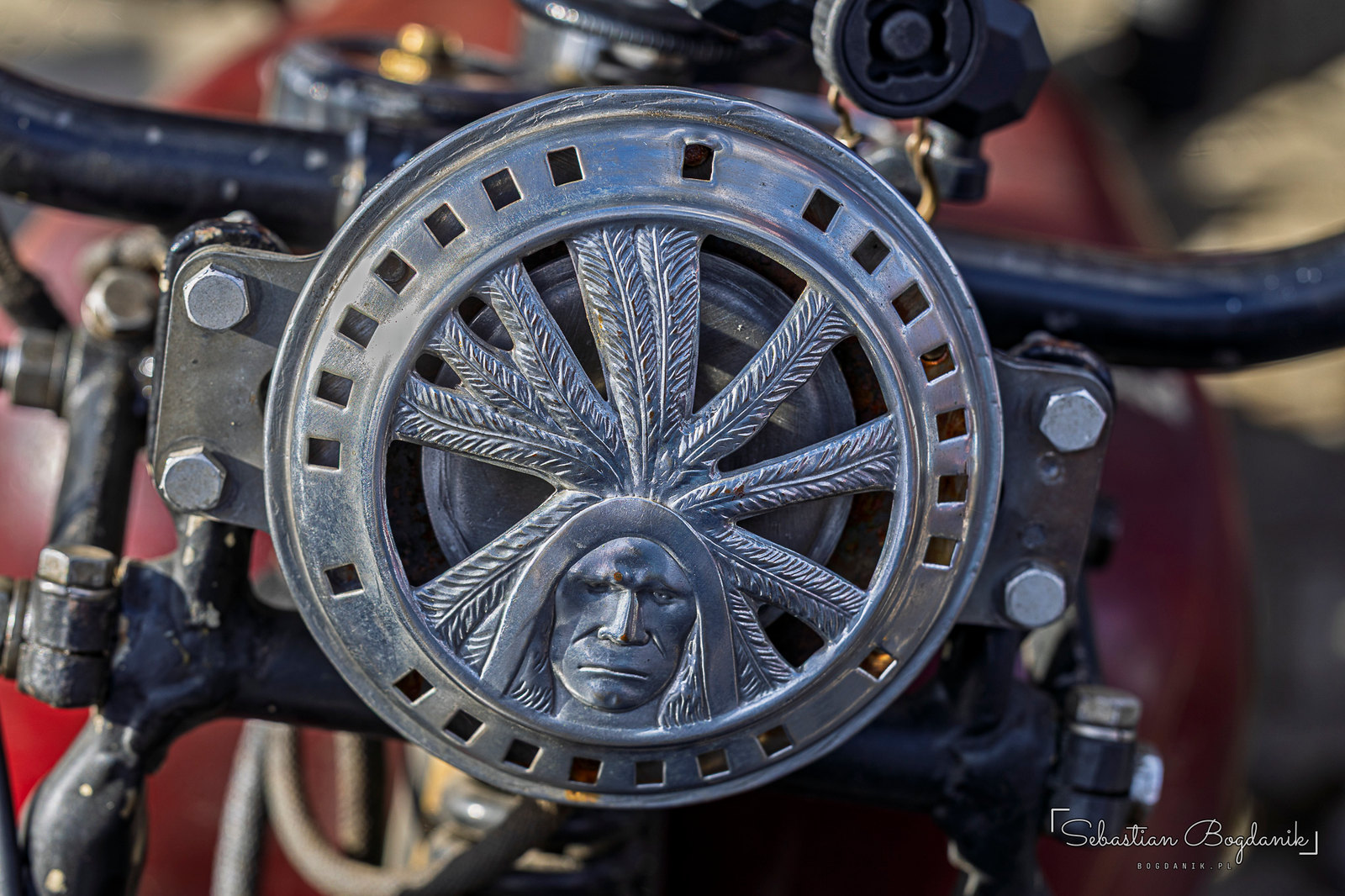
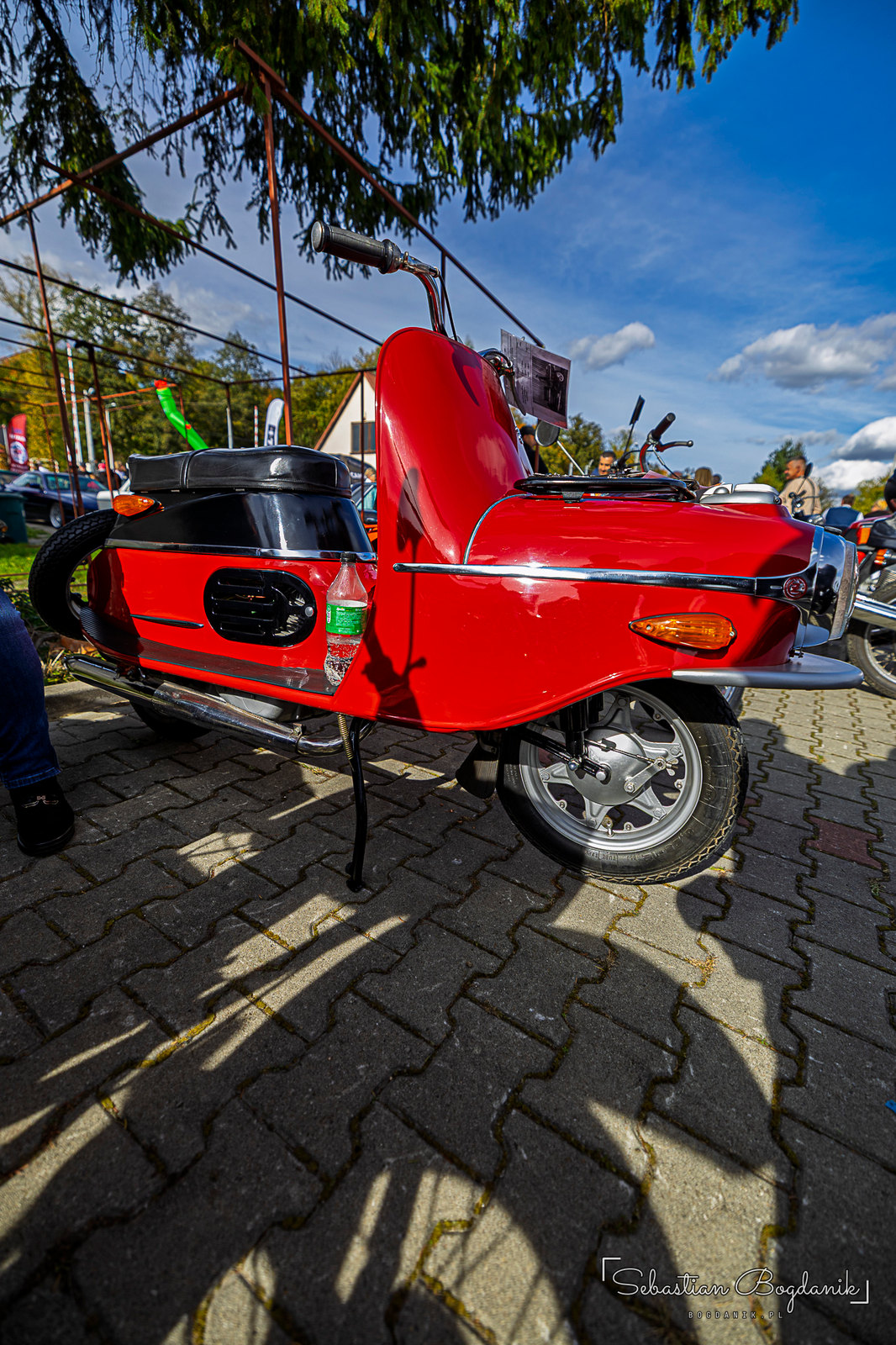
An Indian, Harley’s oldest rival: gold script on the tank and a war-bonnet head on the horn. Its most famous rider was New Zealander Burt Munro, who set speed records at Bonneville on a heavily modified 1920 Indian Scout, the story behind The World’s Fastest Indian.The Čezeta, a Czechoslovak scooter built from 1957 to 1964. Six and a half feet long, shaped like a torpedo, with a trunk under the seat. Czechs lovingly call it “the piglet.”
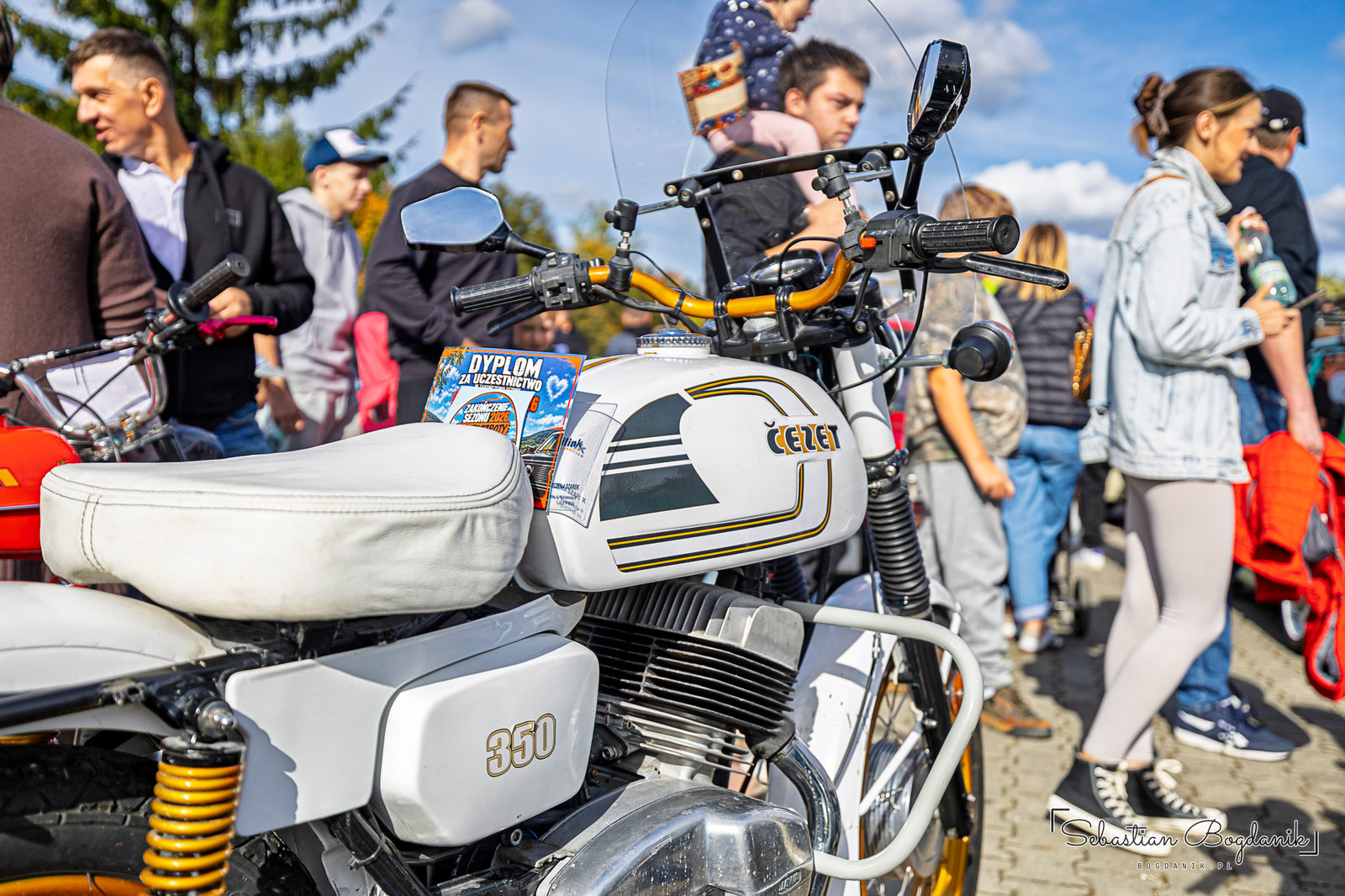
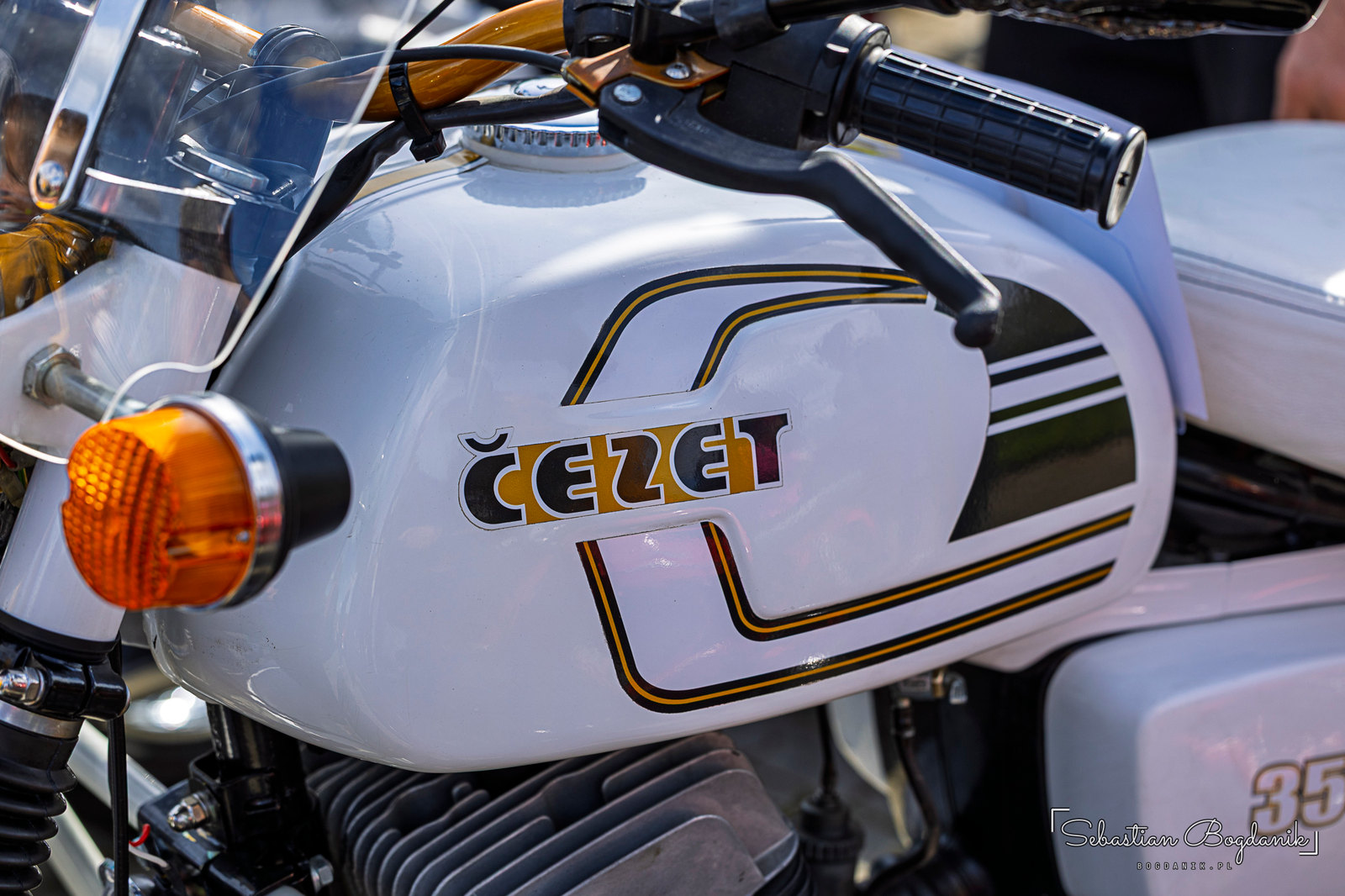
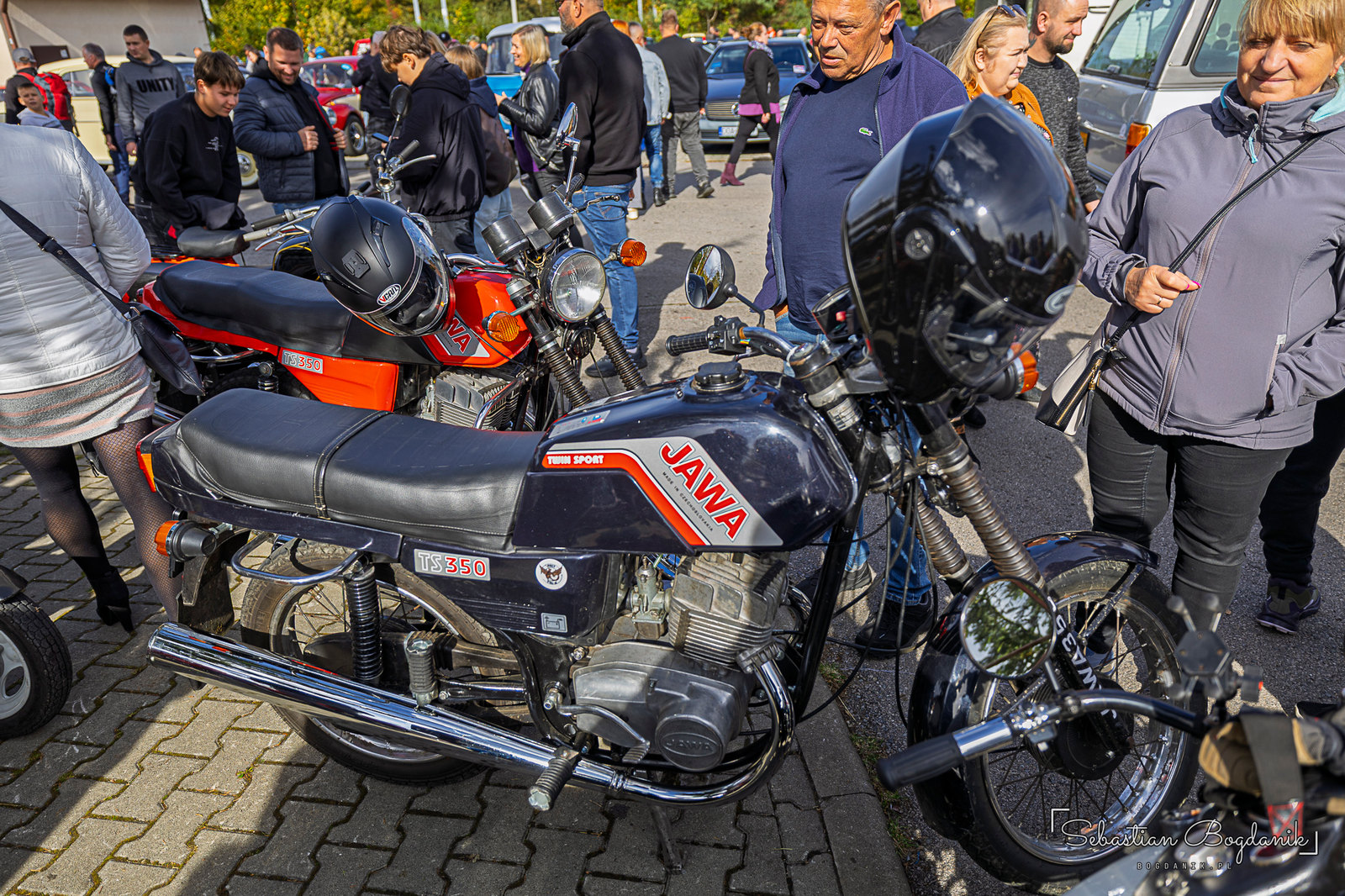
A ČZ 350 with “ČEZET” on the tank, the export name these Czechoslovak bikes from Strakonice wore around the world.Jawa, a brand name built from two names: founder František Janeček bought a license from the German firm Wanderer, and JAneček plus WAnderer gave you JAWA.
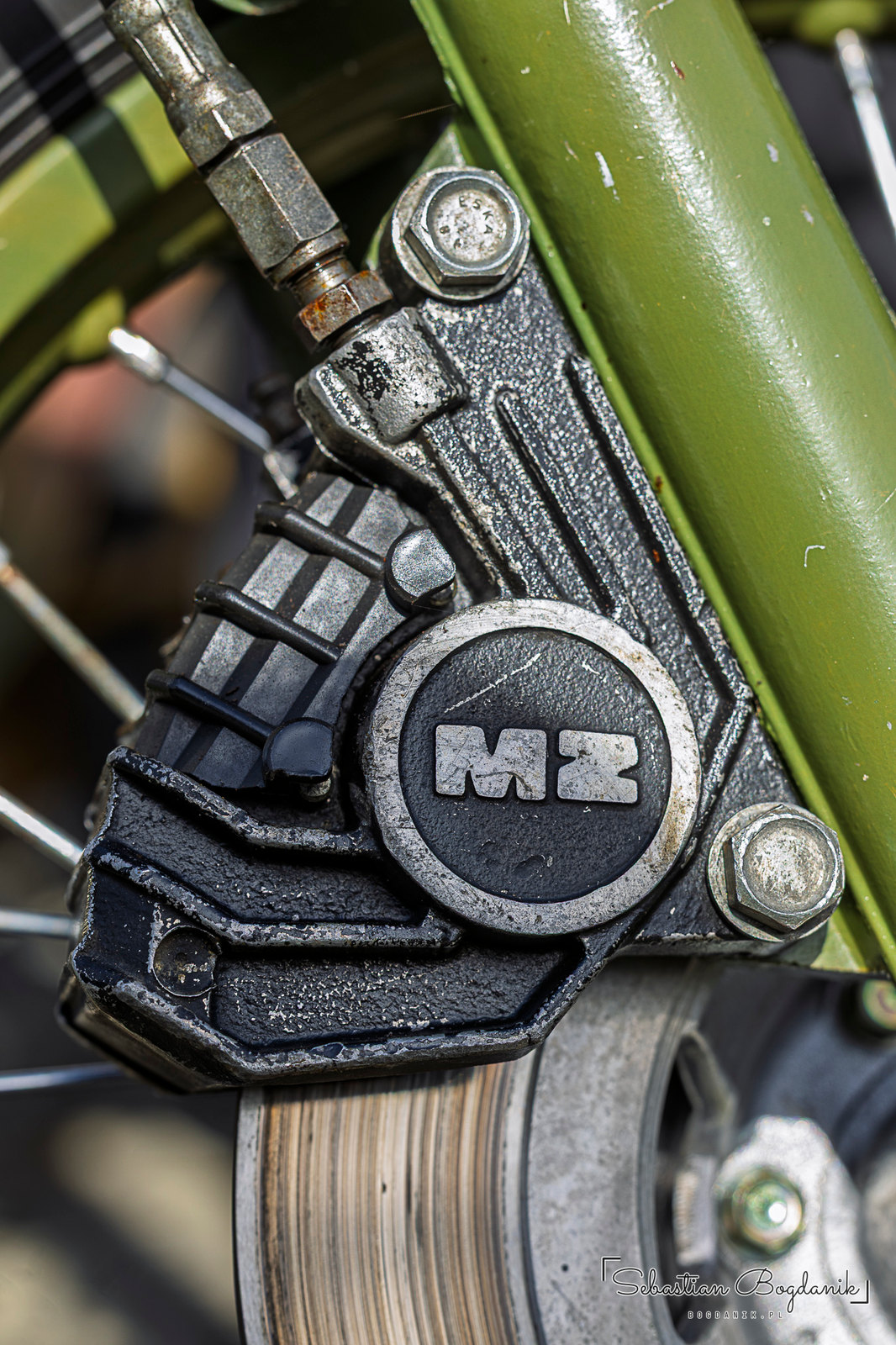
An MZ from Zschopau, East Germany, the same factory that built DKW motorcycles before the war.
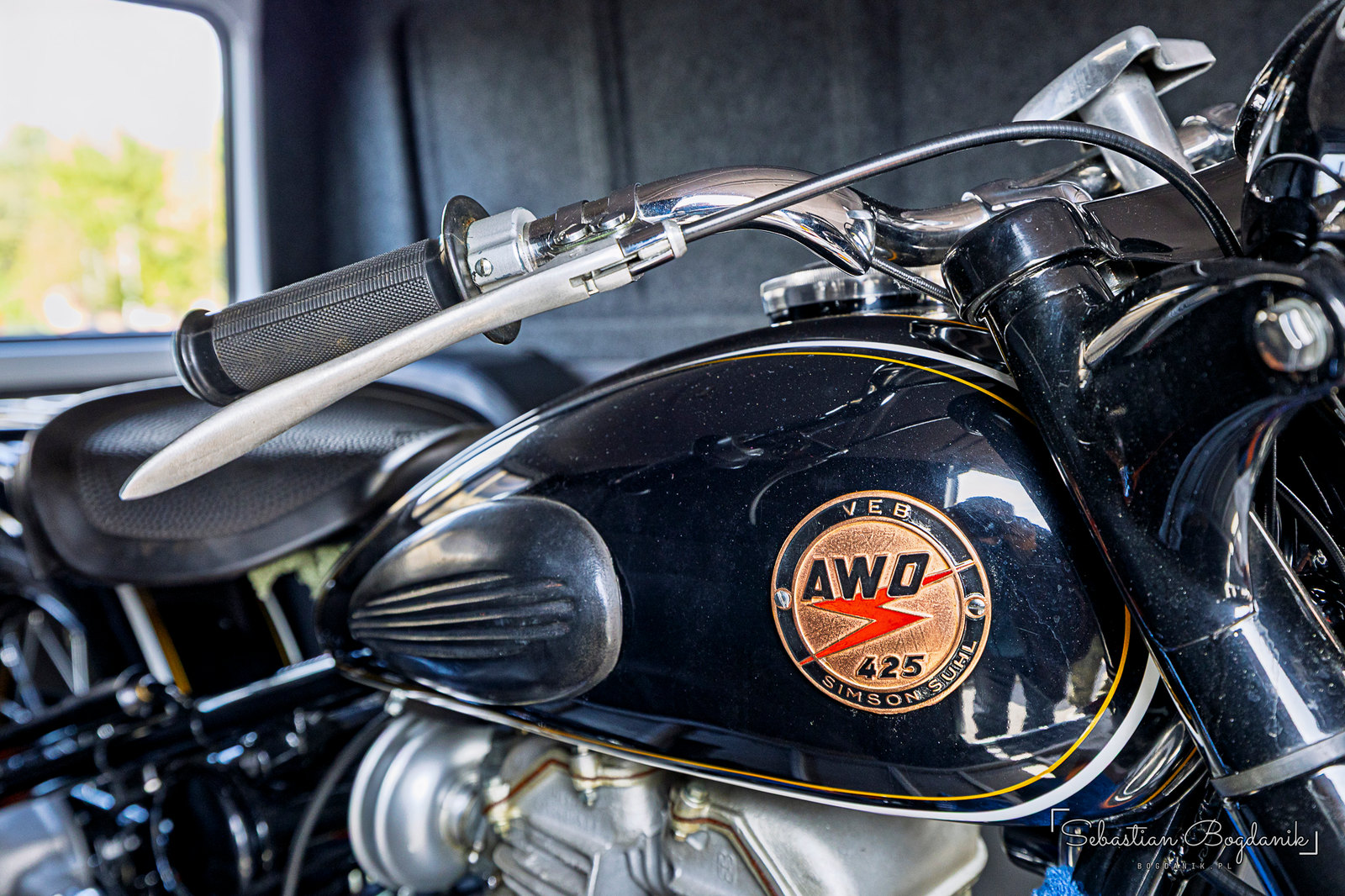
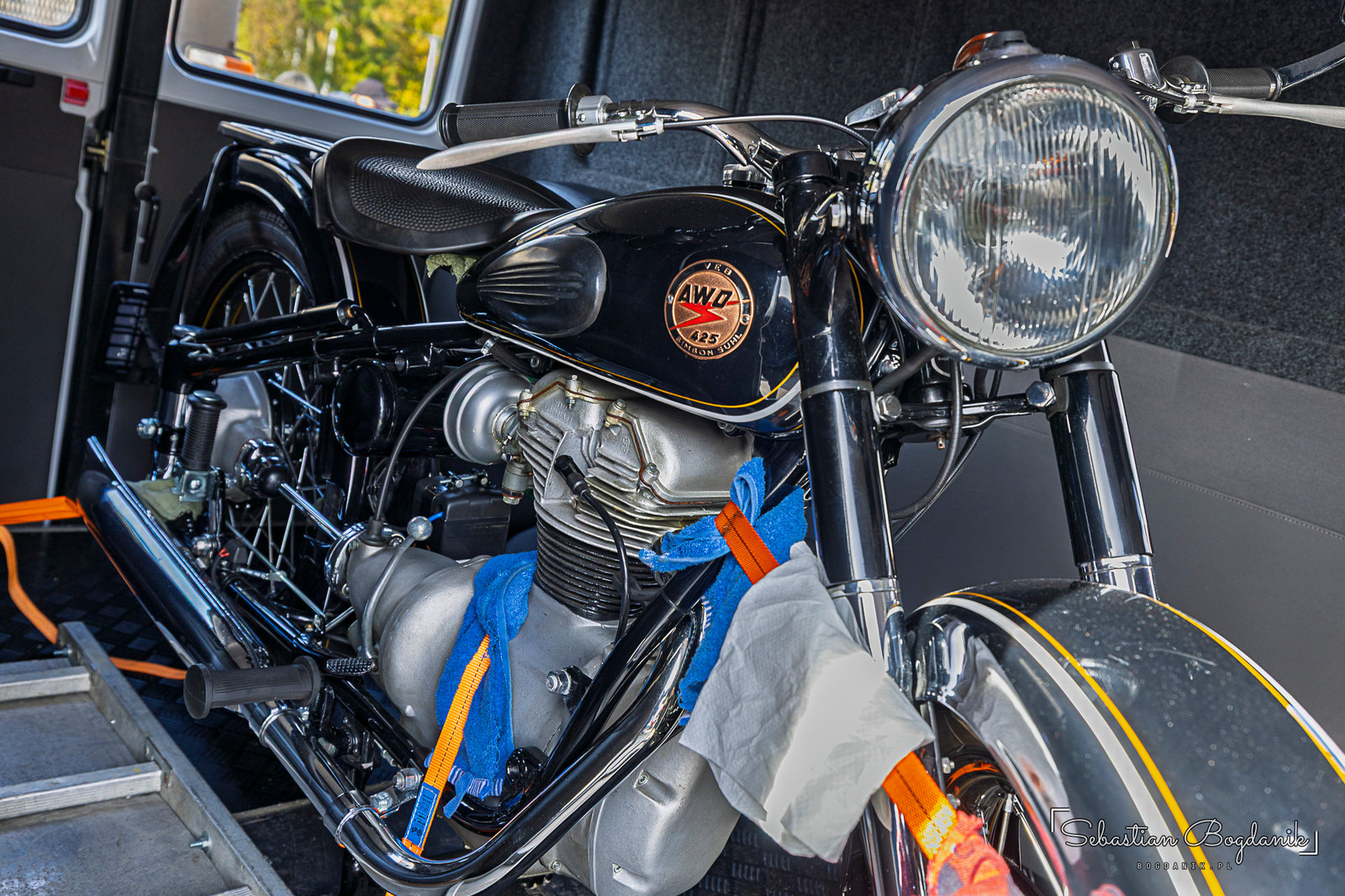
An AWO 425 from Suhl, East Germany, a 1950s single built under Soviet management. It arrived at the show riding in the back of a van, as a veteran should.
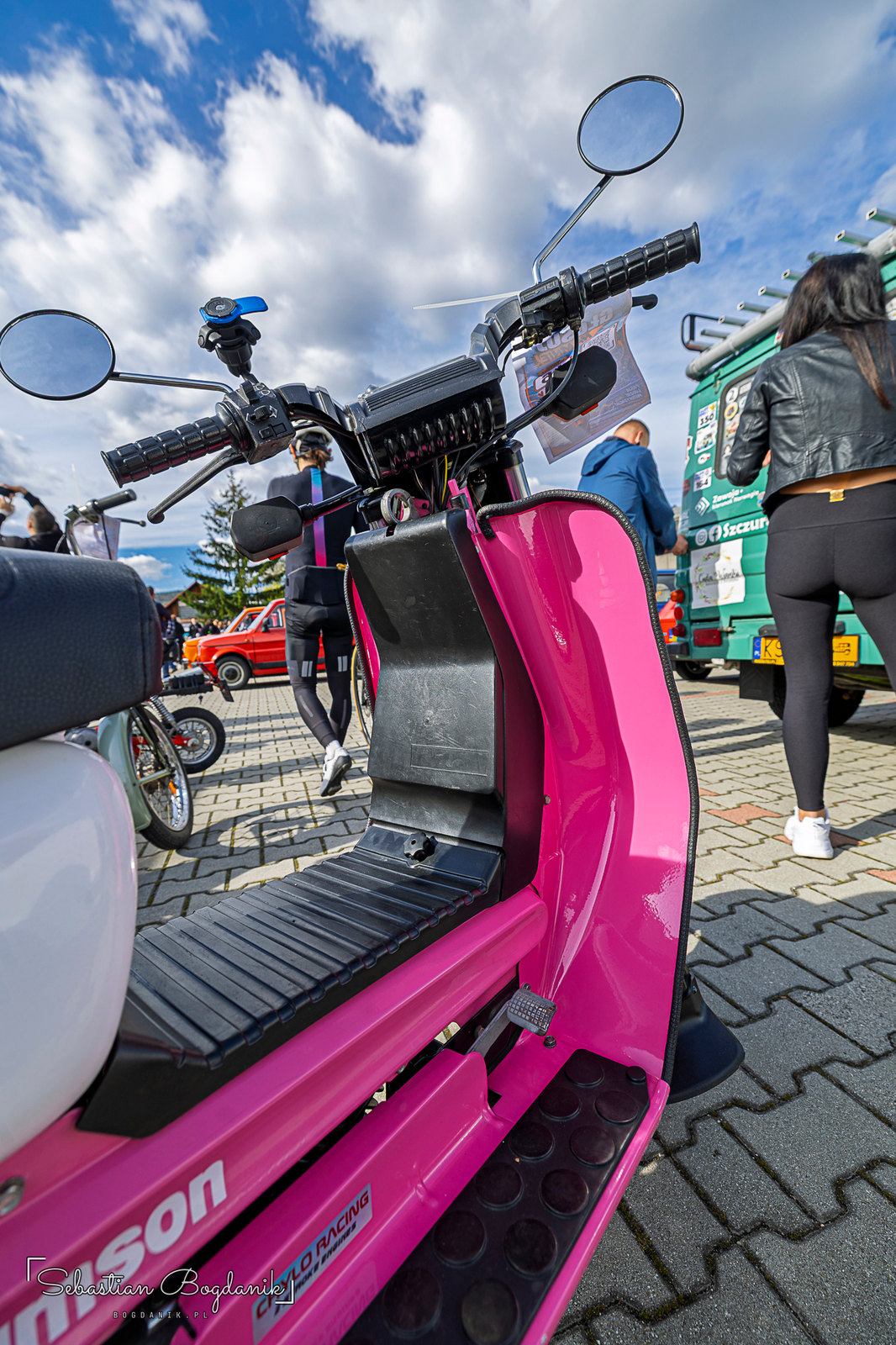
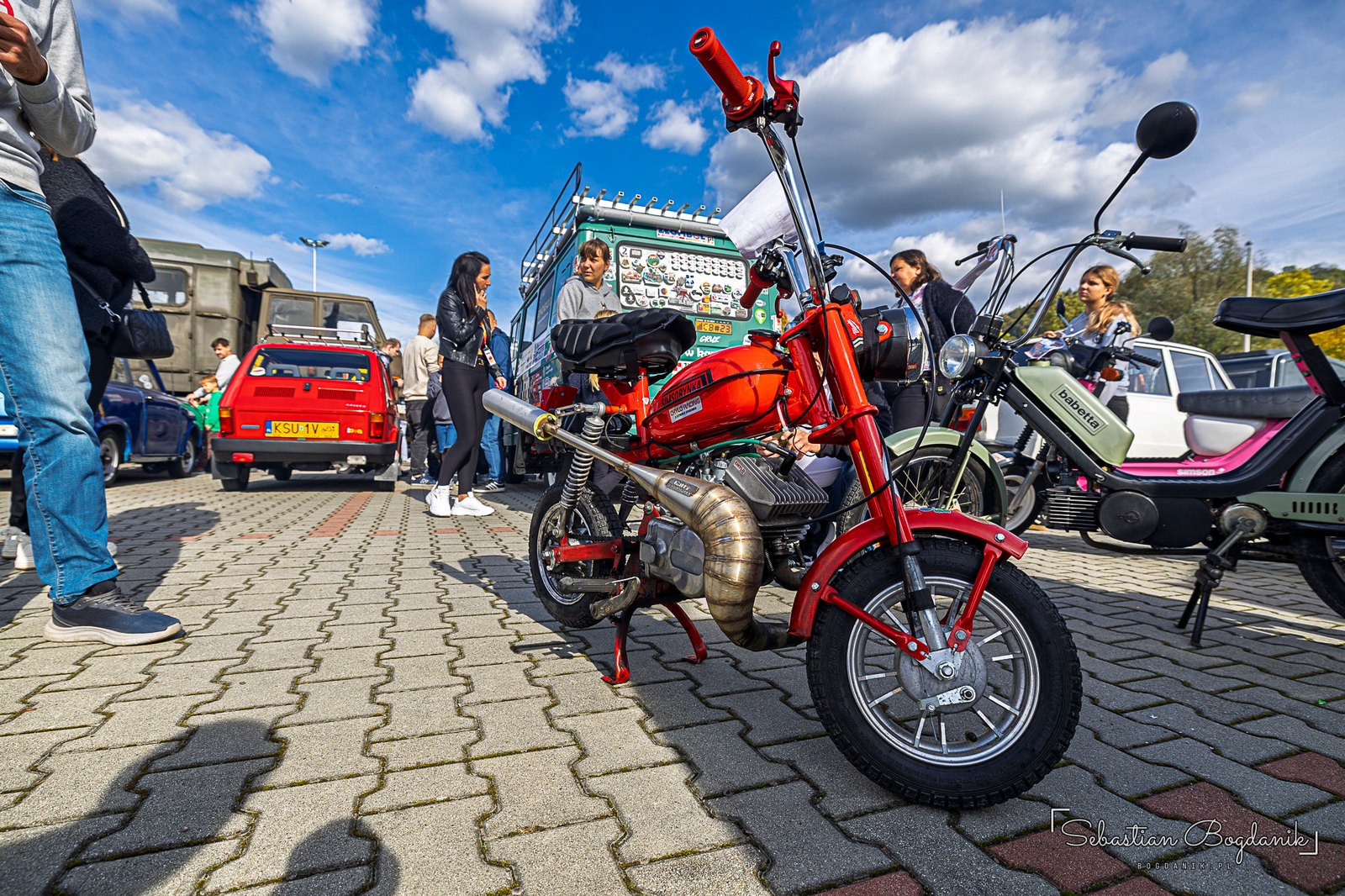
The younger generation: a pink Simson scooter from the same Suhl factory as the AWO, and a Polish Romet Pony moped.
On Duty
Police, fire and army: vehicles you used to call for help, now parked for the admiring crowd.
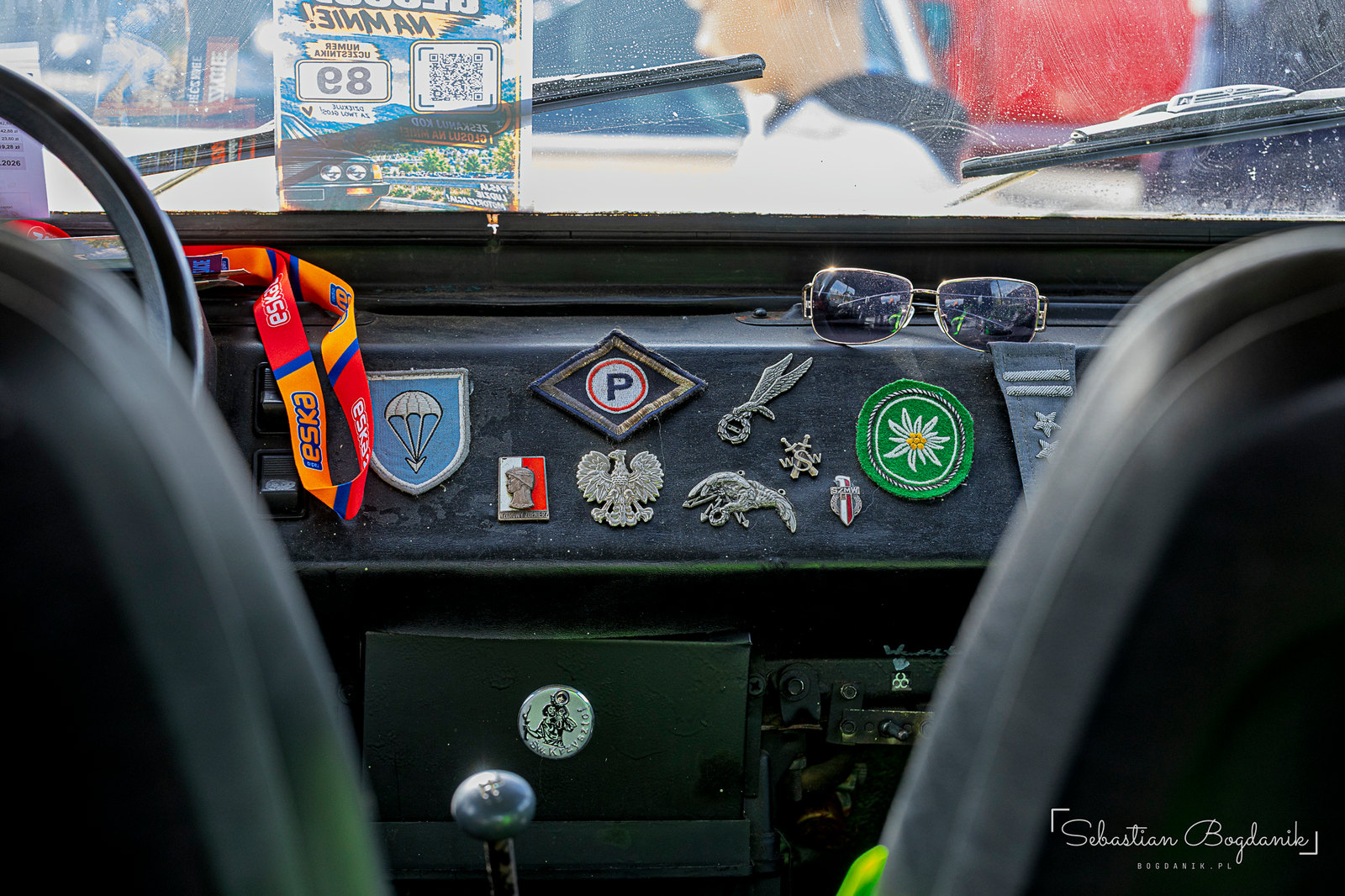
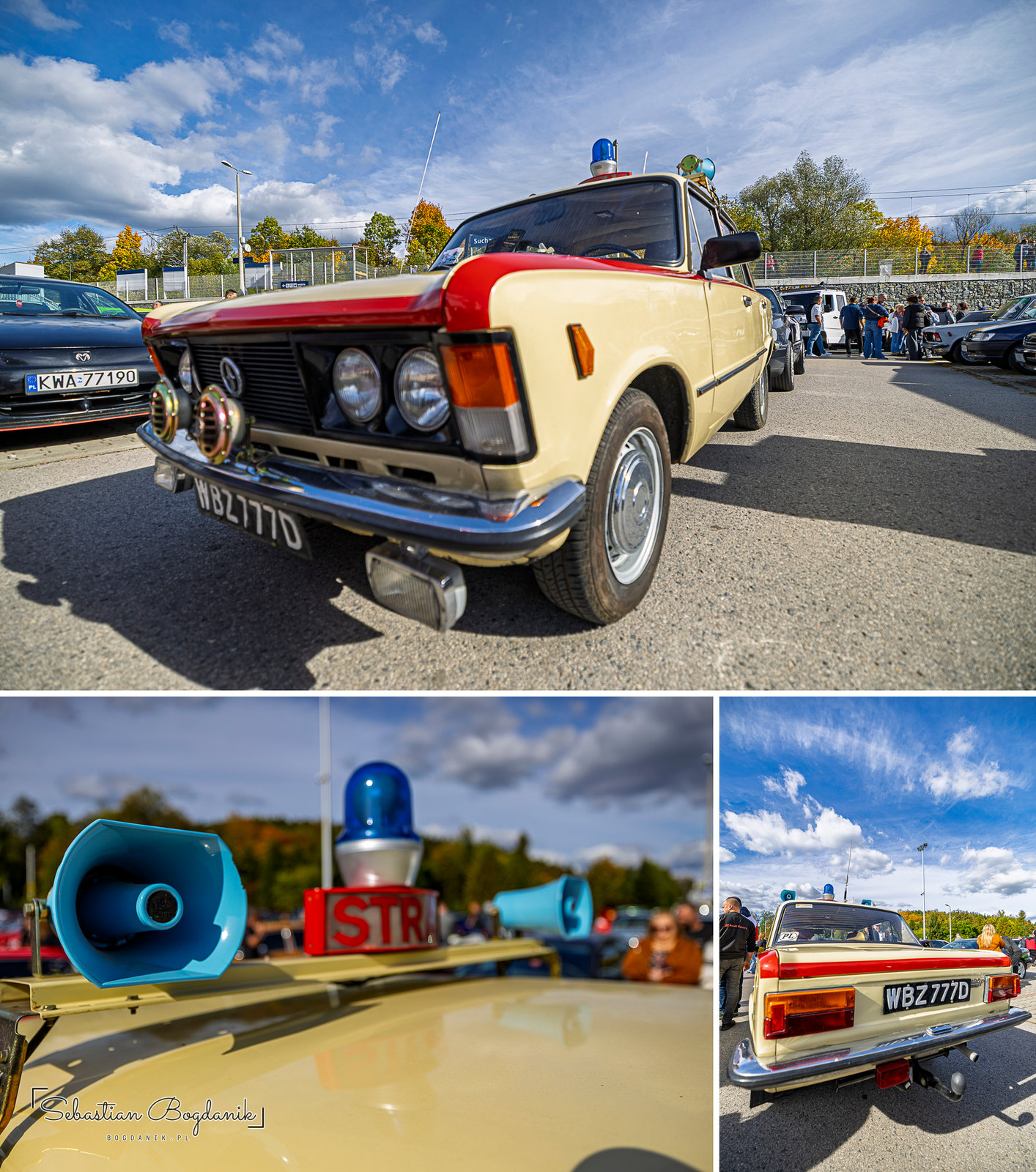
A recreated patrol car of the Citizens’ Militia, communist Poland’s police: MILICJA lettering, a blue beacon with two loudspeakers on the roof and old-style black plates. It is an FSO 125p, the name the Polski Fiat took after the Fiat license ran out in 1983.
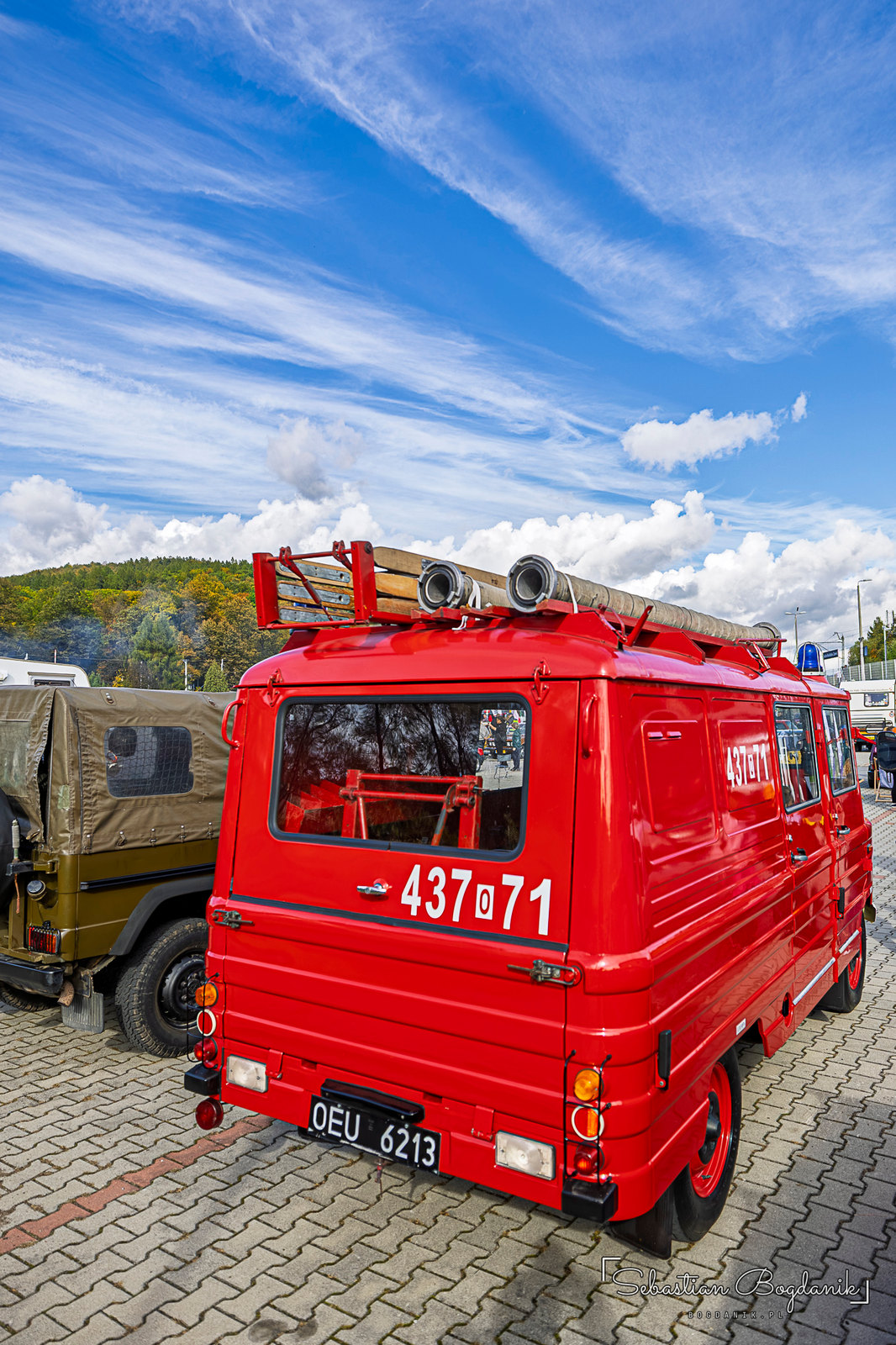
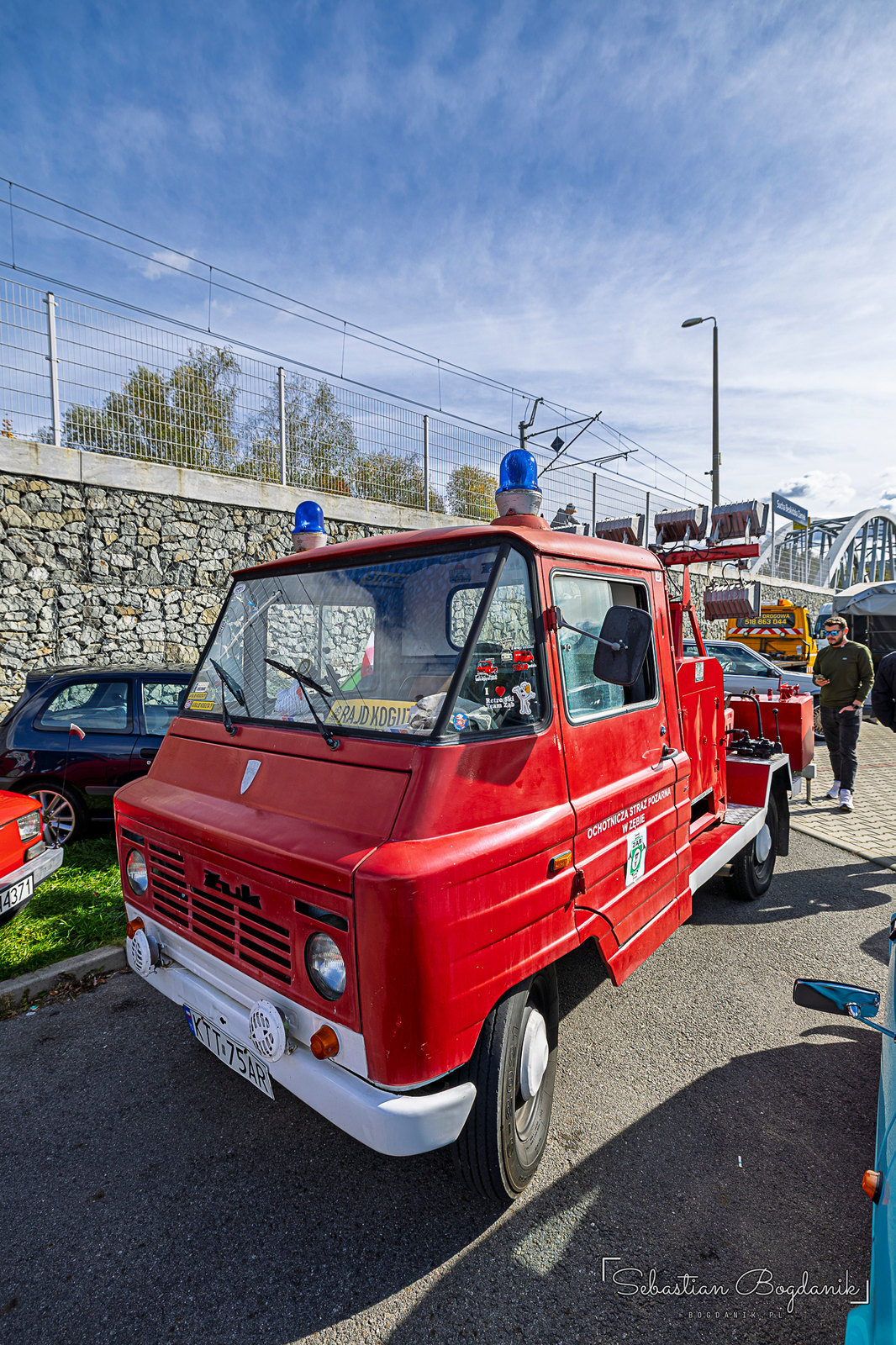
Żuk vans in fire-department red. Built in Lublin from the late 1950s to 1998, they served volunteer fire companies across Poland for decades.
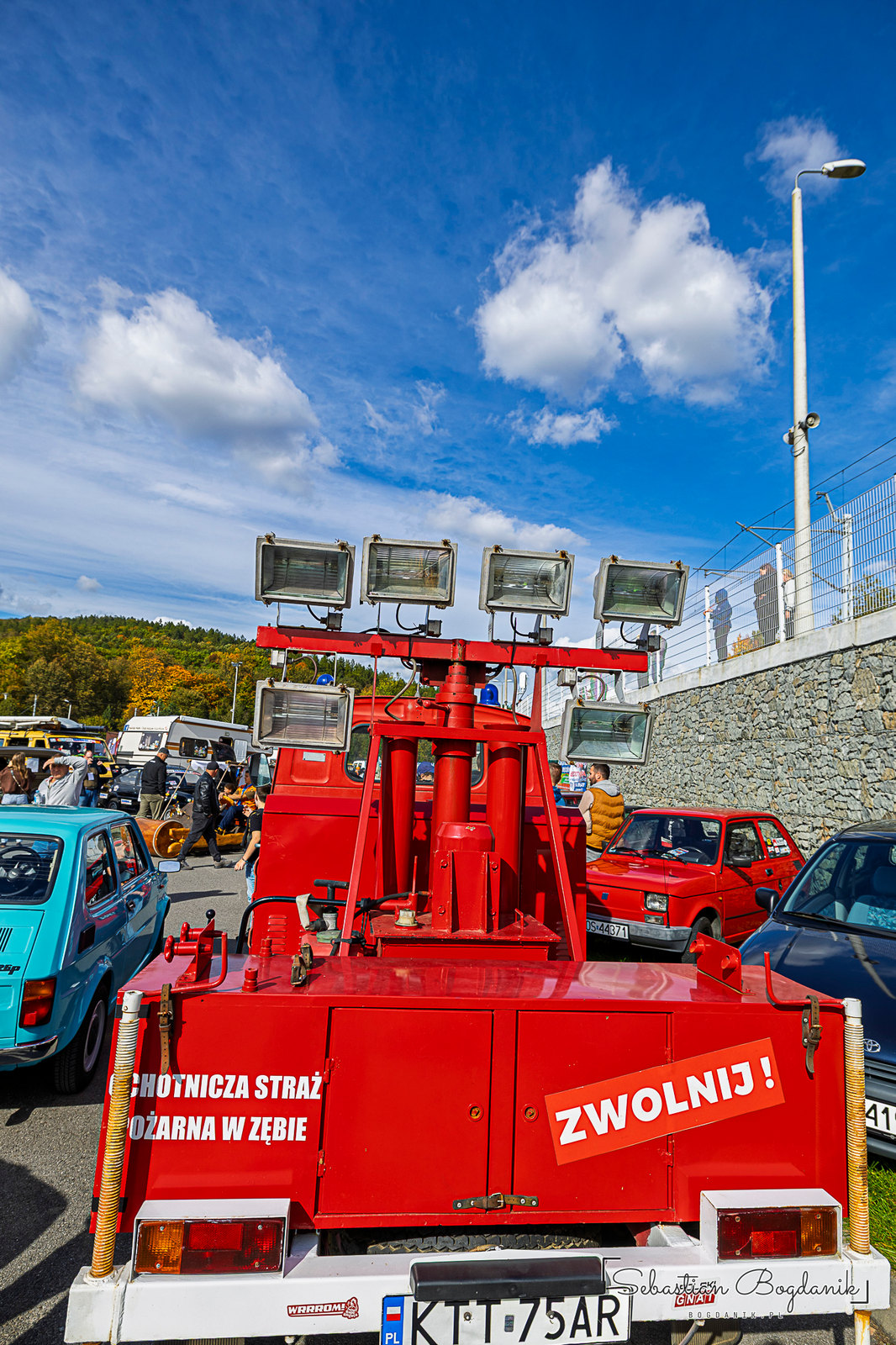
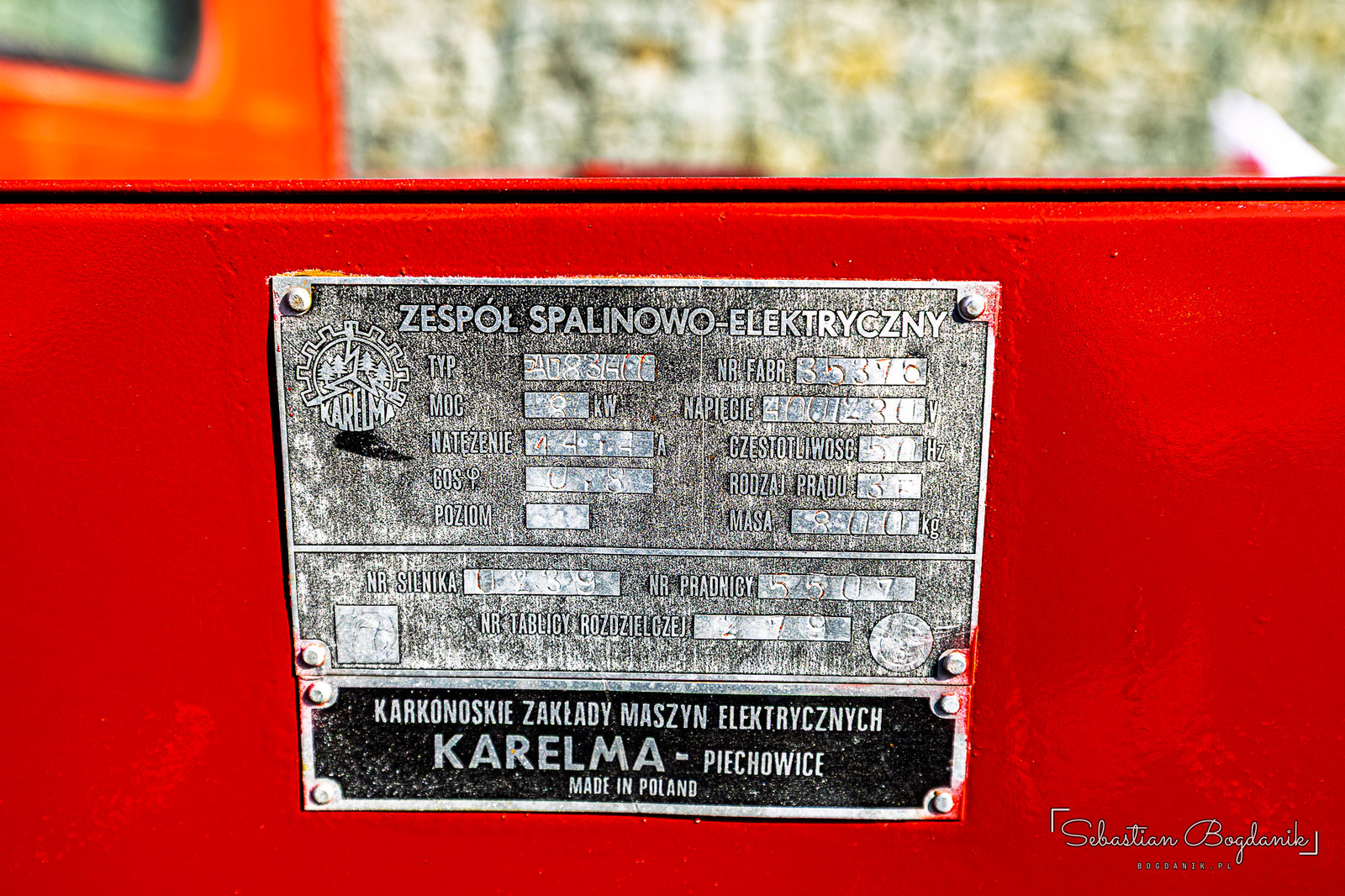
A fire truck politely asking you to “SLOW DOWN,” and the builder’s plate of its generator, made by Karelma in Piechowice.
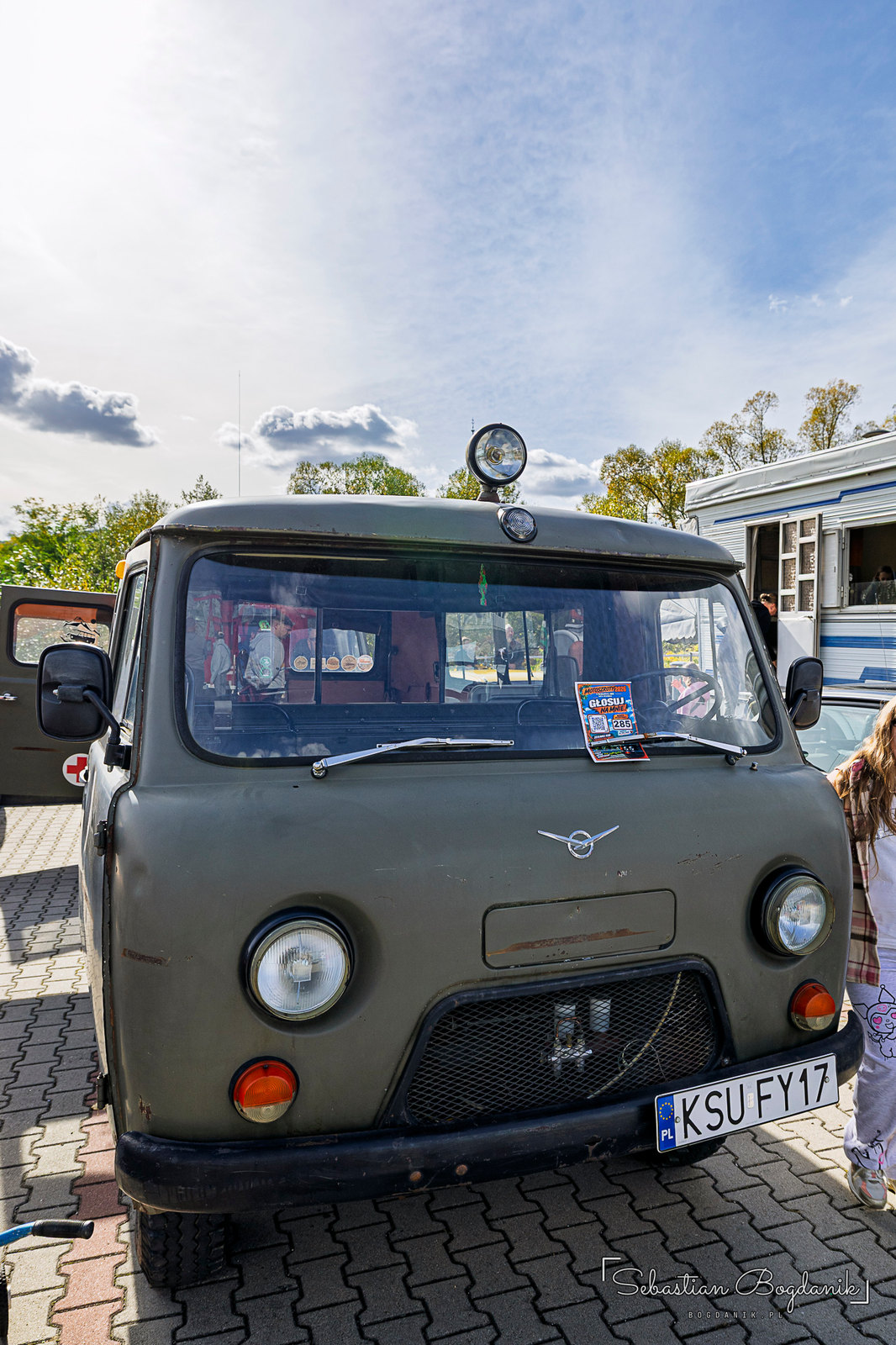
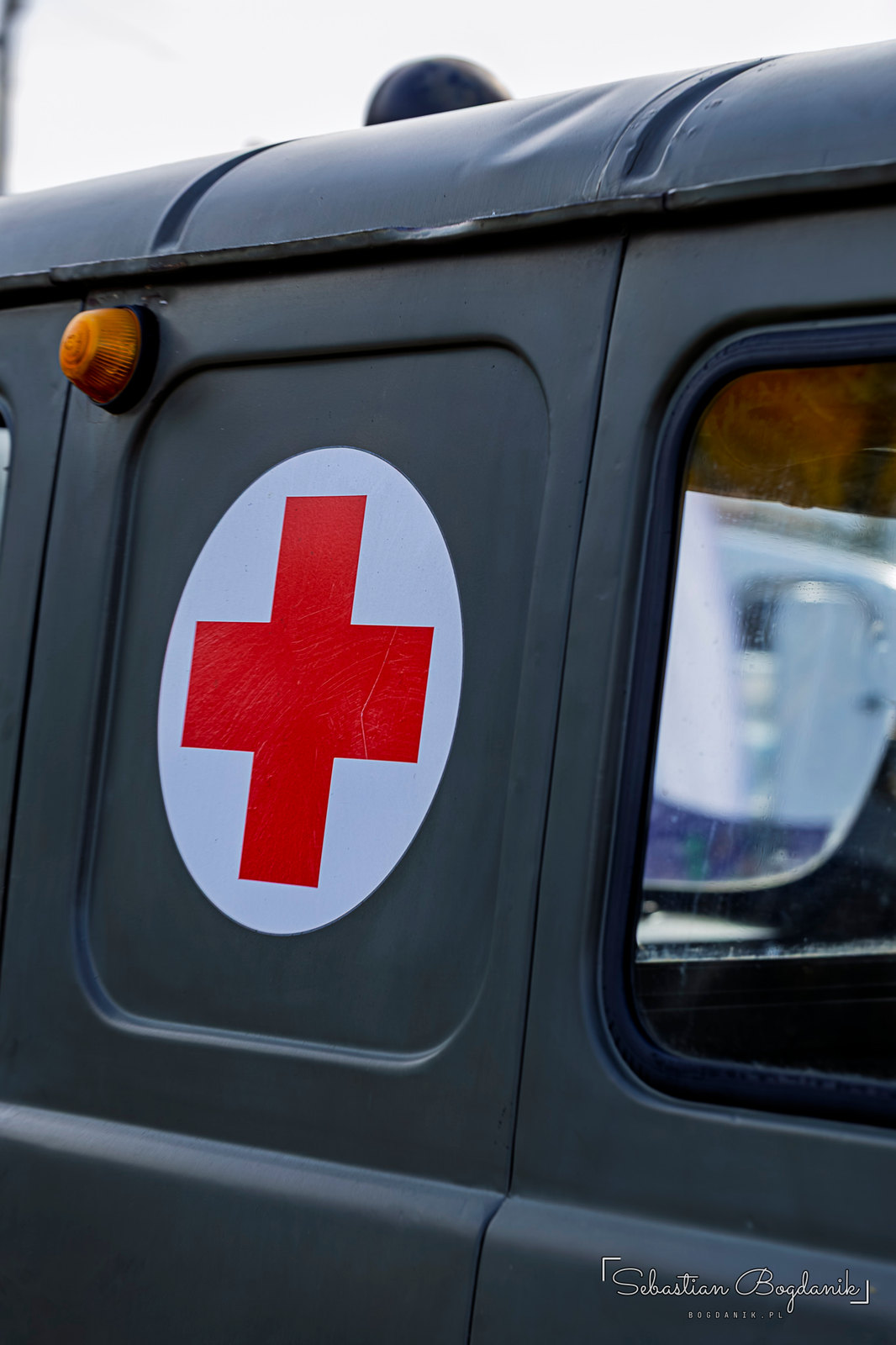
A UAZ-452 ambulance with a red cross on the door. In Russia it is the “bukhanka,” the loaf of bread, and one look tells you why.
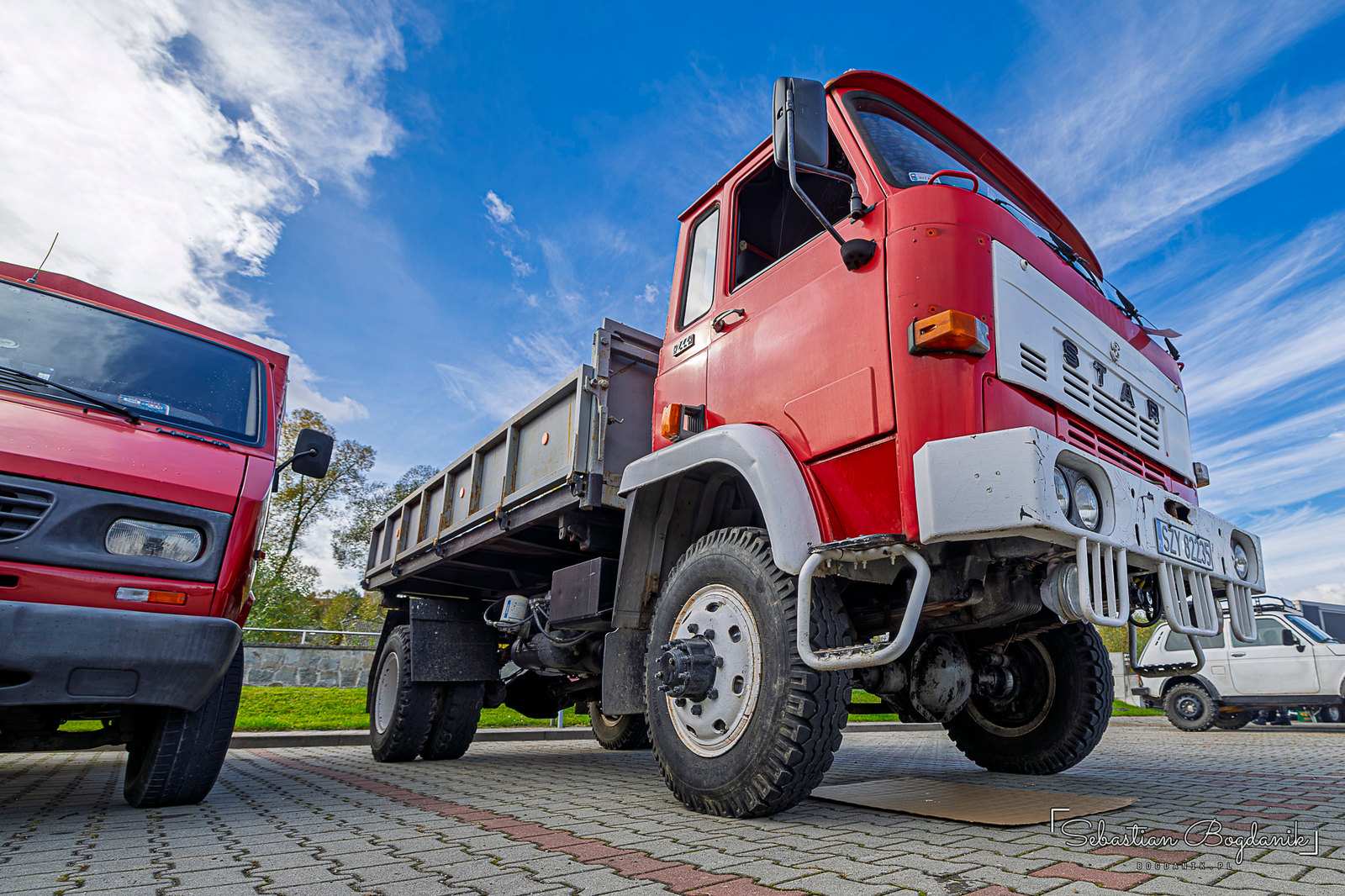
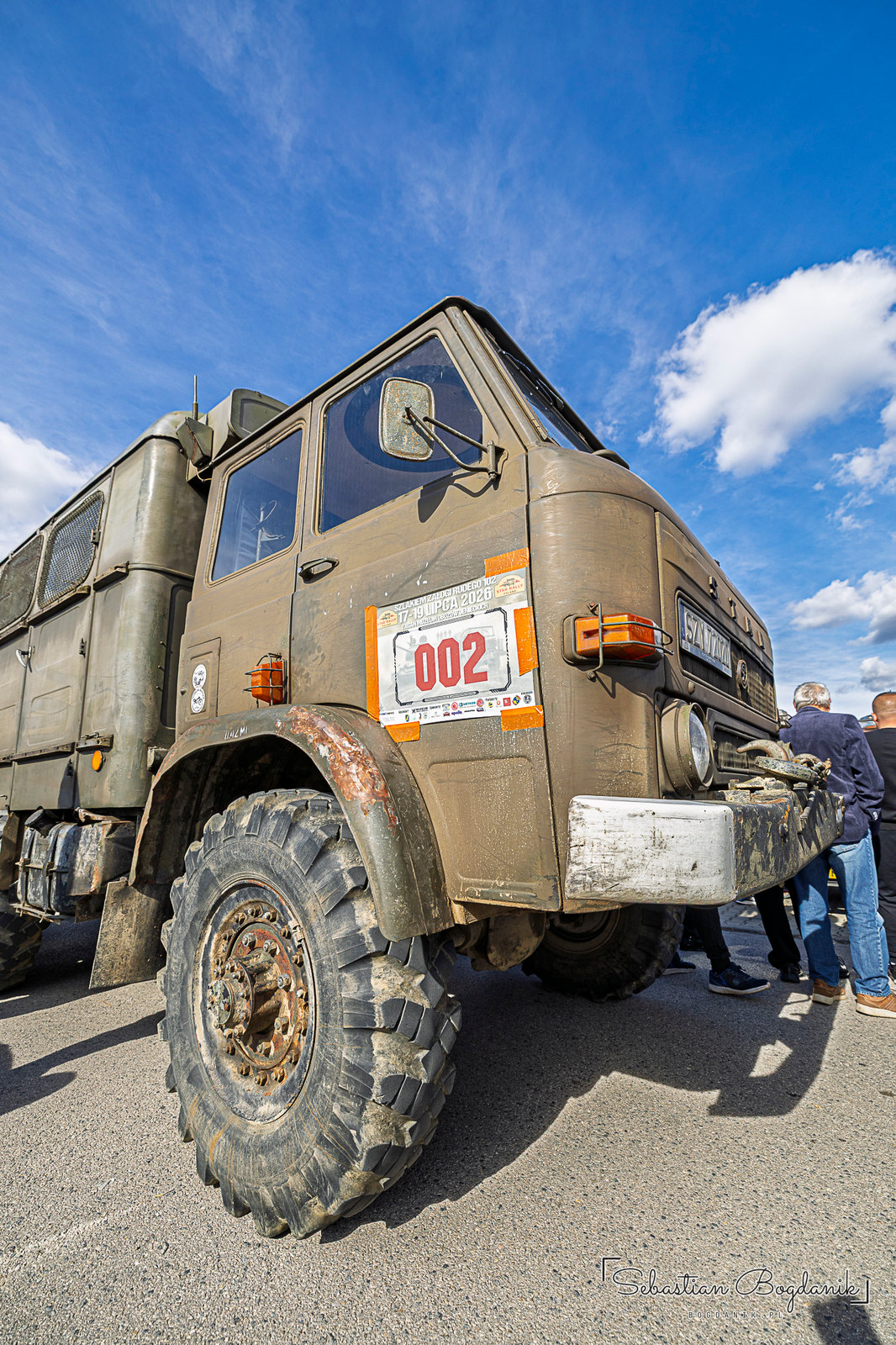
Stars from Starachowice: a red Star dump truck and a military Star 266 wearing number 002. In 1988 two specially prepared Star 266s ran the Paris-Dakar Rally and both made it to the finish in Senegal, just outside the time limit.
The Little Things
Mascots, stickers, gadgets and gags. Without them a car show would just be a parking lot.
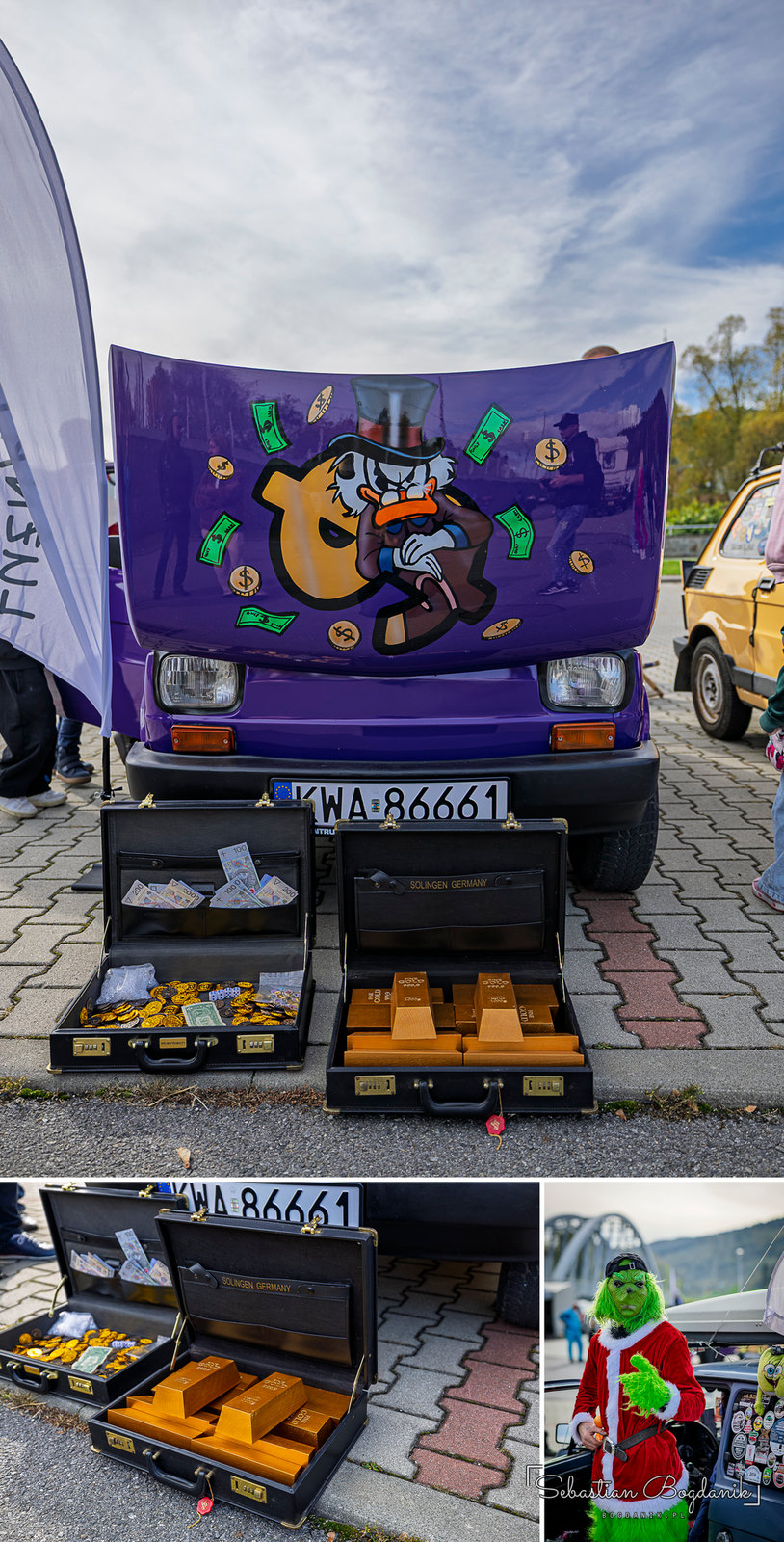
A purple maluch with a Scrooge McDuck-style duck on the hood, and below it suitcases full of gold bars, coins and cash. Who left them there? Maybe the Grinch, who was wandering nearby, has been saving up for presents. Nobody knows.
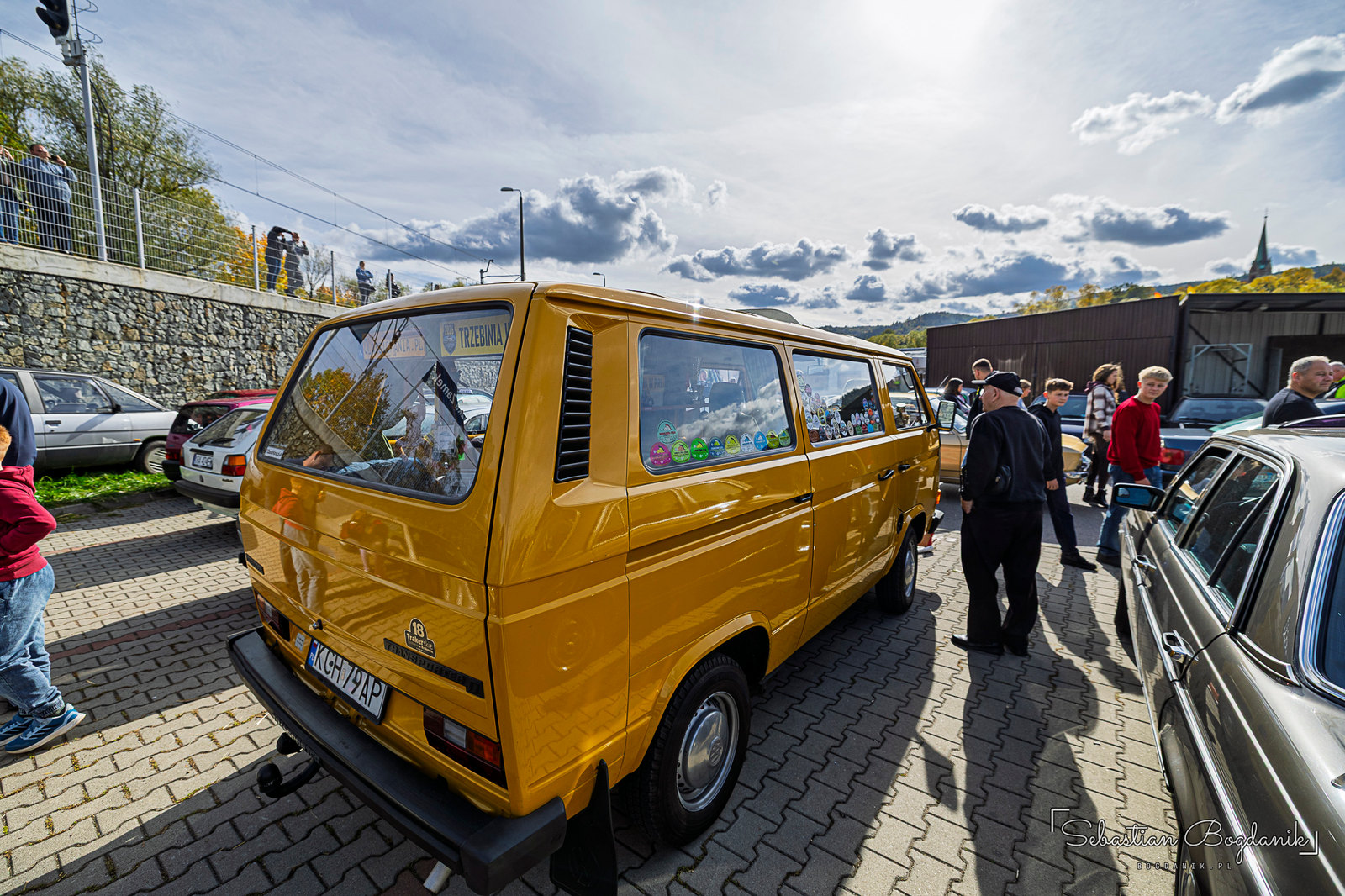
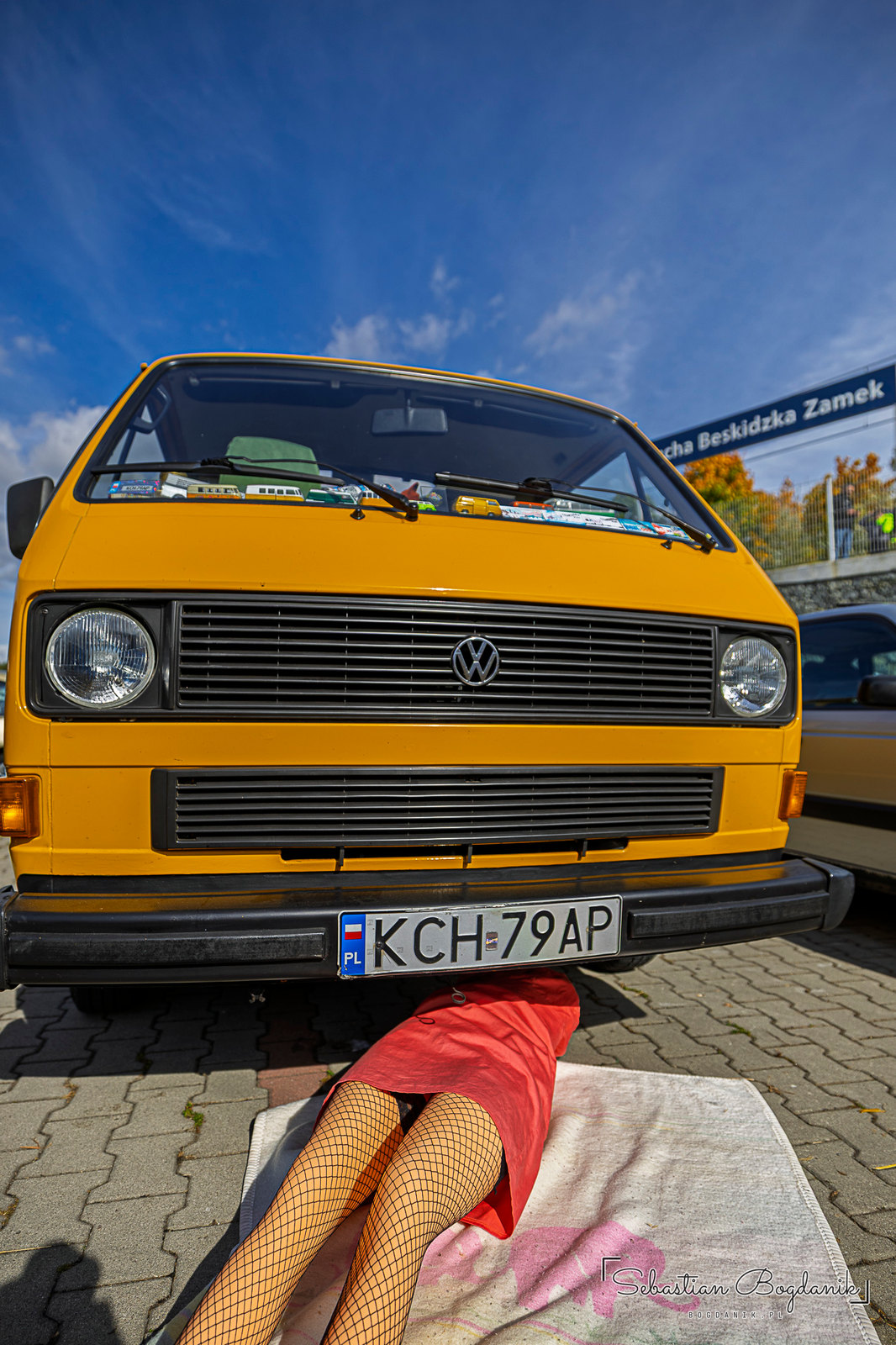
A VW Vanagon, the T3, with a mannequin under the front bumper, mid-repair. Fixing the van on the road is part of every vacation. Small problem: the T3’s engine is in the back.
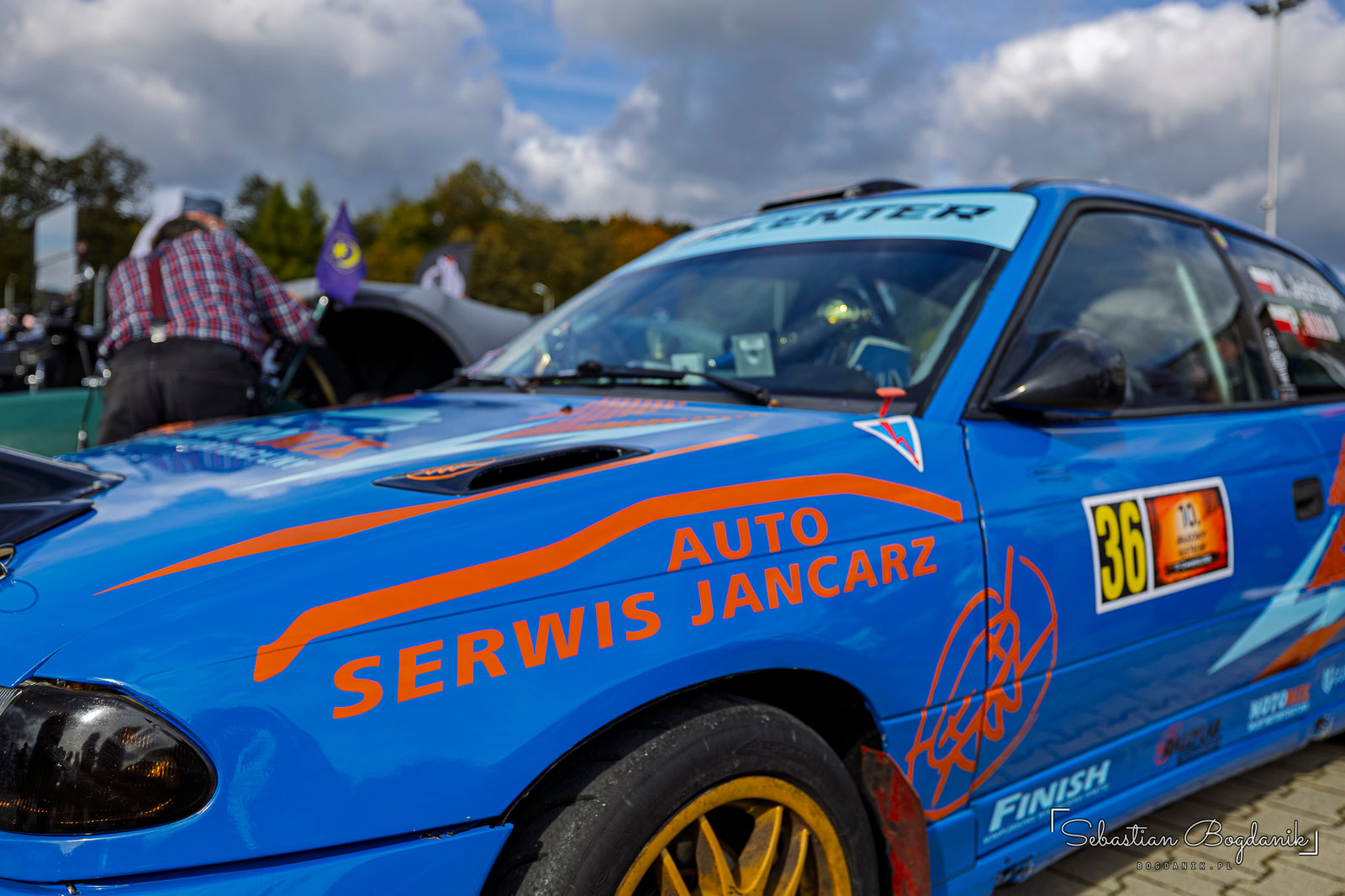
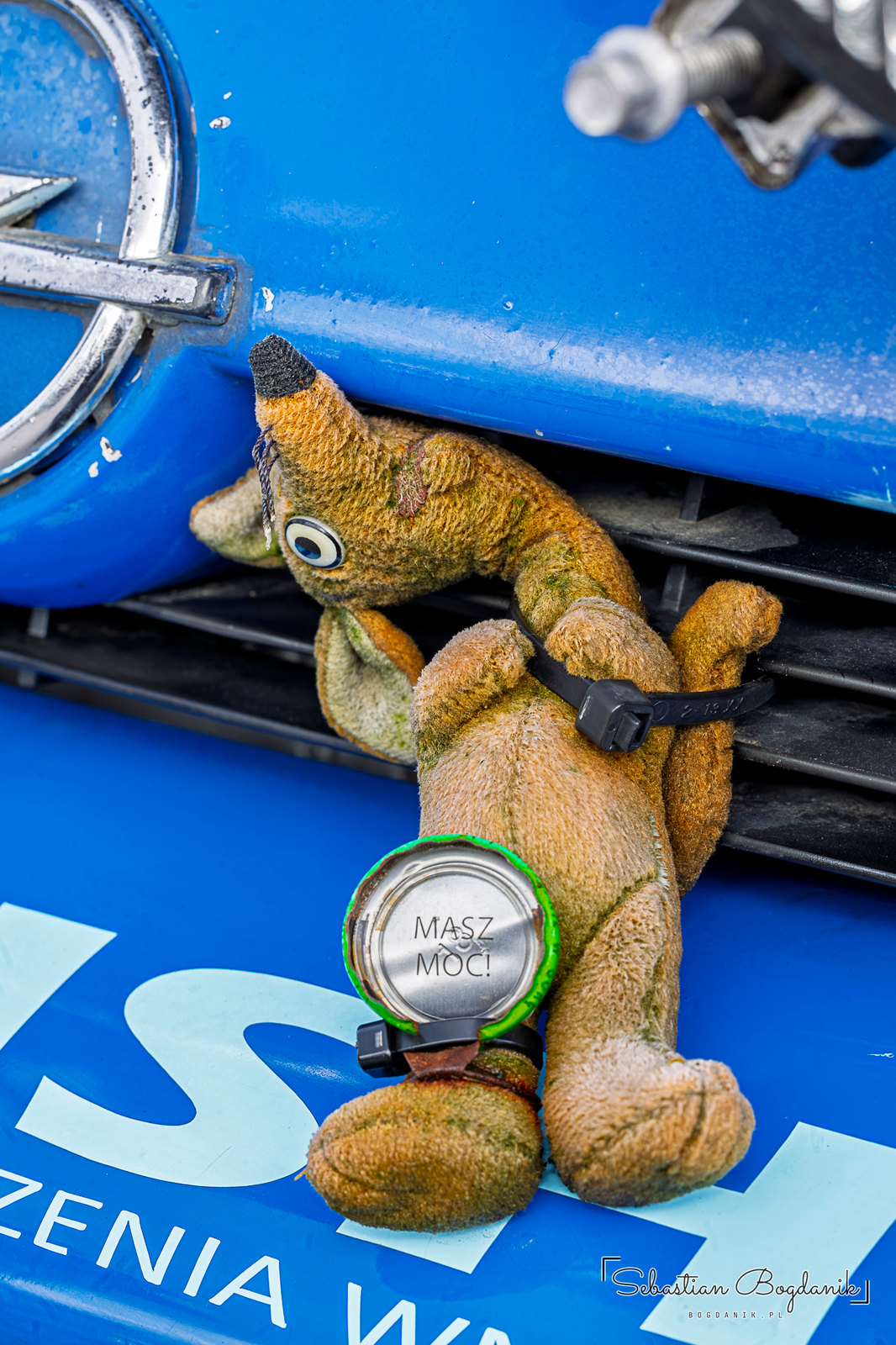
A rally Opel wearing number 36 and a bank of extra lights. Strapped to the grille, a plush squirrel holding a lid that says “MASZ MOC!”, Polish for “You’ve got the power!”
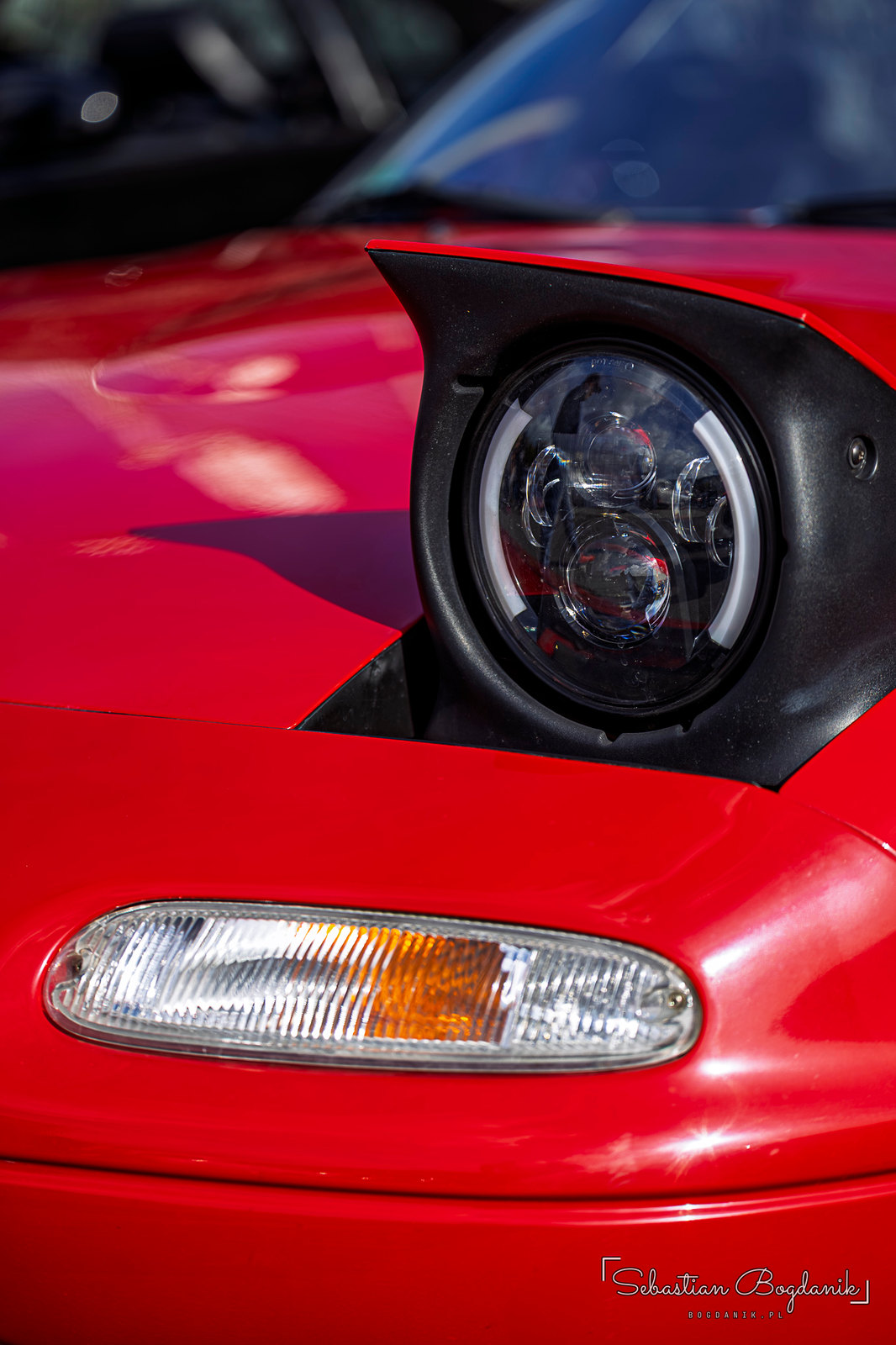
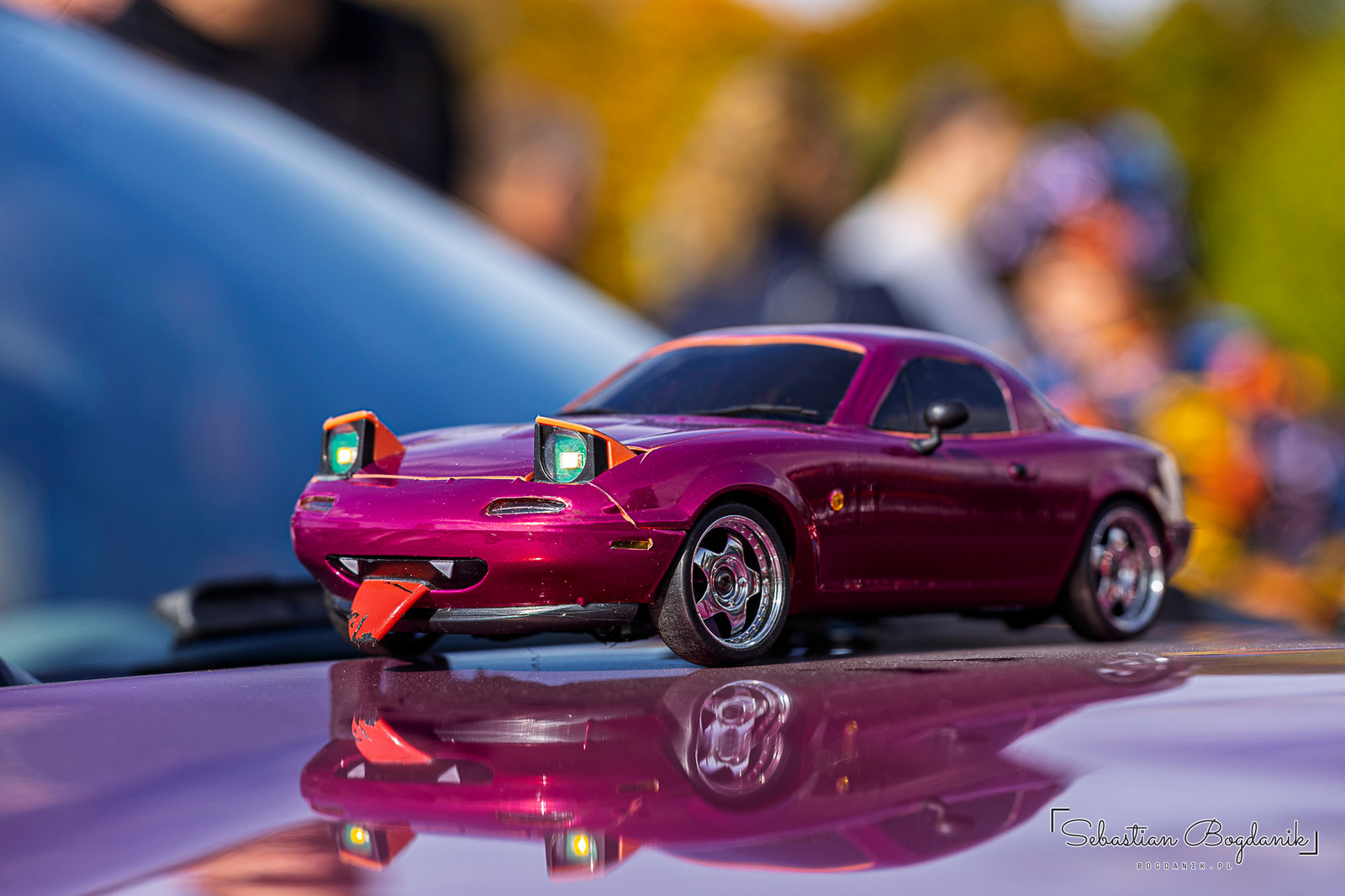
Two Miatas: a real one with pop-up headlights, and a toy one with sleepy eyelids and its tongue out. The real MX-5 is in the Guinness Book of Records as the best-selling two-seat roadster of all time.
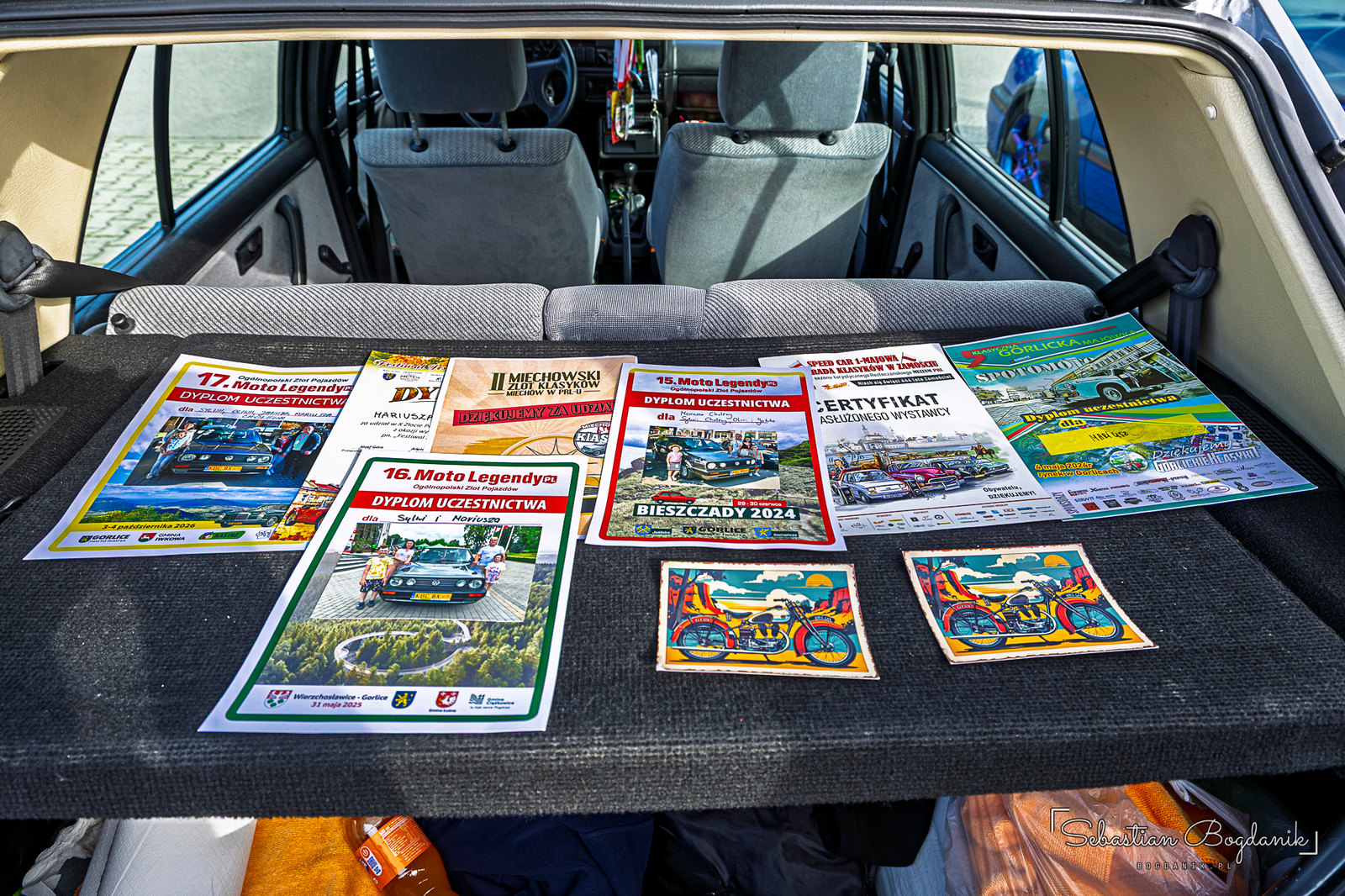
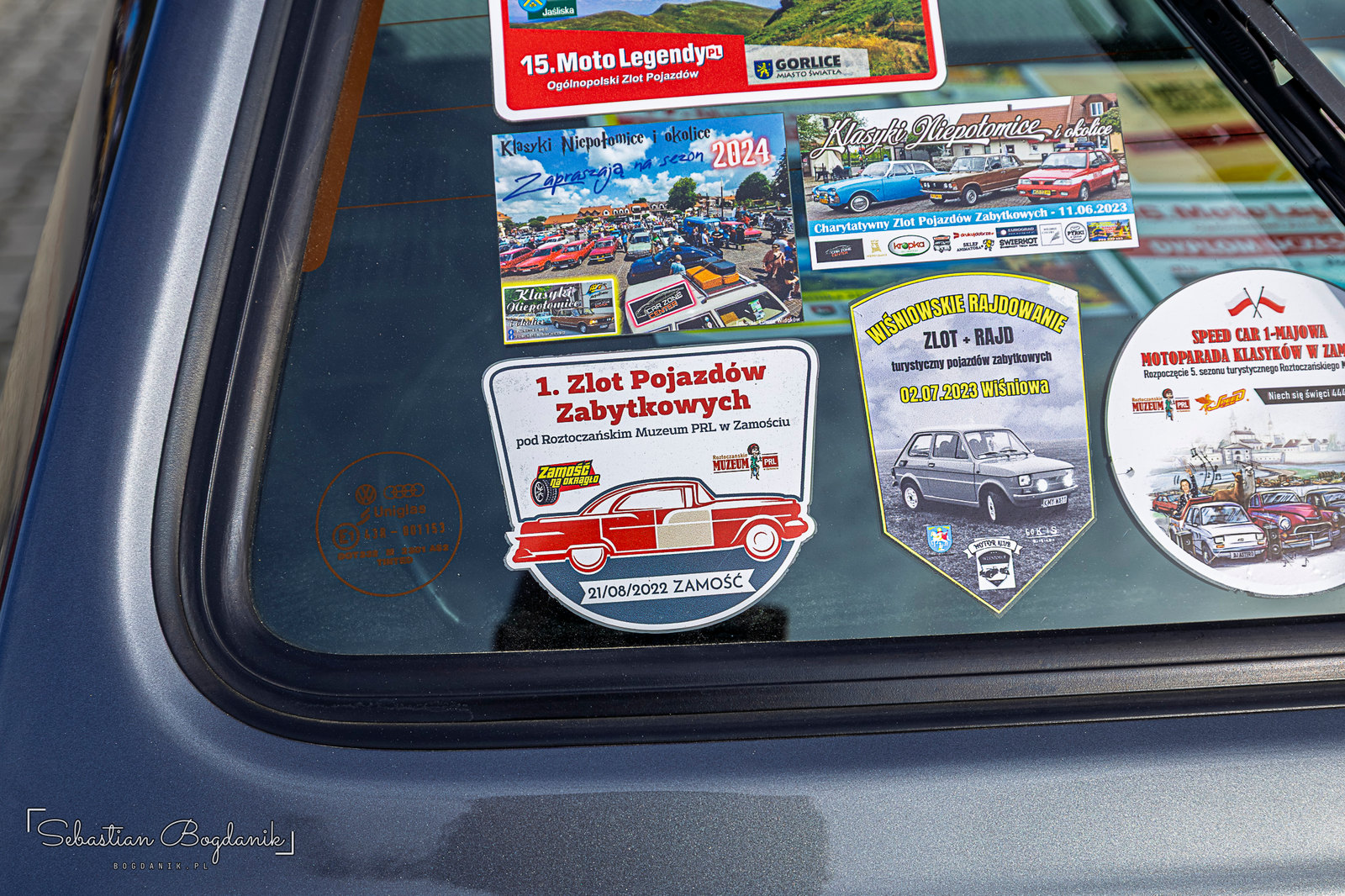
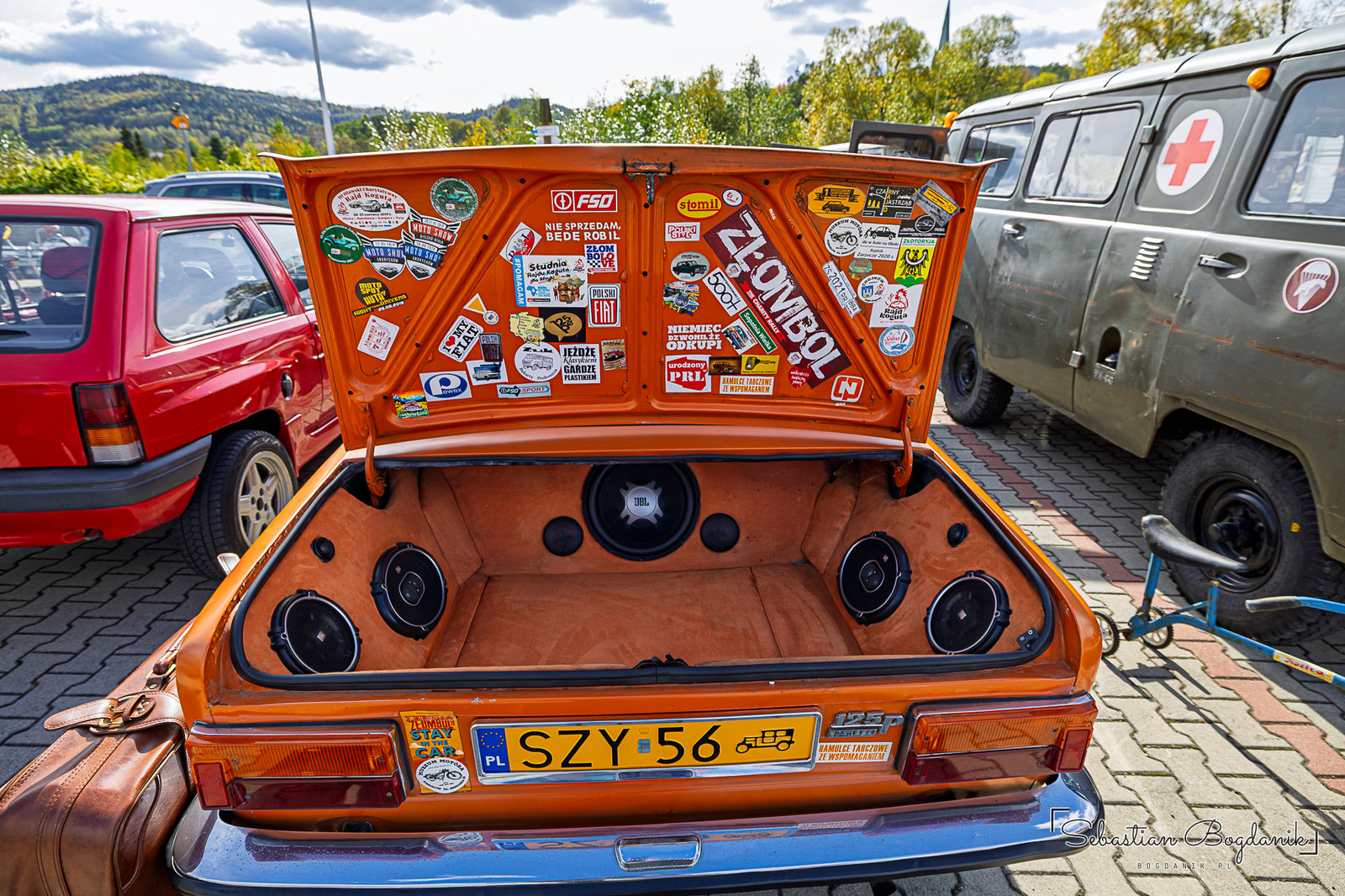
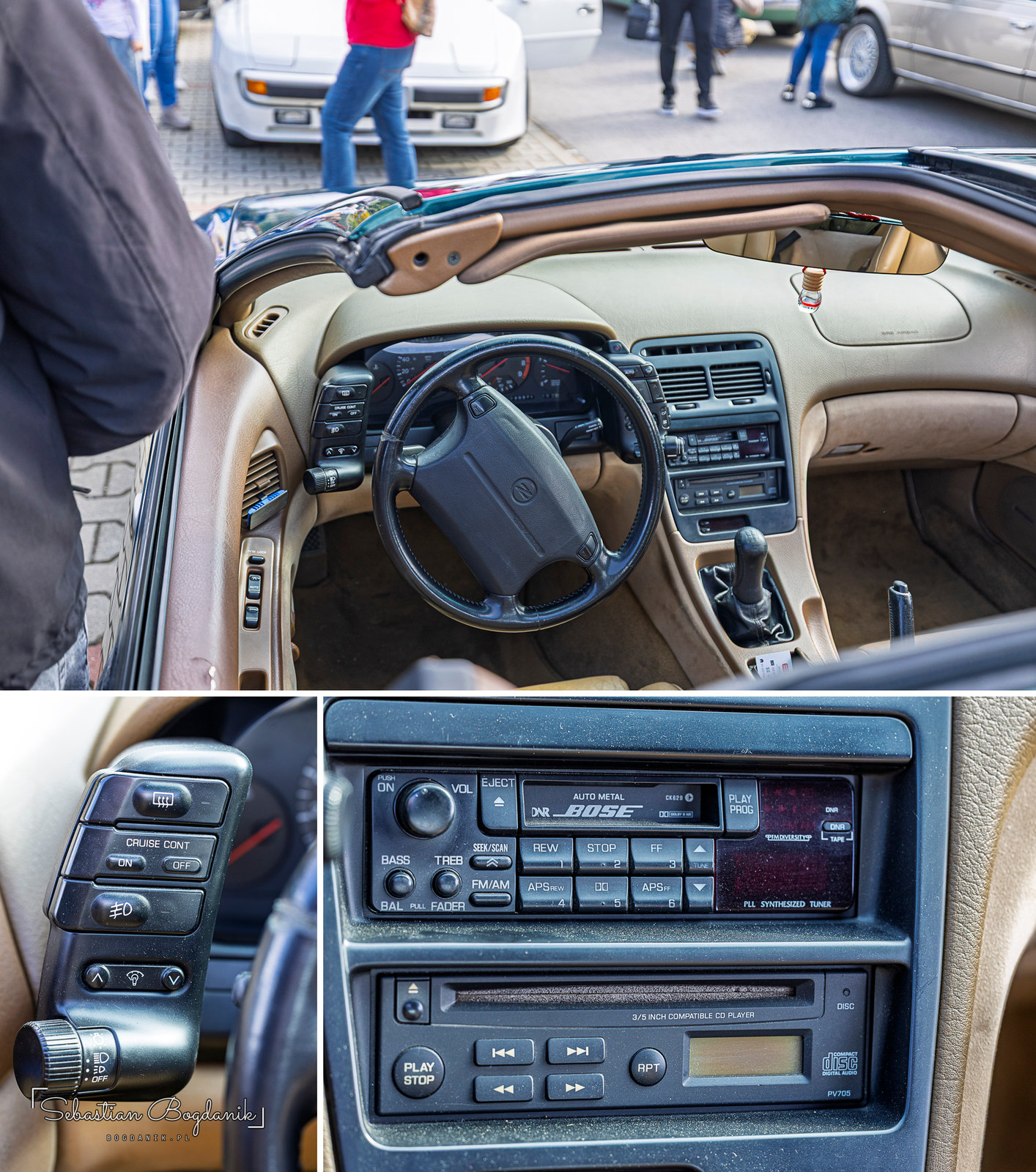
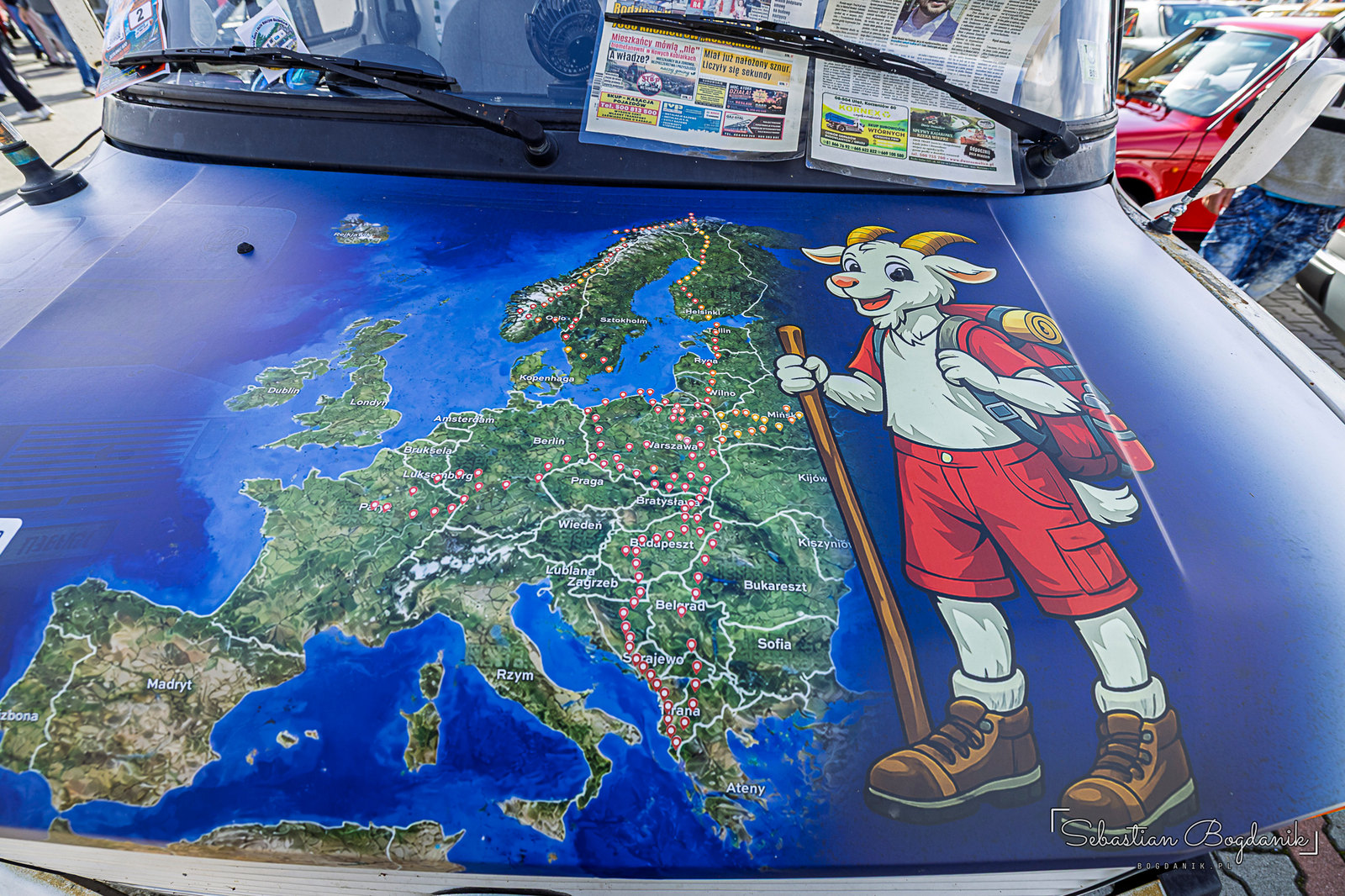
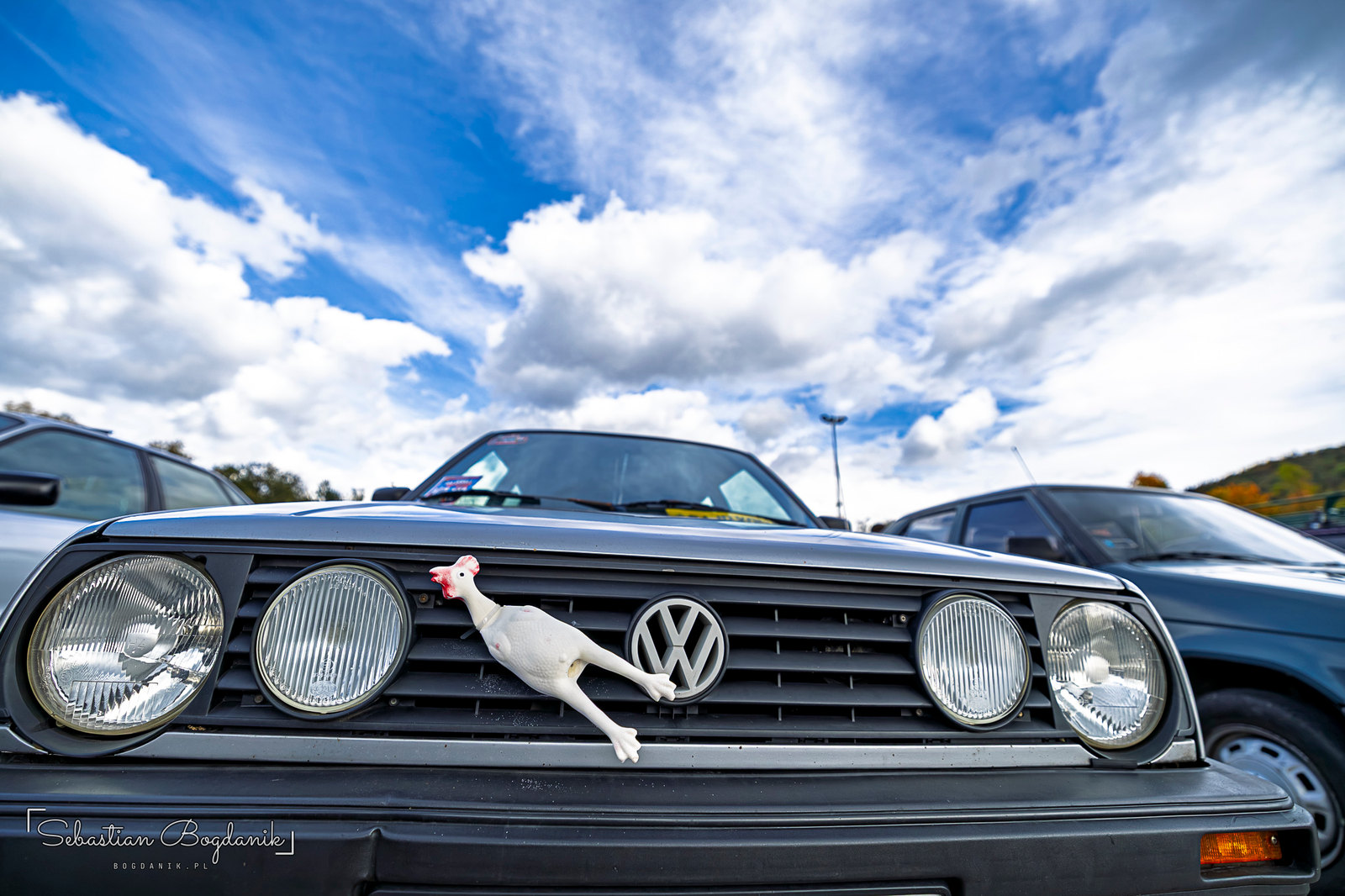
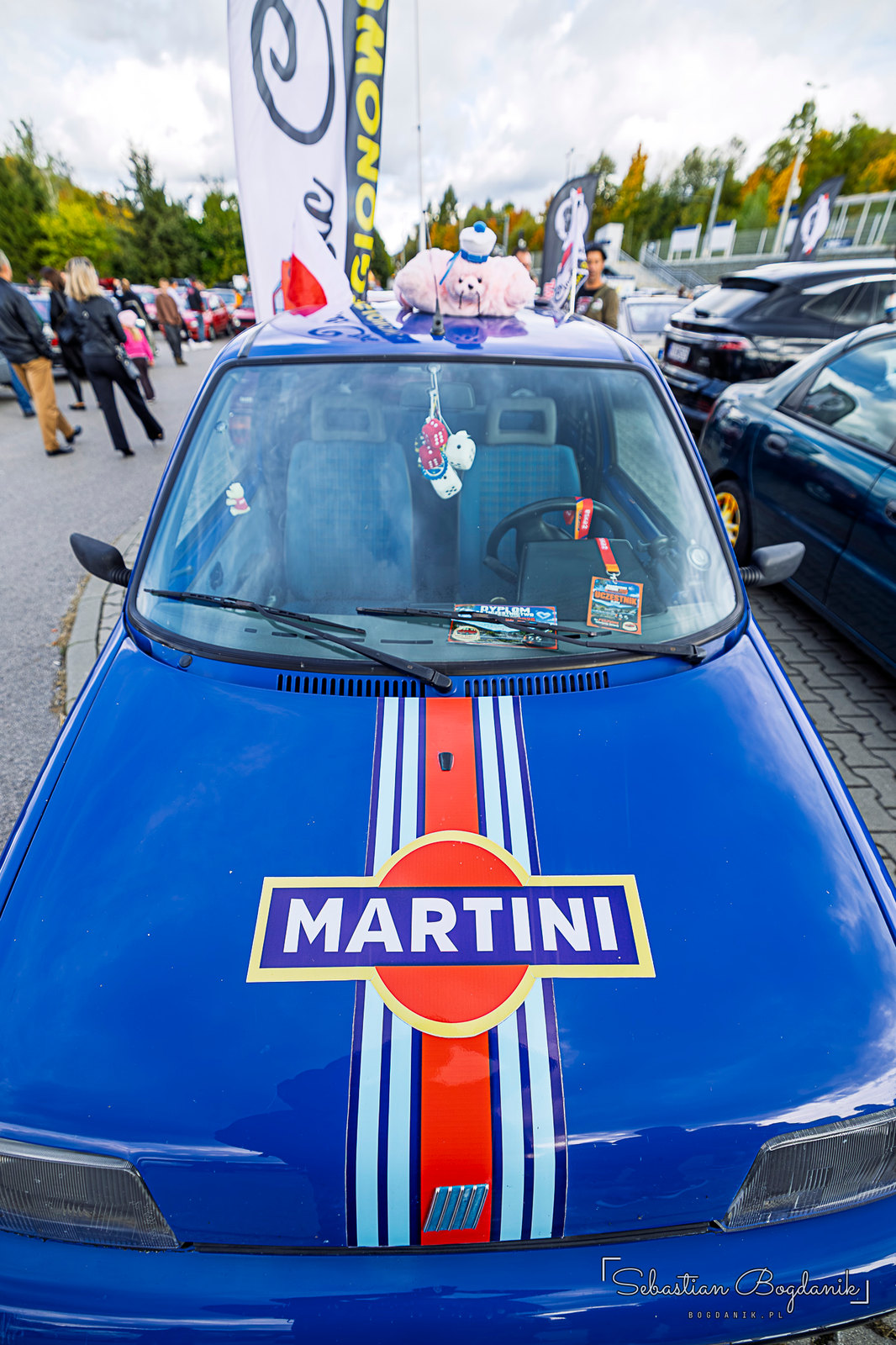
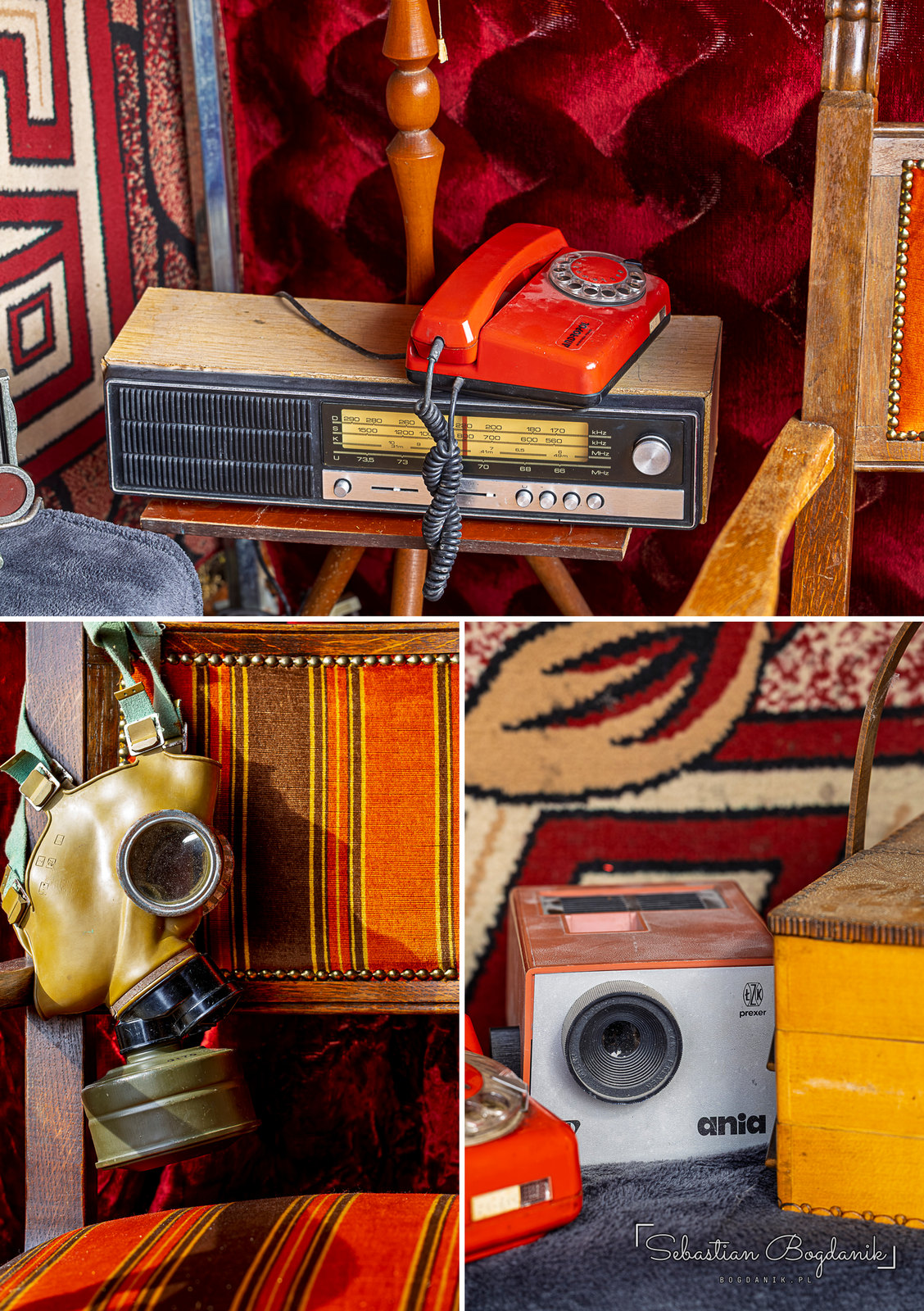
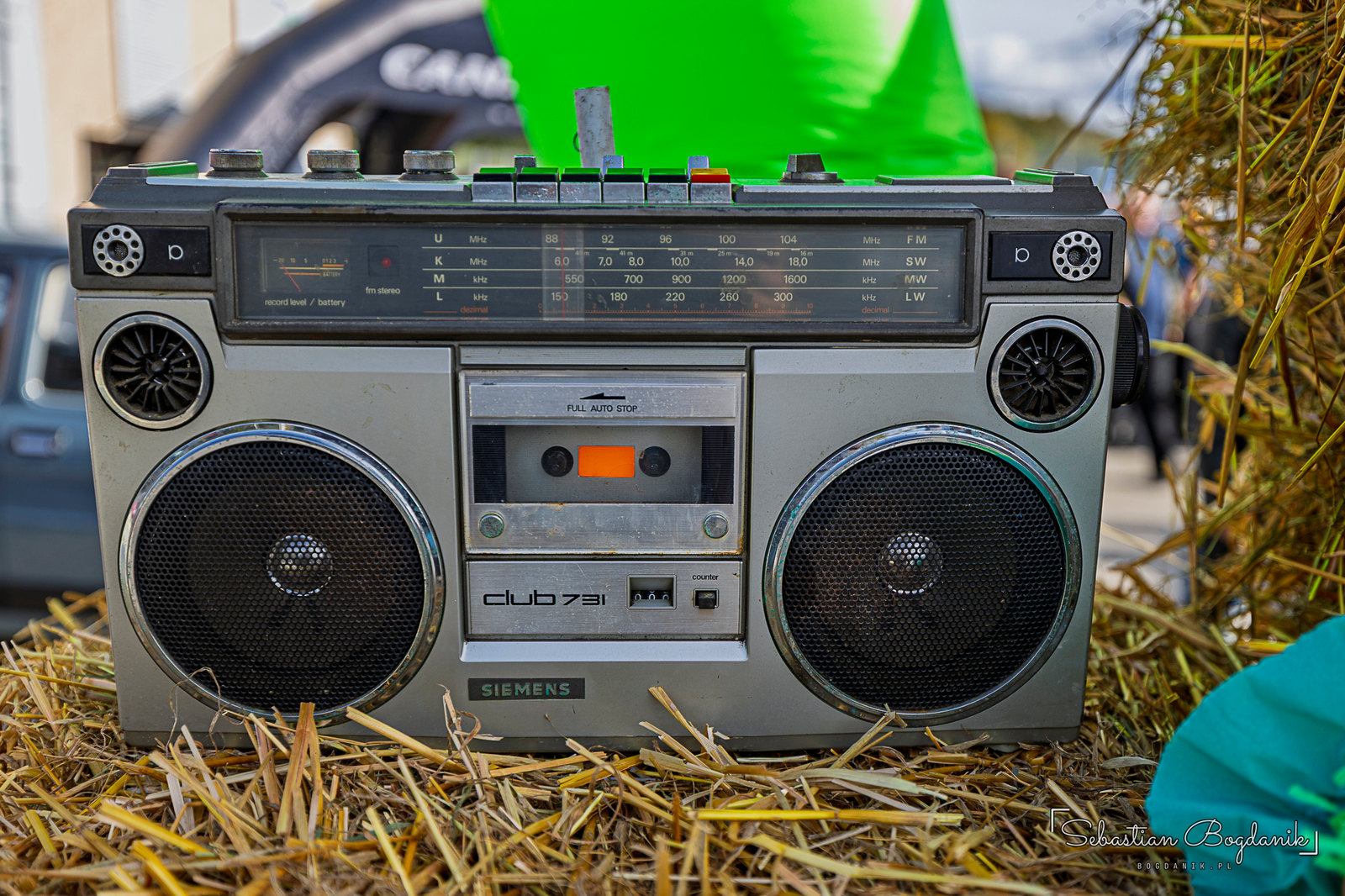
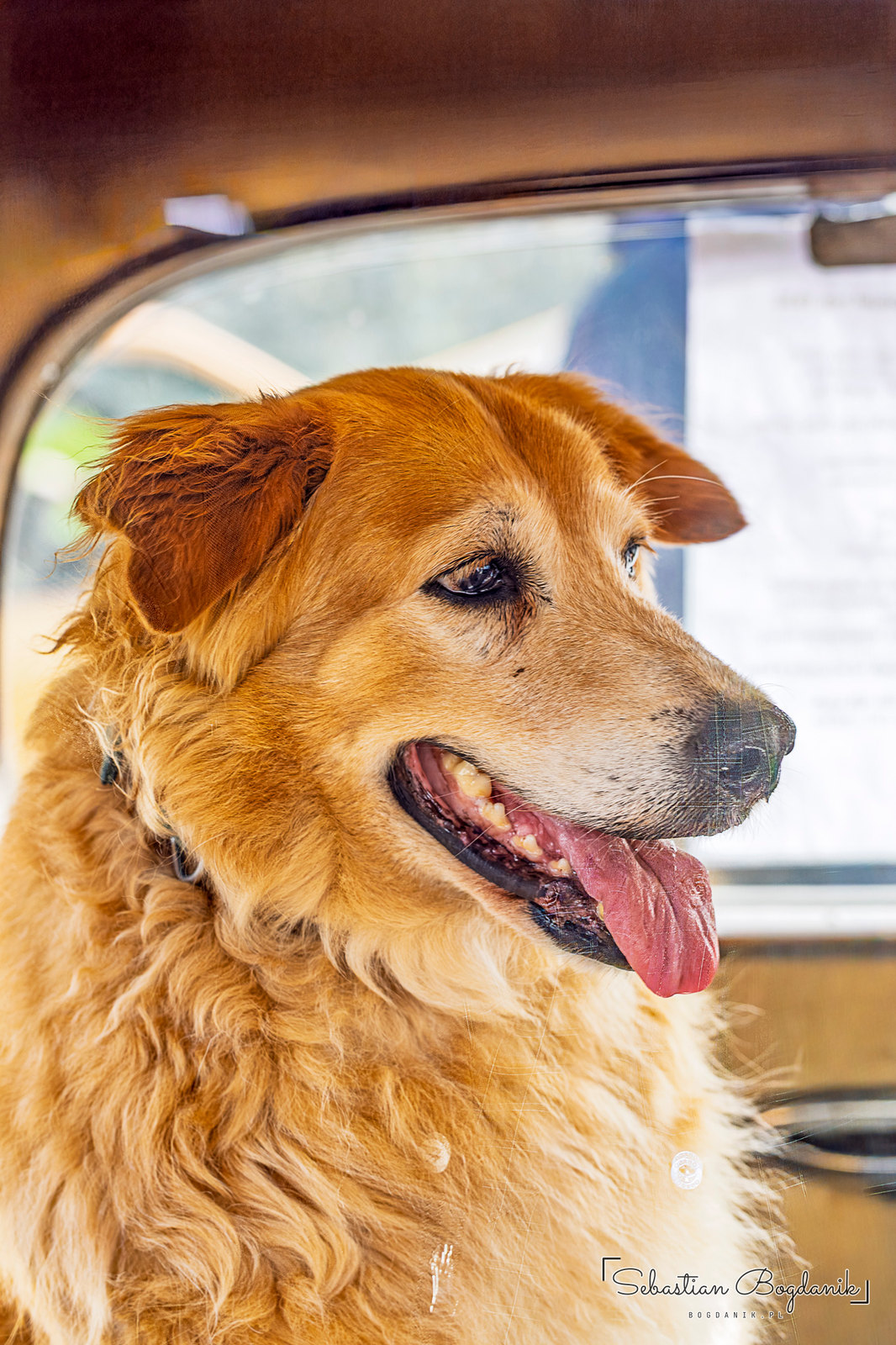
A rolling scrapbook: plaques, certificates and stickers from every show this car has driven to.A trunk full of speakers and a lid full of stickers. No room left for luggage.Nineties tech, up close: tan leather, a cruise-control stalk with ON and OFF buttons, and a Bose head unit with both a cassette deck and a CD player. Peak luxury back then, a genuine antique now.A map of Europe across the whole hood, with the route drawn in and a goat with a walking stick and a backpack. This driver knows where he is going.A plastic rooster on the grille of a Golf, guarding the henhouse.Martini stripes on the hood, the livery that raced on Lancias and Porsches for decades.The organizers’ booth, decorated like a 1970s Polish living room: a radio and an orange rotary phone, a gas mask on a chair and an “Ania” slide projector.A Siemens boombox on a bale of straw. In the 1980s, carrying one of these on your shoulder was peak cool, on both sides of the Iron Curtain.The most relaxed attendee of the day. He did not judge anyone’s paint job.
See You in Spring
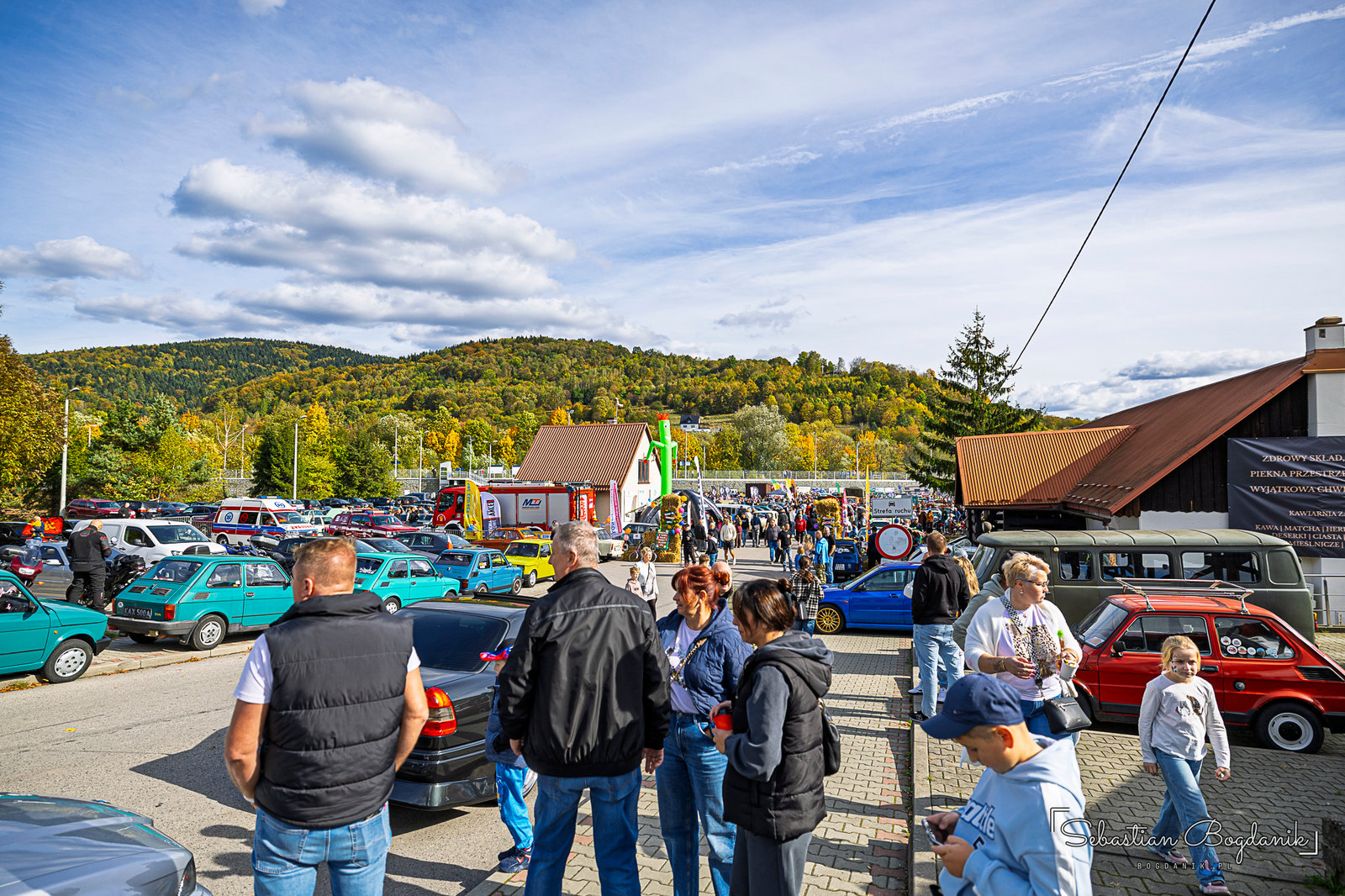
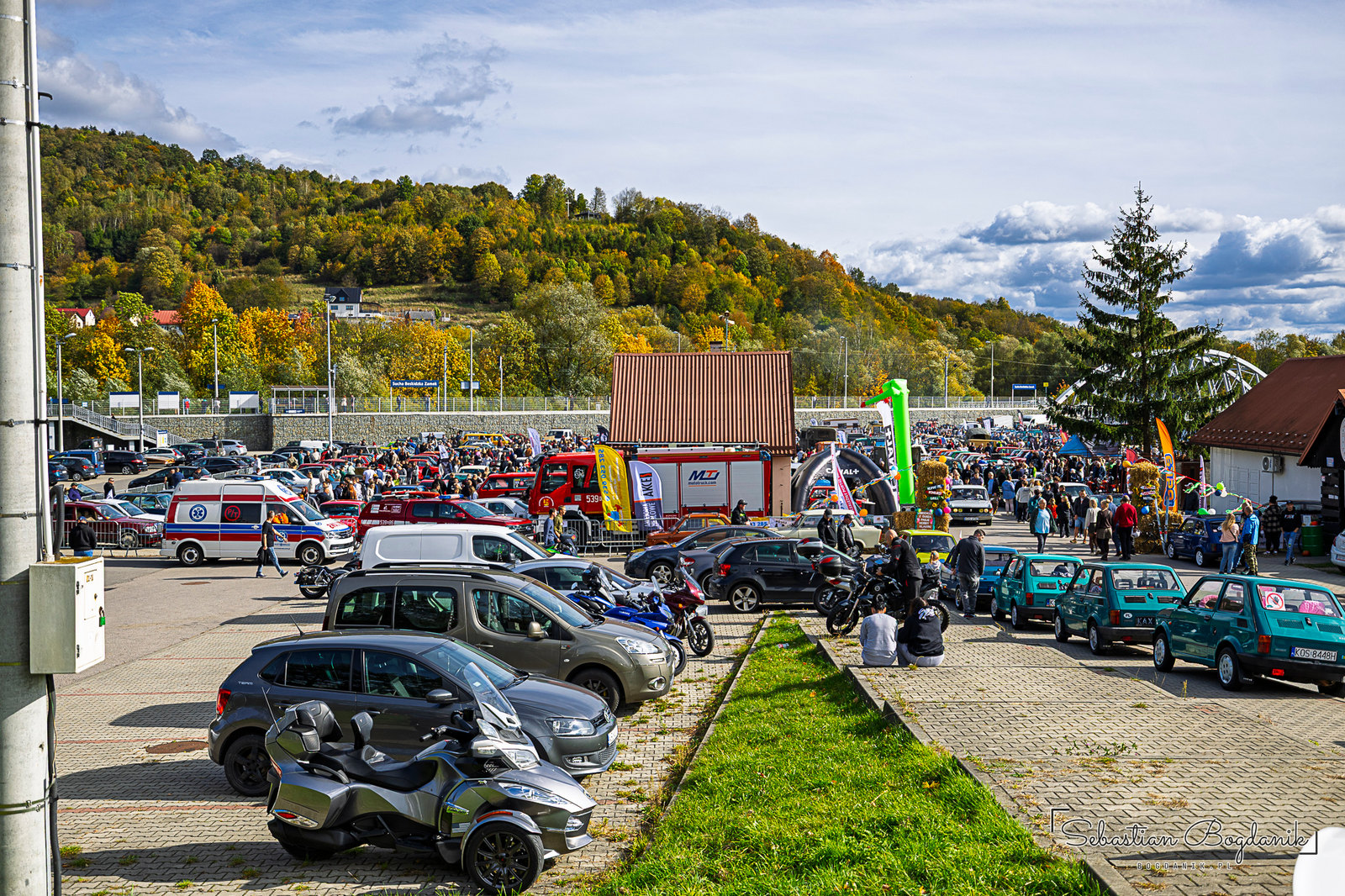
This is the square in Sucha Beskidzka in the afternoon, with classics lined up all the way to the foot of the hills. The Moto Szroty association has already announced its next meet, the season opener in spring. If you are ever in southern Poland, come see for yourself.
A square full of classics and people, with the autumn hills behind.