Between Christmas and New Year I visited three churches to see their nativity scenes. Each is different: the Bernardine friars’ monumental, moving Bethlehem in Kalwaria Zebrzydowska, a parish stable full of angels in Stryszawa, and two scenes in Bieńkówka, one made of birch wood outside the church and another set up inside like an old farmhouse room. All of them grow from the same tradition, begun in 1223 at Greccio by St Francis of Assisi (I wrote about it when covering a Greccio play in Bieńkówka).
Kalwaria Zebrzydowska: the friars’ Bethlehem
Every year one of the largest nativity scenes in Poland is built in the Basilica of Our Lady of the Angels in Kalwaria Zebrzydowska. It is the work of the Bernardine friars, who have cared for the sanctuary since it was founded in 1602 by Mikołaj Zebrzydowski, Voivode of Kraków. The complex of churches and chapels has been on the UNESCO World Heritage List since 1999.
The nativity tradition at the friary goes back some 400 years: the Franciscans, to whom the Bernardines belong, have spread the custom around the world ever since Greccio. The scene has stood in its present place, between the nave and the chancel, since the 1970s. Work begins in November and takes almost two months.
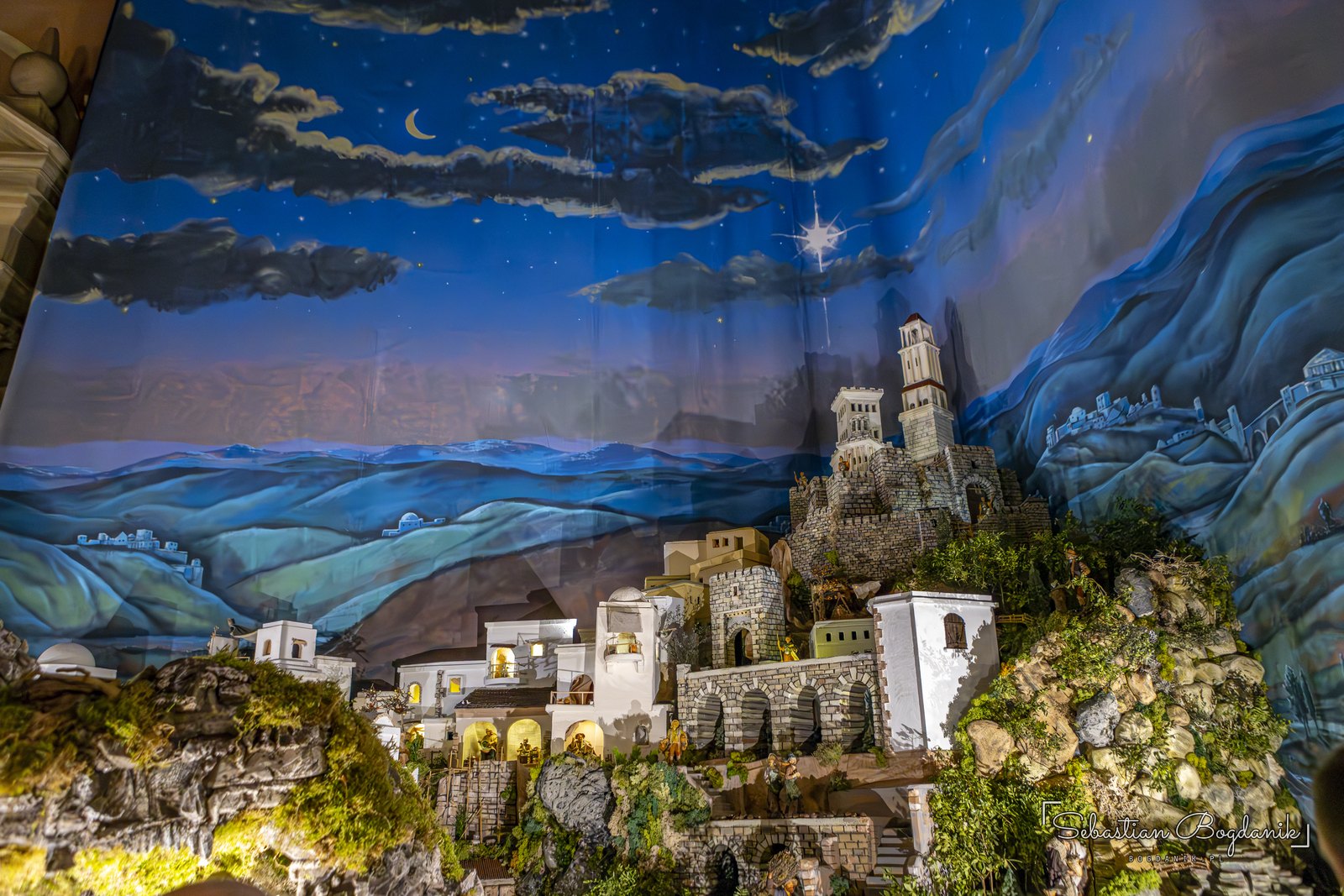
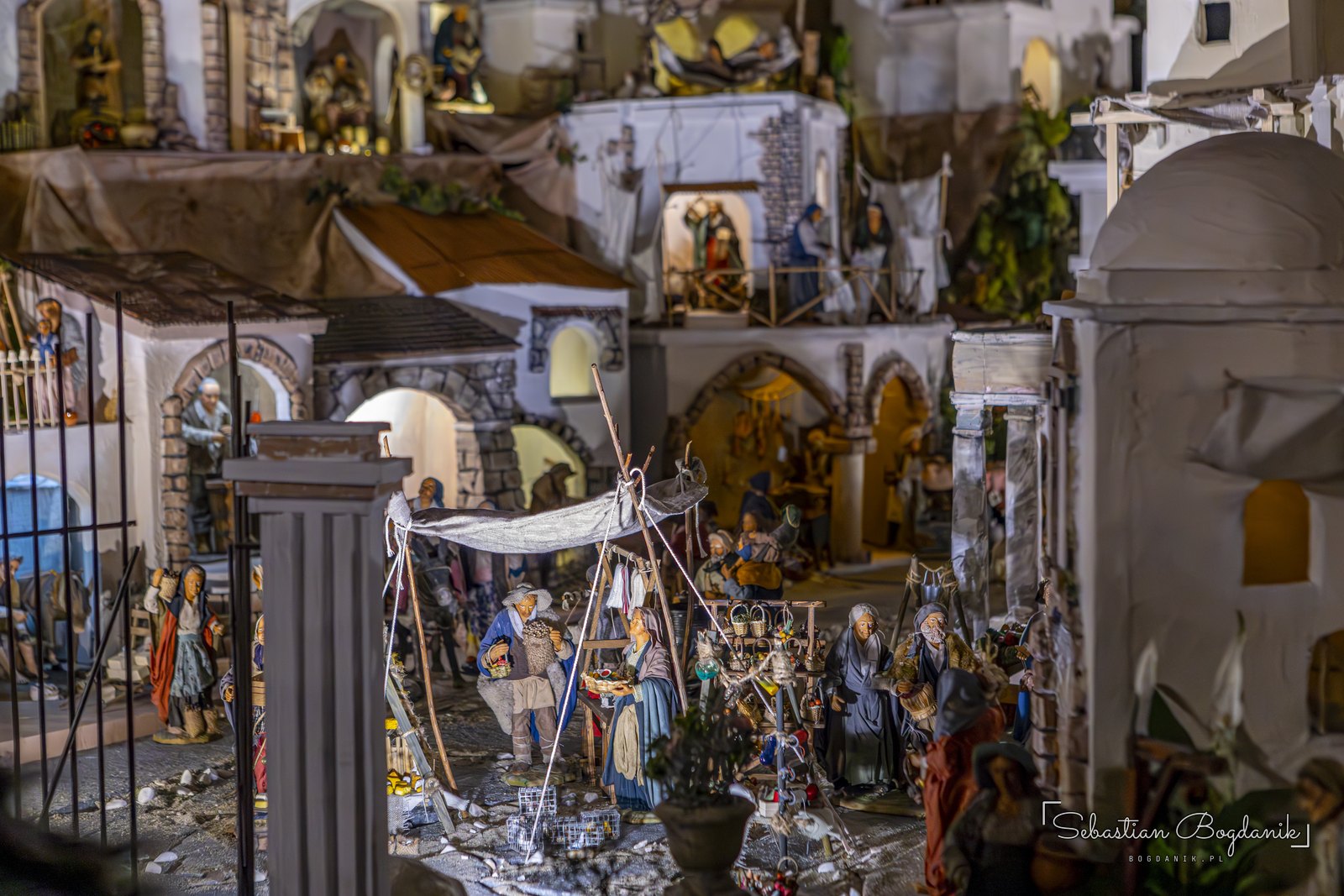
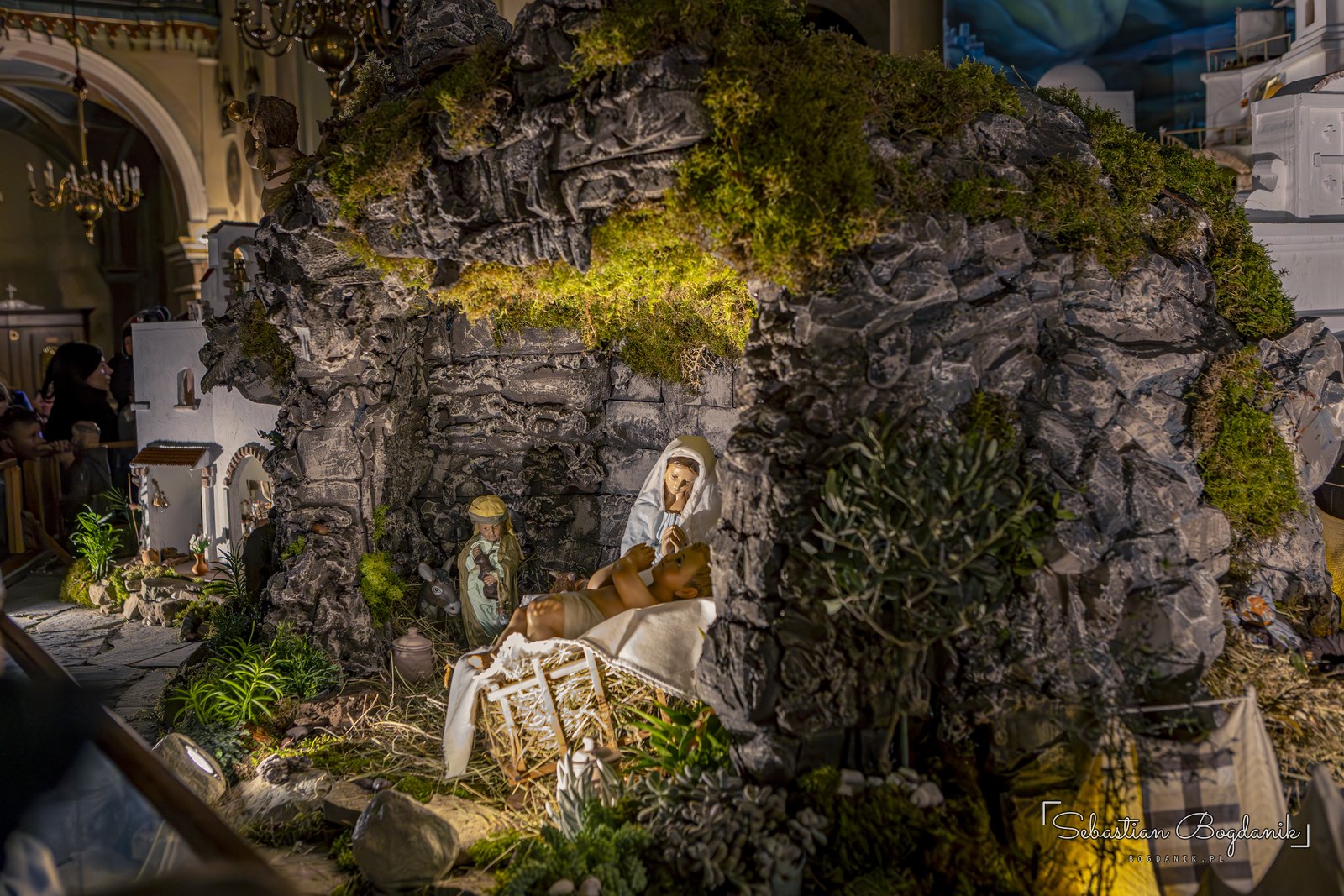
The scale is impressive. The platform covers about 30 square metres, and the backdrop is a painted panorama 11 metres wide and 8 metres high, with a starry sky, the moon and the star over Bethlehem. On the platform stands an entire town with walls, towers and Herod’s palace: white houses on the slopes, stone steps, gardens and little bridges.
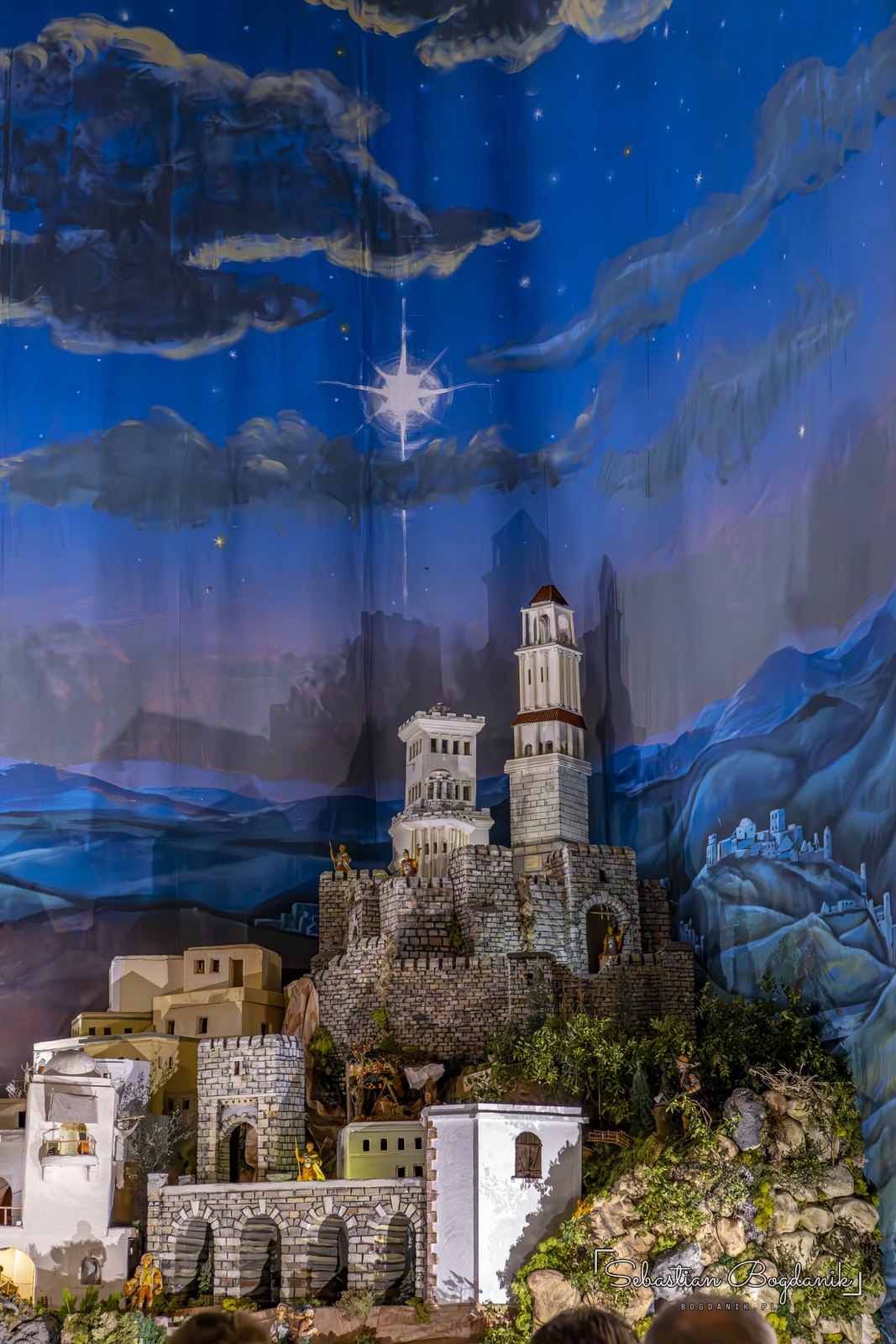
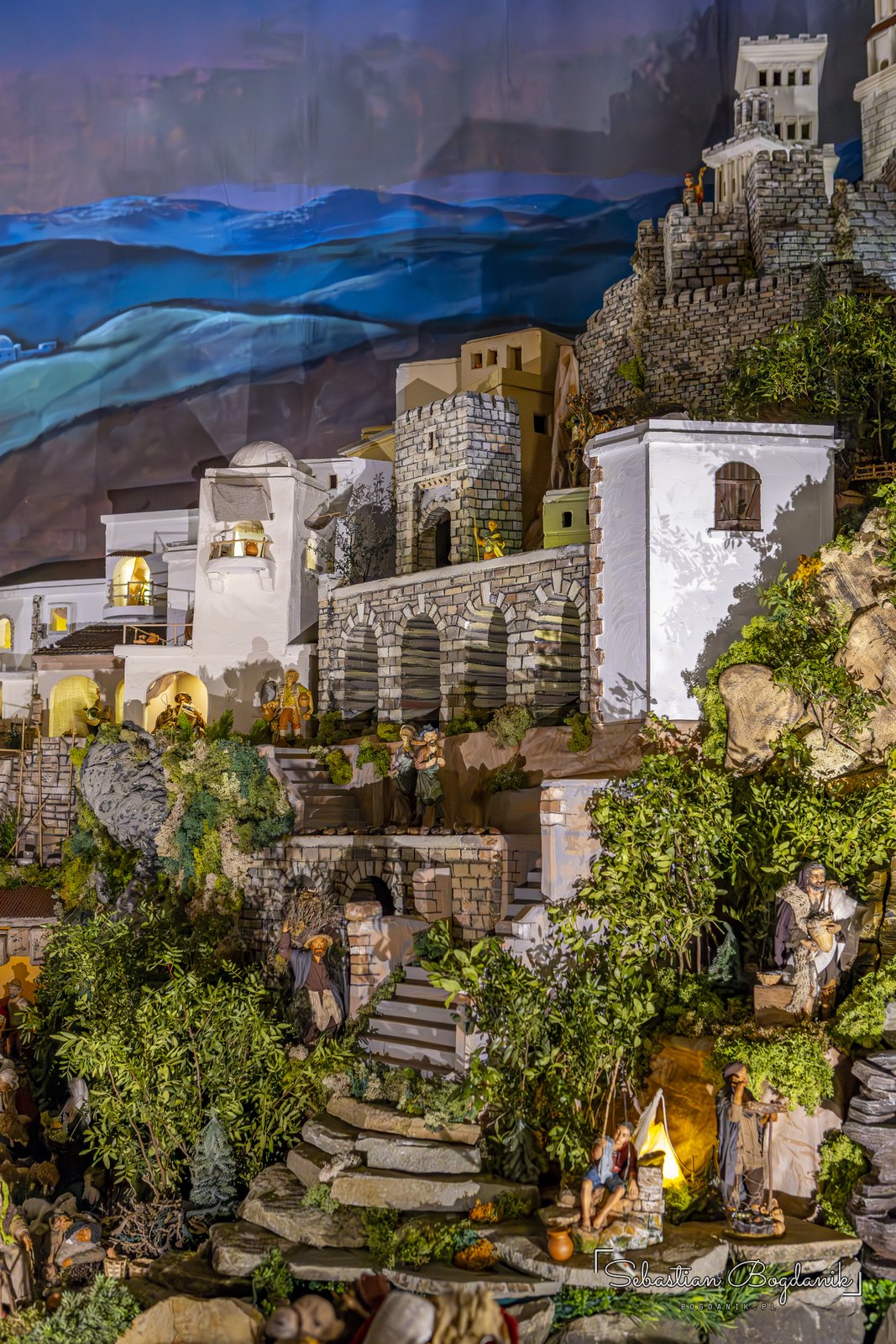
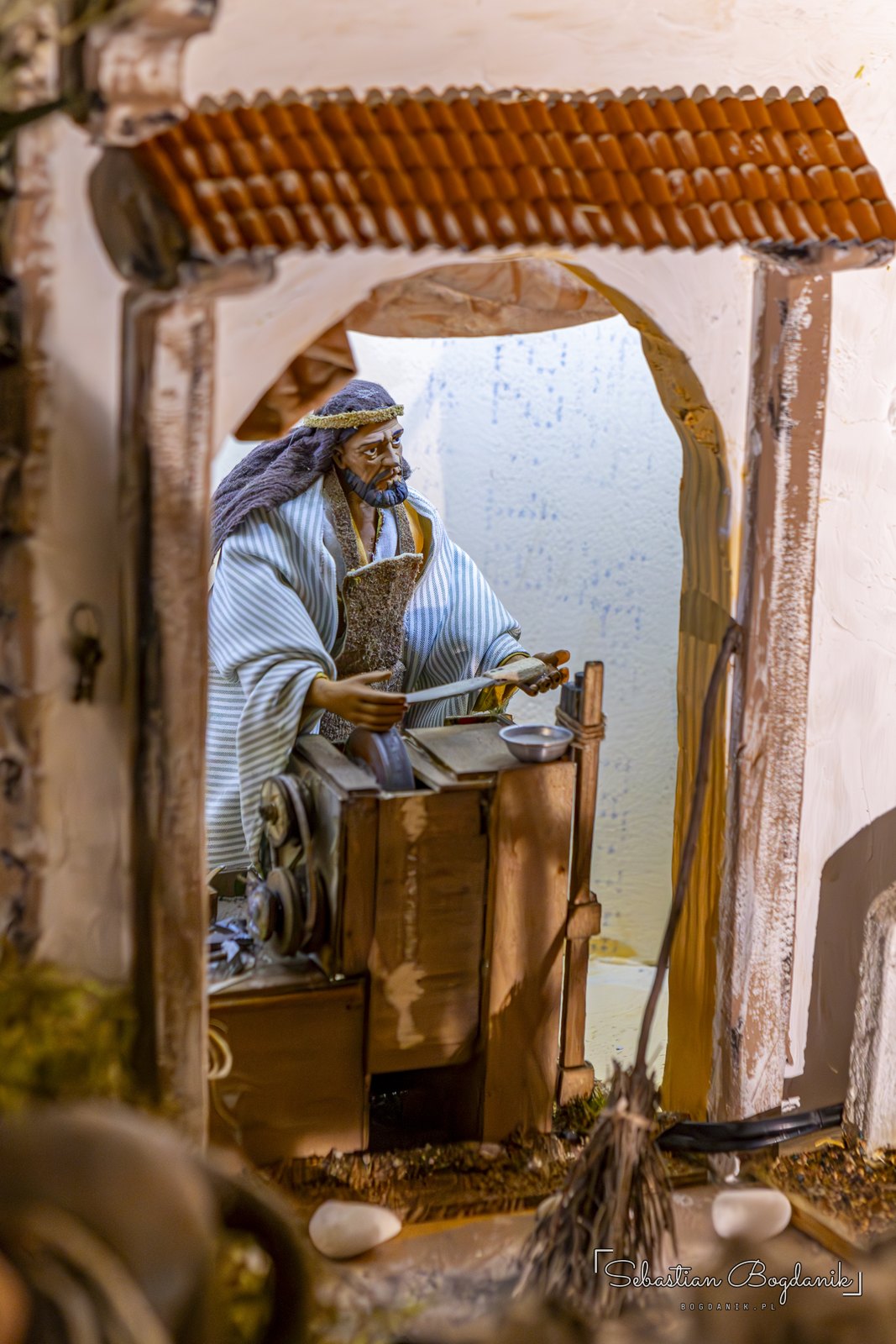
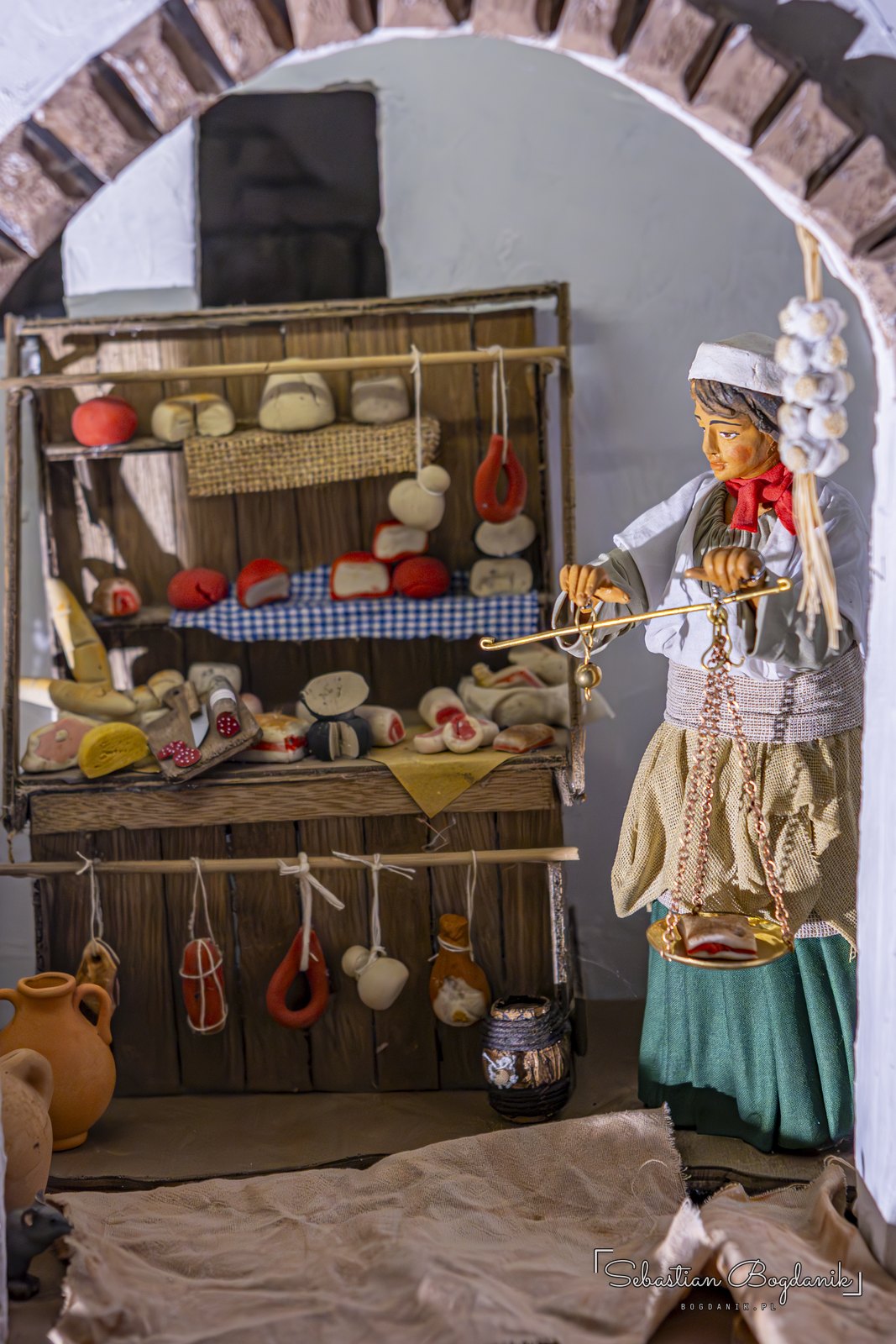
The scene has around 150 figures, brought from Italy, and about 50 of them move: craftsmen work in their workshops, women keep house, and traders stand by stalls of pots and vegetables. You can stand in front of it for a long time and notice something new each time.
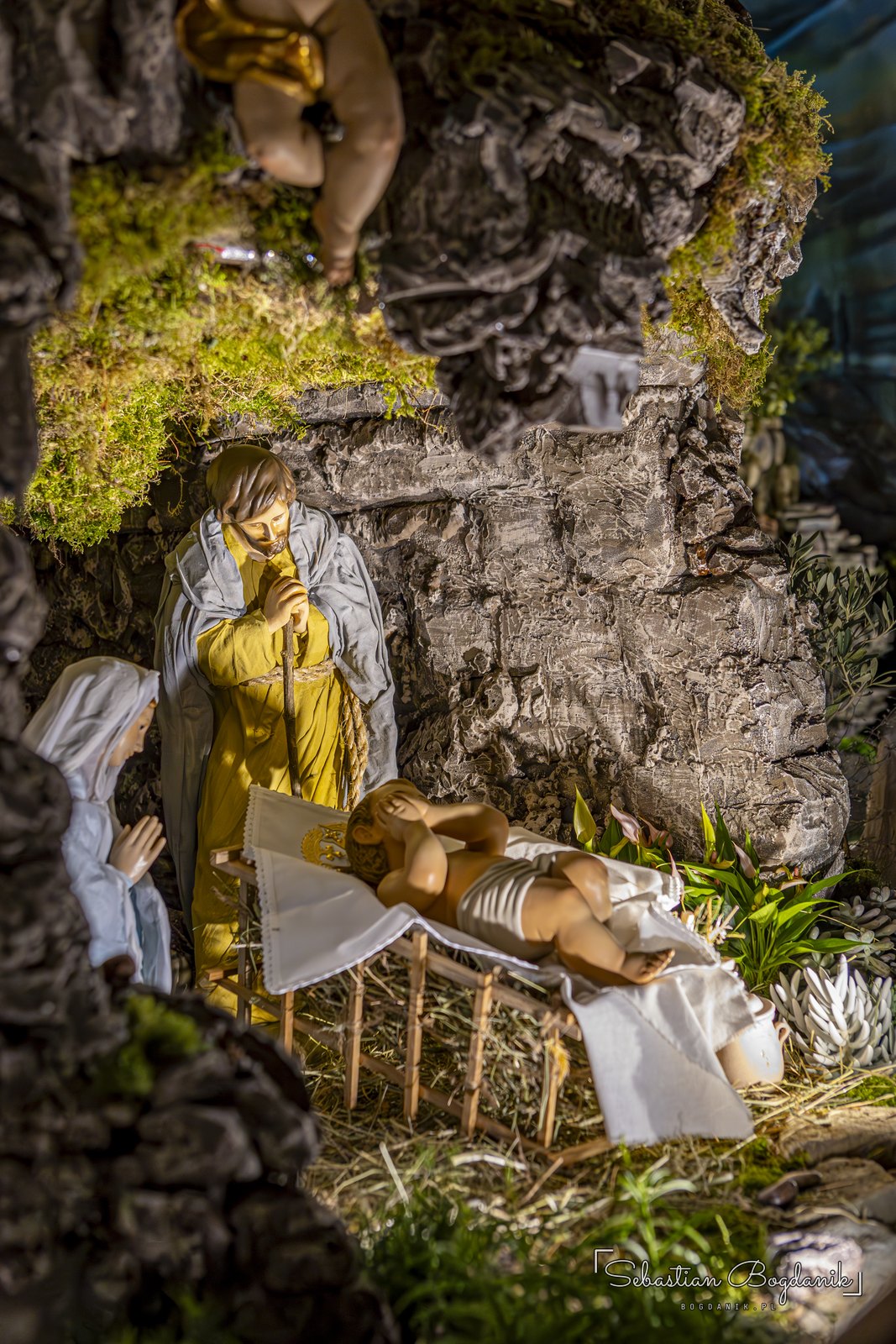
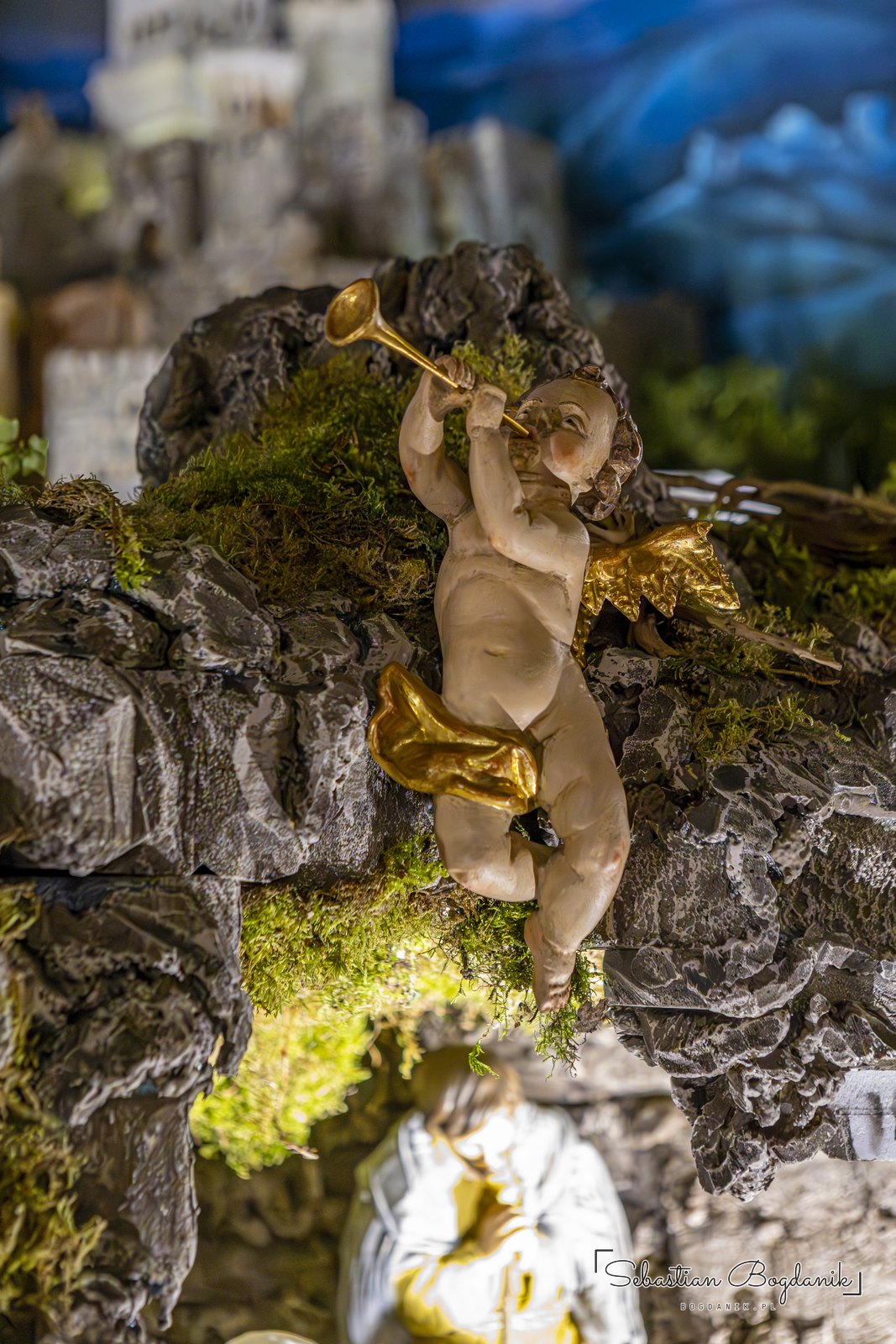
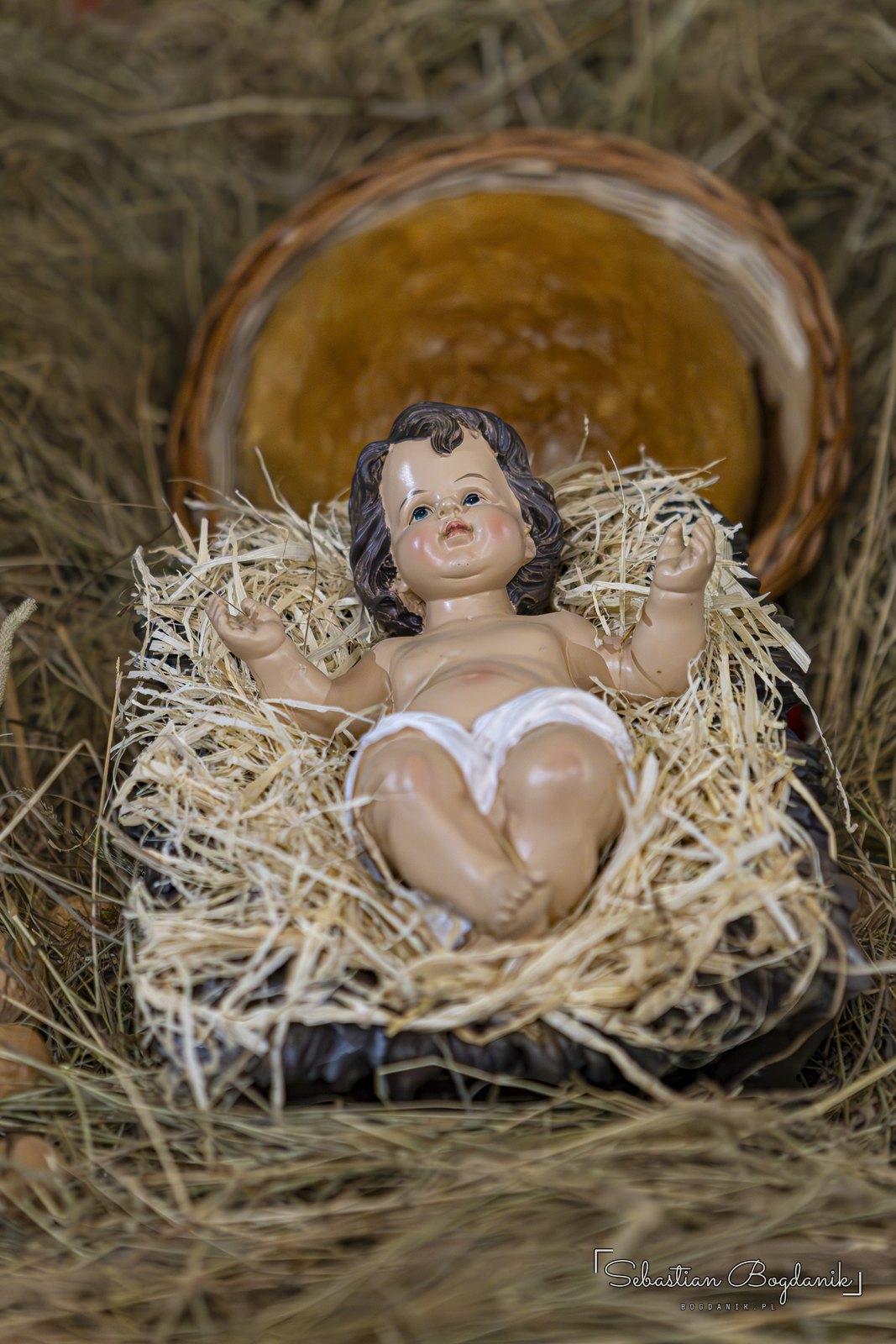
In a rocky grotto, watched over by an angel with a trumpet, lies the Christ Child. The figure only appears on Christmas night: during Midnight Mass, with the lights dimmed, the celebrant solemnly carries it to the scene while a passage from the Roman Martyrology about the time and place of Jesus’s birth is sung.
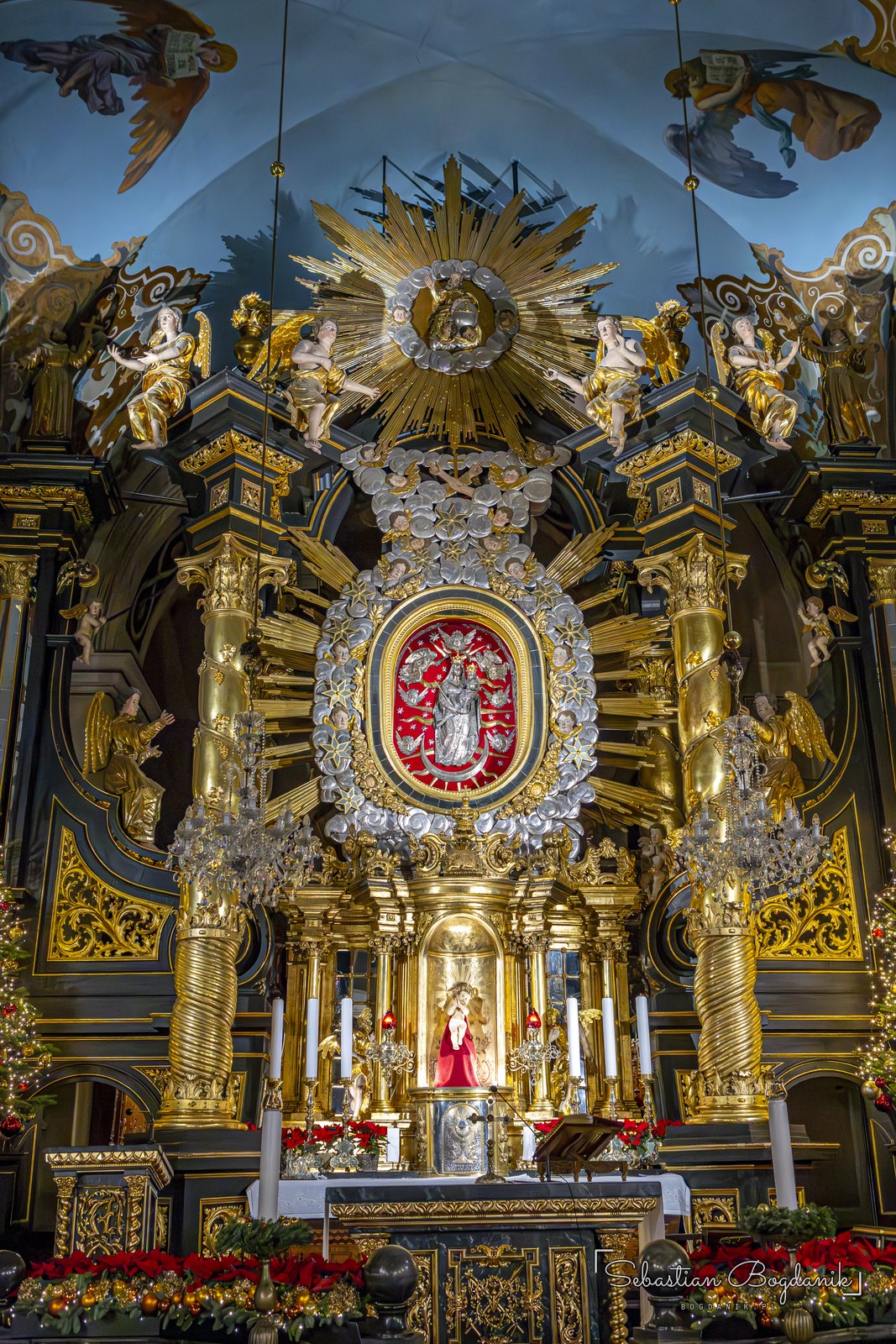
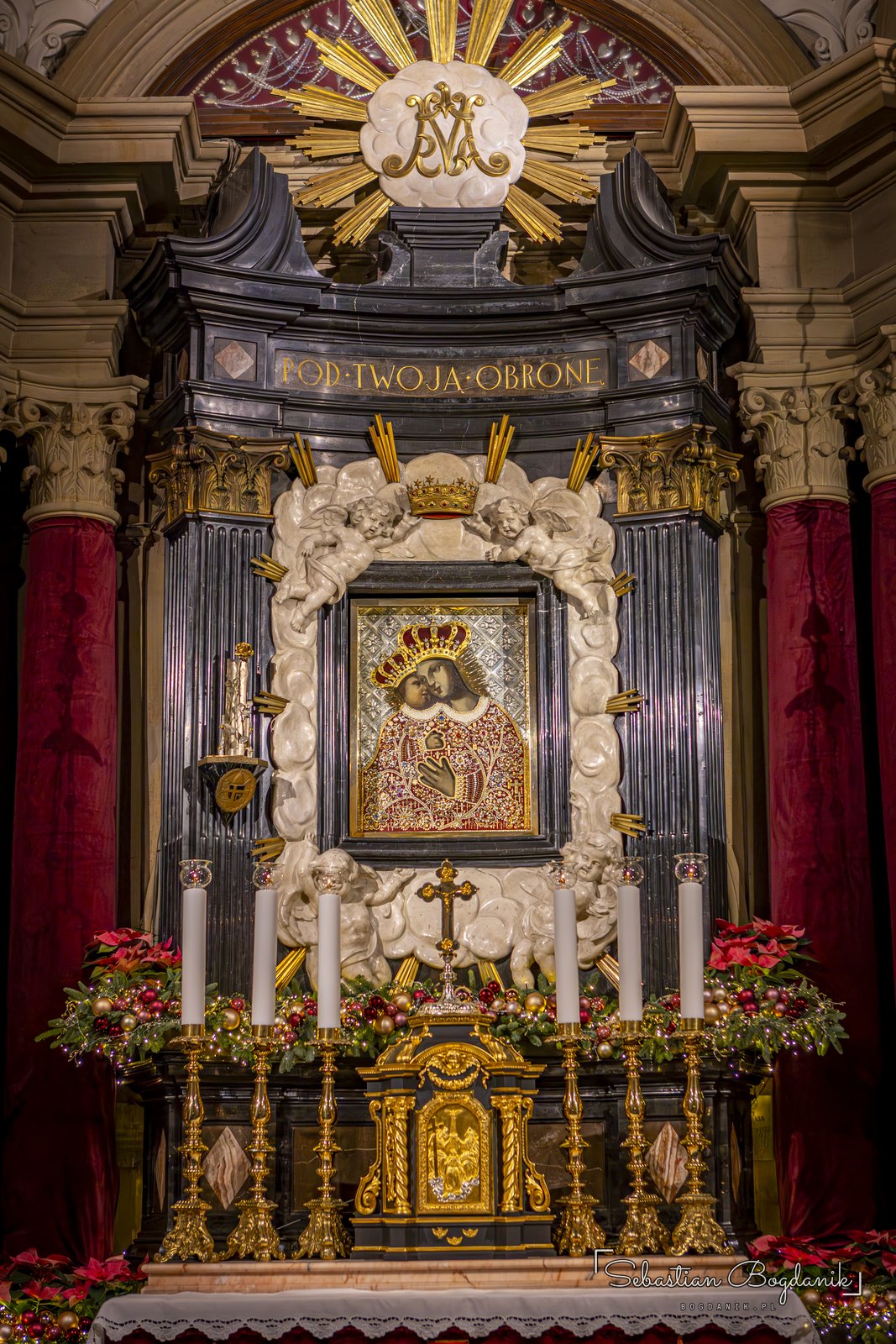
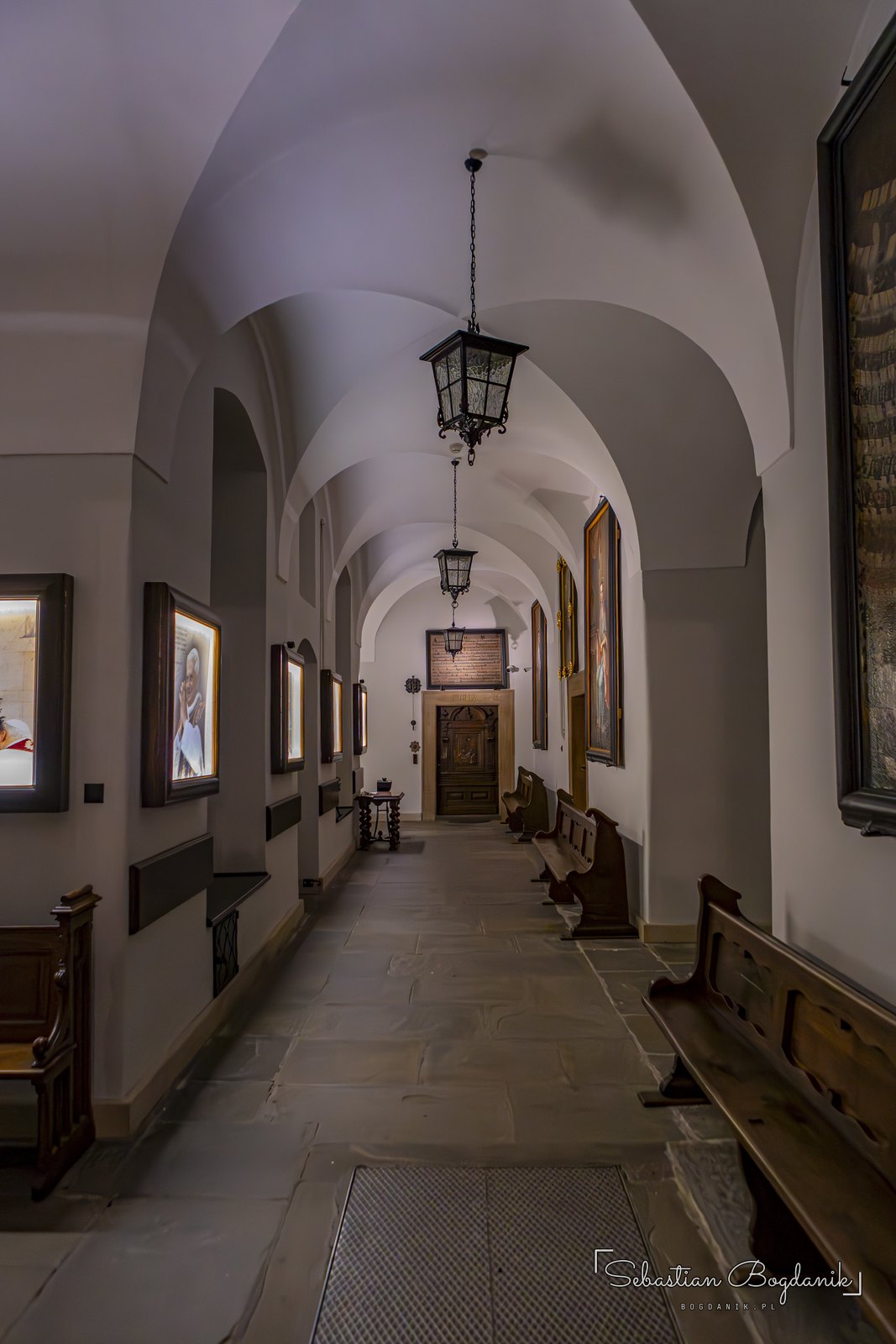
On the evening of 25 December the basilica was full of light. The golden high altar and the altar with the miraculous image of Our Lady of Kalwaria, where pilgrims have prayed for centuries, glowed with candles and red poinsettias. Old paintings hang in the monastery corridors.
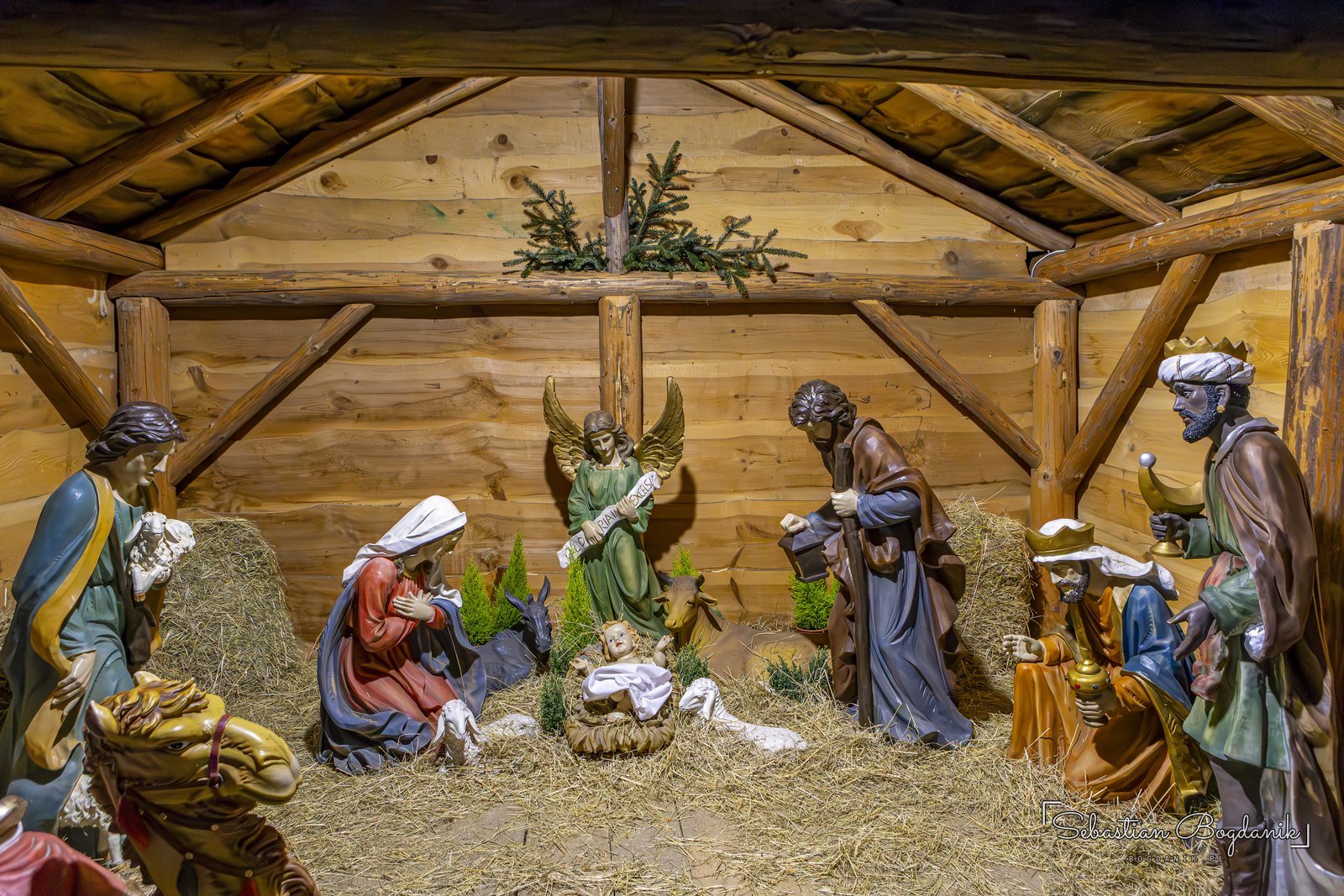
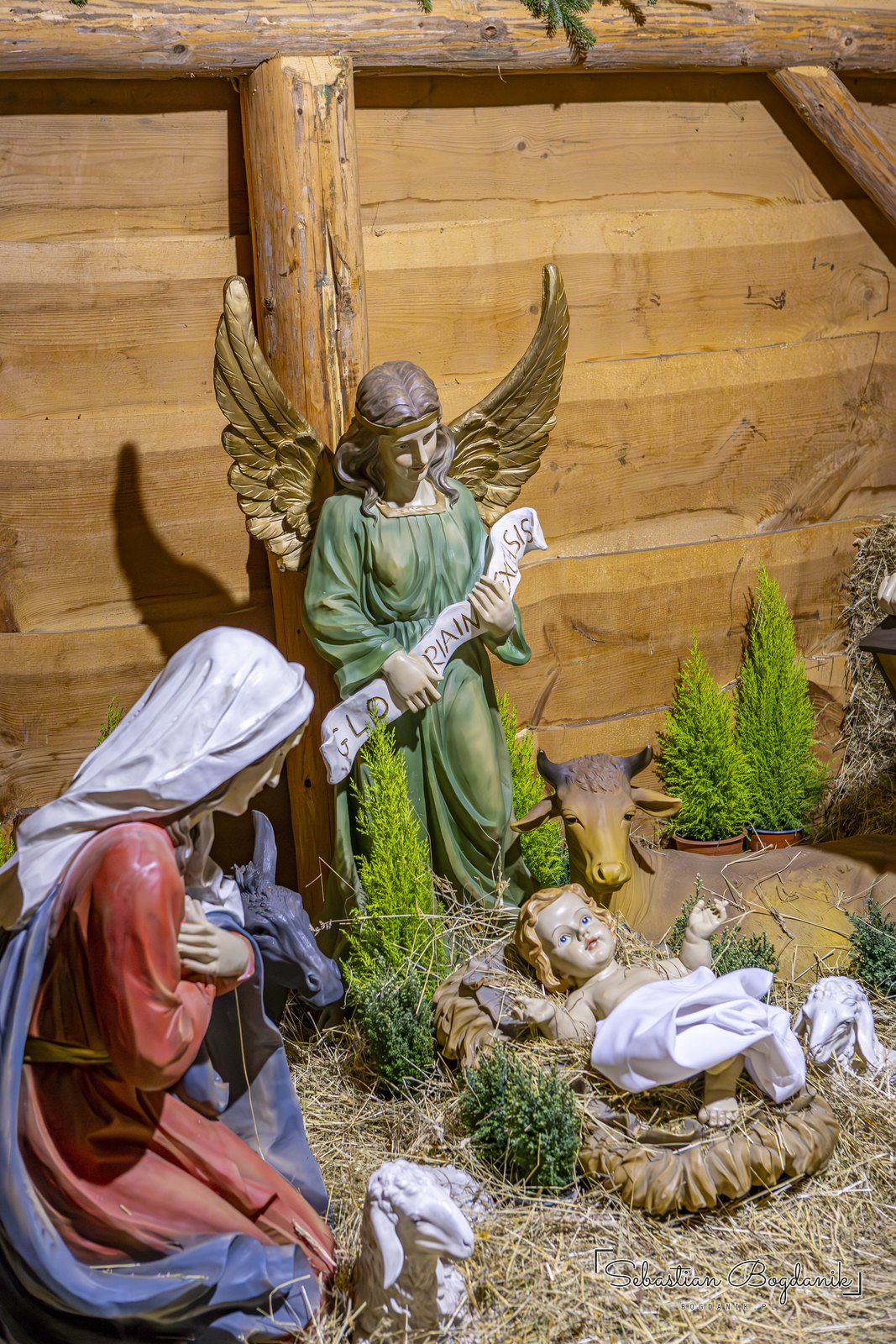
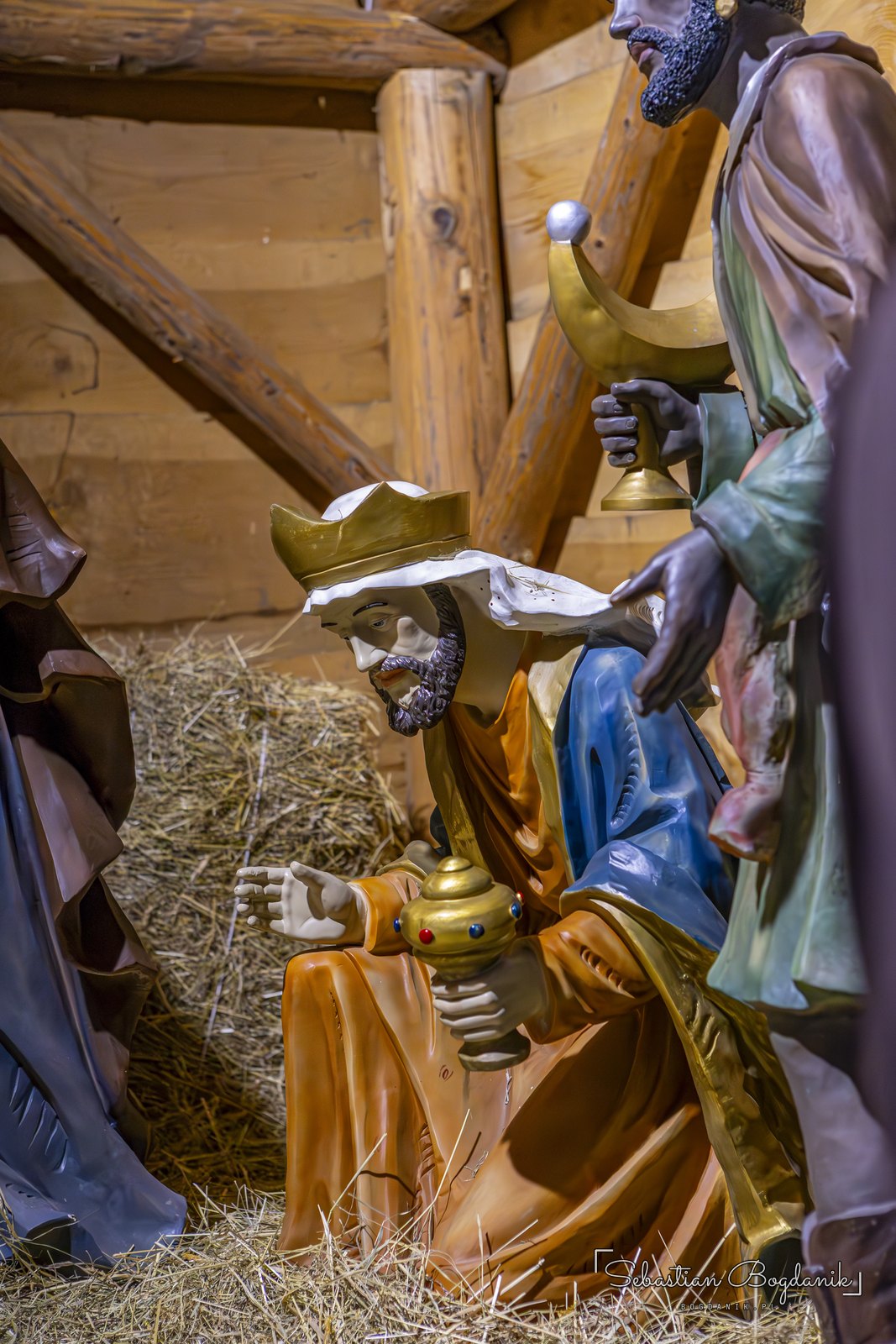
Outside the basilica the friars built a second nativity scene: a wooden stable with large painted figures of the Holy Family, angels, shepherds and the Three Kings. After dark it was lit with warm light.
Stryszawa: a stable full of angels
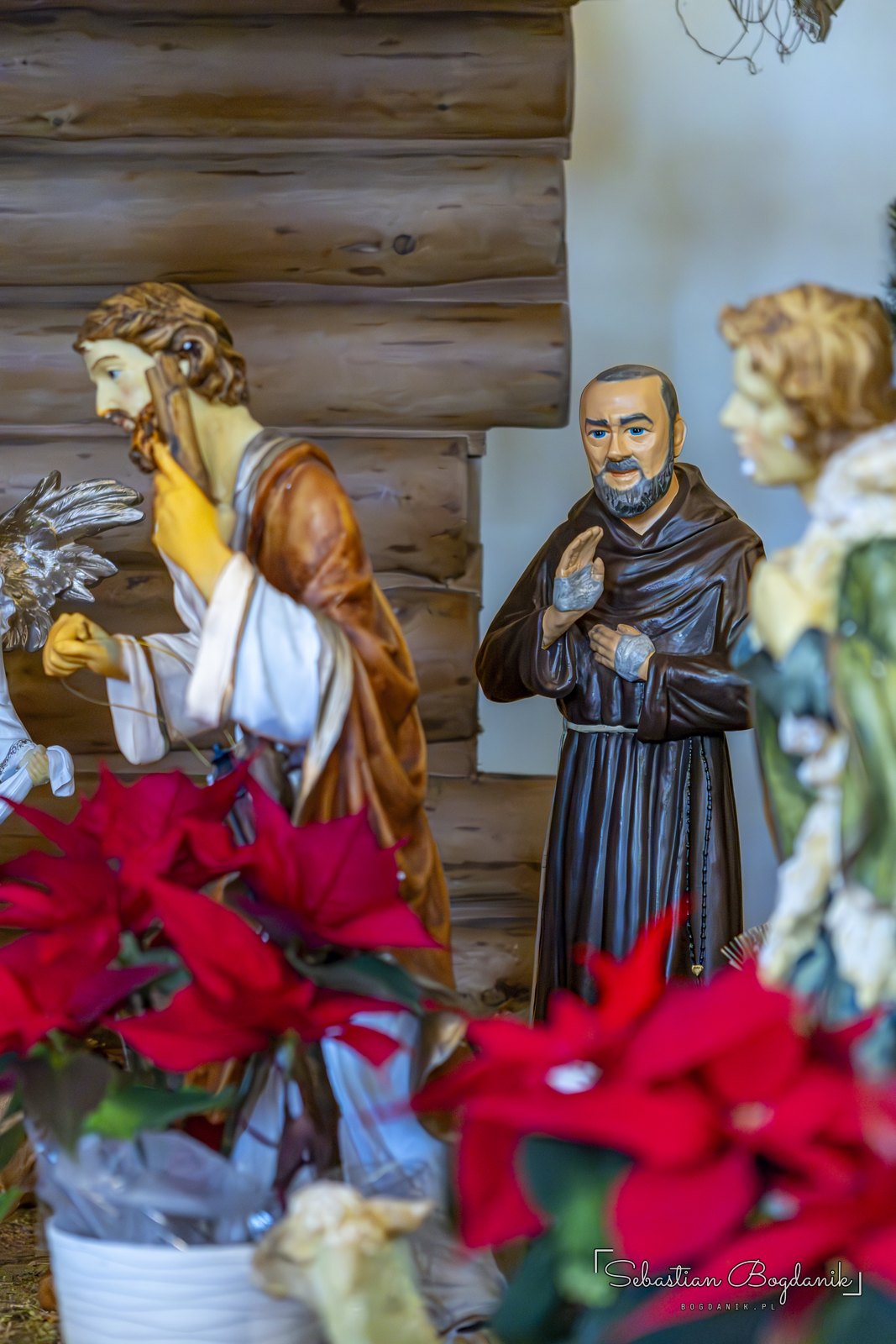
The next day, on St Stephen’s Day, I stopped at St Stanislaus Church in Stryszawa. Here the nativity scene stands in a wooden stable surrounded by Christmas trees and red poinsettias. Beside the Holy Family stand St Francis and Padre Pio.
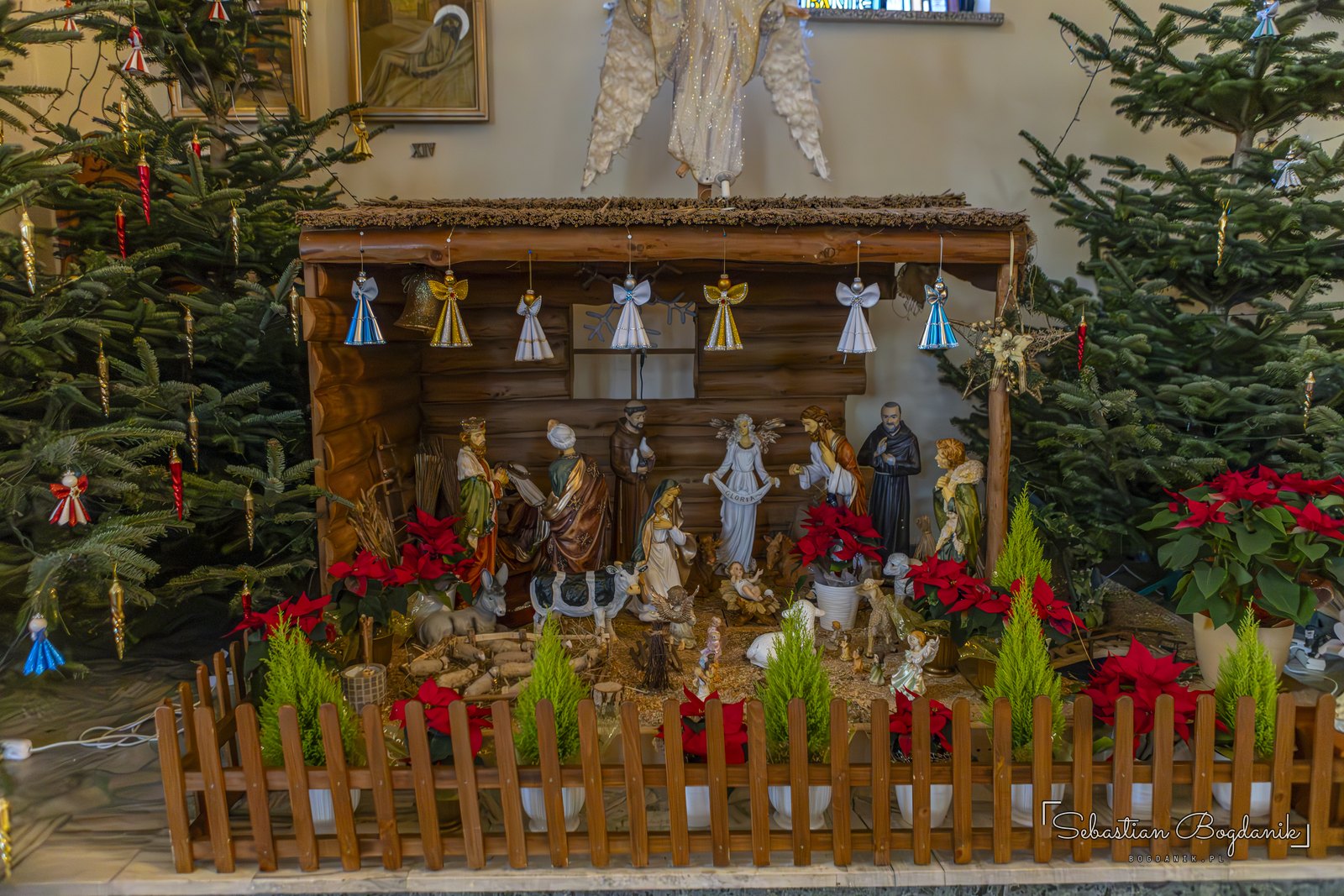
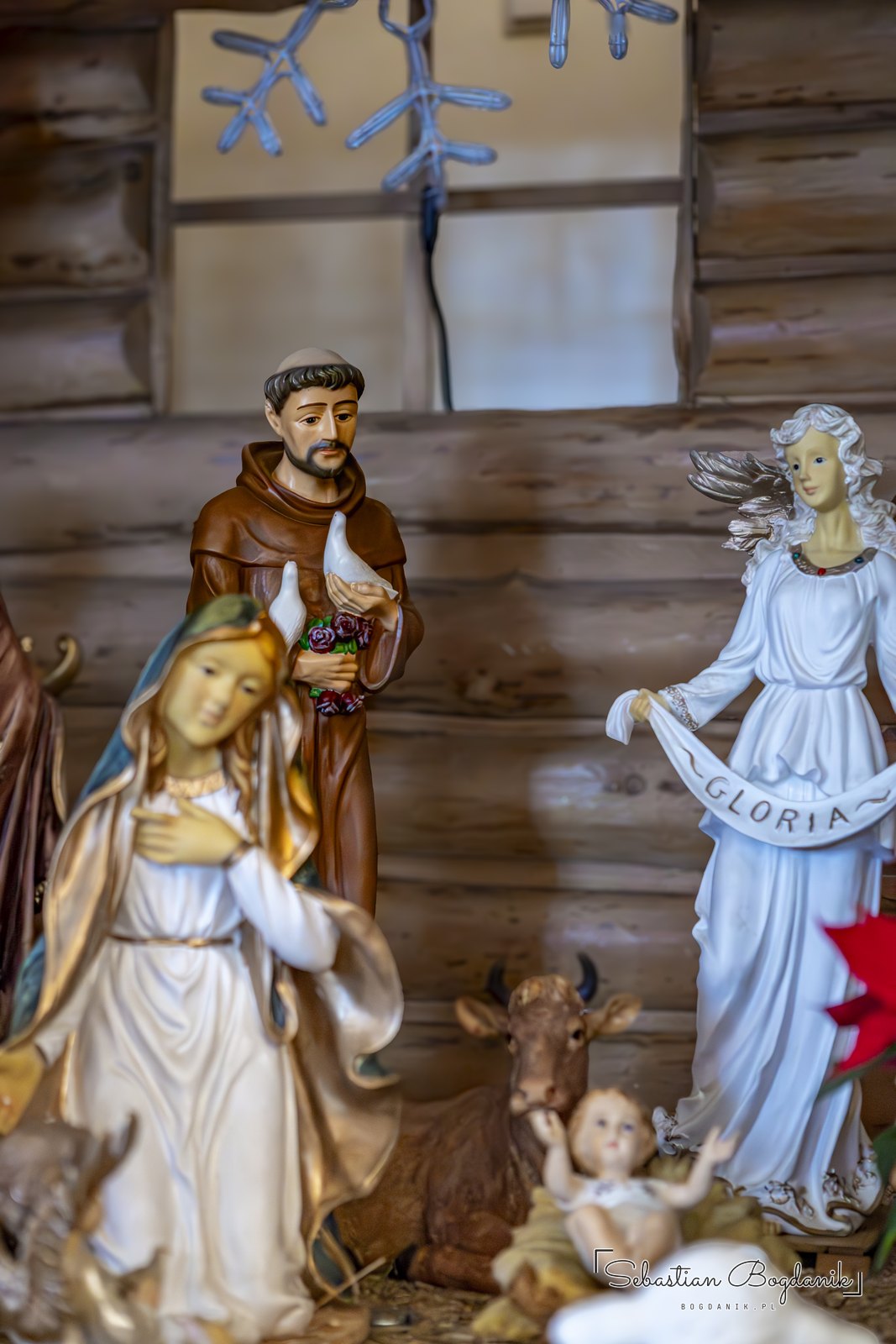
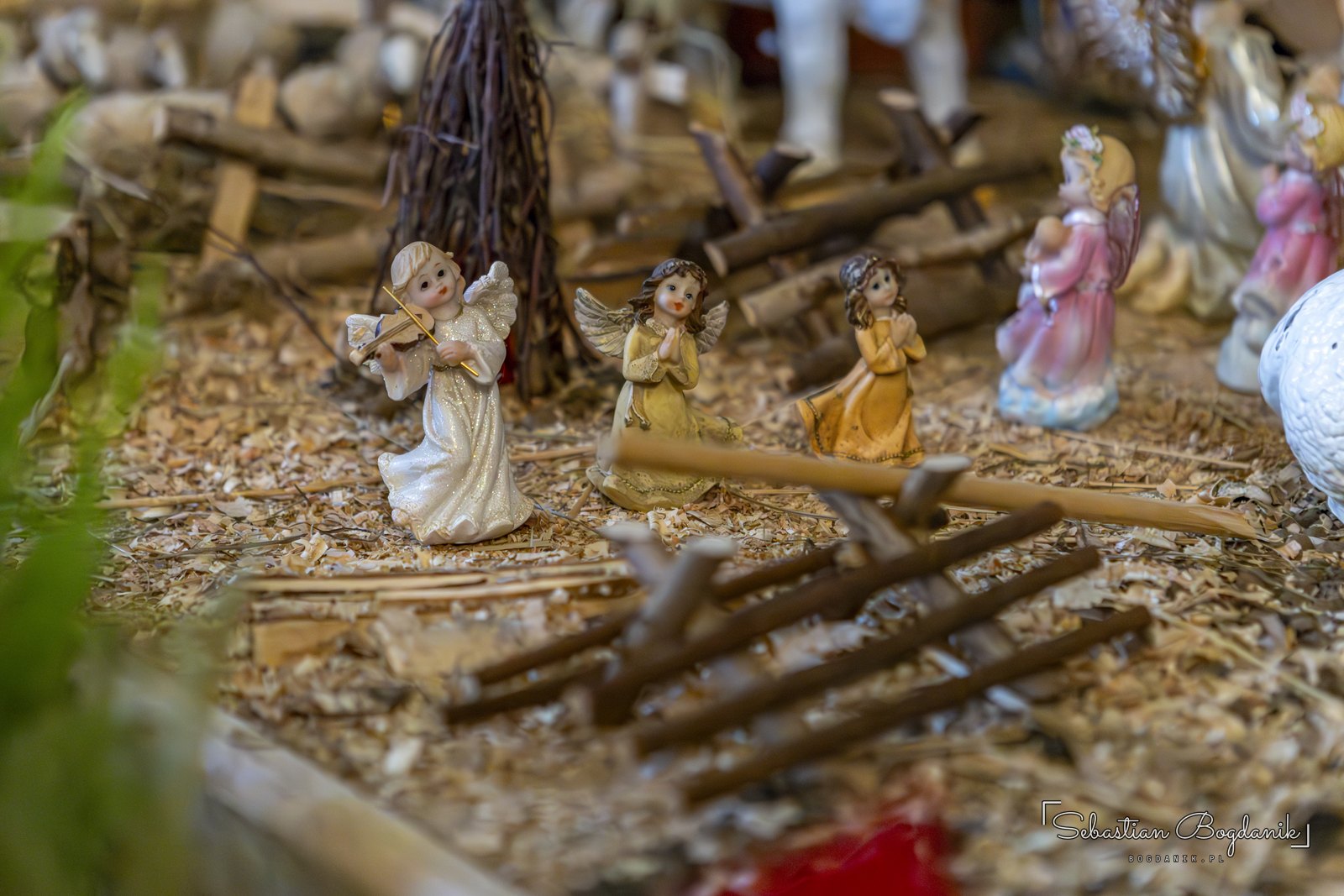
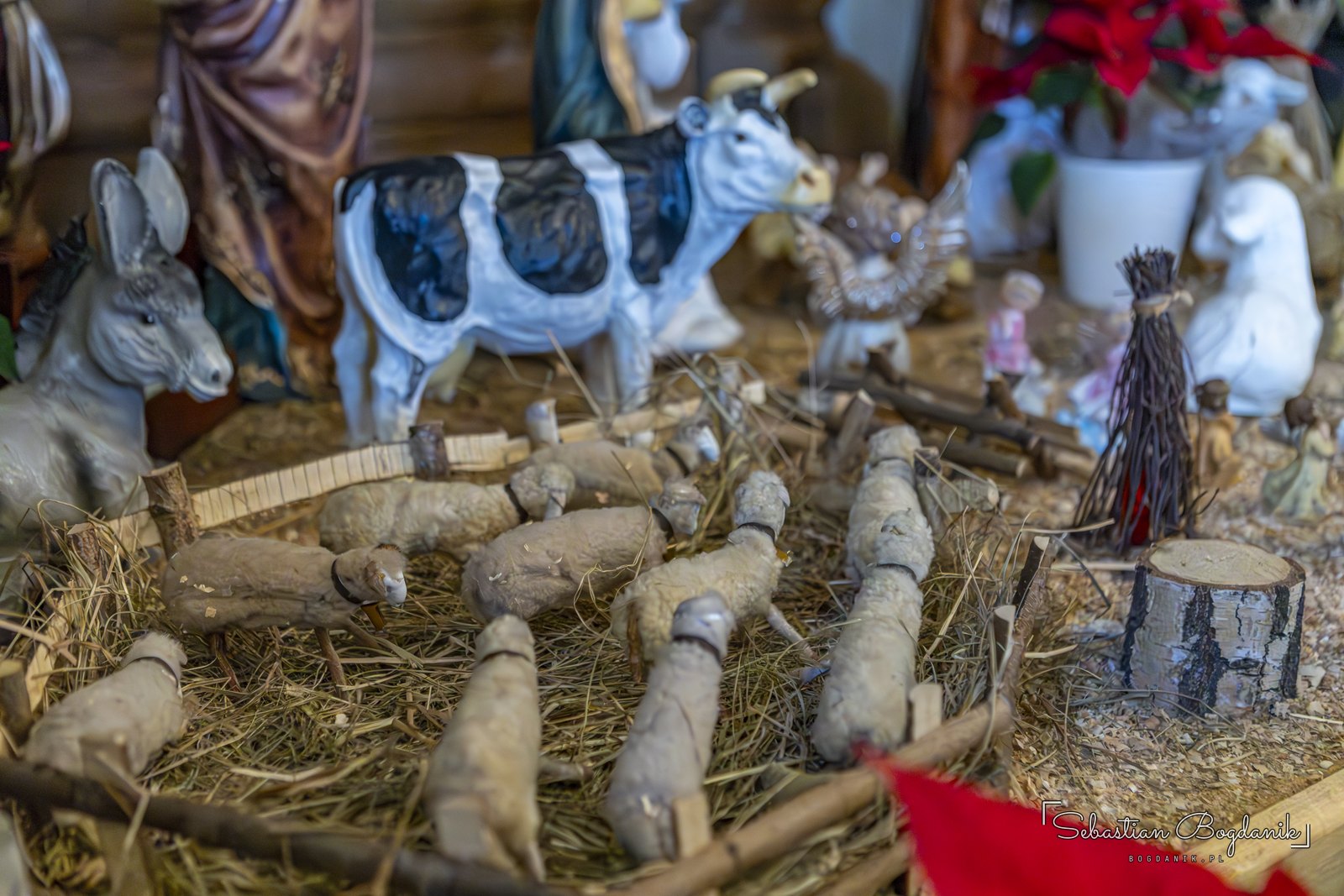
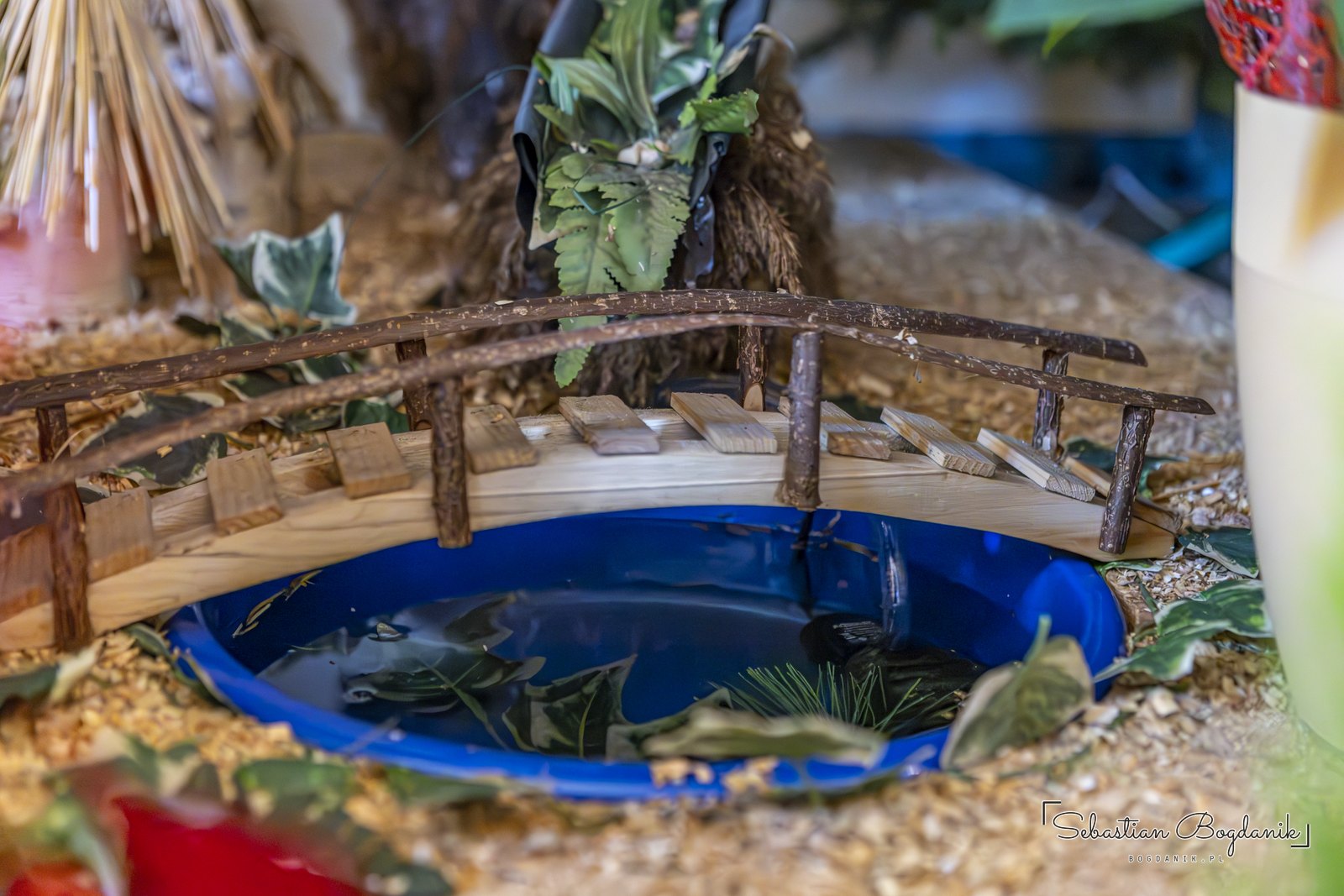
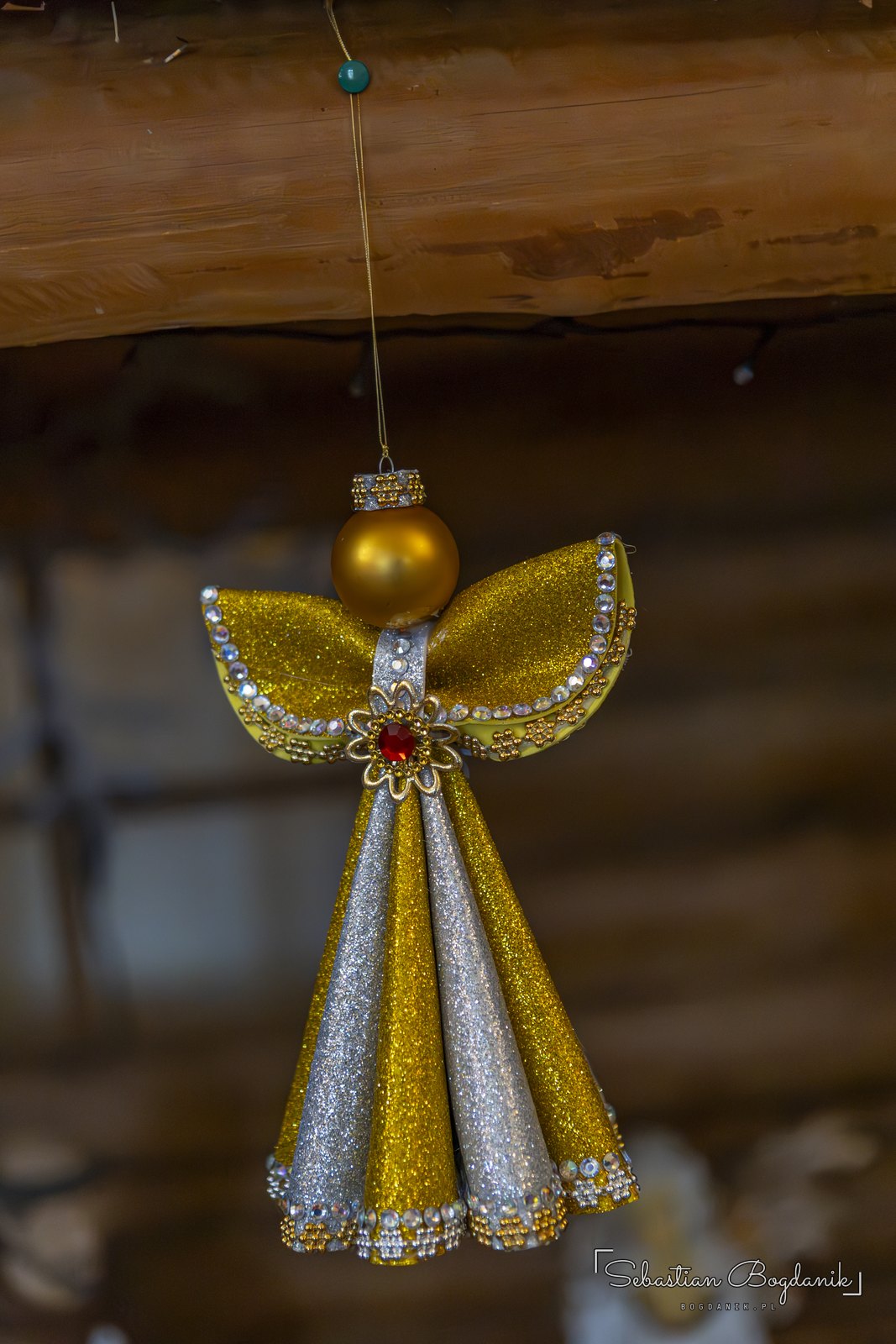
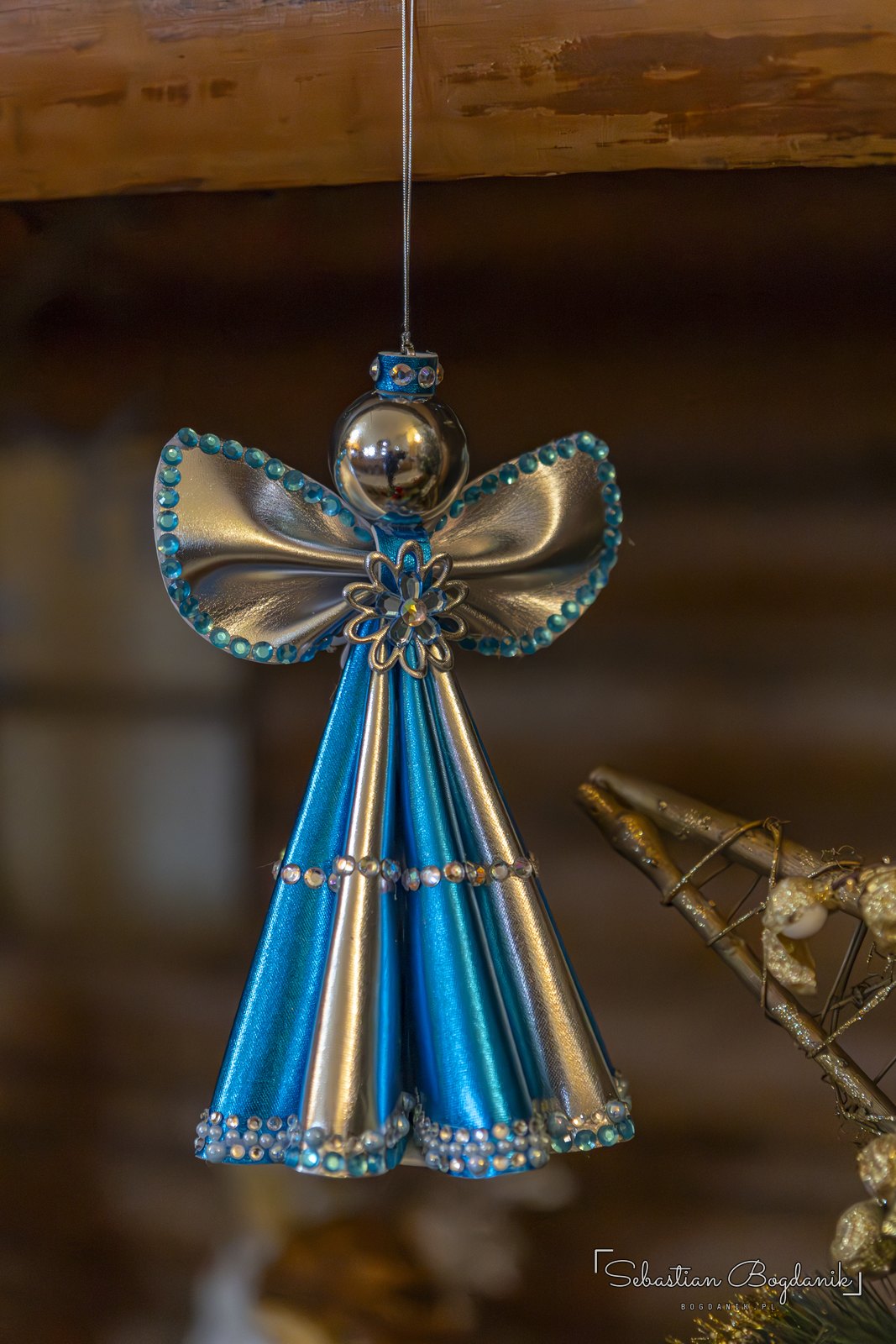
Above all, there are angels: little figures on the hay and, under the stable roof, angels made of ribbon in gold, silver and blue. There is also an ox and a donkey, and a tiny bridge over a pond.
Bieńkówka: two scenes, one of wood and one like an old farmhouse room
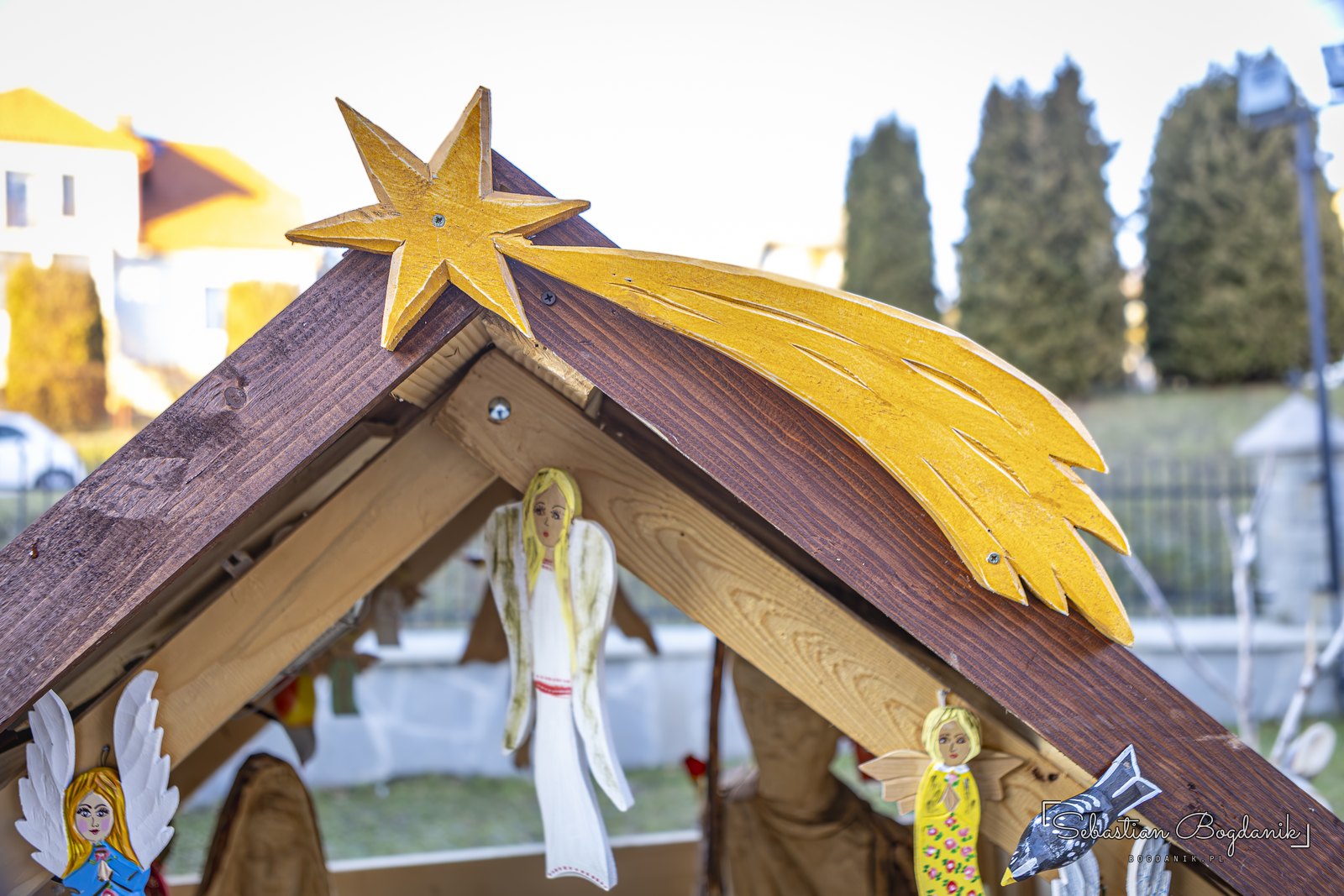
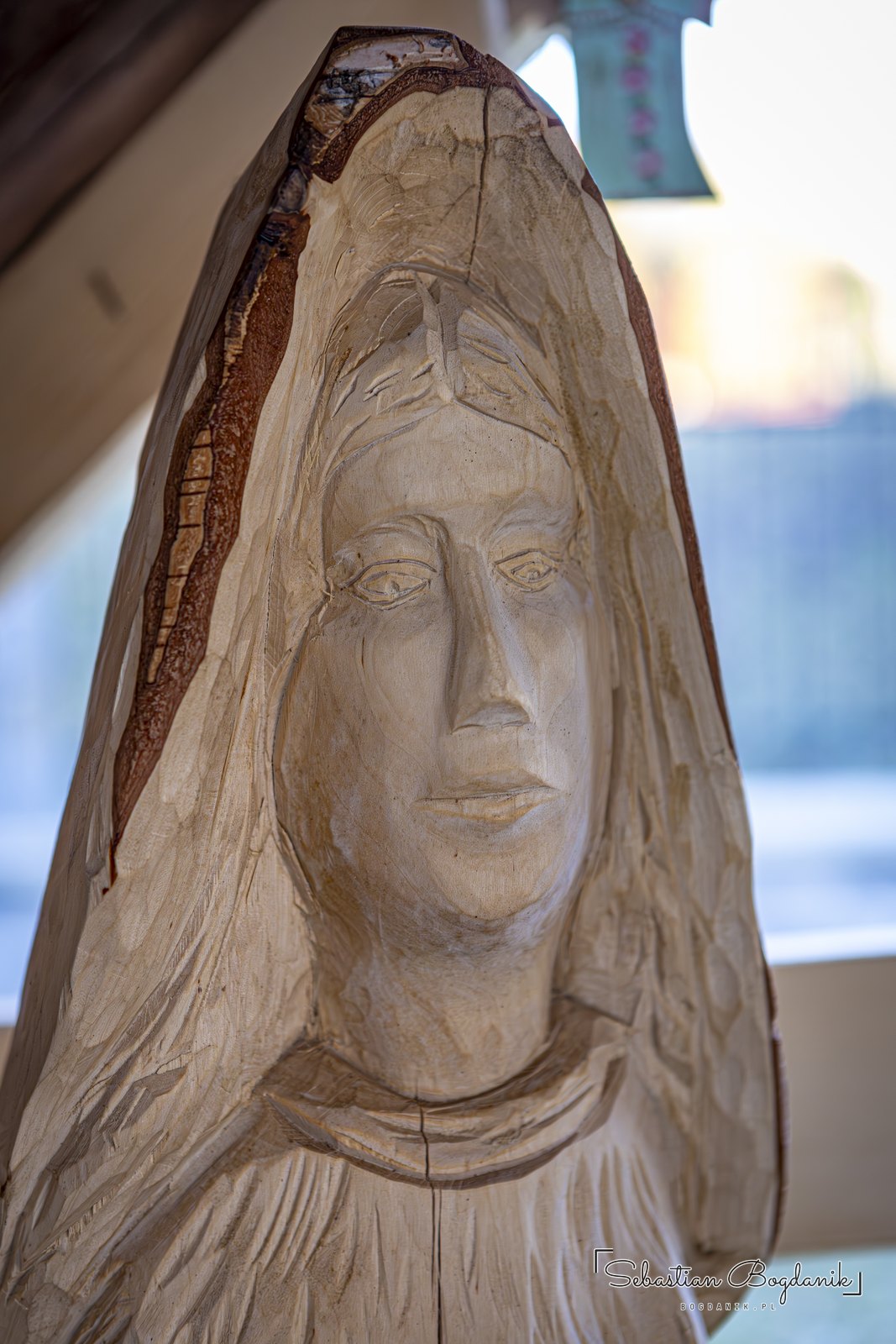
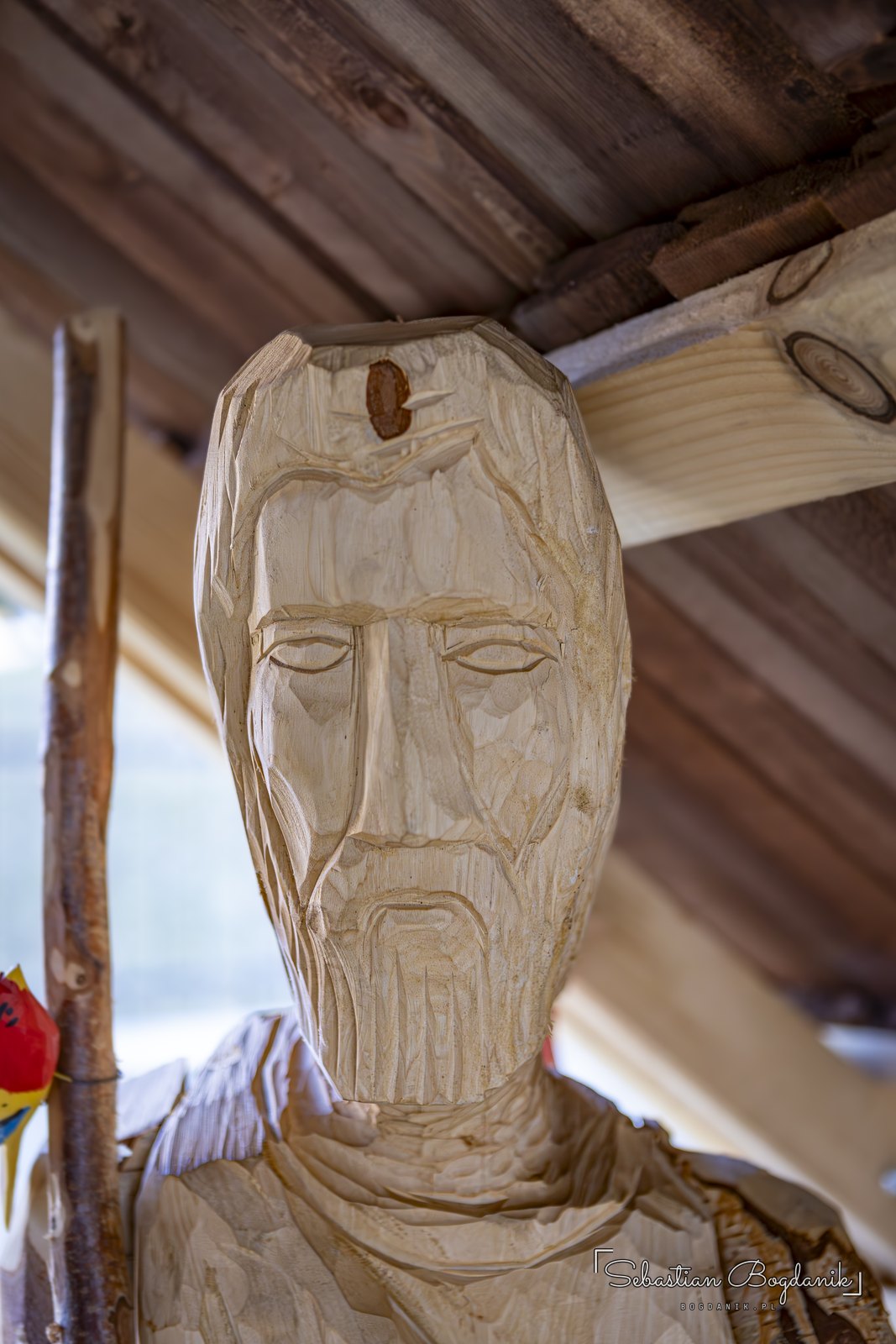
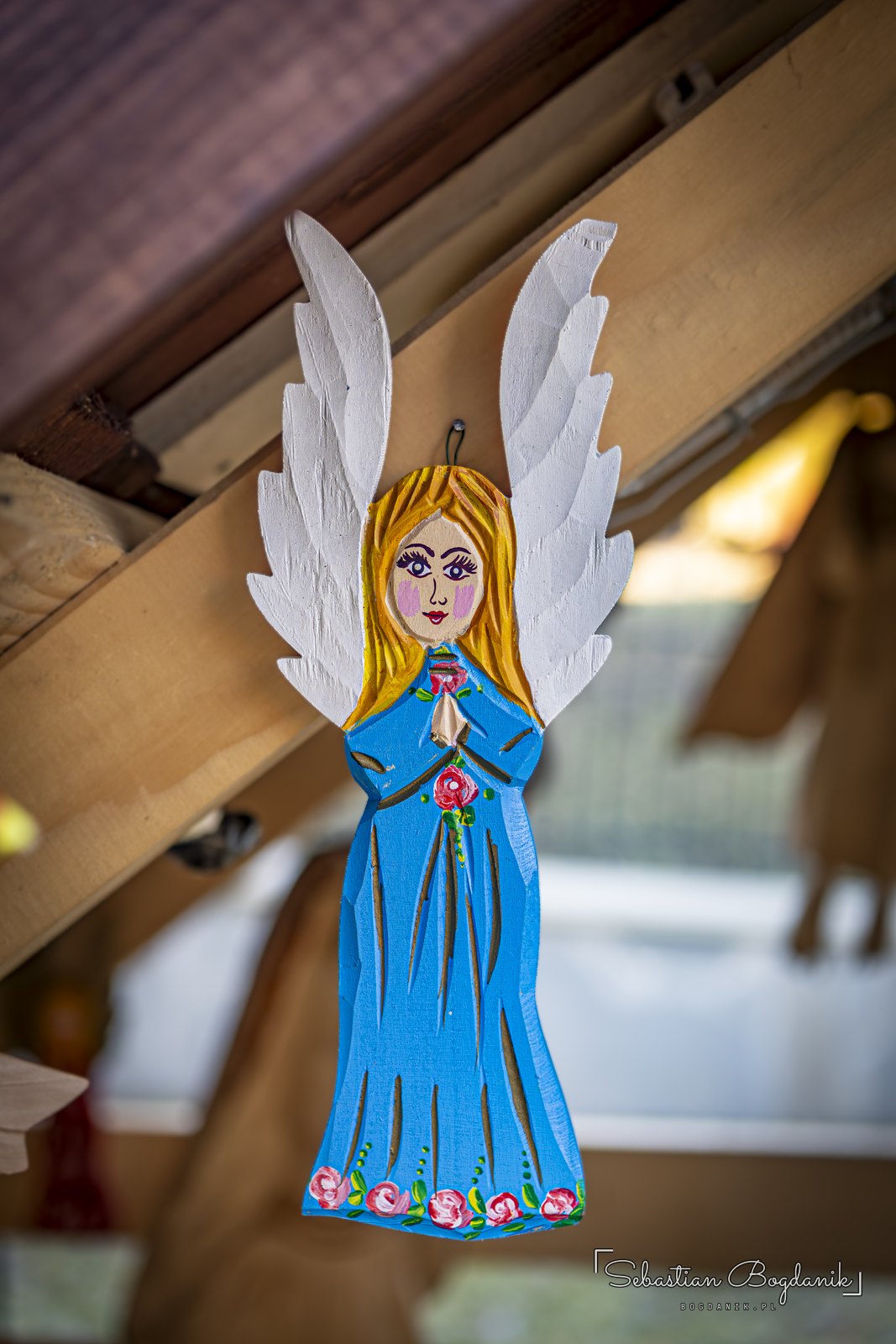
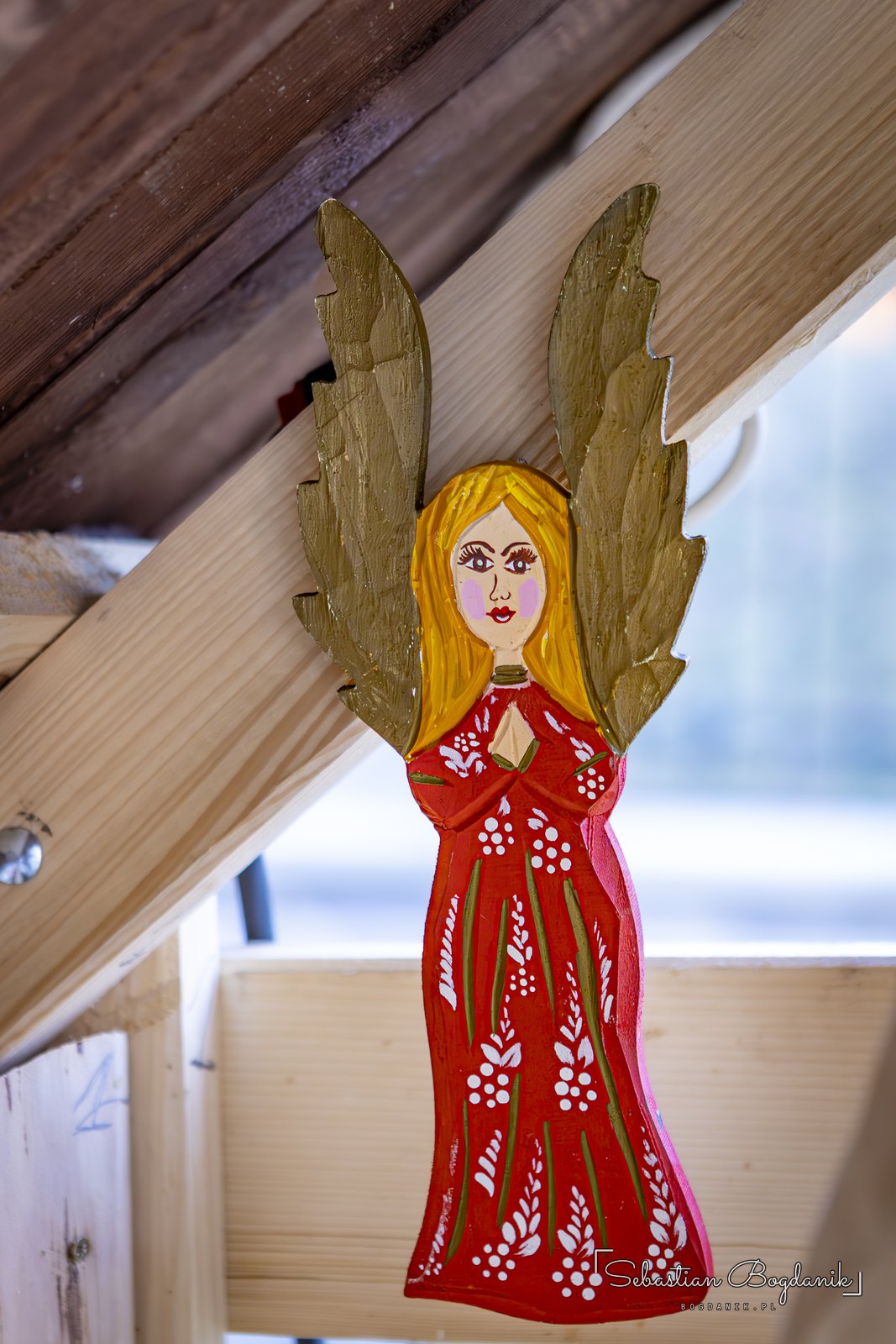
On the last Sunday of the year, 29 December, I went to Bieńkówka. Outside the Church of the Holy Trinity stands a nativity scene of natural wood. A golden star shines above the roof, and inside are Mary and Joseph carved from wood. Under the roof hang painted angels with flowery patterns.
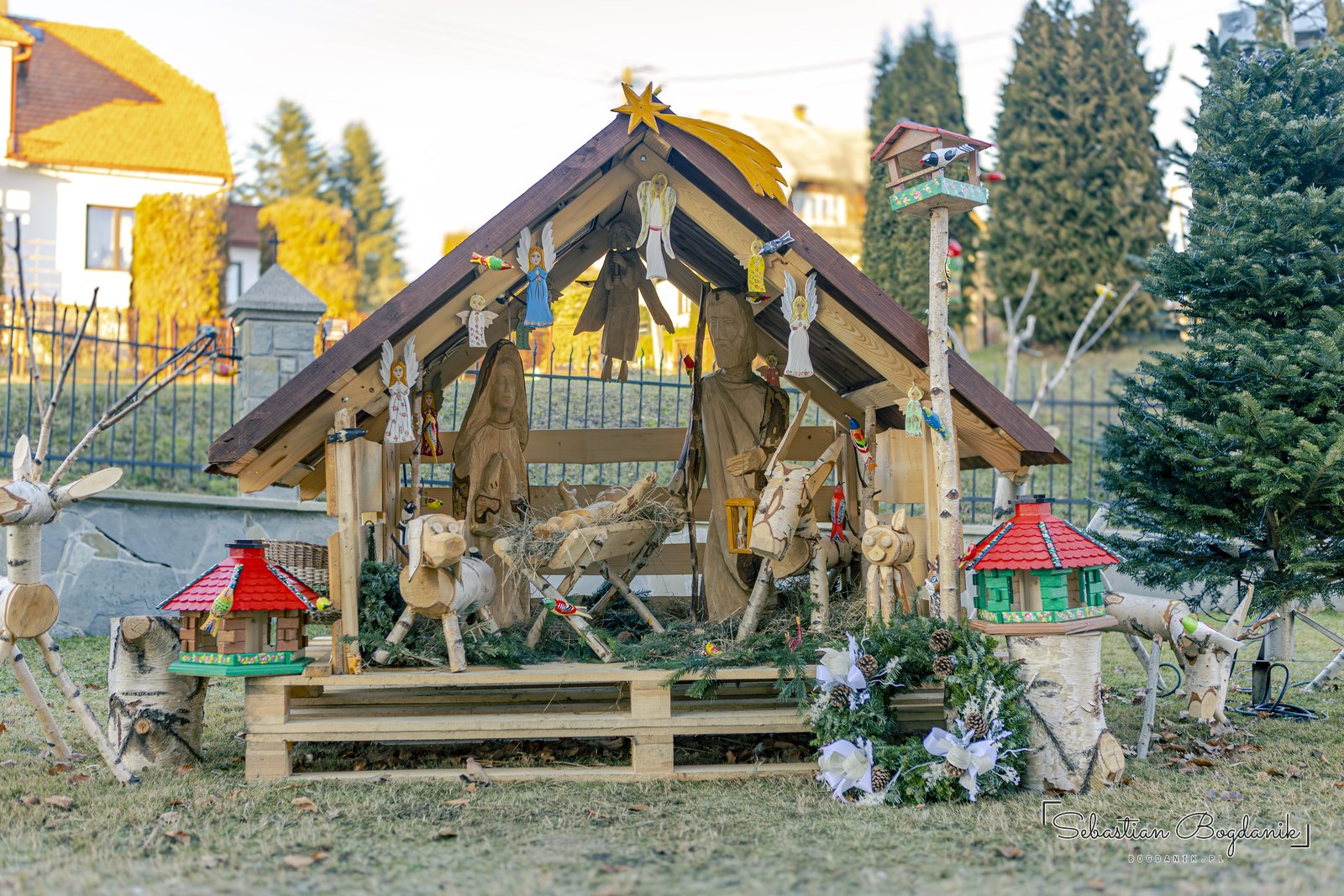
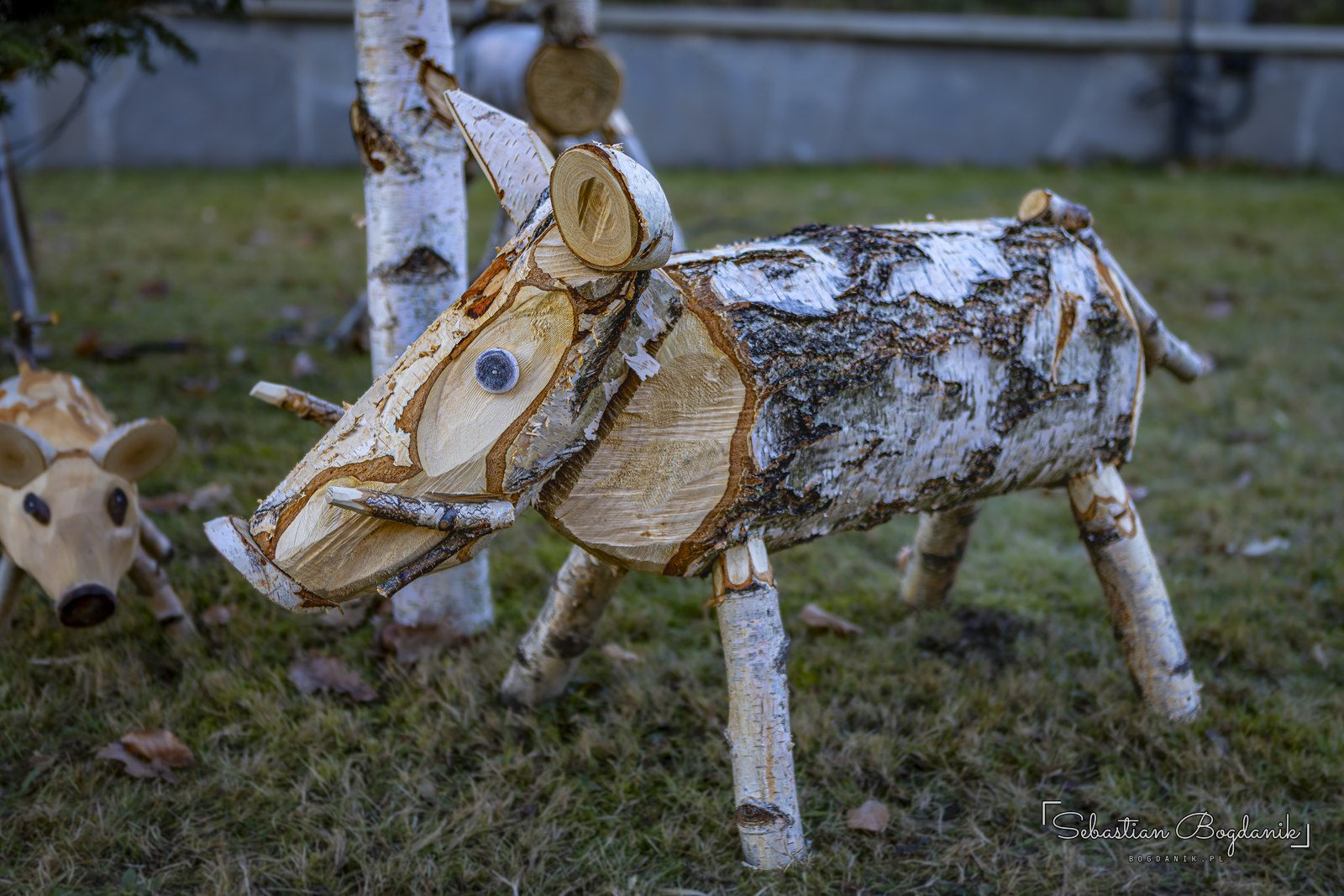
Around the stable graze animals made of birch branches and logs: deer, boars and other creatures.
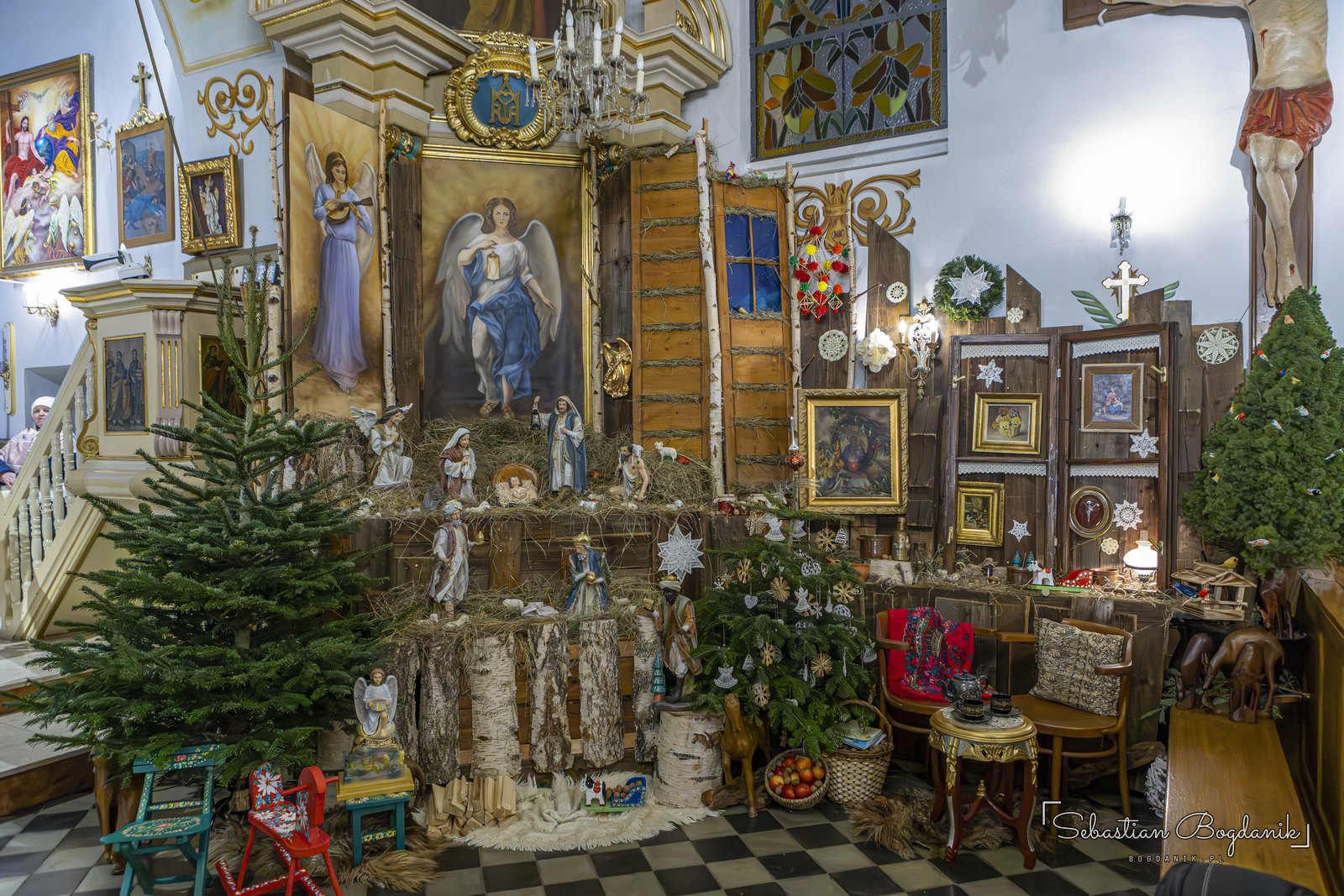
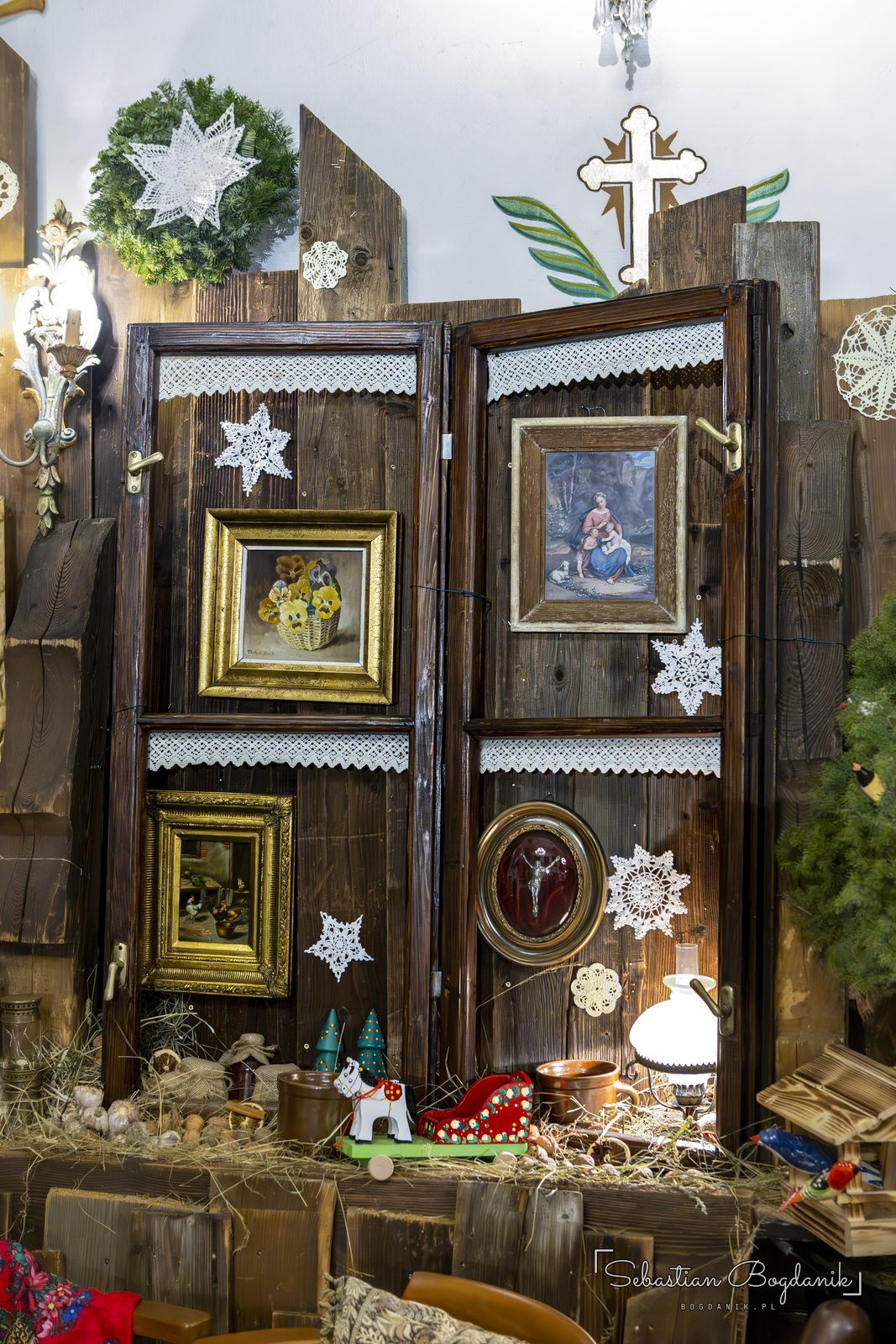
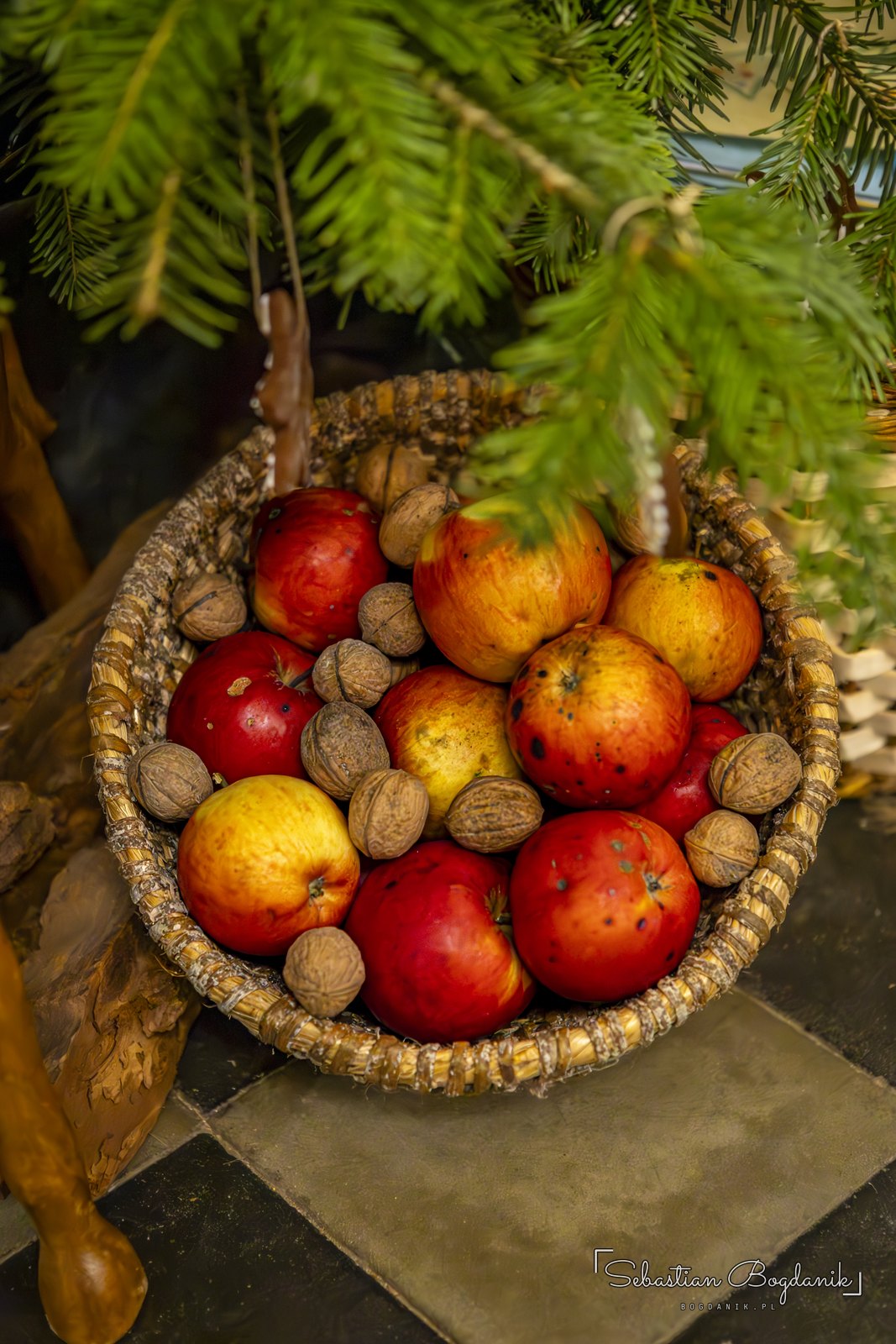
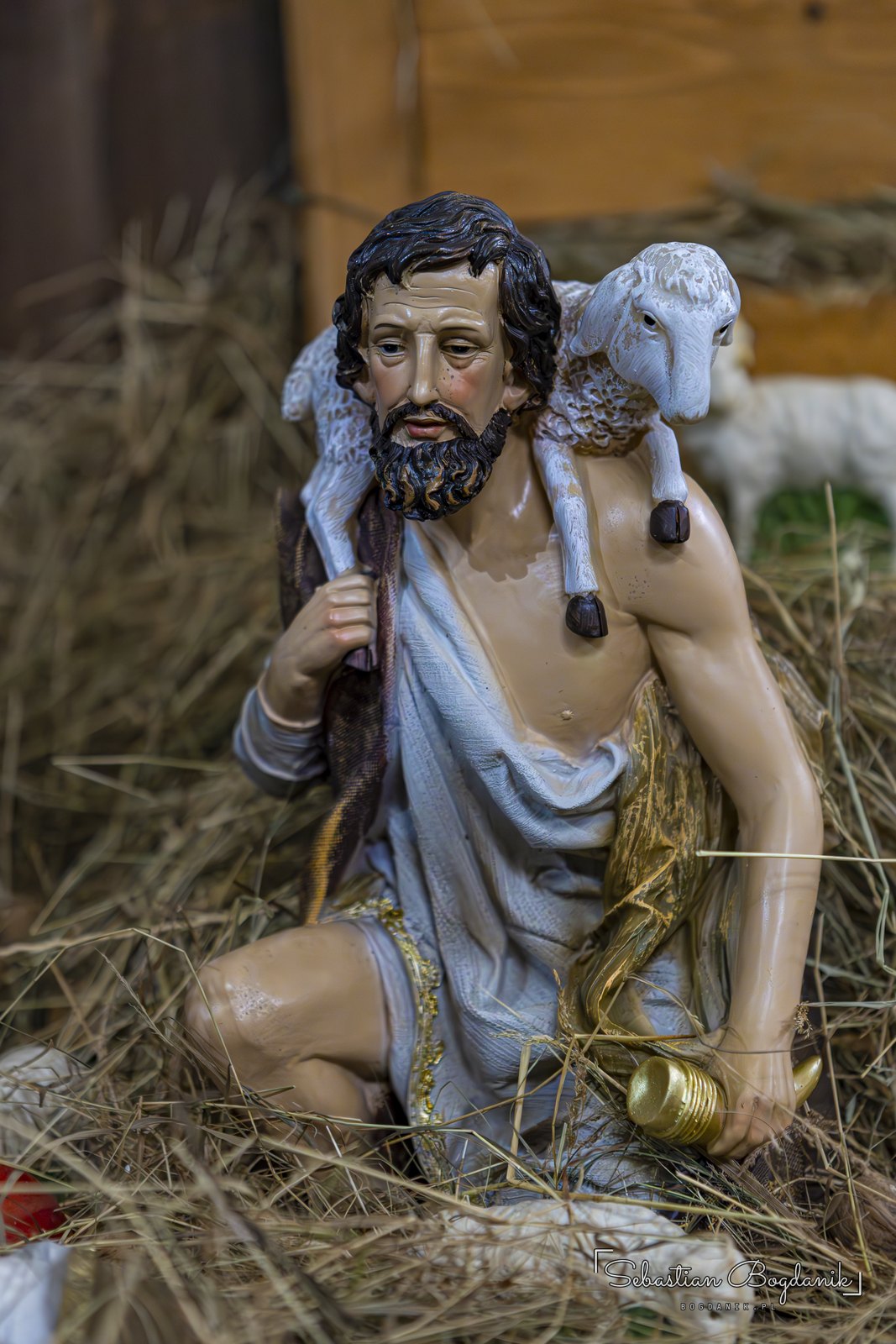
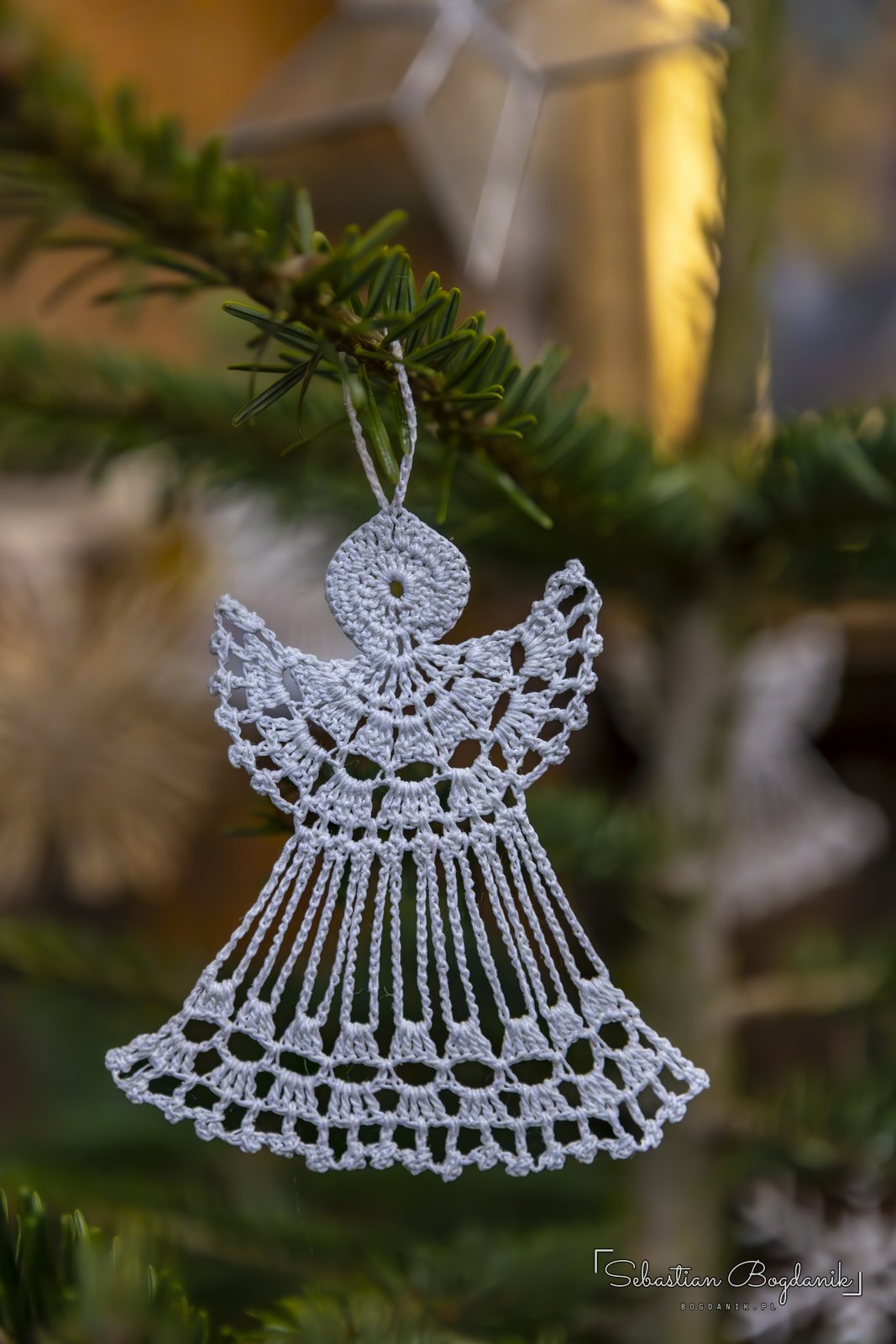
Inside the church a second, very different scene was waiting. It is arranged like an old village farmhouse room: a dresser with holy pictures, a basket of apples and nuts, clay pots, old paintings in gilded frames and a Christmas tree hung with crocheted angels. Among it all stand the Holy Family, shepherds and the Three Kings.
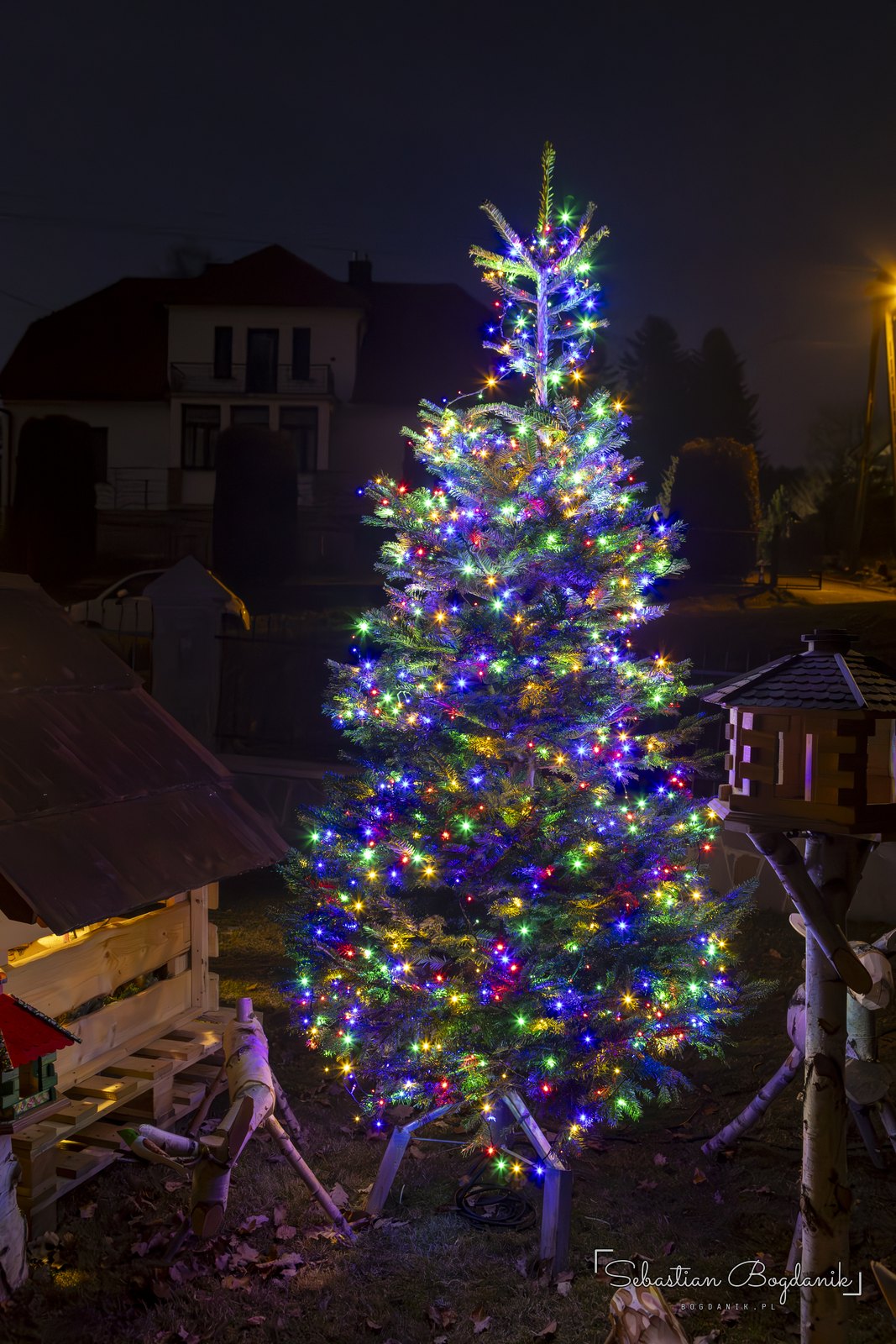
By the time I left it was dark, and the Christmas tree outside the church shone with hundreds of coloured lights.