A grey November Friday, low clouds over the Maków Beskids and less than two hours to spare. That is enough to walk through Maków Podhalański from the railway station to the sanctuary, and to discover that this small town, usually passed on the way to the mountains, has plenty to show: old town houses and villas, a 19th-century chapel, a monument to an embroiderer and a miraculous image crowned by Pope John Paul II.
The station and the runners
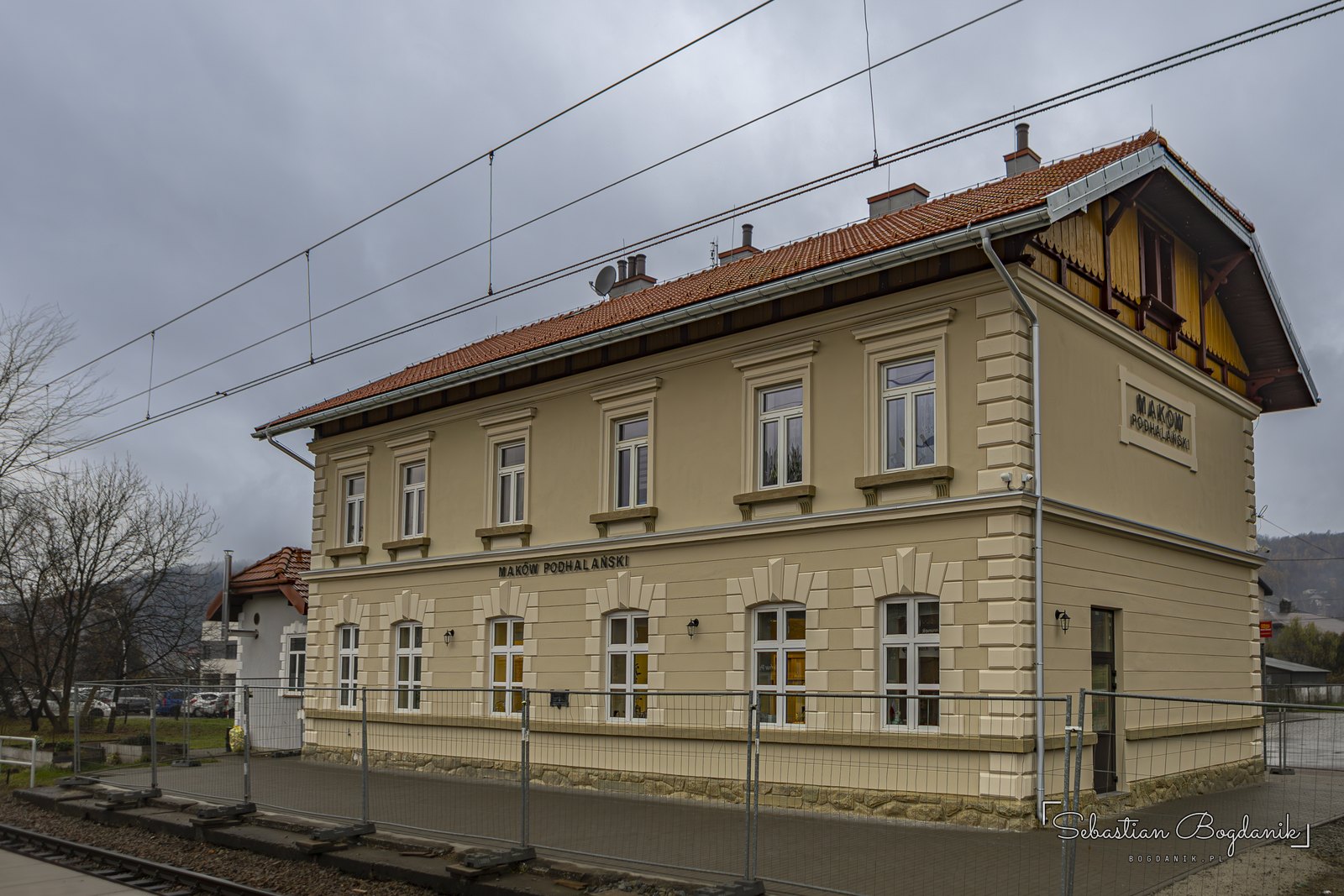
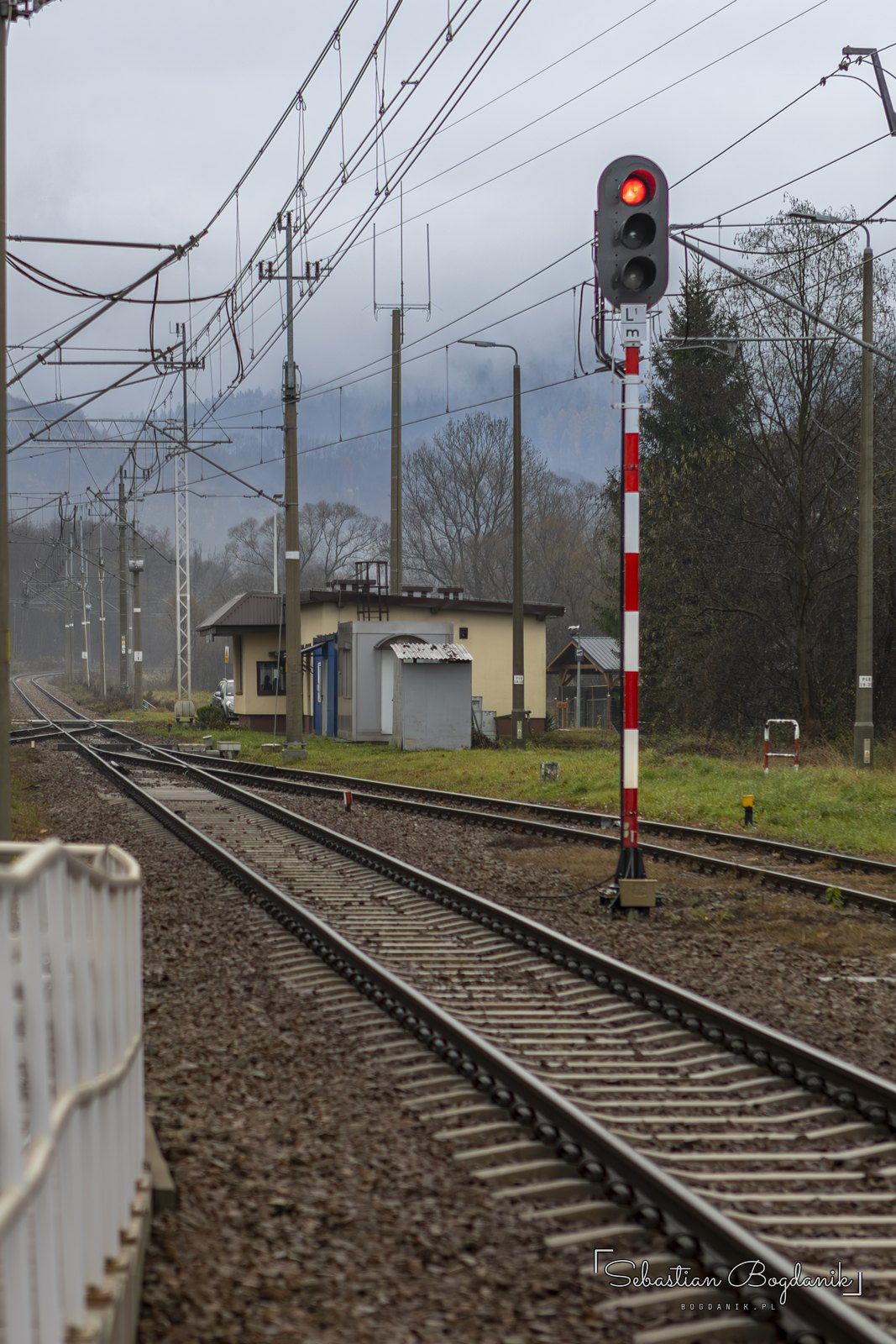
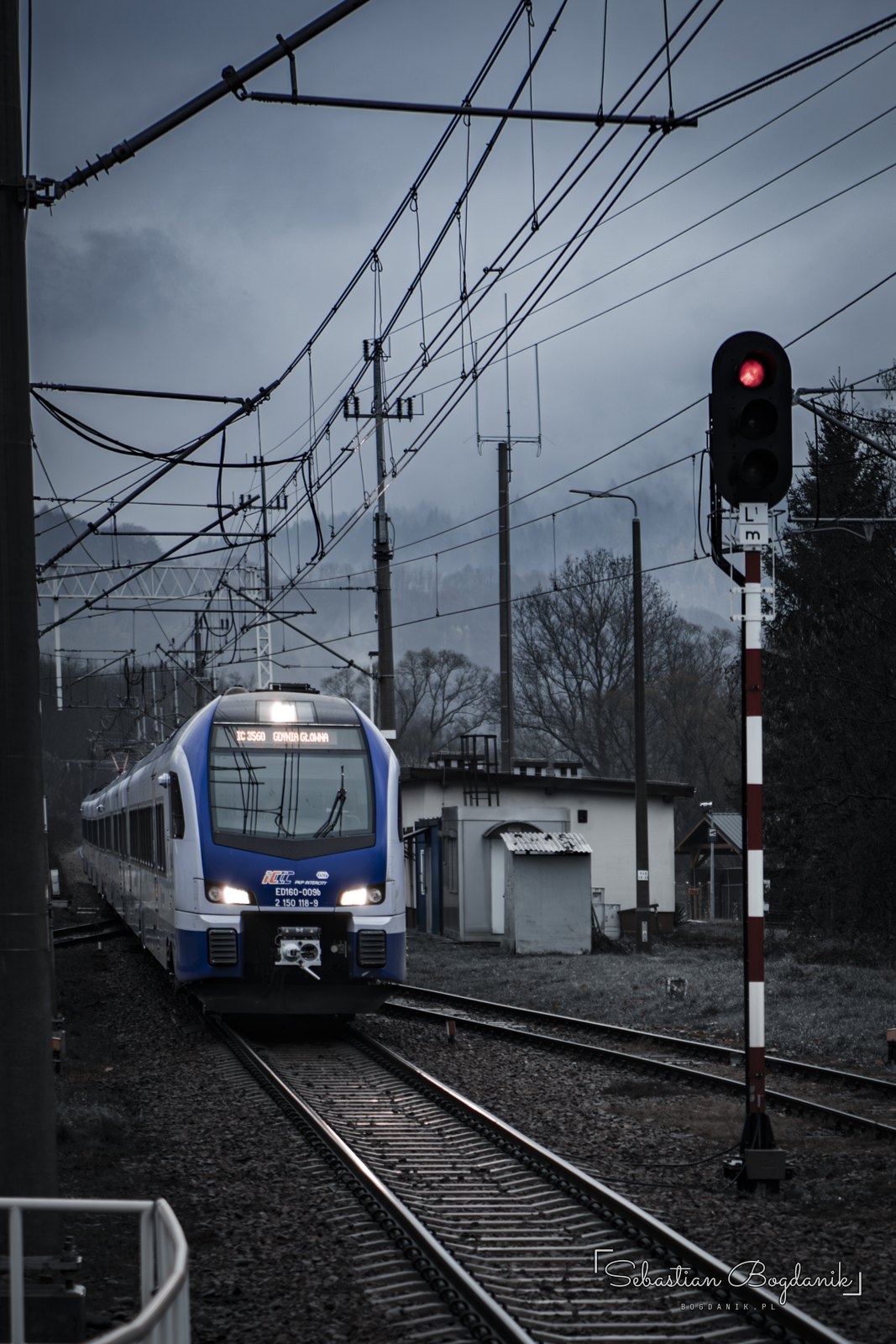
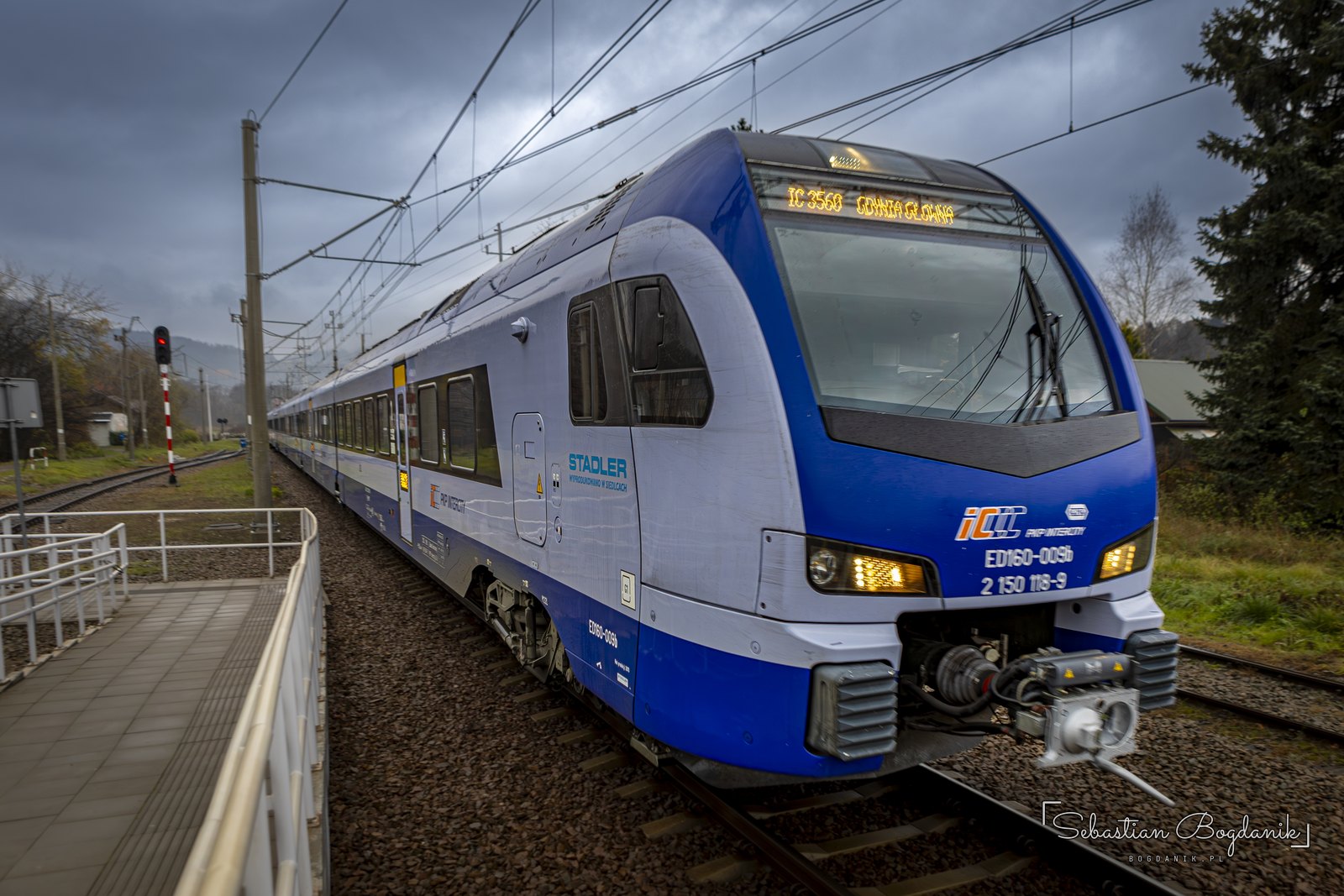
The walk began at the railway station. It opened in 1884 on the line from Sucha Beskidzka to Chabówka, which still links Kraków with the Podhale highlands. The station building has kept its old railway character, and at that hour the morning mist still hung over the tracks.
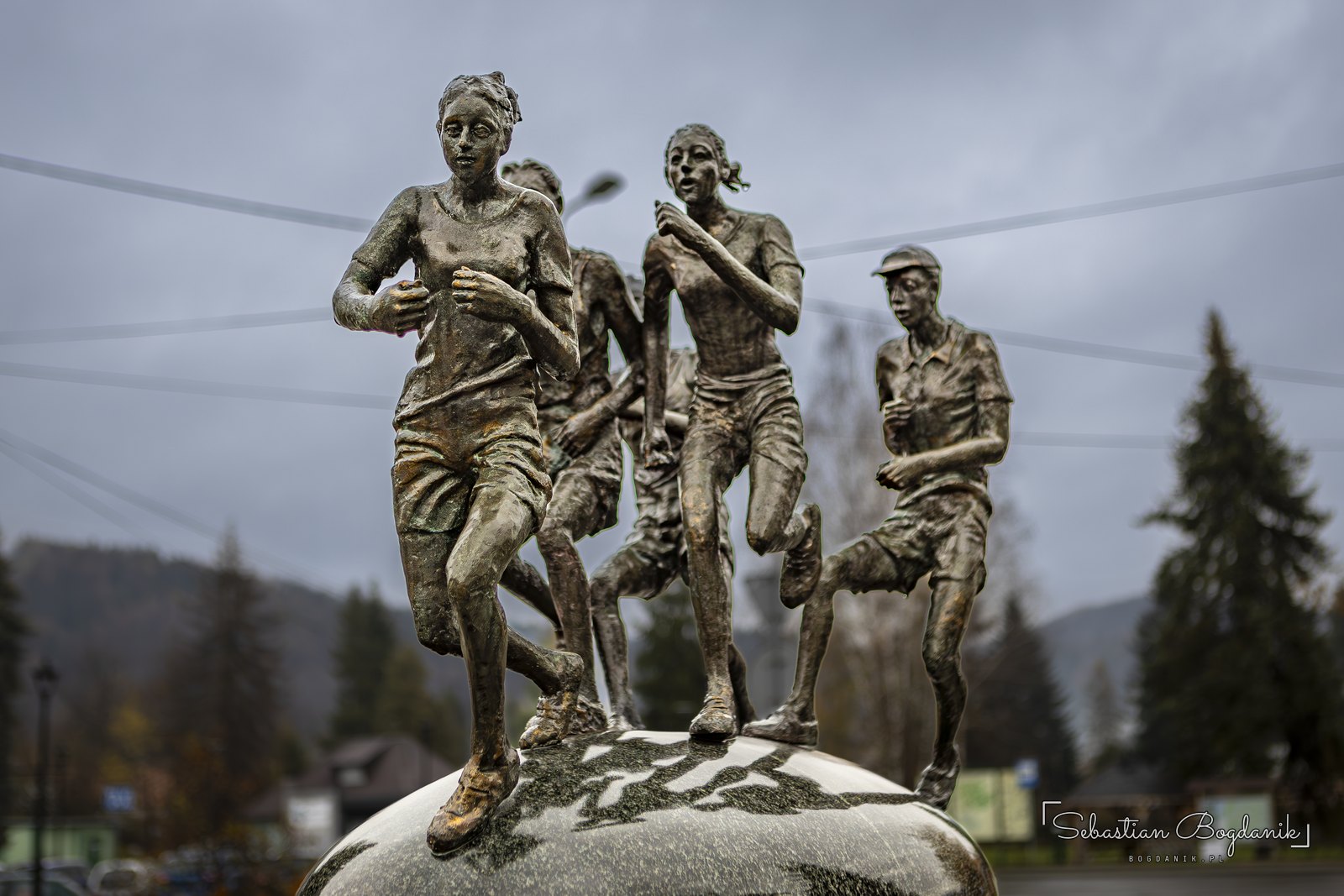
On the roundabout next to the station stands a sculpture you cannot miss: five running figures cast in bronze on a granite base bearing the municipal coat of arms. It commemorates the International Street Run around Maków and was unveiled on 25 October 2017 for the race’s 25th edition. It is the work of local artist Wiesław Kwak.
Town houses and villas
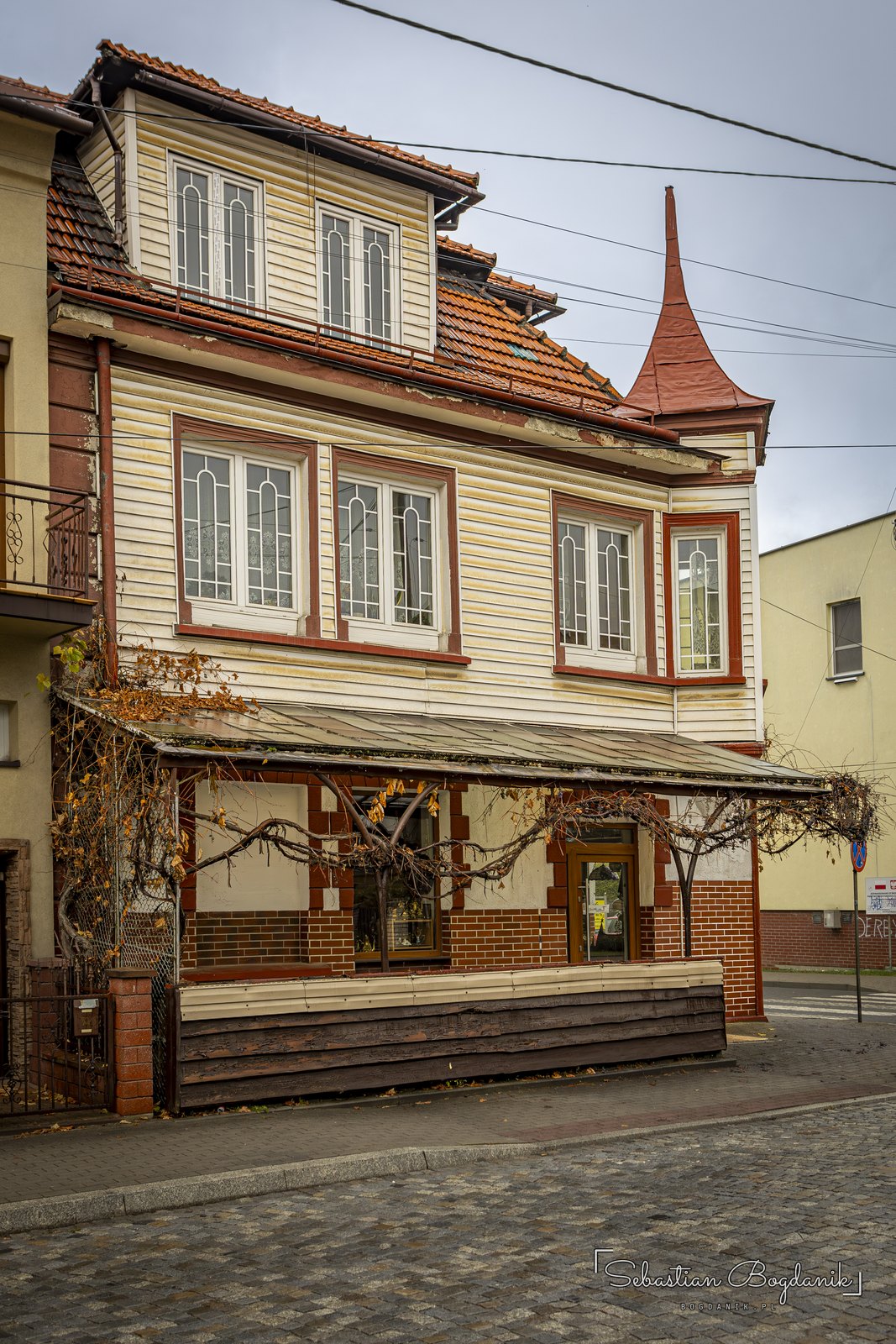
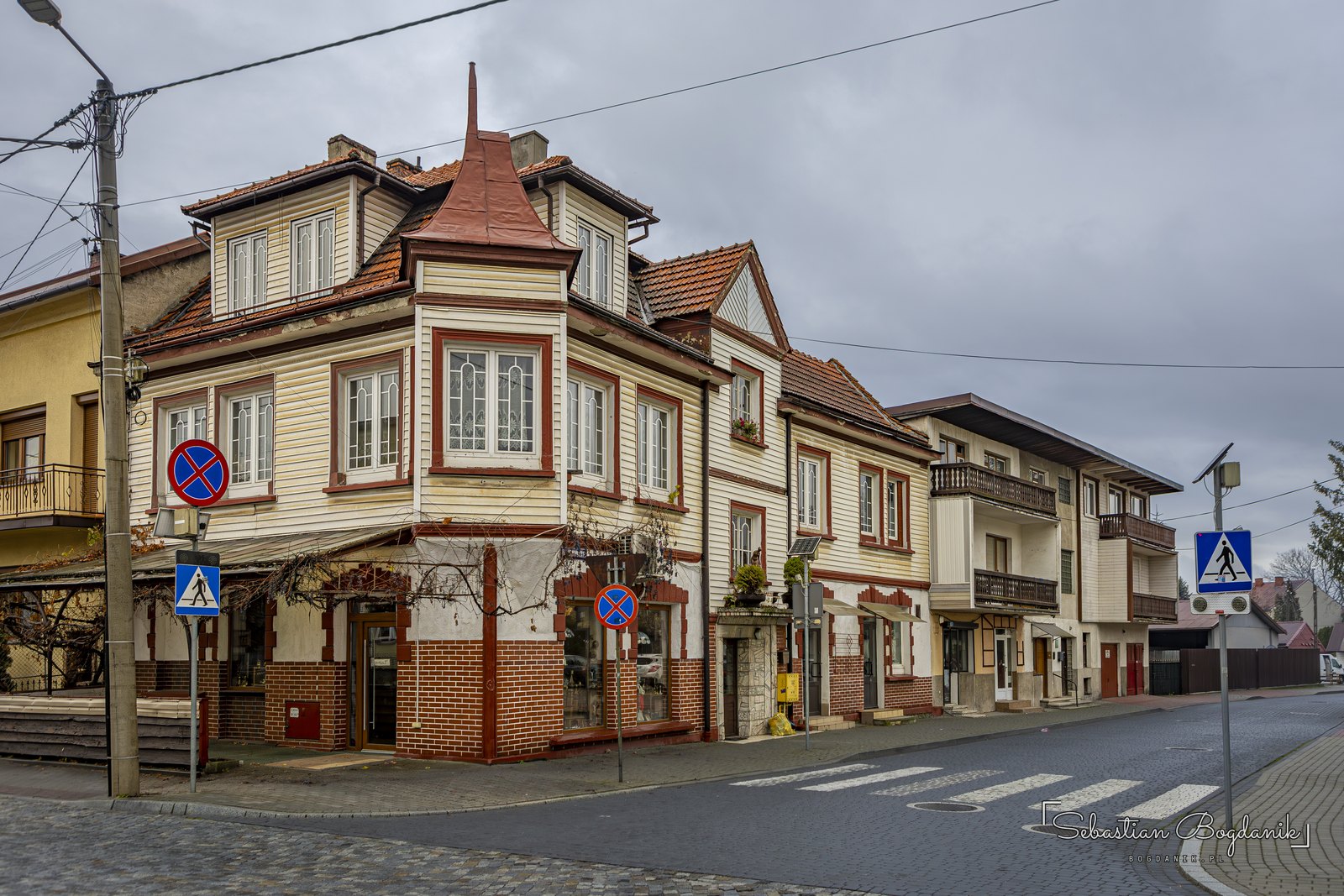
From the station the road leads towards the centre, past town houses from around 1900. Some have turrets and wooden verandas, others decorative gables. Between them stand brick houses and highland-style villas with carved gables and green shutters.
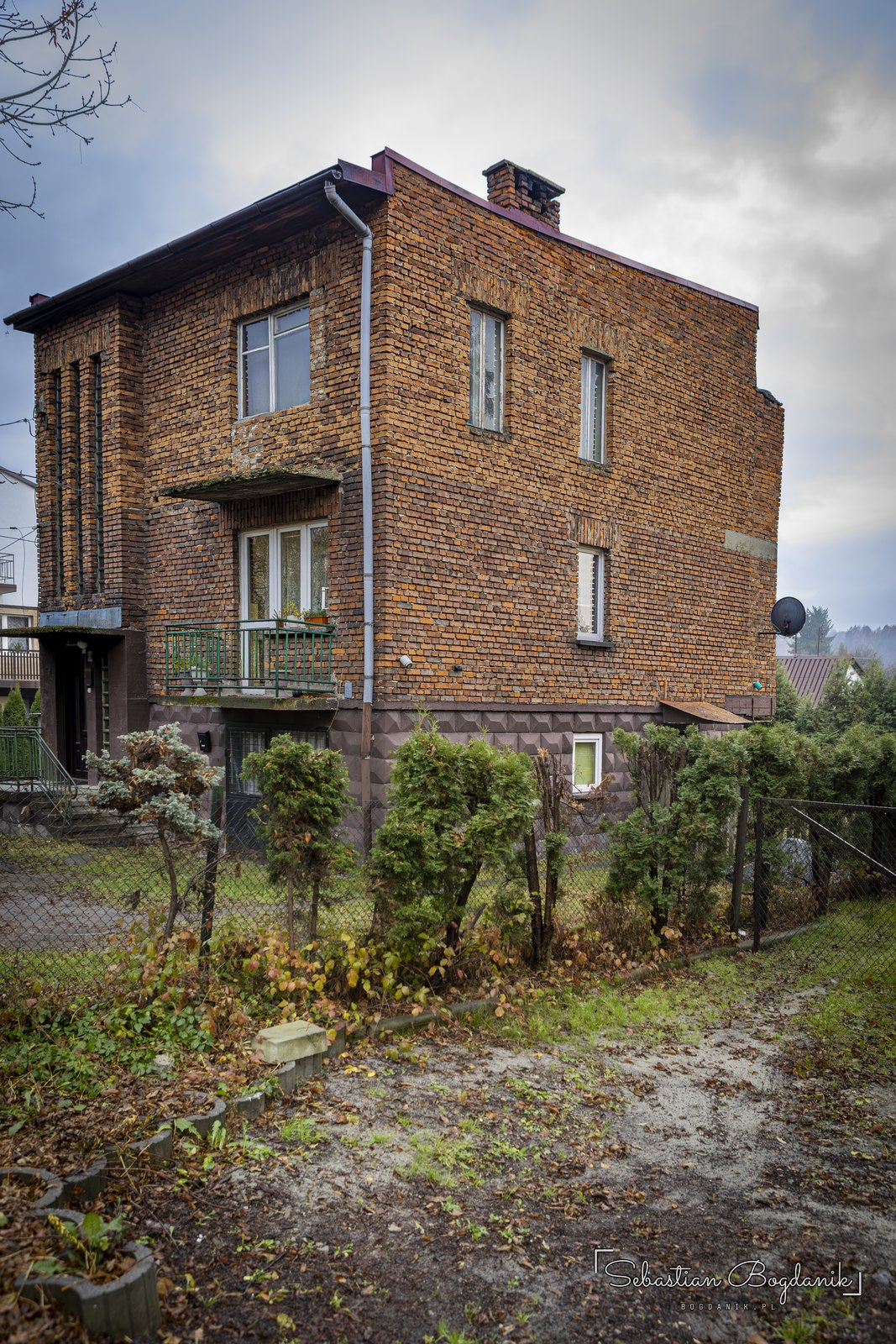
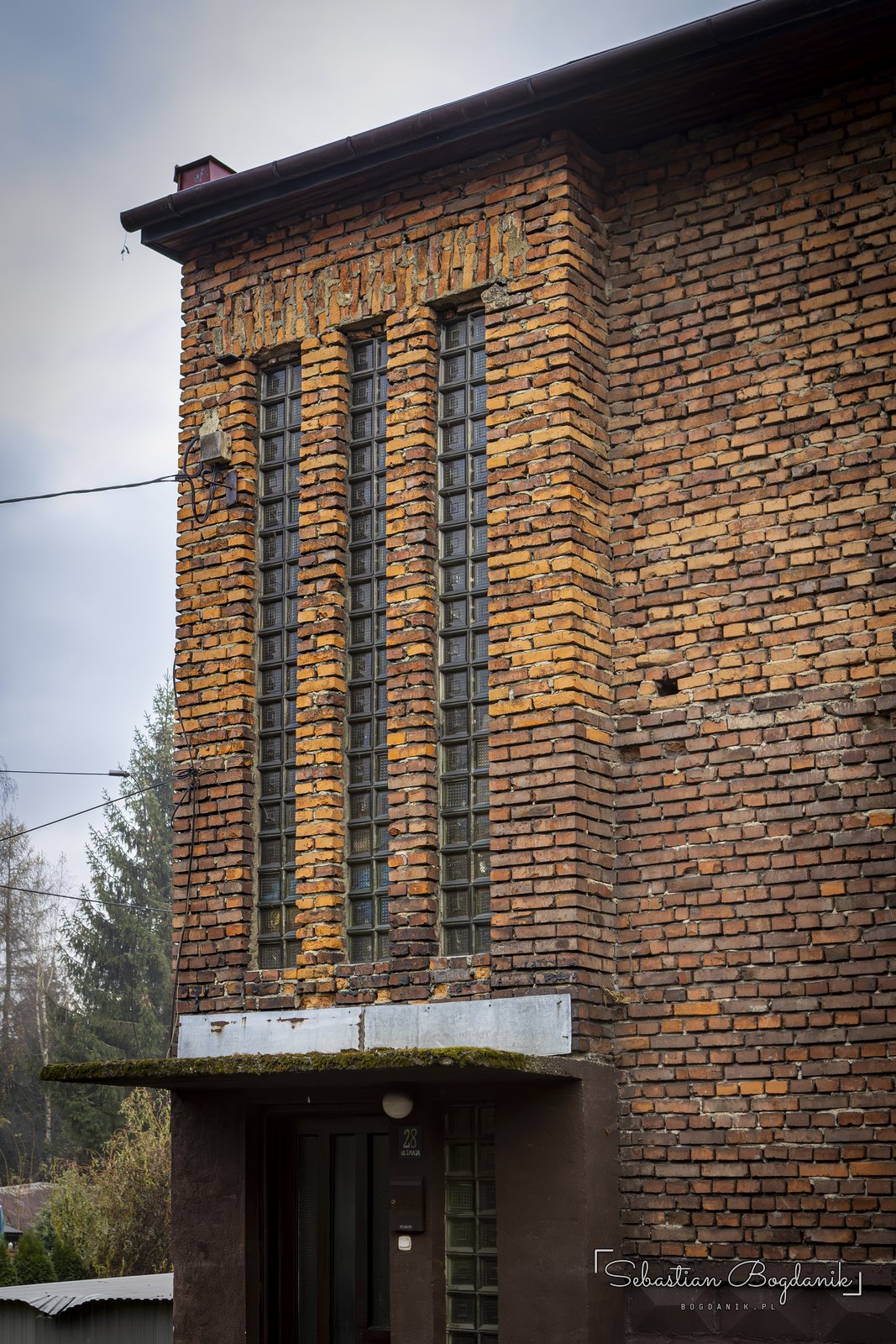
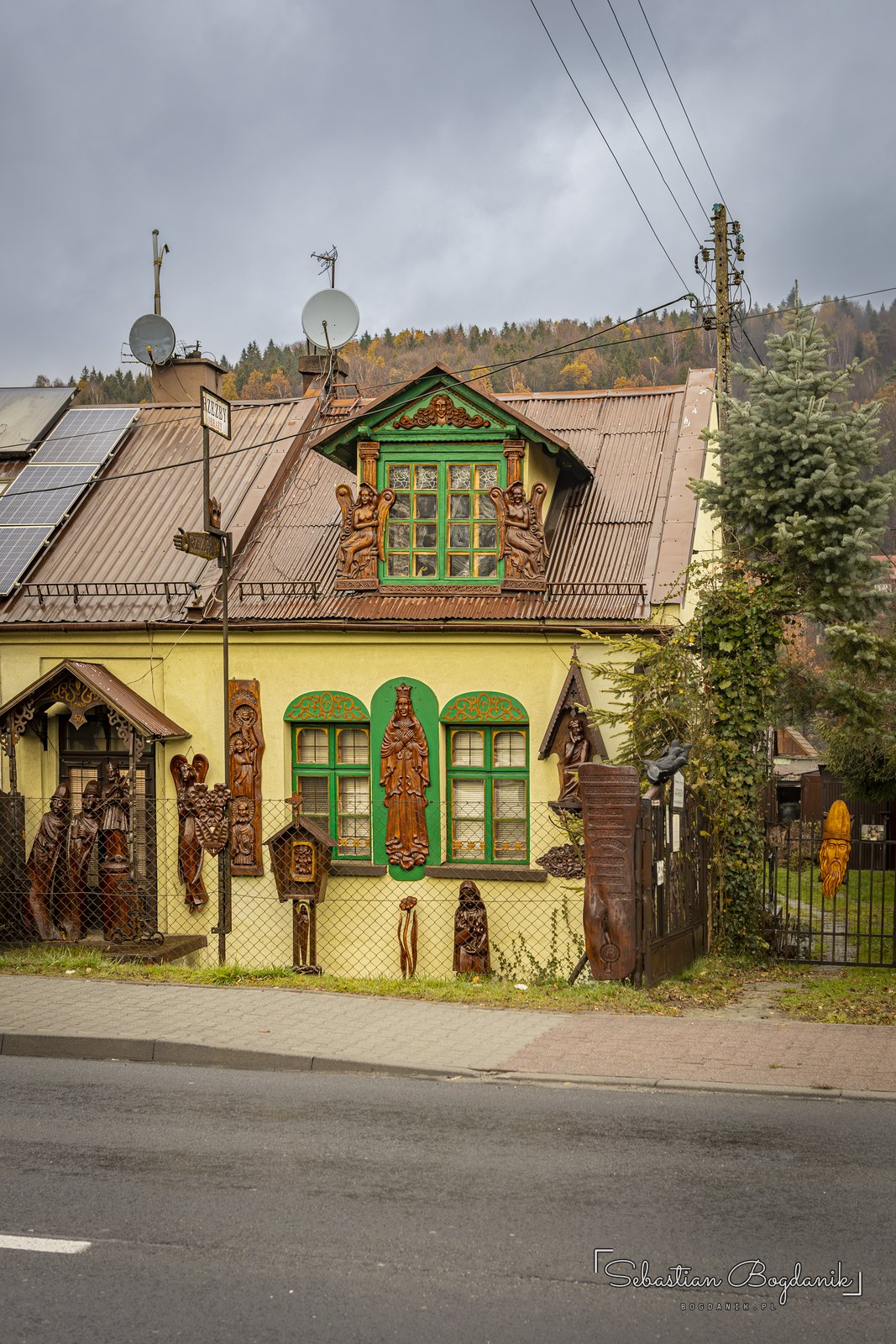
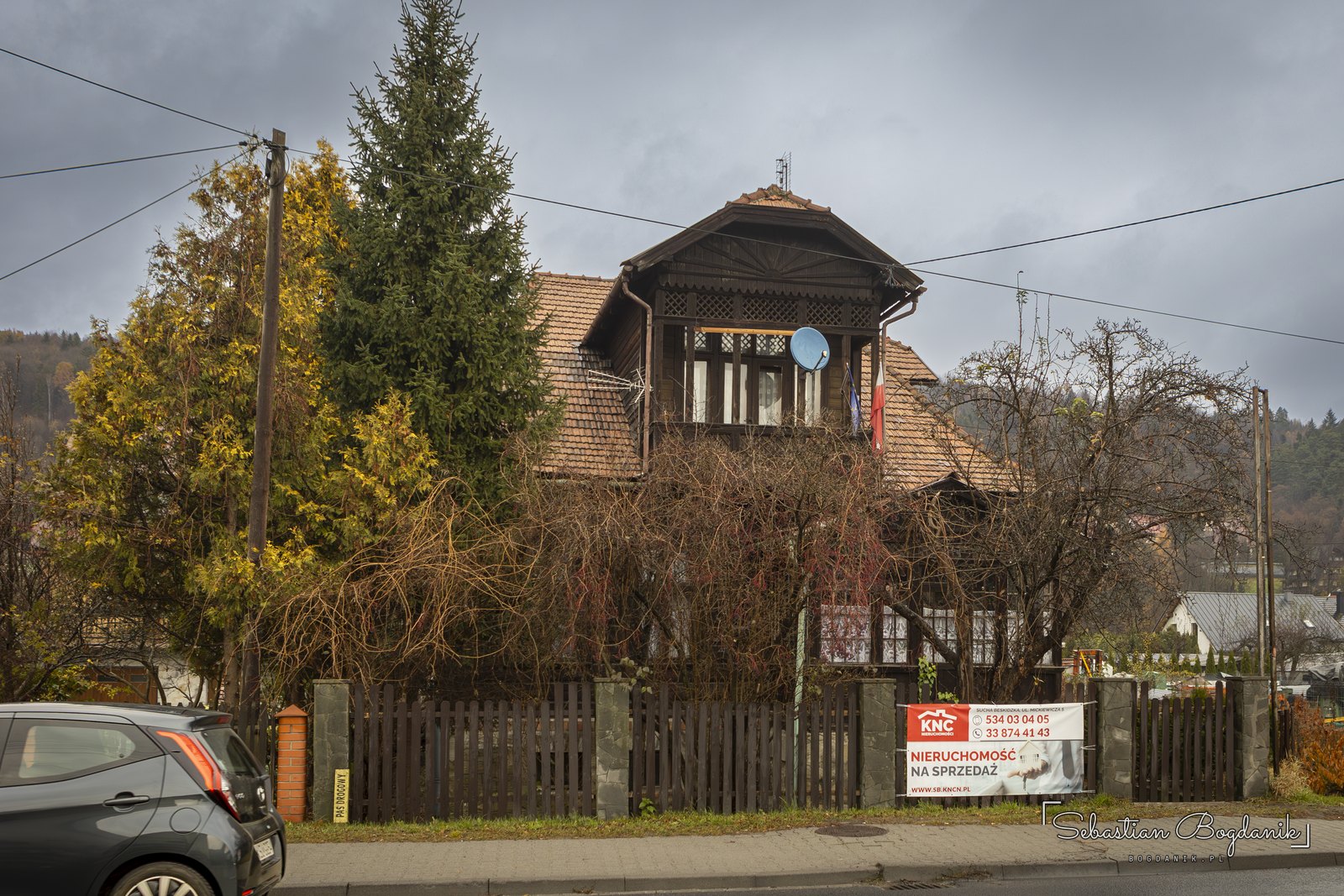
The Filas Chapel
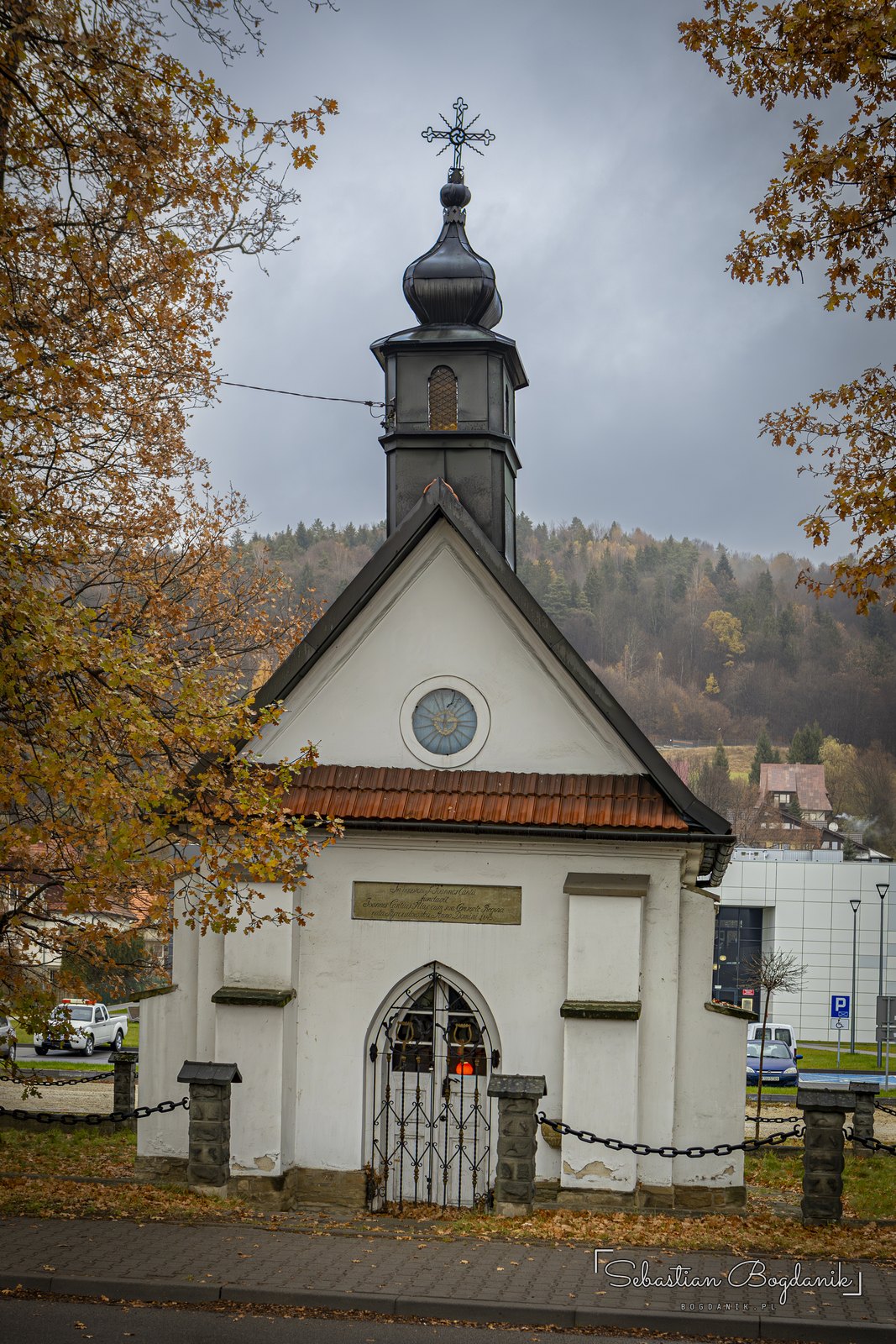
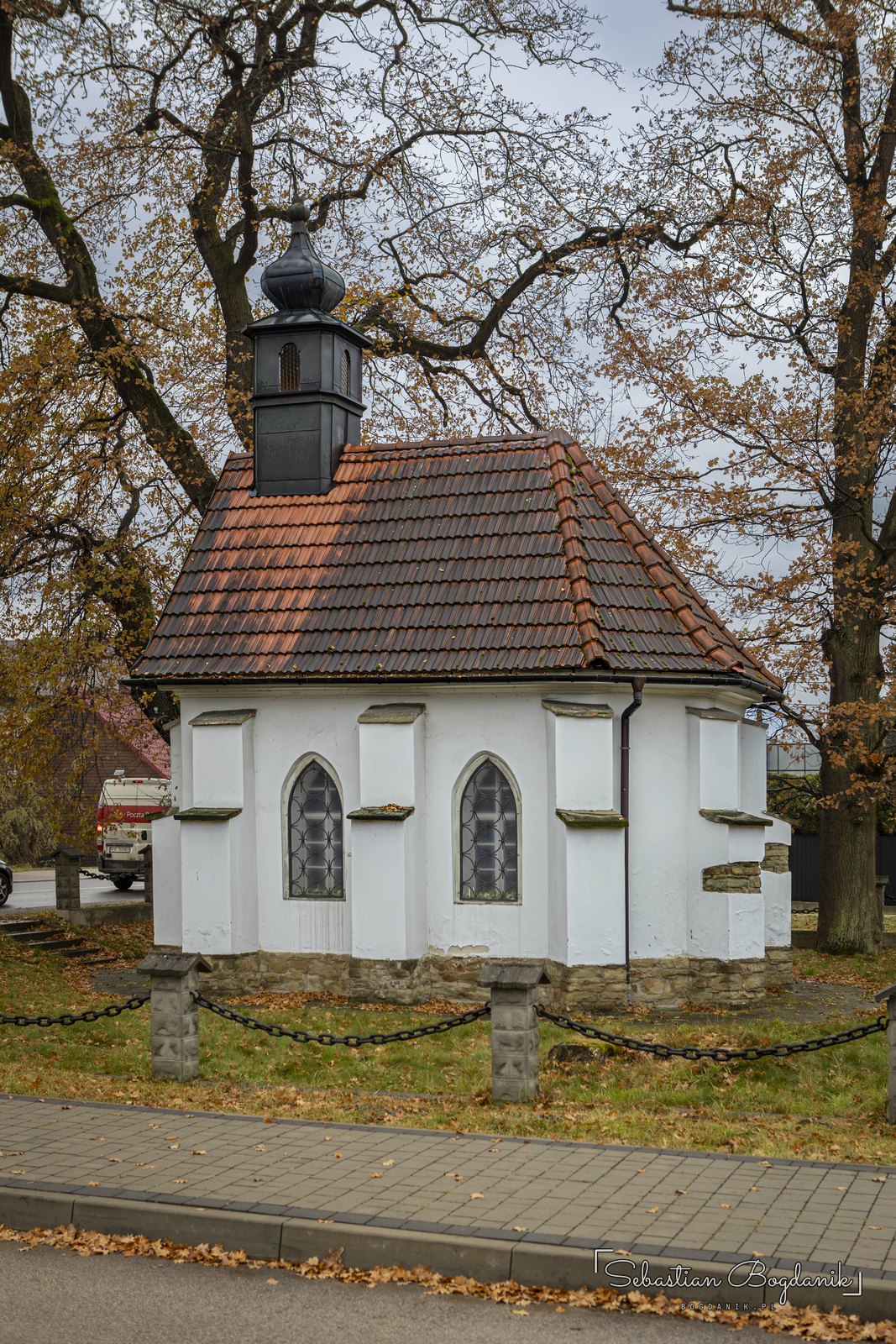
On one of the streets, in the shade of old trees, stands a small white chapel. This is the Filas Chapel, founded in 1845 by Jan Kanty and Regina Filas and dedicated to the founder’s patron, St John of Kęty. It is built of brick, with a pointed doorway and windows, a gable roof and a little bell turret. Its shape echoes the chancel of the town’s parish church. It is an example of the household chapel, a type common in this area, and it has recently been thoroughly restored.
The centre: bank, town hall and monument
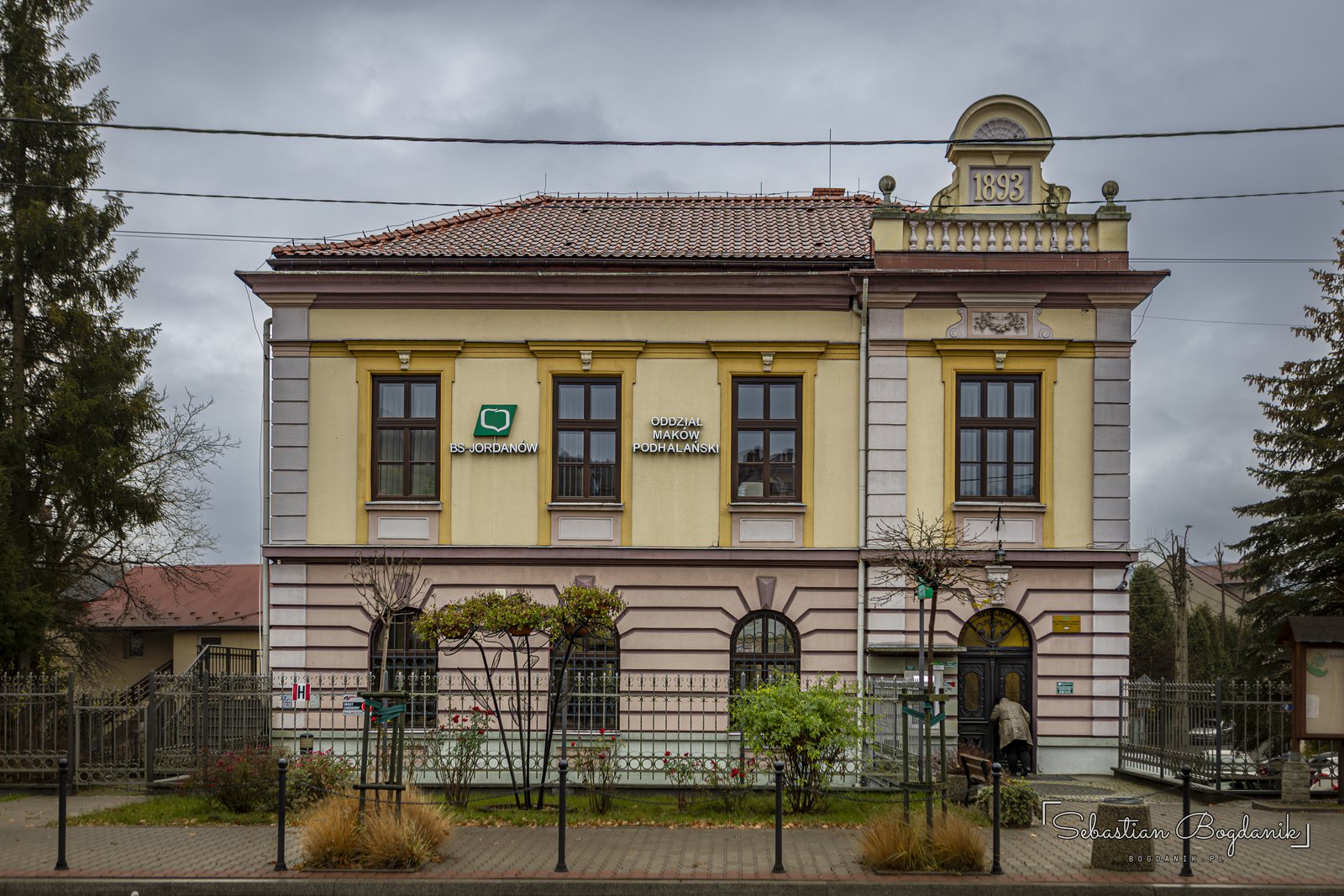
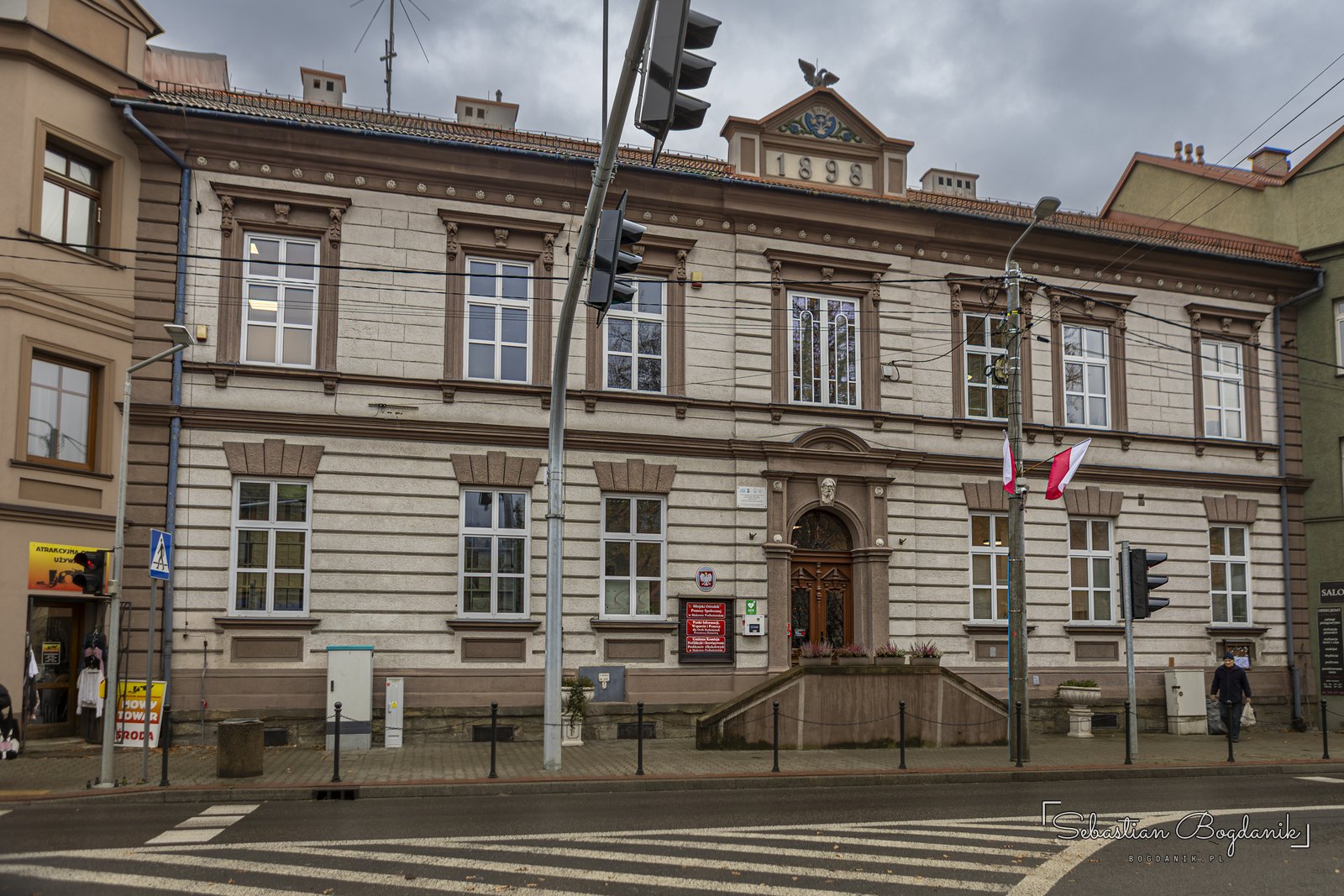
Closer to the market square the town becomes more urban. The date 1893 appears on top of one facade: it is a bank building, still home to a branch of a cooperative bank. Next to it stands the old town hall.
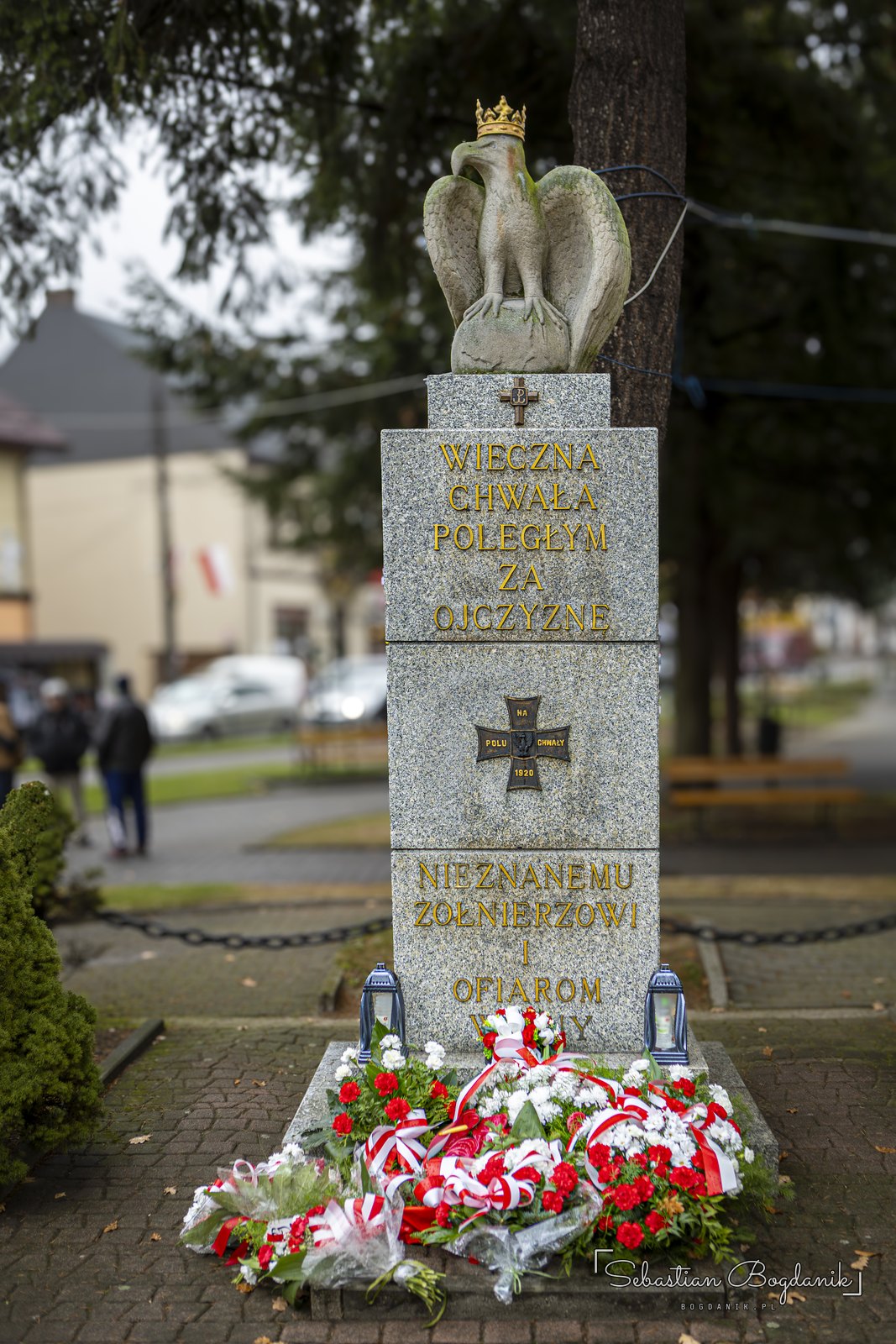
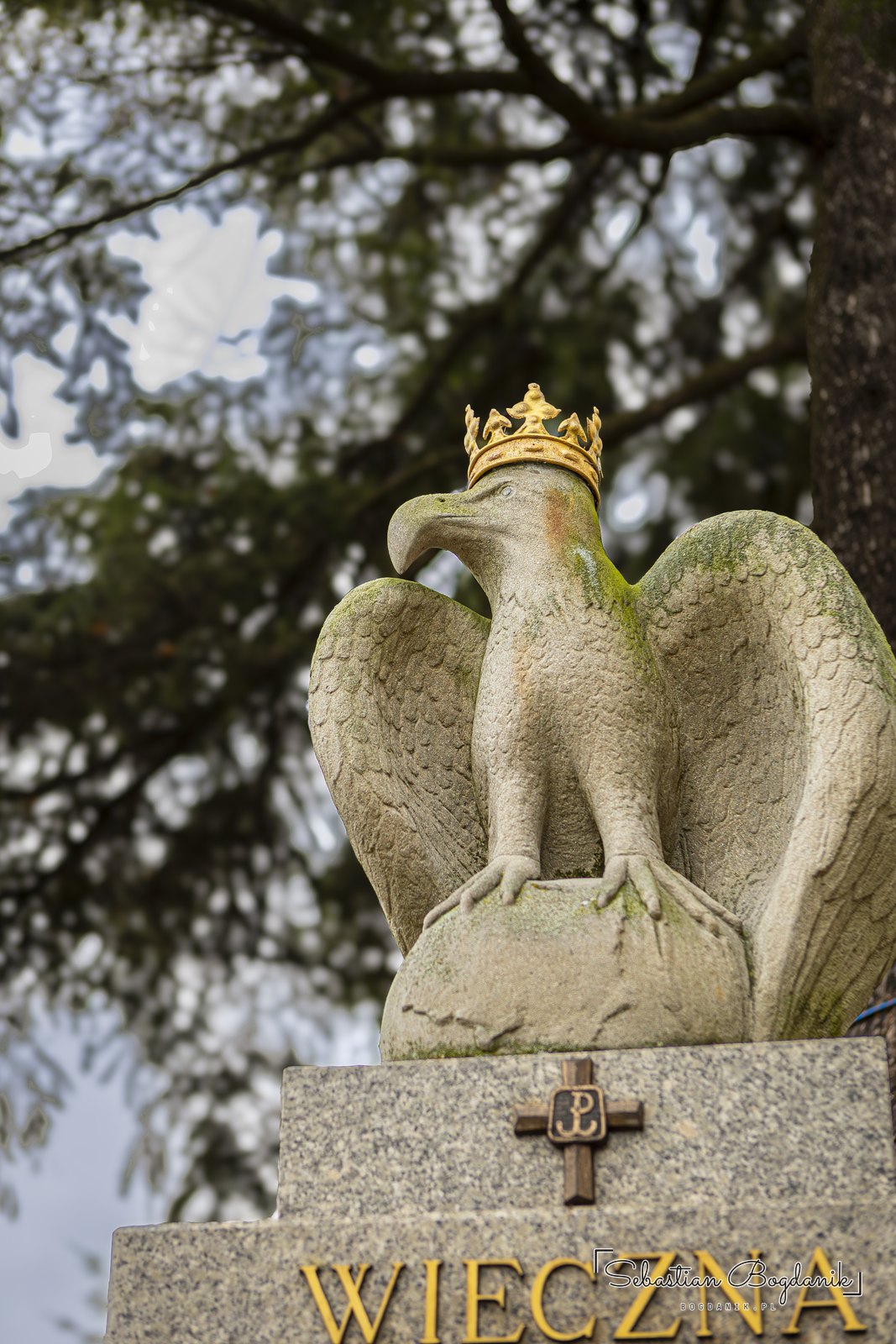
On a small green stands a monument inscribed “Eternal glory to those who fell for the Fatherland”, dedicated to the Unknown Soldier and the victims. Its pedestal bears the 1920 “On the Field of Glory” cross and the anchor of the Polish Underground State, and a crowned eagle sits on top. In mid-November, a few days after Independence Day, red-and-white wreaths still lay at its foot.
The embroiderer and the poppies
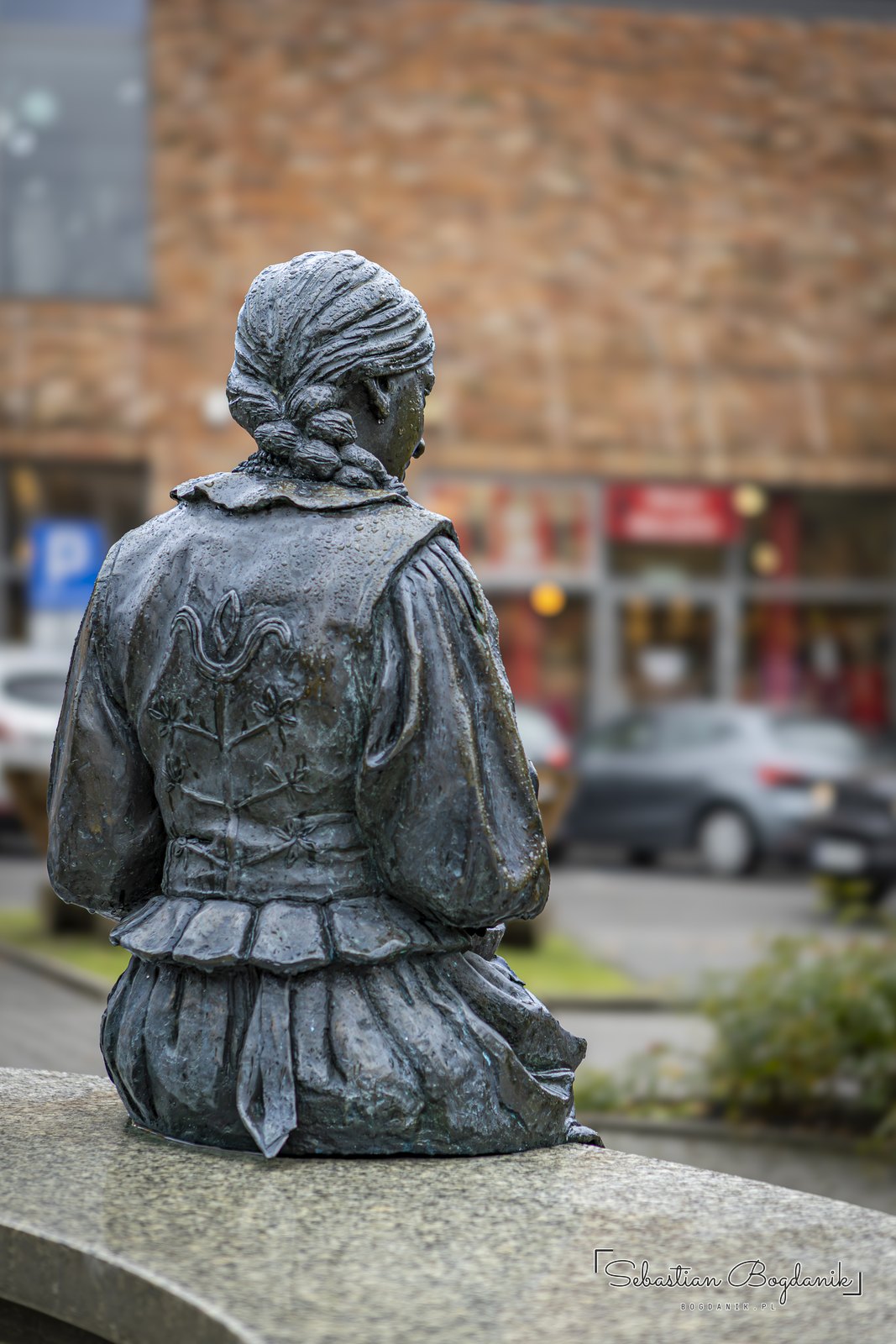
A bronze embroiderer sits on the market square. Maków is known as the capital of highland embroidery, famous for its white-on-white work. An embroidery school was founded here in the 19th century, and within a few years its pieces won a gold medal at an exhibition in Paris. A tablecloth with Maków embroidery is said to have lain on Pope John Paul II’s desk in the Vatican.
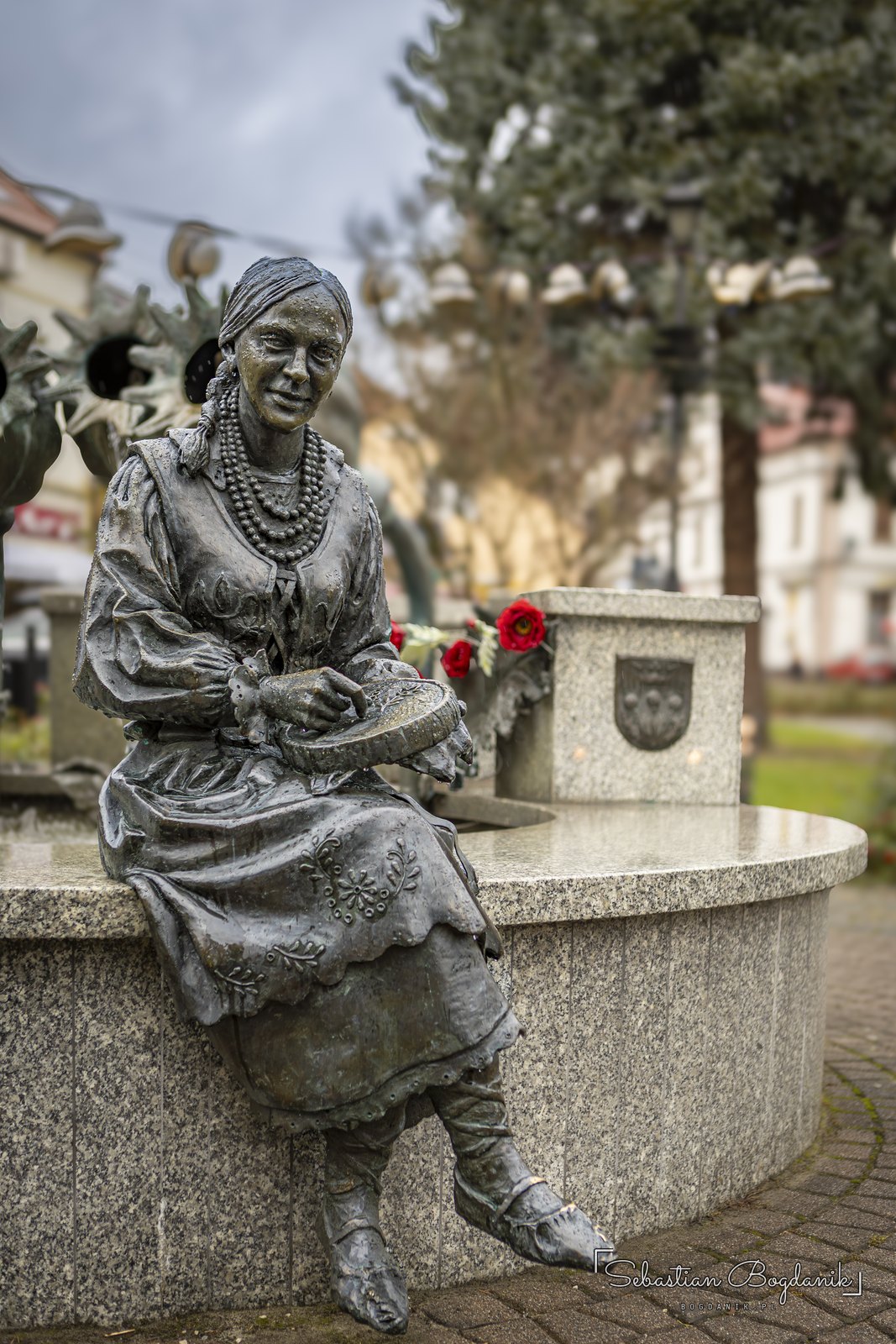
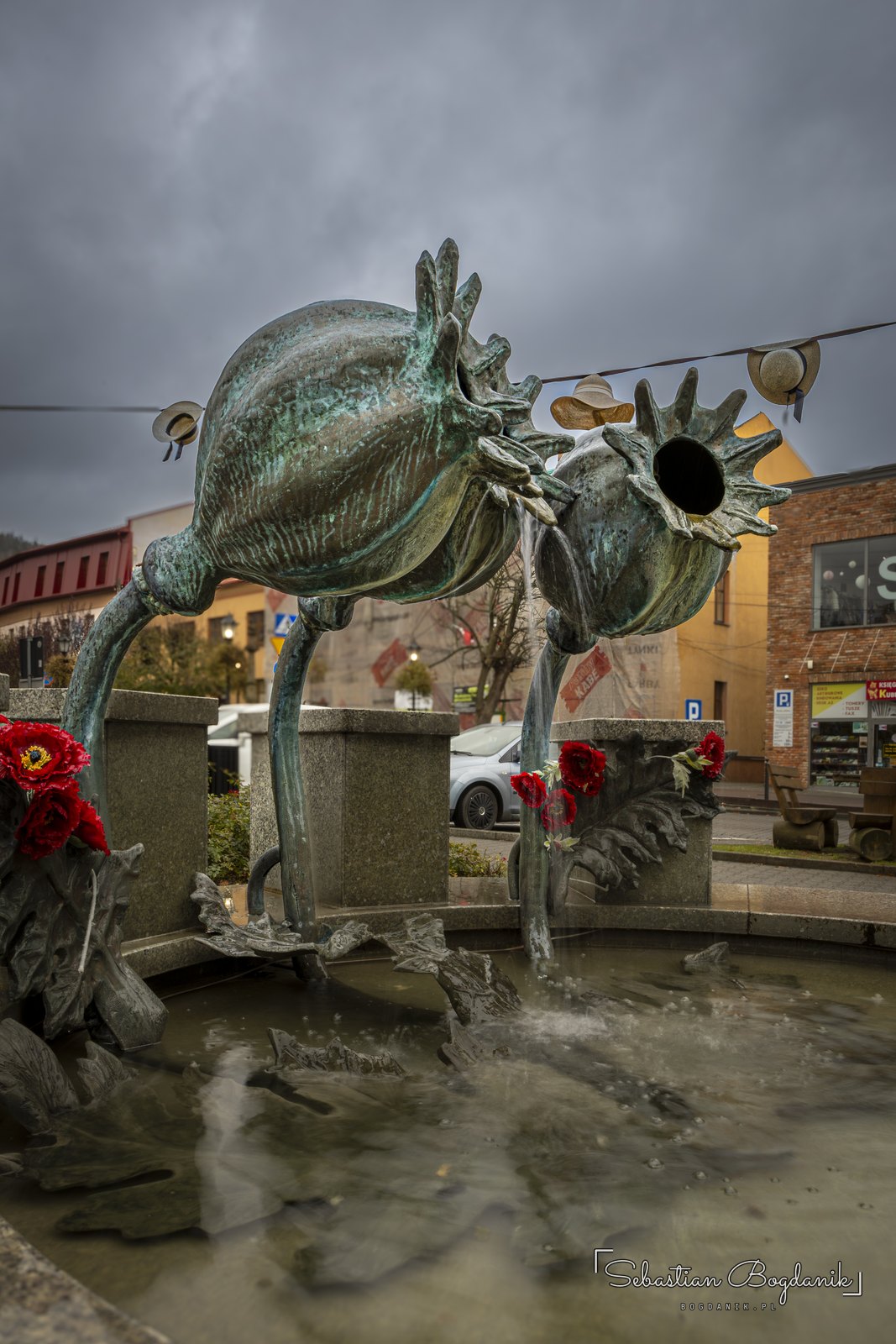
Nearby splashes a fountain with poppy heads. The town takes its name from the poppy (mak in Polish), and three poppies feature in its coat of arms.
The Sanctuary of Our Lady of Maków
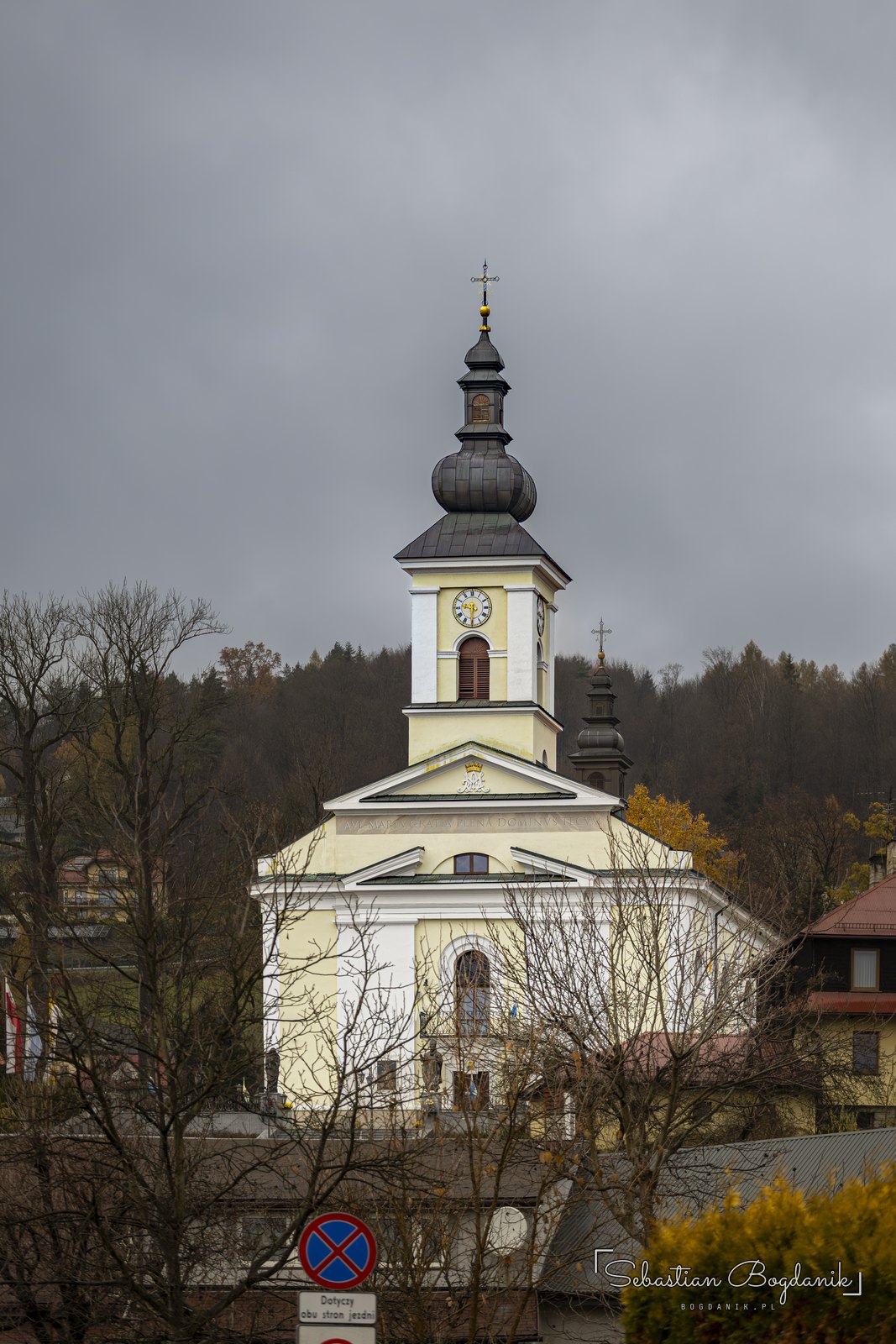
The last stop was the Church of the Transfiguration, the Sanctuary of Our Lady, Guardian and Queen of Families. It owes its present form to a rebuilding in 1828–1833, while the Baroque chancel and chapel survive from an earlier church of around 1700. The high altar holds a 16th-century miraculous image of Our Lady of Maków, crowned by Pope John Paul II on 10 June 1979 during his first pilgrimage to Poland.
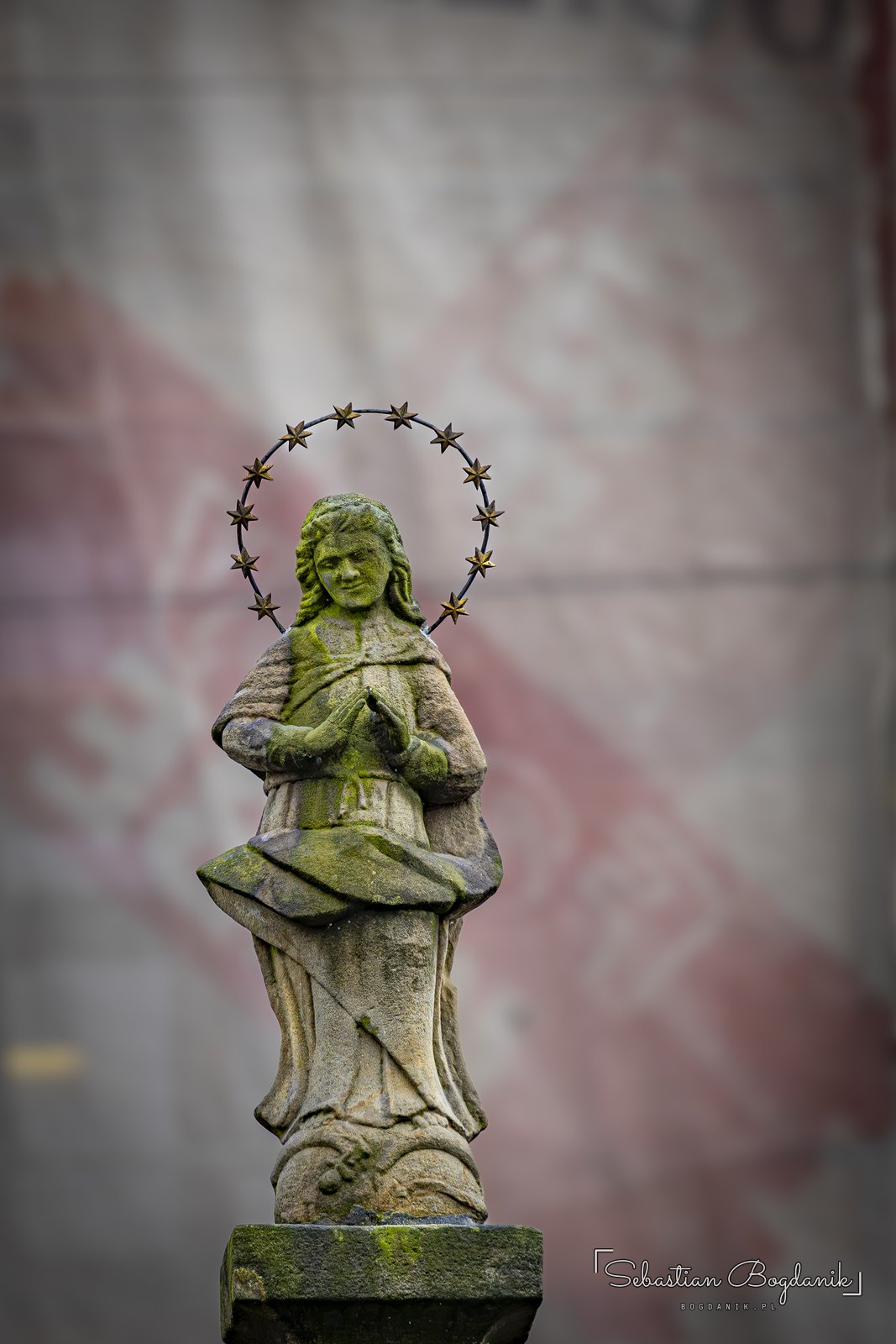
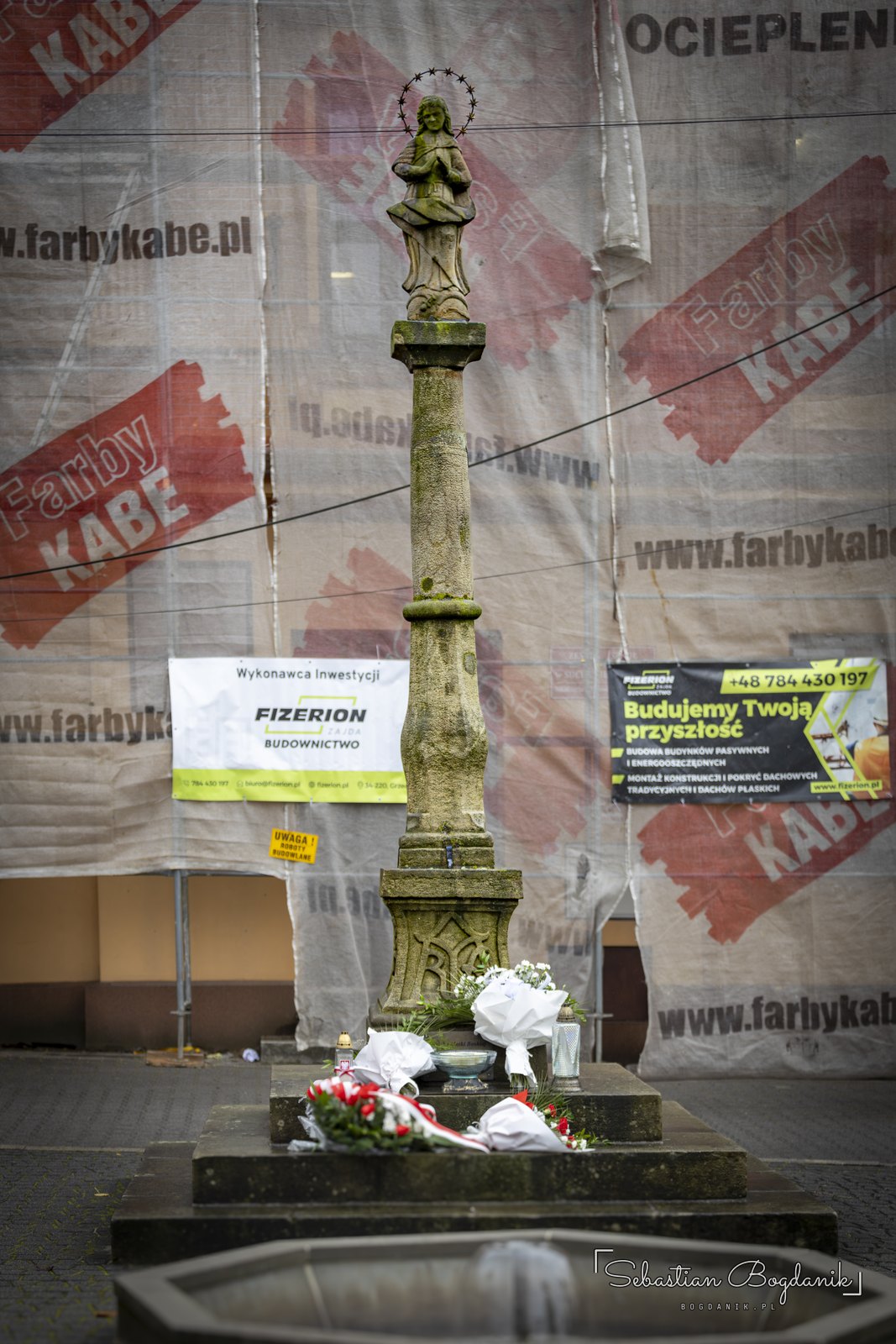
In front of the church stands a column with a statue of the Immaculate Conception. In November 2024 the building behind it was being renovated, so the statue stood against scaffolding and netting.
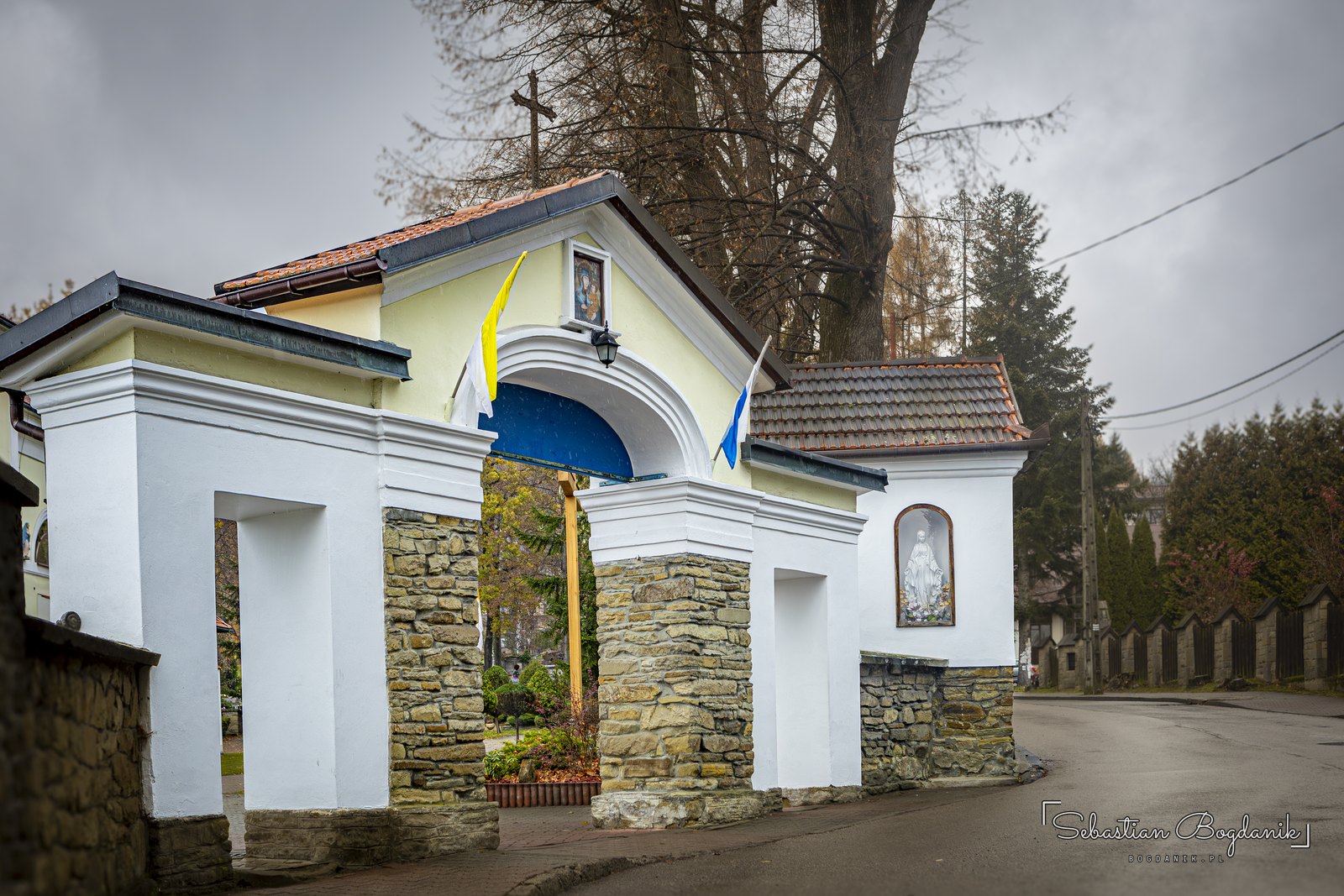
I ended the walk at the historic church gate, built in 1826–1828. Less than two hours, a few streets and several centuries of history, in a town most people only drive through.