One November Sunday, one bus and nine stops. We set off while the fields outside Nowy Targ were still white with frost and finished as the last glow faded over the Tatras. Along the way: the Spiš region with its chapels and sheep, two castles facing each other across Lake Czorsztyn, and wooden villas moved from villages flooded by the lake. The Tatras kept us company all day: first in mist, then in full sun, and finally in gold.
Dawn by the airfield in Nowy Targ
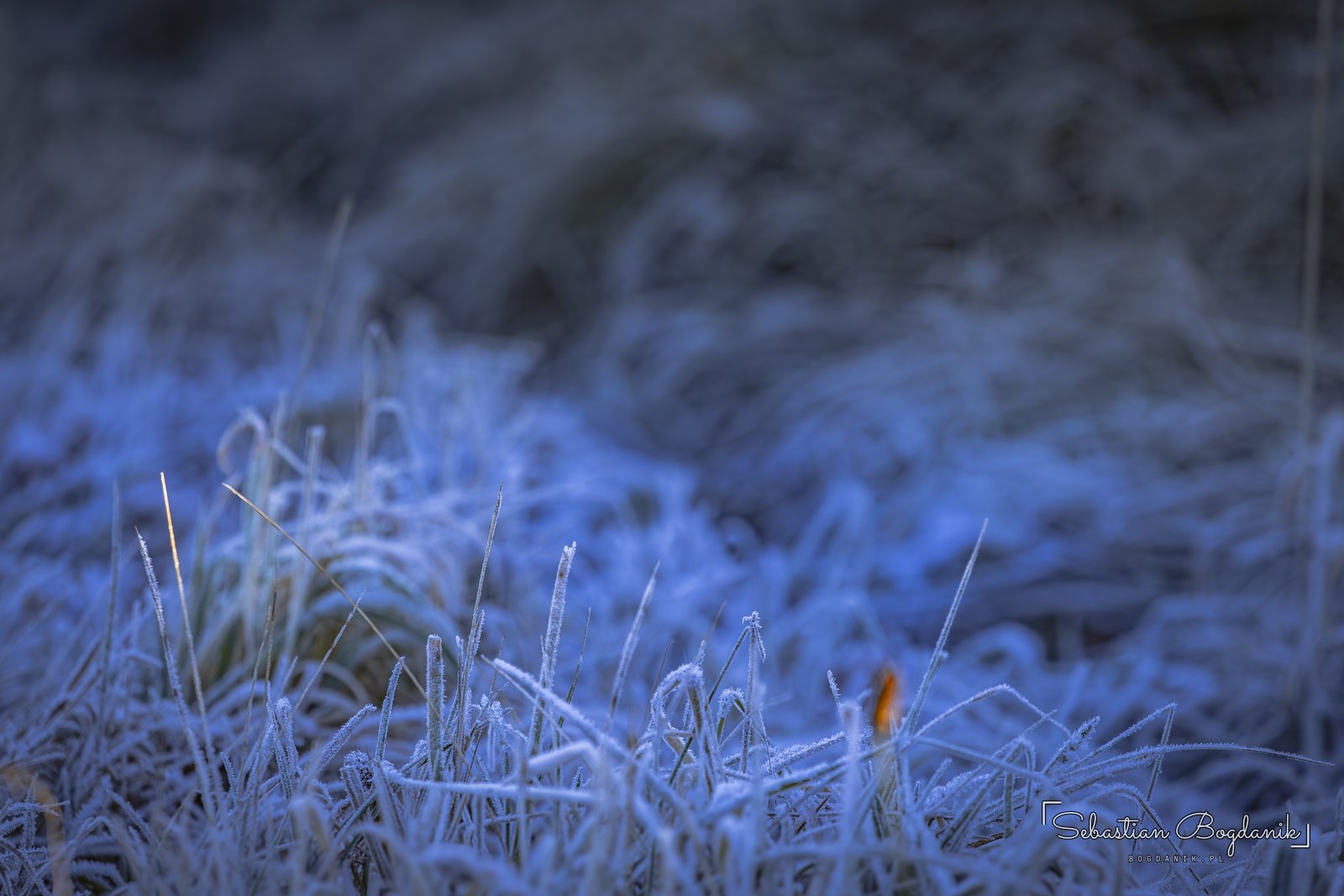
Our first stop was just outside Nowy Targ, at the edge of the airfield. The town bought the land back in the 1930s, and the grass field with its view of the Tatras is well known to Polish glider pilots: they launched from here into the so-called Tatra wave, and in 1966 a world altitude record for two-seat gliders was set here. At 7:37 am nobody was flying. The moon, two days past full, still hung over the field, and the grass crunched with frost.
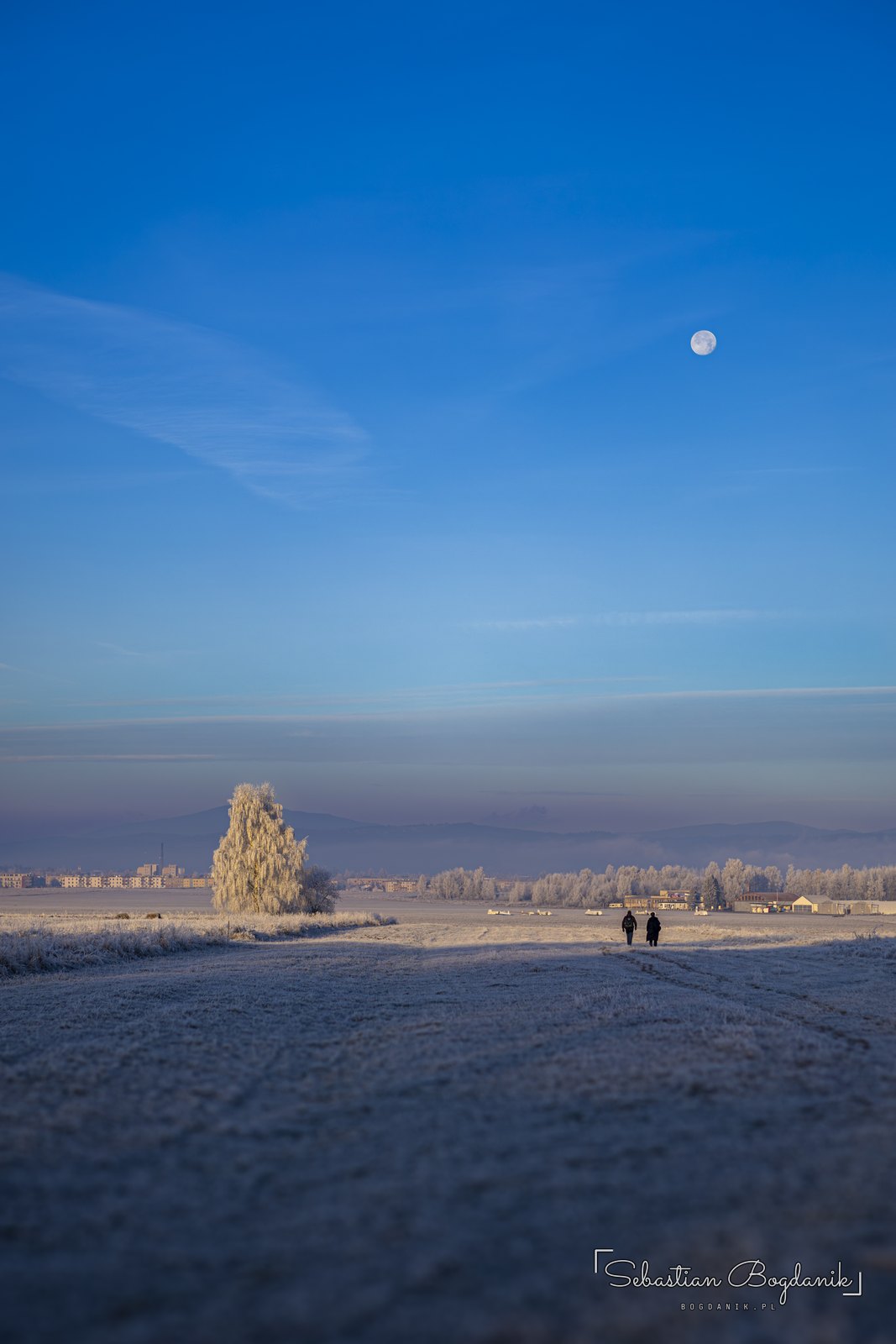
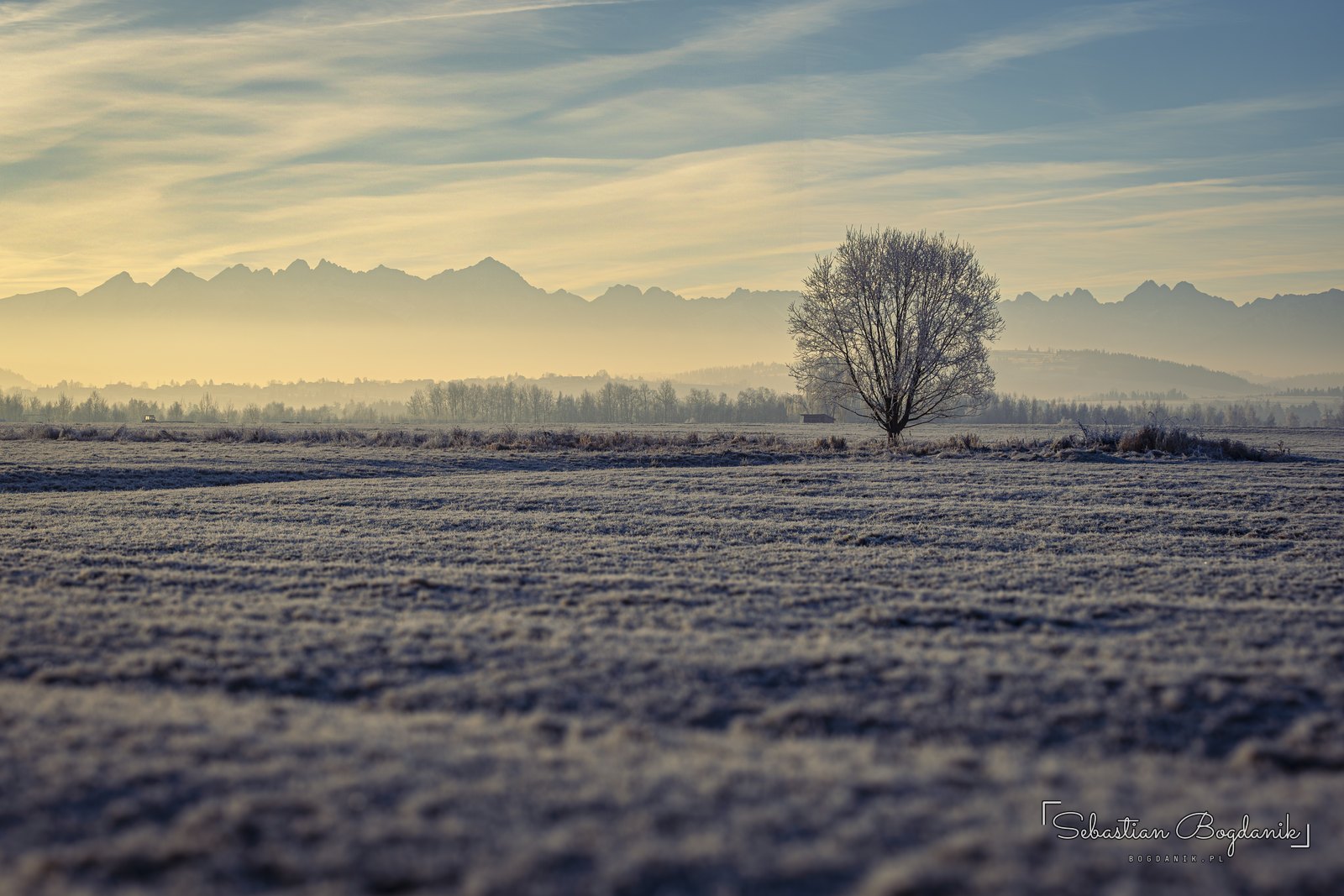
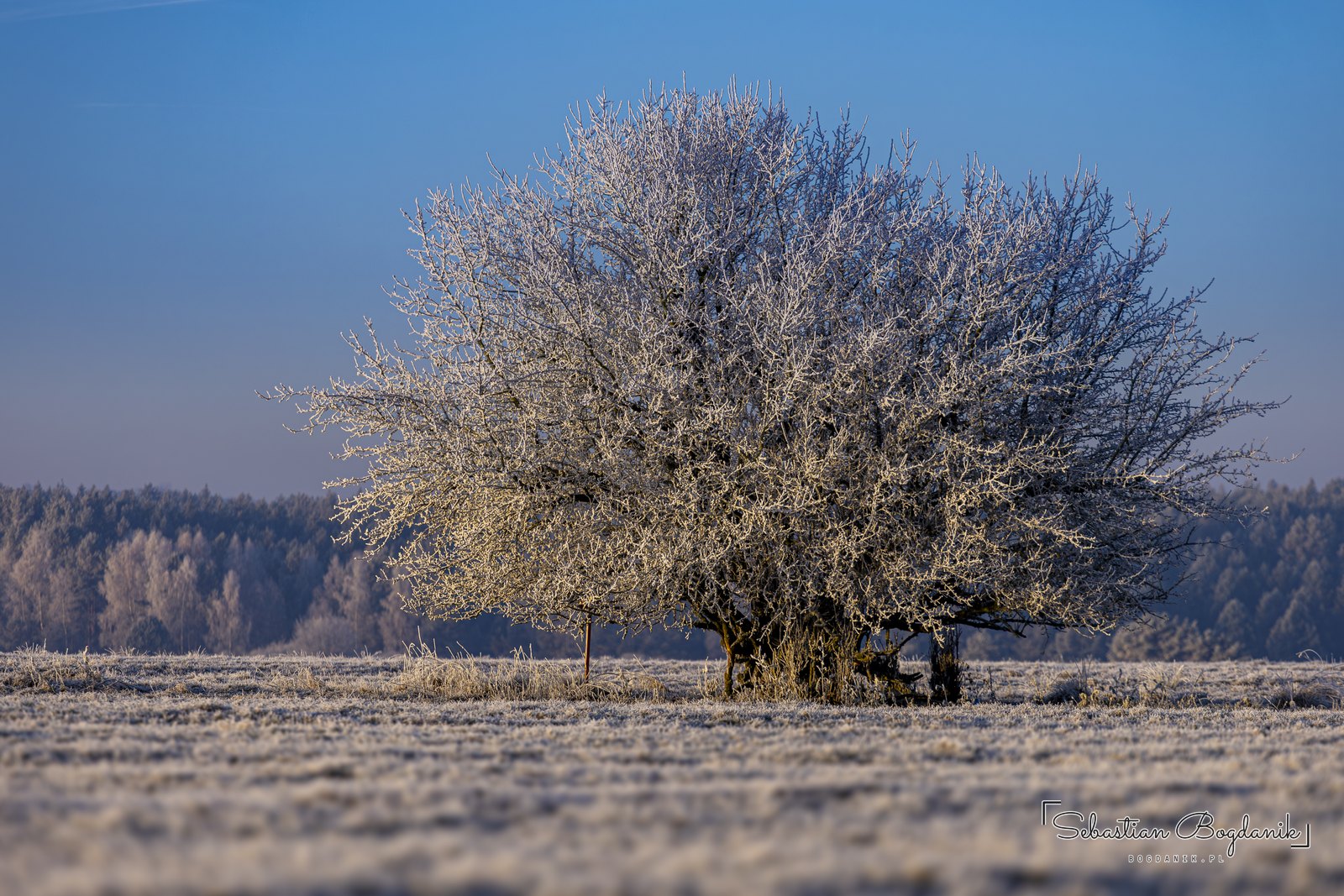
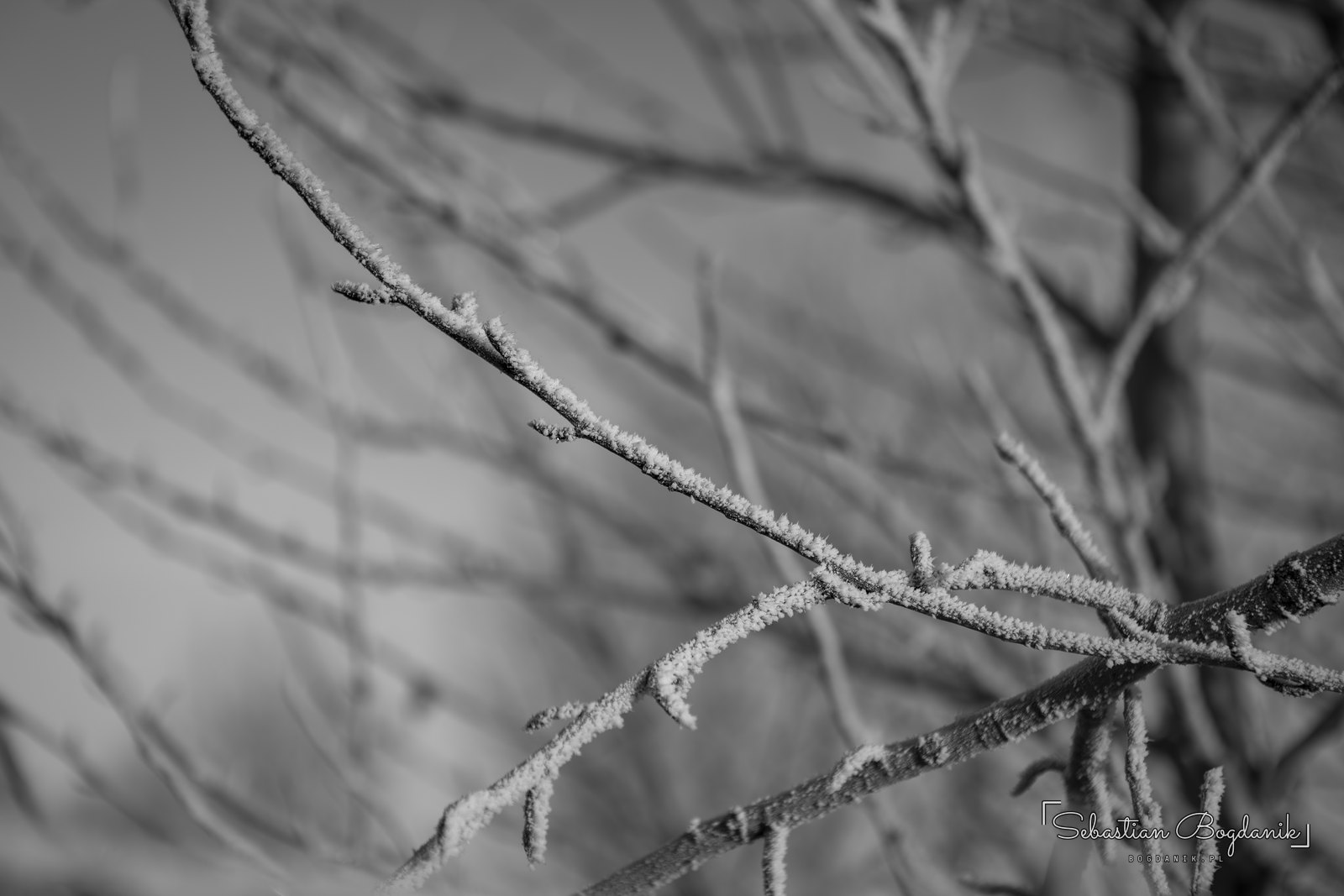
Frost covered everything: grass, bushes and lone trees along the field edges. As the sun rose higher, the frost began to sparkle and the Tatras sharpened against the blue. Some autumns you wait the whole season for a morning like this.
Litwinka above Czarna Góra
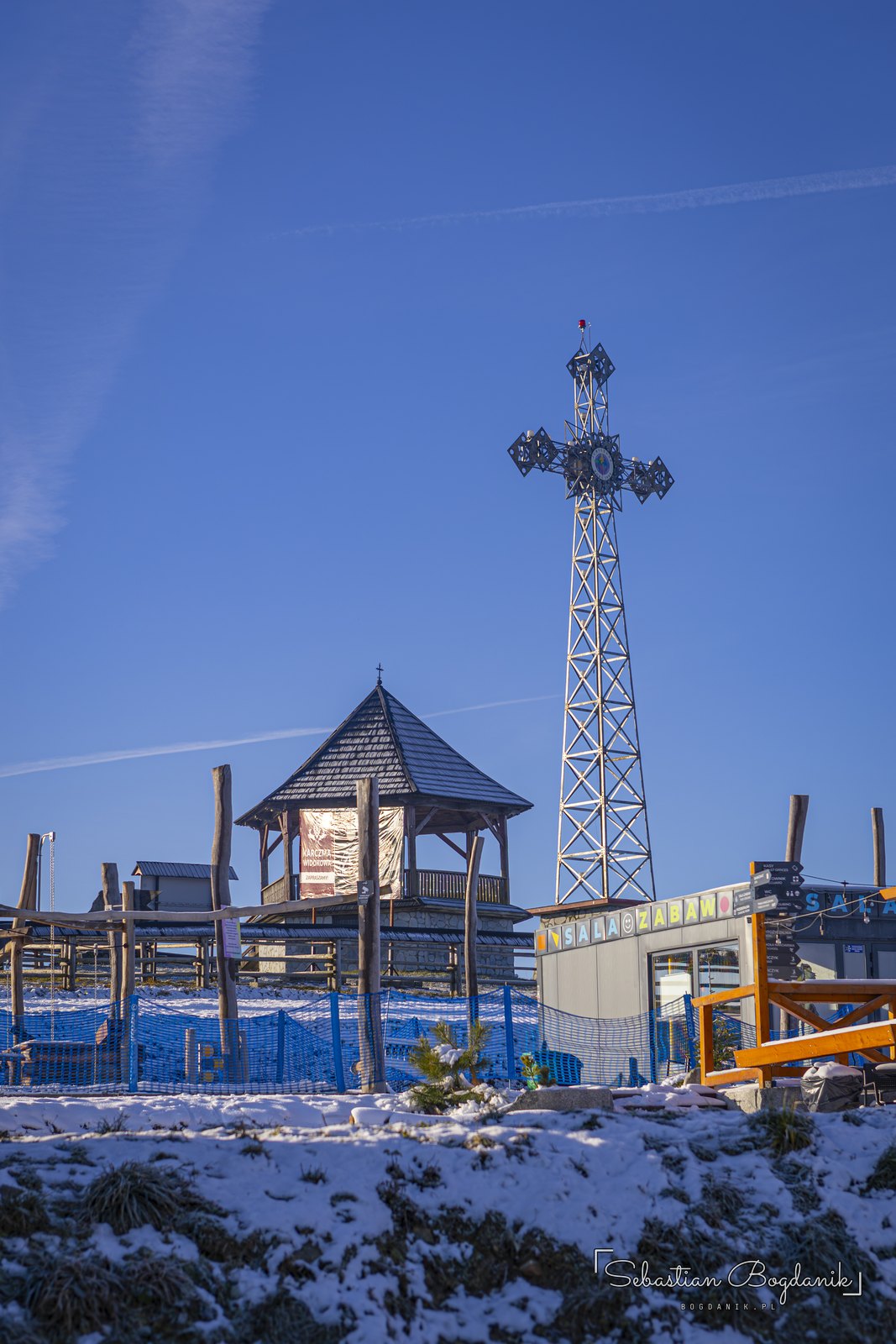
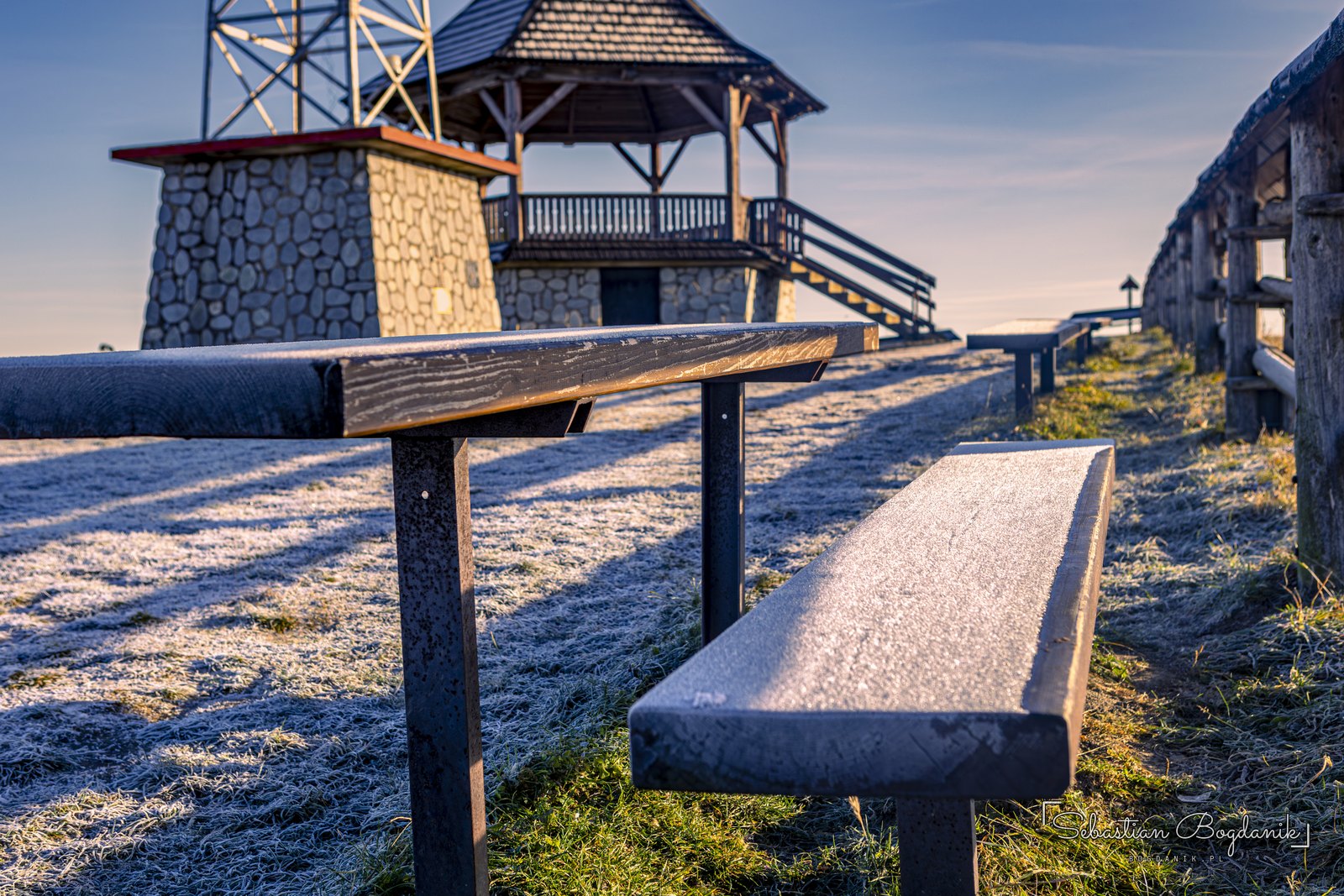
From the Nowy Targ Basin we drove east into Spiš, a historic region shared by Poland and Slovakia. Czarna Góra is a Spiš village set high, at 700–850 metres, and above it rises Litwinka: a hill with a viewpoint and a Millennium Cross that is lit at night and can be seen from a dozen kilometres away. It is one of those places where the Tatra panorama fills the entire horizon.
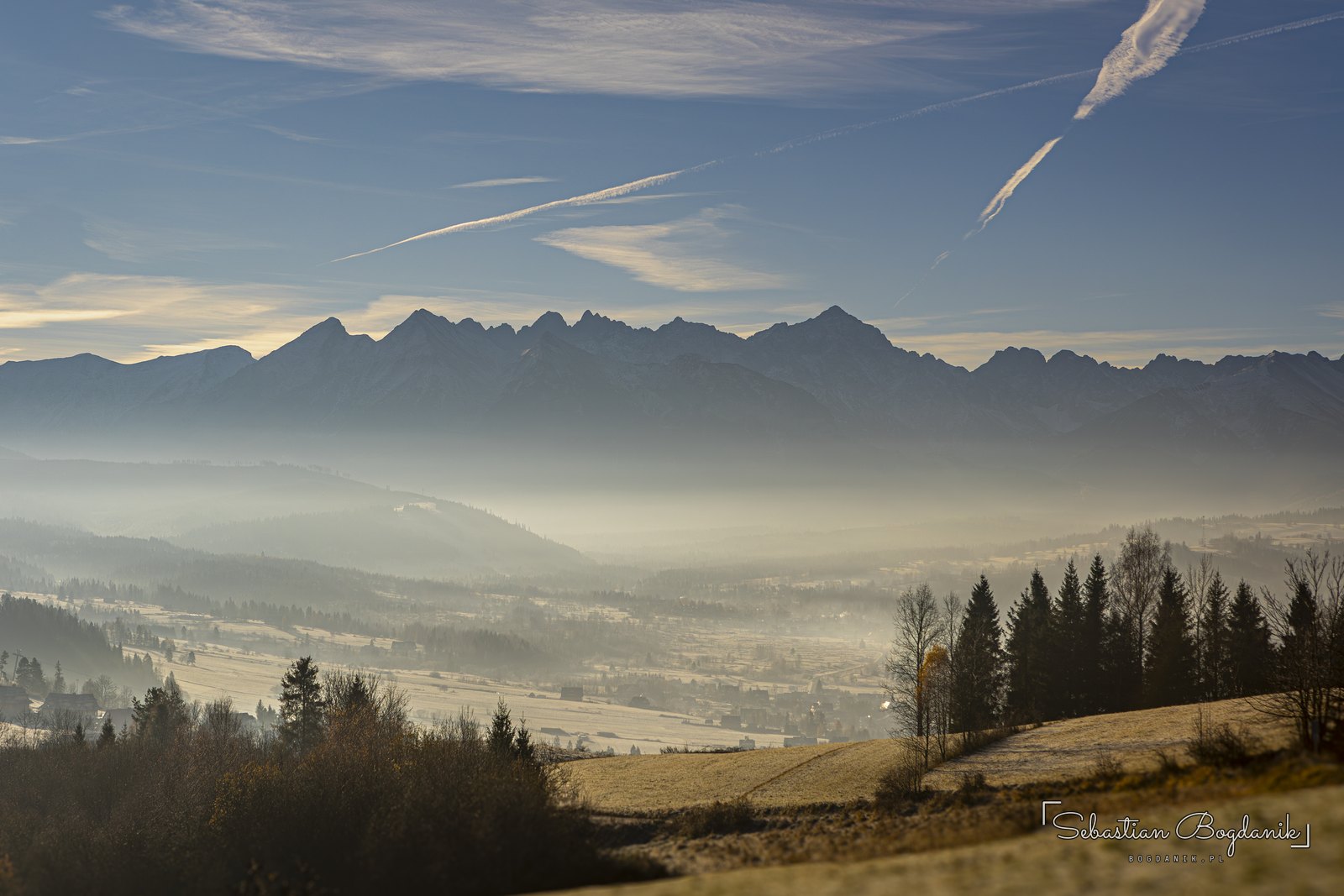
Morning mist still drifted along the valley, with the whole wall of the Tatras above it, from the Belianske to the High Tatras. The summit was empty, the benches were frosted, and the first patches of snow lay by the ski lift.
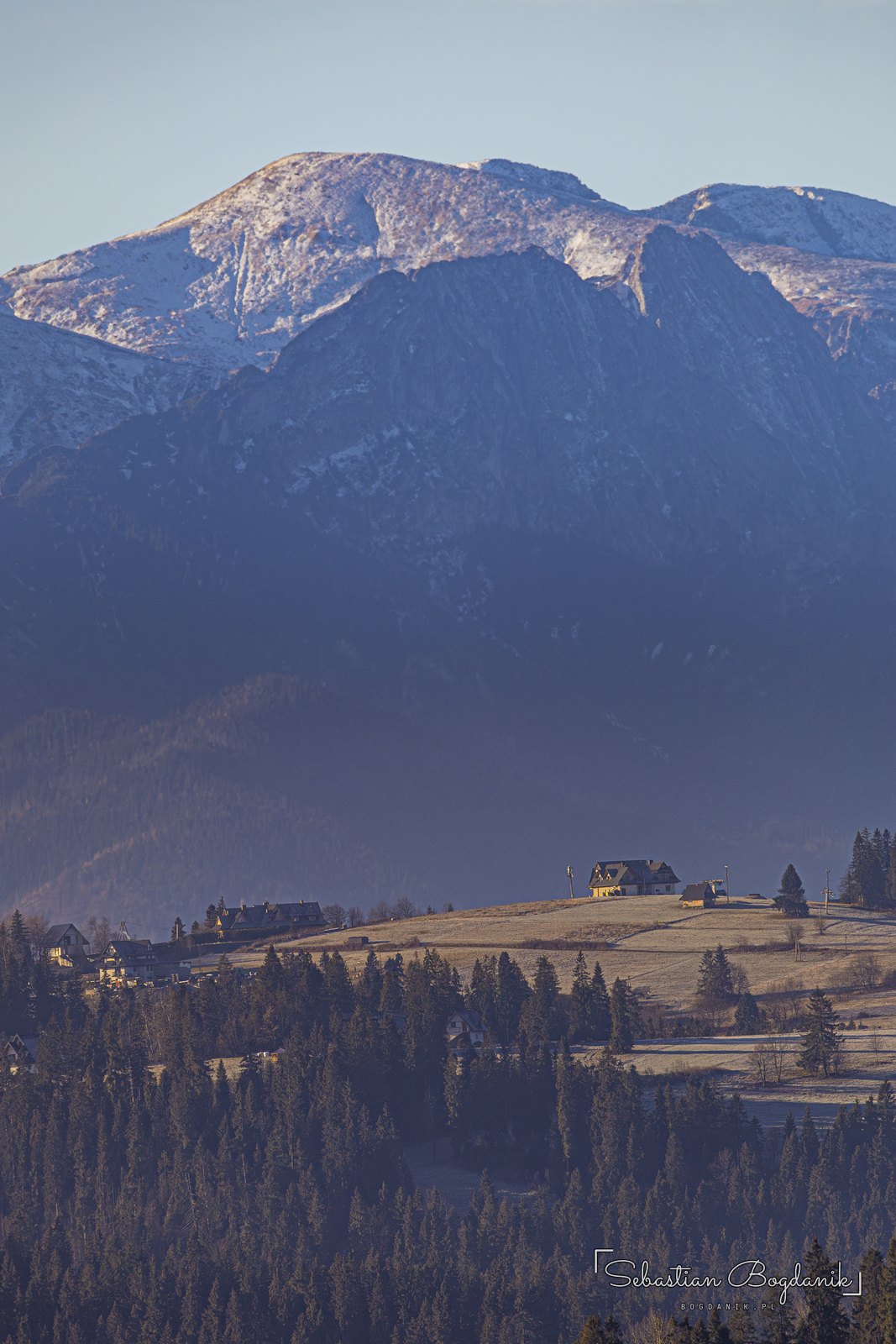
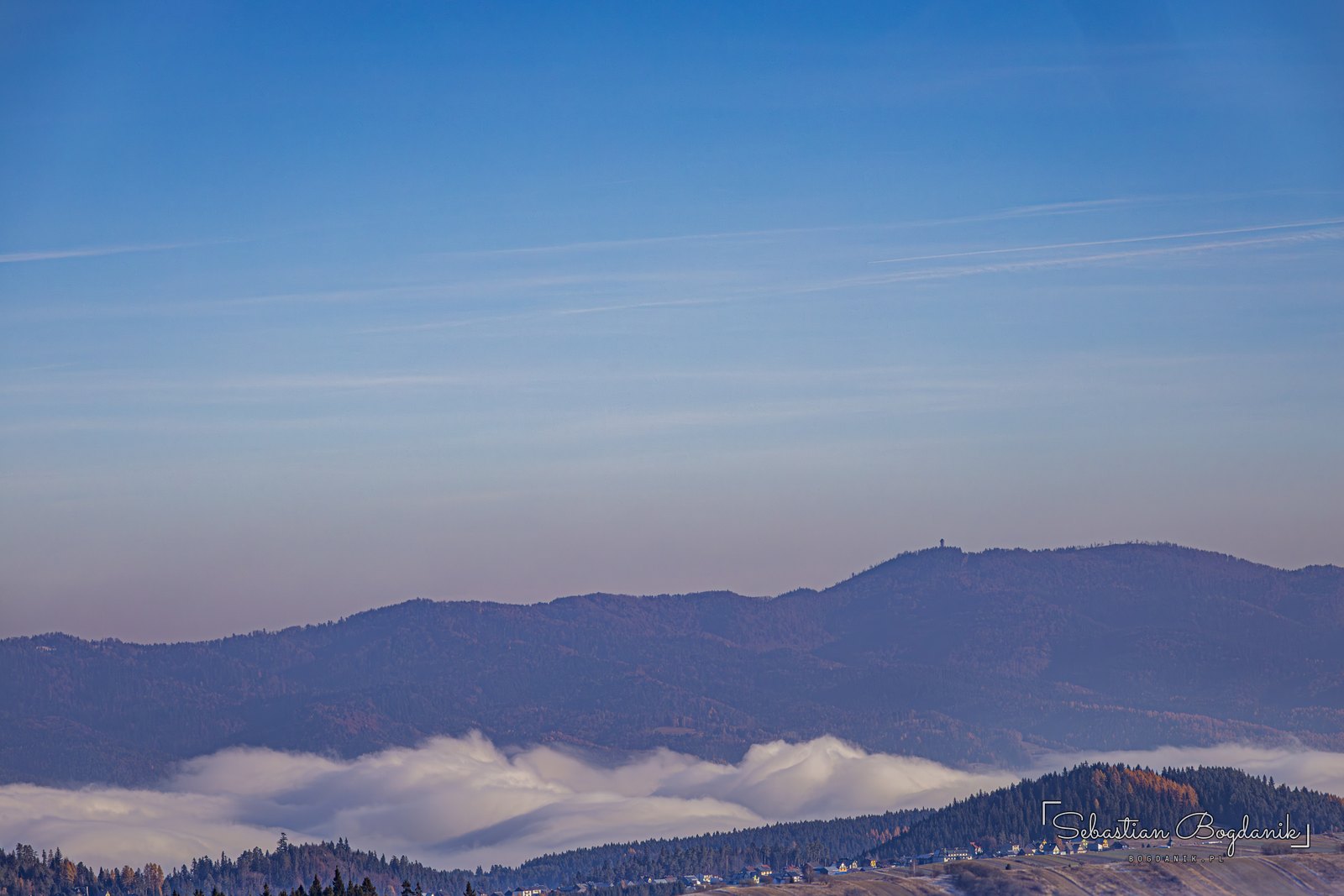
On the other side, to the north, lay a sea of mist. Only the mountain ridges rose above it, like islands.
The pass above Łapszanka
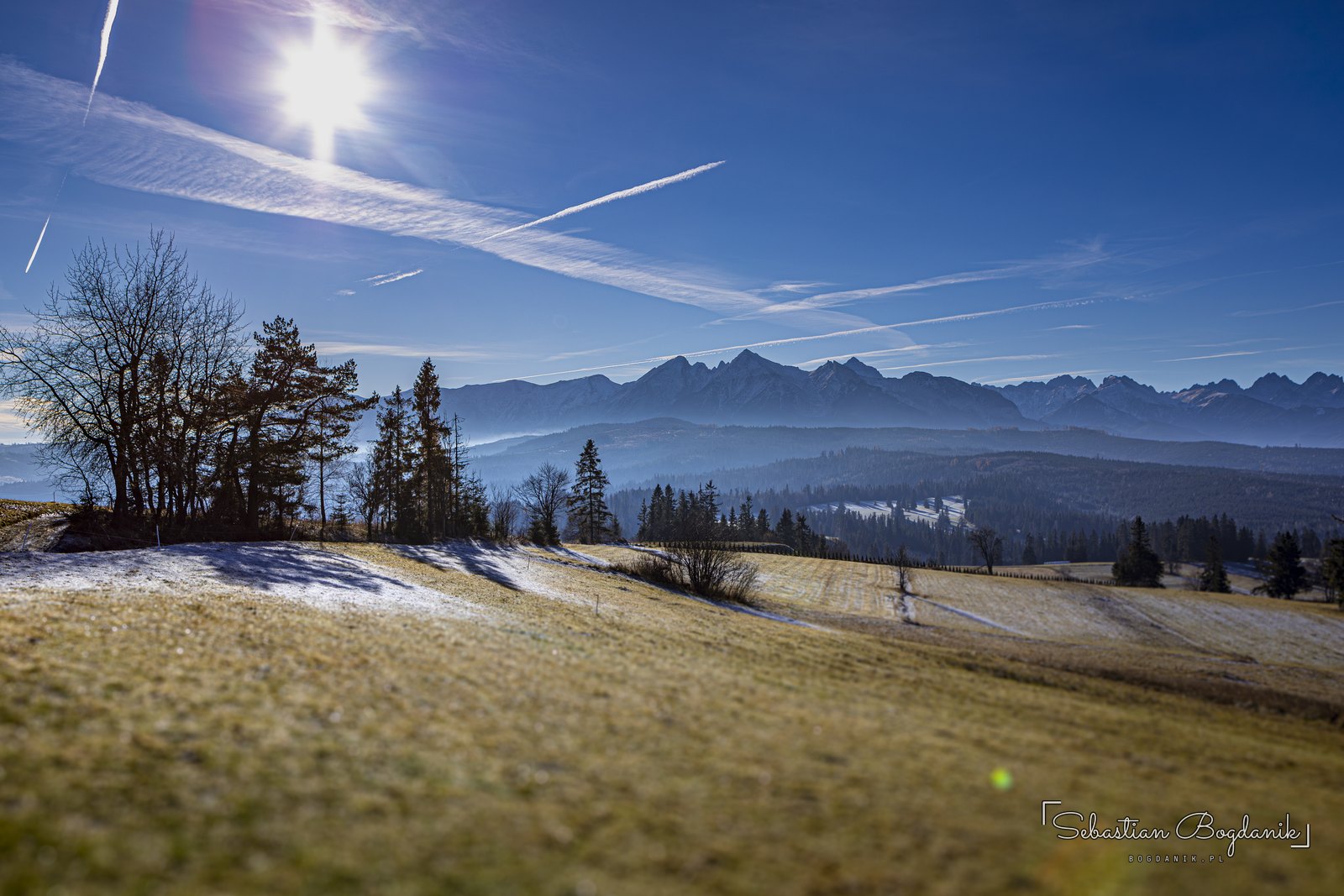
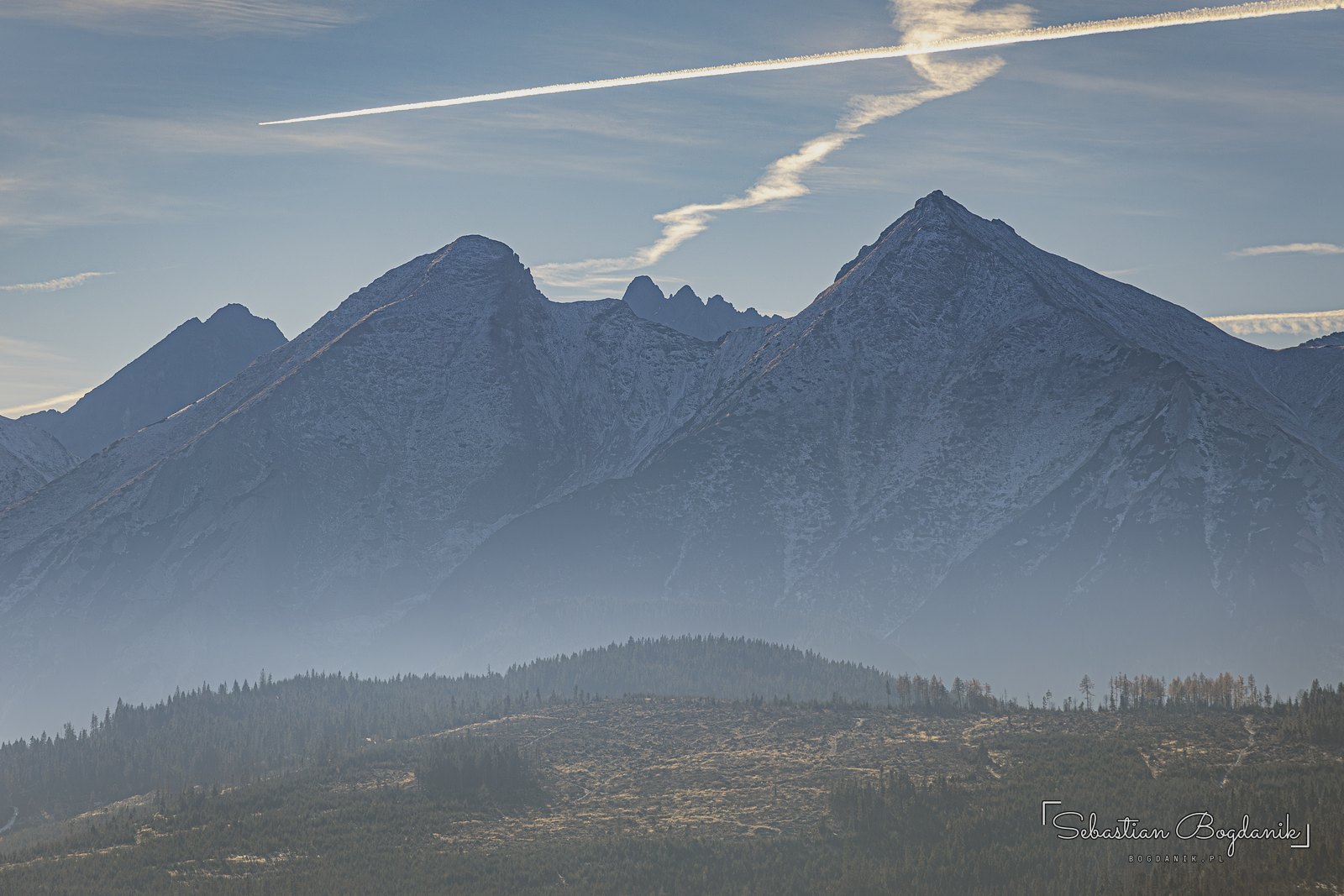
Next came a place photographers know from hundreds of pictures: the pass above Łapszanka. The road climbs onto a ridge, and suddenly the Belianske Tatras appear so close that their limestone walls seem within reach. The sun was still low, and aircraft trails criss-crossed the sky.
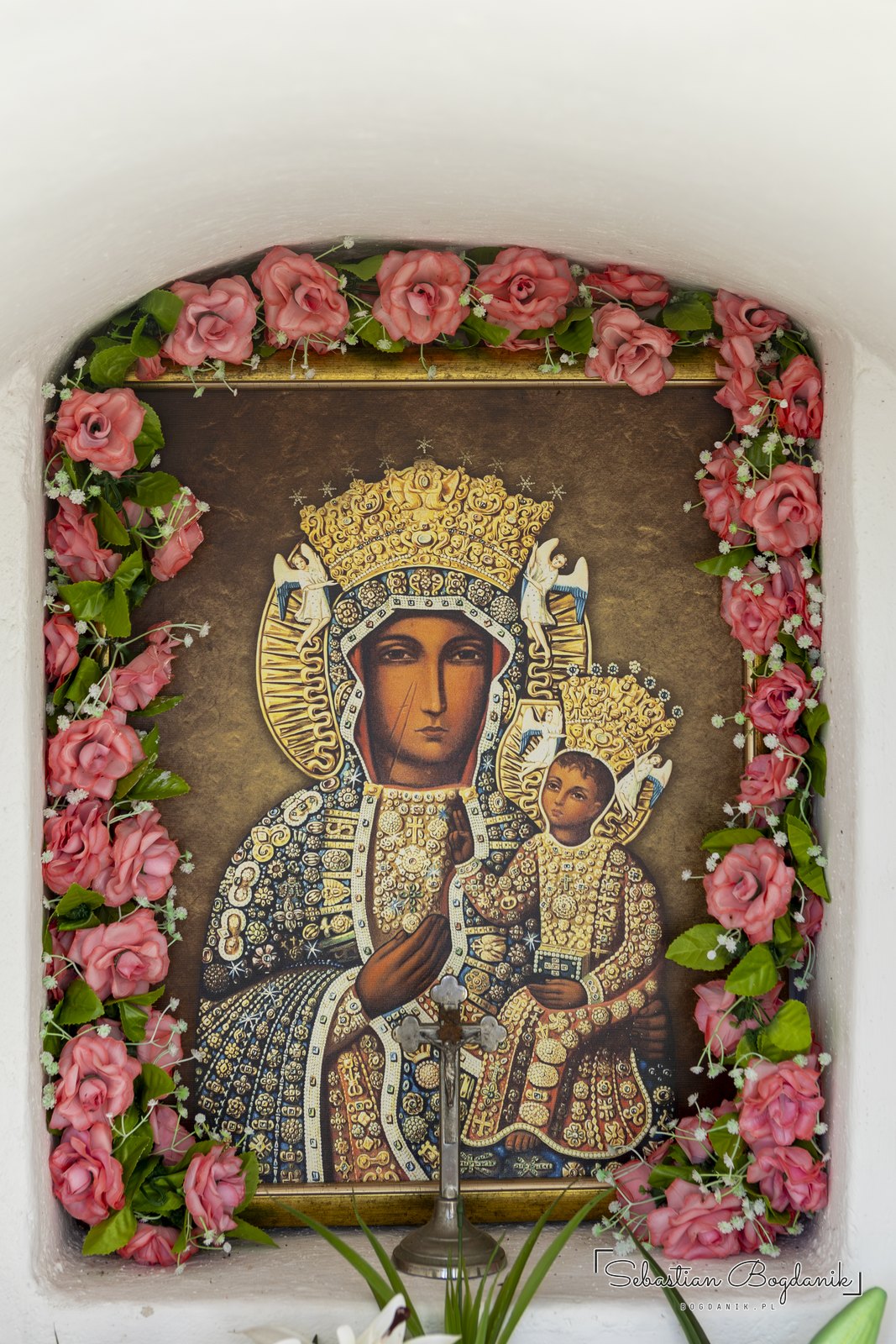
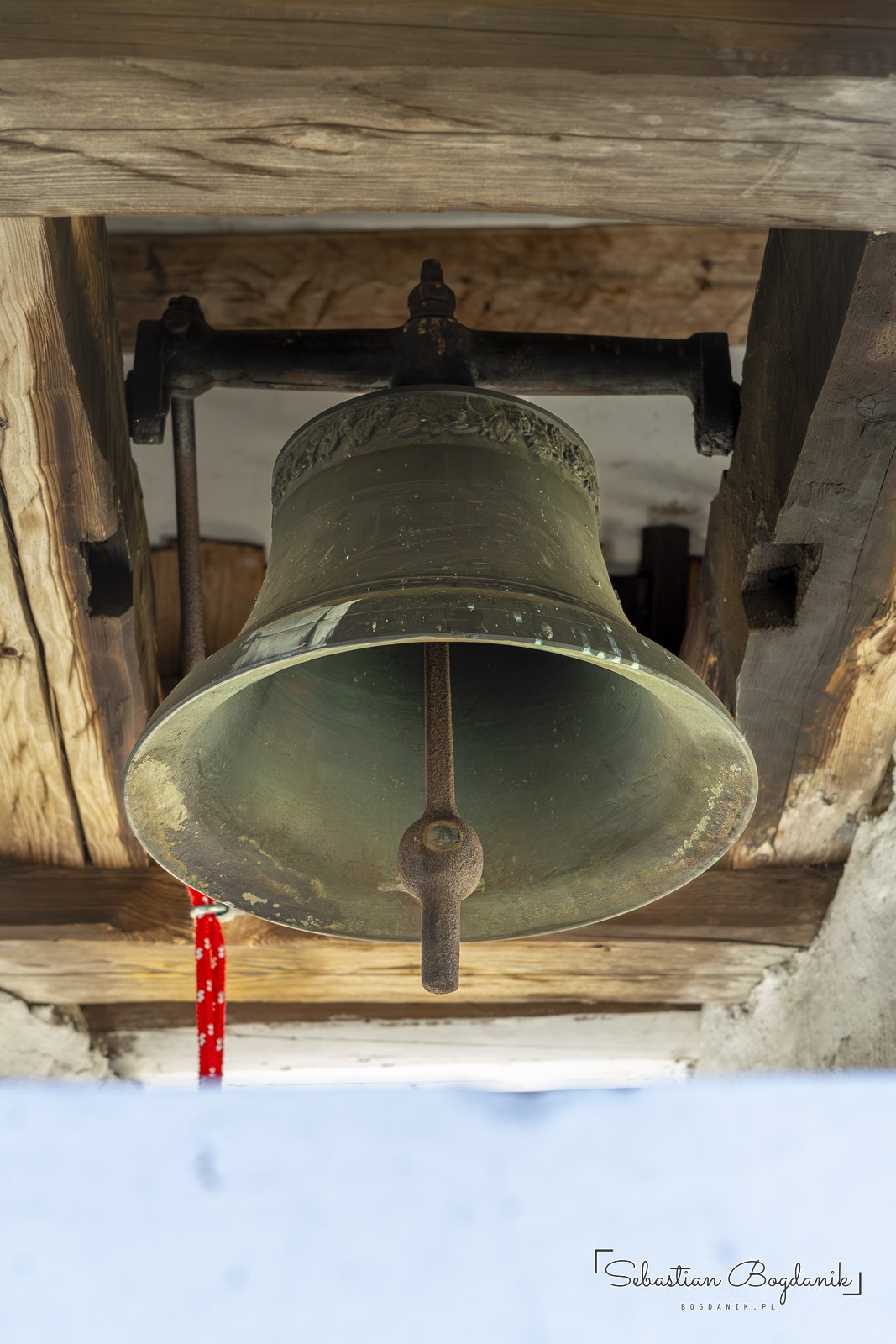
By the road stands the white Chapel of Our Lady of Częstochowa. Villagers who lived far from the church built it in 1928 so they would have a place to pray together; it was founded by the Sołtys family, known locally as the Górzans. It is a so-called Loreto chapel, with a bell rung to warn of approaching storms, as its sound was believed to drive lightning away.
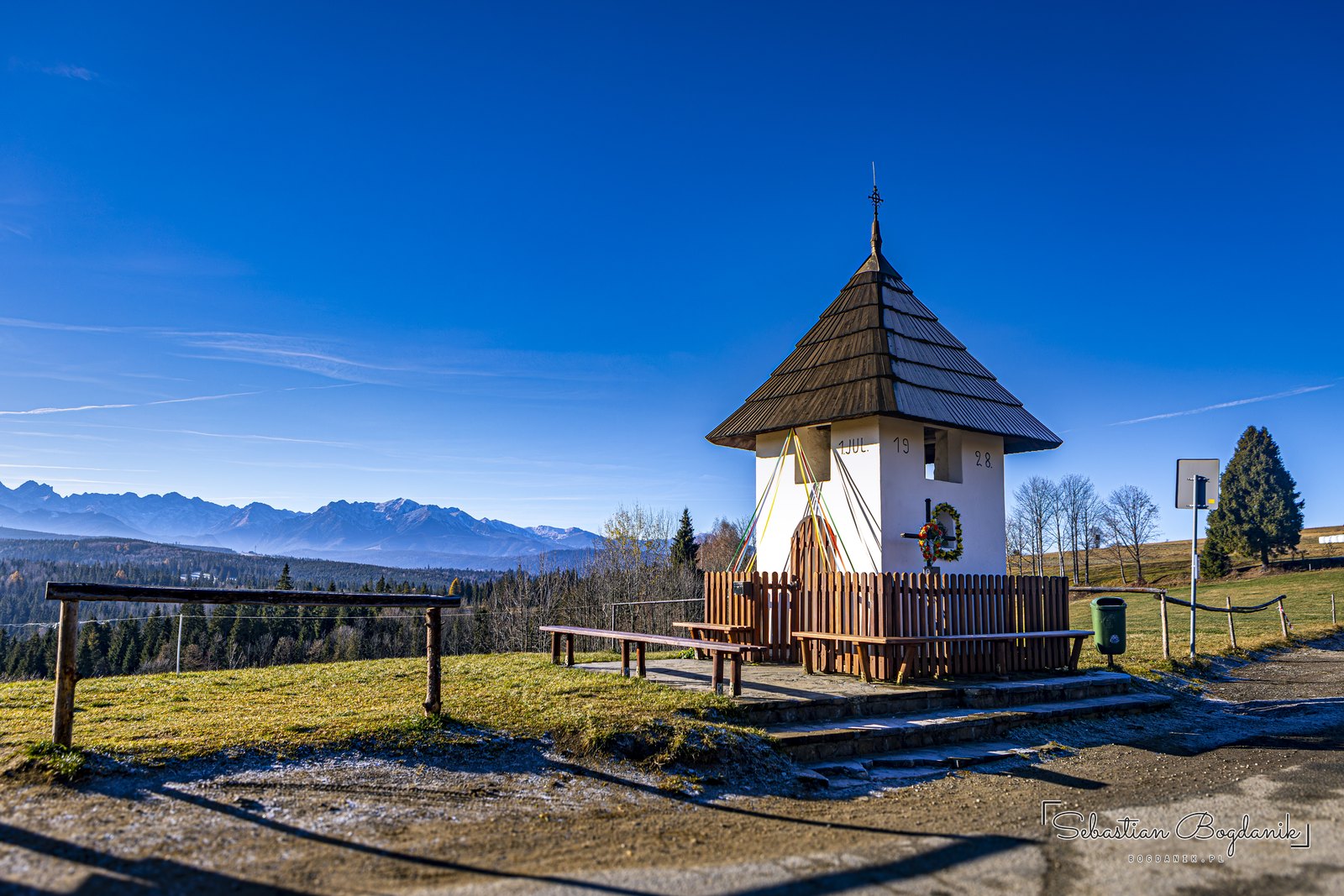
That bell has a sad story. On 17 July 1967, while ringing it during a storm, 33-year-old Franciszek Kapołka was killed by lightning. He was the son of Walenty, who had helped build the chapel as a 16-year-old. A plaque by the entrance remembers him.
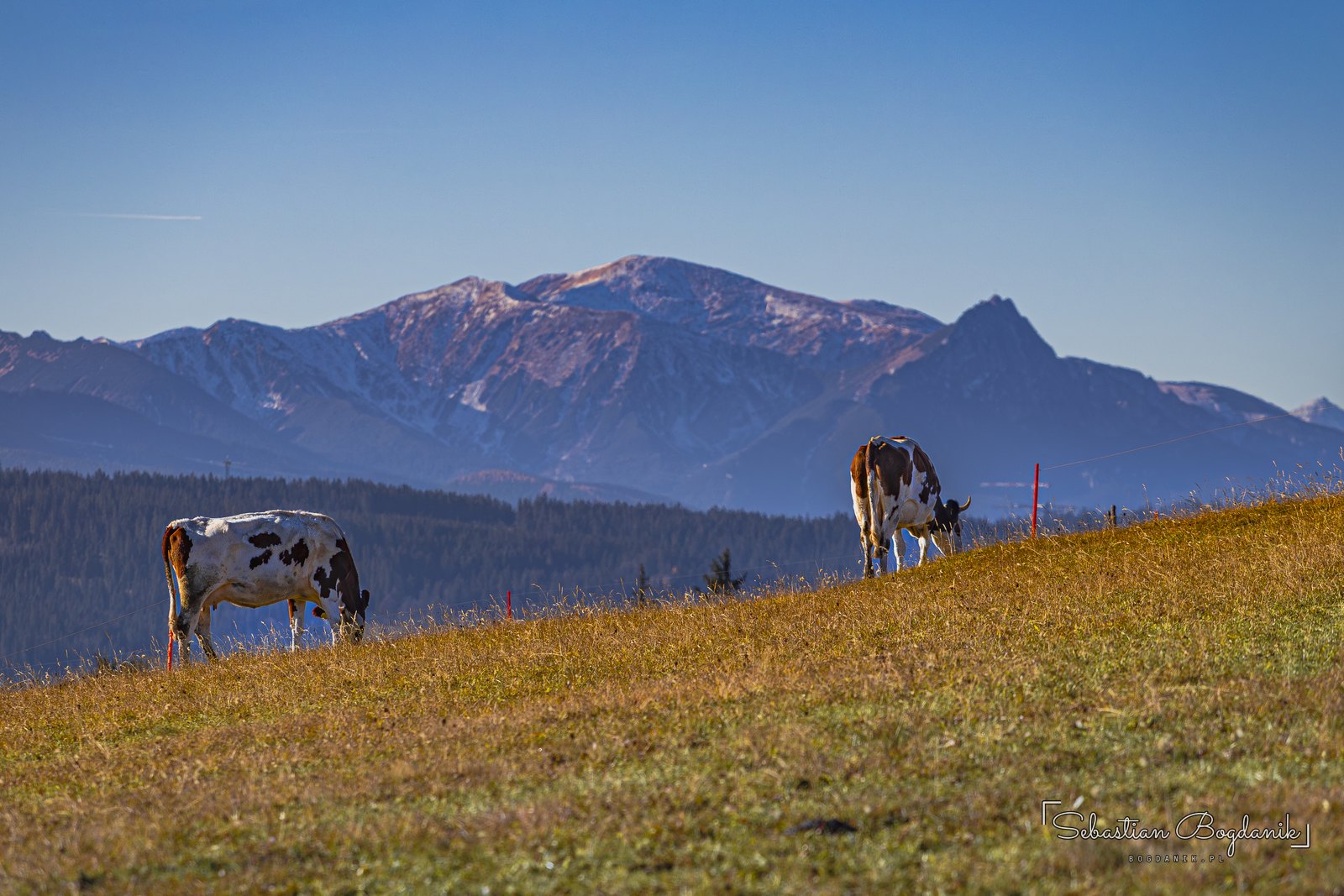
From the pass the Belianske Tatras are laid out before you. On the pasture below, cows were grazing as if no one had told them it was mid-November. In the shade by the road the grass was still white with frost, though in the sun it had long since melted.
The fields above Niedzica
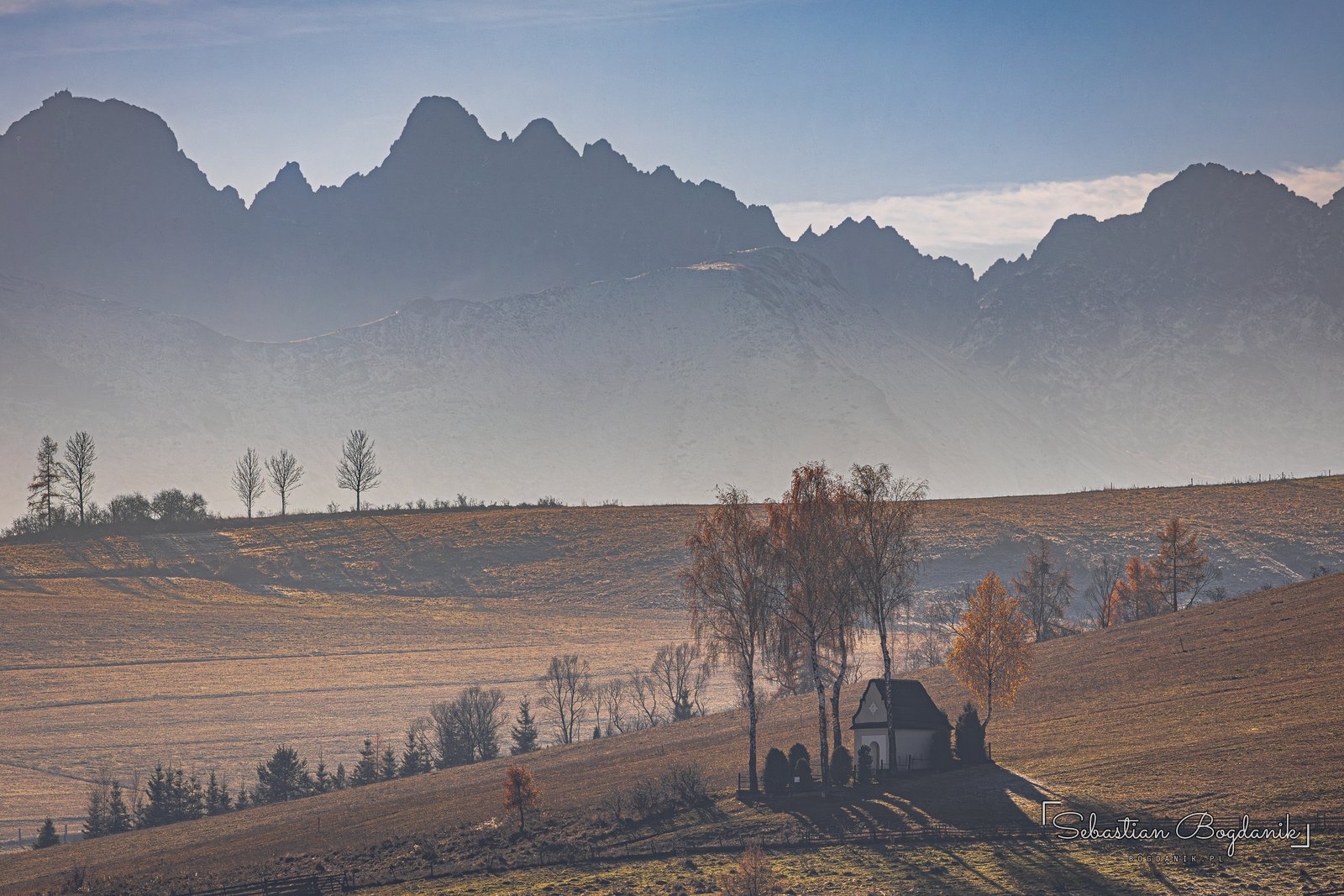
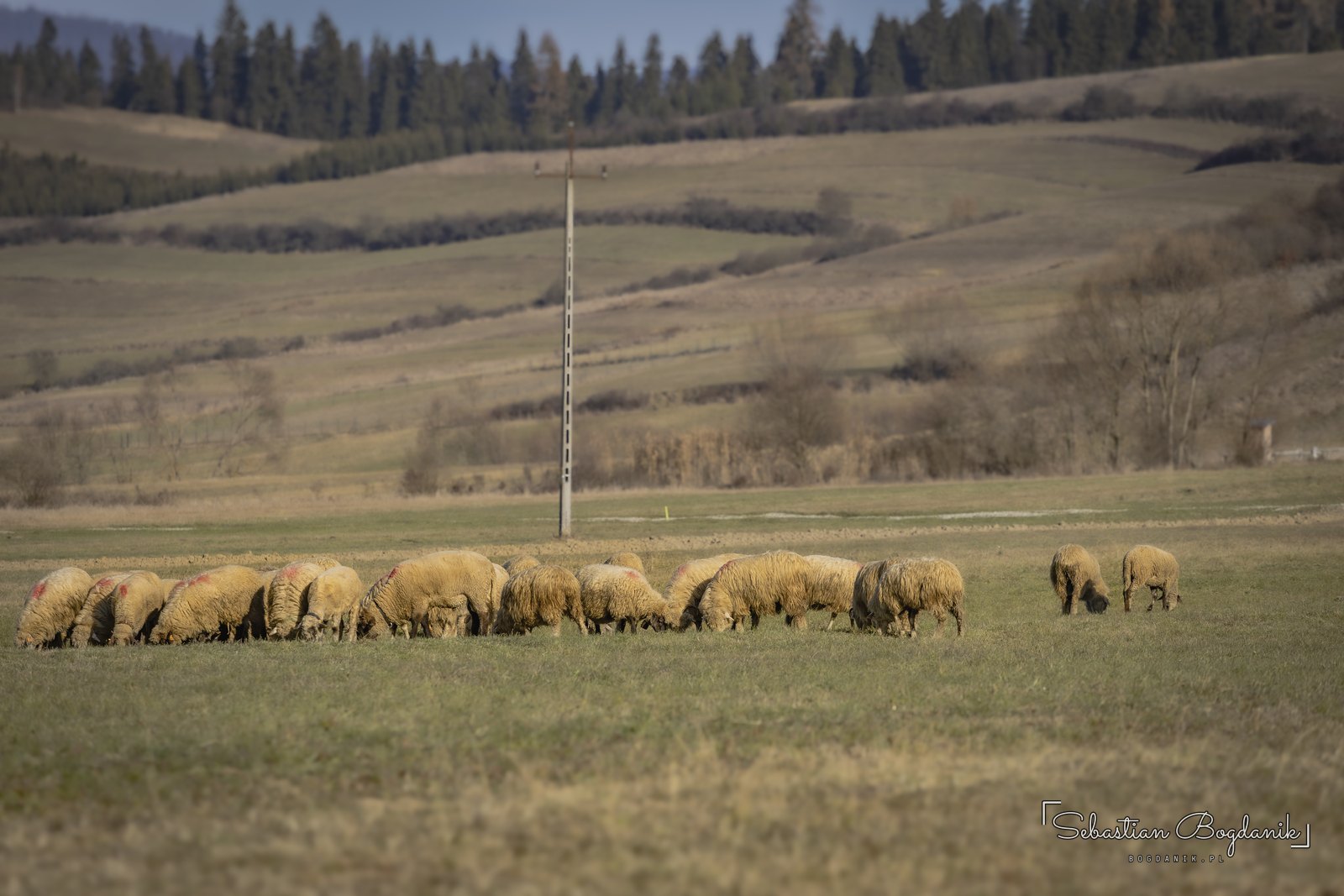
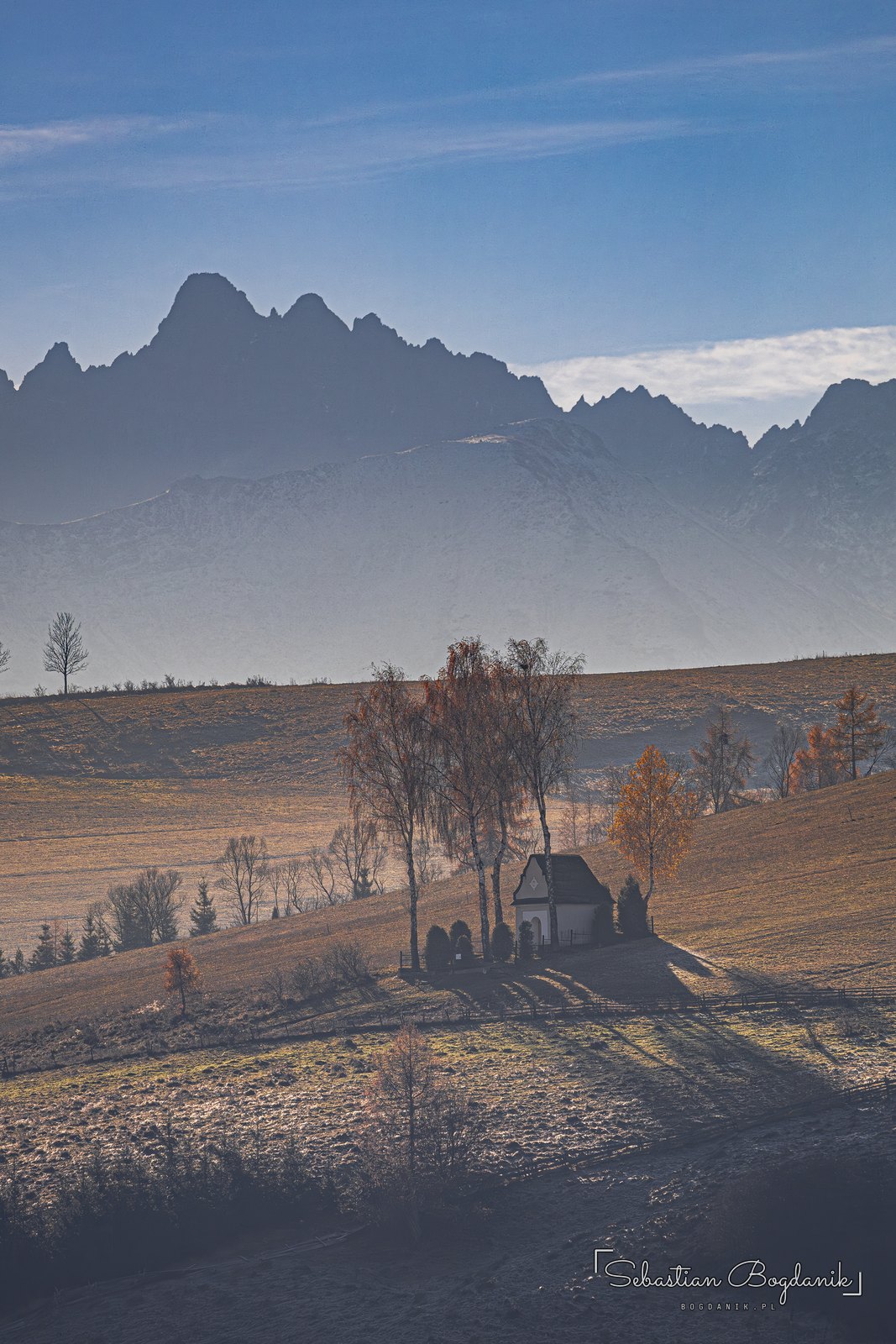
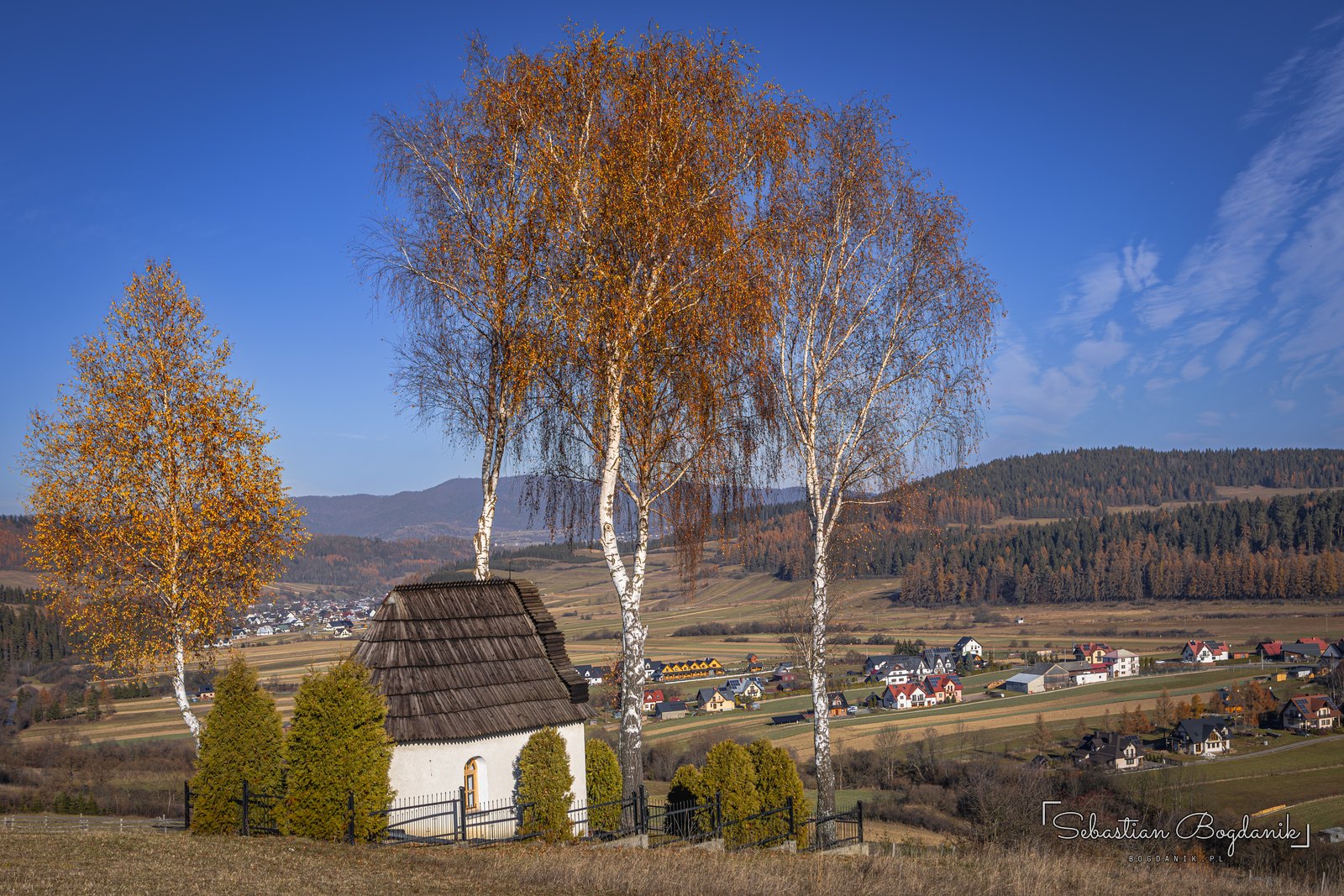
From Łapszanka we drove down towards Niedzica. A flock of sheep grazed on the wide pastures, and above them, on a gentle hill, we spotted a white chapel surrounded by trees. Behind it, in the morning haze, stood the sharp peaks of the Tatras. It was the very chapel we were heading for next: the Chapel of Our Lady of the Snows in Kacwin.
Kacwin and the Chapel of Our Lady of the Snows
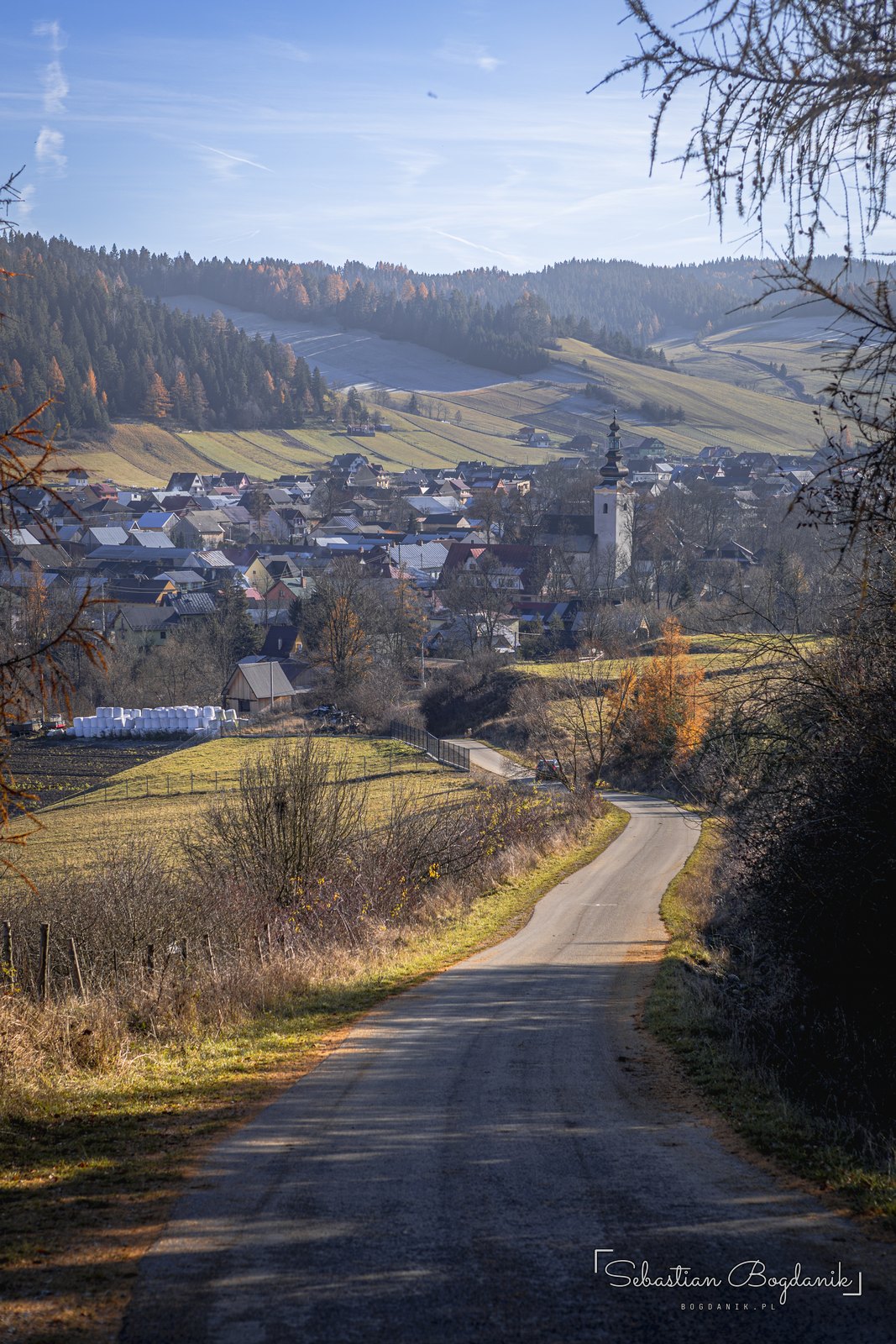
Kacwin is one of the oldest villages in Zamagurie, the Spiš lands north of the Spišská Magura range. It was founded in the early 14th century, when the Berzeviczy family, owners of Niedzica Castle, were settling the area. For centuries it belonged to Hungary; it became part of Poland in 1920, when the Conference of Ambassadors granted Poland fourteen Spiš villages.
The Chapel of Our Lady of the Snows stands on a hill above the village, among birches and thujas. According to the information board by its fence, it was built around 1750, funded by a parishioner from a family of Spiš masons who handed down their craft from generation to generation. The most likely story is that the parish priest had it built after a great fire in the village. Its door faces the settlement so that the priest, blessing the faithful, would bless the whole village too and protect it from fire.
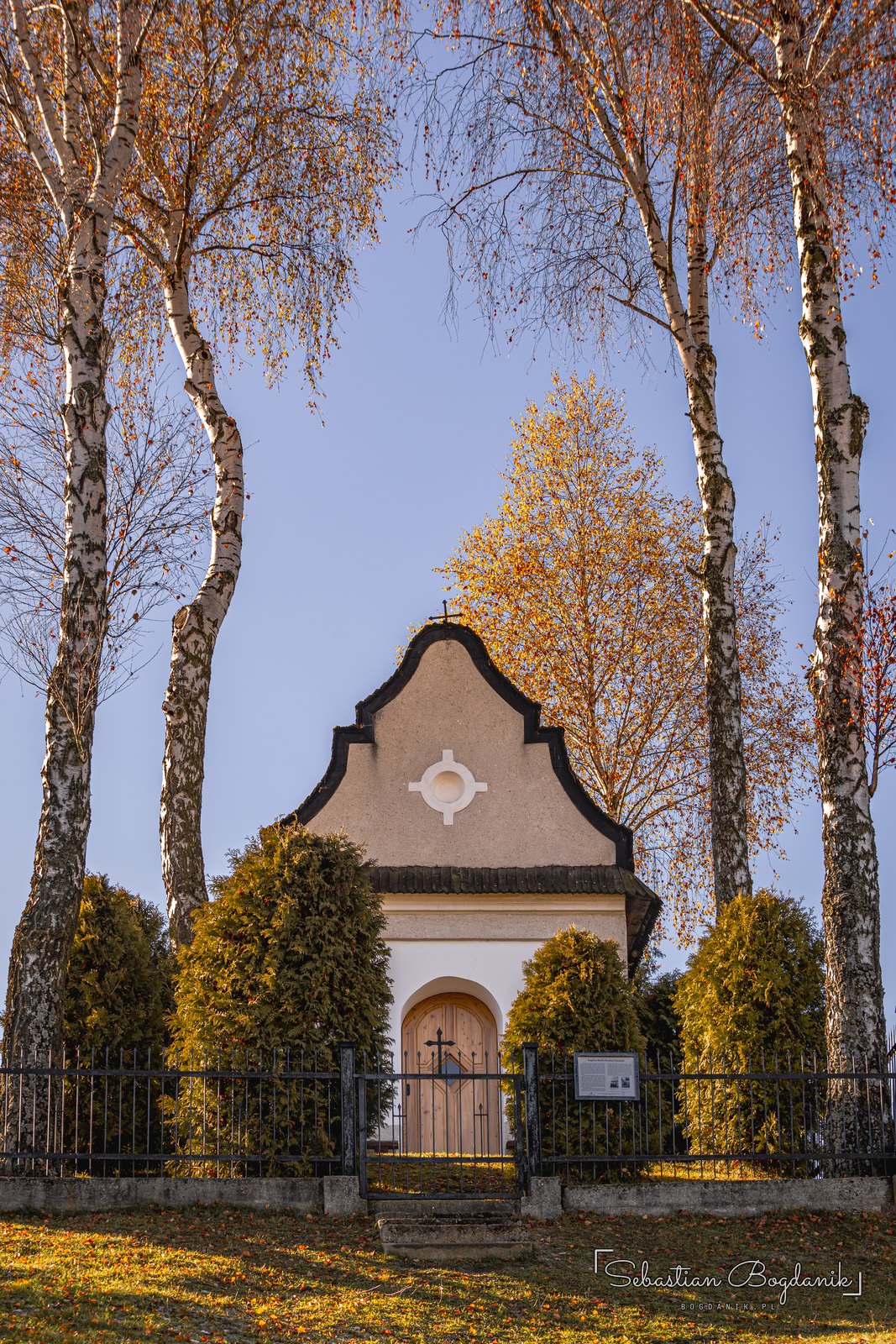
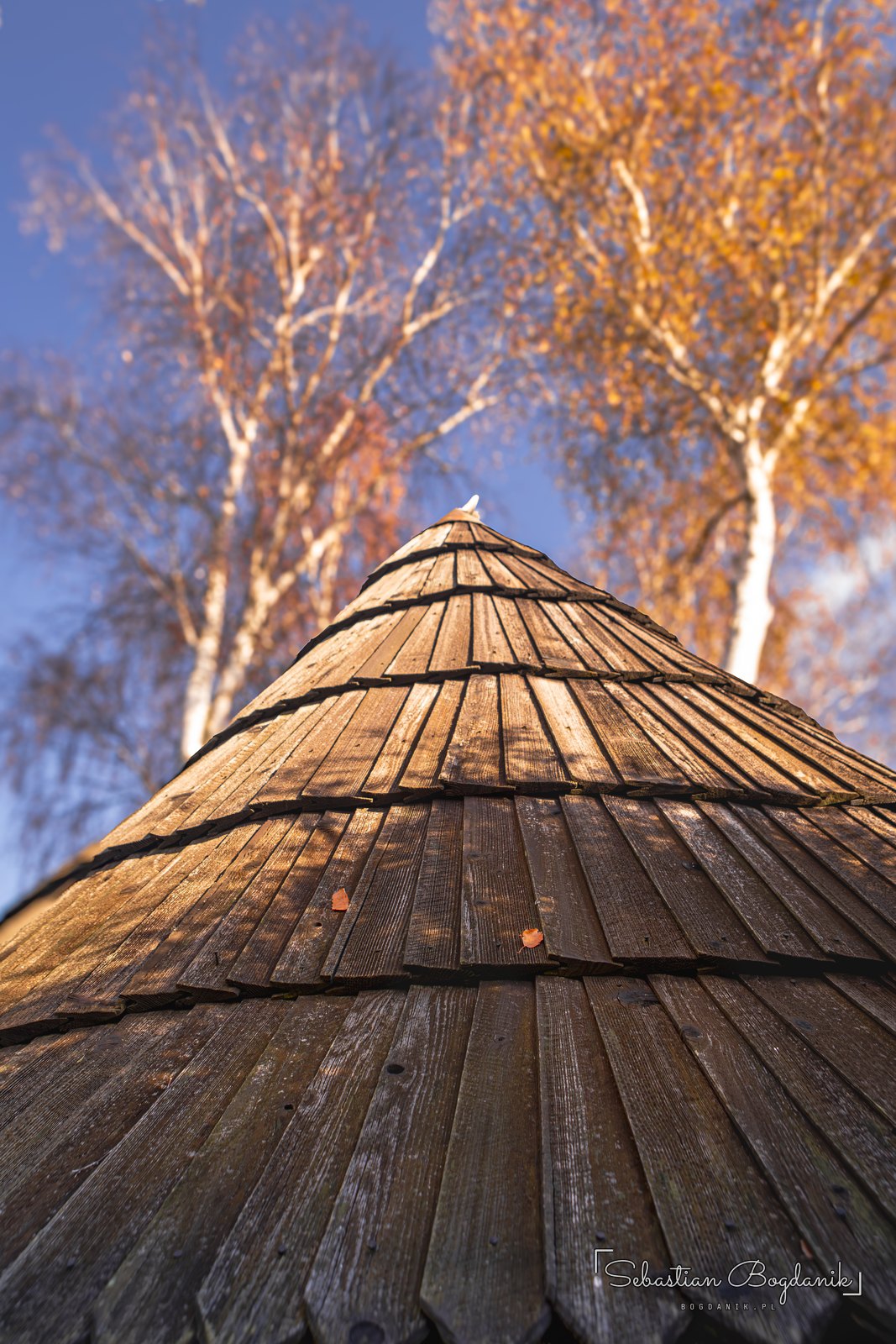
In 1912 the parishioners raised money for a full renovation and for plastering the interior. By the 1970s its only decoration was the altar painting: the Virgin and Child against the clouds. Since the 20th century solemn Masses were held here on the feast of Our Lady of the Snows, 5 August, and in 1970 Cardinal Karol Wojtyła, the future Pope John Paul II, granted the chapel the right to have Mass celebrated in it.
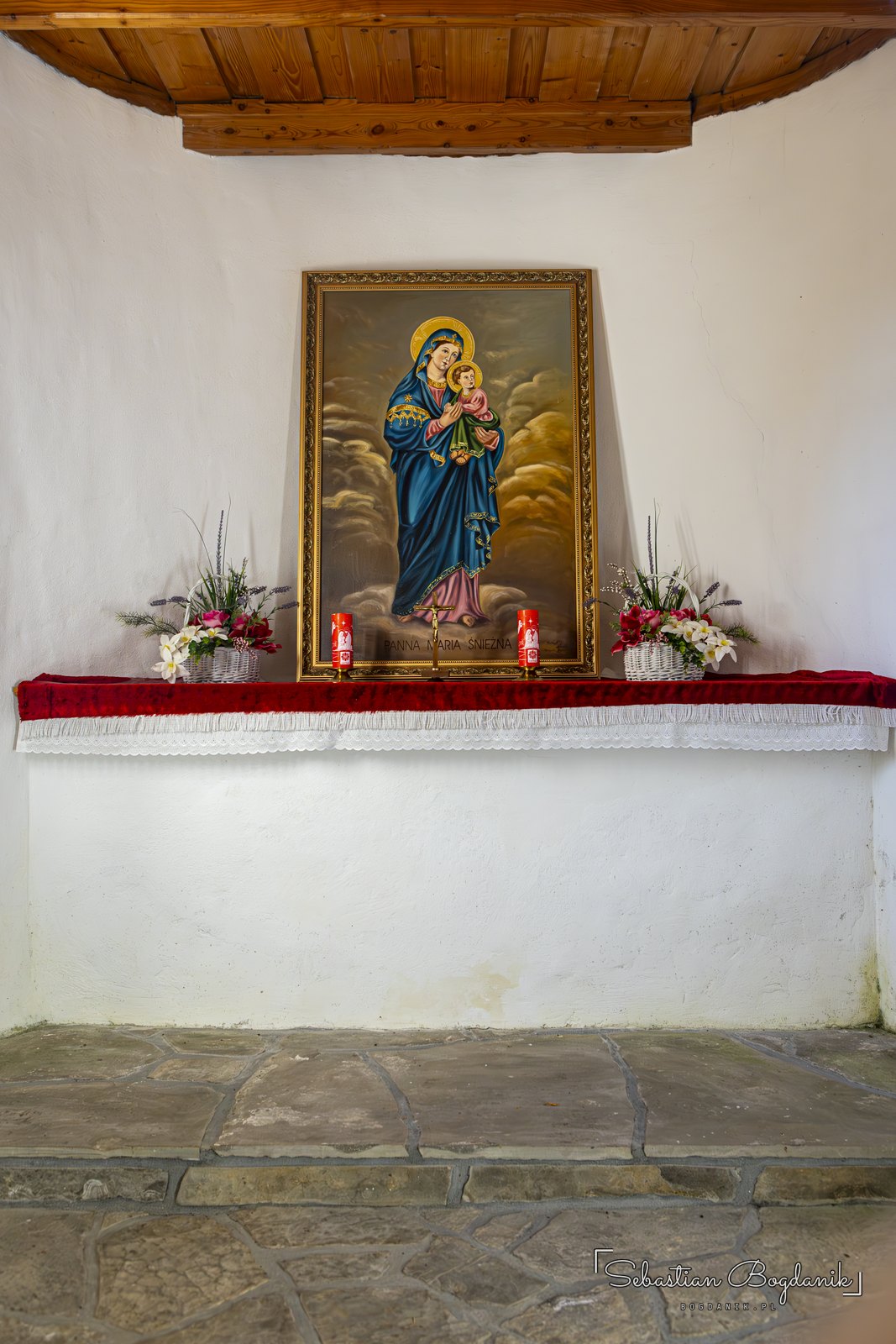
The dedication is no accident. Devotion to Our Lady of the Snows spread across Central Europe after victory over the Turks and the end of an epidemic, and the 18th century was a time of plague and disaster. A legend is attached to the chapel as well: a young woman from Kacwin named Maryna walked here on her knees every night for four years, dressed in white, praying for her husband to return. People said it was punishment for stealing another girl’s fiancé, and that the rival had cursed her by throwing a padlock into the water. The husband vanished and never came back.
Sromowce Wyżne
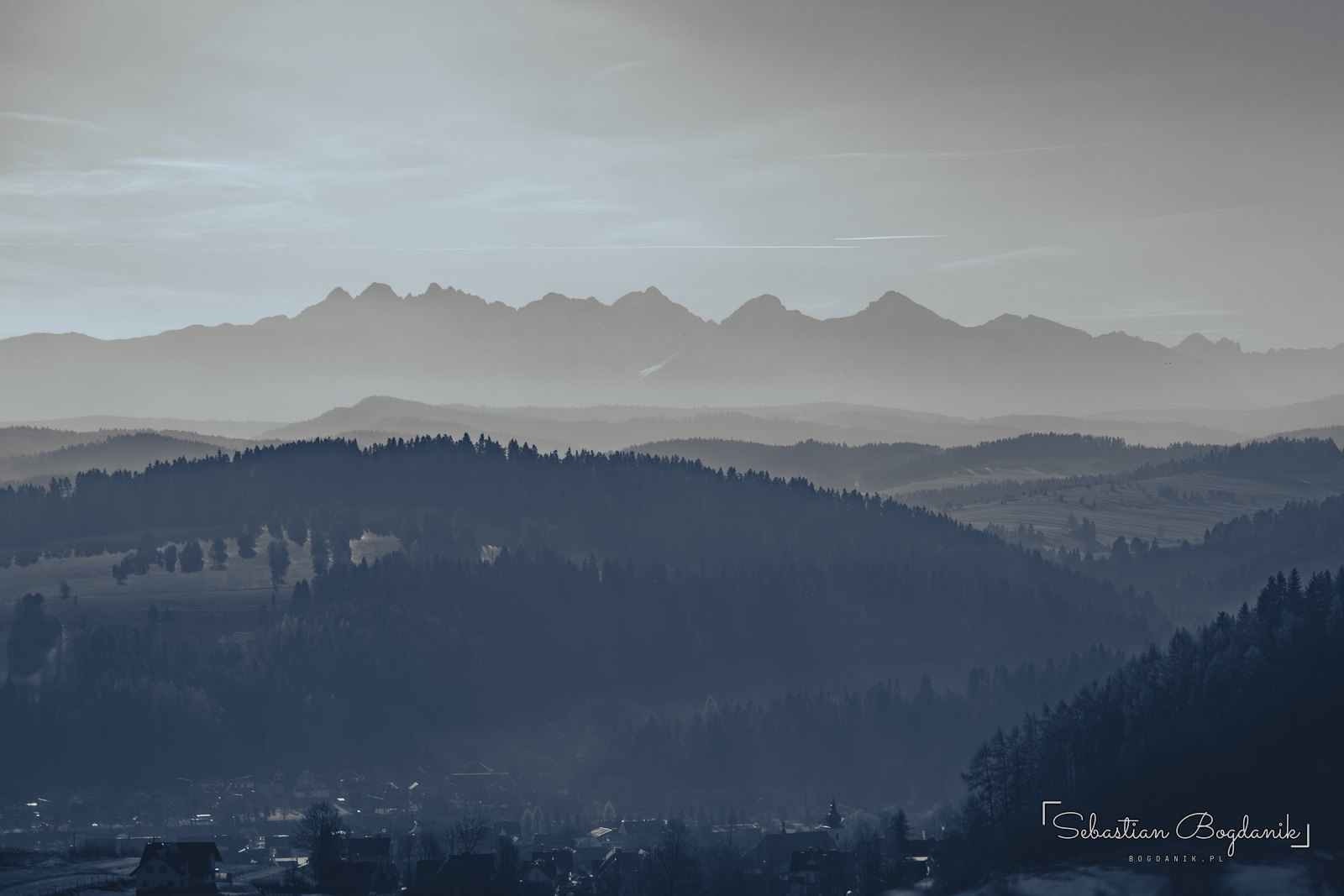
From Kacwin we headed towards the Dunajec river. A short stop in Sromowce Wyżne gave one of the finest views of the day: the Tatras emerging, hazy, behind ridge after ridge, like a stage set.
Czorsztyn: two castles face to face
Two histories meet at Lake Czorsztyn. On the southern shore stands Dunajec Castle in Niedzica, built in 1320–1326 as a Hungarian border fortress. On the northern shore, on a rock, are the ruins of Czorsztyn Castle, its Polish counterpart. For centuries the Polish-Hungarian border ran along the Dunajec, and the two castles guarded it from opposite banks.
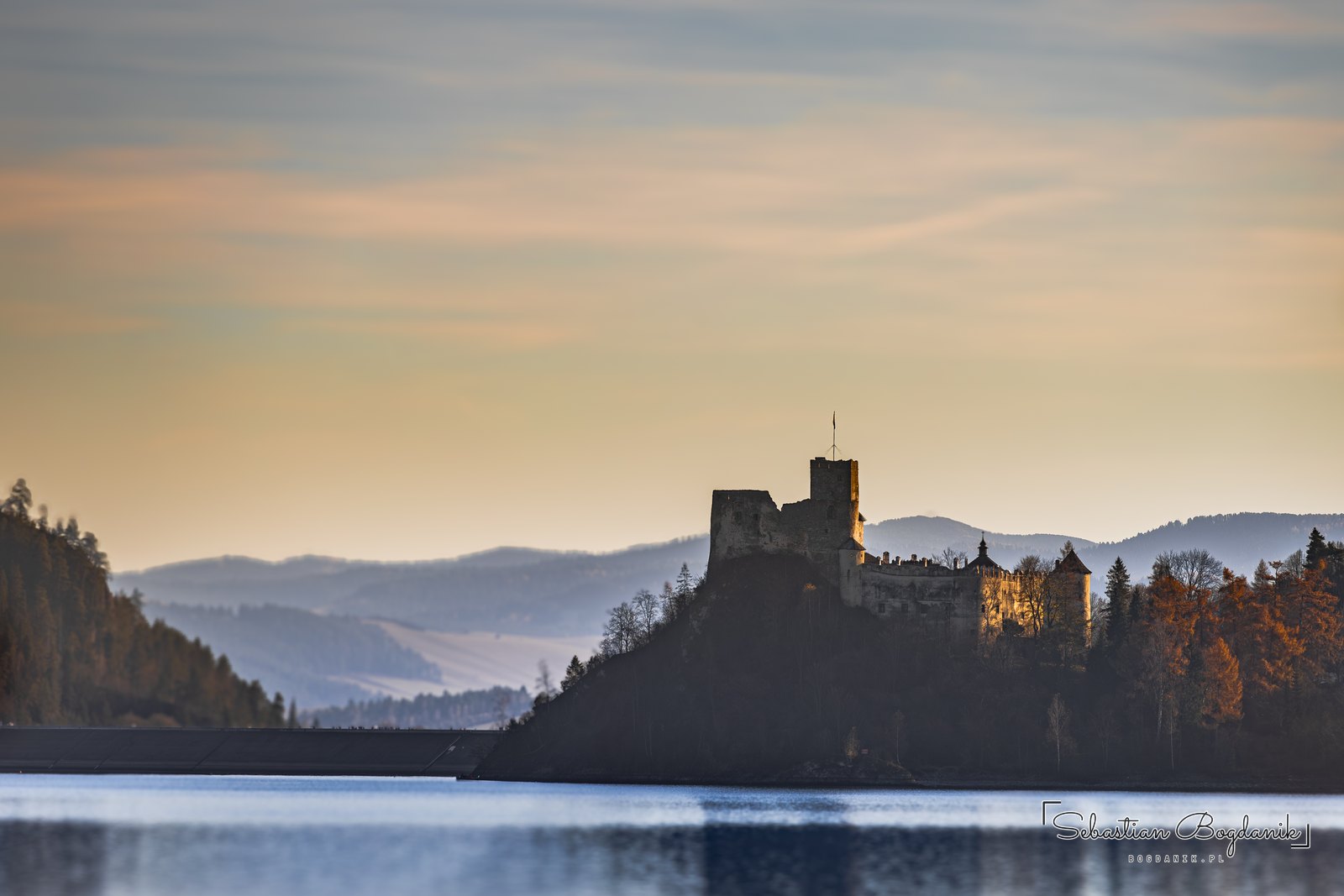
Niedzica Castle has one of the strangest legends in Poland: an Inca princess said to have married one of the Berzeviczys, the castle’s owners, and Inca treasure hidden in its walls along with knotted quipu records.
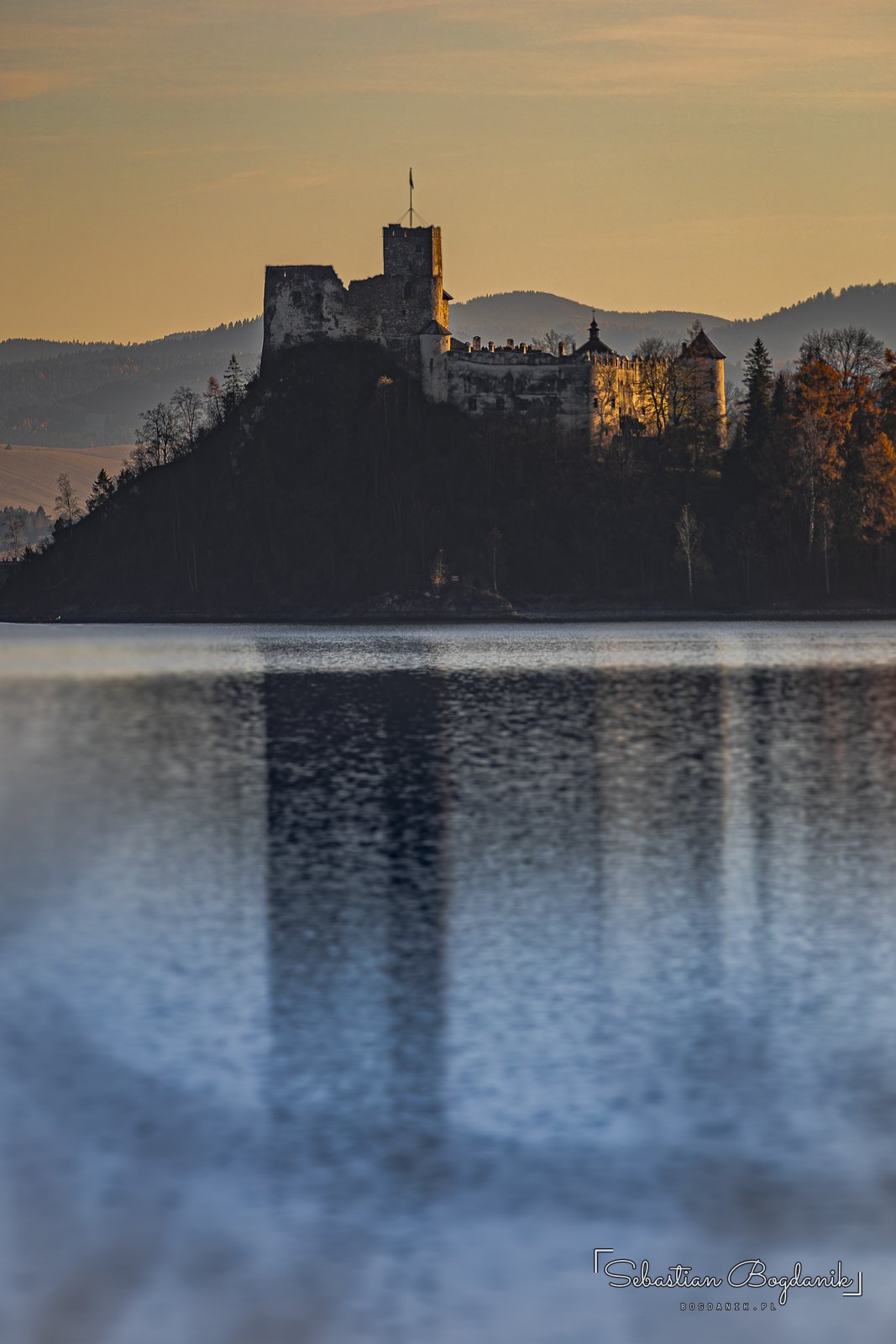
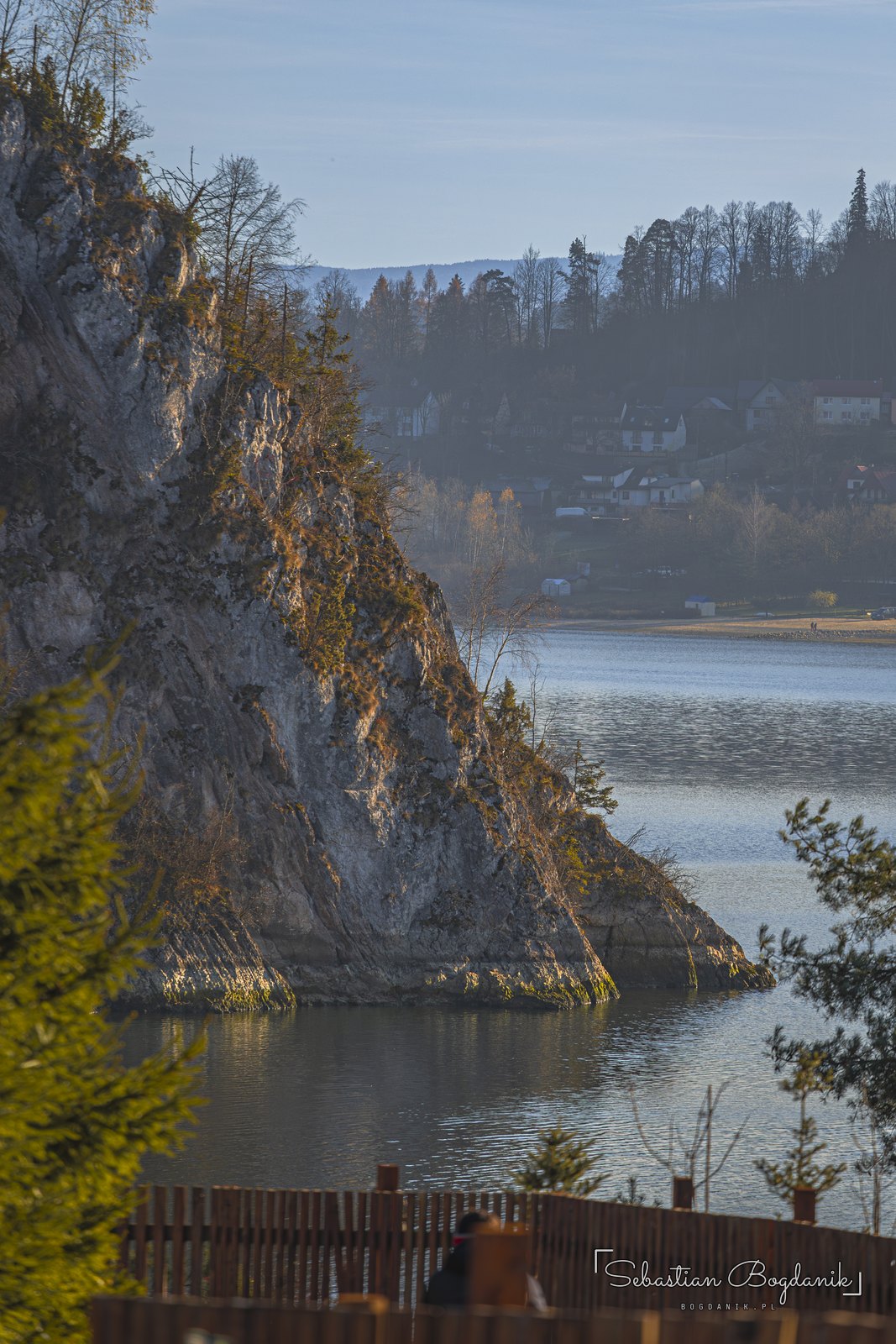
Czorsztyn Castle dates back to the 14th century. Casimir the Great expanded it, and lightning sealed its fate: in 1790 a strike set its roof on fire. Today the ruins look out over the whole lake.
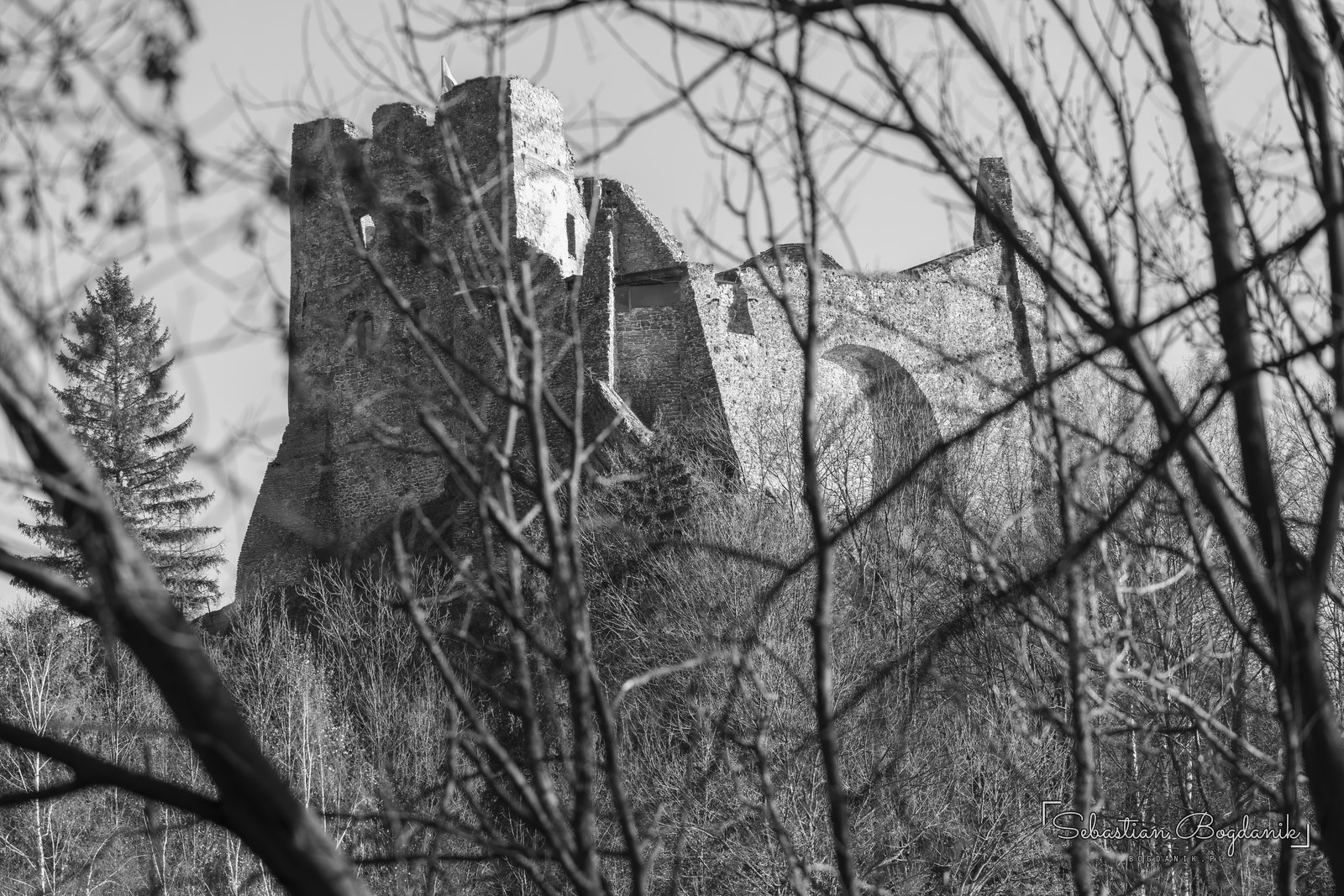
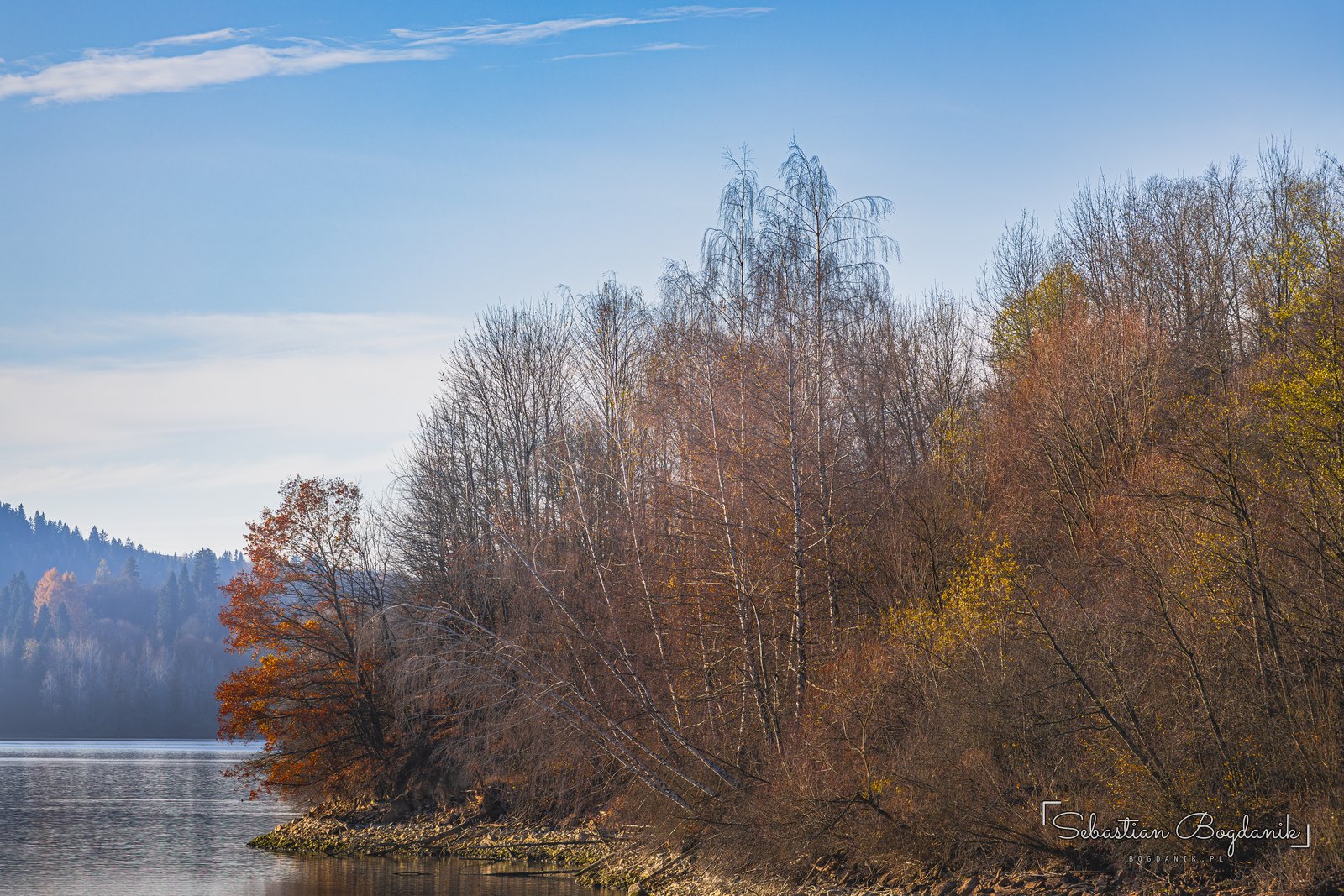
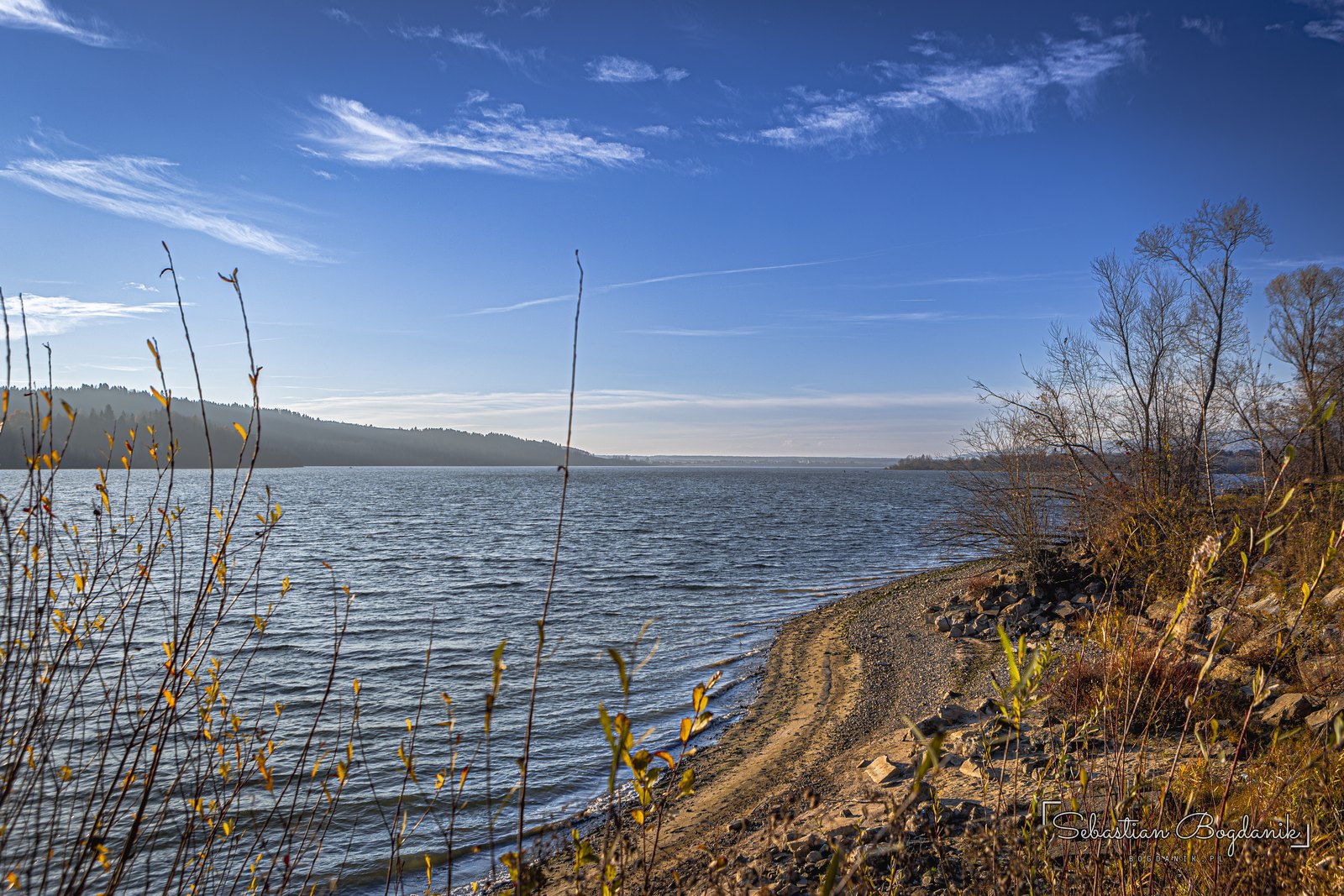
The lake itself is young. It was created by damming the Dunajec at Niedzica, with construction lasting from 1975 to 1997; it is the highest earth dam with a clay core in Poland. The whole village of Maniowy and parts of other villages disappeared under the water, and their residents were resettled. When the water level drops, foundations of old houses emerge from the lake bed.
The Stylchyn settlement in Kluszkowce
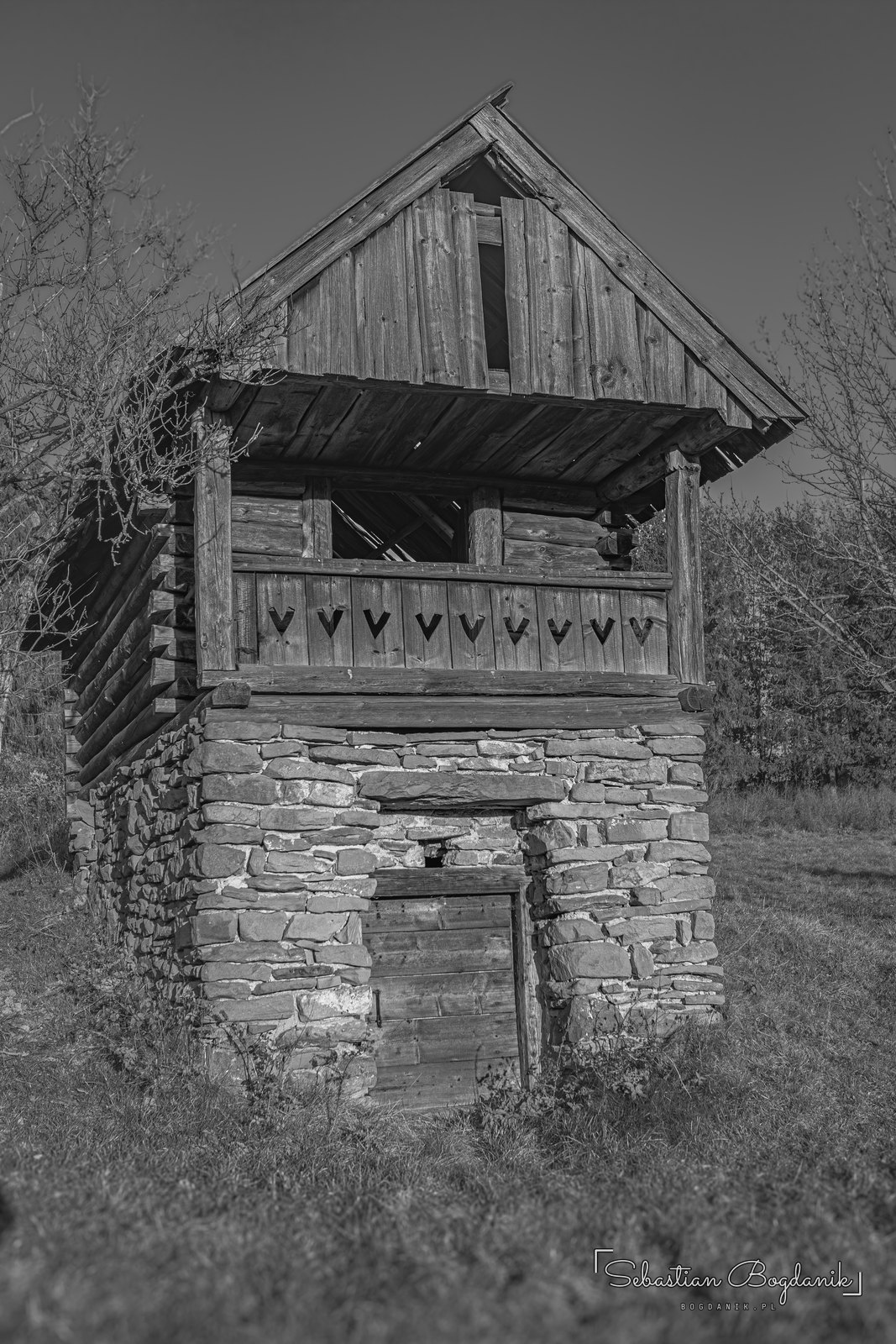
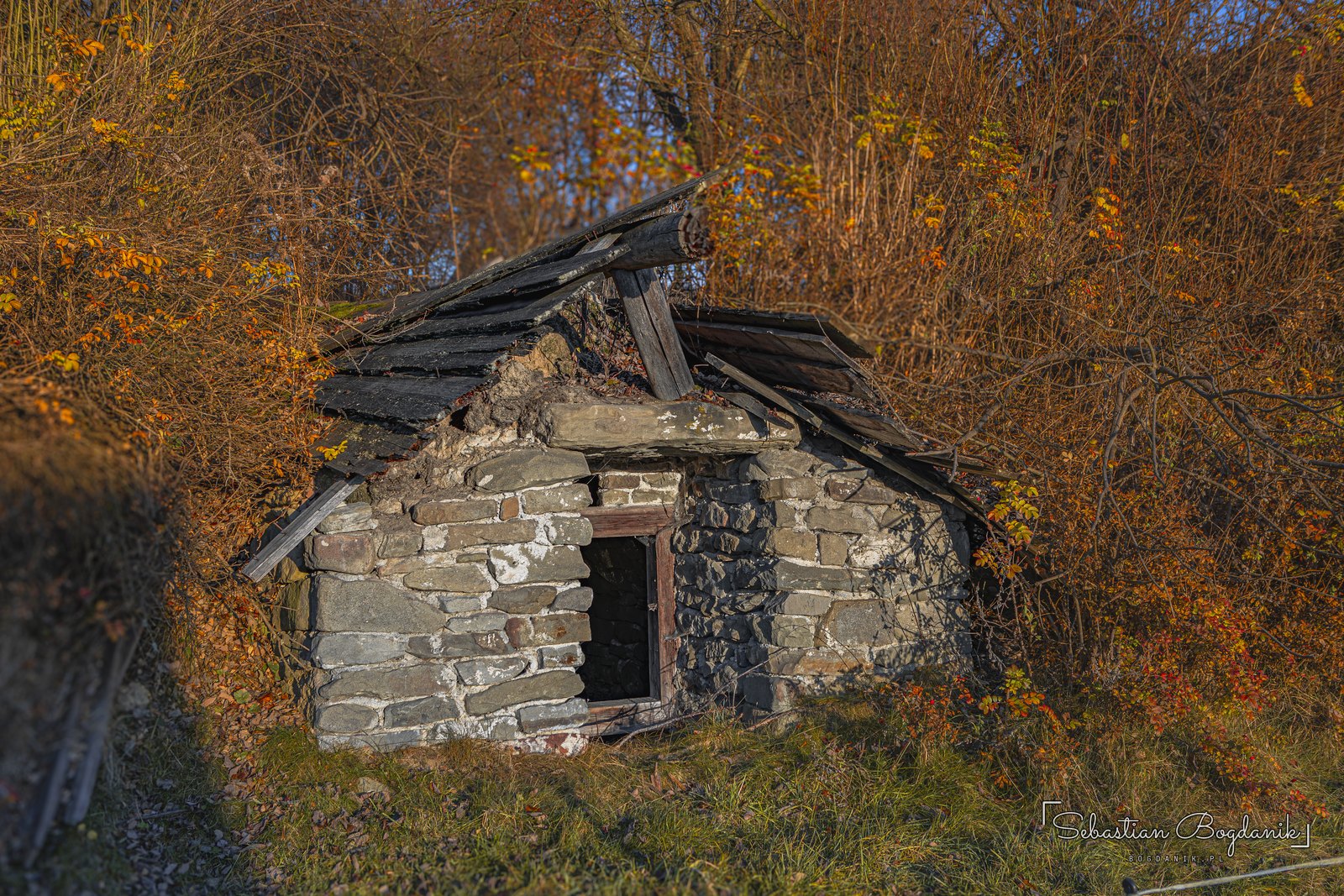
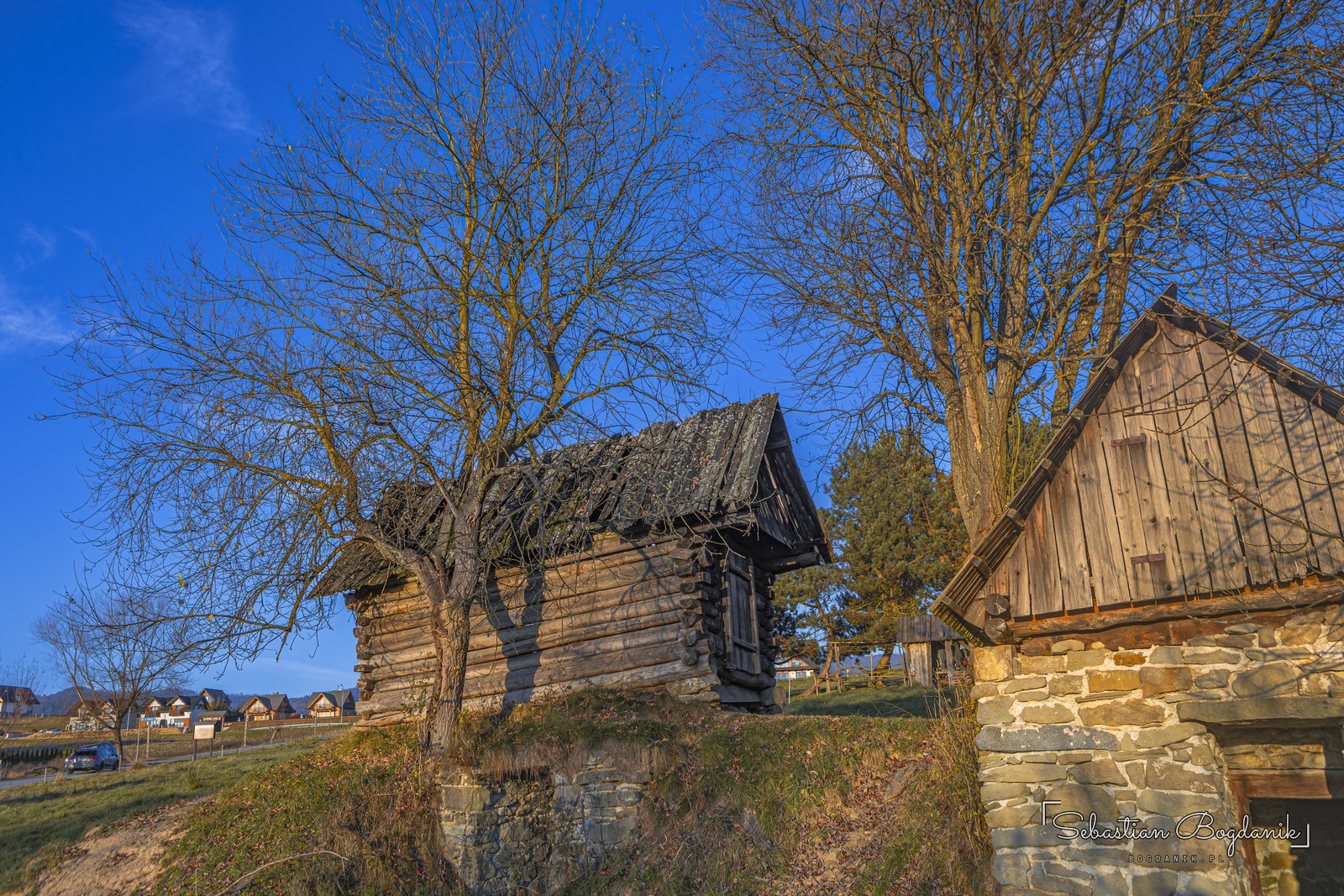
Some of what was meant to vanish under the water survived. On Stylchyn hill in Kluszkowce, on a peninsula above the lake, a settlement of historic buildings moved from old Maniowy, Kluszkowce and Czorsztyn was created in the 1990s: nine wooden villas and guesthouses, eleven cottages and farm buildings, and eleven stone cellars. Jan Królczyk’s farmstead became a regional museum with furnishings from 1909.
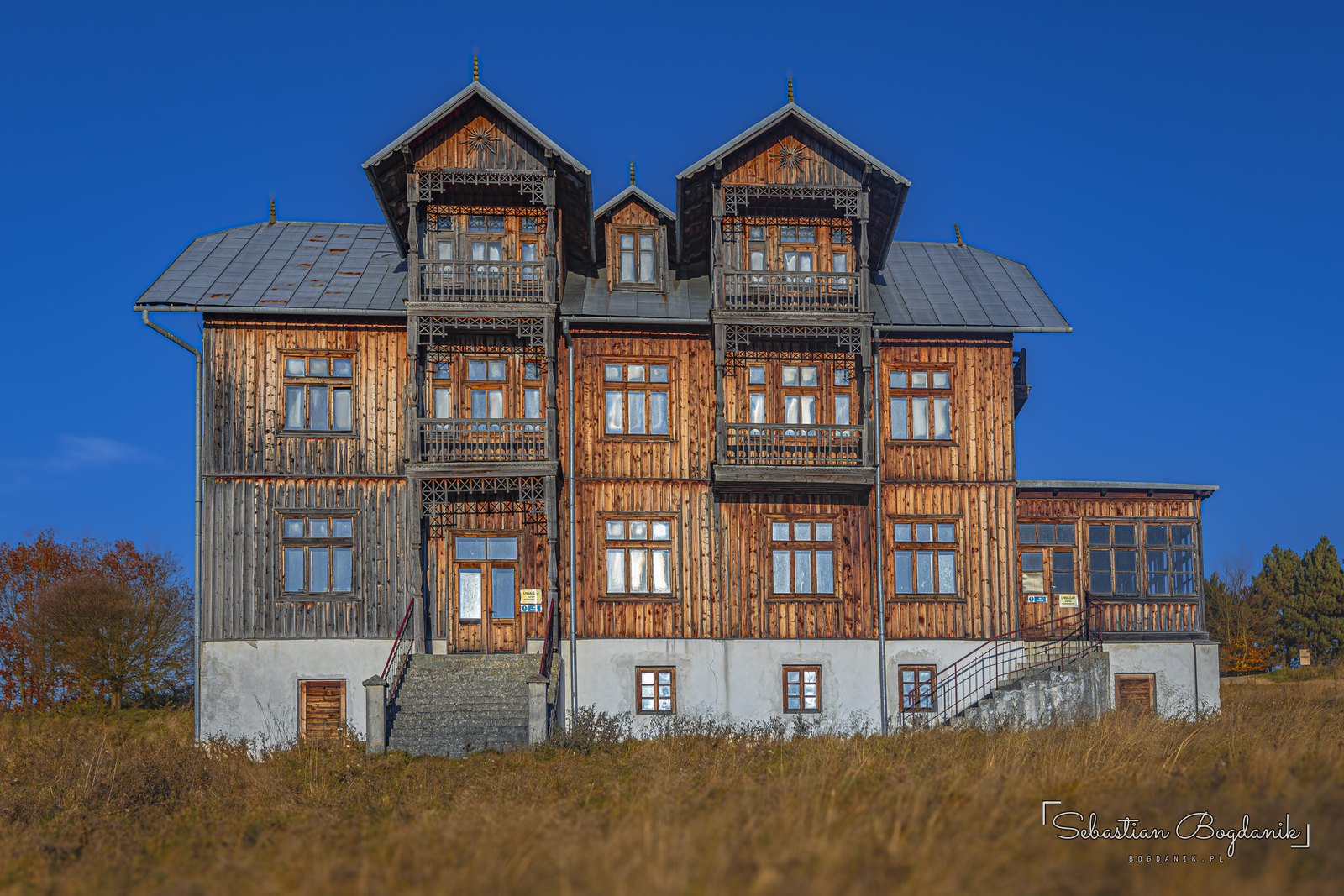
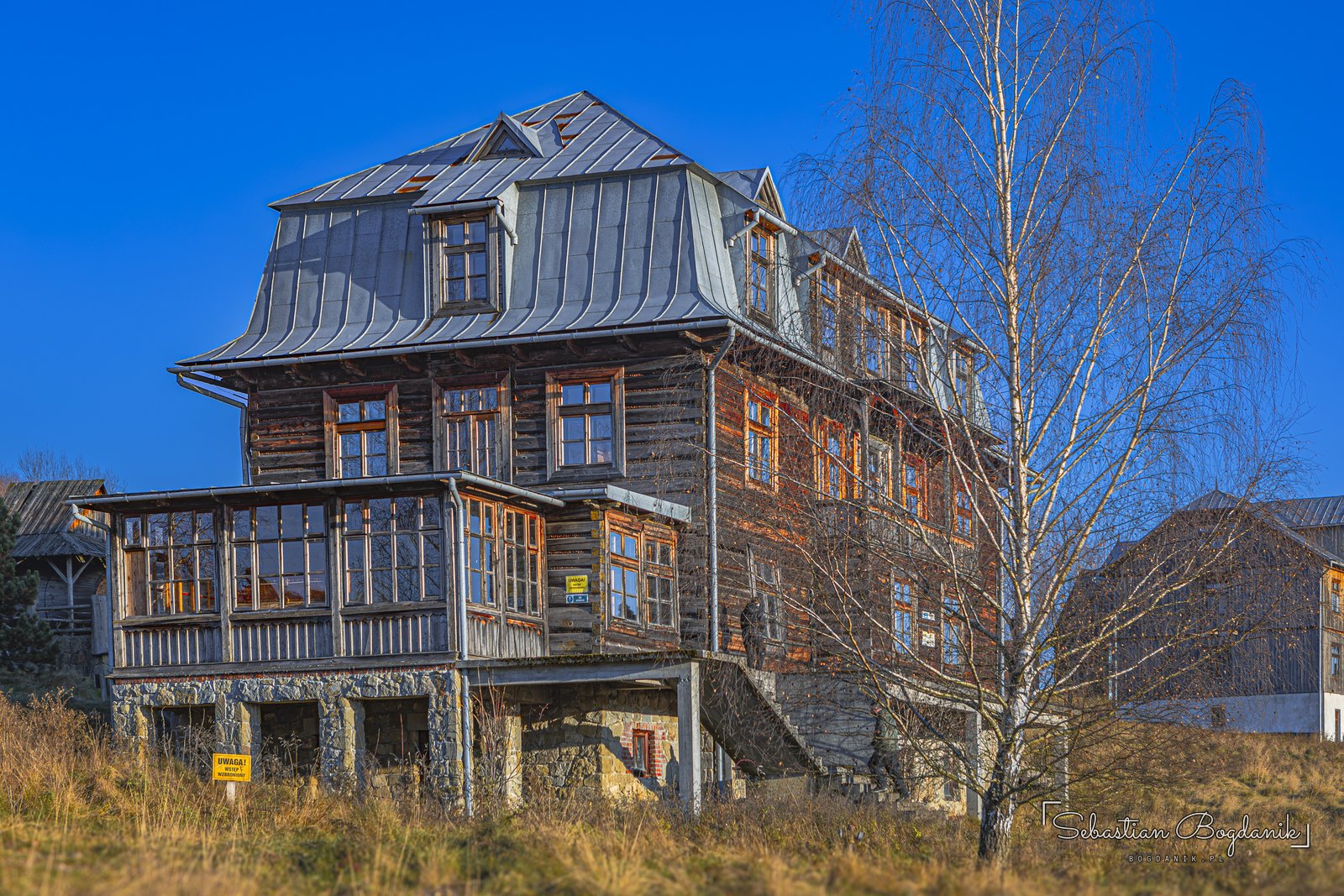
The villas have high stone foundations, long balconies and decorated gables, typical of highland summer resorts around 1900. The cellars are the most striking, though: built of broken stone at the turn of the 20th century, each topped with a log loft for hay. Today many of the buildings stand empty, which makes the settlement feel half fairy tale, half ghost town.
Sunset over the lake
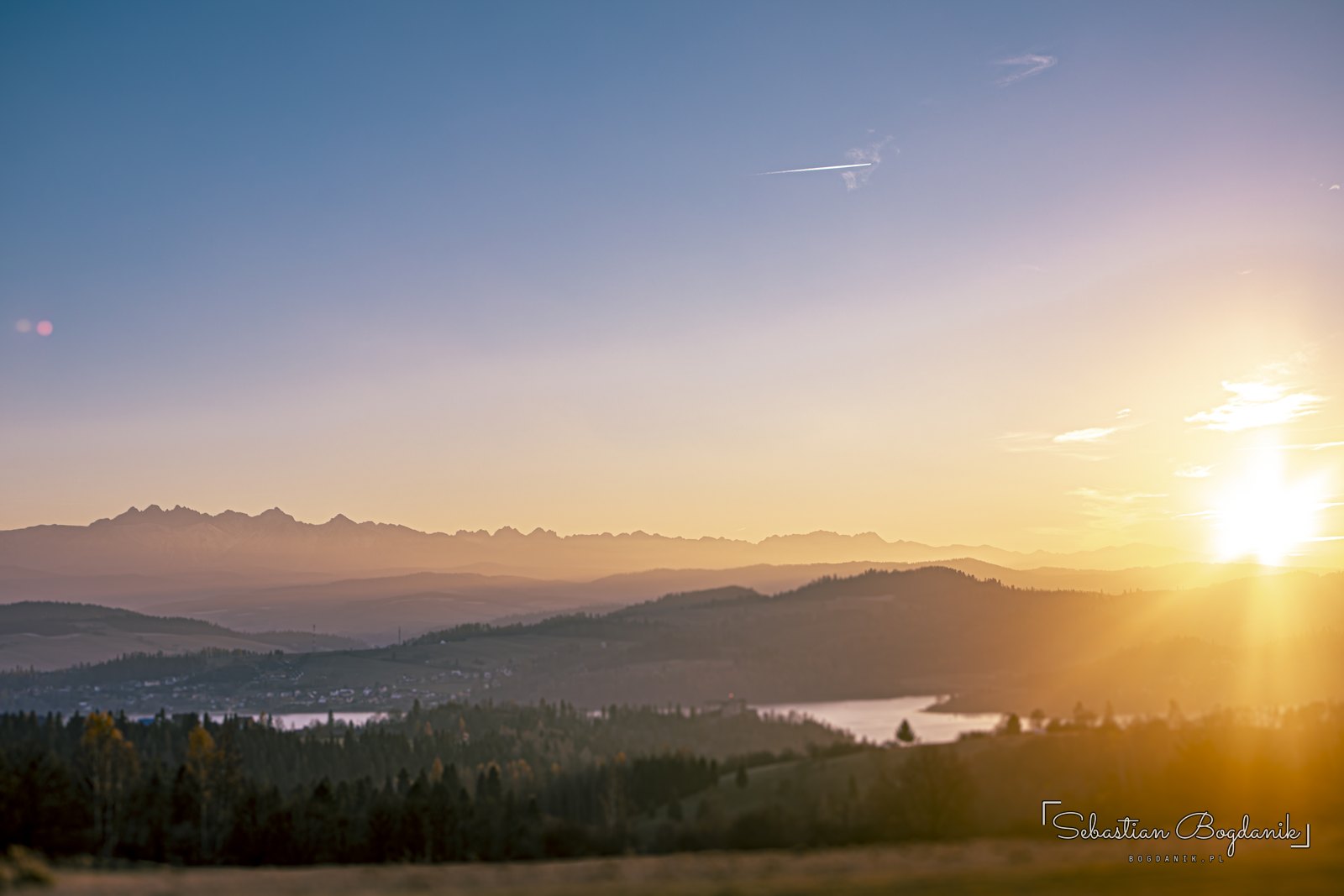
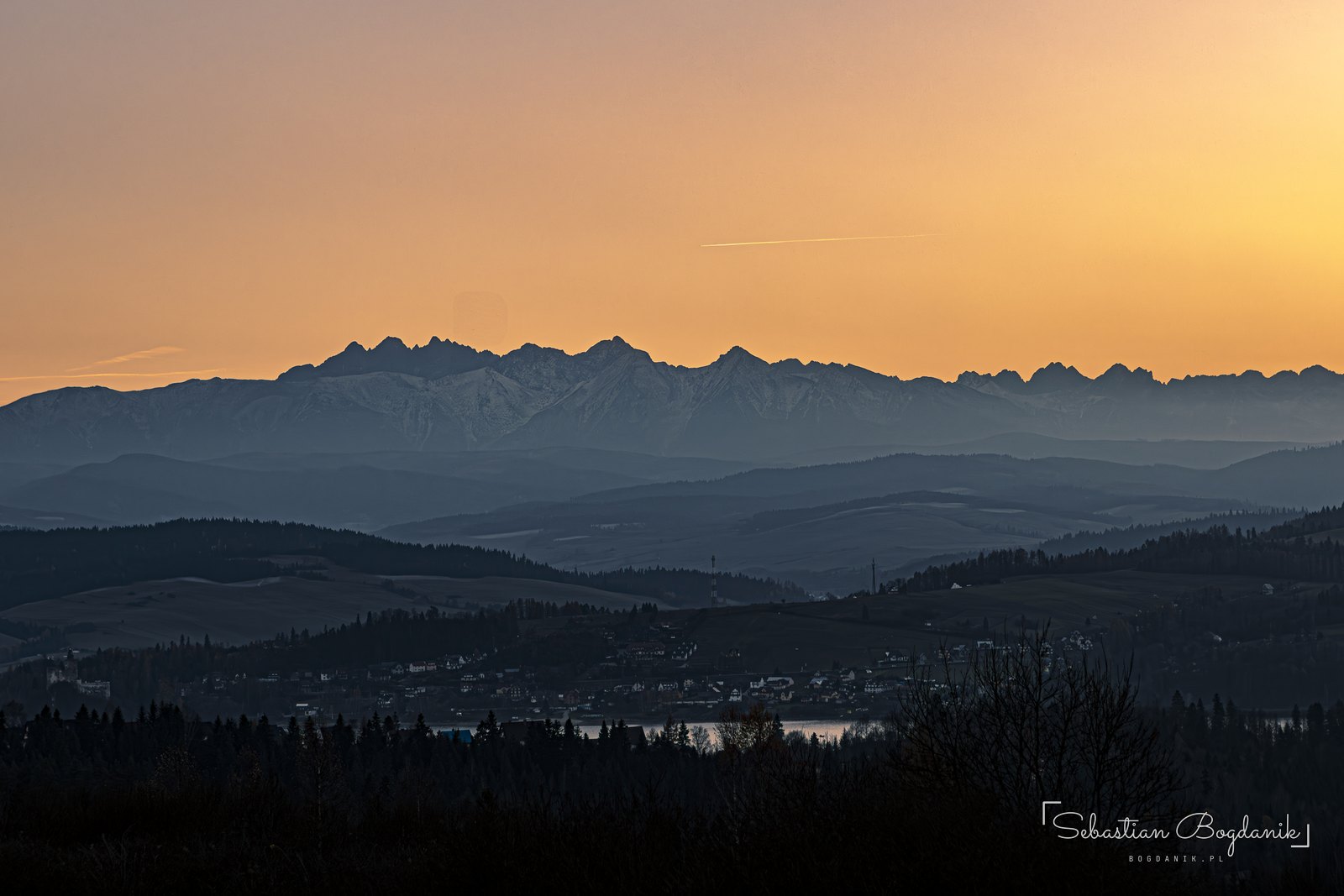
For the last stop we went up a hill in Kluszkowce, with a view of the lake and the Tatras. In November the sun sets early, so soon after 3 pm the light turned golden and the ridges lined up in layers: the Pieniny and the Spiš hills closest, the Tatras at the very back.
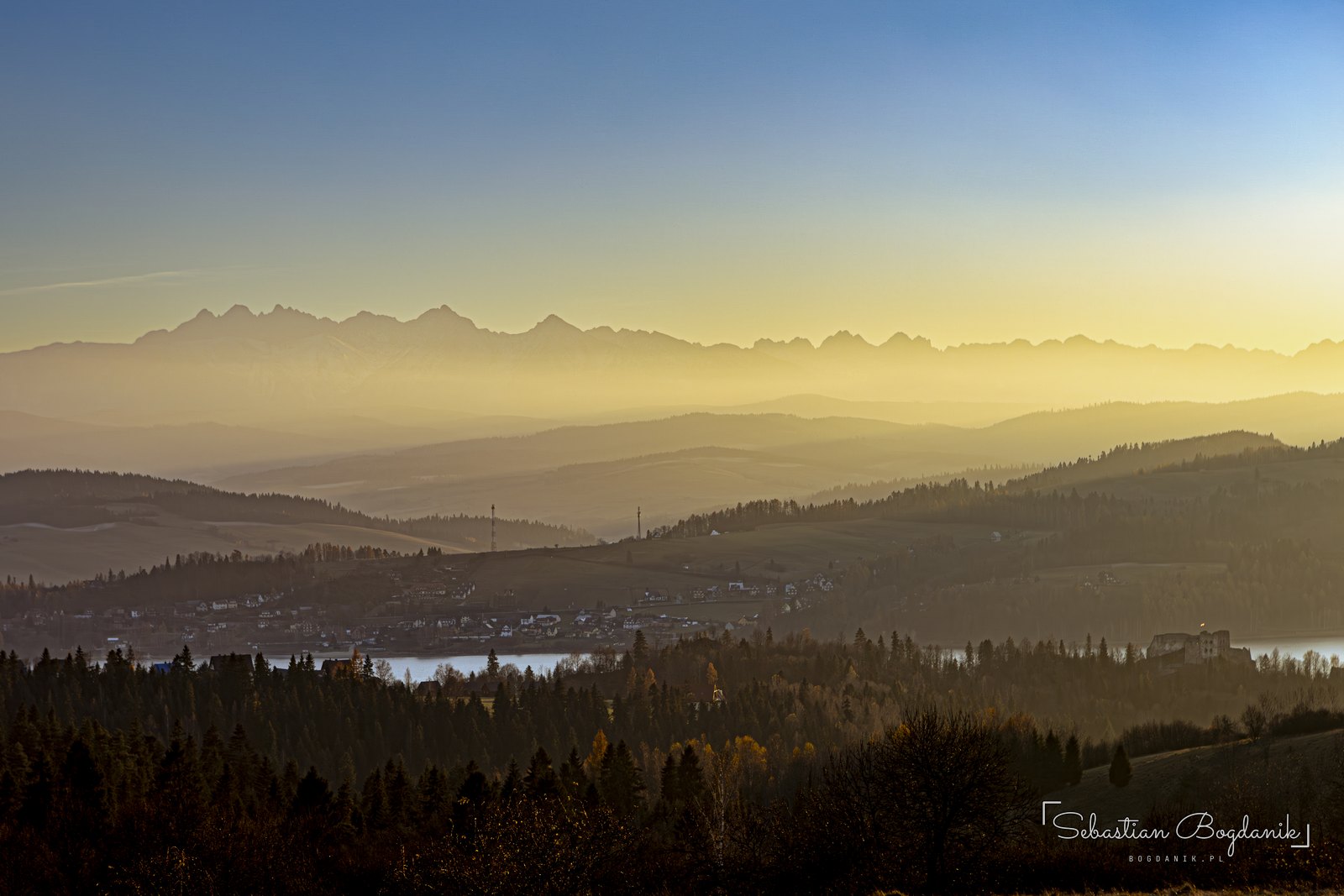
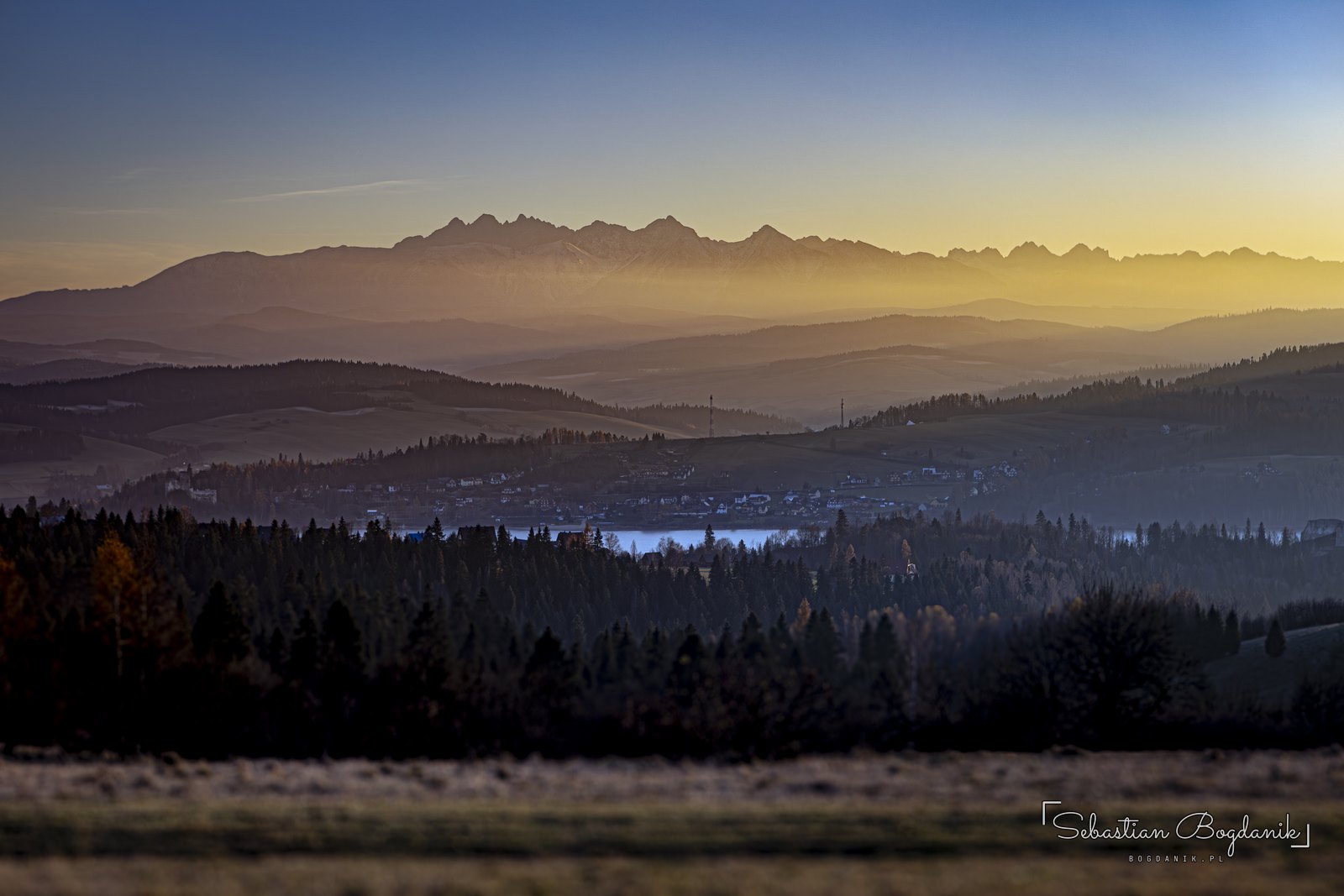
At around 3:40 pm the sun slipped behind the ridges, and the last light reflected in Lake Czorsztyn. A few minutes later only an orange glow remained over the Tatras. A day that began with frost and the moon ended exactly where it should: against the mountains.
The route, 17 November 2024
Nowy Targ (by the airfield) → Czarna Góra (Litwinka) → Łapszanka pass → Niedzica → Kacwin → Sromowce Wyżne → Czorsztyn → Kluszkowce (Stylchyn settlement and sunset)
From 7:37 am to 3:46 pm, by minibus, with stops for photographs.